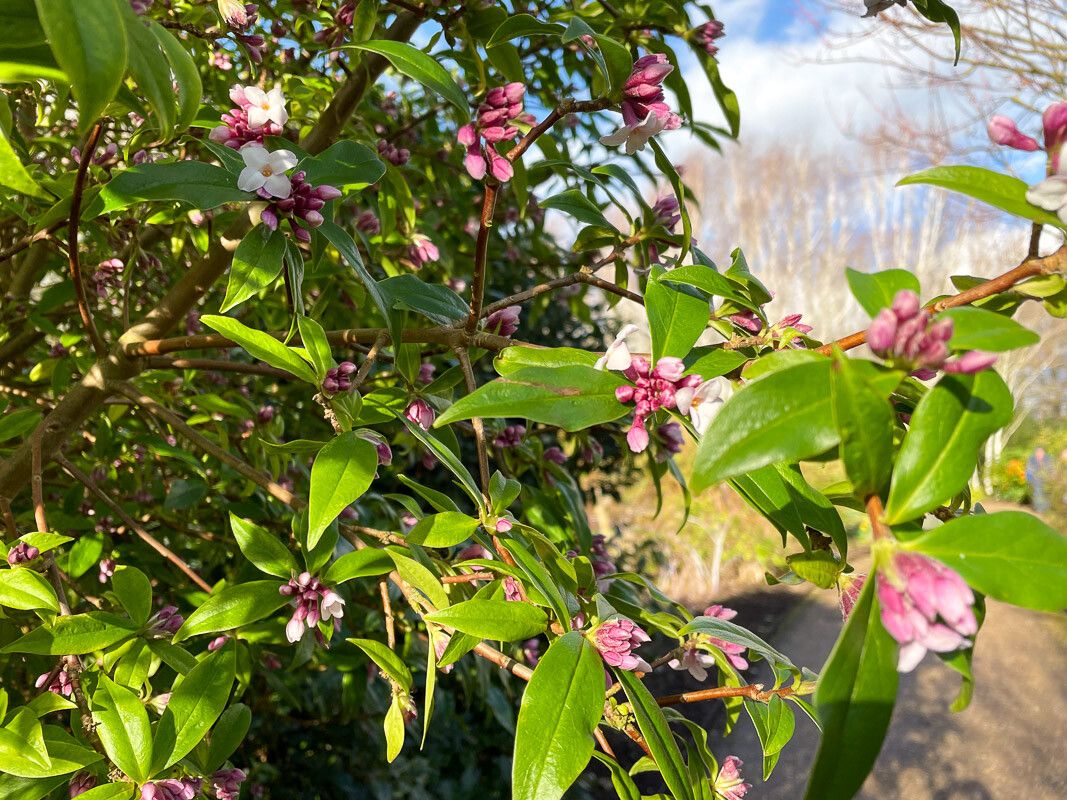
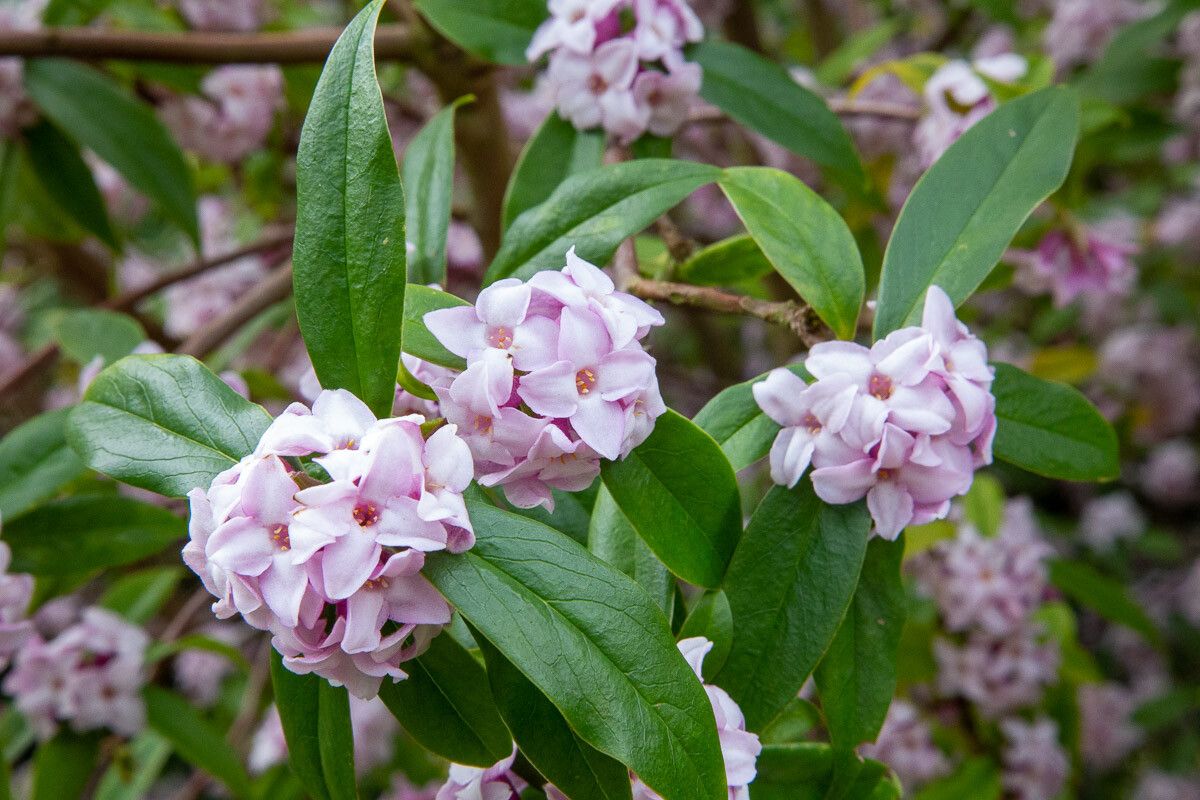
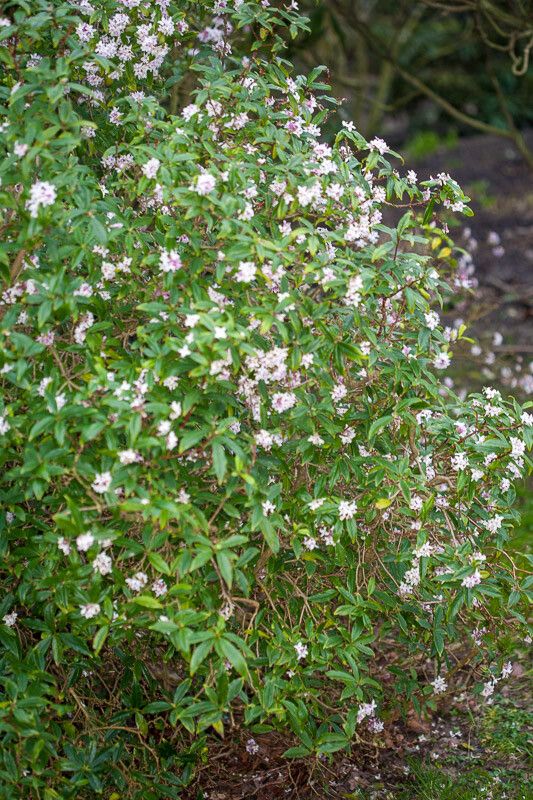
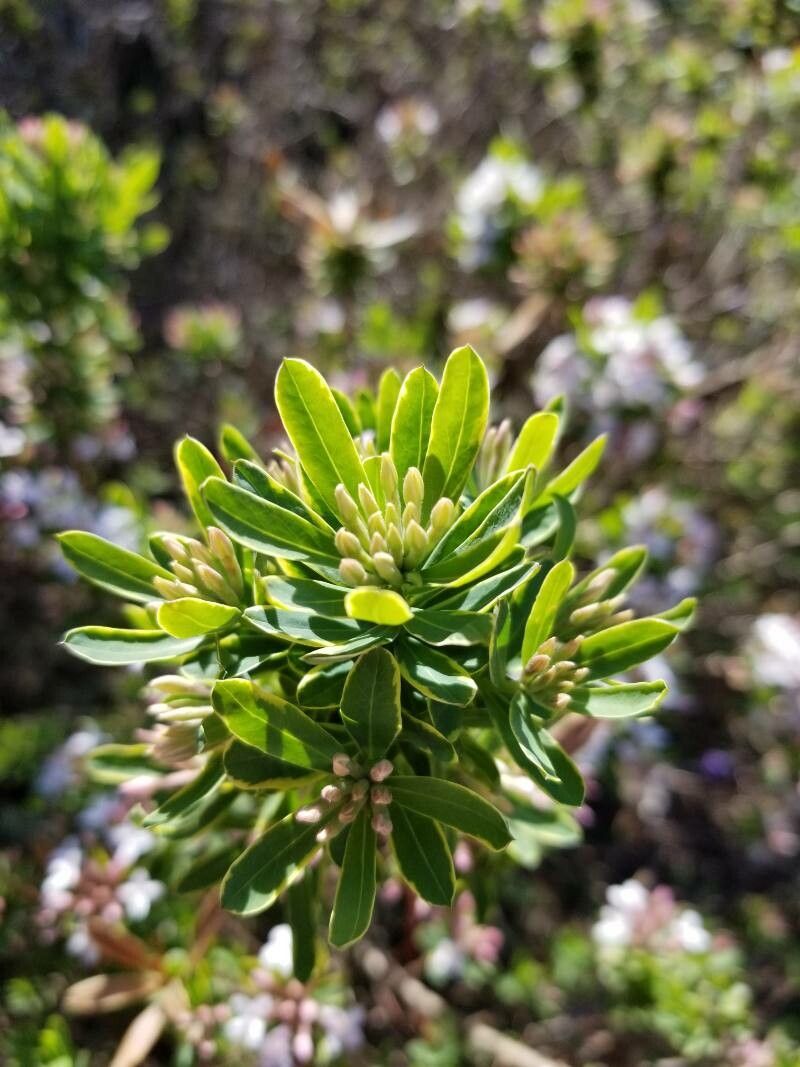
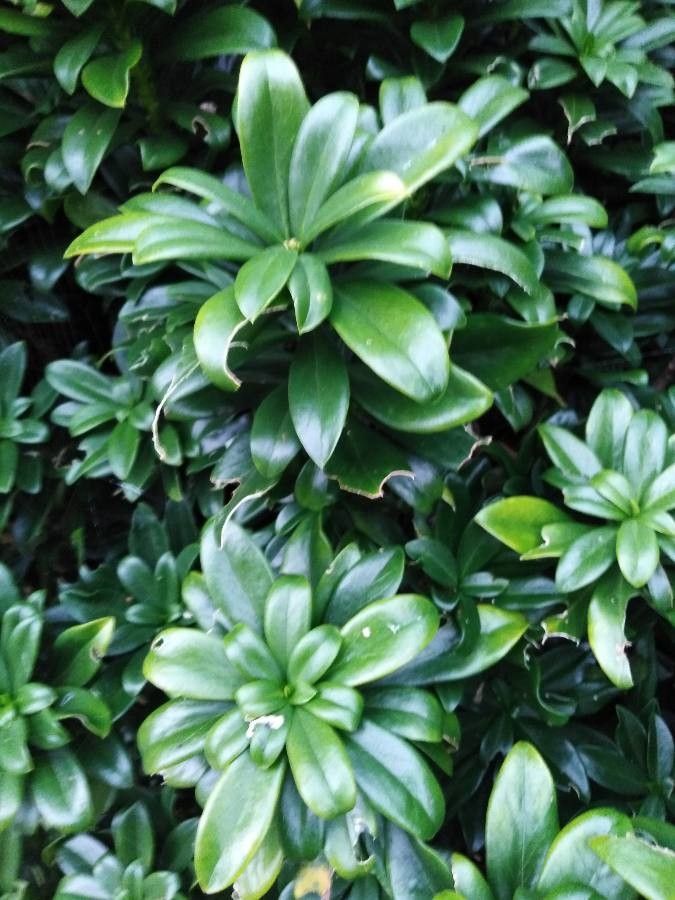
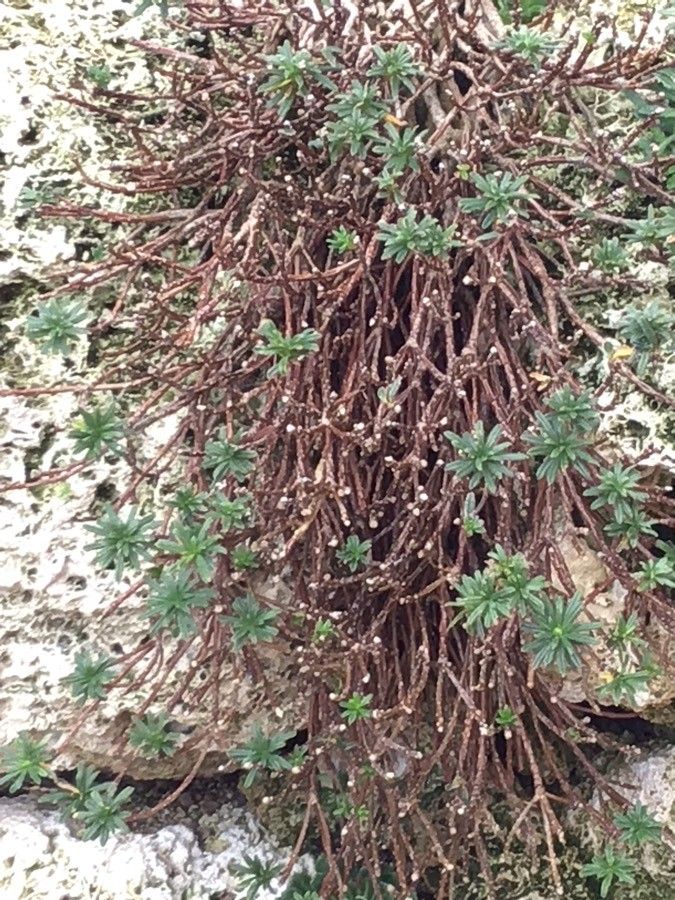
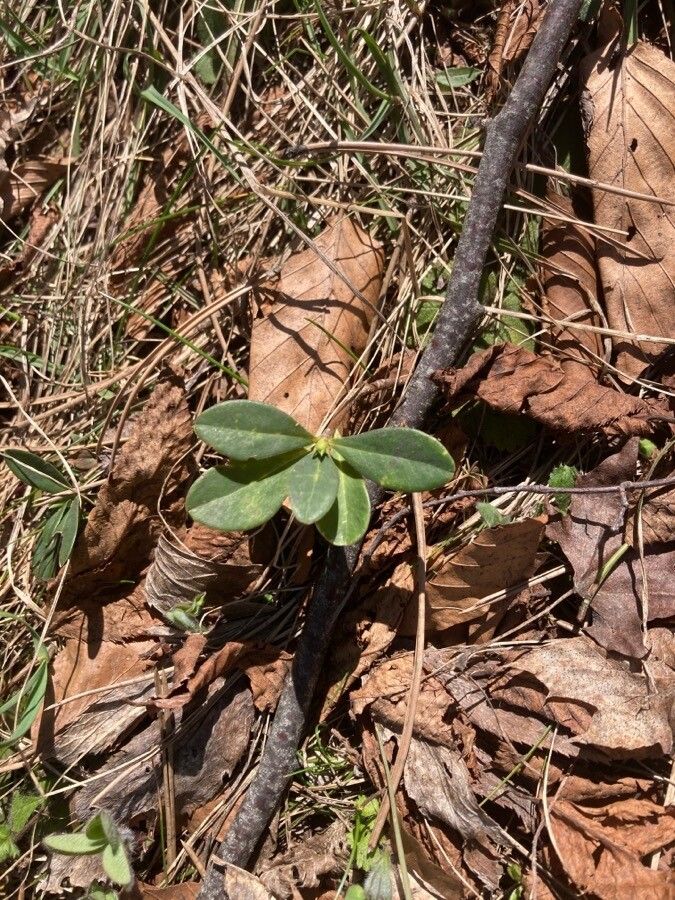
Daphne bholua, the Nepalese paper plant, is a species of flowering shrub in the genus Daphne of the family Thymelaeaceae. It grows at altitudes of 1,700–3,500 m (5,577–11,483 ft) in the Himalayas and neighbouring mountain ranges, from Nepal to southern China. At lower altitudes it is found as an evergreen in thickets and forest margins; at higher altitudes, it is deciduous and is usually found in pastures and grassy glades. It usually reaches a height of about 2.5 m (8 ft 2 in), though some specimens reach 4 m (13 ft) or more.Daphne bholua has leathery leaves and deep pink flowers with a powerful fragrance, and a number of named cultivars have been bred and are grown as garden plants in Europe and North America.
Paper daphne shows strong resistance to disease and is usually not susceptible to illnesses. Regarding care, this plant is fairly low-maintenance. When grown outdoors it needs only light watering, and larger specimens typically do not require pruning. Smaller plants, however, should be trimmed after they finish blooming. Paper daphne is appropriate for anyone with an outdoor area, like a garden or deck, and does not demand extensive plant-care experience.
How to keep Daphne Bholua.
Light
Paper daphne is native to habitats like forest understories and rocky areas, where it grows in natural shade. It prefers partial sun but can tolerate both full sun and full shade, demonstrating its versatility and hardiness.
Water
Paper daphne, a plant native to the Himalayan region, thrives in moderate climates with well-drained soil. It is somewhat drought-tolerant and typically needs watering every 2-3 weeks, allowing the soil to dry slightly between waterings. As an evergreen, paper daphne efficiently conserves water, even in cooler temperatures.
Temperature
Paper daphne shows good adaptability to temperature, able to endure higher heat and wider temperature fluctuations. In hot conditions, pay attention to watering and provide appropriate shade to prevent sunburn. However, Paper daphne is relatively intolerant of low temperatures; while it can withstand a certain amount of cold, excessively cold conditions can cause frost damage.
Fertilizer
Timing is essential for fertilizing Paper daphne. Start fertilizing in early spring and continue once a month until early summer. Fertilizer encourages beautiful blooms and supplies energy during both dormant periods and times of active growth.
Pruning
The paper daphne is known for its fragrant winter blooms and elegant foliage. To encourage healthy growth and maintain its shape, it's best to prune this plant in early spring, right after it has finished flowering. Light and regular pruning can enhance its blooming and help control its size. It's important to avoid heavy pruning, as that can stress the plant.
Botanical profile.
- Plant Type
- Shrub
- Life Cycle
- Perennial
- Genus
- Daphne
- Family
- Thymelaeaceae
- Hardiness Zone
- 7-10
- Mature Height
- 2.13 m
- Mature Spread
- 1.52 m
- Leaf Color
- Green
- Leaf Type
- Evergreen
- Flower Color
- Pink, White
- Flower Size
- 1.02 cm to 1.52 cm
- Bloom Time
- Winter
- Planting Time
- Spring, Summer, Autumn
- Harvest Time
- Late spring, Early summer, Mid summer
- Native Area
- Nepal, India, Vietnam, Bhutan, Bangladesh, China
Other names.
Reader questions.
How should I water my Paper daphne at different stages of growth?
When the Paper daphne is young, especially in the seedling stage, it requires more water compared to when it is fully grown. It is crucial to keep the soil consistently moist during the initial stages to promote root growth. This principle also applies if you have relocated a Paper daphne to a new growing spot. Additionally, providing proper care can result in the development of beautiful flowers and fruits. If your Paper daphne is currently flowering or producing fruits, it usually requires slightly more water to support these plant structures.
What are the sunlight requirements for Paper daphne?
Paper daphne thrives in partial sun, requiring about 3-6 hours of sunlight daily. It's important to observe the movement of sunlight through your garden to identify areas that offer a balanced exposure to light and shade. This ensures the plant's well-being, as Paper daphne is naturally accustomed to environments like forest understories or rocky areas, where it can also tolerate full shade.
What is Paper Daphne?
Paper Daphne, known botanically as Daphne bholua, is a plant species recognized for its unique characteristics and applications. Unfortunately, specific details regarding its essentials, symptoms of health or infestations, and additional information were not provided.
How should I water my Paper daphne plant to make it thrive?
You can use any common watering tool, such as watering cans, hoses, or even cups, to water your Paper daphne. It's important to water the soil directly and make sure all areas are evenly moistened to nourish the entire root system. Filtered water is preferable to tap water, as it may contain harmful particles. Additionally, using water at or slightly above room temperature is best, as extremely cold or hot water can be shocking to the plant. Nevertheless, the Paper daphne generally does well with any type of water.
What should I do if my indoor Paper daphne isn't getting enough natural light?
For indoor Paper daphne plants not receiving sufficient natural sunlight, especially during winter or in less sunny spaces, artificial lighting can be a beneficial alternative. LED lights are recommended due to their ability to provide specific light wavelengths needed by plants. Full sun plants require 30-50W/sq ft, partial sun plants need 20-30W/sq ft, while full shade plants need 10-20W/sq ft of artificial light. The artificial light source should be placed 12-36 inches above the plant and turned on for 8-12 hours per day to mimic natural daylight conditions.
What should I do if I give too much or too little water to my Paper daphne plant?
Outdoor plants, especially newly planted ones or seedlings, are often at risk of not being watered enough. It is important to consistently water them for a few months while they are small or newly planted. Once the roots are established, Paper daphne plants can rely more on rain. When Paper daphne plants are in pots, overwatering is more likely to occur. If you accidentally overwater your plant, you should take immediate action to fix the situation. First, stop watering the plant to minimize the impact of overwatering. Then, remove the plant from its pot and check the roots for any signs of root rot. If there is no root rot, you can return the plant to its container. However, if root rot is present, trim away the affected roots and consider using a fungicide to prevent further damage. Lastly, repot the Paper daphne in well-draining soil. On the other hand, if your Paper daphne plant is underwatered, simply water it more frequently. Underwatering can be easily fixed by observing the plant's leaves. If they droop, dry out, or fall off, it means the plant needs more water. Adjust your watering frequency accordingly.
What are the symptoms of insufficient light in Paper daphne?
When Paper daphne doesn't receive enough light, several symptoms may appear, including small new leaves, leggy or sparse growth, faster leaf drop, slower or halted growth, lighter-colored new leaves, chlorosis, sunscald, leaf curling, wilting, and leaf scorching. These symptoms indicate that the plant is struggling with light deficiency, affecting its overall health and ability to photosynthesize.
How frequently should I give water to my Paper daphne?
Most outdoor plants can grow naturally with rainfall. But if your area doesn't get enough rain, you should water them every 2 weeks in spring and fall. In summer, you'll need to water more often. In winter, when plants grow slower and need less water, water sparingly or not at all. Young or newly planted Paper daphne plants will need more frequent watering to help them establish and grow. For potted Paper daphne plants, you have two options for determining watering frequency. The first is to have a set schedule, like once a week or every other week. However, this may not always work because it doesn't take into account the specific conditions of your plant's environment. The other option is to determine watering frequency based on soil moisture. Wait until the top two to four inches of soil have completely dried out before watering again. This is usually about ⅓ to ½ depth of the pots.
How can I address light deficiency in my Paper daphne?
To address light deficiency in Paper daphne, gradually acclimate the plant to brighter conditions by moving it to a sunnier spot each week, aiming for 3-6 hours of direct sunlight daily. If moving the plant isn't feasible, consider using artificial lighting, such as a desk or ceiling lamp for at least 8 hours a day or invest in professional grow lights. For outdoor plants, avoid drastic changes in light intensity to prevent sunburn. If obstructions like trees are blocking sunlight, pruning can help. For smaller plants, consider transplanting during their dormant period to a location with more sunlight and good drainage.
How much water does my Paper daphne plant need?
When watering your Paper daphne, it's important to note that it doesn't always require a lot of water. If only a few inches of soil have dried since the last watering, giving it about five to ten ounces of water each time will support healthy growth. To determine how much water to give, check the moisture of the soil. If more than half of the soil has dried out, give more water until you see excess water draining from the pot's holes. If your Paper daphne is planted in a rain-rich area, it may not need additional watering. However, when it's young or establishing, aim for 1-2 inches of rain per week. As it matures, it can survive on rainwater alone, only needing thorough watering during hot and rainless periods to prevent stress.
How do I know if I am giving enough water to my Paper daphne?
The Paper daphne is more commonly affected by overwatering. There are several signs to watch for when this happens. An overwatered Paper daphne will have yellowing and dropping leaves. Overwatering can also cause the plant to shrivel and promote root rot. Conversely, an underwatered Paper daphne will wilt and have brown or brittle leaves. Regardless of whether you see signs of overwatering or underwatering, it's important to intervene and restore the plant's health.
How can I keep my Paper daphne plant hydrated throughout the year?
The watering needs of your Paper daphne will vary based on the seasons. In the summer, when it is hot and sunny, you will need to water it more often, as the soil can dry out quickly. On the other hand, during the winter when it is not actively growing, you can water it less frequently, maybe once every 2 to 3 weeks or even skip watering altogether. If you are growing it indoors, be mindful of appliances like air conditioners that can cause the plant to dry out faster, requiring more frequent watering.