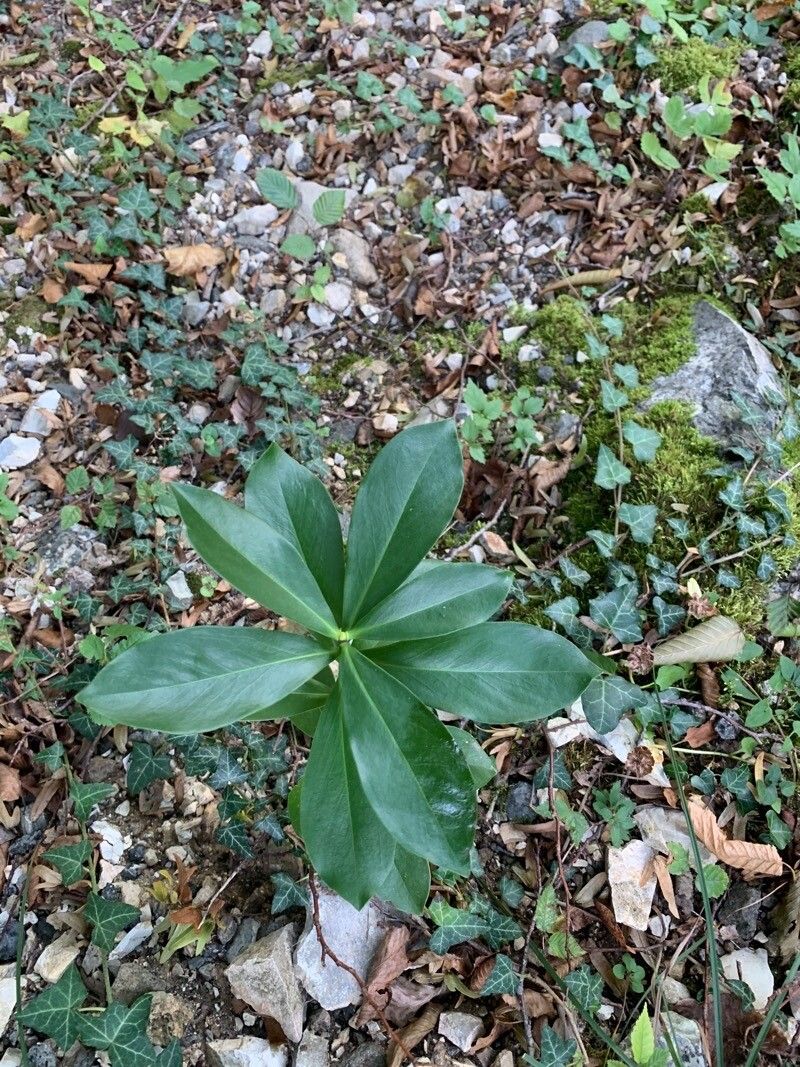
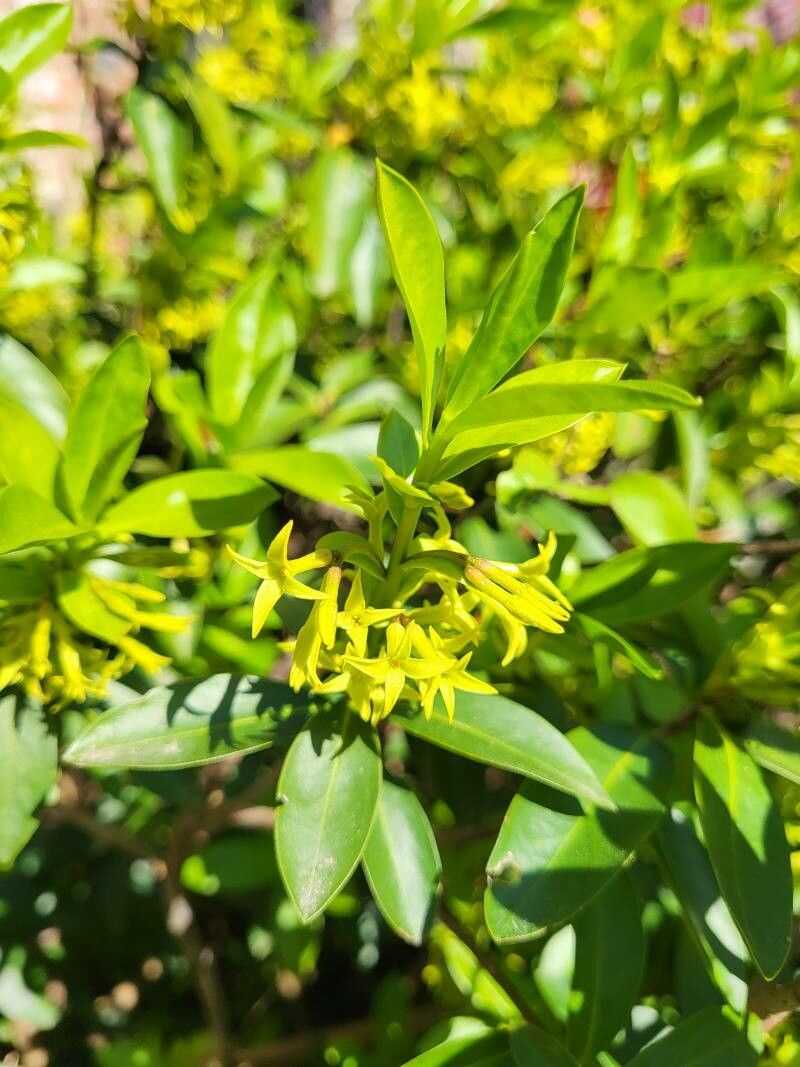
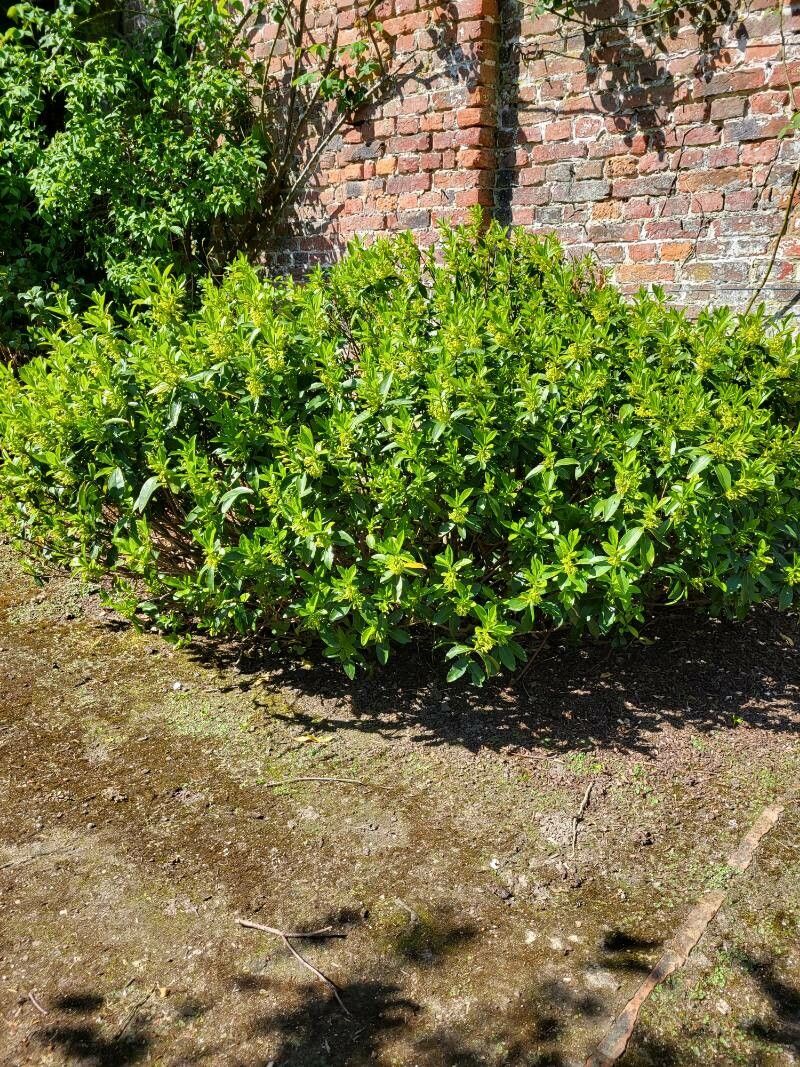
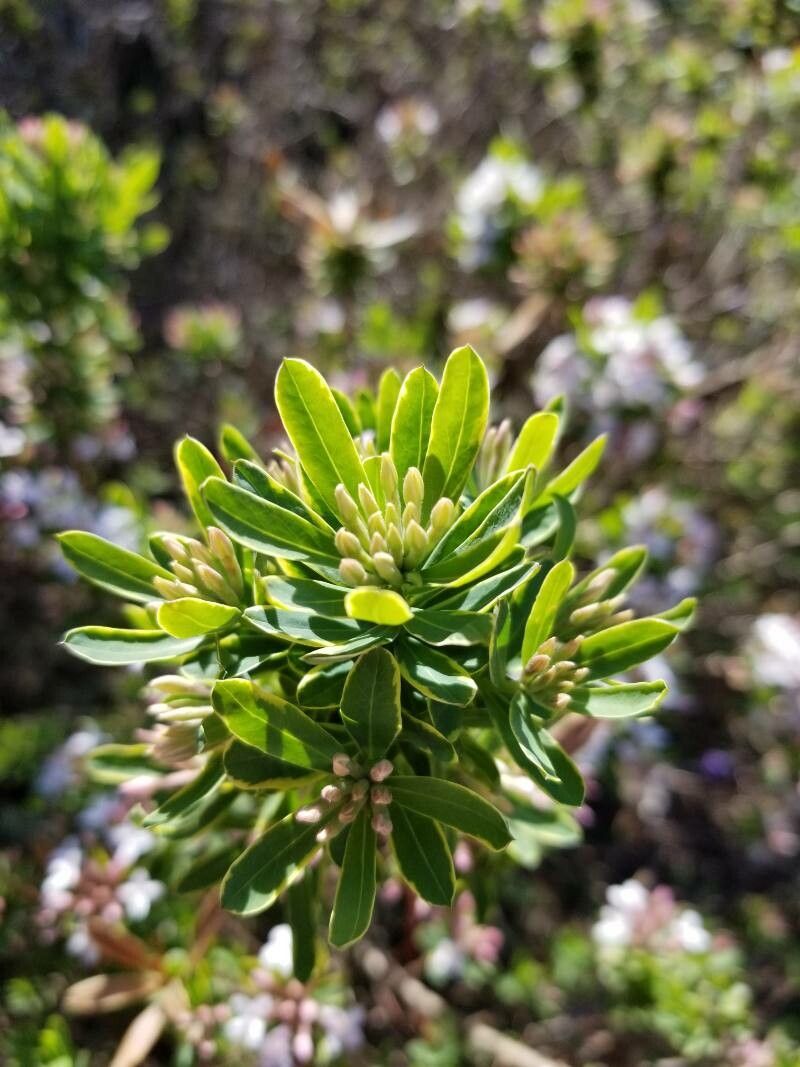
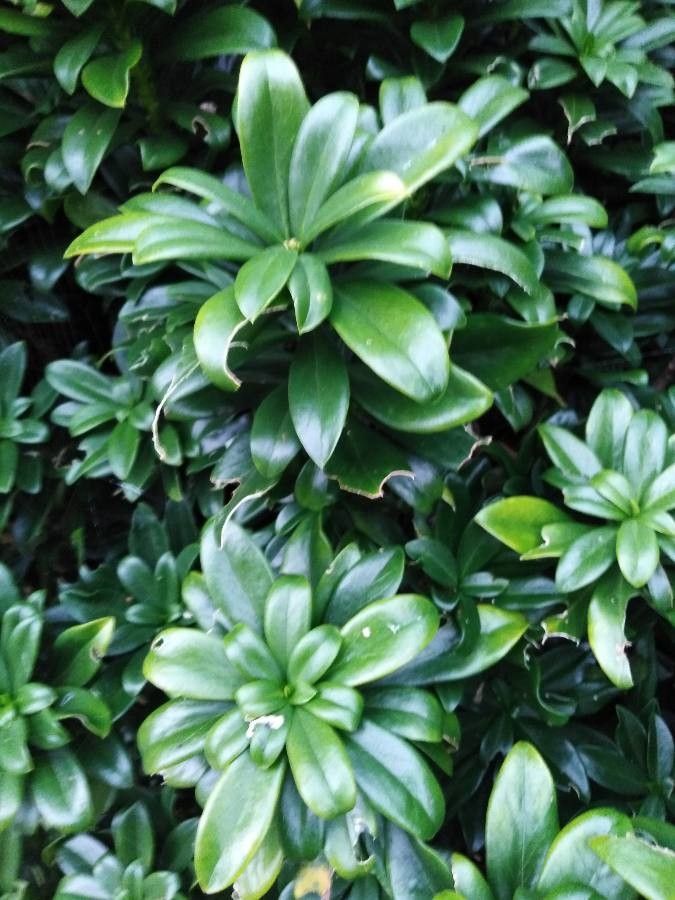
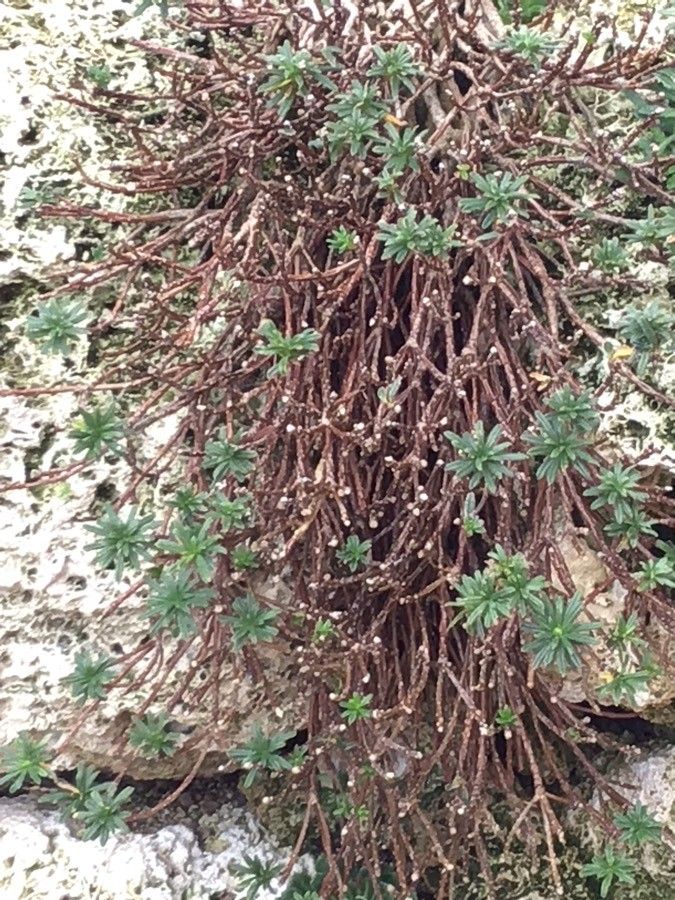
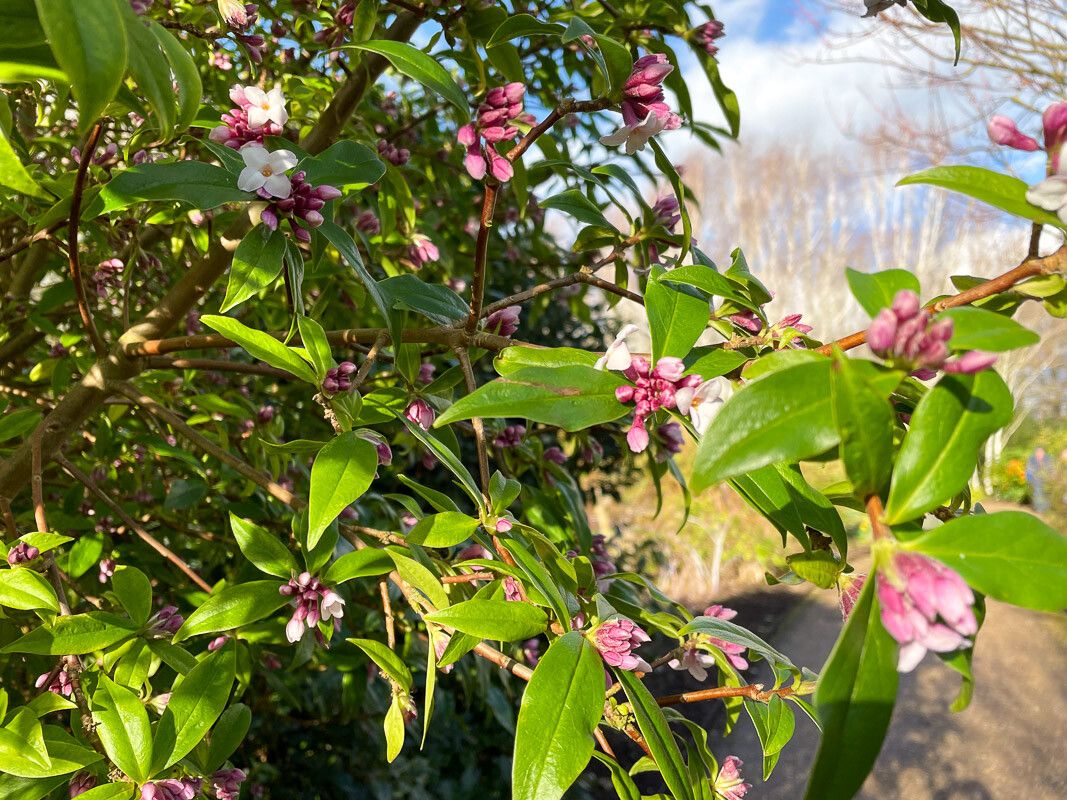
Daphne pontica, commonly known as twin-flowered or Pontic daphne, is a species of flowering plant in the family Thymelaeaceae, native to Bulgaria, northern Turkey and the Caucasus. It is a small evergreen shrub growing to 1 m (3 ft 3 in) tall by 1.5 m (4 ft 11 in) wide, with leathery leaves and clusters of fragrant yellow flowers in pairs, in spring. The flowers are often followed by black berries. It tolerates deep shade in the garden, but dislikes transplanting. This plant has gained the Royal Horticultural Society's Award of Garden Merit.The specific epithet pontica, refers to the Latin term for Pontus, a city of the Black Sea.
Long-flowered spurge laurel shows strong resistance to disease and is usually not vulnerable to illnesses. In terms of maintenance, this plant is fairly low-maintenance. Planted outdoors, it needs only minimal watering, and larger plants typically do not require pruning. Smaller plants, however, should be pruned after they finish blooming. Long-flowered spurge laurel is appropriate for anyone with an outdoor area, such as a garden or deck, and does not demand much gardening experience.
How to keep Daphne Pontica.
Water
The long-flowered spurge laurel needs regular watering to keep the soil moist, but be careful not to over-water it. How often you water depends on the climate, with less frequent watering needed during the winter months. A useful technique is to check the soil moisture by inserting your finger about 5 cm (2 in) deep into the soil. The goal is to have the soil feel damp but not wet.
Fertilizer
Fertilize your Long-flowered spurge laurel in early spring to encourage healthy growth. Regular feeding improves overall health, producing vigorous growth, greater tolerance of harsh conditions, and enhanced resistance to diseases and pests. Keeping to a specific fertilization schedule will ensure foliage that is vivid, deeply colored, and lush.
Pruning
The long-flowered spurge laurel is an evergreen shrub known for its glossy leaves and fragrant flowers. To keep the plant healthy and well-shaped, it is best to prune it in early spring, removing any damaged branches. Regular, light trimming encourages denser foliage and improved blooming. Be sure to use clean tools to prevent the spread of disease. Additionally, avoid heavy pruning to ensure continued flower production.
Botanical profile.
Other names.