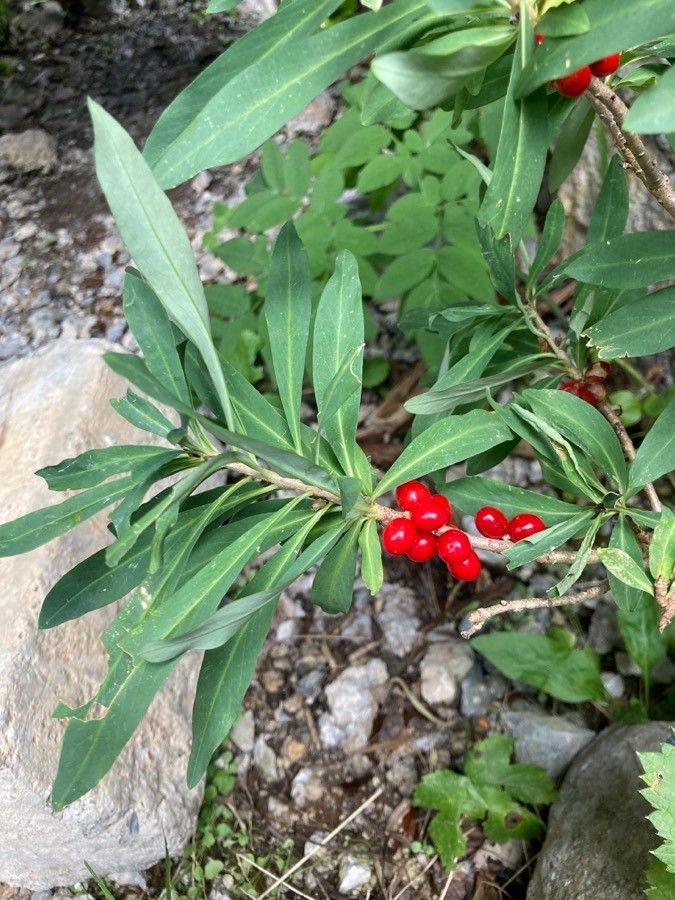
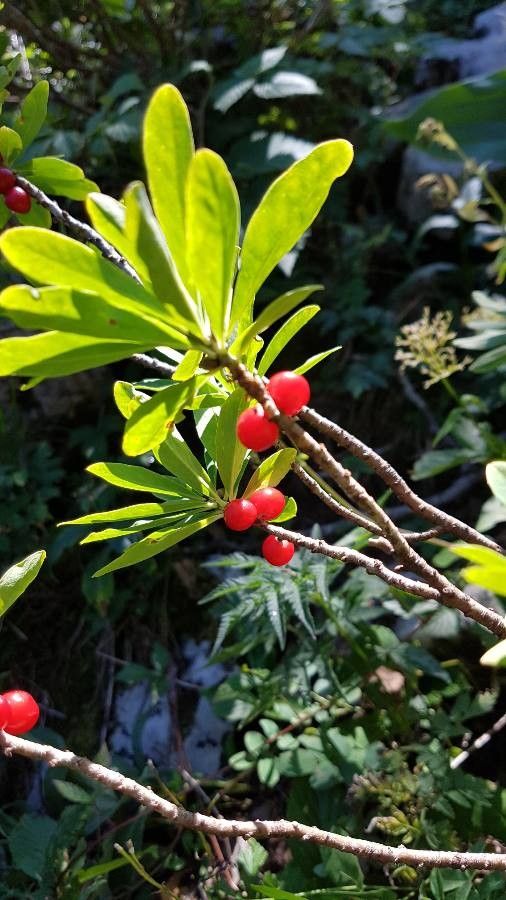
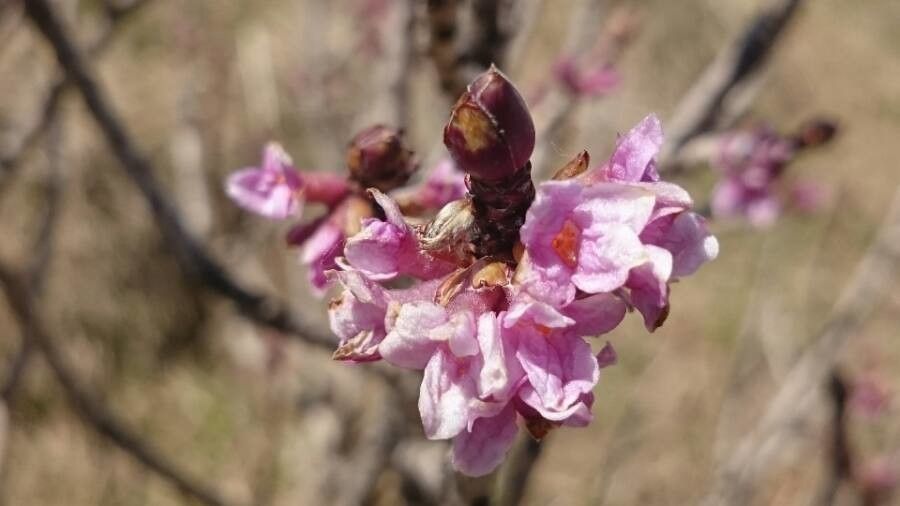
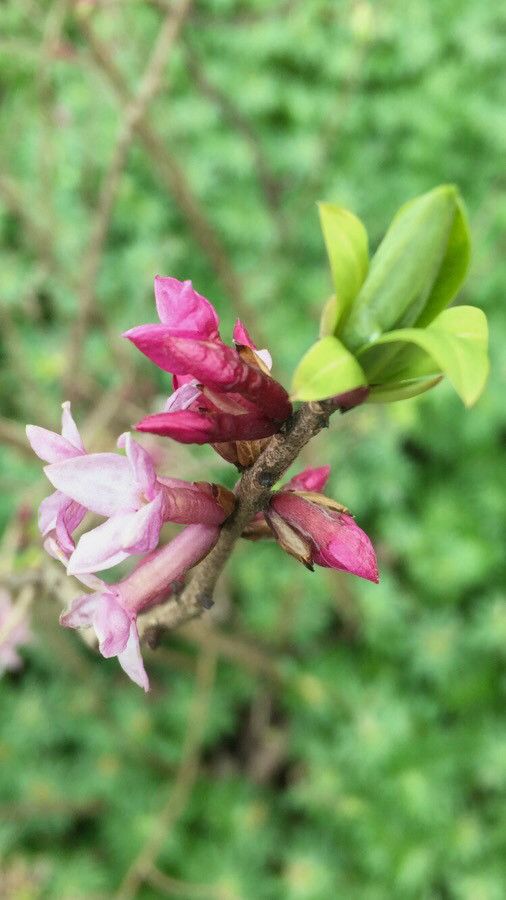
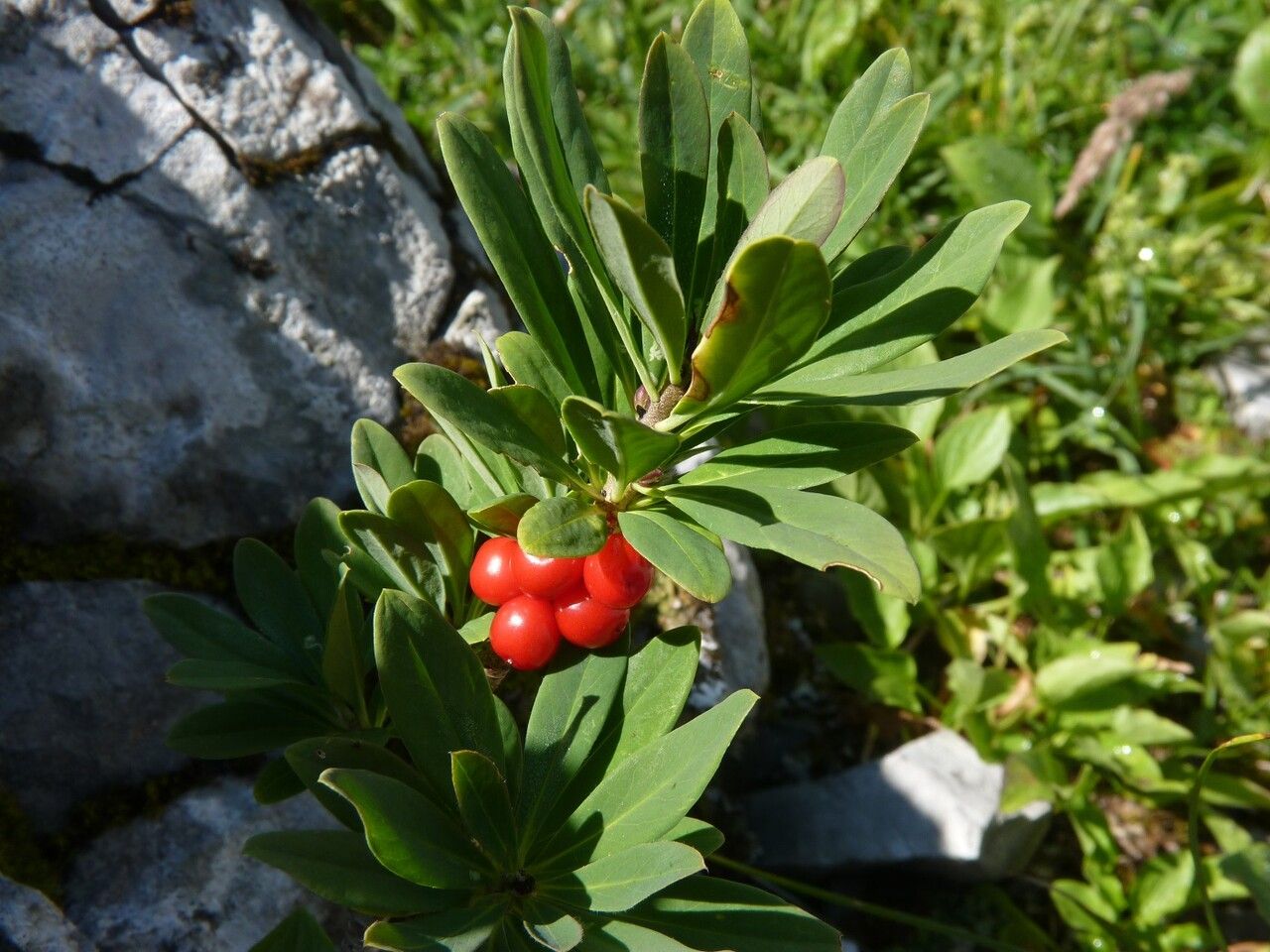
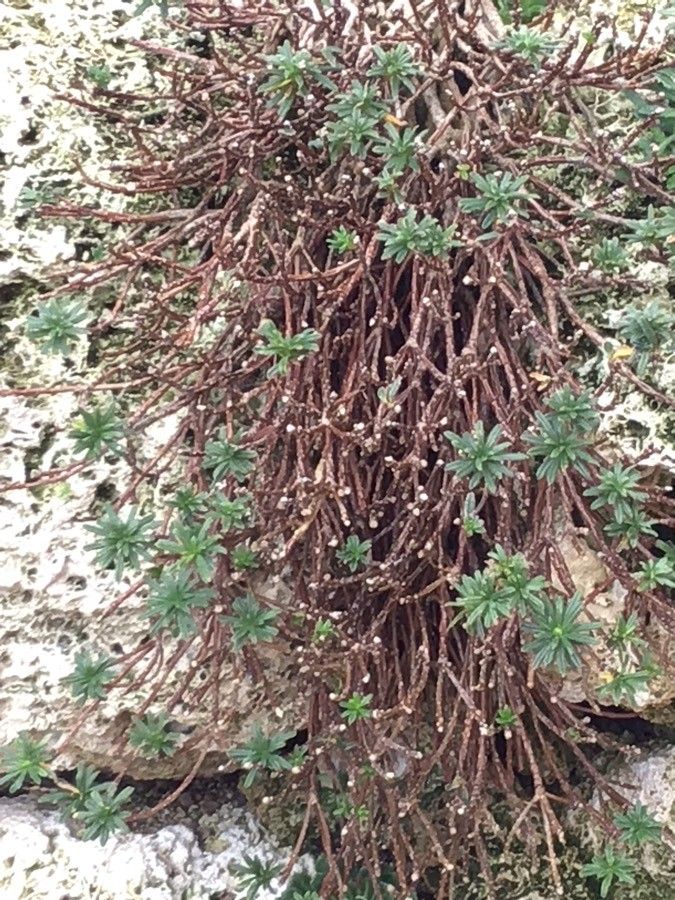
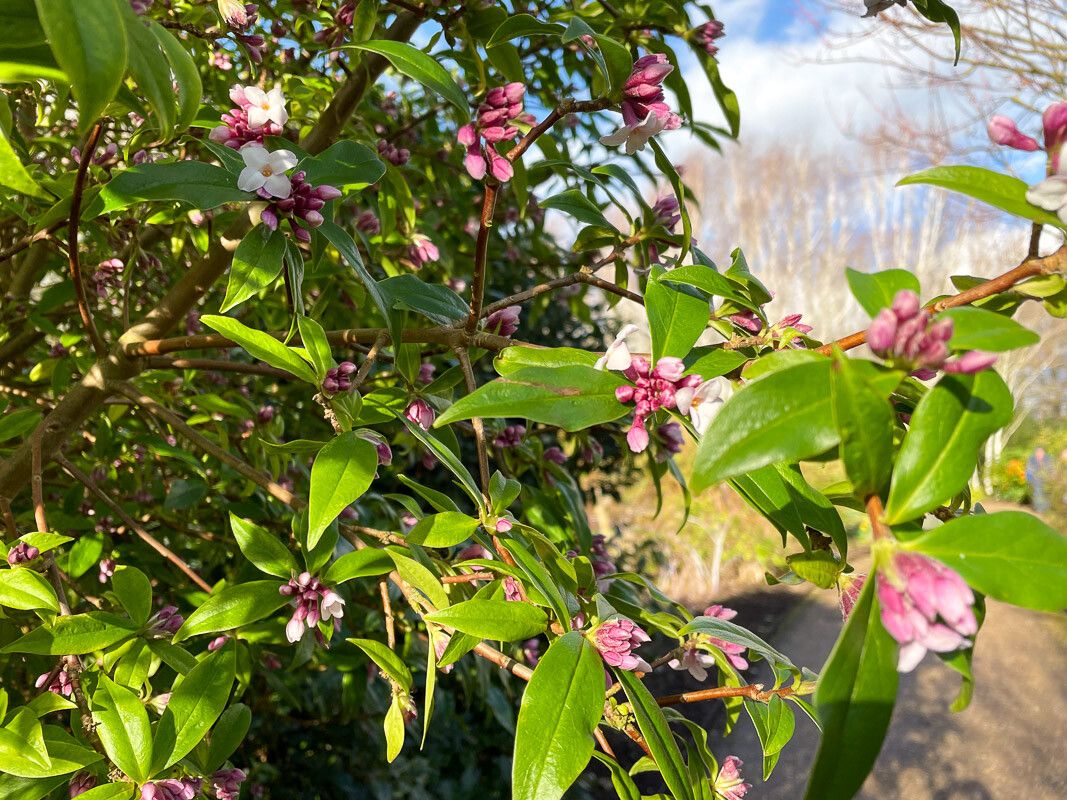
Daphne mezereum, commonly known as mezereon or February daphne, is a deciduous shrub in the Thymelaeaceae family. Native to Europe and western Asia, this plant can grow up to 1.5 meters in height. It features a spreading habit with multiple stems covered in smooth, grey bark.
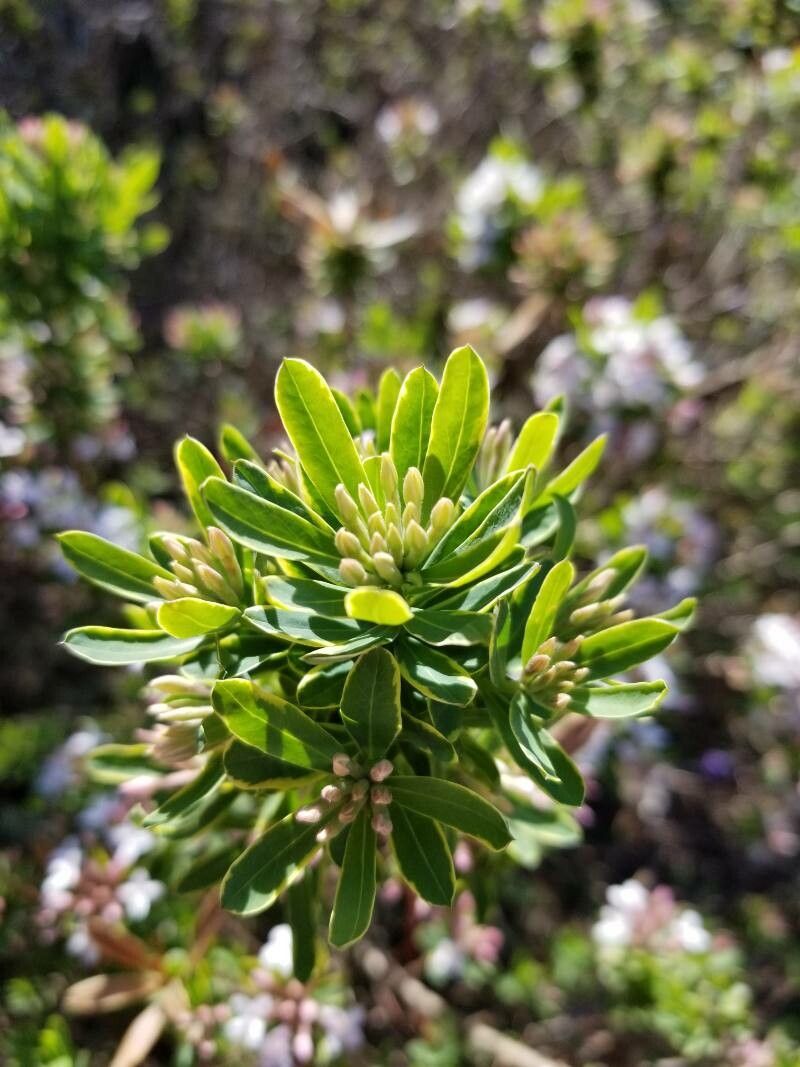
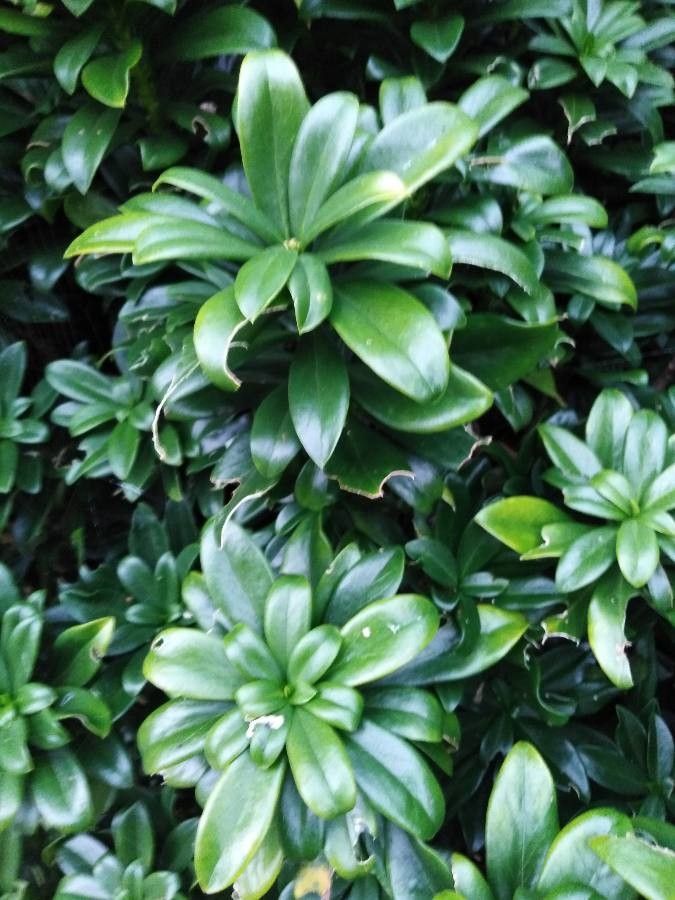
The leaves of Daphne mezereum are oval-shaped, dark green, and can grow up to 10 cm in length. The plant produces clusters of fragrant pink or purple flowers on bare stems from late winter through early spring, before the leaves emerge.
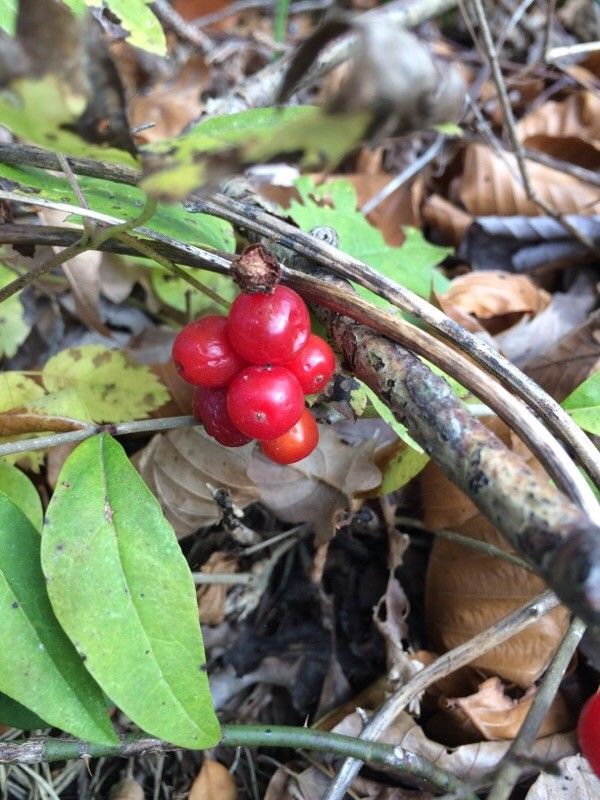
The fruit of Daphne mezereum is a bright red berry that ripens in late summer or early autumn and contains toxic seeds, which should not be ingested by humans or animals.
Daphne mezereum prefers moist, well-drained soil with partial shade but can also tolerate full sun if the soil remains consistently moist. This shrub is commonly used as an ornamental plant for its attractive flowers but should be handled with care due to its toxic properties.
In traditional medicine, various parts of Daphne mezereum have been used for their medicinal properties, such as treating rheumatism and skin diseases. However, it should only be used under professional supervision because of its toxicity levels.
February daphne is resistant to disease and is generally not susceptible to illnesses. Regarding care, this plant is fairly low-maintenance. When grown outdoors it needs little watering, and larger specimens typically do not require pruning. Smaller plants, however, should be pruned after they finish blooming. February daphnet is suitable for anyone with an outdoor area, such as a garden or deck, and does not demand much gardening experience.
How to keep Daphne Mezereum.
Light
February daphne does best in locations with moderate sunlight, yet it can also tolerate environments with intense sun or limited light. This adaptability lets it cope with a range of light conditions, echoing the versatility it exhibits in its natural habitat. However, too much or too little sunlight may inhibit its growth.
Water
February daphne flourishes in moderate humidity and should be watered consistently, yet not excessively, approximately every three weeks. Allow the soil to partially dry out between waterings. This plant, native to temperate regions, is usually grown outdoors and benefits from mulching during the active growing season to help retain moisture.
Humidity
This plant will thrive in moderate humidity, which is probably the level in your home. However, misting it a few times a week can be very beneficial. Make sure the room has good ventilation.
Temperature
February daphne shows strong adaptability to various climate conditions, whether encountering scorching summers or frigid winters. However, it does have an optimal temperature range for growth. When temperatures become excessively high, the plant is susceptible to heat and humidity stress, which can lead to its death. In regions where temperatures approach the lower limit of its cold tolerance, it's important to provide insulation to protect the plant.
Fertilizer
The timing for fertilizing February daphne is important. Apply fertilizer in early spring and continue once a month through early summer. Fertilizer encourages attractive blooms and supplies energy both during dormant periods and active growth.
Pruning
The February daphne is known for its fragrant flowers that bloom in early spring. To maintain the plant's health and shape, prune it right after it finishes flowering. Remove any dead wood and thin out the branches to improve air circulation and shape. Be sure to use clean, sharp tools, as this encourages healthy growth and flowering. It's important to respect the plant's growth cycle to avoid harming future buds.
Botanical profile.
- Plant Type
- Shrub
- Life Cycle
- Perennial
- Genus
- Daphne
- Family
- Thymelaeaceae
- Hardiness Zone
- 4
- Mature Height
- 1.52 m
- Mature Spread
- 1.52 m
- Leaf Color
- Green
- Leaf Type
- Deciduous
- Flower Color
- Pink, Purple, White, Red
- Flower Size
- 2.54 cm
- Bloom Time
- Early spring, Winter
- Planting Time
- Spring, Autumn
- Harvest Time
- Mid spring, Late spring, Early summer
- Native Area
- Turkey, Sweden, Austria, Slovakia, Croatia, Slovenia, Belarus, Russia, Germany, Estonia, Romania, Latvia, Belgium, Netherlands, France, Czech Republic, Bulgaria, Armenia, Poland, Greece, Ukraine, Serbia, Lithuania, Norway, Italy, Kazakhstan, Spain, Switzerland, Finland, Iran, Albania, Azerbaijan, United Kingdom, Hungary
Other names.
Reader questions.
How should I water my February daphne plant?
To ensure excellent root development, place a garden hose at the base of the plant. Avoid spraying water directly on the leaves. If the plant is outdoors and receiving direct sunlight, the leaves will need more watering. Consider using bubblers or soaker hoses to moisten the roots. When adding or removing plants, use soaker hoses to thoroughly water the entire garden or bed and allow the roots to go deeper. Make sure to drain any excess water and wait for the soil to dry before watering again. Water at ground level to prevent diseases. On a sunny day, it may be beneficial to spray the whole bush with water. Whether in a pot or in the ground, remember that February daphne prefers deep watering rather than light sprinkling.
Why should I add fertilizer to my February daphne?
Fertilizing your February daphne is essential for several reasons. Firstly, it will enhance the production of beautiful blooms. Early spring fertilization is particularly beneficial for ensuring your daphne has excellent flowers during that season. Additionally, fertilizer provides your daphne with ample energy to store in the ground during its dormant growth phases. By giving it extra nutrients in the fall planting process or late spring, you can help your daphne retain more energy to support active growth when it resumes.
What are the sunlight requirements for February daphne?
February daphne requires moderate exposure to sunlight but can adapt to both strong sunrays and limited light, showing flexibility akin to its natural habitat. This plant thrives in partial sun, needing about 3-6 hours of sunlight a day, but can also handle full sun or full shade conditions, which means more than 6 hours of sunlight. It's vital to observe the movement of sunlight through your garden to select spots that offer a harmonious balance of light and shade to ensure the plant's wellbeing.
If I give too much or too little water to the February daphne, what should I do?
An overwatered February daphne can show signs such as yellowing, dropping leaves, and wilting. The plant will also look dull and unhealthy with mushy stems. It's best to adjust your watering schedule when you notice these signs. However, wilting can also be a sign of under watering. Underwatered leaves will turn crispy and dry, while overwatered leaves will be soft and wilted. If the soil is dry and watering alone is not enough, give the plant a thorough watering. Although enough water will help the daphne recover, the damaged root system may still result in dry, yellow leaves after a few days. Once the plant returns to normal, the yellowing of leaves will stop. When you have a February daphne indoors, always check the moisture levels in the pot and avoid overwatering. Look for signs of black spots, and if present, allow the soil to dry out by withholding water for a few days. Overwatering can cause root rot, so if you notice discolored and slimy roots, it may be necessary to transfer the plant to a different pot. Preventing root rot is important, so avoid making the soil too soggy. When planting your February daphne outdoors, dig a little deeper and check the soil moisture with your fingers. If the soil is too dry, it may indicate underwatering, so provide adequate watering to help the plant recover.
When should I fertilize my February daphne plant?
The timing for fertilizing February daphne is crucial. If you fertilize too early while it is still dormant, the fertilizer will not be effective and will be washed away by rainwater. This causes waste and pollution. To ensure effectiveness, the first application of fertilizer should be in early spring. Continue fertilizing once a month until early summer.
What type of artificial lighting is best for indoor plants, including February daphne?
For optimal growth of indoor plants like February daphne, especially when natural sunlight is scarce, artificial lighting is a beneficial alternative. LED lights are recommended due to their ability to provide specific wavelengths needed by plants. The intensity of artificial light required varies: full sun plants need 30-50 watts per square foot, partial sun plants require 20-30 watts, and full shade plants need 10-20 watts. The light source should be placed 12-36 inches above the plant, simulating natural sunlight as closely as possible. Most plants benefit from 8-12 hours of light per day to mimic natural daylight hours.
How frequently do I need to water my February daphne?
The February daphne prefers deep and infrequent watering, especially when in pots. To maintain moisture, water them with a gallon of water each time. Potted plants dry out faster, so watering every 3 to 5 days is necessary in cold regions. Water in the morning when the soil is dry, whether inside or outside. Check the soil moisture level by feeling the top 2-3 inches. If dry, water the plant fully. In hot weather, moisture levels can drop rapidly, so daily checks may be needed. If you have a garden, watering is also required. In hot climates, watering once a week is recommended. Only water when the top 2 to 3 inches of soil are too dry, and avoid excess moisture to prevent root rot. If rainfall is abundant, additional watering may not be necessary. When growing February daphne outdoors, use mulch 3 to 4 inches deep to conserve water. Sandy soil requires more frequent watering, while clay soil needs less to avoid root rot. Keep track of watering dates on a calendar and watch for drooping leaves, which may indicate the need for watering.
When is the best time to not fertilize my February daphne plant?
Here are some tips to follow when fertilizing February daphne: - Avoid using fertilizer with too much nitrogen, as it can result in an abundance of leaves but fewer blooms. Look for a fertilizer that has a lower nitrogen content compared to other nutrients. - Do not fertilize after early autumn, as this can cause excessive growth just before winter. - It is not recommended to fertilize February daphne during hot and dry periods, as dry soil does not effectively deliver the fertilizer, and stimulating growth during this time may require more water that may not be available. - It is best to apply fertilizer earlier in the season when temperatures are cooler. - Keep in mind that February daphne can absorb fertilizer from nearby plants or lawns, so be cautious about accidentally giving the tree/shrub a double-dose of fertilizer.
What are the common signs of inadequate light in February daphne?
February daphne can exhibit several symptoms when exposed to insufficient light, including smaller new leaves, leggy or sparse growth, early leaf drop, slower or halted growth, lighter-colored or pale new leaves, and symptoms specific to either too much or too little light such as chlorosis (yellowing of leaves due to breakdown of chlorophyll), sunscald, leaf curling, wilting, and leaf scorching. These signs indicate the plant's adaptation struggles to atypical light conditions.
How much water does my February daphne plant need?
The February daphne typically requires about a gallon of water per watering session. For potted plants, make sure to water them deeply until you see water dripping from the bottom of the pot. Then, wait for the soil to dry before watering again. You can use a water calculator or moisture meter to track how much water you give your plants in a week. During the flowering period, provide plenty of water but allow the moisture to evaporate afterwards to avoid root rot. If the February daphne is planted outside and receives adequate rainfall, additional watering may not be necessary. However, when the February daphne is young or newly planted, it needs 1-2 inches of rain per week. As it grows, the February daphne can rely solely on rainfall. Only when the weather is exceptionally hot or there is no rainfall for 2-3 weeks, consider giving the February daphne a full watering during the cooler part of the day to prevent heat damage. Extra watering is also needed during extended dry spells.
What kind of fertilizer does my February daphne plant need?
To ensure optimal growth and blooming of your February daphne, you have a few options for fertilizing. One approach is to use a well-balanced fertilizer with slightly higher levels of phosphorus. Alternatively, some gardeners prefer enriching the soil with organic materials like compost, worm castings, or manure. When the flower buds start to appear, experienced gardeners may supplement with water-soluble fertilizers containing phosphorus to enhance flower development and prolong blooming. There are various forms of fertilizers available, but liquid or powdered forms tend to work best for February daphne. Regardless of the type you choose, make sure to dilute the fertilizer and apply it while watering your daphne plant.
How can I address light deficiency issues in February daphne?
To optimize plant growth and address light deficiency, gradually expose your February daphne to more sunlight, aiming for 3-6 hours of direct sunlight daily. Indoor plants might benefit from artificial light if they are large or difficult to move. Keeping a desk or ceiling lamp on for at least 8 hours daily or using professional plant grow lights can supplement light intake. Outdoors, steadily move your plants to sunnier spots each week to avoid sudden intensity changes and potential sunburn. If obstructions shade your plants, consider pruning or transplanting to sunnier locations. Remember, damaged parts from insufficient light may not recover, but new growth will be healthier following improved light conditions.