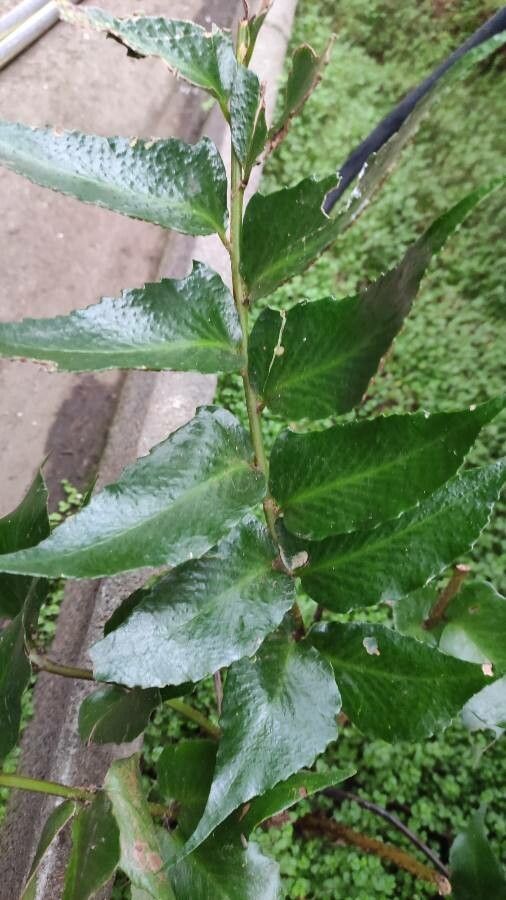
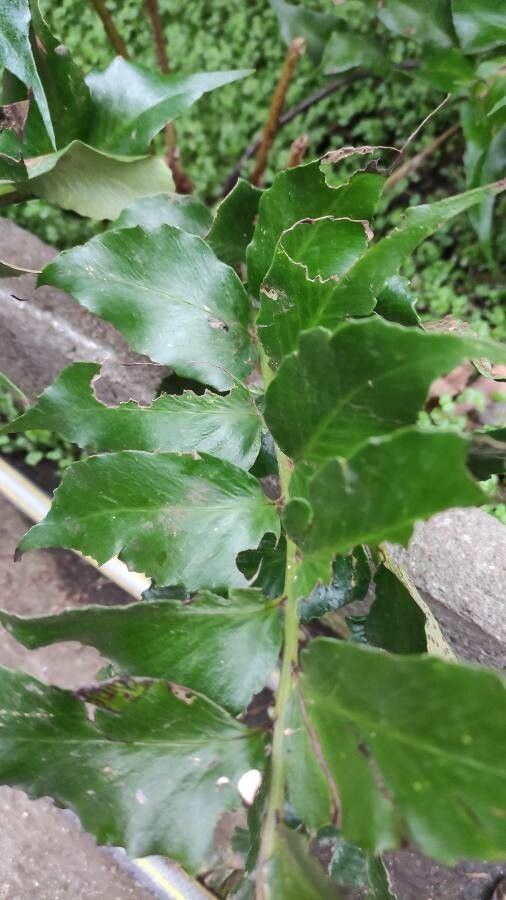
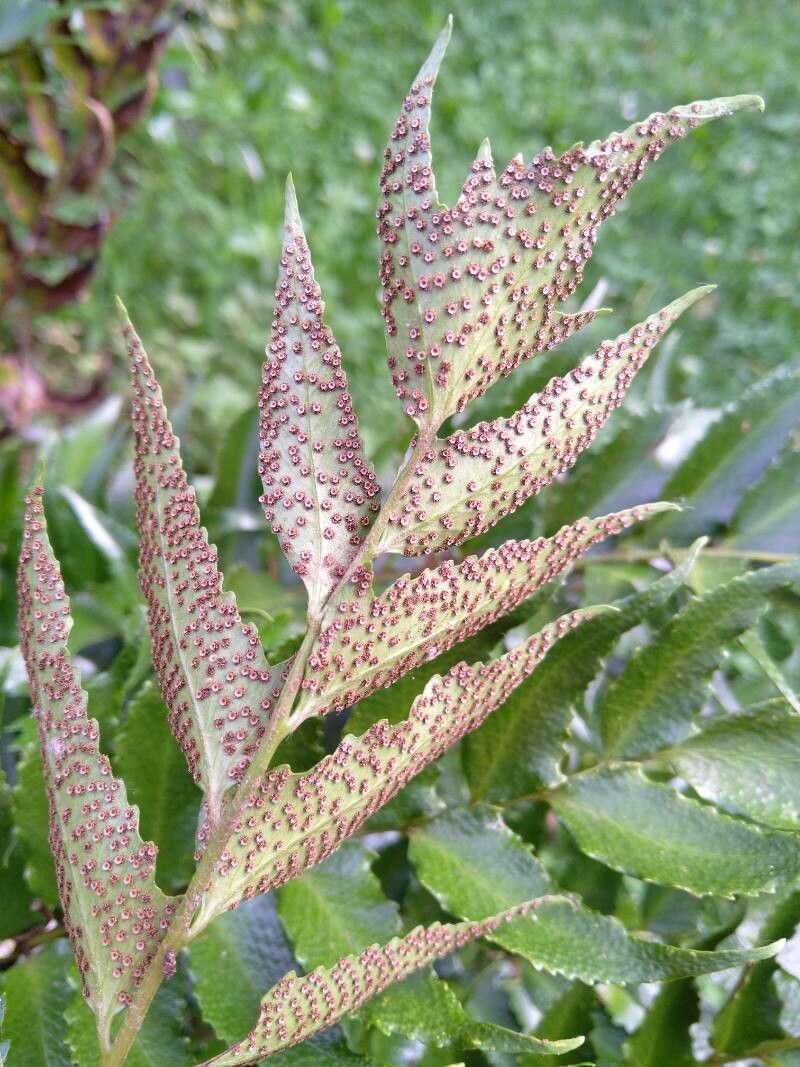
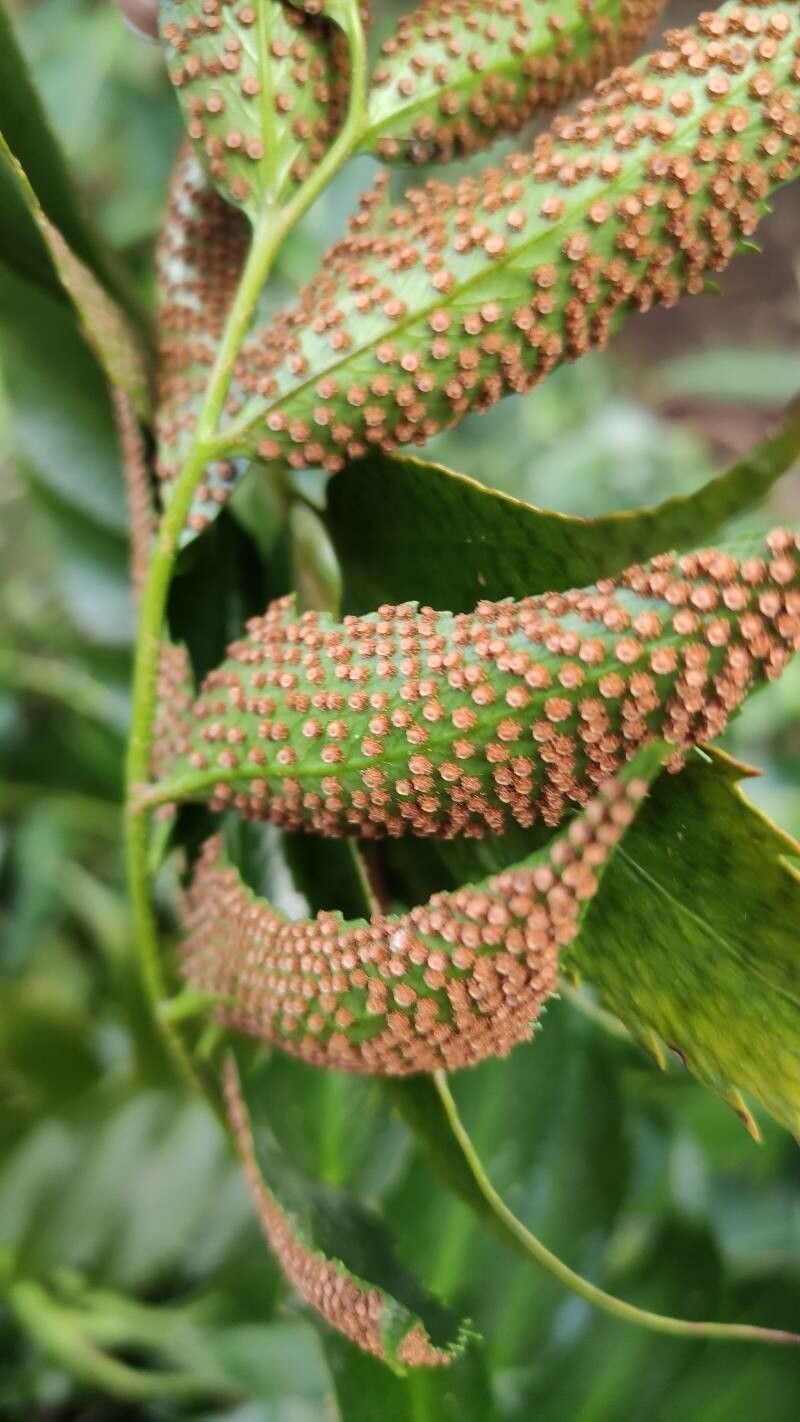
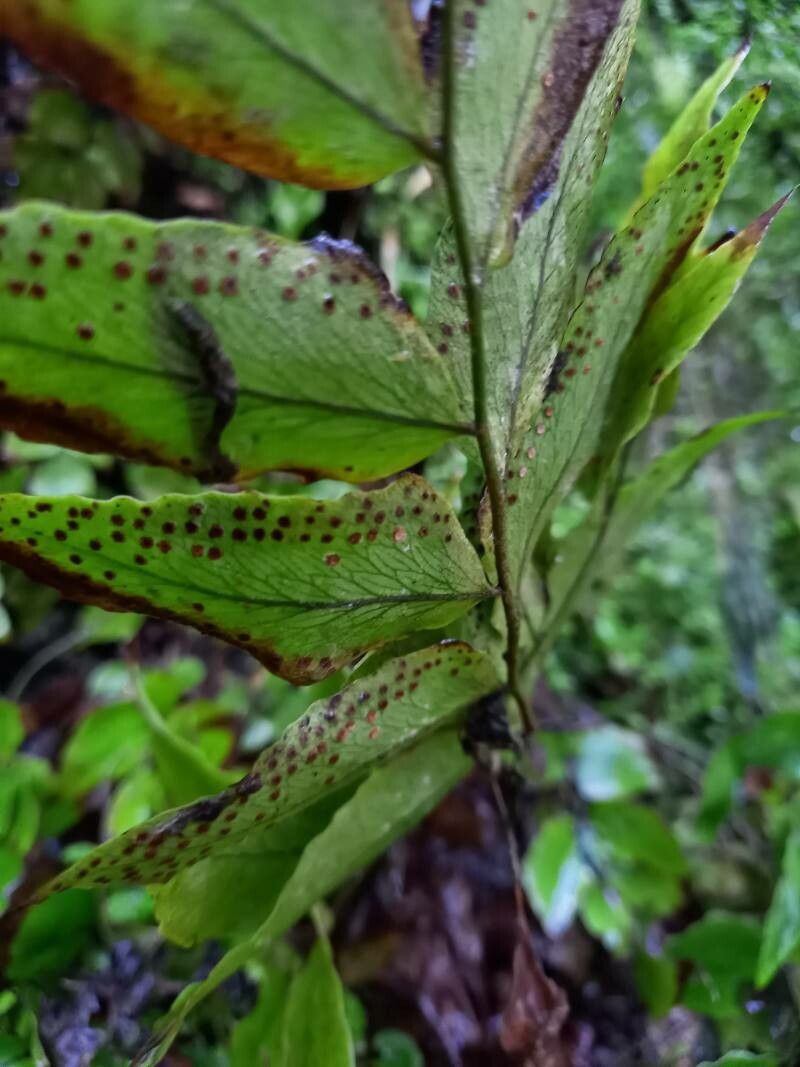
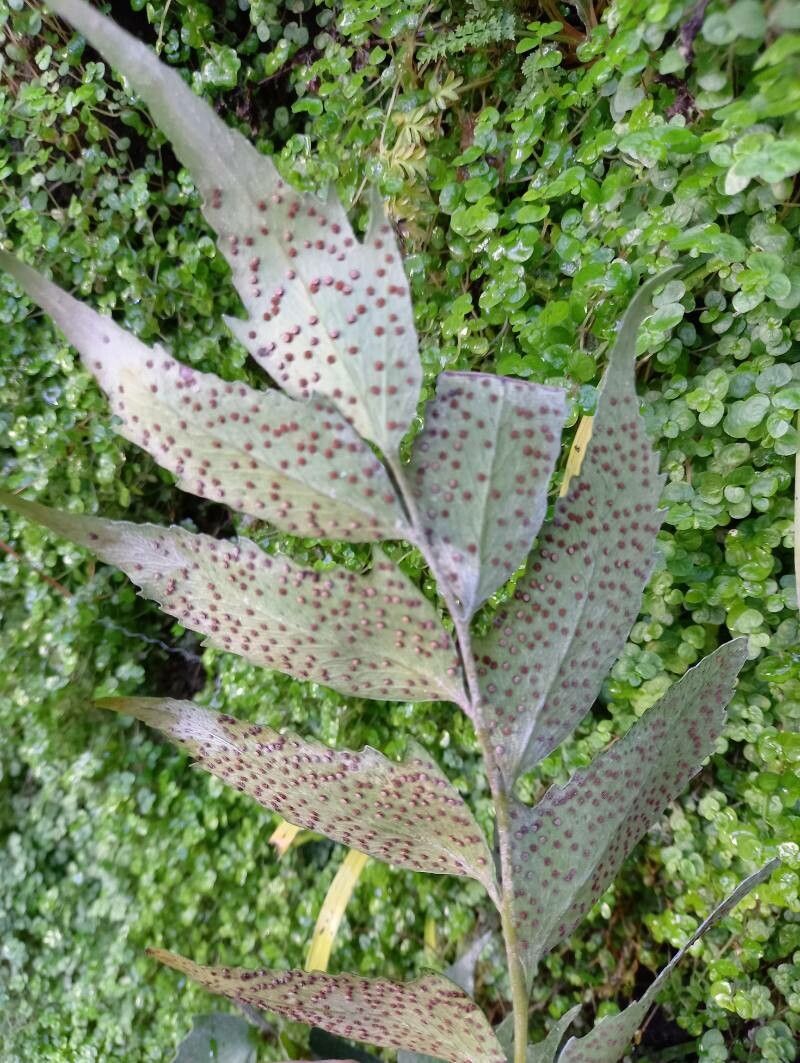
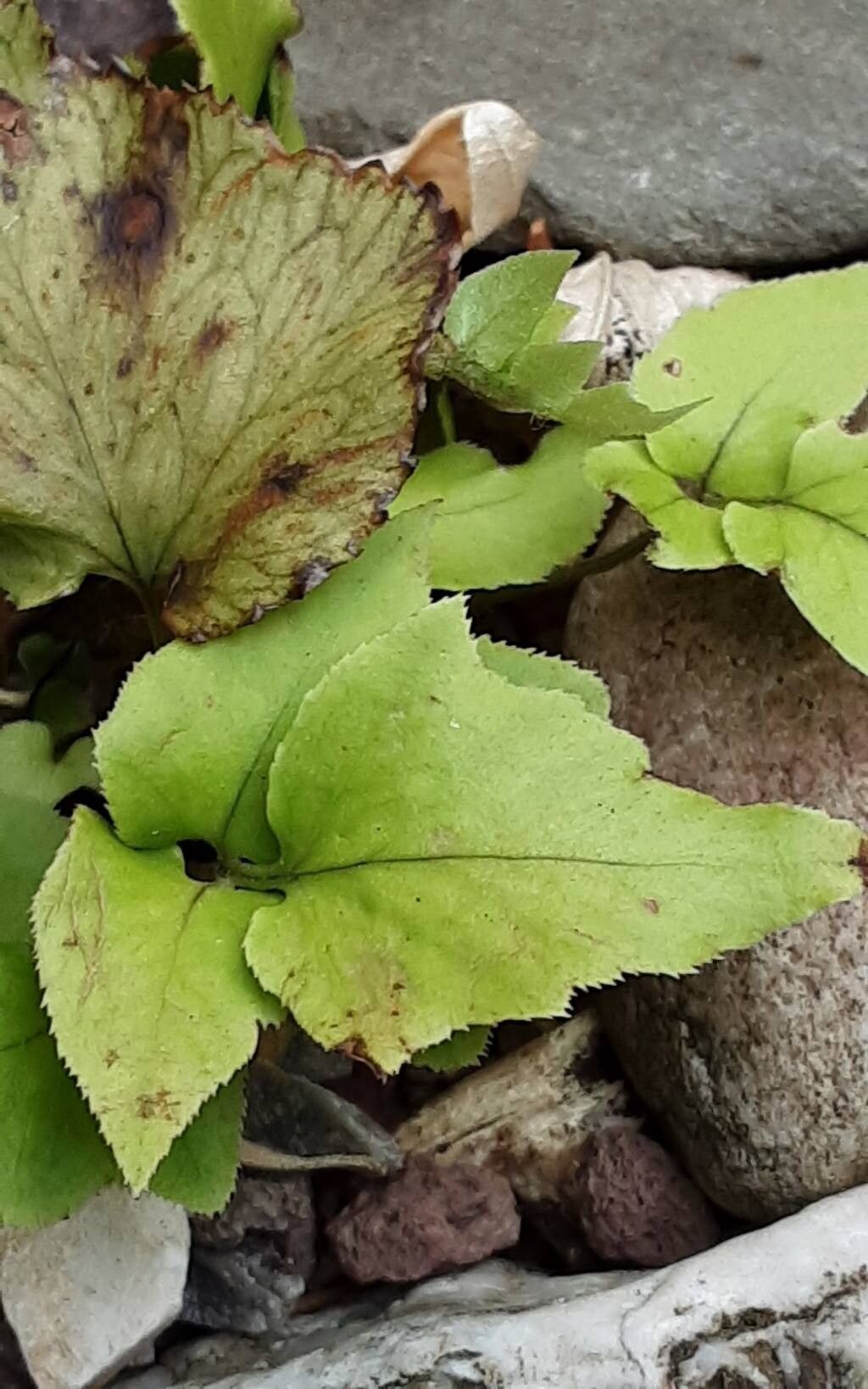
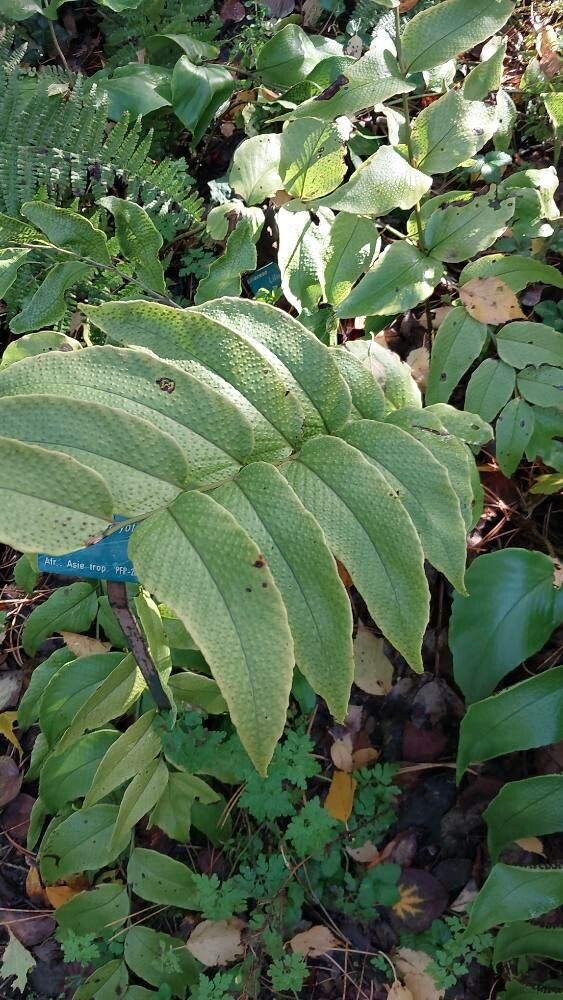
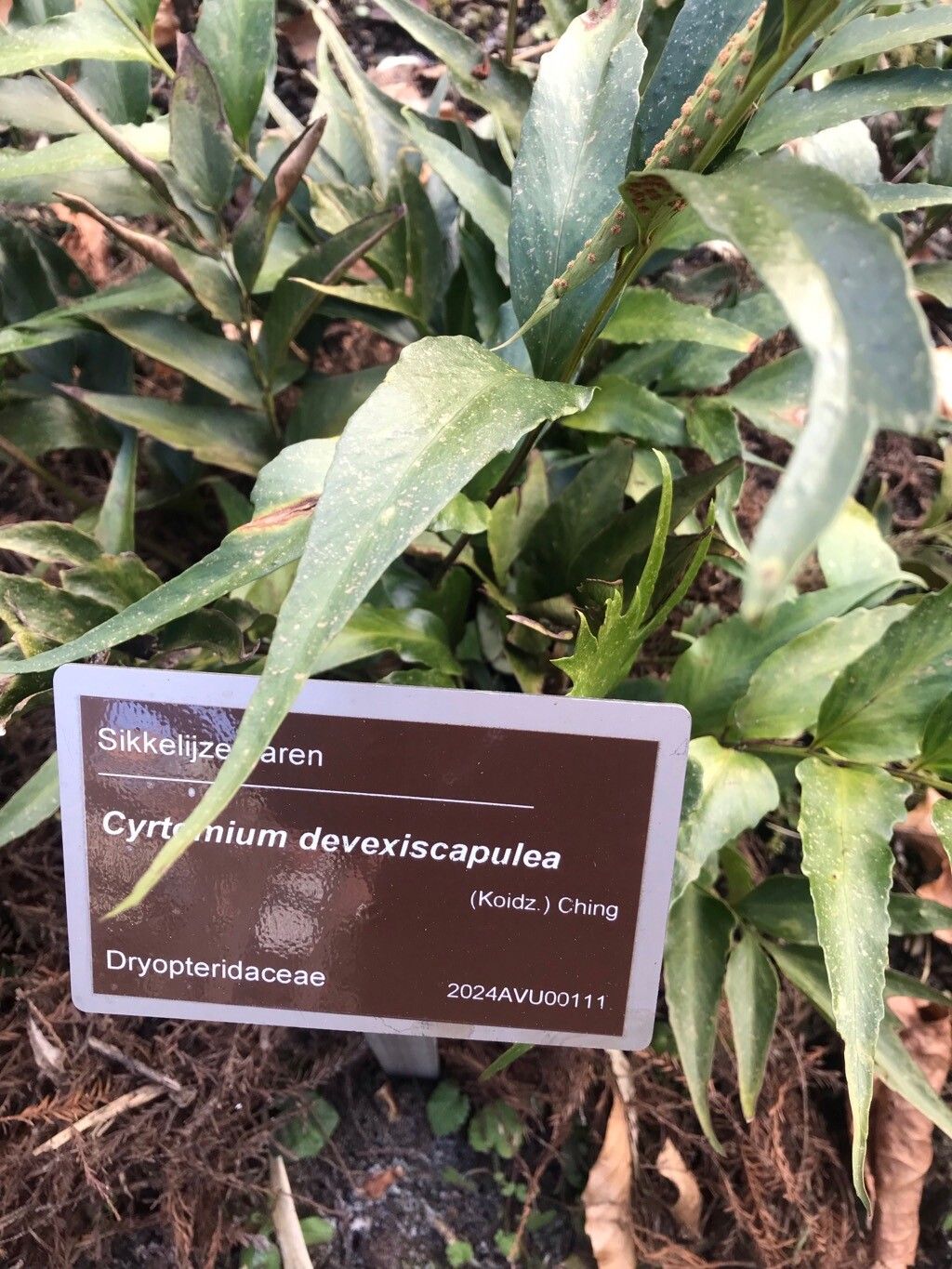
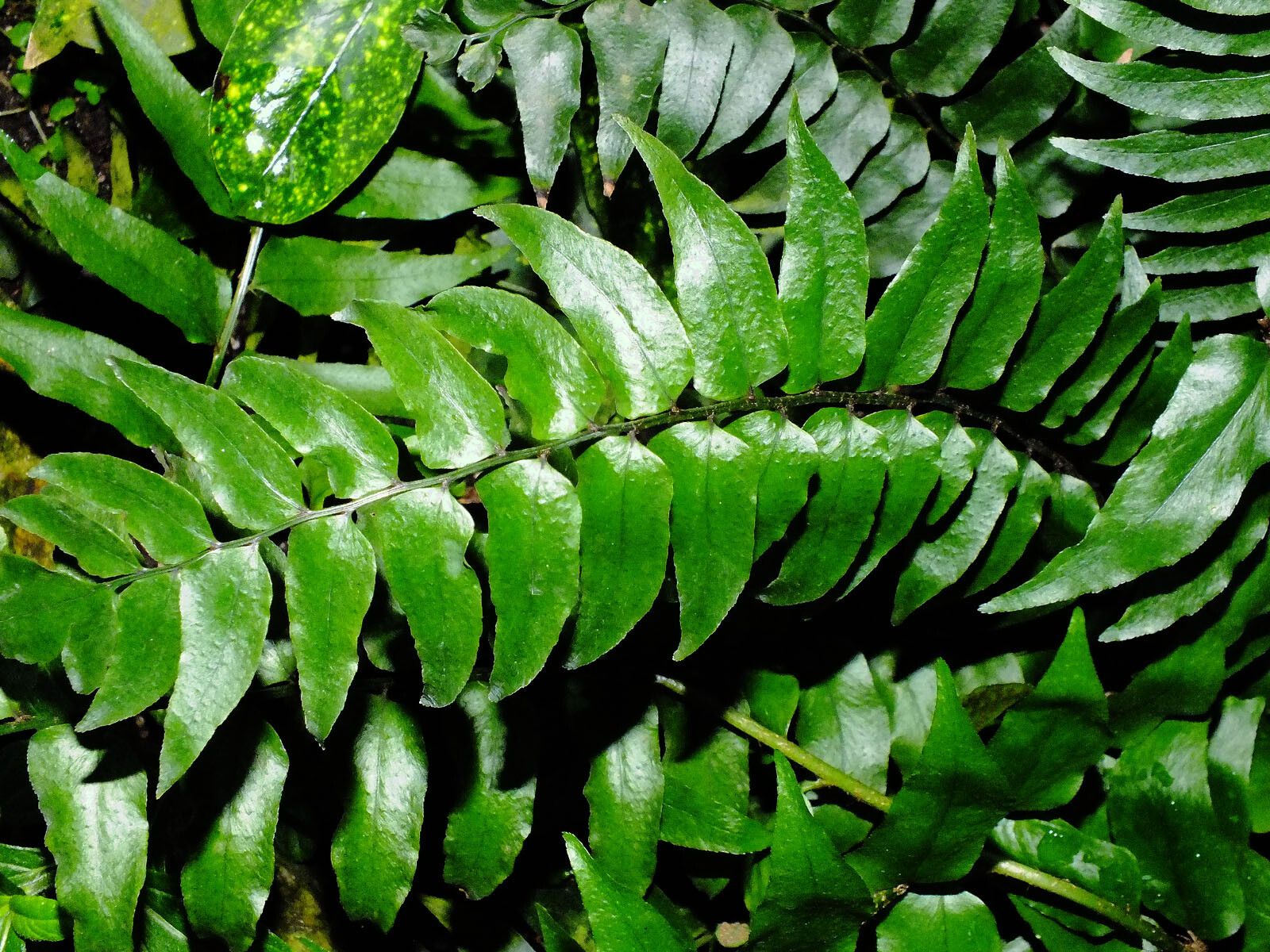
Cyrtomium falcatum, commonly known as the Japanese holly fern, is a fern species native to East Asia. It is prized as an ornamental plant for its attractive, glossy green fronds that can grow up to 60 cm in length. The fronds are leather-like and have a distinctive holly-like shape, featuring serrated edges and pointed tips.
This fern thrives in partial shade and moist, well-drained soil. While it can tolerate some drought, it does not fare well in overly wet conditions. Additionally, Cyrtomium falcatum is tolerant of salt spray, making it suitable for coastal gardens.
Propagation of this plant can be achieved through spores or by dividing the rhizomes. It is relatively low maintenance and does not require frequent pruning or fertilization.
In traditional Chinese medicine, Cyrtomium falcatum has been used for its anti-inflammatory properties and as a treatment for respiratory ailments such as asthma and bronchitis.
Overall, Cyrtomium falcatum is an attractive addition to shady gardens, adding texture and aesthetic appeal while offering potential medicinal benefits in traditional practices.
The House Holly Fern derives its name from its pointy, leathery fronds that resemble those of holly bushes. Its Latin name, Cyrtomium falcatum, is inspired by the Greek word "kyrtos," meaning "arched," referring to the shape of the fronds. The specific epithet "falcatum" means "sickle-shaped," further highlighting the unique shape of its fronds.
House holly fern typically shows good resistance to disease and attracts relatively few insect pests. Its care is considered difficult because it needs a moist environment and frequent watering. However, its roots are susceptible to rotting if overwatered or if the surrounding air is not well ventilated. House holly fern is appropriate for people with some growing experience, since most individuals can keep it alive for a certain amount of time. Nevertheless, it may struggle to thrive, and its leaves can dry out and become less healthy as time goes on.
How to keep Cyrtomium Falcatum.
Light
The house holly fern prefers filtered light like that found in the understory of its native forests. Strong, direct light can be harmful, causing the plant to dry out or its leaves to scorch. Conversely, too little light can result in weak or elongated growth. No changes in its sunlight needs across different growth stages have been documented.
Water
The house holly fern flourishes in moist, well-drained soil with consistent humidity and needs to be watered twice a week. It is best suited for indoor growth, where it thrives in stable conditions and indirect light. As an evergreen plant, it retains its lush foliage throughout the year when properly watered.
Humidity
This plant needs special care because it loves high humidity levels of 60-80% or more. The best way to achieve this is by placing a humidifier near the plant. Daily misting is also essential! Make sure the room has good ventilation.
Temperature
The house holly fern grows best in its native environment at about 55 to 65 ℉ (13 to 18 ℃). It can tolerate temperatures from 50 to 95 ℉ (10 to 35 ℃), though it prefers cooler conditions. In winter, keeping the temperature between 50 and 60 ℉ (10 to 15 ℃) helps encourage growth.
Fertilizer
The house holly fern needs high-nitrogen fertilizers to ensure healthy frond growth. Apply the fertilizer once a month during the growing season. Stop fertilizing in the fall and winter. To prevent over-fertilization, watch for signs of salt buildup or browning fronds. When introducing fertilizers to new pots, do so gradually to maintain optimal plant health.
Pruning
To ensure optimal growth, prune your house holly fern in early spring. Start by removing any dead fronds and thin out the clumps to improve air circulation and reduce the risk of disease. Regular maintenance promotes vigorous growth, keeping your house holly fern lush and attractive, a perfect addition to any garden.
Pot & Repot
When repotting House holly fern, pick a pot 1-2 inches (2.5–5.1 cm) larger that has good drainage. Use a well-draining potting mix. Repot during spring or fall, making sure the root ball sits slightly lower than the rim of the flower pot. Water thoroughly after repotting and place the plant in a warm spot with indirect sunlight.
Botanical profile.
- Plant Type
- Fern
- Life Cycle
- Perennial
- Genus
- Cyrtomium
- Family
- Polypodiaceae
- Hardiness Zone
- 6-10
- Mature Height
- 30 cm to 40 cm
- Mature Spread
- 91 cm
- Leaf Color
- Green
- Leaf Type
- Evergreen
- Planting Time
- Spring, Summer
- Native Area
- Vietnam, Japan, Koppen, South Korea, China
Other names.
Reader questions.
What should I do if I give my House holly fern too much water or too little water?
House holly ferns can be overwatered, especially if they sit in a pool of water or lack drainage holes in their planter. Too much moisture can hinder nutrient absorption and lead to fungal or bacterial diseases. Signs of overwatering include wilted and yellow leaves, drooping stems, and soft or mushy texture. However, it's important to consider other causes as well, as overwatering is difficult to do with this plant. On the other hand, underwatering is a common issue, as fern owners may inadvertently let the plant become too dry. In dry conditions, the fern's appearance can rapidly change from lush and green to brown and crispy. In severe cases, the plant may seem completely dried up, but if some roots are healthy, the plant can still be saved. Pruning dry and dead stems, thorough watering, and returning the plant to its usual spot can help revive it. Although it may take several months, with proper care, the fern can bounce back and grow new fronds.
Why do I have to put fertilizer on my House holly fern?
Fertilizing House holly fern is important for a few reasons. First, it provides the necessary nutrients for healthy new growth. Second, it supports the overall health of the plant, including the existing growth. Lastly, it can help protect the fern from diseases and pests.
What are the sunlight requirements for house holly fern?
House holly fern thrives in environments that mimic its native forest understory habitat, ideally preferring filtered light. This fern requires about 3-6 hours of sunlight for partial sun conditions and less than 3 hours of sunlight for full shade conditions. It's crucial to observe how sunlight moves through your garden to find spots with the perfect balance of light and shade, ensuring the plant's well-being. Harsh, intense light can cause desiccation or leaf scorching, while insufficient light may result in weak or elongated growth. The plant does not have specific sun needs that change at different growth stages.
What is the preferred temperature range for the House Holly Fern?
The House Holly Fern (Cyrtomium falcatum) thrives in temperatures between 50 to 95°F (10 to 35°C), with an ideal native growth environment temperature of 55 to 65°F (13 to 18°C). During the winter, maintaining the temperature between 50 and 60°F (10 to 15°C) is beneficial for the plant's growth. This fern has a strong cold resistance and usually does not require special frost protection measures. However, if temperatures are expected to drop below -25°C, protective measures like covering the plant with soil or straw are recommended. Additionally, watering the plant abundantly before the first freeze of autumn to keep the soil moist can help prevent drought and water scarcity during the colder months.
How do I properly water my House holly fern?
To keep your House holly fern healthy and happy, it's important to provide it with consistently moist soil, resembling its natural habitat. This may involve watering the plant every one or two days, as this species doesn't handle dry conditions well. Once you notice the top layer of soil starting to become slightly dry, it's a clear sign that it's time for watering. But don't just give it a few drops of water; instead, thoroughly saturate the soil until water starts draining from the bottom of the pot. After the excess water has drained, make sure to discard it, preventing the pot from sitting in a puddle. This method is the best way to ensure the soil never becomes too dry.
When should I fertilize my House holly fern for the best results?
The feeding schedule of House holly fern depends on where it is growing. This plant doesn't require a lot of food, but it still needs some extra nutrients. Outdoor plants only need to be fertilized once in the spring, whereas indoor ferns should be fed monthly from spring to summer.
How can artificial lighting be used for house holly fern?
When natural sunlight is not sufficient, especially during winter or in areas receiving less sun, artificial lighting becomes essential for the optimal growth of indoor plants like house holly fern. LED lights are recommended for their ability to be customized to the specific wavelengths needed by plants. For full sun plants, 30-50W/sq ft of artificial light is needed; partial sun plants require 20-30W/sq ft; and full shade plants need 10-20W/sq ft. The light source should be placed 12-36 inches above the plant to mimic natural sunlight. Moreover, most plants benefit from 8-12 hours of light per day.
How does the House Holly Fern react to low temperatures?
The House Holly Fern is cold-tolerant and performs best when kept above 10°C during the winter. It should be protected if temperatures are expected to drop below -15°C. Although the fern may not show noticeable changes when temperatures fall below -25°C during winter, there could be a decrease in sprouting or even a failure to sprout in the spring. To manage this, removing parts that have failed to sprout in the spring is advised.
What do I need to think about when watering my House holly fern?
The frequency of watering your House holly fern is influenced by the amount of humidity in the air. Higher humidity means less watering. Avoid placing the fern near vents as it can cause quick drying. The fern prefers dappled and indirect sunlight and temperatures between 55-80 degrees F (13-27 degrees C). Tap water works fine but rainwater or distilled water is better to prevent brown leaf tips. Small pots dry out quickly, so give the fern more space. Consider using a self-watering planter for consistent moisture and healthier roots.
When is the best time to not fertilize my House holly fern?
To ensure proper growth and avoid issues with water availability, it is important to follow these guidelines for fertilizing House holly fern. Firstly, avoid fertilizing after early autumn to prevent excessive growth right before winter. Additionally, refrain from fertilizing during hot and dry periods, as the dry soil hinders effective fertilizer delivery and can lead to increased growth that requires more water, which may not be readily available. It is recommended to use fertilizer earlier in the season when temperatures are cooler. Lastly, be mindful that House holly fern can absorb fertilizer intended for nearby plants or lawns, so avoid inadvertently over-fertilizing the ferns.
What are the symptoms of incorrect lighting for house holly fern?
Under poor light conditions, house holly fern may exhibit delayed growth or stop growing altogether as it enters a survival mode with halted leaf production. Incorrect lighting can lead to several problems. Chlorosis might occur, where leaves lose their green color and turn yellow due to chlorophyll breakdown from excessive sunlight. Sunscald, which appears as pale, bleached areas on the plant tissue, can happen with too much sunlight exposure. Leaves may curl or twist to minimize water loss and damage under extreme light conditions, and wilting can arise from overexposure to sunlight increasing water loss. Lastly, leaf scorching is characterized by brown, dry, and crispy leaf edges from excessive sunlight.
How should I care for my House Holly Fern during high temperatures?
During the summer, it's essential to keep the House Holly Fern below 35°C to prevent heat stress. Exposure to temperatures exceeding 41°C can cause the leaves to lighten in color, curl, and become more susceptible to sunburn. If your fern experiences high temperatures, cut away any sunburned or dried-up parts. Relocating the plant to a shady area, especially away from the midday and afternoon sun, or using a shade cloth can protect it from excessive sun exposure. Additionally, water the fern during the morning and evening to ensure the soil remains moist, assisting in cooling the plant and preventing damage from high temperatures.