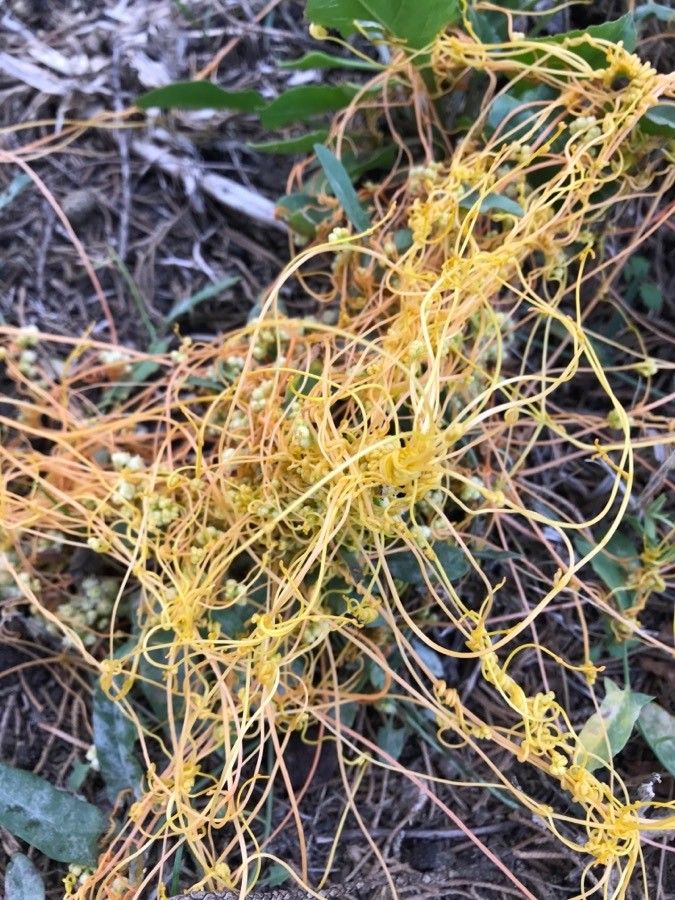
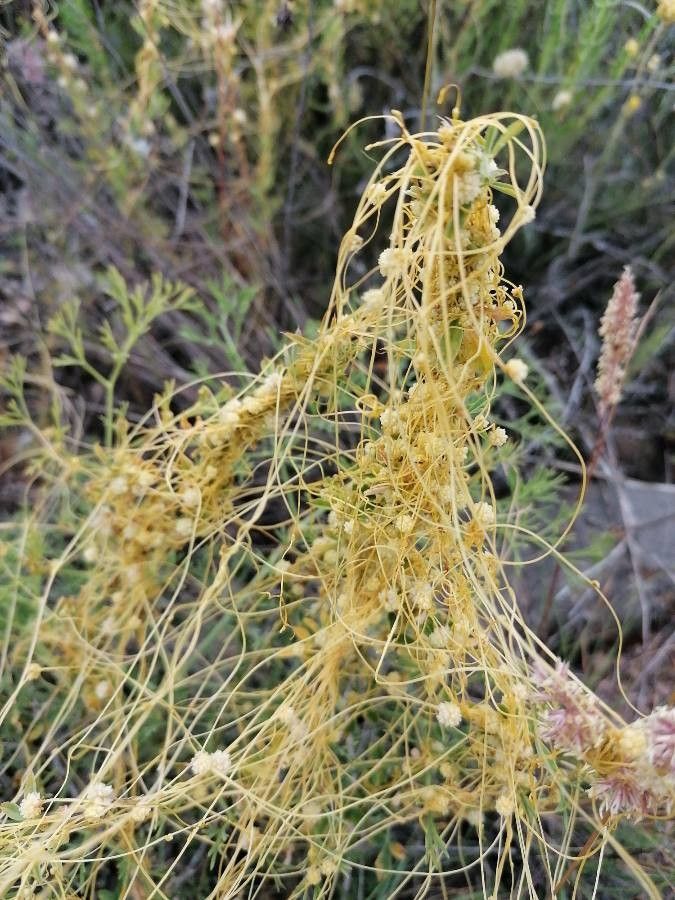
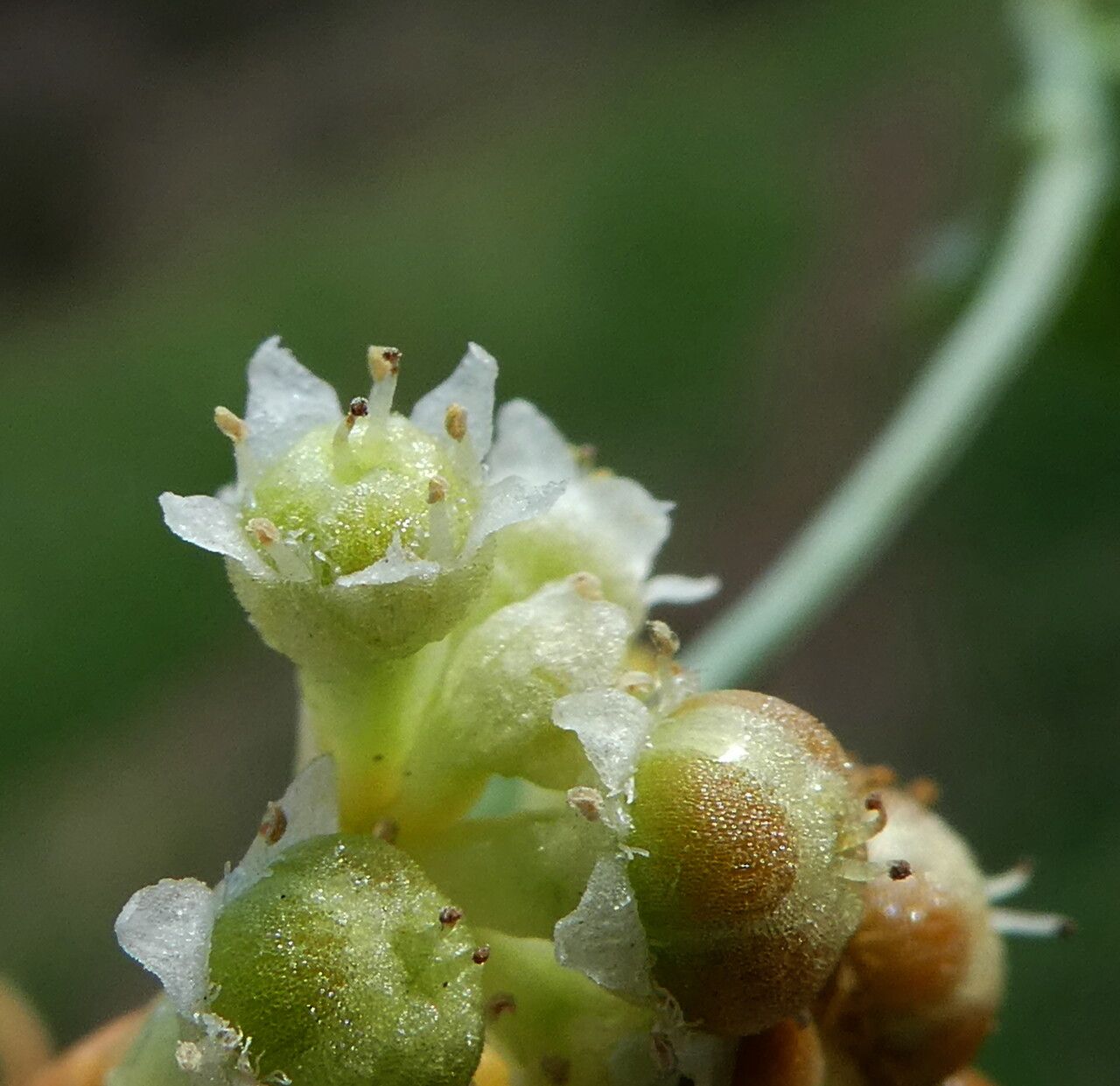
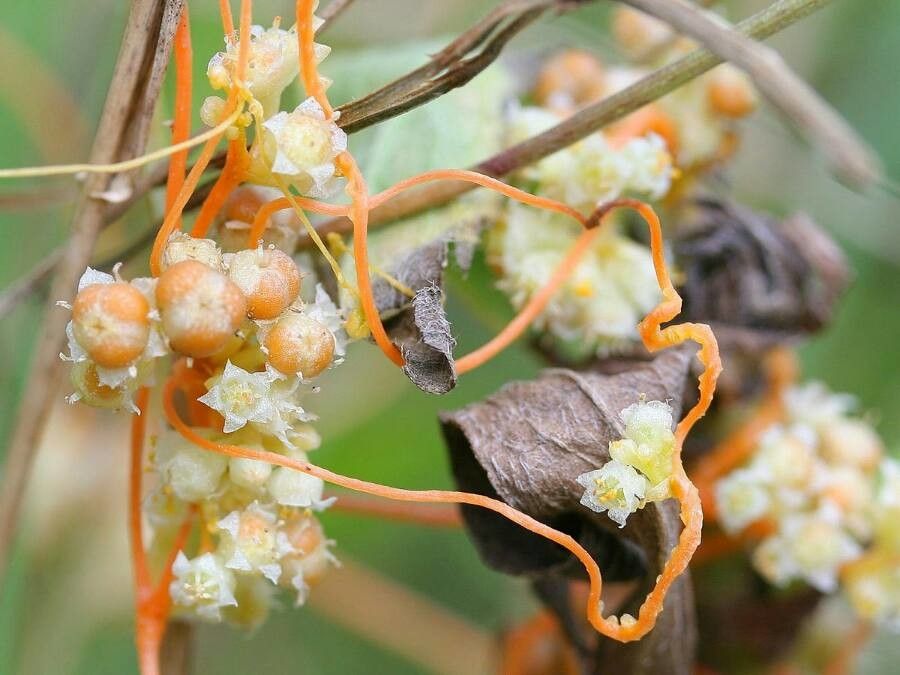
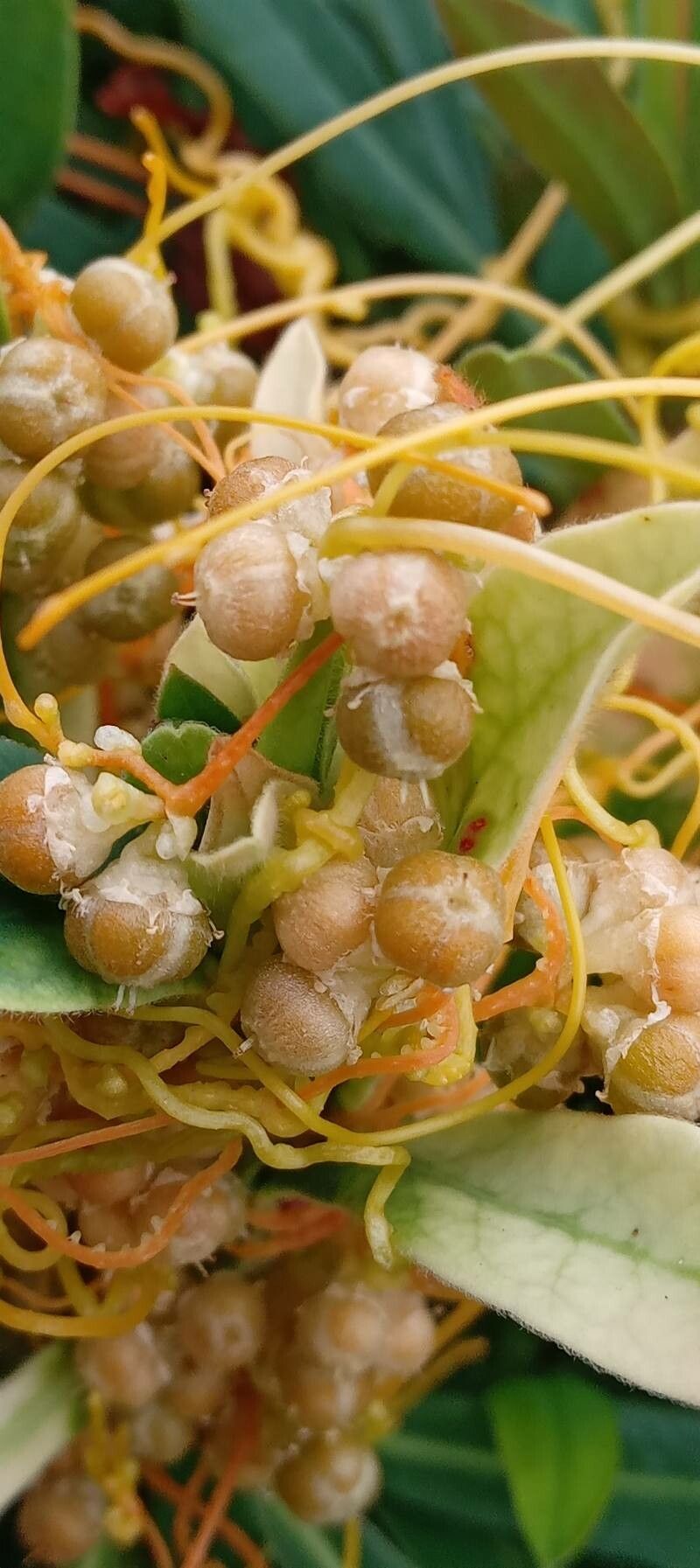
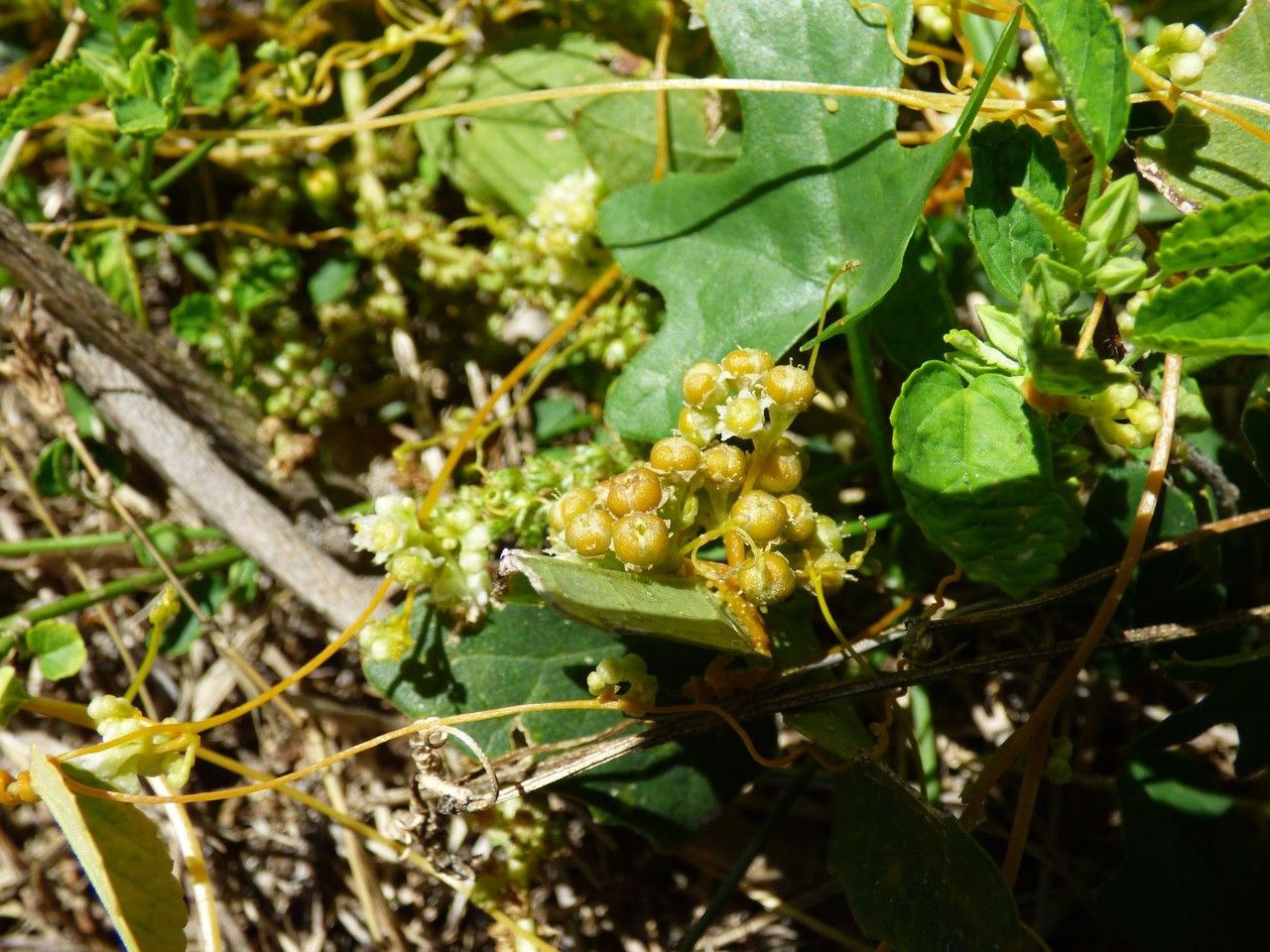
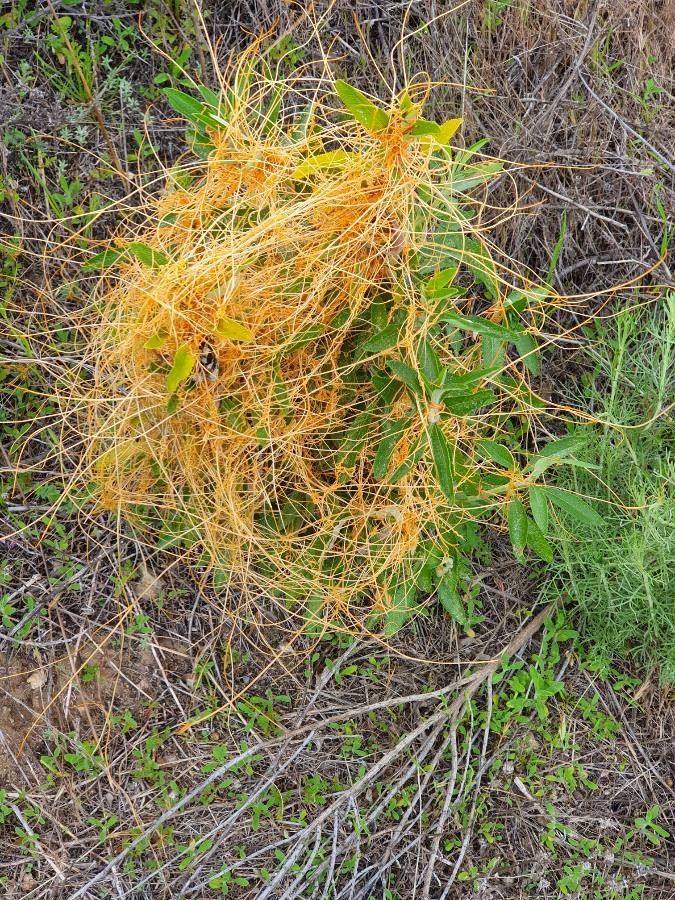
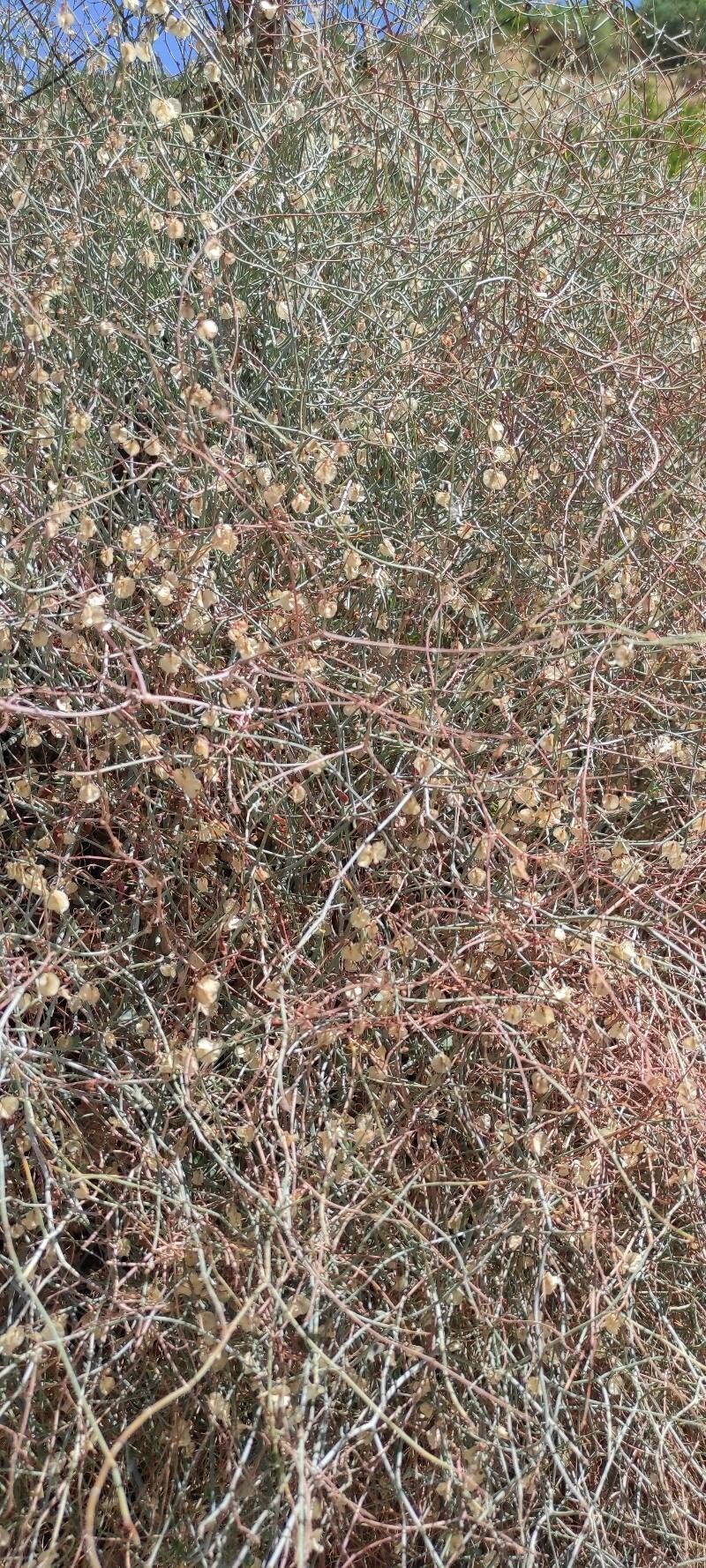
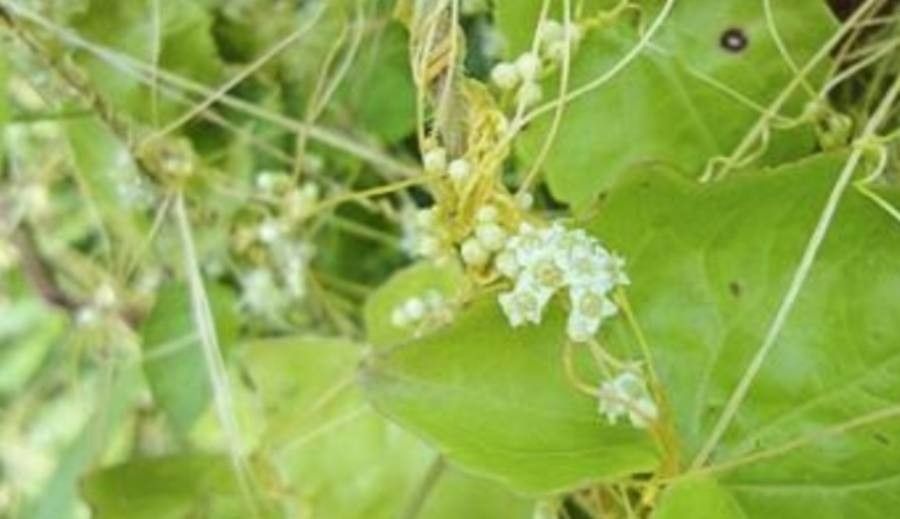
Cuscuta campestris, with the common names field dodder, golden dodder, large-seeded alfalfa dodder, yellow dodder and prairie dodder, is a parasitic plant which belongs to the family Convolvulaceae. It was formerly classified in the family Cuscutaceae. It is native to central North America. It is a parasite of a wide range of herbaceous plants. It is a pest of lucerne and other legumes. It has become a widespread weed in many countries. It is known as 'golden dodder' in Australia. It has been confused in some recent literature with Cuscuta pentagona Engelmann, but the differences between the two species are clear.Remarkably, the seeds of the plant have been found to become dispersed by waterfowl in significant numbers.
Fiveangled dodder has strong resistance to disease and is typically not prone to illnesses. However, it can be vulnerable to pests and diseases present in its environment. These infections are generally not serious. In terms of care, this plant requires moderate maintenance. It should be pruned regularly to maintain a good appearance and healthy growth. Fertilizing can also help encourage flowering. Fiveangled dodder is suitable for anyone with outdoor space, such as a garden or patio, and does not demand much prior care experience. It may need more attention when grown indoors.
How to keep Cuscuta Campestris.
Light
Fiveangled dodder does best in full sun but can tolerate reduced sunlight. Moving it to match seasonal changes in light is helpful whether it’s in a pot or planted in the ground. Too little light can limit its growth and vigor.
Temperature
Fiveangled dodder is a plant that thrives at temperatures between 68 and 100 °F (20 to 38 ℃). Native to temperate regions, it prefers steady temperatures year-round. In colder areas, seasonal temperature adjustments may be necessary to ensure optimal growth.
Fertilizer
Usually, one fertilizer application in spring suffices for Fiveangled dodder, though repeated feedings can maximize growth. Fertilize every month to every month and a half. Fertilization improves leaf appearance and function, helping maintain even color and a healthy texture. It also promotes root development and nutrient uptake for the plant's long-term health.
Botanical profile.
- Plant Type
- Herb, Vine
- Life Cycle
- Perennial, Annual
- Genus
- Cuscuta
- Family
- Convolvulaceae
- Hardiness Zone
- 2-11
- Mature Height
- 0.91 m to 1.22 m
- Mature Spread
- 30 cm
- Leaf Color
- Yellow, Orange
- Leaf Type
- Semi-evergreen
- Flower Color
- White, Cream
- Flower Size
- 2.54 cm
- Bloom Time
- Summer, Early fall
- Planting Time
- Spring, Summer
- Harvest Time
- Late summer, Fall
- Native Area
- Mexico
Other names.