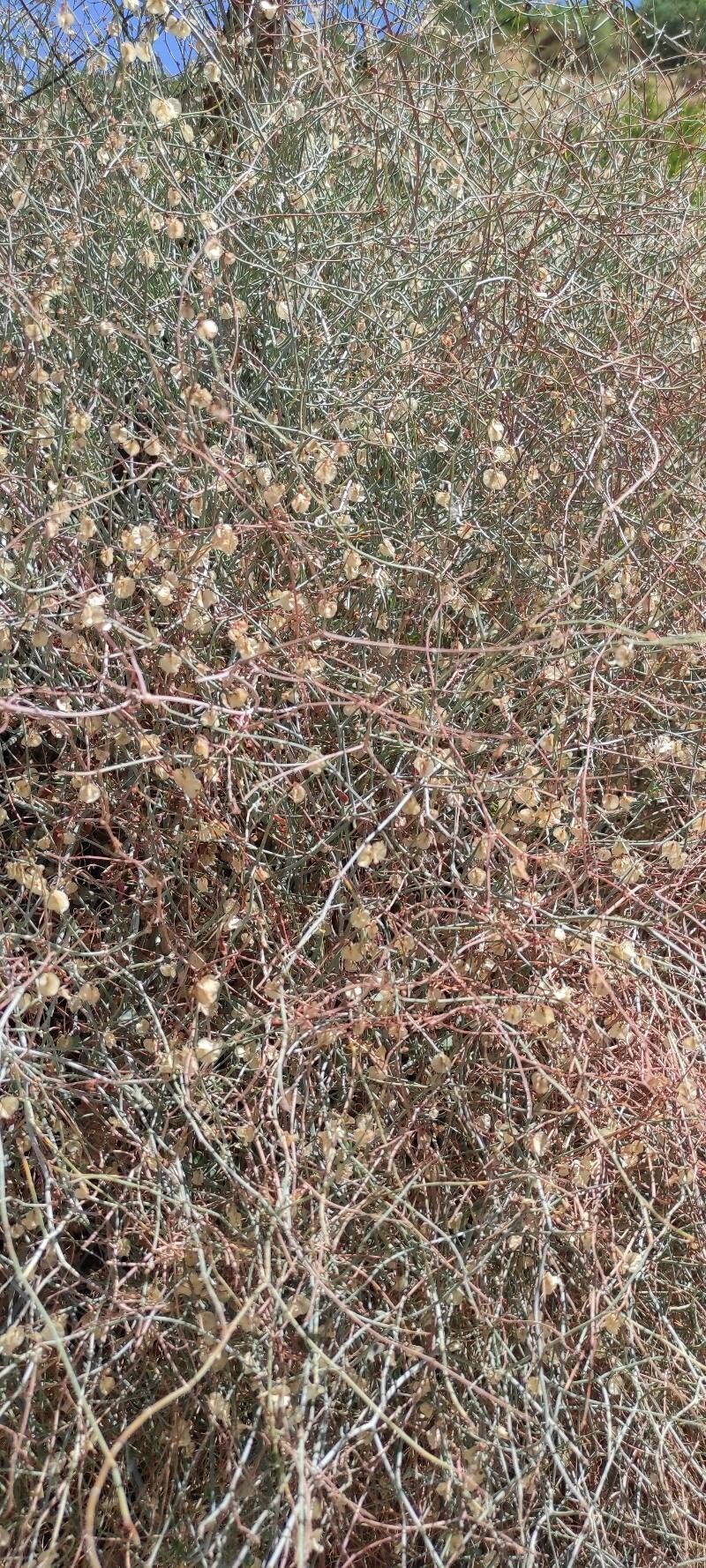
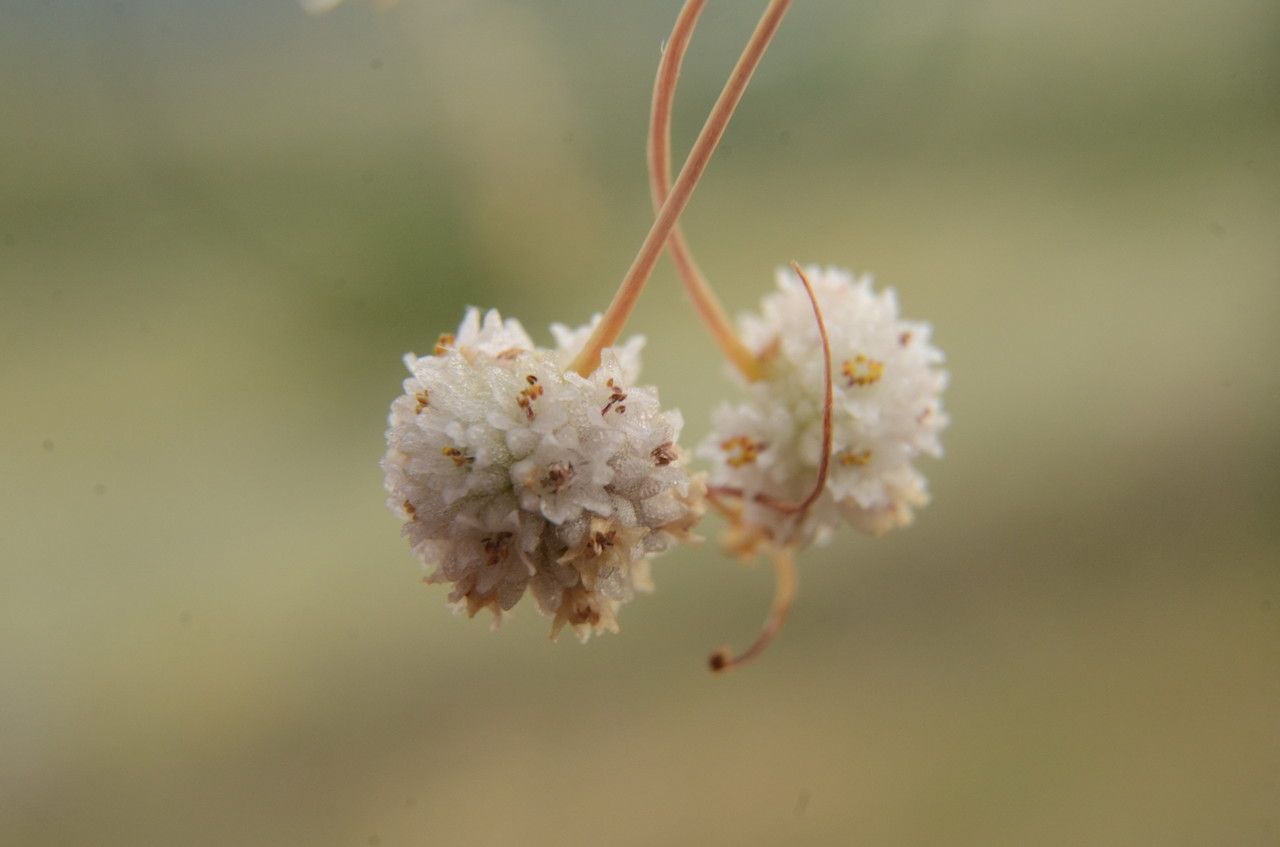
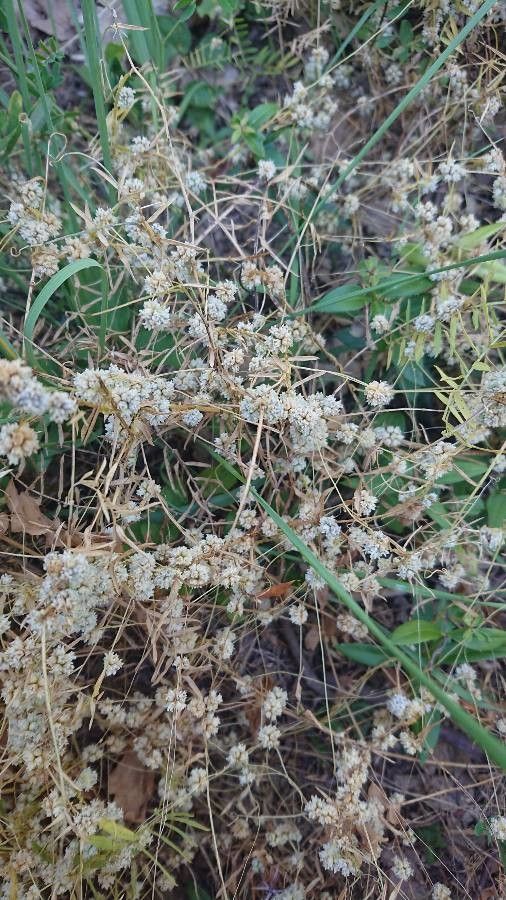
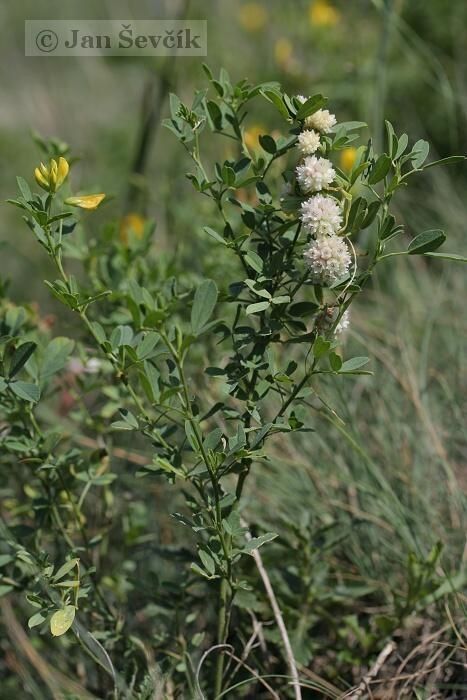
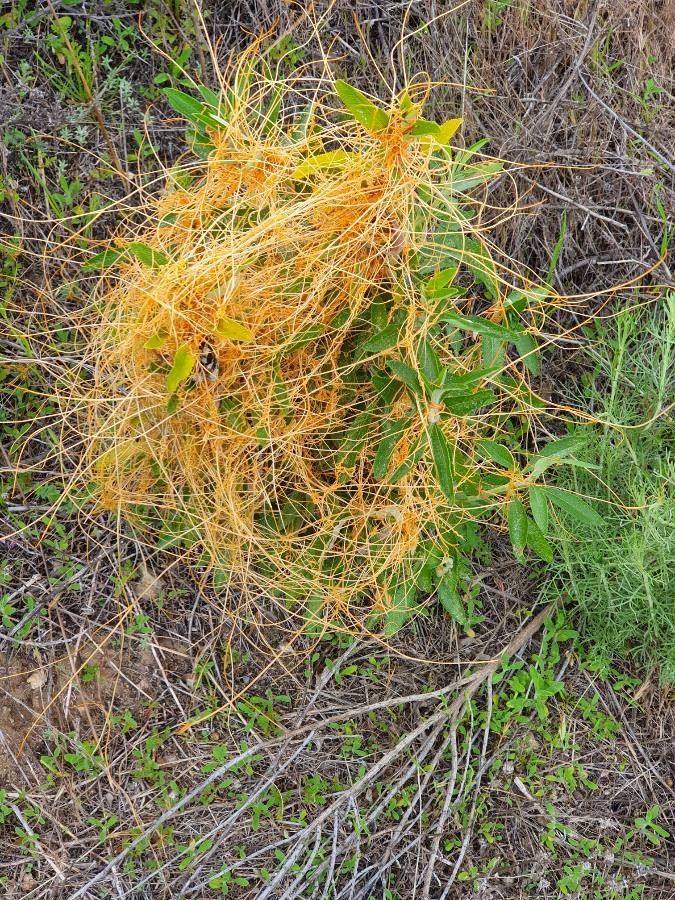
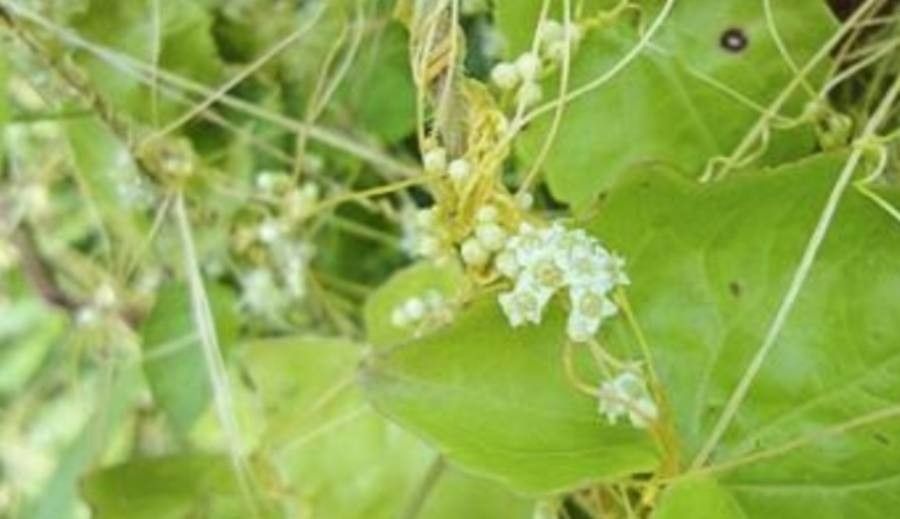
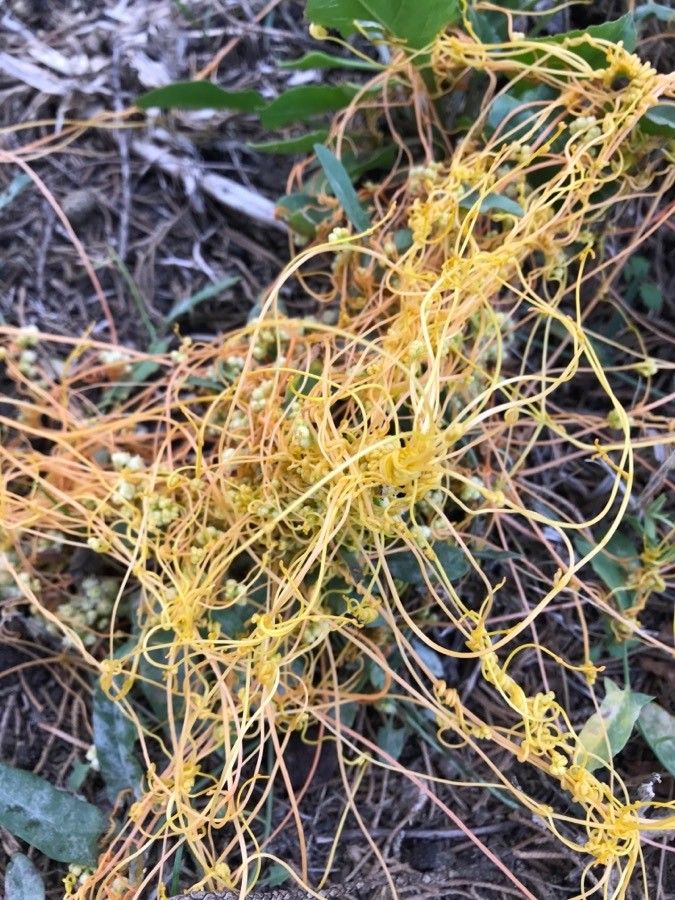
Cuscuta approximata is a species of dodder known by the common name alfalfa dodder. It is native to Eurasia and Africa, but it is also found in North America, where it is an introduced species and uncommon noxious weed. It is a parasitic vine which climbs other plants and takes nutrition directly from them via a haustorium. The dodder resembles a pile of light yellow to orange-red straw wrapped tightly around its host plant. It is mostly stem; the leaves are reduced to scales on the stem's surface, since they are not needed for photosynthesis while the dodder is obtaining nutrients from its host. It bears clusters of tiny yellowish bell-shaped flowers which are only about 3 millimeters wide. The dodder reproduces by seed, with each plant capable of producing over 10,000 seeds at once. This plant is a weed of alfalfa, clover, and tomatoes, as well as other crop plants and native flora. This species is sometimes treated as a subspecies of Cuscuta epithymum.
Alfalfa dodder is fairly disease-resistant and usually not prone to illness. However, it can be affected by pests and diseases present in its environment; such infections are generally mild. As for care, the plant needs moderate maintenance. It should be pruned regularly to keep a neat appearance and promote healthy growth. Applying fertilizer can also help encourage flowering. Alfalfa dodder is appropriate for anyone with outdoor space, like a garden or patio, and does not demand extensive care experience. It may require more attention when cultivated indoors.
How to keep Cuscuta Approximata.
Light
Alfalfa dodder comes from sunny, open habitats and does best in full sun. It can tolerate some shade but prefers direct sunlight for optimal growth. This plant, which may be annual or biennial, is noted for its affinity for sun.
Water
Alfalfa dodder, which comes from a variety of moisture environments, is adept at using water efficiently and has moderate drought tolerance. It needs to be watered twice a week and grows well outdoors. Since it extracts nutrients directly from host plants, soil moisture is less important for its growth.
Temperature
Alfalfa dodder can tolerate a wide range of temperatures, but its distribution can still be restricted by different combinations of moisture and heat. It performs best in warm summer conditions with sufficient rainfall or irrigation. Long stretches of cloudy, rainy weather or prolonged high temperatures can raise the chances of Alfalfa dodder dying. In winter, adequate protection from cold can increase the plant’s survival rate.
Fertilizer
Alfalfa dodder benefits from regular, light fertilizer applications to encourage healthy leaf development. You should fertilize Alfalfa dodder about once a month during the summer. Nitrogen is essential for foliage, and adding nitrogen-rich sources helps Alfalfa dodder prosper.
Pruning
Alfalfa dodder is a parasitic plant characterized by its slender, thread-like stems and lack of chlorophyll. To control its spread and maintain the health of host plants, prune it from early to late spring. Additionally, make sure to regularly disinfect your tools to prevent the transmission of diseases.
Botanical profile.
- Plant Type
- Herb, Vine
- Life Cycle
- Annual, Perennial
- Genus
- Cuscuta
- Family
- Convolvulaceae
- Hardiness Zone
- 5-9
- Mature Height
- 30 cm to 91 cm
- Mature Spread
- 0.49 m to 2.13 m
- Leaf Color
- Yellow, Orange
- Leaf Type
- Semi-evergreen
- Flower Color
- White
- Flower Size
- 0.20 cm to 0.51 cm
- Bloom Time
- Summer
- Planting Time
- Spring
- Harvest Time
- Late summer, Early fall, Mid fall
Other names.