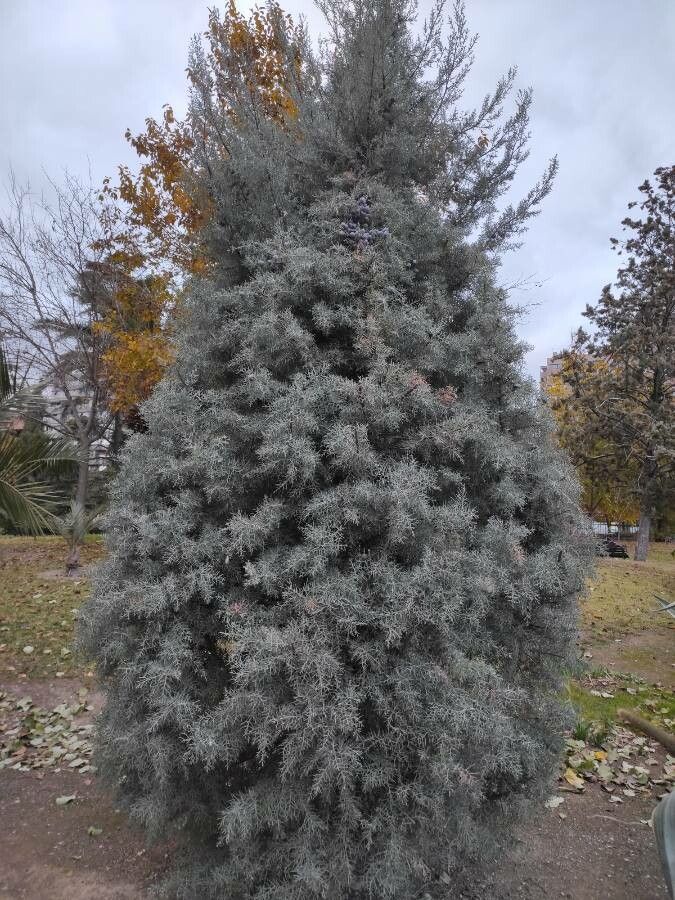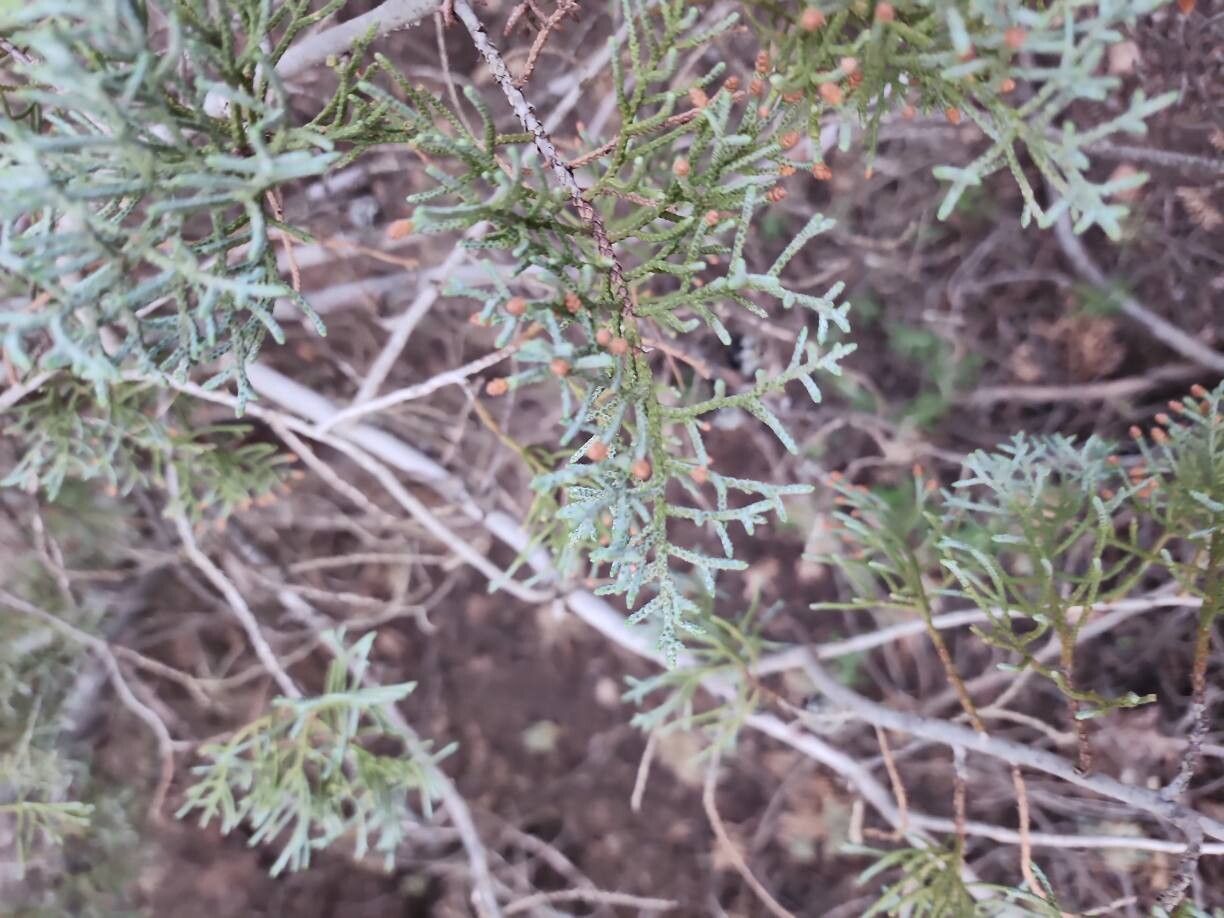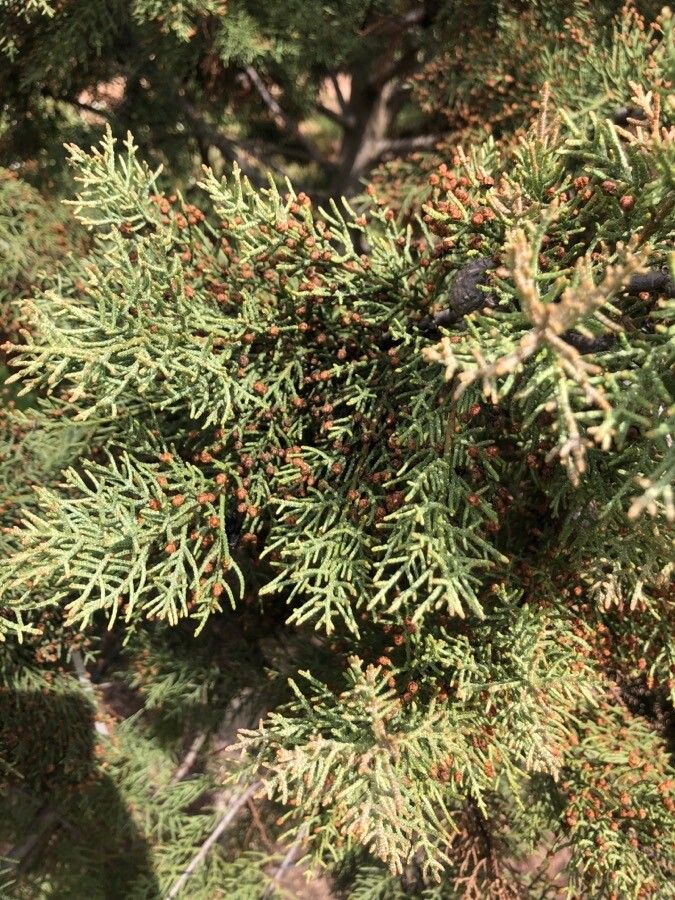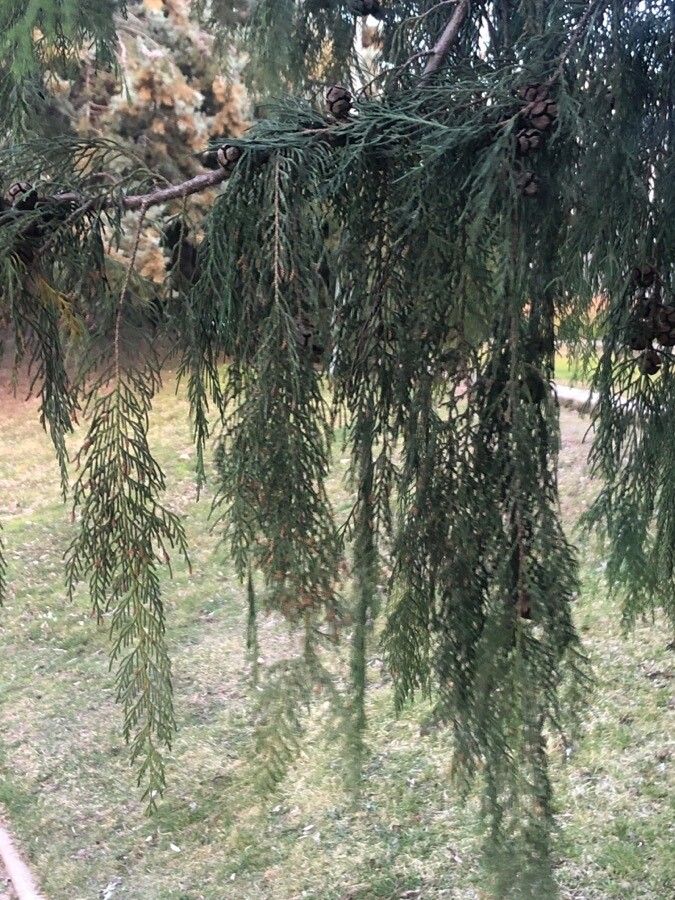
Cupressus sargentii, commonly known as Sargent's cypress, is a slow-growing evergreen tree in the Cupressaceae family. It is native to the southwestern United States and can be found in California and Arizona. The tree typically grows up to 50 feet tall, featuring a narrow, conical shape and dense foliage that ranges from blue-green to gray-green. Sargent's cypress has scale-like leaves arranged in opposite pairs along the stem. The leaves are about 1/8 inch long and emit a distinctive resinous aroma when crushed. The tree also produces small cones, approximately 1 inch long, with woody scales. Due to its attractive appearance and ability to withstand drought conditions once established, Sargent's cypress is commonly used as an ornamental tree. It prefers well-drained soils but can also thrive in clay soils, provided they are not waterlogged. For centuries, Native American tribes have used Sargent's cypress for various medicinal purposes, including treating respiratory ailments like coughs and colds. Overall, Cupressus sargentii is a visually appealing evergreen tree with unique foliage, making it a popular choice for landscaping projects within its native range.
Sargent's cypress has strong disease resistance and is generally not susceptible to diseases. In terms of care, this plant is fairly low-maintenance. When planted outdoors it needs little watering, and larger specimens usually do not require pruning. Smaller plants, however, should be pruned after they have bloomed. Sargent's cypress is suitable for anyone with outdoor space, such as a garden or deck, and does not demand much care experience.
How to keep Cupressus Sargentii.
Light
Sargent's cypress performs best with plentiful sunlight, which encourages vigorous growth and good health. It can also tolerate more shaded conditions, although its vigor may be reduced. In its native habitat, it is commonly found in areas with abundant sun. However, either too much or too little sunlight can have adverse effects, causing potential growth problems or stress.
Water
Sargent's cypress, native to California, is a drought-tolerant tree that needs watering only every 1-2 weeks. To thrive, plant it outdoors in well-draining soil that mimics its natural habitat, which helps prevent root rot. Its hardy nature makes it ideal for dry, rocky areas.
Temperature
Sargent's cypress is indigenous to temperate regions. It grows best in temperatures between 10 and 35°C (50 to 95°F). Seasonal temperature changes should be handled cautiously to avoid harm from extreme heat or cold.
Fertilizer
Sargent's cypress has specific nutrient needs and does not require heavy fertilization. Spring is the best time to apply fertilizer for optimal growth. Supplying nutrients enhances its health, increases resistance to pests and diseases, and helps preserve its long lifespan.
Pruning
Sargent's cypress is an evergreen tree with a dense, conical shape. For best results, prune the tree from early to late winter, focusing on removing dead or diseased branches and thinning out overcrowded areas. Regular, light pruning promotes healthy growth, reduces the risk of pests and diseases, and maintains its aesthetic appeal throughout the year.
Botanical profile.
- Plant Type
- Tree
- Life Cycle
- Perennial
- Genus
- Cupressus
- Family
- Cupressaceae
- Hardiness Zone
- 6-10
- Mature Height
- 10.06 m to 21.95 m
- Mature Spread
- 3.05 m to 7.92 m
- Leaf Color
- Dark Green
- Leaf Type
- Evergreen
- Flower Size
- 0.20 cm
- Bloom Time
- Late winter, Early spring
- Planting Time
- Spring, Summer
- Harvest Time
- Late summer, Early fall, Mid fall
Other names.
Reader questions.
How should I water my Sargent's cypress tree?
Watering your Sargent's cypress is a simple task. For mature trees, use a garden hose to slowly soak the soil. Large trees may require a higher volume of water. Smaller trees can be watered with a watering can or smaller tool. Avoid overhead watering to prevent disease, especially for young trees.
How many hours of sunlight per day should Sargent's cypress get to grow well?
To ensure healthy growth, Sargent's cypress needs a minimum of 3-6 hours of sunlight each day. Most plants that can tolerate partial sunlight can also thrive in full sunlight. These plants are more adaptable because they require less light for photosynthesis compared to plants that need either full sunlight or partial shade.
What temperature does Sargent's cypress prefer?
Sargent's cypress thrives best when temperatures range between 65~80℉(18~27℃). During the primary growing phase, it can tolerate temperatures as high as 95℉(35℃) and as low as 15℉(-10℃). This species is particularly tolerant of low temperatures and can survive freezing winters. The ideal temperature range for this species is: Perfect:65~80℉(18~27℃), Highest:85~95℉(30~35℃), Lowest:-5~15℉(-20~-10℃) or colder.
What should I do if I give too much or too little water to my Sargent's cypress?
Overwatering can occur when the soil does not allow efficient water drainage for your Sargent's cypress. If this happens, you can either improve the soil's drainage by amending it or relocate the plant to a more suitable spot. If your Sargent's cypress is potted, you may need to repot it using looser soil and a container with better drainage. Overwatering can cause diseases, so immediate treatment is necessary. On the other hand, if your Sargent's cypress is underwatered, simply increase the frequency of watering to help it recover. You can determine if your plant is overwatered by observing its foliage, especially the new growth. Discolored or easily breakable new growth indicates excessive moisture. Standing water or slow drainage in the growing area is another sign of overly moist soil. Sparse and brown leaves suggest underwatering. Consider recent rainfall or high temperatures as possible causes for these symptoms.
What kind of sunlight does the Sargent's cypress require?
Sargent's cypress thrives in full or part sun, but it does best with direct morning light. However, in the summertime, they require some protection from the strong afternoon sun. If exposed to too much hot afternoon sun in temperate environments, the leaves can get burnt, which can negatively affect the plant's appearance and health.
Do I need to change the temperature for Sargent's cypress when they are growing differently?
According to research, Sargent's cypress will show signs of stunted growth when subjected to prolonged higher temperatures, particularly during the development of axillary buds and growth of main shoots. To promote healthy growth after germination or transplanting, it is recommended to maintain consistent and cooler temperatures, around 65℉(18℃).
How frequently should I water my Sargent's cypress?
A mature Sargent's cypress is highly drought tolerant and can survive solely on rainfall. Generally, you only need to water it once a week during the hottest months. However, if it's a newly planted tree, regular watering is necessary to establish the roots. Remember that Sargent's cypress cannot handle standing water, so it's better to avoid overwatering it.
Can the sun harm Sargent's cypress trees? What can be done to keep Sargent's cypress safe from the sun and heat?
To prevent damage from direct sunlight, it is recommended to gradually move Sargent's cypress plants from a shaded area to a brighter spot when transitioning them outdoors. However, even plants accustomed to the sun can be harmed by excessive heat. During a heatwave, it is crucial to keep the soil consistently moist to help plants handle the high temperatures. In addition, protecting sensitive Sargent's cypress plants from extreme weather can be done by moving them to shaded areas in the afternoon or by using a shade cloth.
How do I make sure Sargent's cypress tree stays warm during cold seasons?
Sargent's cypress is resilient to freezing temperatures when planted in the ground, as long as the area doesn't experience temperatures below 15℉(-10℃) during winter. However, if planted in pots or containers, it is important to protect the roots from the cold. This can be done by wrapping the container in a blanket or bringing it inside for complete protection from the winter elements.
How much water does my Sargent's cypress require?
During the height of summer, you'll need to water your Sargent's cypress. Normally, you should give the plant about one inch of water per week. However, this amount may vary depending on rainfall. If it has rained one inch or more during that week, you can skip watering your Sargent's cypress. For newly planted Sargent's cypress, it will need more water during the establishment period. Generally, you should water it once every one to two weeks for the first few growing seasons.
Should I keep Sargent's cypress away from the sun?
Sargent's cypress benefits from bright morning sun and some full sun exposure. However, it cannot handle the harsh, hot midday sun of summer. If you plant it in the ground, it will gradually adapt to the increasing summer sun. But if it's in a pot and has been indoors or in a protected location, it may get injured when suddenly exposed to direct summer sun in the hottest part of the day. To protect it from the brutal afternoon sun, plant or place it in a shaded spot at midday, such as under taller trees, plants, a building, or a landscape feature.
If the temperature is too high or too low, what harm will happen to Sargent's cypress?
Sargent's cypress is more likely to be harmed if the temperature is consistently too high rather than too low. When it gets too hot, the plant's ability to germinate and efficiently use sunlight for photosynthesis is reduced due to hormone triggers caused by heat stress. This can be observed through wilting, leaf browning, and even death of the plant. On the other hand, if Sargent's cypress gets too cold, its vital functions like nutrient uptake and photosynthesis will stop, potentially leading to the plant's death. In the event of a freezing episode during the growing season, a membrane phase transition may occur, resulting in the cessation of plant functions and ultimately leading to the plant's demise.