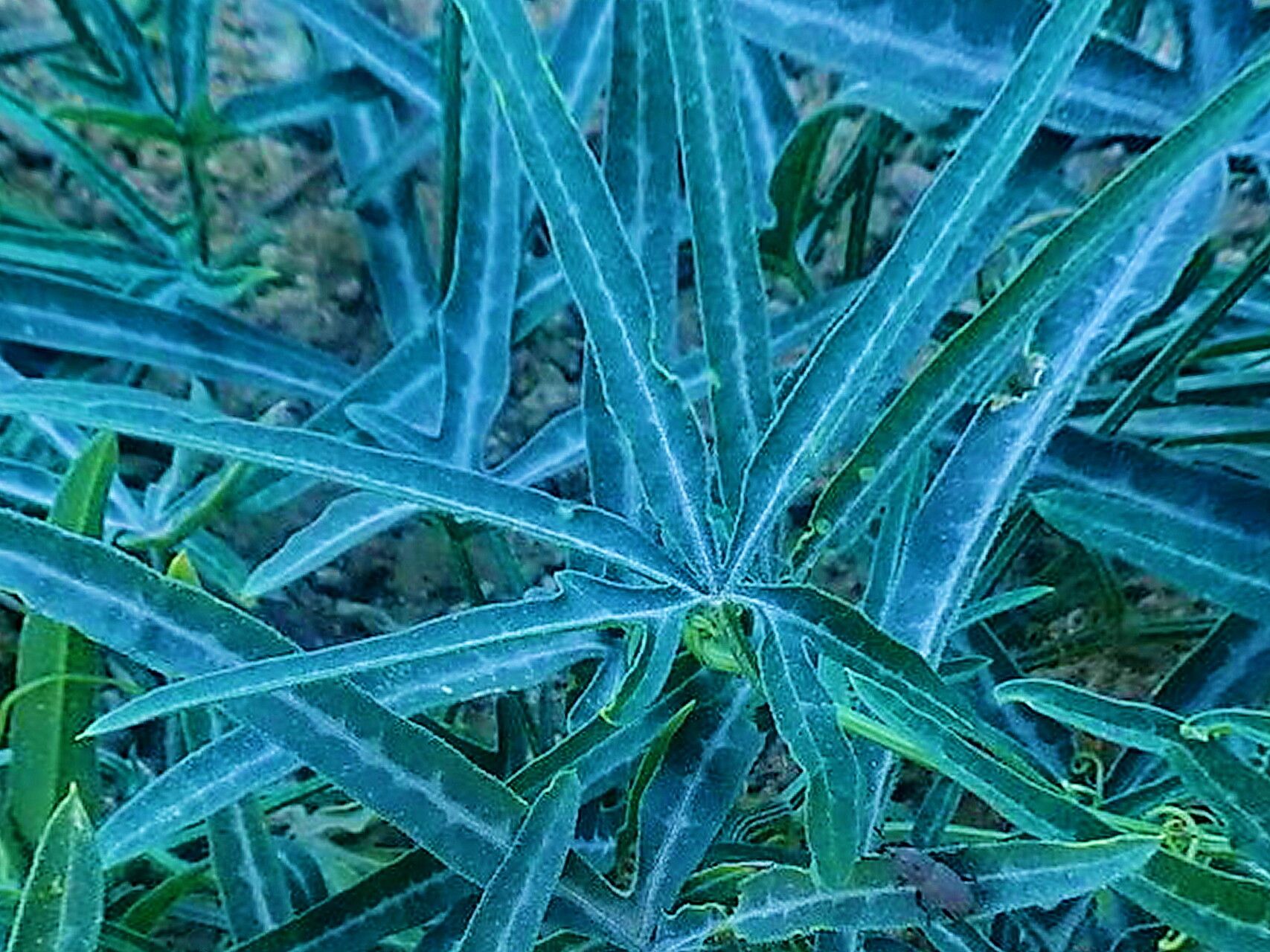
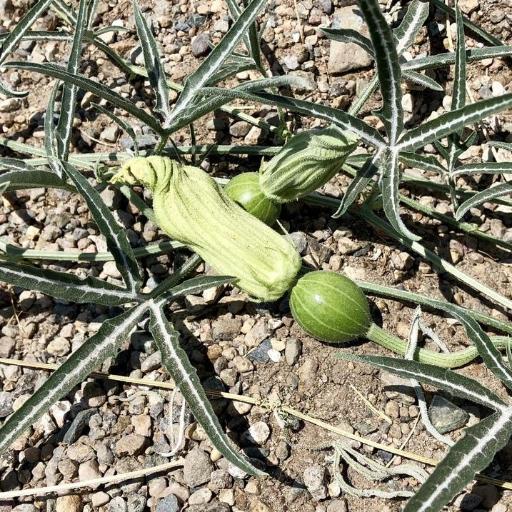
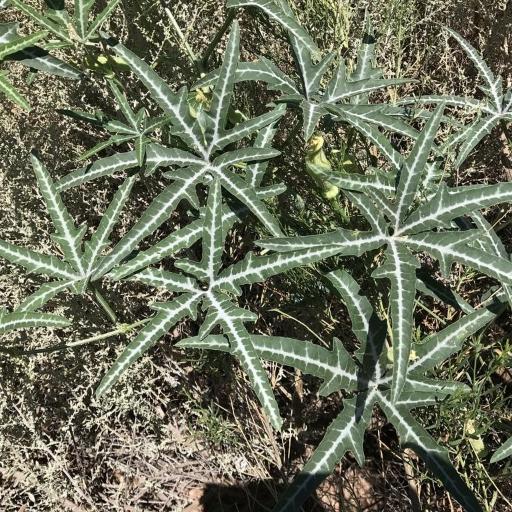
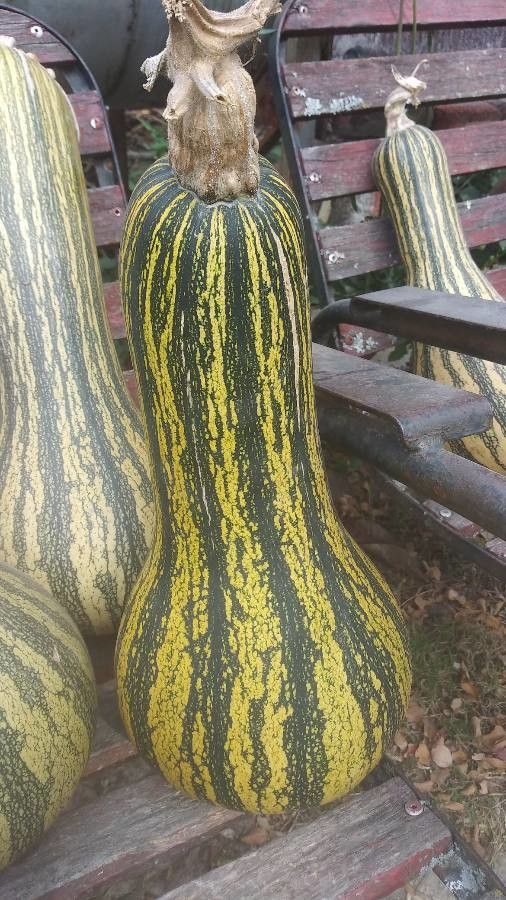
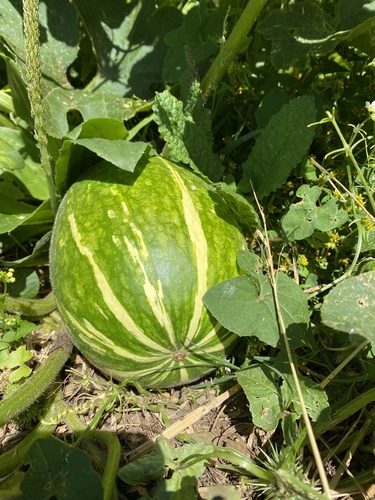
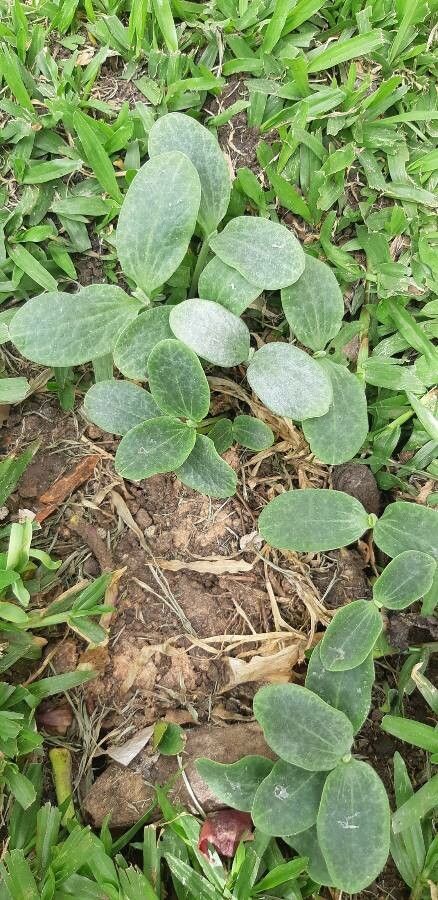
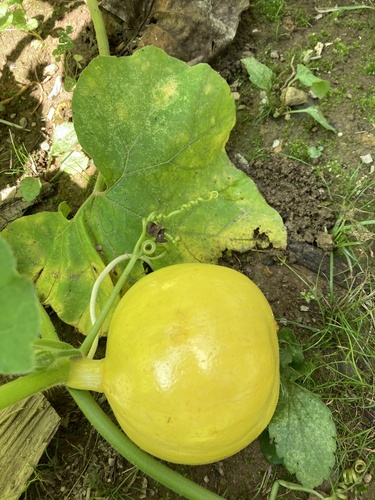
Cucurbita digitata is a species of flowering plant in the squash family known by the common names fingerleaf gourd and bitter squash. It is similar to Cucurbita californica, Cucurbita cordata, Cucurbita cylindrata, and Cucurbita palmata and all these species hybridize readily. These species form the only restricted xerophyte species group in the genus Cucurbita. Each member of this species group is native to the Southwestern United States and Northwestern Mexico where they are relatively uncommon. Each group member is found in hot, arid regions with low rainfall. They prefer soil that is loose, gravelly, and well-drained. C. digitata is native to northern Baja California at higher elevations, northern Sonora, Mexico, southern Arizona, and southwestern New Mexico. The juvenile leaves of C. cylindrata, C. cordata, C. digitata, and C. palmata show a high degree of similarity, but their mature leaves are visibly different, as are their root structures. C. palmata and C. digitata are sympatric, with C. palmata separating the ranges of C. digitata at the juncture of Baja California, California, and Arizona. C. digitata fruits are clear green mottle that turns yellow at maturity, striped, and round.It was first identified by Asa Gray in 1853.
Fingerleaf gourd is fairly resistant to disease and usually not prone to illnesses. However, it can be affected by pests and diseases present in its environment. These issues are typically not serious. As for care, the plant needs moderate maintenance. It should be pruned regularly to preserve a tidy appearance and healthy growth. Fertilizing can also help encourage flowering. Fingerleaf gourd is appropriate for anyone with outdoor space, like a garden or patio, and does not demand extensive gardening experience. When grown indoors, it may need more attention.
How to keep Cucurbita Digitata.
Light
Fingerleaf gourd is a sun-loving, herbaceous perennial that comes from open habitats and commonly grows in meadows and grasslands. It prefers full sun but can also tolerate partial sun.
Temperature
Fingerleaf gourd comes from tropical areas, where the climate is generally warm and humid. Consequently, it is well suited to high temperatures and moisture. It does not tolerate abrupt temperature changes and prefers a steady thermal environment, so indoor temperature fluctuations should be avoided. It typically cannot endure cold conditions and needs warmer temperatures to grow. If the ambient temperature falls too low, the plant may stop growing or even perish.
Fertilizer
Fingerleaf gourd needs the most fertilizer during its active growth period, which is mainly in spring, summer, and early fall. Fertilizing supplies essential nutrients the soil may lack, supporting healthy root and stem growth and enhancing the attractive foliage that is a key characteristic of this plant.
Botanical profile.
- Plant Type
- Herb, Vine
- Life Cycle
- Perennial
- Genus
- Cucurbita
- Family
- Cucurbitaceae
- Hardiness Zone
- 8-10
- Mature Height
- 30 cm to 91 cm
- Mature Spread
- 0.91 m to 3.05 m
- Leaf Color
- Green, Dark Green
- Leaf Type
- Deciduous
- Flower Color
- Yellow
- Flower Size
- 6.35 cm to 10.16 cm
- Bloom Time
- Summer, Early fall
- Planting Time
- Spring, Summer
- Harvest Time
- Late summer, Fall
- Native Area
- Mexico
Other names.