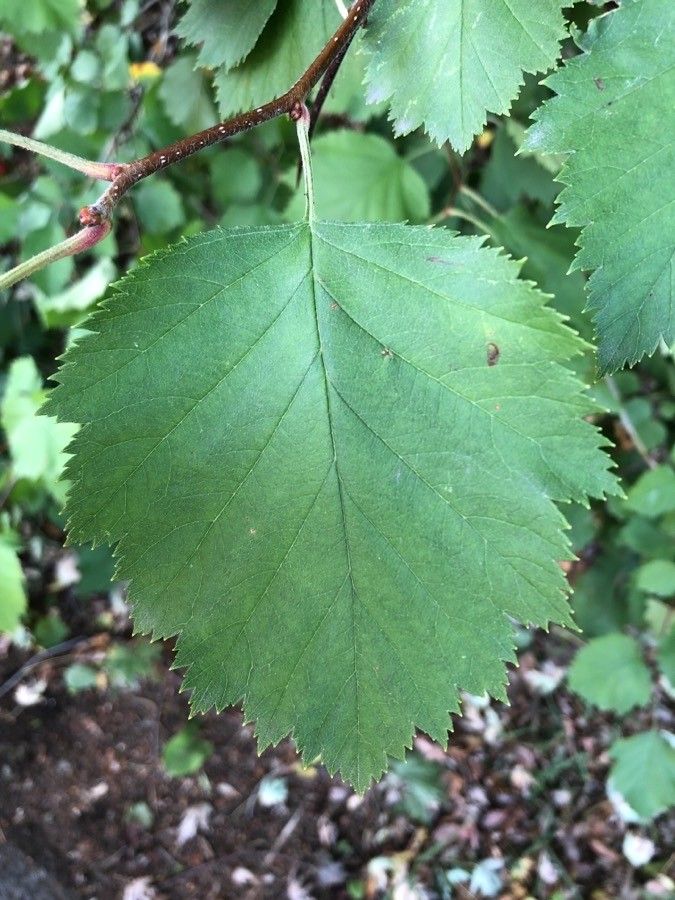
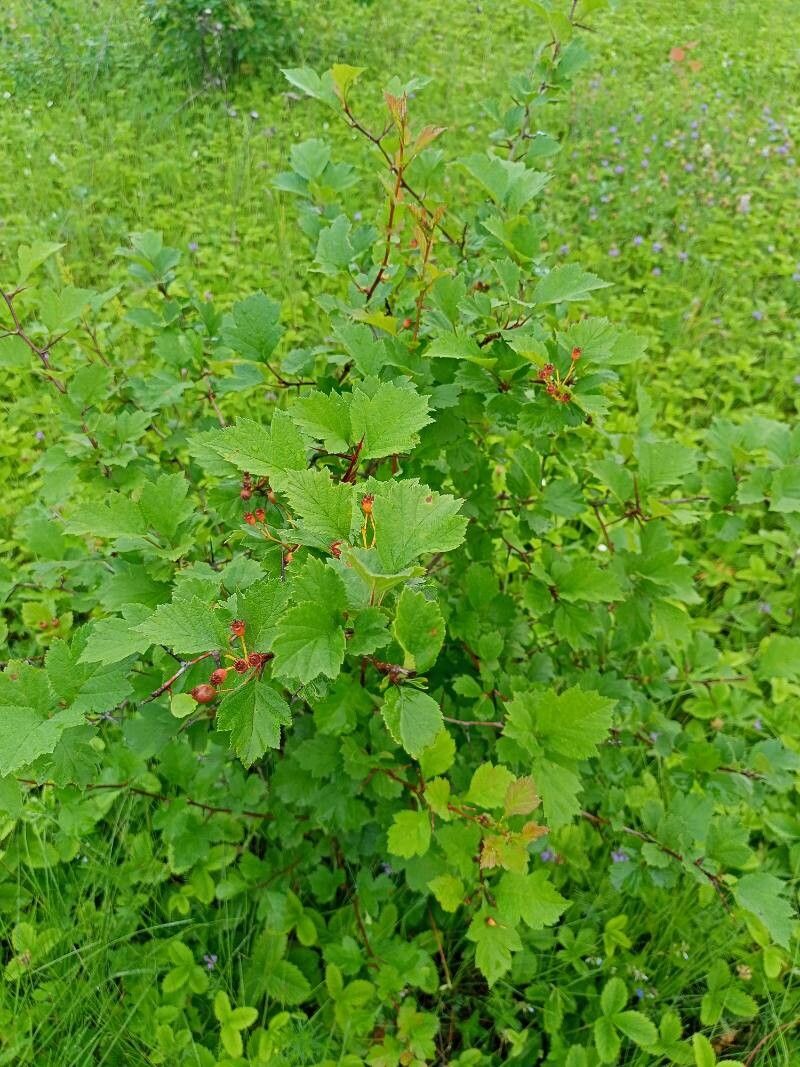
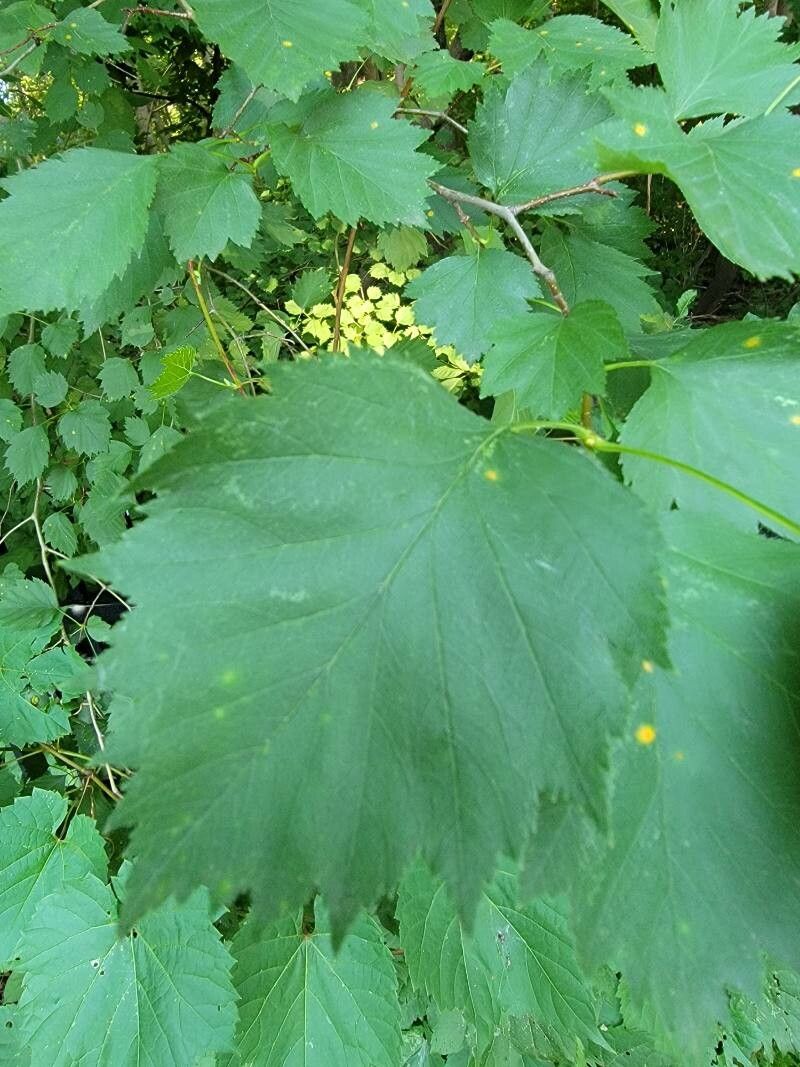
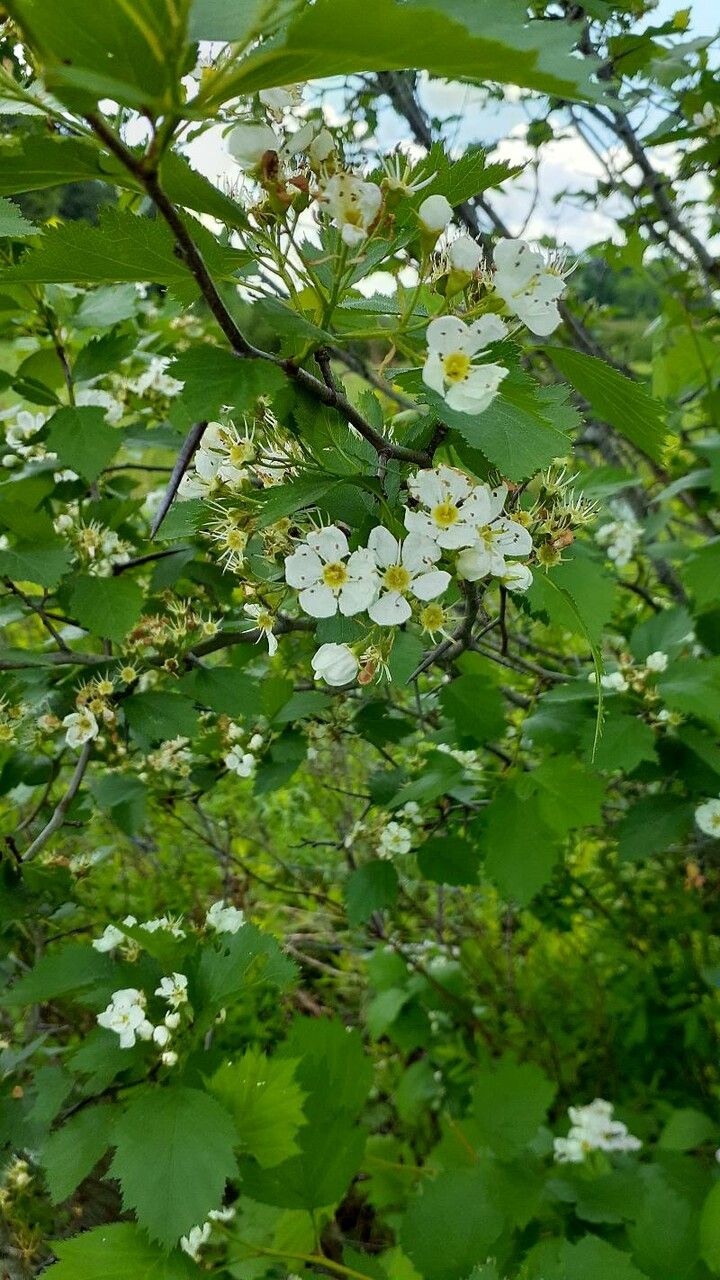
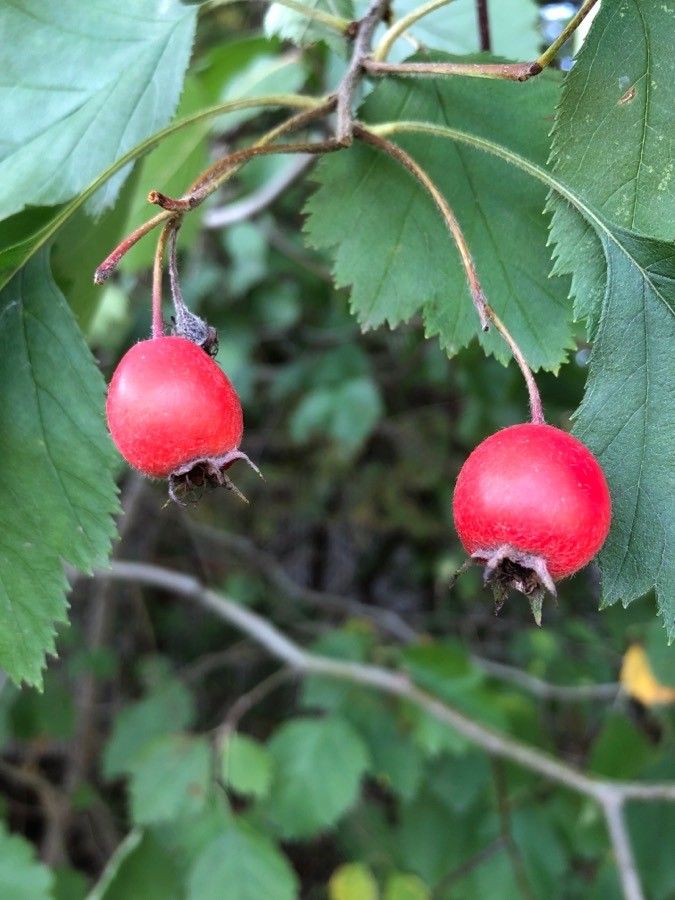
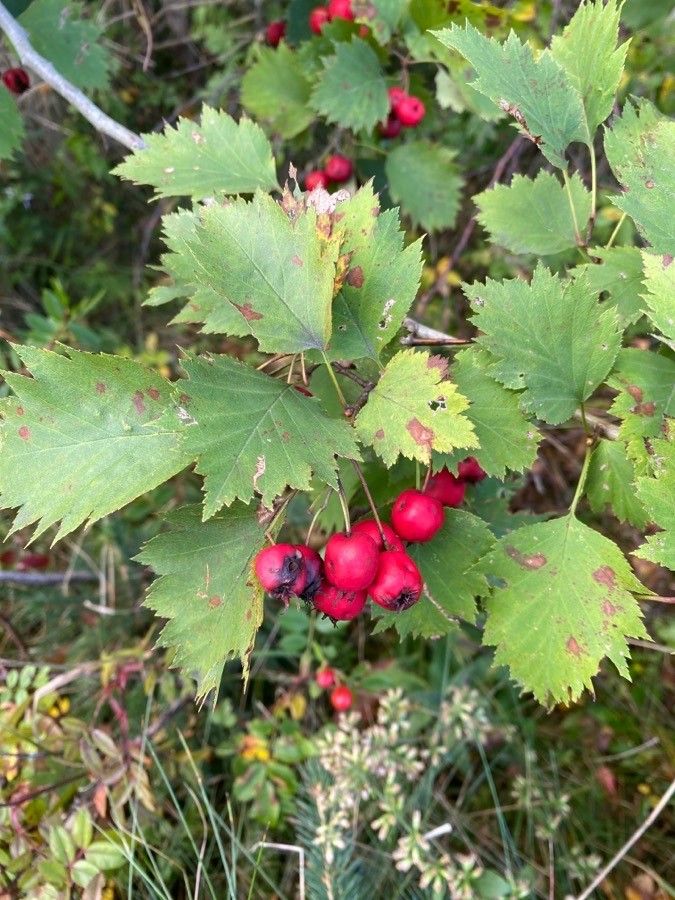
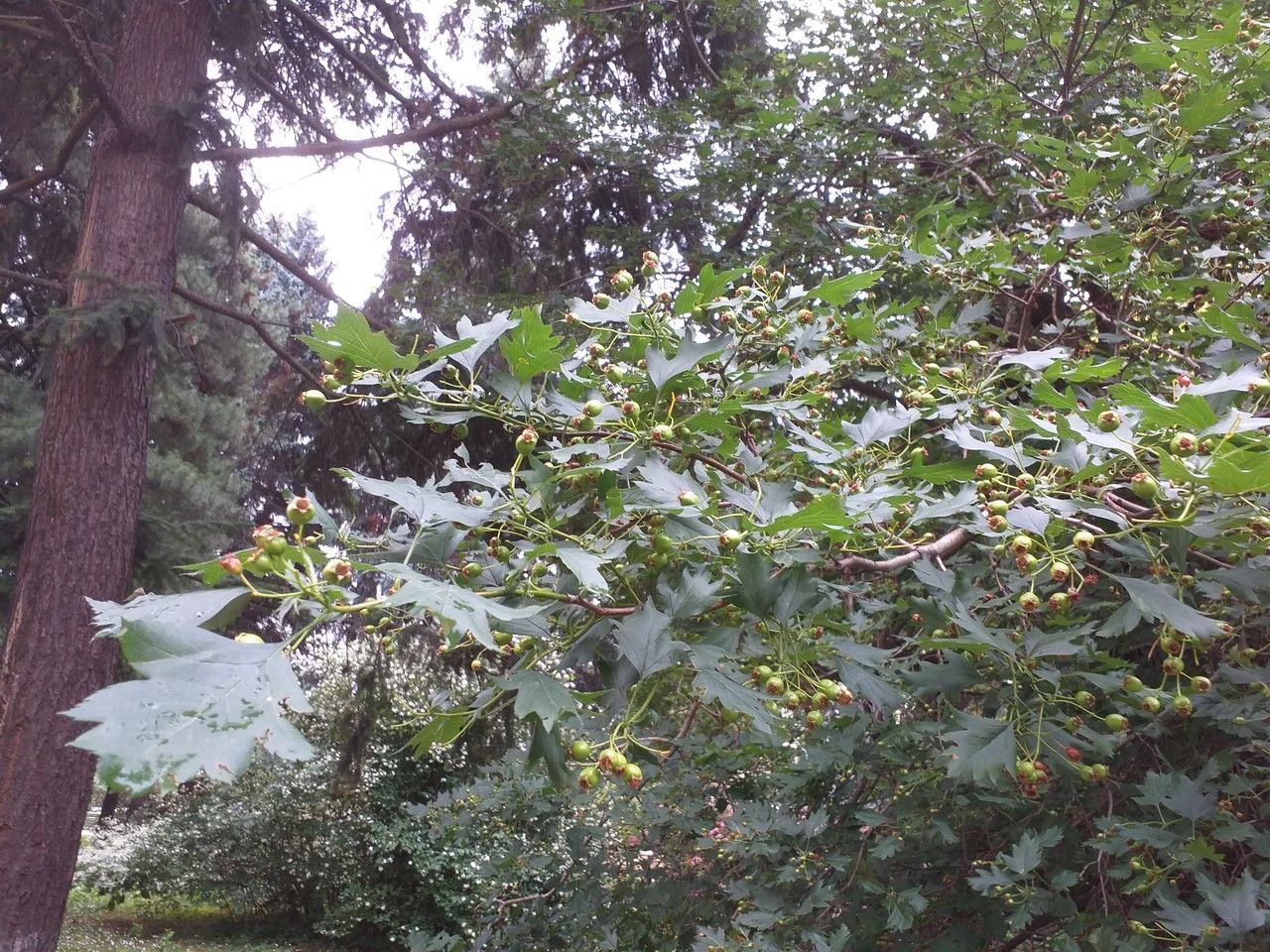
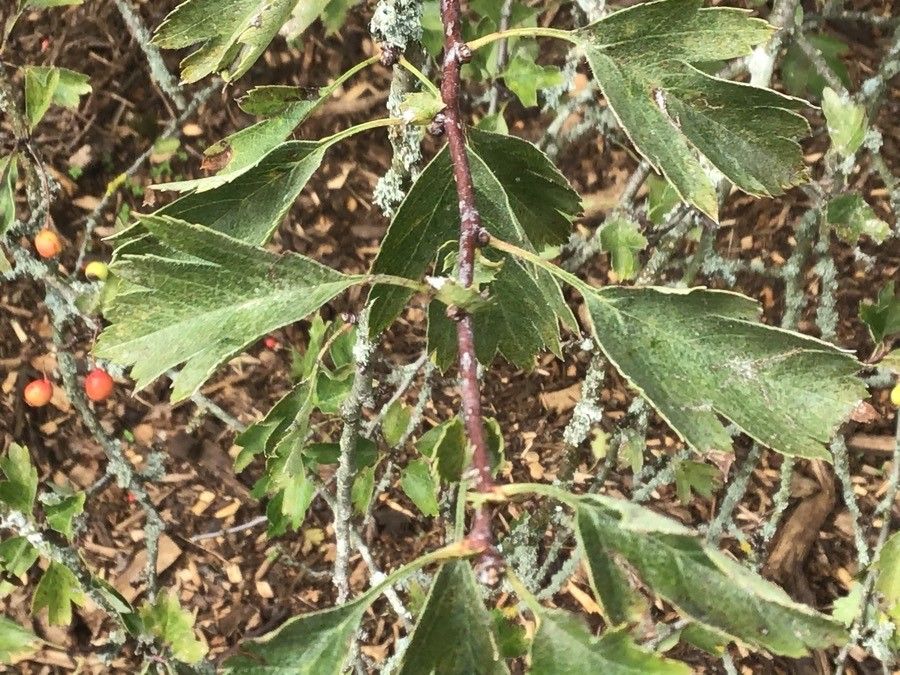
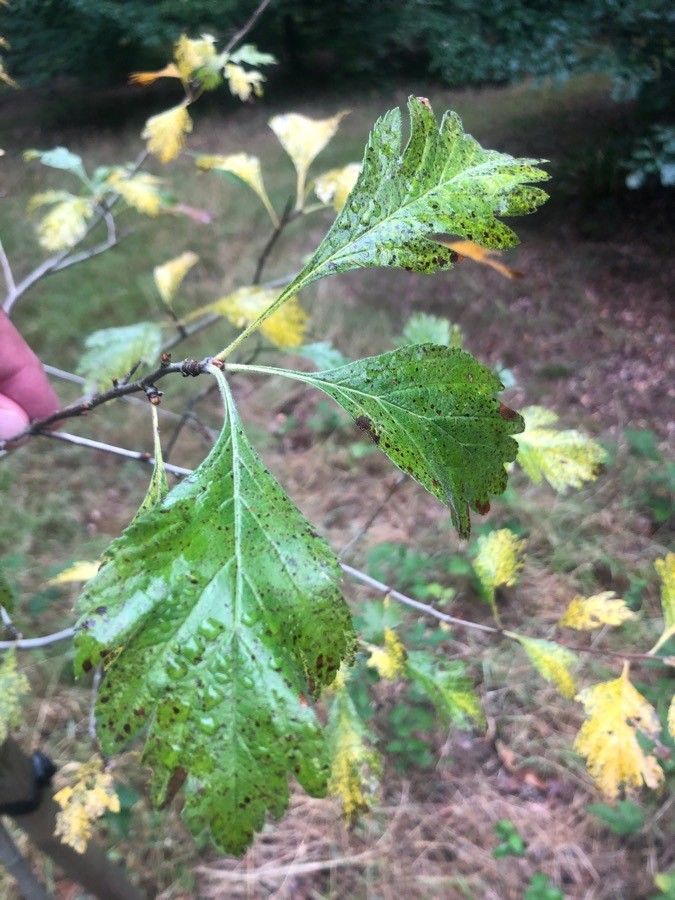
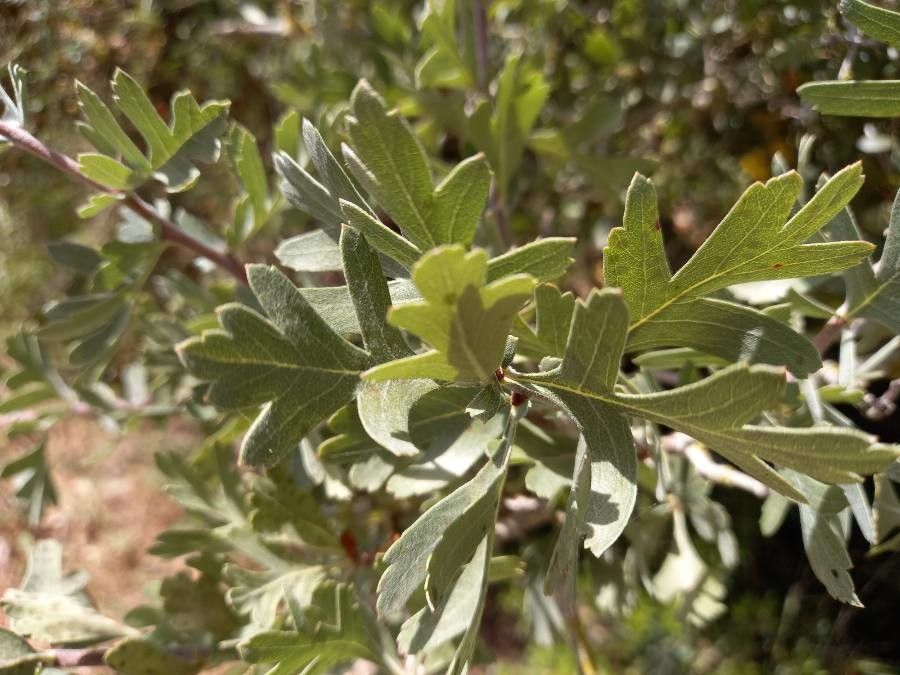
Crataegus canadensis, commonly known as the Canadian hawthorn, is a deciduous shrub or small tree native to North America. It typically grows up to 6 meters tall with a rounded crown and thorny branches. The leaves are dark green, glossy, and have serrated edges. The flowers, which are white or pink, bloom in clusters from late spring to early summer. The fruit is a small red berry that ripens in late summer and lasts into winter.
This plant prefers moist soil but can tolerate drought conditions once established. It thrives in full sun to partial shade and is often used as an ornamental plant because of its attractive foliage, flowers, and fruit. Additionally, it provides food for birds such as cedar waxwings.
Traditionally, Indigenous peoples have used Crataegus canadensis for medicinal purposes, particularly for treating heart conditions, due to its high flavonoid content, which has antioxidant properties.
Overall, Crataegus canadensis is an appealing shrub or small tree that offers both ornamental and ecological benefits, along with traditional medicinal uses.
Canadian hawthorn resists disease well and is typically not susceptible to illnesses. Regarding maintenance, this plant is fairly low-maintenance. When grown outdoors it needs little watering, and larger specimens usually do not require pruning. Smaller specimens, however, should be trimmed after they finish flowering. Canadian hawthorn is appropriate for anyone with outdoor space, like a garden or a deck, and does not demand much gardening experience.
How to keep Crataegus Canadensis.
Light
Canadian hawthorn comes from open habitats, like sunny meadows and forest margins, which supply plenty of light. It performs best in Full Sun but can also withstand Partial Sun, adjusting well to different light conditions.
Temperature
Canadian hawthorn is highly adaptable to a wide range of climatic conditions, from sweltering summers to frosty winters. Nevertheless, it has an optimal temperature range for growth. When temperatures become excessively high, the plant is susceptible to heat and humidity stress, which can cause its death. In areas where temperatures near the lower limit of its cold tolerance, it is important to provide insulation to protect the plant.
Fertilizer
The Canadian hawthorn needs adequate nutrients to produce fruit at its best. Fertilize in early spring to encourage new growth and flowering. Regular feeding keeps the plant healthy, results in more delicious fruit, and prevents nutrient deficiency problems like yellow leaves and poor fruit production.
Botanical profile.
- Plant Type
- Tree
- Life Cycle
- Perennial
- Genus
- Crataegus
- Family
- Rosaceae
- Hardiness Zone
- 3-7
- Mature Height
- 3.96 m to 7.92 m
- Mature Spread
- 3.05 m to 6.1 m
- Leaf Color
- Green, Dark Green
- Leaf Type
- Deciduous
- Flower Color
- White
- Flower Size
- 1.02 cm to 2.03 cm
- Bloom Time
- Mid spring, Late spring
- Planting Time
- Spring, Summer
- Harvest Time
- Late summer, Early fall, Mid fall
- Native Area
- Canada
Other names.