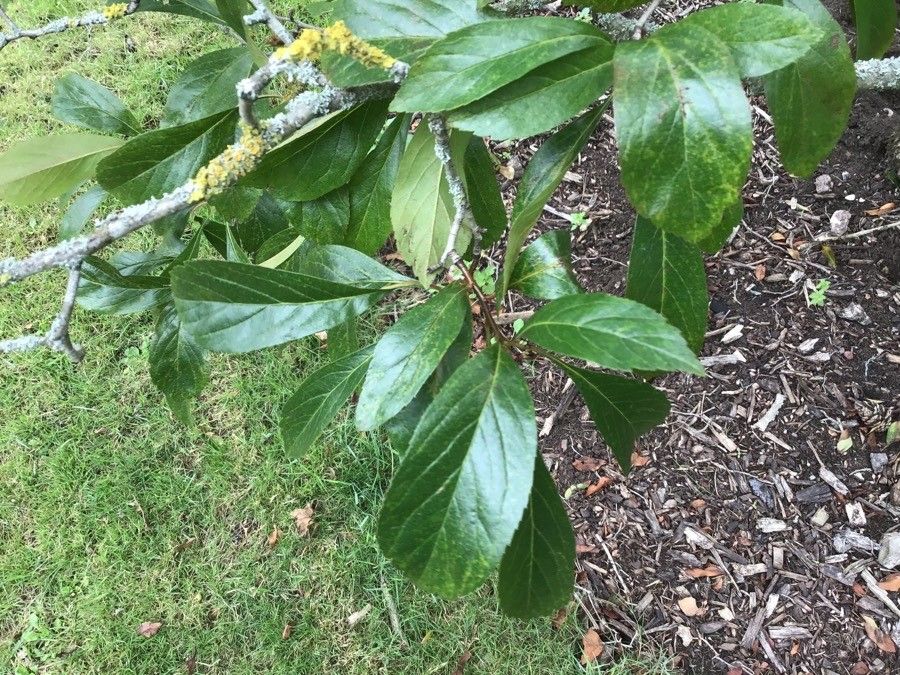
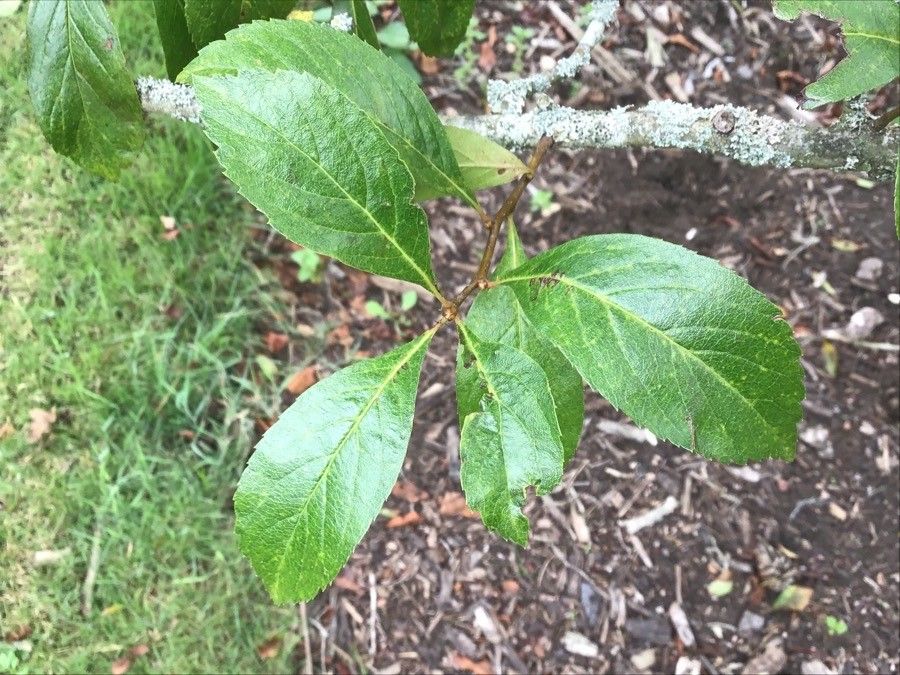
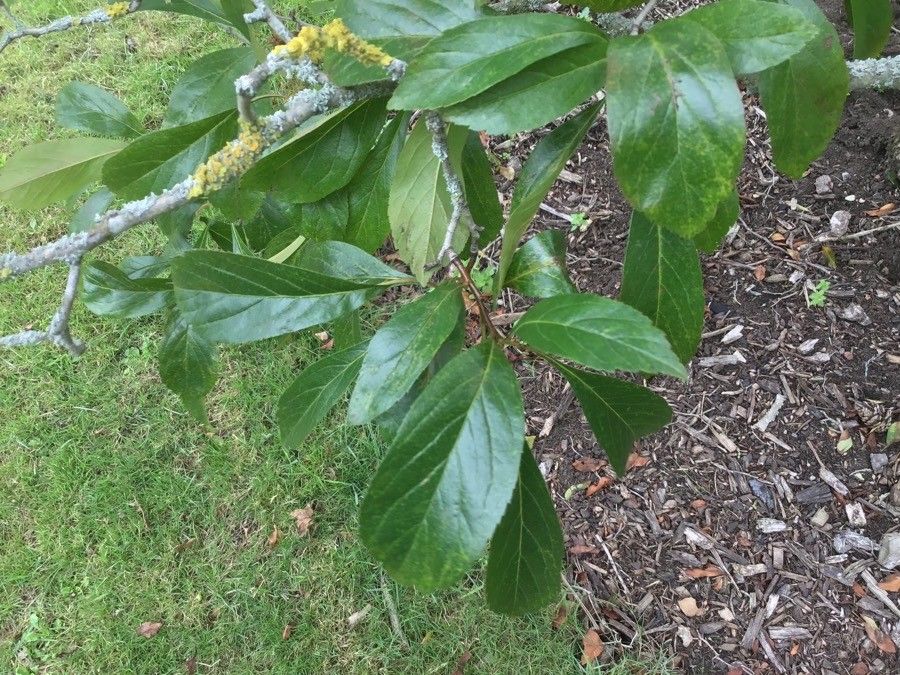
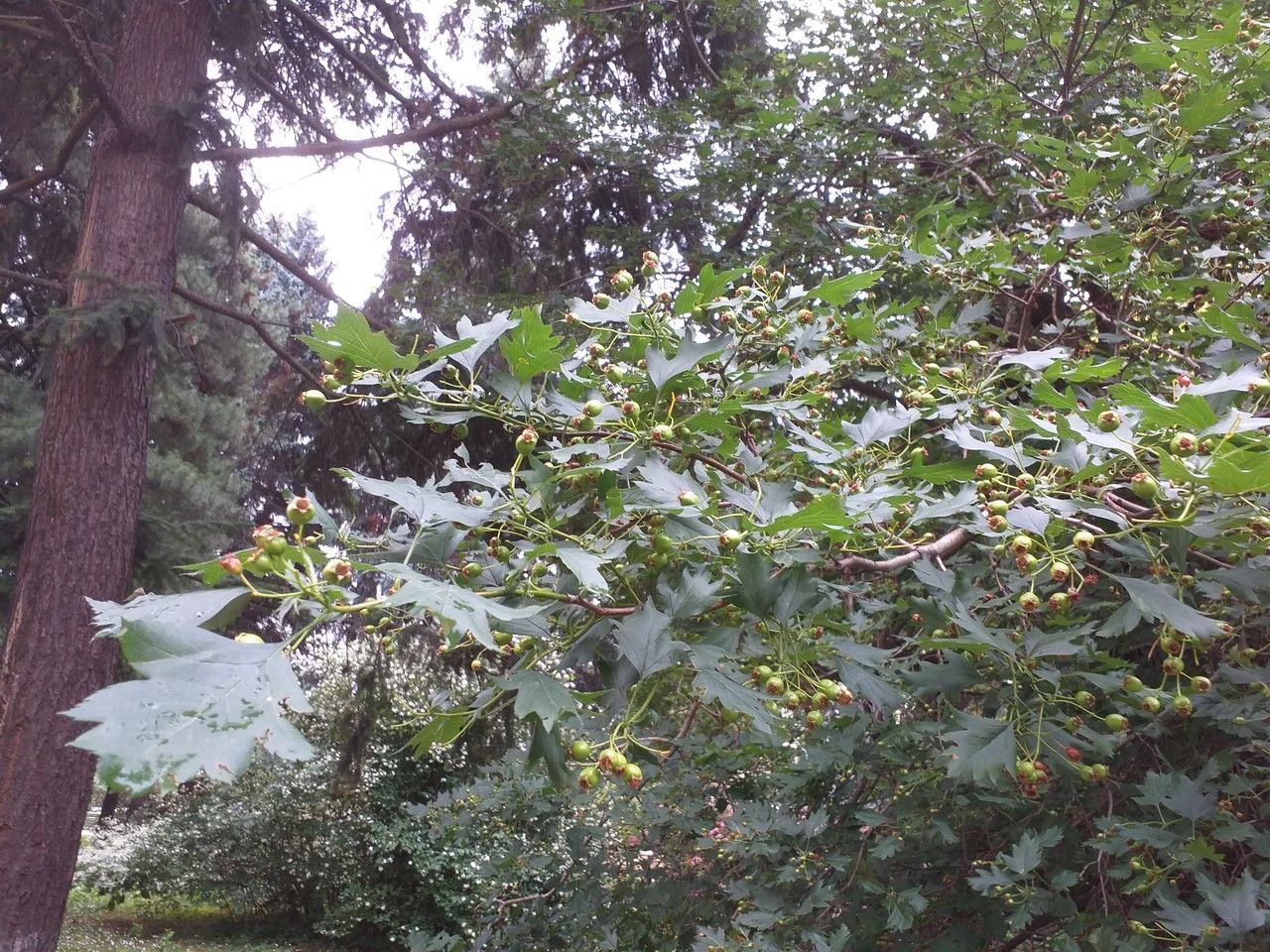
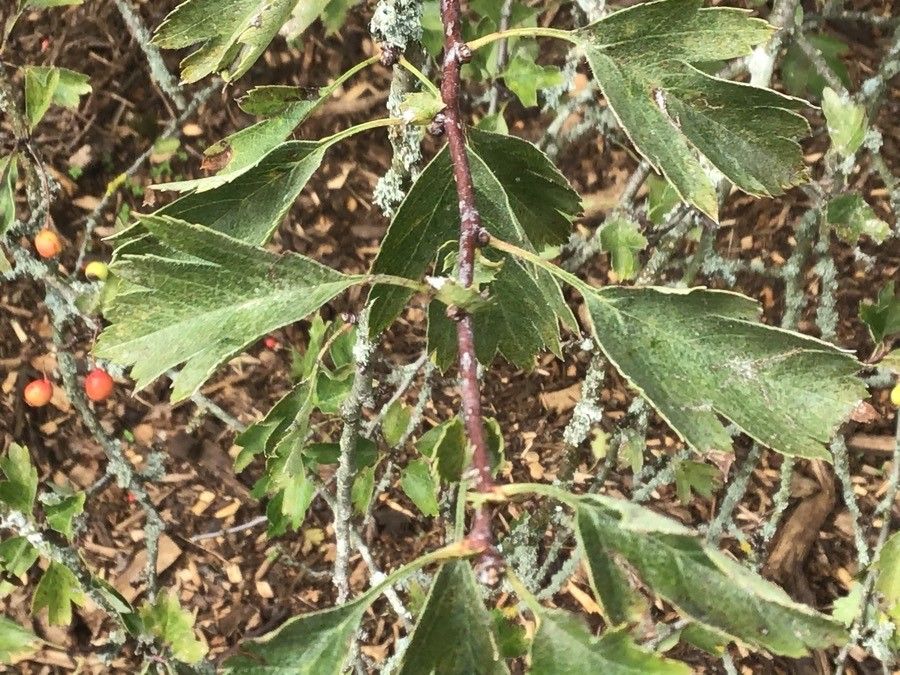
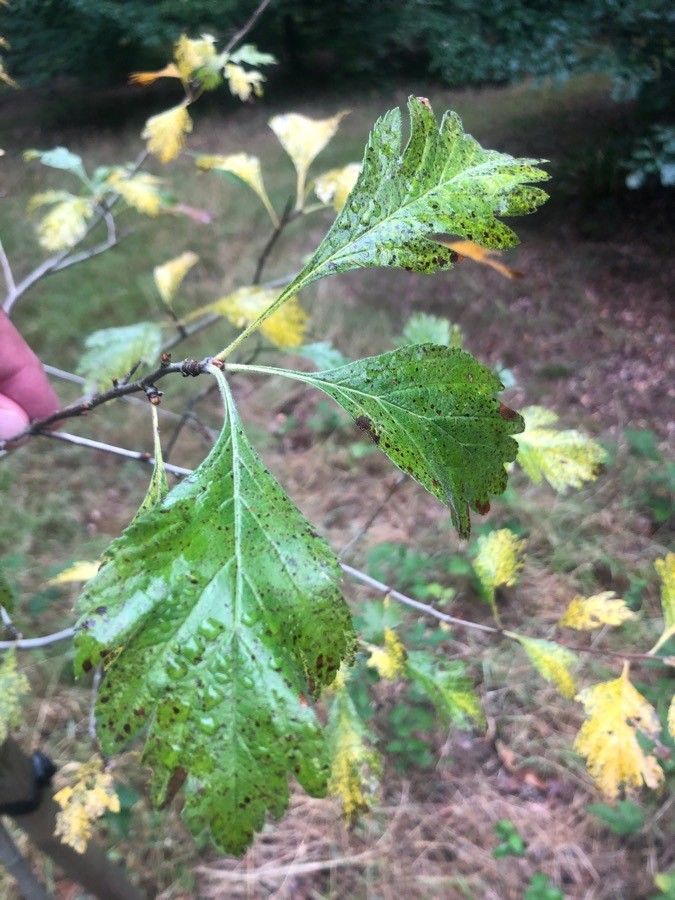
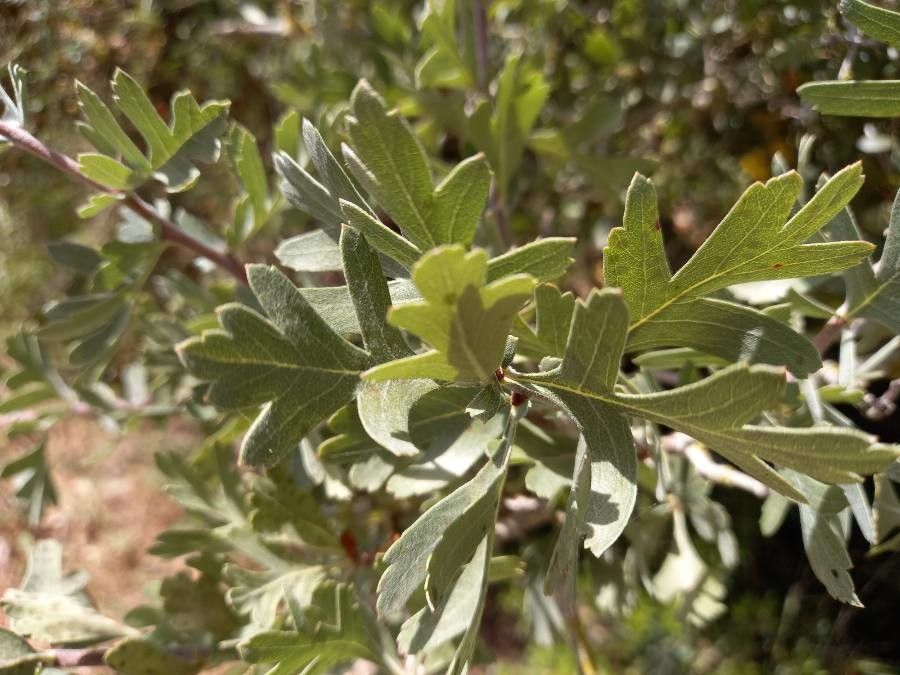
Crataegus brainerdii is a species of flowering plant in the rose family known by the common name Brainerd's hawthorn. It is named for Ezra Brainerd (1844–1924), a renowned botanist and former president of Middlebury College, in Vermont.It is native to eastern North America, including eastern Canada and the eastern United States.This species is a shrub or small tree growing up to 30 feet tall. The branches are lined with thorns up to 1.6 inches long. The serrated leaves are somewhat triangular in shape and sometimes slightly lobed. They are hairy when new. The flowers are borne in clusters. The rounded fruit is red and juicy.This species grows best in full sunlight and well-drained soils, but it will tolerate wet soils and drought conditions. It can be planted in urban environments. It can be used as a windbreak. It is good for erosion control. The fruits attract animals.
Brainerd's hawthorn is resistant to disease and is generally not prone to it. Regarding care, the plant is fairly low-maintenance. When grown outdoors it needs minimal watering, and larger specimens typically do not require pruning; smaller plants should be pruned after they have finished blooming. Brainerd's hawthorn is suitable for anyone with an outdoor space, such as a garden or deck, and does not demand a lot of care experience.
How to keep Crataegus Brainerdii.
Fertilizer
Fertilize your Brainerd's hawthorn in early spring to encourage healthy growth. Regular feeding improves overall health, producing vigorous growth, increased resilience to challenging conditions, and enhanced resistance to pests and diseases. Keep a consistent fertilization routine for your Brainerd's hawthorn to achieve vibrant, deeply colored foliage and a lush appearance.
Botanical profile.
Other names.