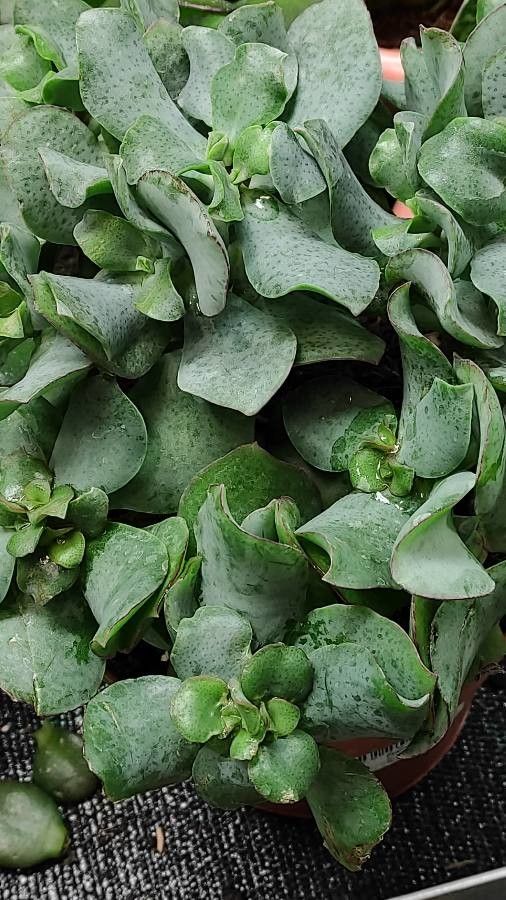
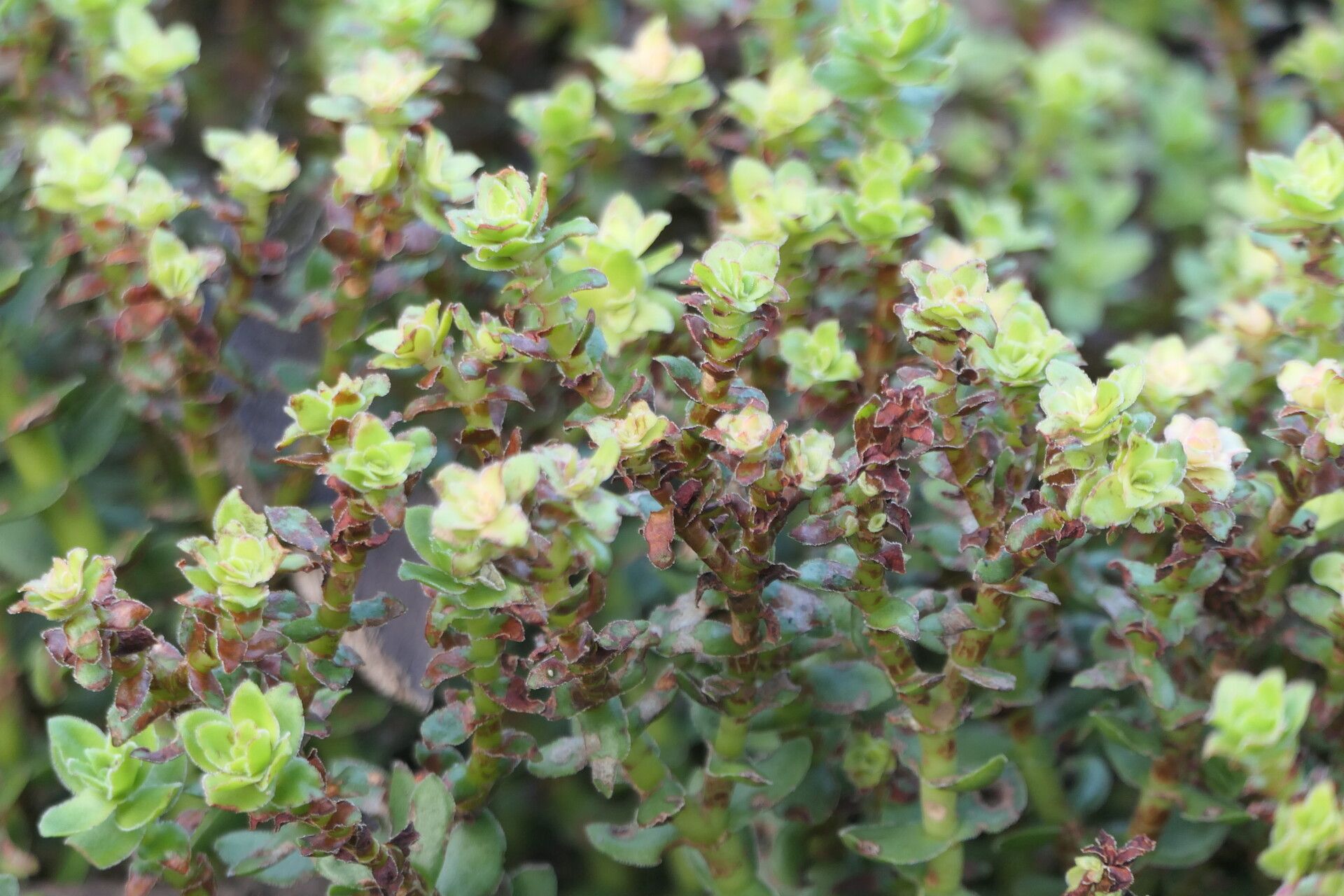
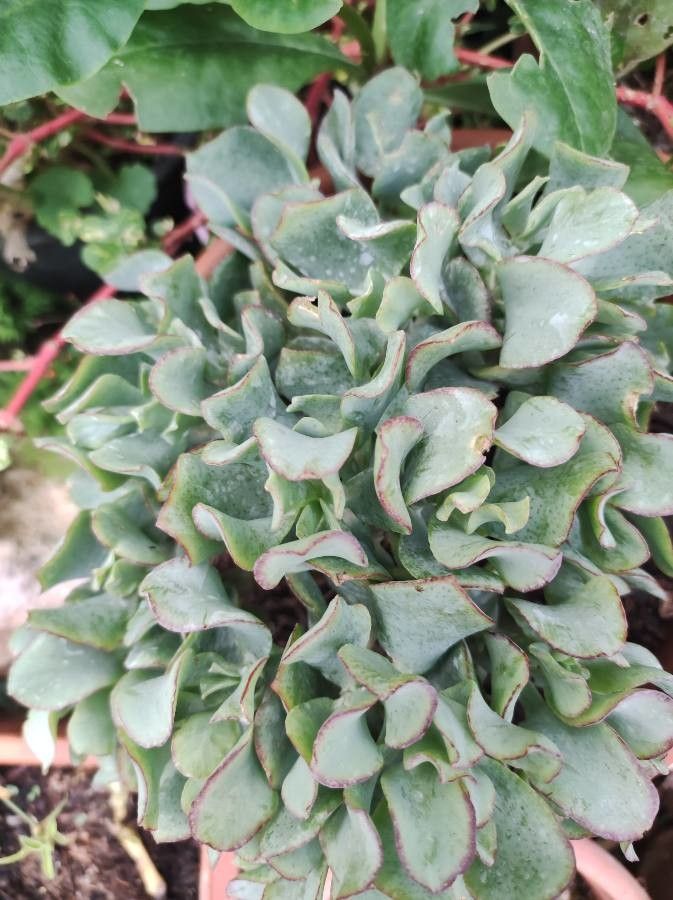
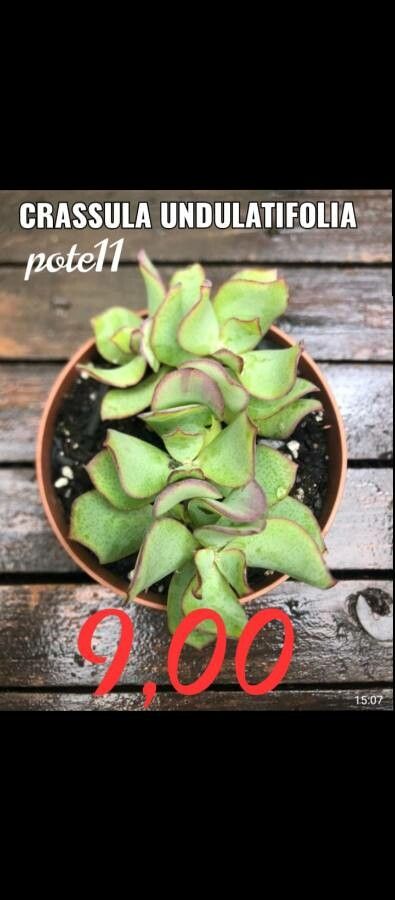
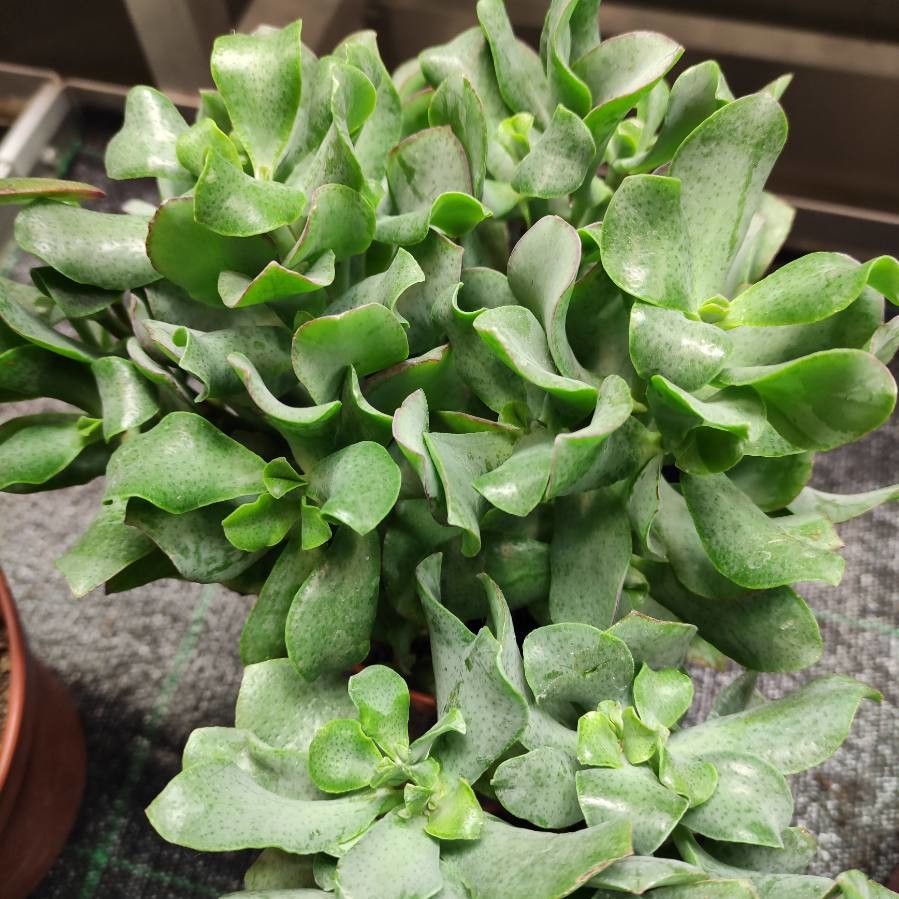
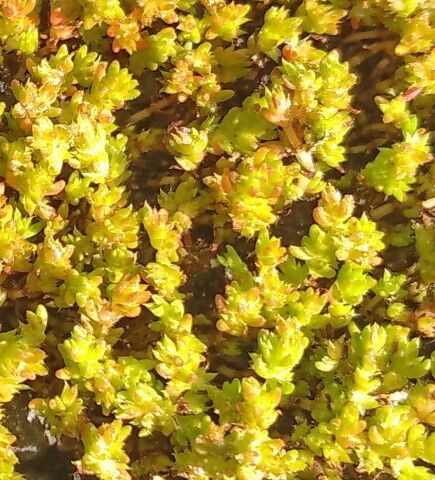
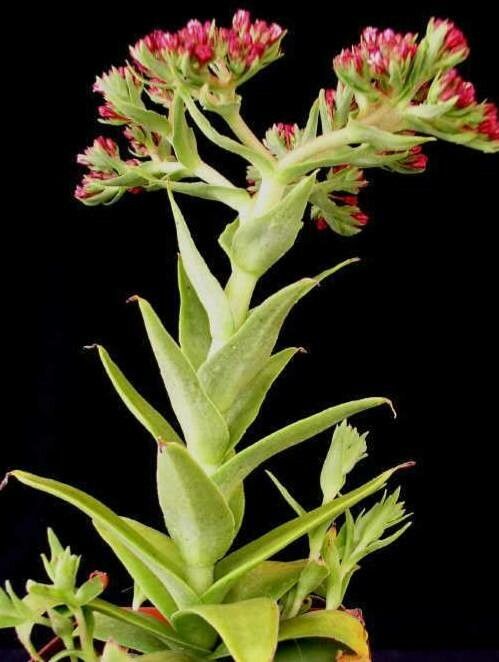
Crassula ovata 'Undulata,' commonly known as the "Jade Plant," is a succulent that belongs to the Crassulaceae family. It is a popular houseplant due to its attractive appearance and low maintenance requirements. The plant features thick, fleshy, oval-shaped leaves with a distinctive wavy or undulating edge. While the leaves are typically green with red or pink edges, they can also be entirely red or pink.
Native to South Africa, the Jade Plant can grow up to 3 feet tall in its natural habitat. However, when grown indoors, it usually reaches a height of 1-2 feet.
The Jade Plant thrives in bright but indirect sunlight and should be watered sparingly, as it stores water in its leaves for extended periods. Overwatering can lead to root rot, which can be fatal for the plant.
In addition to its aesthetic appeal, Crassula ovata 'Undulata' has also been traditionally used in Chinese culture as a symbol of good luck and prosperity, often given as gifts during important occasions such as weddings or business openings.
Overall, this succulent is easy to care for and boasts beautiful foliage, making it an excellent choice for both novice gardeners and experienced horticulturists alike.
Doily crassula has moderate disease resistance but is more sensitive to humidity. It is vulnerable to disease when humidity is high and is liable to develop root rot during dormancy. In terms of care, Doily crassula tolerates drought but requires increased watering during the growing season. Watering should be greatly reduced or stopped entirely during the dormant period. Doily crassula is suitable for growers with some experience, though it can be difficult to maintain, particularly during dormancy. It is especially appropriate for people who can dedicate time to its care throughout the winter months.
How to keep Crassula Undulata.
Light
Doily crassula grows best in direct sunlight, which encourages vigorous development. It can tolerate some shade, though that is not preferred. Coming from sunny habitats, excessive exposure can cause harm, while insufficient light can lead to stunted growth.
Temperature
Doily crassula is native to areas with temperate climates and grows best at temperatures between 68 and 100°F (20 and 38°C). It favors warm conditions and may need minor adjustments when grown indoors during the winter months.
Fertilizer
For Doily crassula, light applications of fertilizer once or twice a year during the growing season are enough. Avoid fertilizing in winter and in the summer when the plant is dormant. Use less fertilizer for plants that have been repotted and wait a couple of months after repotting before feeding. Fertilizing supports healthy growth and helps encourage blooms.
Pot & Repot
When repotting a Doily crassula, choose a pot slightly larger than the current one that provides good drainage. Use a gritty, well-draining cactus or succulent potting mix. Gently remove the plant from its old pot, brush off excess soil, and plant it at the same depth. Wait several days before watering to let any root damage heal. Repot in spring or autumn and keep it in a brightly lit spot.
Botanical profile.
- Plant Type
- Succulent
- Life Cycle
- Perennial
- Genus
- Crassula
- Family
- Crassulaceae
- Hardiness Zone
- 9-11
- Mature Height
- 40 cm
- Mature Spread
- 30 cm
- Leaf Color
- Light Green, Pale Green
- Leaf Type
- Semi-evergreen
- Flower Color
- White
- Flower Size
- 0.51 cm to 0.76 cm
- Bloom Time
- Mid spring, Late spring, Early summer
- Planting Time
- Spring, Summer, Autumn
- Harvest Time
- Summer
- Native Area
- South Africa
Other names.