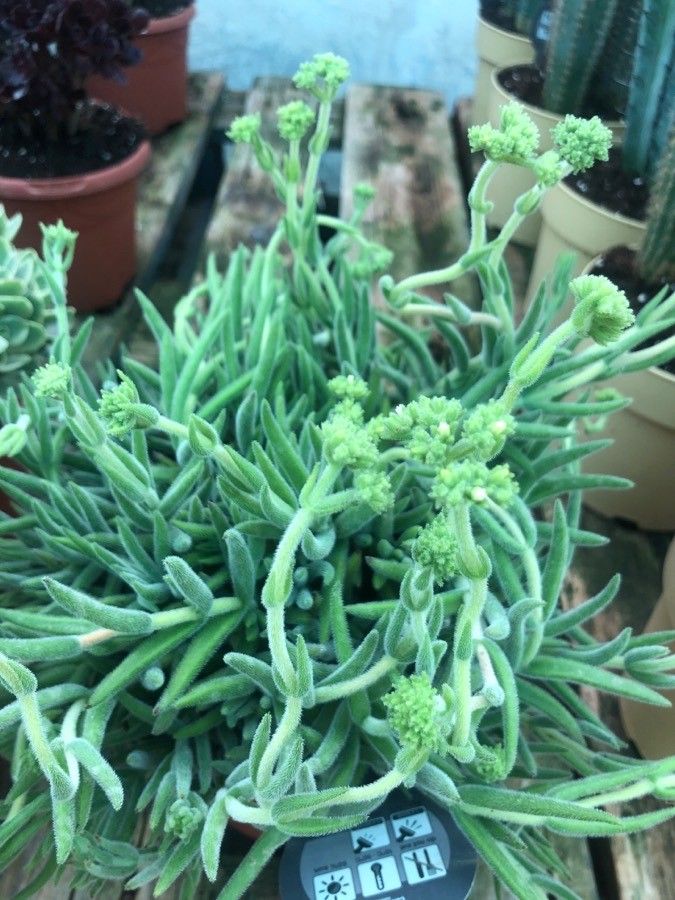
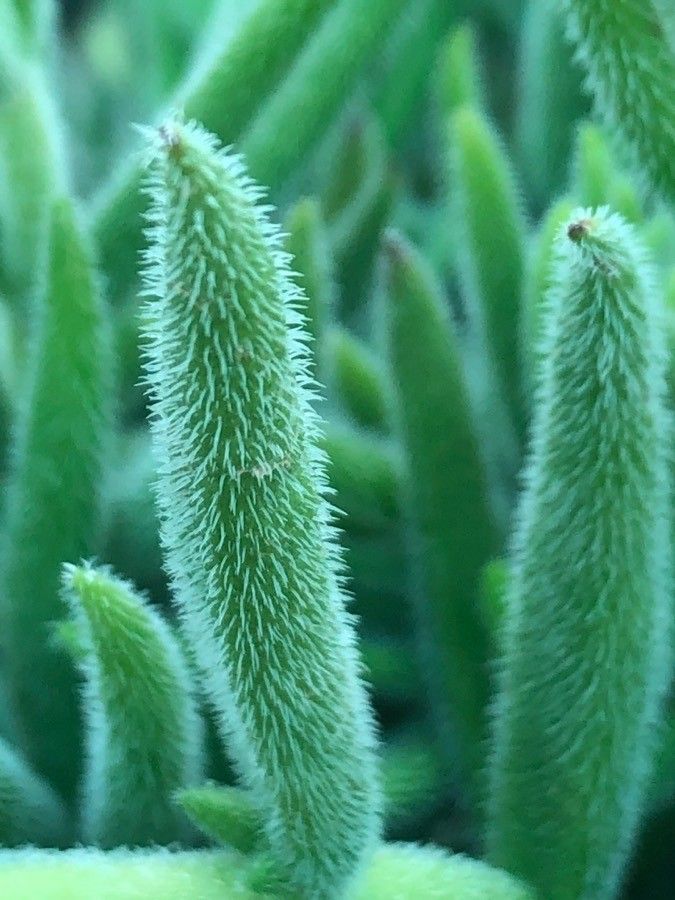
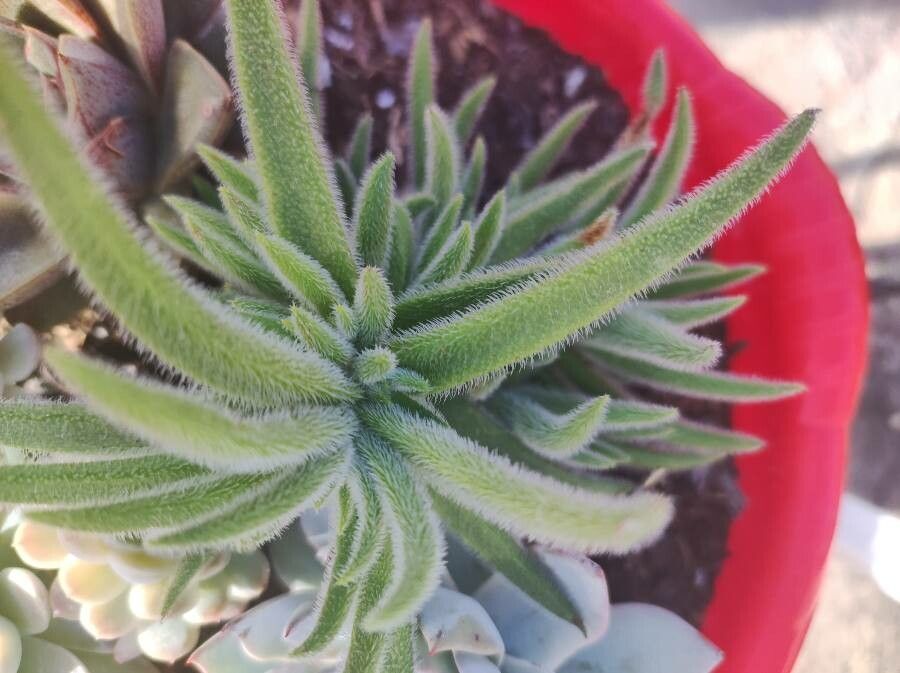
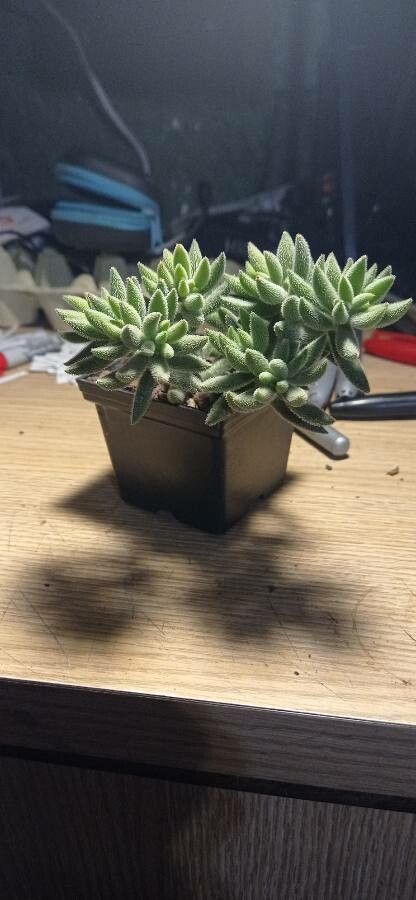
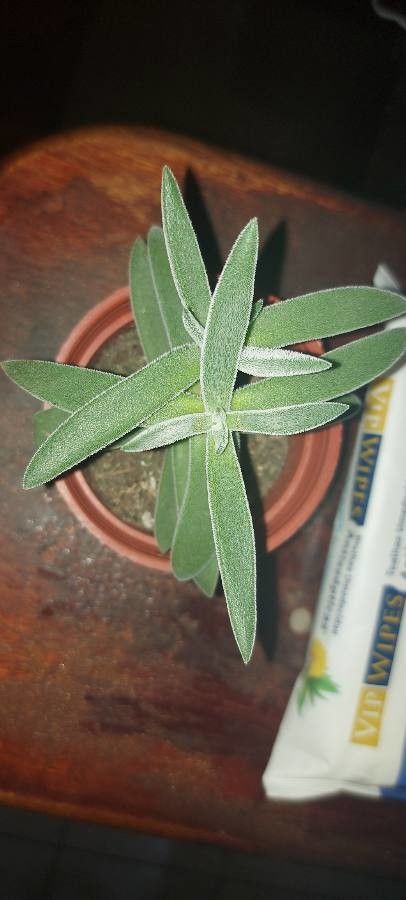
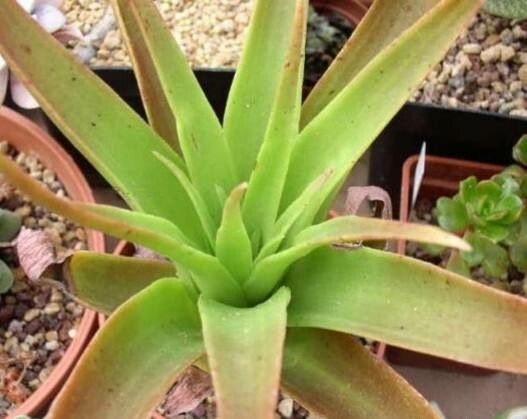
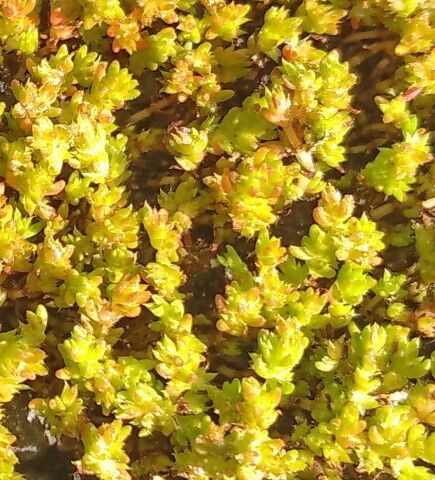
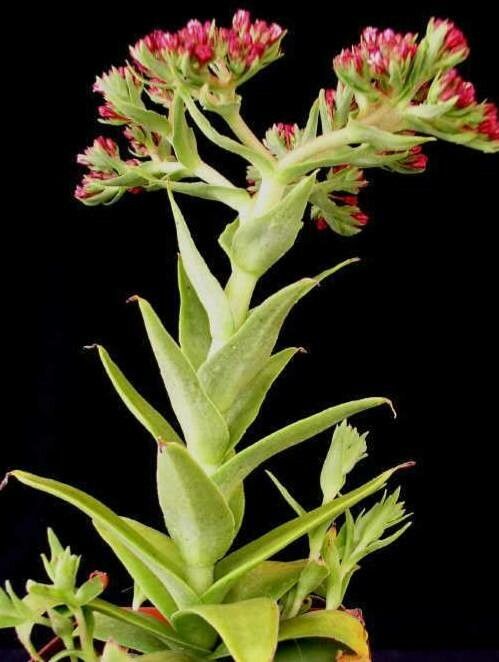
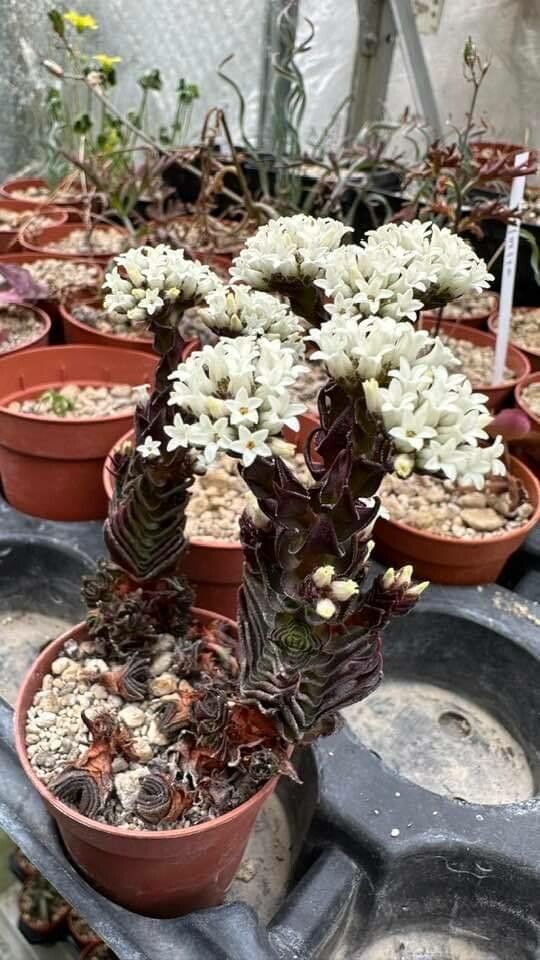
Crassula mesembryanthemoides, also known as the Red Pagoda or Red Crassula, is a striking succulent plant from the Crassulaceae family. Native to South Africa, this plant is distinguished by its stacked, triangular leaves that grow in opposite pairs along the stem, creating a pagoda-like structure.
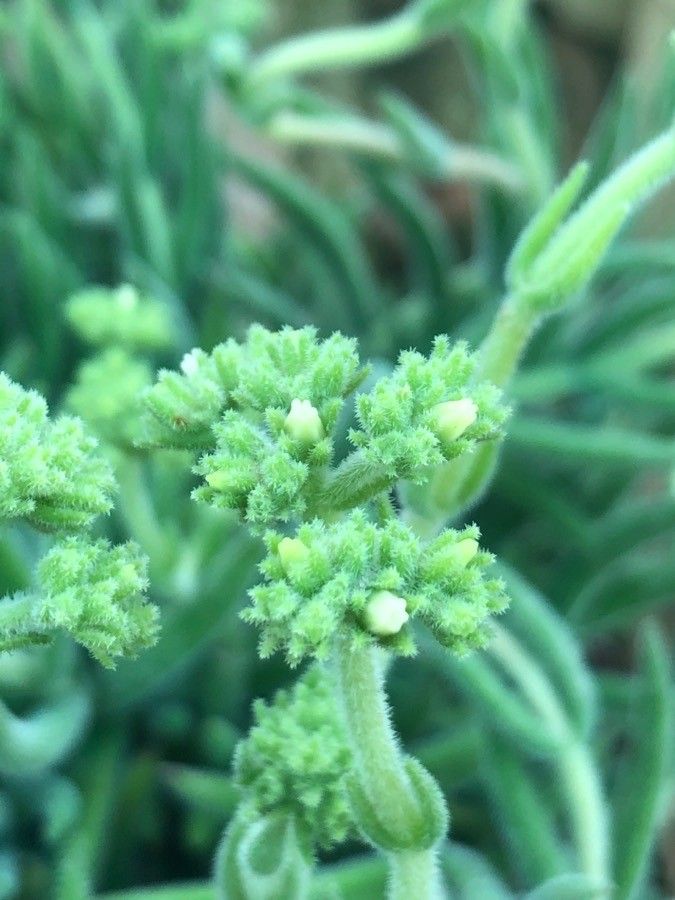
The fleshy leaves of the Red Pagoda feature bright red tips, a color that becomes even more vibrant when exposed to direct sunlight. The stem can grow up to 30 cm in height and produces small white flowers during the summer.
This succulent is known for being easy to care for, requiring minimal watering and able to thrive in various light conditions, from full sun to partial shade. It prefers well-draining soil with good airflow around its roots.
Crassula mesembryanthemoides has gained popularity among gardeners due to its unique appearance, low maintenance needs, and versatility in both indoor and outdoor settings. Whether placed in rock gardens or container gardens, its vivid red coloration adds visual interest to any space.
Crassula mesembryanthemoides has moderate disease resistance and is more sensitive to humidity. It becomes susceptible to illnesses when humidity is high and is liable to develop root rot during dormancy. Regarding care, Crassula mesembryanthemoides tolerates drought but requires more water in the active growing season. Watering should be greatly reduced or halted entirely during its dormant period. Crassula mesembryanthemoides is appropriate for growers with some experience, though it can be challenging to maintain, especially while dormant. It is particularly well suited to those who can spend time caring for it throughout the winter months.
How to keep Crassula Mesembryanthemoides.
Light
Crassula mesembryanthemoides, a plant indigenous to dry areas, flourishes under direct sunlight, as its natural habitat comprises of intense sunlight and scarce shade. It also tolerates semi-shaded conditions, demonstrating some flexibility in its growth patterns.
Water
Crassula mesembryanthemoides needs careful watering that depends on the environmental conditions. During its dormancy period, reduce watering to once every 1-2 weeks. In the summer, it's best to water the plant in the evening. Pay attention to the plant's symptoms to gauge its water needs. Also, check the soil moisture and the type of pot to decide how often to water.
Humidity
This plant will thrive in moderate humidity, which is probably the level in your home. However, misting it a few times a week can be very beneficial. Make sure the room has good ventilation.
Temperature
Crassula mesembryanthemoides can tolerate some warmth, but it primarily flourishes and develops during the cooler seasons, becoming inactive in the summer. In periods of high summer heat, it is crucial to offer shade to shield it from burning sunlight. During the hottest times, watering should be decreased or stopped to avoid root decay. The periods of vibrant growth for Crassula mesembryanthemoides are during the winter and spring seasons. Provided the temperature stays above a certain point, its growth will remain steady.
Fertilizer
For the Crassula mesembryanthemoides, small amounts of fertilizer applied 1-2 times annually during the growth period are adequate. Avoid providing fertilizer during winter and summer when it is in a dormant state. Cut back on the amount of fertilizer for plants that have been repotted, and delay fertilizing for a few months post-repotting. Fertilization promotes robust growth and stimulates flowering.
Pruning
To keep the shape of Crassula mesembryanthemoides well-maintained, prune any unnecessary or dense branches during the spring and autumn. You can use tools like knives and scissors for this task. If you wish to propagate the plant, cut stems with 5 to 6 leaves. Apply sulfur powder to the wounds, and plant them after they have healed. Make sure the soil is lightly moistened when you plant them.
Pot & Repot
When you're transplanting Crassula mesembryanthemoides, opt for a container somewhat bigger than the present one and ensure it has proper drainage. Utilize a course, free-draining succulent or cactus mixture. Gently dislodge the plant from its previous pot, shake off surplus dirt, and replant it at an identical depth. Hold off watering for several days to let potential root harm recover. Do the repotting in the spring or autumn, and locate it in an area with abundant light.
Toxicity
Crassula mesembryanthemoides, like many other Crassulas, is non-toxic to both humans and animals. This lovely, fluffy plant is safe to have near children and dogs.
Further reading →
The toxicity and danger assessments provided are for reference only. We do not assure their accuracy, so it's crucial not to depend on them. Seek professional advice when necessary for accurate guidance.
Botanical profile.
- Plant Type
- Succulent, Herb
- Life Cycle
- Perennial
- Hardiness Zone
- 9-11
- Mature Height
- 15 cm to 30 cm
- Mature Spread
- 20 cm to 40 cm
- Leaf Color
- Light Green, Pale Green
- Leaf Type
- Evergreen
- Flower Size
- 0.51 cm to 0.76 cm
- Bloom Time
- Mid spring, Late spring, Early summer
- Planting Time
- Spring
- Harvest Time
- Summer
- Native Area
- South Africa
Other names.