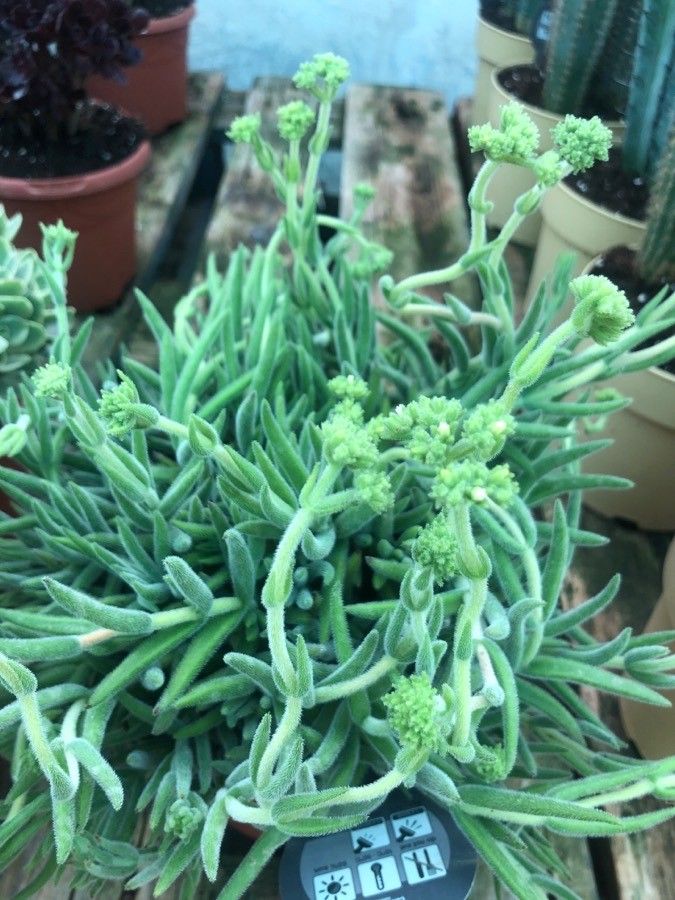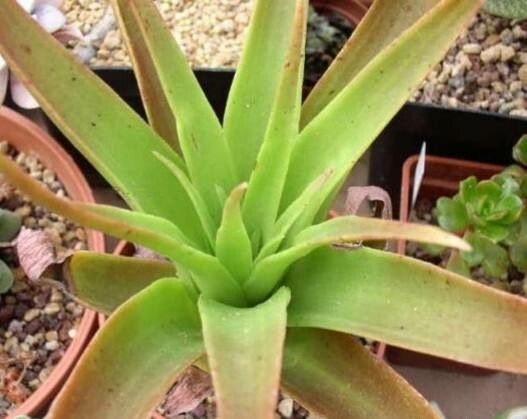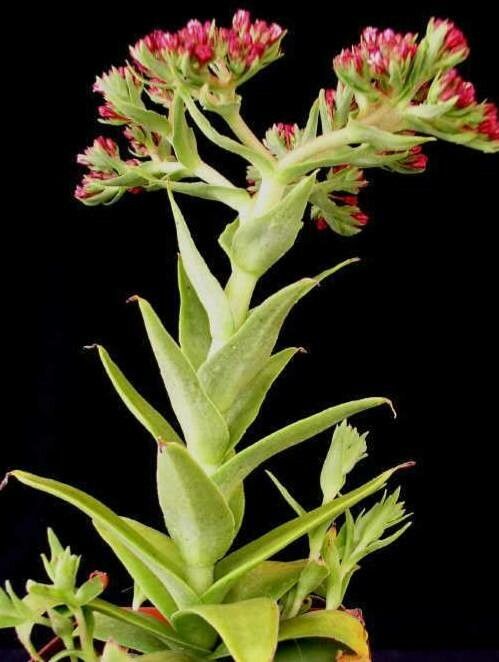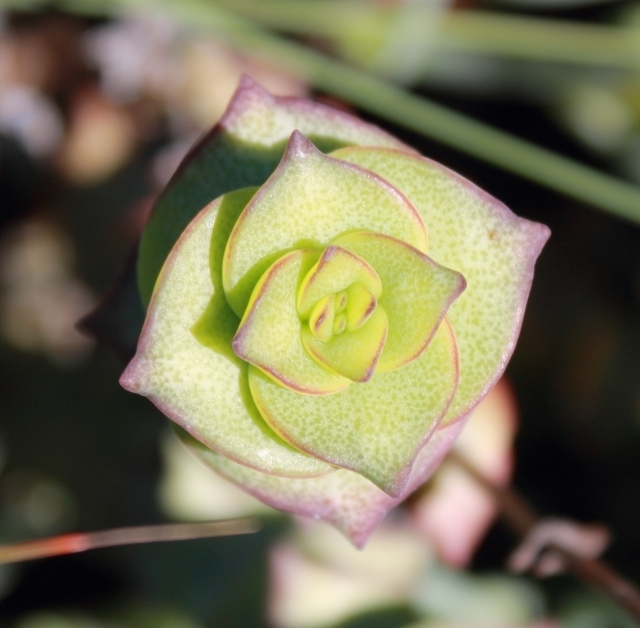
Crassula perforata is a succulent plant native to the Cape Provinces and KwaZulu-Natal in South Africa.
String of Buttons: This plant, native to South Africa, is an attractive succulent that grows in a sprawling, stacked pattern. Its distinctive stems are adorned with small, tight leaves that appear to spiral around them, giving rise to the common name "String of Buttons."
String of buttons has moderate disease resistance and is more sensitive to humidity. It becomes susceptible to disease when humidity is high and is prone to root rot during dormancy. In terms of care, String of buttons tolerates drought but requires more water in the growing season. Watering should be sharply reduced or stopped entirely during the dormant period. String of buttons is best for people with some growing experience, though it can be challenging to care for, particularly during dormancy. It is especially suited to those who have time to dedicate to its care during the winter months.
How to keep Crassula Perforata.
Light
String of buttons prefers full sun exposure but can tolerate partial shade. It comes from an environment with abundant sunlight and has adapted to do well under those conditions. Excessive light can cause sunburn, whereas too little light can adversely affect its growth.
Water
The string of buttons, which is well-suited for arid regions, demonstrates excellent drought tolerance. It prefers the soil to dry out between waterings, ideally every three weeks. This plant thrives in well-draining soil to prevent root rot, making it an excellent choice for indoor cultivation. It is particularly appealing to water-conscious gardeners.
Temperature
The native habitats of the string of buttons plant are arid and semi-arid areas with high daytime and low nighttime temperatures that range from 65 to 104 ℉ (18 to 40 ℃). This species favors temperatures between 68 and 100 ℉ (20 to 38 ℃). It should be kept in a warm location during cooler months and in a shaded spot in summer when temperatures can climb to 104 ℉ (40 ℃).
Fertilizer
For String of Buttons, light applications of fertilizer once or twice a year during the growing season are sufficient. Avoid fertilizing in winter, and avoid it in summer when the plant is dormant. Reduce the amount of fertilizer for repotted plants and wait a couple of months after repotting before fertilizing. Fertilizing supports healthy growth and encourages blooms.
Pruning
To preserve the shape of a string of buttons, regular pruning is essential, especially during the spring and autumn seasons. Use tools such as scissors and knives for trimming, and apply sulfur powder to the cuts to protect them. For propagation, choose healthy stems with 5-6 leaves, make a clean cut, treat the cut area, and plant the stems in slightly moist soil.
Pot & Repot
When repotting String of buttons, choose a pot slightly larger than the current one that has good drainage. Use a gritty, well-draining succulent or cactus mix. Carefully remove the plant from its old pot, brush off excess soil, and plant it at the same depth. Wait a few days before watering to allow any root damage to heal. Repot in spring or fall and place it in a brightly lit area.
Botanical profile.
- Plant Type
- Succulent, Herb
- Life Cycle
- Perennial
- Genus
- Crassula
- Family
- Crassulaceae
- Hardiness Zone
- 9-11
- Mature Height
- 30 cm to 61 cm
- Mature Spread
- 61 cm to 91 cm
- Leaf Color
- Green, Gray, Silver
- Leaf Type
- Evergreen
- Flower Color
- White
- Flower Size
- 2.54 cm
- Bloom Time
- Late spring, Early summer, Mid summer
- Planting Time
- Spring, Autumn, Winter
- Harvest Time
- Late spring, Early summer, Mid summer
- Native Area
- South Africa
Other names.
Reader questions.
When Should I Water My String Of Buttons?
Watering your string of buttons is essential for its health and growth, showcasing its vibrant appearance and disease resistance. The ideal time to water is when the top 1 to 2 inches of soil around the plant's base is dry, which you can check with your finger or a moisture meter. Additionally, signs such as leaf wrinkling, wilting, fading, or yellowing, and stem shriveling indicate the plant needs water. It's important to consider that high temperatures and low humidity might increase the need for watering. However, watering too soon or late could risk diseases or stunt the plant's growth, respectively. Understanding these cues will help maintain an effective watering schedule.
Why is fertilizing my String of buttons necessary?
To nourish the growing medium, it is beneficial to fertilize the String of Buttons plant. While it does retain water and nutrients, supplementing with plant food during the growing season promotes robust growth. Additionally, fertilizing can stimulate flowering in well-developed specimens during this time.
What are the sunlight requirements for String of Buttons (Crassula perforata)?
The String of Buttons plant thrives best in full sun, which is defined as receiving above 6 hours of sunlight daily. However, it can also manage under partial sun conditions, meaning it requires about 3-6 hours of sunlight daily. It's essential to monitor how sunlight moves through your garden or indoor setting to ensure the spots you choose for your plants provide a perfect balance of light and shade, guaranteeing their well-being. Overexposure to sunlight may lead to sunburn, whereas insufficient sunlight could impede the plant's growth.
What are the native environments of the String of Buttons plant?
The String of Buttons plant (Crassula perforata) is native to arid and semi-arid regions, thriving in environments where day and night temperatures range quite significantly. During the day, temperatures can reach between 65 to 104 °F (18 to 40 °C), while at night, they may drop significantly. This plant species prefers maintaining a temperature range between 68 to 100 °F (20 to 38 °C).
How Should I Water My String Of Buttons?
The string of buttons, or Crassula perforata, benefits from specific watering techniques to meet its hydration needs. Bottom-watering is recommended to ensure moisture reaches the roots without over-saturating the surface, thus minimizing risks of fungal diseases. When using a watering can, a narrow spout benefits the plant by directing water flow directly to the base, avoiding excess moisture on the foliage. Using a moisture meter can help in accurately gauging the soil's moisture, and it's important to avoid misting since it can lead to water retention on leaves. Ensuring good drainage and monitoring watering frequencies based on the plant's environmental conditions are crucial steps in caring for your string of buttons.
When should I fertilize my String of buttons plant?
String of buttons plants benefit from additional nutrients, but they only require a light dose of fertilizer during the growing season. It is best to fertilize them 1-2 times a year in the spring and autumn, while avoiding winter and summer when the plant is dormant. If you have recently repotted your String of buttons, be cautious with the amount of fertilizer you use, as it should be reduced. Additionally, it is advisable to wait a few months after repotting before applying any fertilizer.
What are the essentials for growing String of Buttons indoors and outdoors?
The String of Buttons prefers full sun but can tolerate partial shade, indicating its adaptability to various light conditions. For indoor plants not receiving sufficient natural sunlight, especially during winter or in less sunny locations, artificial light becomes crucial. LED lights are recommended because they can be customized to offer specific light wavelengths needed by plants. For plants requiring full sun, 30-50W/sq ft of light is needed, while partial sun plants require 20-30W/sq ft, and full shade plants need 10-20W/sq ft of artificial light. The light source should be placed 12-36 inches above the plant, simulating natural sunlight, and most plants need 8-12 hours of light per day to thrive.
What care does the String of Buttons plant require during different seasons?
In cooler months, it's crucial to keep the String of Buttons plant in a warm spot, particularly as winter is its growing season, requiring temperatures above 20°C for optimal growth. During summer, when temperatures can soar up to 104 °F (40 °C), keeping the plant in a shaded area is advisable. If overwintering the plant outdoors, ensure it is placed in a sheltered spot with ample sunlight. When outdoor temperatures drop below 0°C, bringing the plant indoors to a well-lit area is recommended. Adjust watering accordingly, increasing during higher temperatures and decreasing as it approaches 0°C. A temporary greenhouse may be set up for protection against consistently low outdoor temperatures, keeping the plant adequately moist.
How Much Water Does String Of Buttons Really Need?
String of buttons prefers a dry environment conducive to its native South African habitat. It thrives on a 'soak and dry' method, which involves thorough watering followed by a complete dry-out of the soil before the next watering session. The amount of water depends on various factors like pot size and plant size, with a general guideline of 1/4 cup (60 ml) of water every 2 weeks for small plants, and approximately 1/2 cup (120 ml) for larger plants every 3 weeks. Signs of proper hydration include plump and firm leaves with a vibrant green color. Conversely, overwatering and underwatering can lead to various health issues for the plant.
When is it not a good time to fertilize my String of buttons?
String of buttons, like other plants, goes through a dormancy period. During this time, you should avoid using fertilizer. The plant's growth stops during the summer and winter seasons, which is when you should refrain from applying fertilizer. Additionally, it's recommended to wait a few months after repotting in the spring before resuming fertilization.
What are the symptoms of insufficient light in String of Buttons, and how can they be addressed?
When String of Buttons is placed in areas with insufficient light, it may show several symptoms indicating light deficiency. These include lighter-colored new leaves, indicating a lack of chlorophyll and essential nutrients, and leggy or sparse growth, showing that the spaces between leaves or stems are elongating and the plant appears thin. Faster leaf drop, small leaves, chlorosis, sunscald, leaf curling, wilting, and leaf scorching are other signs of distress either due to low or excessive light. To solve light deficiency, gradually move plants to sunnier spots, ensuring they get at least 6 hours of direct sunlight daily. For indoor plants, consider using artificial light like a desk or ceiling lamp for at least 8 hours daily or invest in professional plant grow lights. If light obstructions are a problem, prune branches or leaves of trees blocking the sunlight or transplant smaller plants to a location with more sun and good drainage during their dormant period.
How does the String of Buttons plant react to extreme temperatures?
The String of Buttons plant does not tolerate extremely cold or hot temperatures well. At temperatures below -5°C, the leaves may show signs of water-soaked necrosis and wilting, indicating frost damage. In contrast, temperatures above 43°C can cause the plant to enter a dormant state, increasing its susceptibility to rot in high humidity. Trim off affected areas in cases of frostbite and move the plant to a warmer indoors spot or a makeshift greenhouse for cold protection. To combat heat stress, move the plant to a partially shaded area to protect it from direct midday and afternoon sun, and halt watering until cooler weather prevails.