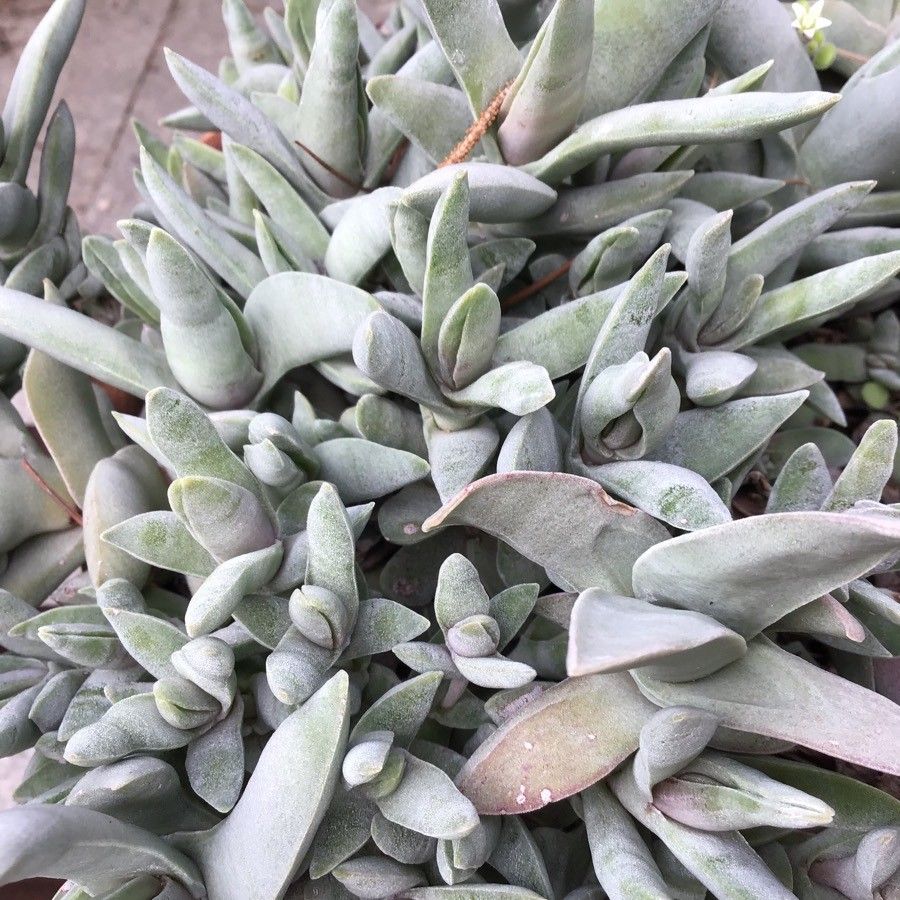
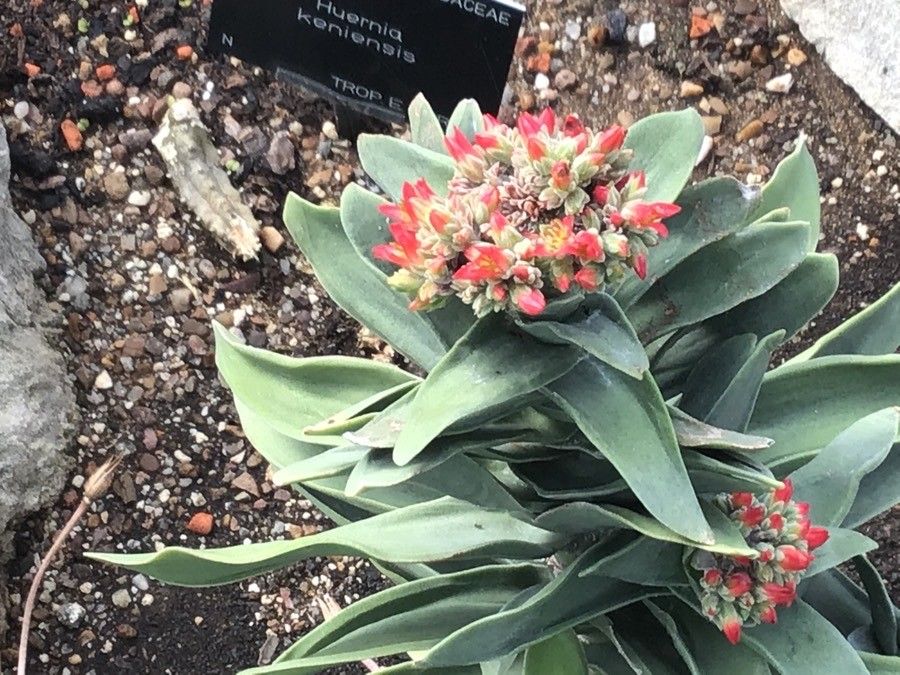
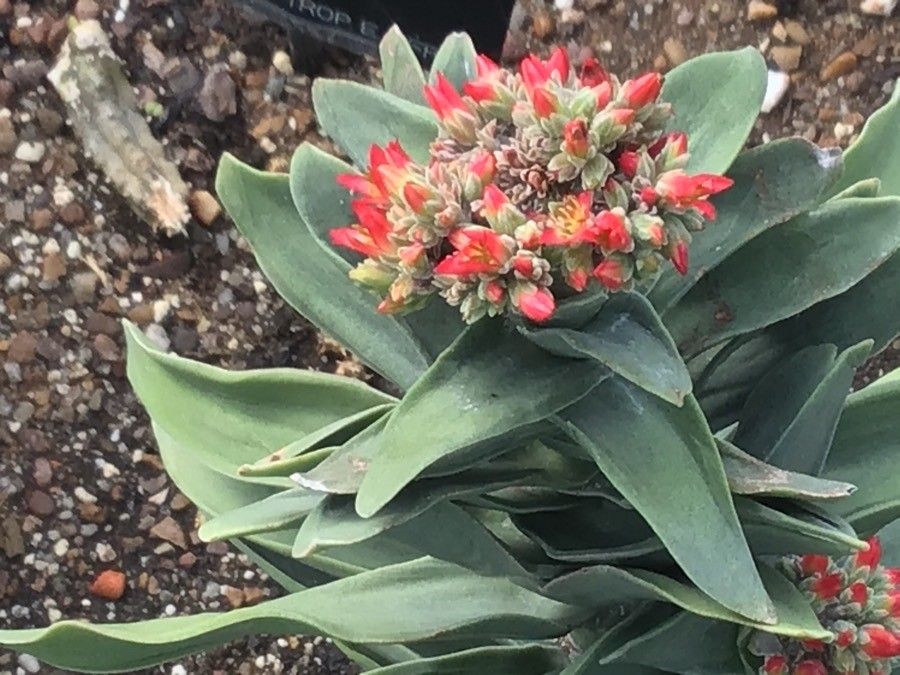
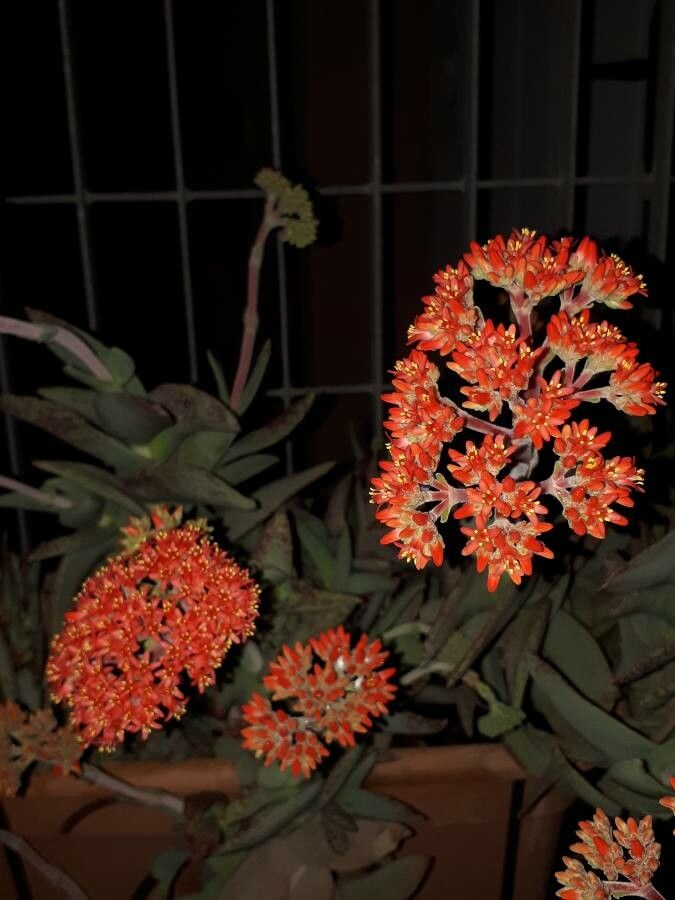
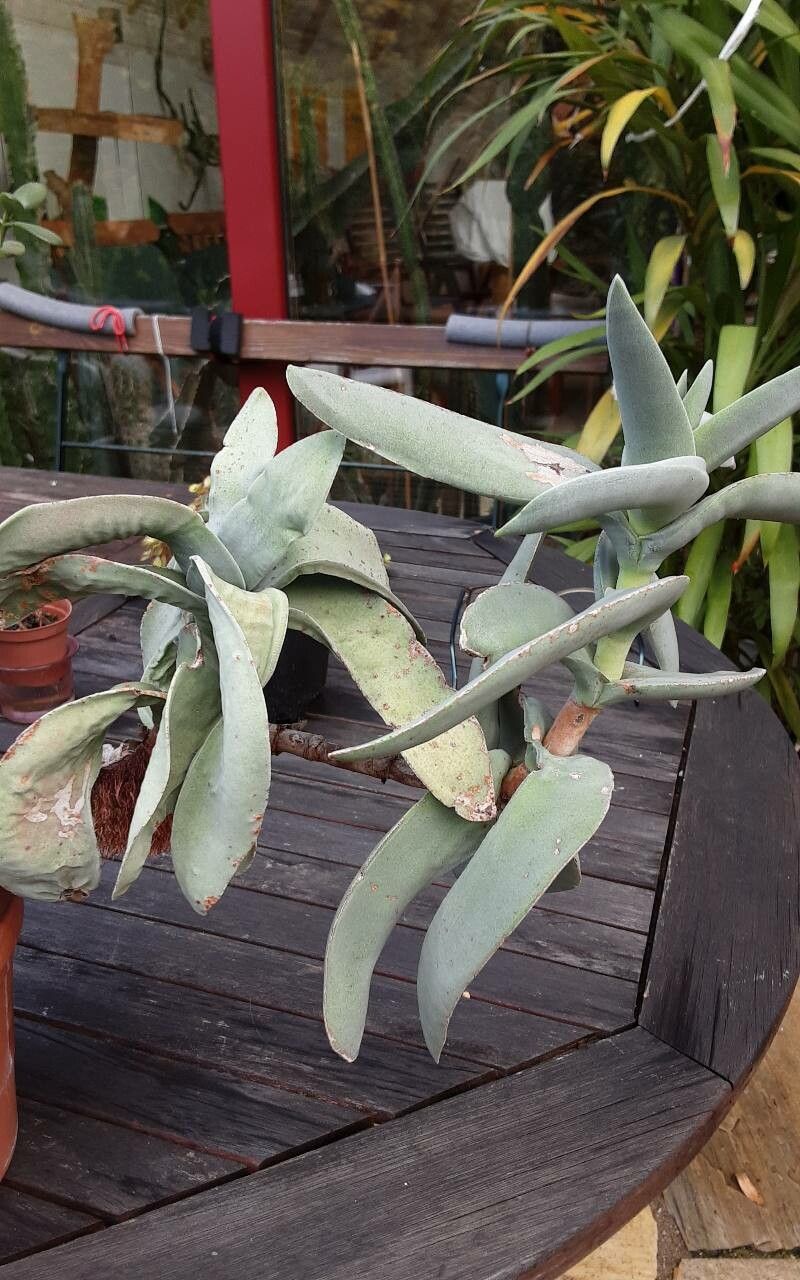
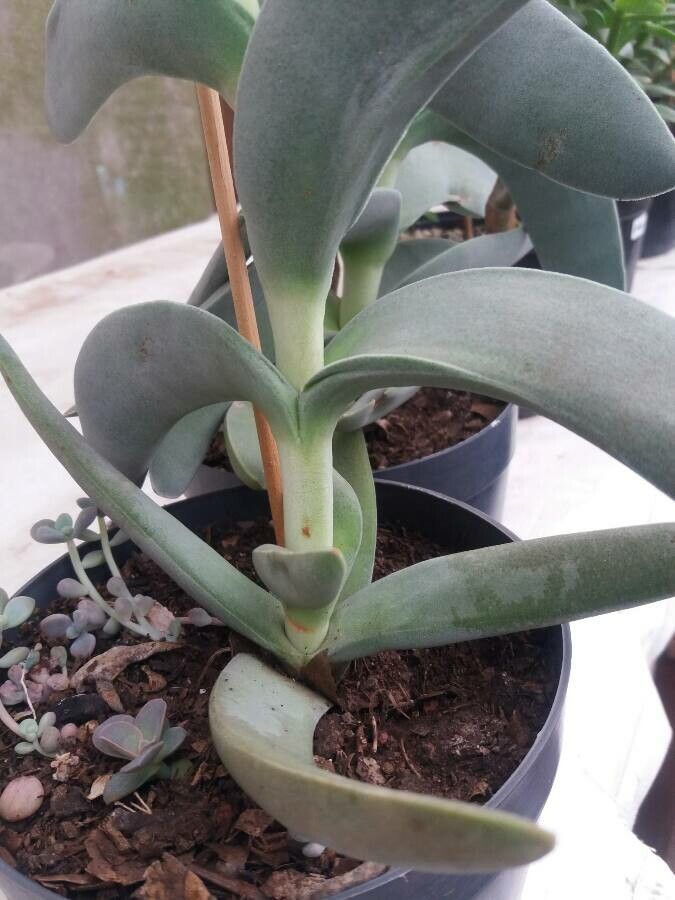
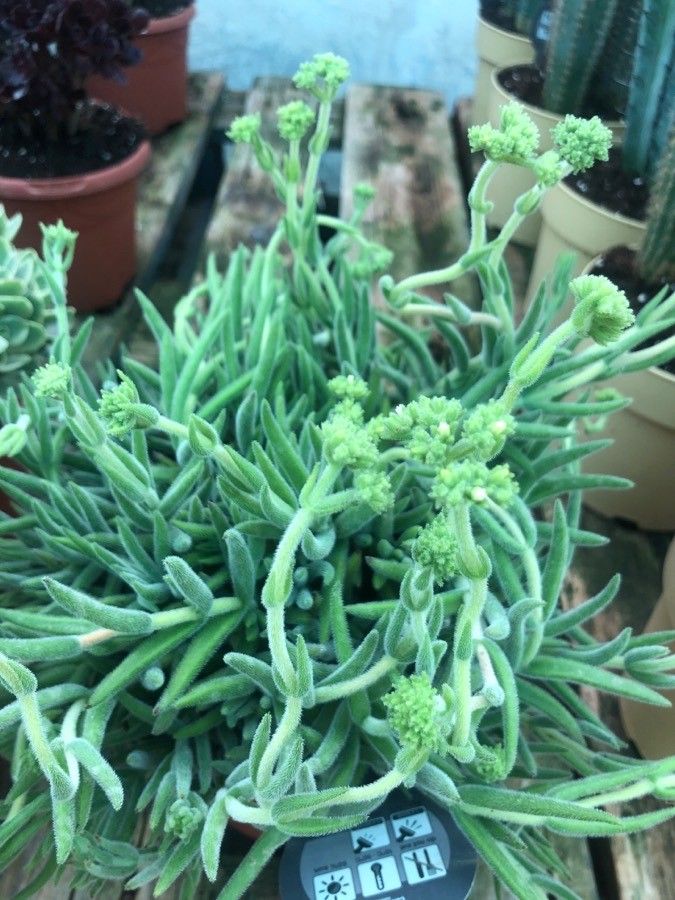
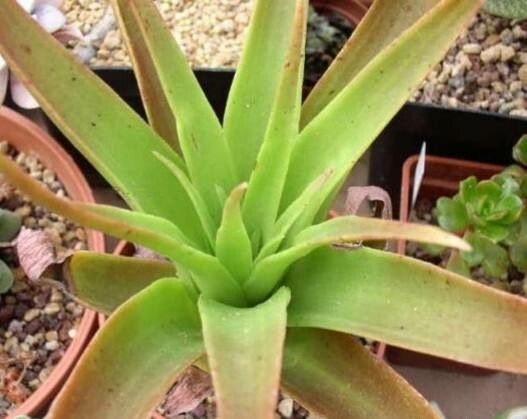
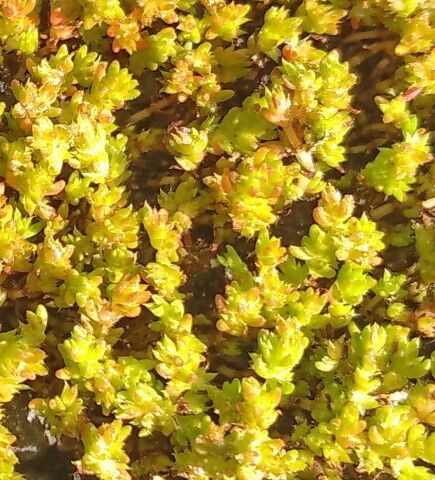
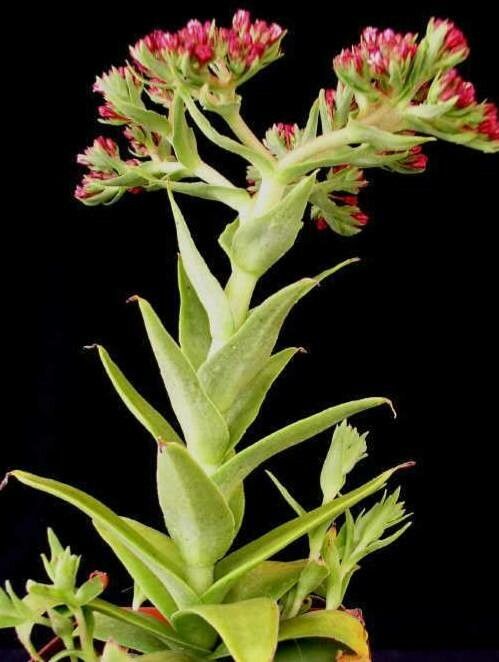
Crassula perfoliata, commonly known as the String of Buttons or Necklace Vine, is a succulent plant belonging to the Crassulaceae family. Native to South Africa, it thrives in rocky areas and cliff sides. The plant features thick, fleshy leaves arranged in opposite pairs along a stem that can reach up to 60 cm in length. The leaves are triangular with pointed tips and are uniquely fused at their bases, forming a circular shape around the stem.
During the summer months, the String of Buttons produces small white or pink flowers on long stalks that rise above the foliage. This plant is notably easy to care for, requiring minimal watering and thriving in well-draining soil with ample sunlight.
Crassula perfoliata has garnered popularity as an indoor houseplant due to its distinctive appearance and low maintenance needs. It can be grown in hanging baskets or trained along trellises for added visual appeal.
Beyond its ornamental value, Crassula perfoliata possesses medicinal properties traditionally utilized by indigenous people to treat various ailments, including stomach problems, skin conditions, and headaches.
Overall, this succulent plant makes an excellent addition for any indoor garden enthusiast looking for something unique yet easy to care for!
Crassula conjuncta has moderate disease resistance and is more sensitive to humidity. It is vulnerable to disease when humidity is high and is prone to root rot while dormant. Regarding care needs, Crassula conjuncta tolerates drought but requires more water during the growing season. Watering should be sharply reduced or stopped entirely during the dormant period. Crassula conjuncta is appropriate for people with some growing experience, but it can be challenging to care for, especially during dormancy. It is particularly suited to those who can dedicate time to its care in the winter months.
How to keep Crassula Perfoliata.
Light
Native to dry regions, Crassula conjuncta grows best in full sun; its natural habitat features intense sunlight and very little shade. It will also tolerate partial sun, giving it some flexibility in its growth.
Water
Crassula perfoliata is well-suited for arid conditions, requiring watering only every three weeks due to its drought tolerance. The plant is adapted to retain water, so it benefits from a deep soak when it is watered. Being an evergreen, Crassula perfoliata keeps its foliage throughout the year, making it ideal for indoor settings with stable humidity levels.
Humidity
This plant prefers dry conditions, so don't mist it. However, watering it less often can also thrive in higher humidity.
Temperature
Crassula conjuncta can tolerate some heat, but it mainly flourishes and grows during the cooler seasons and goes dormant in summer. In very hot summer conditions, give it shade to prevent scorching from strong sunlight. Watering should be reduced or stopped during the hottest period to avoid root rot. It shows vigorous growth in winter and spring. Provided the temperature does not fall too low, it will continue to grow steadily.
Fertilizer
Crassula conjuncta only needs light fertilizer applications once or twice a year during the growing season. Avoid fertilizing in winter or in summer when it is dormant. Reduce fertilizer for recently repotted plants and wait a couple of months after repotting before applying fertilizer. Fertilizing supports healthy growth and encourages blooming.
Pruning
To keep your Crassula perfoliata well-shaped, prune any excess or overly dense branches during the spring and autumn. Use a knife or scissors for the trimming, and apply sulfur powder to the cuts to promote healing. If you want to propagate the plant, cut stems with 5-6 leaves, treat the cuts with sulfur powder, and slightly moisten the soil before planting the stems.
Pot & Repot
When repotting Crassula conjuncta, pick a pot just a bit larger than the current one that has good drainage. Use a gritty, well-draining succulent or cactus mix. Gently take the plant out of its old pot, dust off any excess soil, and place it back in at the same depth. Wait a few days before watering so any root damage can heal. Repot in spring or fall and keep it in a brightly lit spot.
Botanical profile.
- Plant Type
- Succulent
- Life Cycle
- Perennial
- Genus
- Crassula
- Family
- Crassulaceae
- Hardiness Zone
- 9-11
- Mature Height
- 46 cm
- Mature Spread
- 34 cm
- Leaf Color
- Light Green, Pale Green
- Leaf Type
- Evergreen
- Flower Color
- White
- Flower Size
- 0.51 cm to 1.02 cm
- Bloom Time
- Spring
- Planting Time
- Spring, Summer, Autumn
- Harvest Time
- Late spring, Early summer, Mid summer
- Native Area
- South Africa
Other names.