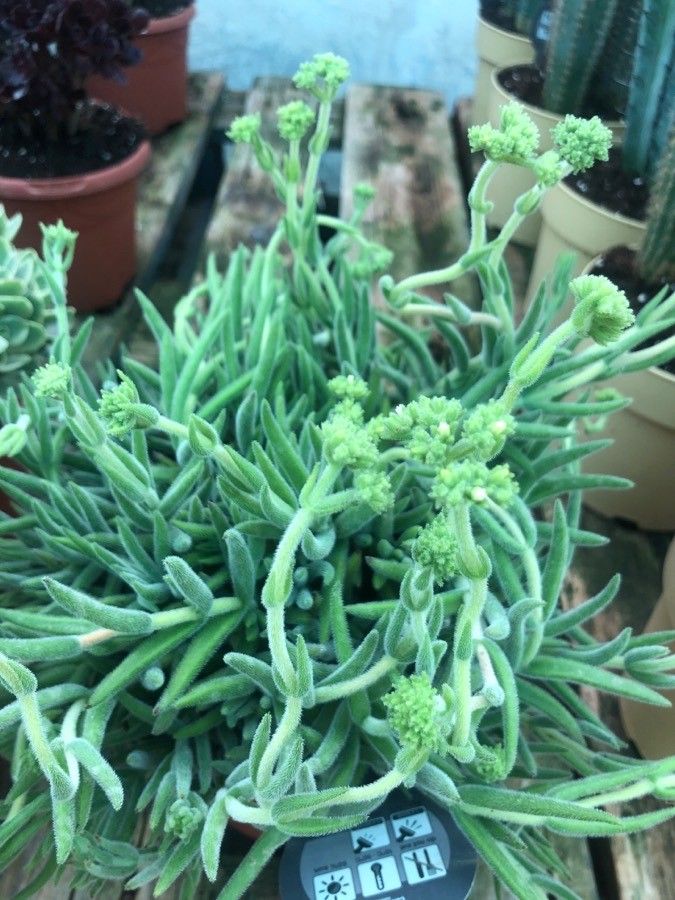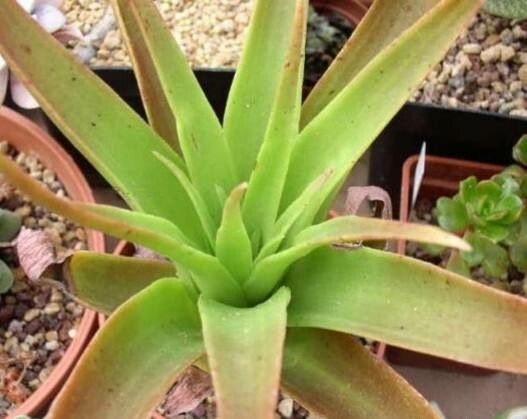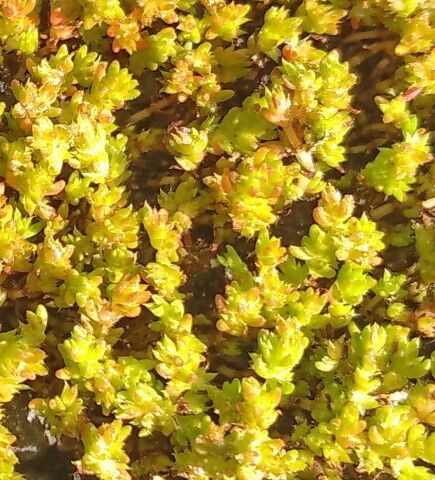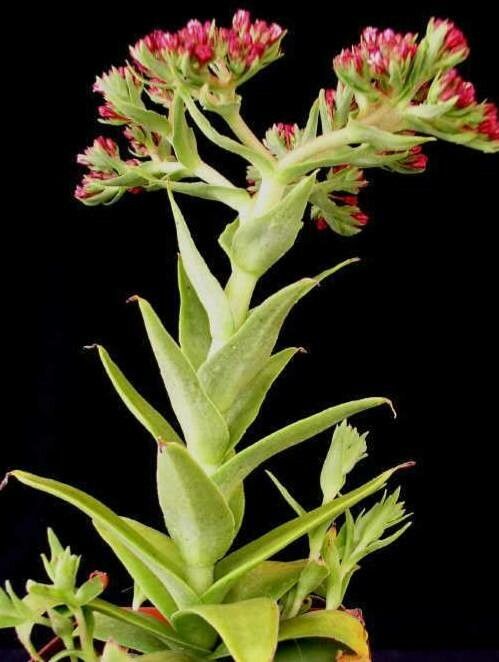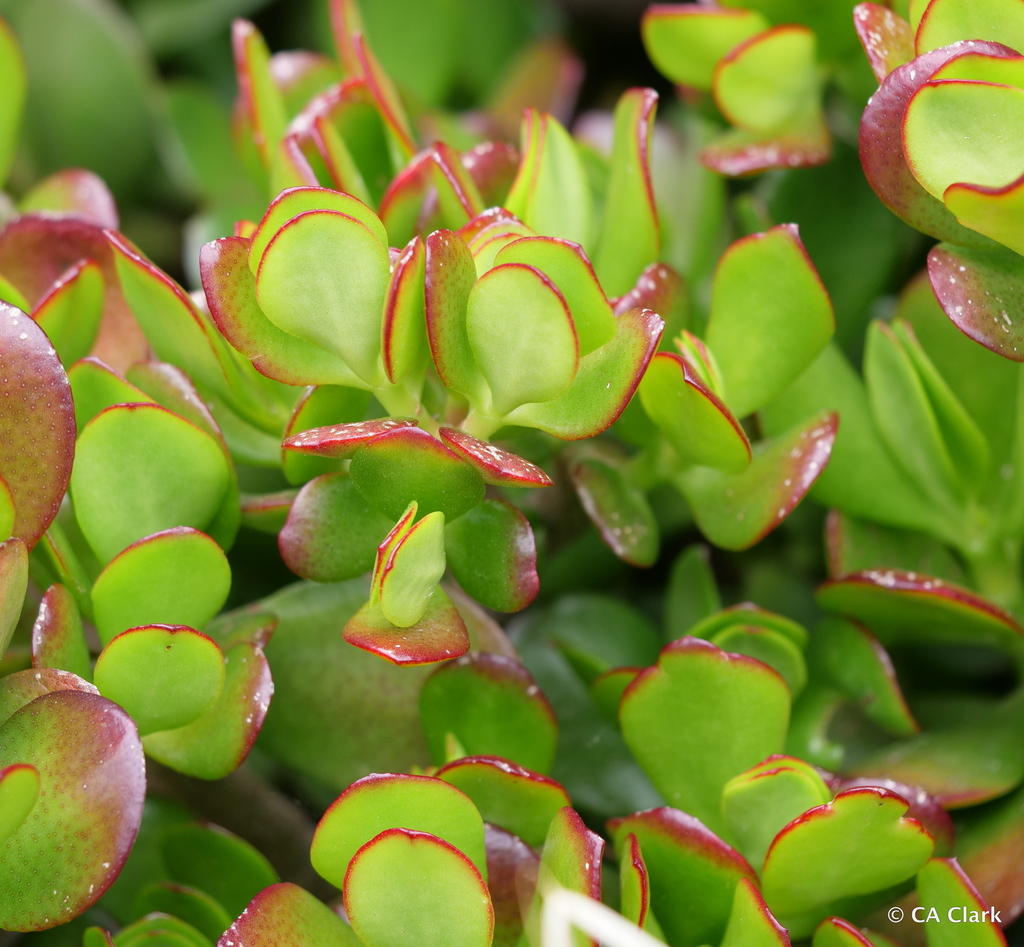
Crassula is a genus of succulent plants belonging to the Crassulaceae family. Native to South Africa, these plants are commonly known as jade plants or stonecrops. They are popular houseplants thanks to their attractive appearance and low maintenance needs.
Crassula plants feature thick, fleshy leaves that store water, making them drought-tolerant. The leaves can be green or variegated with shades of red, yellow, or pink. Their flowers are small, star-shaped, and range in color from white to pink.
These succulents prefer bright light but can tolerate some shade. They require well-draining soil and should be watered sparingly, as overwatering can lead to root rot.
Getting a jade plant to bloom is quite challenging, and witnessing its flowers is often considered a sign of great luck. Because it's believed to bring good fortune, the jade plant is a popular choice as a decorative indoor plant. FUN FACT · FROM THE LIBRARY
Crassula is a versatile plant that can be grown in containers either indoors or outdoors in warmer climates. It is also often used in bonsai arrangements due to its small size and unique appearance.
Overall, Crassula is an easy-to-care-for plant that adds beauty and interest wherever it is grown!
The Jade Plant is a succulent known for its fleshy, flat, oval-shaped leaves that are roughly the size of a thumb. These leaves bear a striking resemblance to jadeite, featuring edges that are attractively tinged with pale red, similar to the aging process of green jadeite. As the plant matures, its leaves grow thicker. These distinctive traits are what inspired the name "Jade Plant."
Jade plant has moderate disease resistance and is more sensitive to humidity. It is vulnerable to disease when humidity is high and is prone to root rot during dormancy. In terms of care, jade plant tolerates drought but requires more water in the growing season. Watering should be greatly reduced or stopped entirely during the dormant period. Jade plant is suitable for people with some growing experience, though it can be challenging to care for, particularly during dormancy. It is especially appropriate for those who can spend time tending to it during the winter months.
How to keep Crassula Ovata.
Light
The jade plant prefers moderate to plentiful light, ideally a bit filtered or diffused. It can tolerate wide contrasts in illumination, from very bright to much lower light levels. Originating from rocky habitats, it grows well under varied light intensities, but extreme swings can cause discoloration or wilting.
Water
The jade plant is a drought-tolerant succulent that requires minimal watering, typically about once every three weeks. It is ideal for low-humidity environments and thrives in dry conditions. The plant's glossy leaves indicate its preference for dry periods, which helps prevent root rot caused by excessive moisture.
Humidity
This plant prefers dry conditions, so don't mist it. However, watering it less often can also thrive in higher humidity.
Temperature
The jade plant plant is indigenous to South Africa and does best in temperatures of 68 to 100 ℉ (20 to 38 ℃). It can tolerate cooler conditions down to about 50 ℉ (10 ℃), but care should be taken to avoid prolonged exposure to frost. In the summer months it may benefit from a slight increase in temperature, up to around 82 ℉ (28 ℃).
Fertilizer
For a jade plant, light applications of fertilizer once or twice a year during the growing season are enough. Do not fertilize in winter or in summer when the plant is dormant. Cut back on fertilizer for repotted plants and wait a couple of months after repotting before feeding. Fertilizing promotes healthy growth and encourages blooms.
Pruning
To maintain the shape of a jade plant, prune any excess or densely packed branches in the spring and autumn. Use a knife or scissors for pruning, and apply sulfur powder to the cuts. For propagation, cut stems that have 5-6 leaves, apply sulfur to the cut ends, and allow them to heal before planting. Ensure the soil for the cuttings remains slightly moist.
Pot & Repot
When repotting a Jade plant, choose a pot slightly larger than the current one that has good drainage. Use a well-draining, gritty succulent or cactus mix. Gently remove the plant from its old pot, brush off excess soil, and place it at the same depth in the new pot. Wait a few days before watering to allow any root damage to heal. Repot in spring or fall, and position the plant in a brightly lit spot.
Botanical profile.
- Plant Type
- Succulent, Shrub
- Life Cycle
- Perennial
- Genus
- Crassula
- Family
- Crassulaceae
- Hardiness Zone
- 9-12
- Mature Height
- 0.91 m to 1.83 m
- Mature Spread
- 8 cm to 15 cm
- Leaf Color
- Green, Red
- Leaf Type
- Evergreen
- Flower Color
- Pink, White
- Flower Size
- 2.54 cm
- Bloom Time
- Early spring, Winter
- Planting Time
- Spring, Summer, Autumn, Winter
- Harvest Time
- Early spring, Mid spring
- Native Area
- South Africa, Eswatini, Mozambique
Other names.
Reader questions.
When Should I Water My Jade Plant?
Understanding the proper timing for watering a jade plant is essential for its health and growth. The ideal time to water is when the top 1 to 2 inches of soil around the plant base are dry. Paying attention to the leaves can also provide clues; signs that your jade plant needs water include wilted, lackluster leaves, a yellow or drooping appearance, or wrinkling indicating dehydration. In contrast, plump, firm leaves suggest the plant is adequately hydrated. Keep in mind that higher temperatures and low humidity require more frequent watering, but be cautious of over-watering as it can lead to root diseases. Monitoring these conditions will help ensure the jade plant is watered at optimal times.
Why should I put fertilizer on my Jade plant?
Fertilizing the Jade plant during the growing season is beneficial in multiple ways. It adds nutrients to the soil and supports healthy growth, even though the plant can store water and nutrients. Additionally, fertilizing can help mature specimens produce blooms.
What are the sunlight requirements for a jade plant?
The jade plant thrives under varying light conditions, preferring moderate to abundant light exposure, ideally in slightly filtered or scattered sunlight. It can withstand a range of light intensities, from intense illumination to considerably reduced light. However, it's essential to avoid sudden and drastic changes in light intensity to prevent discoloration or wilting. For indoor plants, artificial lighting can be a viable option, especially when natural sunlight is insufficient. LED lights are recommended, with full sun plants requiring 30-50W/sq ft, partial sun plants needing 20-30W/sq ft, and full shade plants 10-20W/sq ft of artificial light. The light source should be positioned 12-36 inches above the plant, mimicking natural daylight for 8-12 hours per day.
What is the native region and optimal growing temperatures for a Jade Plant?
The Jade Plant, botanically known as Crassula ovata, is native to South Africa. It flourishes in a temperature range of 68 to 100°F (20 to 38°C) for optimal growth. It can withstand cooler temperatures down to 50°F (10°C), but it's important to protect it from prolonged frost exposure. During summer, a slight increase in temperature to around 82°F (28°C) is beneficial. In winter, which is the Jade Plant's growing season, maintaining temperatures above the minimum tolerable level is crucial for its health. If outdoor temperatures drop too low, the plant should be moved indoors to a well-lit area and watered appropriately in response to temperature changes.
How Should I Water My Jade Plant?
Jade plants thrive in well-draining soil and need the soil to almost completely dry out between watering sessions. Employing bottom-watering techniques helps avoid water contact with the leaves and stems, reducing the risk of rot. Use a watering can with a long, narrow spout for targeted watering at the plant's base, and consider using a moisture meter to check soil dryness. Focus on watering the soil directly, avoiding the foliage to prevent fungal diseases. Be cautious of over-watering signs such as yellowing or dropping leaves and adjust your watering frequency based on these indicators. A suitable pot and well-draining soil mix also support healthy watering practices.
When should I put fertilizer on my Jade plant?
The Jade plant benefits from some extra nutrients, but it only needs a small amount of fertilizer during the growing season. It is best to fertilize it 1-2 times a year, specifically in the spring and autumn. Avoid fertilizing it in the winter and summer when it is dormant. When repotting the plant, be cautious with the amount of fertilizer used and wait a couple of months before applying any fertilizer.
What are the symptoms of improper lighting for a jade plant?
The jade plant shows various symptoms when exposed to unsuitable lighting conditions. Insufficient light can lead to leggy or sparse growth, paler new leaves indicating a lack of chlorophyll, and slower or halted growth as the plant enters survival mode. In low light, the plant may shed older leaves earlier than usual to conserve resources. Symptoms of excessive sunlight include chlorosis, where leaves turn yellow due to the breakdown of chlorophyll; sunscald, characterized by pale or necrotic spots on the plant tissue; leaf curling as a defense mechanism against sunlight; wilting due to increased water loss; and leaf scorching, seen as brown, crispy edges on the leaves.
What should I do if my Jade Plant is exposed to temperatures too low or too high for its tolerance?
For low-temperature exposure, Jade Plants exhibit symptoms like water-soaked necrosis and wilting when temperatures fall below their growth limit, and leaves may significantly wilt and fall off after mild frost damage. The immediate solution is to trim off frostbitten areas and move the plant to a warmer indoor location or set up a temporary greenhouse with proper ventilation to prevent decay. Ensure it's placed near a south-facing window for sufficient sunlight. For high-temperature exposure, Jade Plants should be kept below their maximum suitable temperature to avoid dormancy and rot in high humidity. Remove dry and rotten parts, move the plant to a partially shaded area, especially during the intense midday and afternoon sun, and stop watering until the temperature cools.
How Much Water Does My Jade Plant Really Need?
The actual amount of water your jade plant requires can vary based on several factors such as pot size, root depth, and environmental conditions. Generally, for a standard pot, 1-2 cups of water, ensuring thorough saturation to the root depth without waterlogging, is recommended. Indicators of adequate hydration include vibrant green, plump, and firm leaves. Conversely, signs of over or under-watering include yellow or mushy leaves and shriveled foliage, respectively. Utilizing a well-draining pot and soil mix is critical to avoiding over-watering and ensuring the health of your jade plant.
When is it not a good idea to fertilize my Jade plant?
Jade plants, like other plants, have a dormancy period where growth stops. During this time, it is best to avoid using fertilizer. It is important to note that both summer and winter are periods of limited growth for the plant, and fertilizer should not be applied then. Furthermore, after repotting in the spring, it is advised to wait a few months before beginning to fertilize again.
How can I address and prevent lighting issues for my jade plant?
To optimize your jade plant's growth in response to lighting issues, gradually acclimate it to changing light conditions. For indoor plants, shift them to progressively sunnier spots each week, aiming for 3-6 hours of direct sunlight daily, or use artificial lighting like desk or ceiling lamps for at least 8 hours a day. For outdoor plants, move them gradually to sunnier locations to avoid sunburn. If the plant is too large or immovable, consider professional grow lights. Additionally, minimize obstructions to sunlight, such as by pruning obstructing branches, and consider transplanting smaller plants during their dormant period to better-lit locations. Note that parts of the plant already affected by insufficient light may not recover, but new growth should be healthy following these adjustments.
What Kind of Water is Best for Jade Plant?
Jade plants prefer well-aerated and fresh water, thriving best with rainwater, distilled water, or filtered tap water with minimal contaminants. They are moderately sensitive to chlorine, fluoride, and minerals like magnesium and calcium found in hard tap water. Letting tap water sit out before use can help reduce these chemicals, and utilizing water at room temperature is best to avoid shock to the plant's roots. Ensuring the water used is free of harsh chemicals and at a comfortable temperature will promote the plant's health and growth.