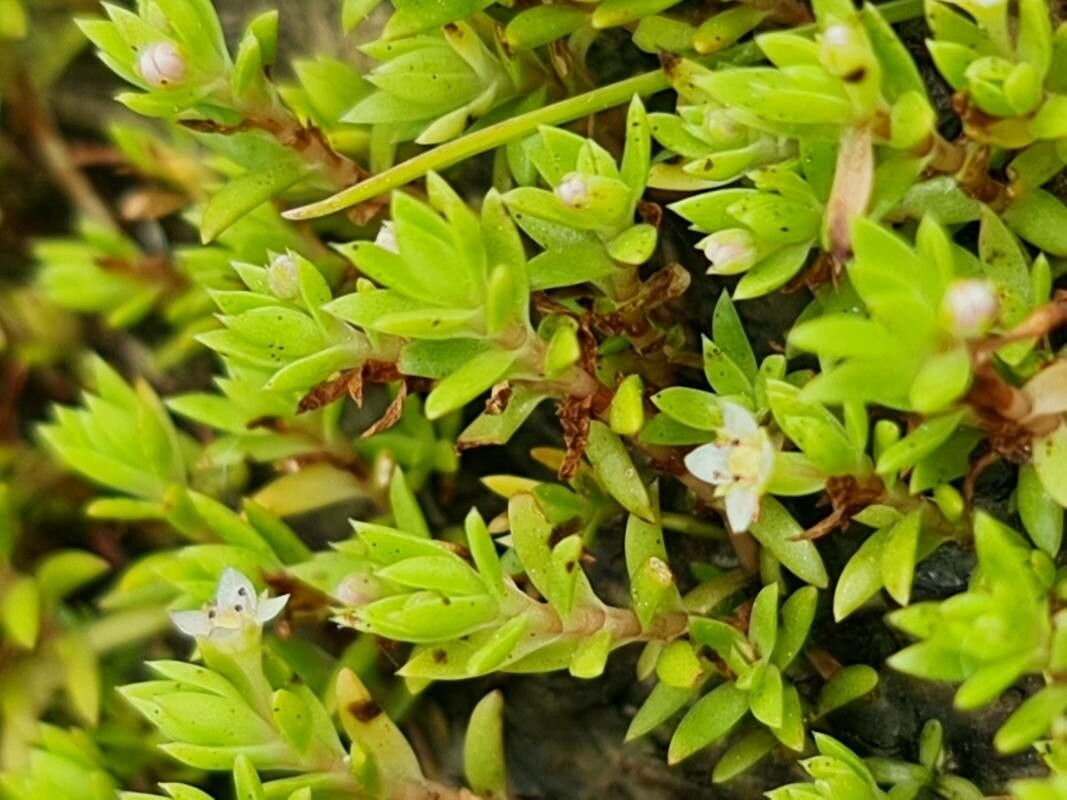
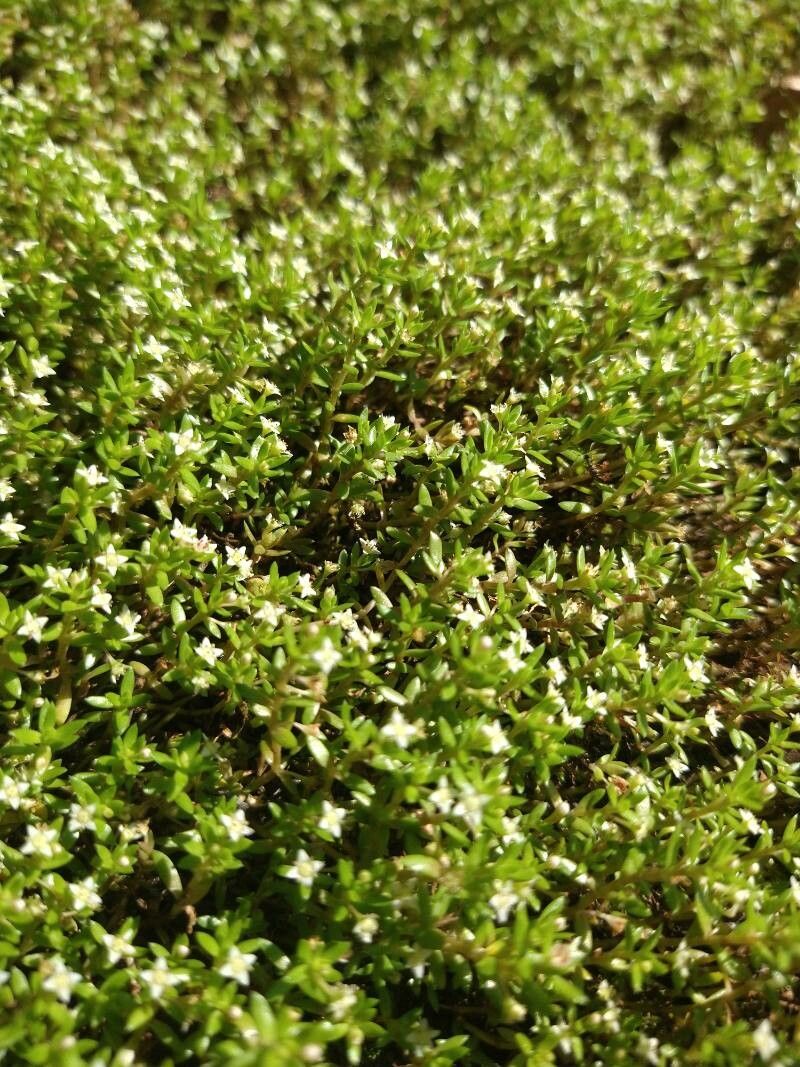
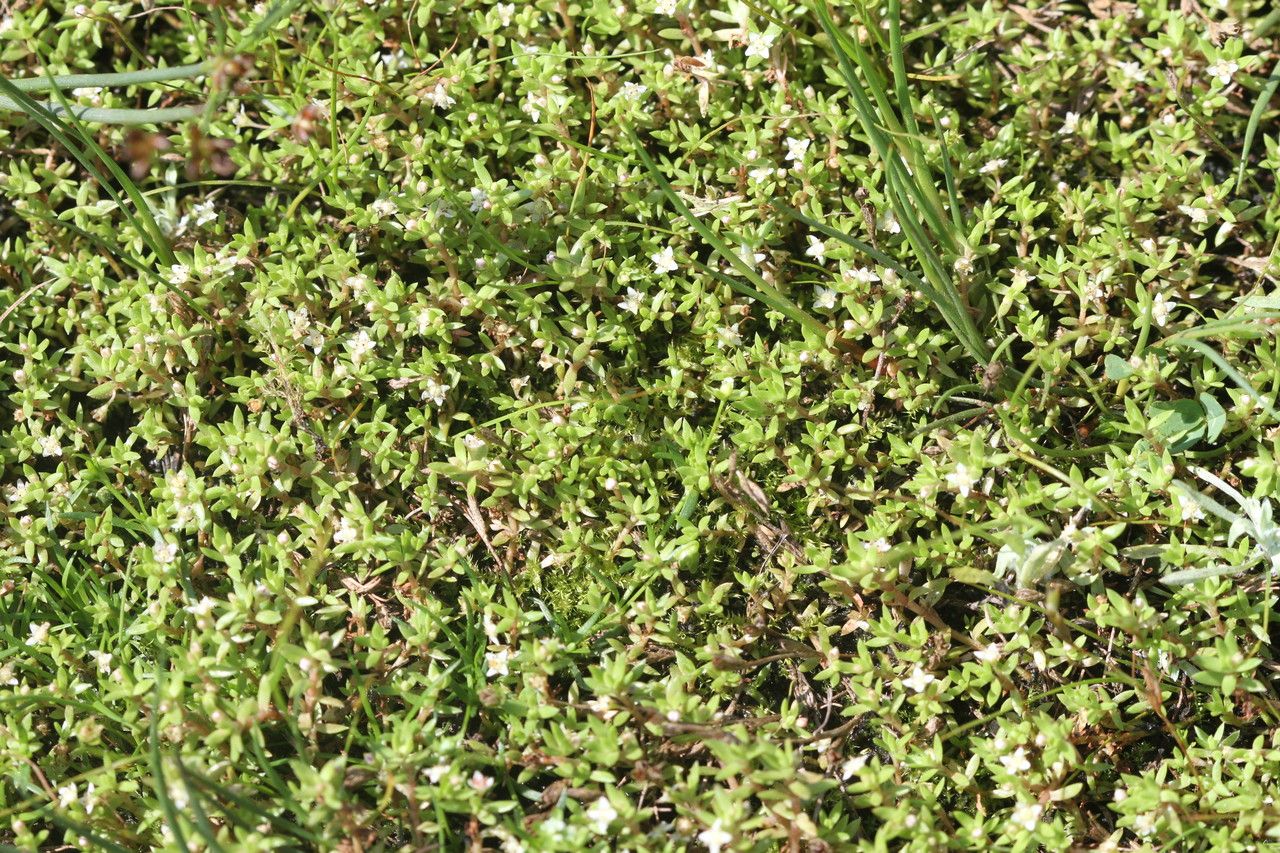
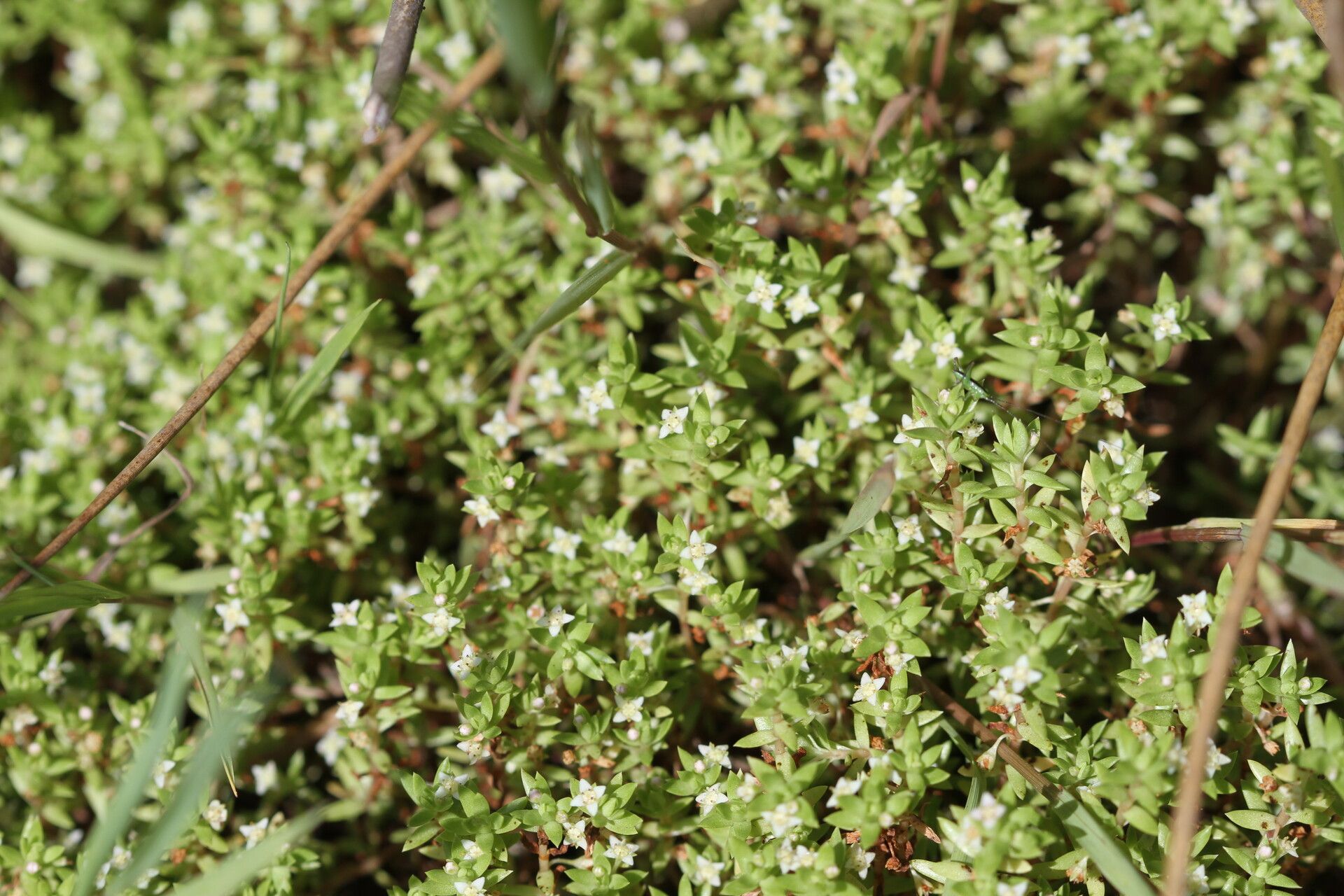
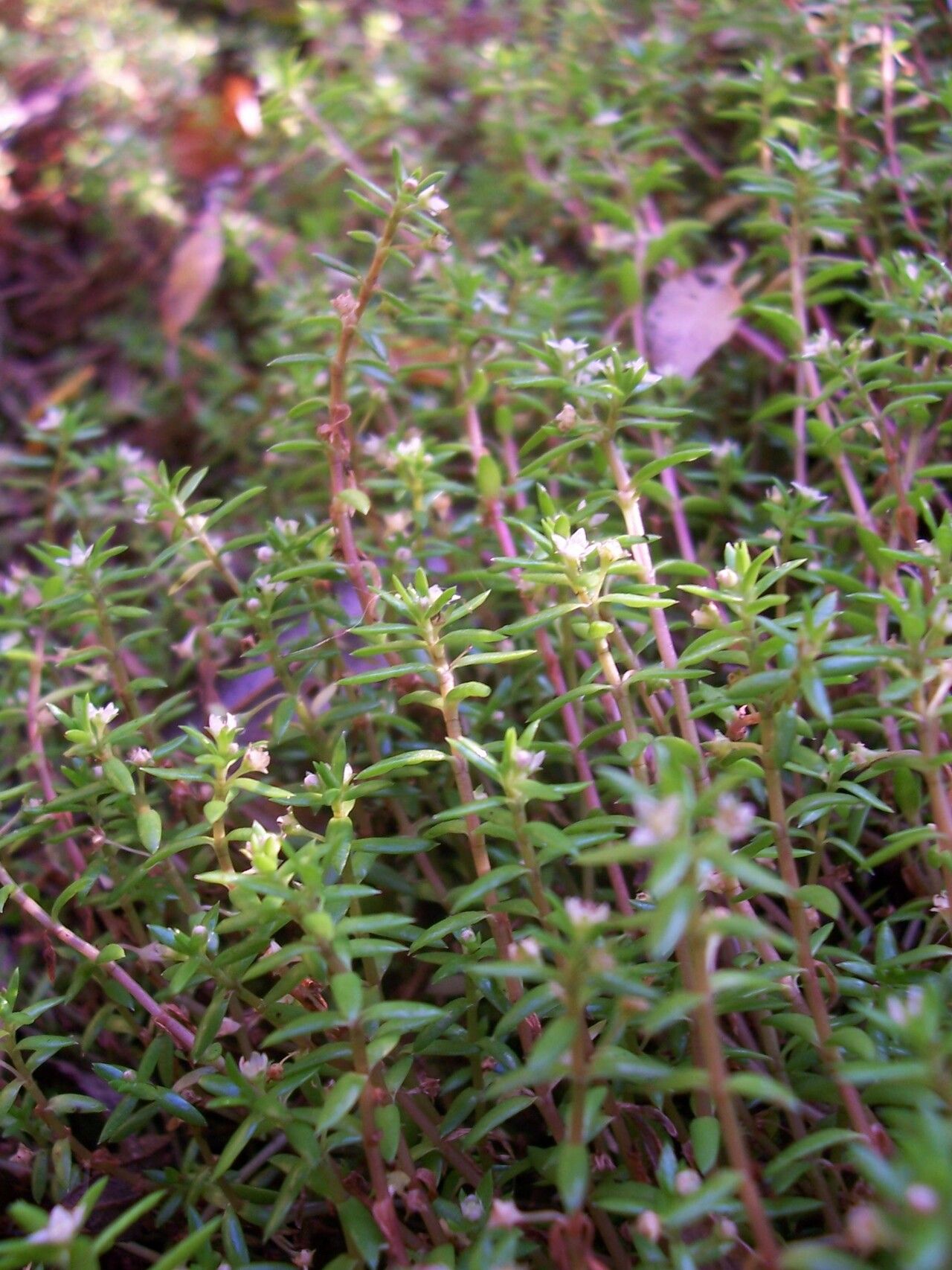
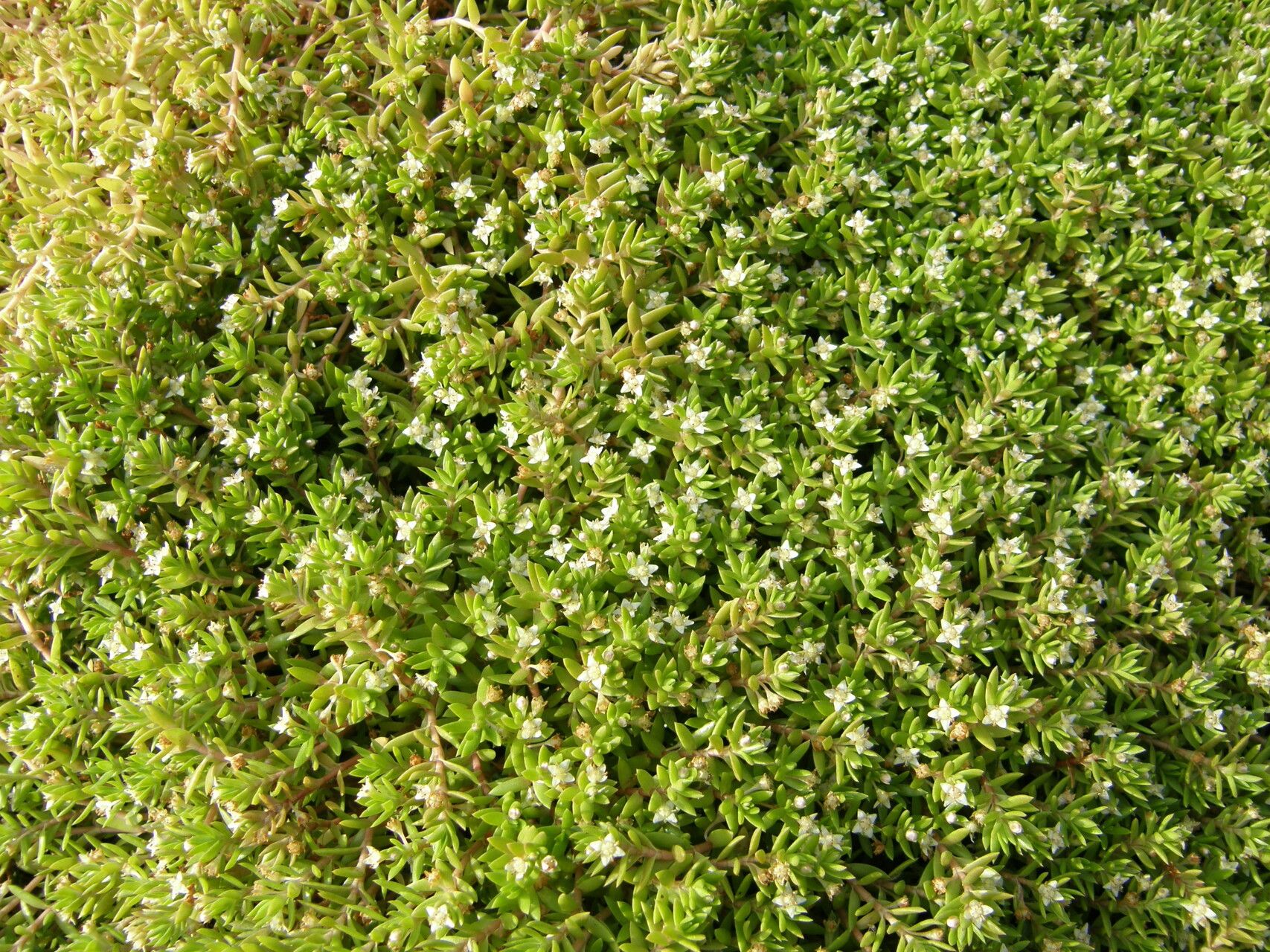
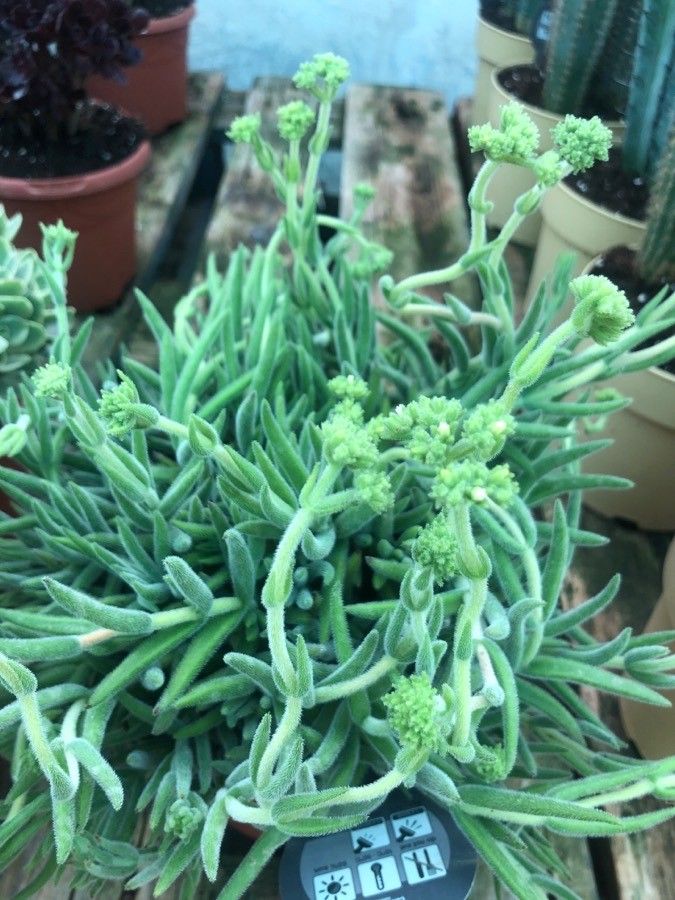
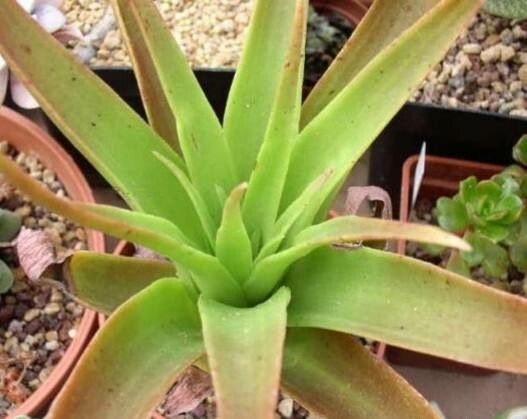
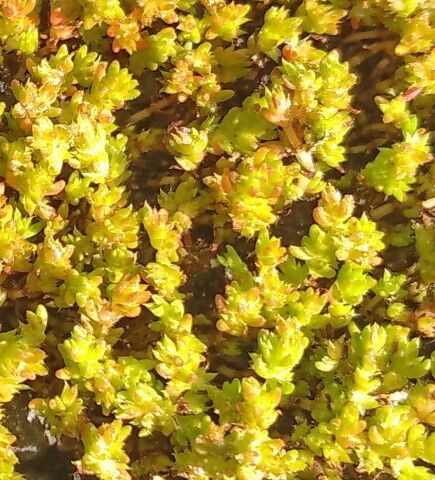
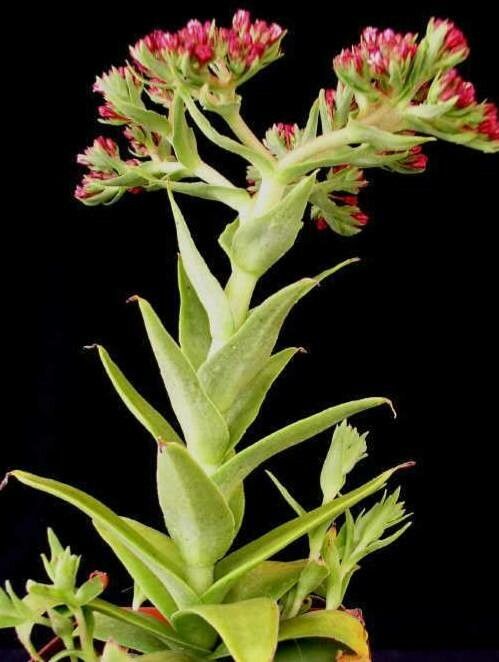
Crassula helmsii, commonly known as swamp stonecrop or New Zealand pygmyweed, is a small succulent plant native to New Zealand and Australia. It has become an invasive species in many parts of the world due to its rapid spread and ability to form dense mats in wetland habitats. The plant features small, fleshy leaves arranged in opposite pairs along the stem. These oval-shaped leaves are glossy green with red or purple tinges at the tips. The stem of Crassula helmsii can grow up to 30 cm long and produces tiny white flowers during the summer. Crassula helmsii thrives in wetland habitats such as ponds, lakeshores, ditches, marshes, and slow-moving streams, where it can grow both submerged underwater or on moist soil at the water's edge. The plant poses a serious threat to native aquatic plants by outcompeting them for resources such as light and nutrients, potentially leading to their extinction if not controlled properly. Various organizations around the world have made efforts to eradicate Crassula helmsii from natural ecosystems. These efforts include mechanical removal methods such as hand-pulling and cutting, followed by the application of herbicides to the remaining plants and seeds. Such measures help prevent the further spread of this invasive species into new areas.
Swamp stonecrop has moderate disease resistance and is more sensitive to humidity. It becomes prone to illness when humidity is high and can develop root rot during dormancy. Regarding care, Swamp stonecrop tolerates drought but requires increased watering in the growing season. Water should be greatly reduced or completely stopped during the dormant period. Swamp stonecrop is appropriate for growers with some experience, though it can be challenging to maintain, especially during dormancy. It is particularly well suited to people who can spend time caring for it through the winter months.
How to keep Crassula Helmsii.
Light
Originally from arid regions, Swamp stonecrop performs best in full sun; its native habitat has intense sunlight and very little shade. It can also tolerate partial sun, providing some flexibility in its growth.
Water
Swamp stonecrop needs careful watering depending on its dormancy and surrounding conditions. During hot weather, water it every 1-2 weeks. In the summer, it's best to water in the evening. To check for soil moisture, assess the weight of the pot. Keep an eye out for wrinkled leaves, as this indicates a lack of water. Additionally, the type of pot can influence how often you need to water the plant.
Humidity
This plant needs special care because it loves high humidity levels of 60-80% or more. The best way to achieve this is by placing a humidifier near the plant. Daily misting is also essential! Make sure the room has good ventilation.
Temperature
Although Swamp stonecrop tolerates some heat, it mainly grows and does best in the cooler seasons and goes dormant in summer. In very hot summer weather, provide shade to avoid scorching from strong sunlight. Watering should be cut back or stopped during the hottest part of the year to prevent root rot. Swamp stonecrop shows vigorous growth in winter and spring, and it will keep growing steadily as long as temperatures don't fall too low.
Fertilizer
Most succulent plants, such as swamp stonecrop, thrive in poor environments and do not require fertilization during their growth cycle. While a small amount of slow-release fertilizer in early summer is acceptable, it's important to avoid fertilizing during their dormant period to prevent nutrient damage.
Pruning
Swamp stonecrop is a semi-aquatic succulent that needs pruning in early spring to manage its invasive growth. To promote healthy and dense foliage, trim the overgrown stems and remove any dead leaves. Be sure to use clean, sharp tools to minimize stress on the plant and reduce the risk of infection.
Toxicity
Due to its invasiveness, Crassula helmsii may directly or indirectly harm or damage crops, cattle, poultry, or other agricultural, irrigation, navigation, natural resource, public health, or environmental interests, although there is no evidence of its direct toxicity to humans.
Further reading →
The toxicity and danger assessments provided are for reference only. We do not assure their accuracy, so it's crucial not to depend on them. Seek professional advice when necessary for accurate guidance.
Botanical profile.
- Plant Type
- Succulent
- Life Cycle
- Perennial
- Genus
- Crassula
- Family
- Crassulaceae
- Hardiness Zone
- 6-10
- Mature Height
- 5 cm
- Mature Spread
- 49 cm
- Leaf Color
- Green
- Leaf Type
- Evergreen
- Flower Color
- White
- Flower Size
- 0.25 cm to 0.51 cm
- Bloom Time
- Summer, Early fall, Mid fall
- Planting Time
- Spring, Summer, Autumn
- Harvest Time
- Late summer, Fall, Early winter
- Native Area
- Papua New Guinea, New Zealand
Other names.
Reader questions.
What is the botanical name of Swamp stonecrop?
Swamp stonecrop is botanically known as Crassula helmsii. This name helps distinguish it from other plants within the Crassula genus and ensures accurate identification and study.