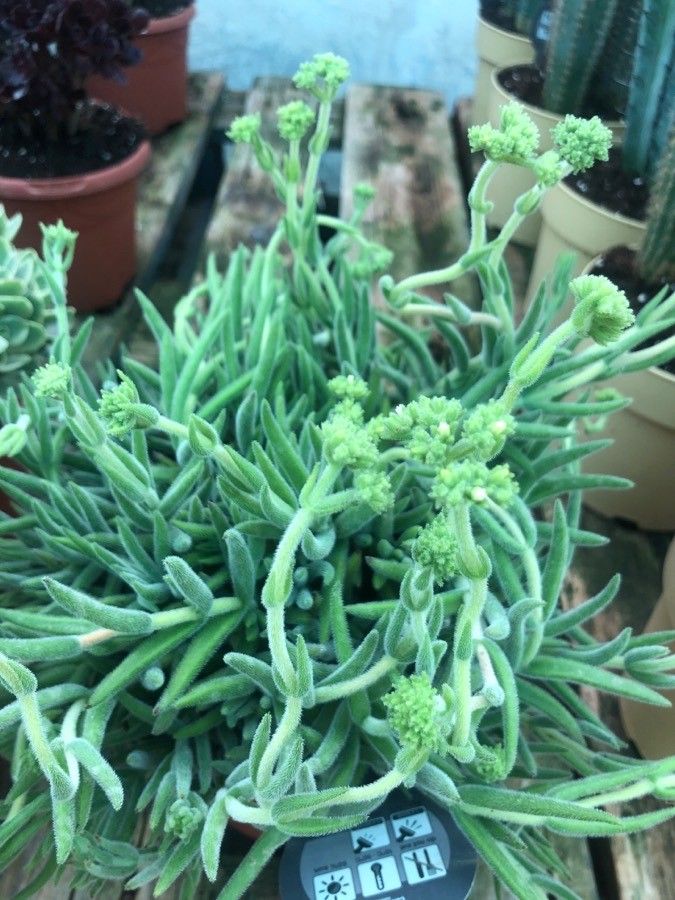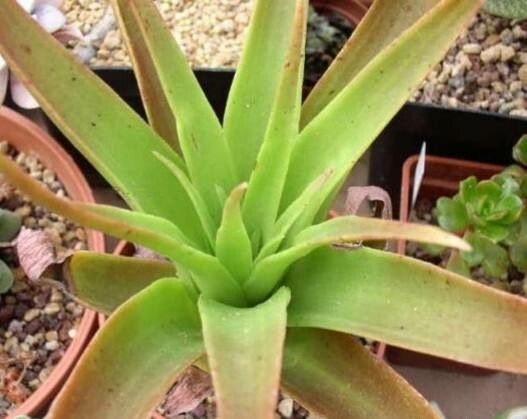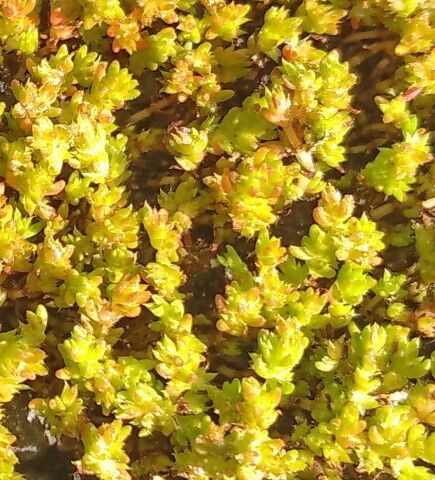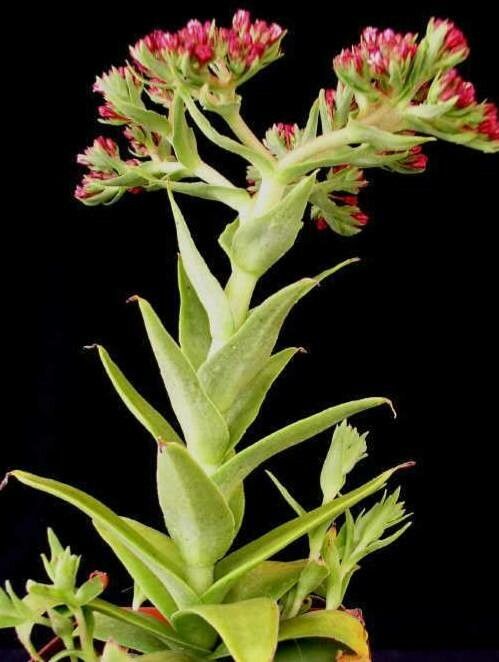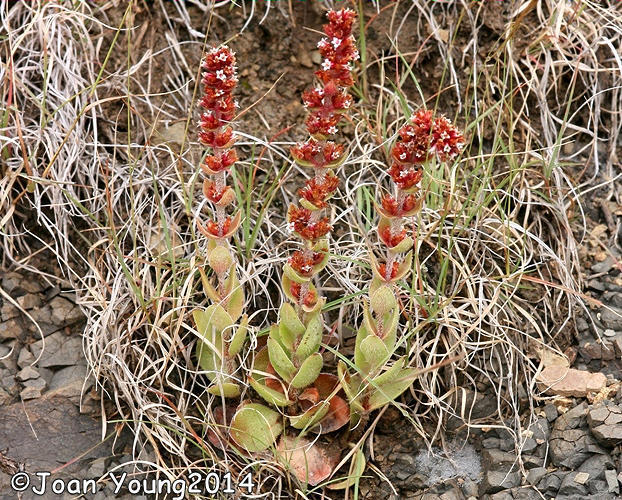
Crassula capitella, also known as the Red Pagoda or Campfire plant, is a succulent belonging to the Crassulaceae family. Native to South Africa, it has gained popularity as a houseplant due to its distinctive appearance and low maintenance needs.
The Red Pagoda features fleshy leaves that grow in a stacked formation, resembling pagodas. The triangular leaves have pointed tips with striking red edges. Depending on the amount of sunlight it receives, the leaves can range in color from green to red.
When fully matured, this plant can reach up to 6 inches in height and 12 inches in width. During its blooming season, which occurs in late winter or early spring, it produces small white or pink flowers.
Crassula capitella, like all Crassula species, succulents, and cacti, has a unique mechanism to cope with water scarcity. These plants have developed a type of photosynthesis known as Crassulacean Acid Metabolism (CAM). This process involves closing their stomata during the day and collecting CO2 at night to minimize moisture loss through evaporation. FUN FACT · FROM THE LIBRARY
The Red Pagoda thrives in bright, indirect sunlight but can also tolerate low light conditions, making it ideal for indoor spaces and beginners. It requires well-draining soil and occasional watering, as it is drought-tolerant.
In summary, Crassula capitella is an attractive succulent that brings color and texture to any indoor space. Its minimal care requirements make it an excellent choice for those seeking an easy-to-maintain houseplant option.
Red Pagoda: This plant is called the Red Pagoda because of its striking foliage. Its triangular-shaped leaves are arranged in such a way that they resemble architectural pyramids.
The Campfire plant has moderate disease resistance and is relatively sensitive to humidity. High humidity makes it more vulnerable to disease, and it is prone to root rot while dormant. Regarding care, the Campfire plant tolerates drought but requires more frequent watering during the growing season. Watering should be sharply reduced or stopped entirely during the dormant period. This plant is appropriate for growers with some experience, though it can be challenging to care for, particularly during dormancy. It is especially suited to people who can dedicate time to its winter care.
How to keep Crassula Capitella.
Light
The campfire plant does best outdoors in direct sunlight, though it can tolerate some partial shade. Native to bright habitats, strong light helps its colors become more vivid. However, excessive sun can cause leaves to yellow or drop, while too little light makes the plant stretch out and lose its compact form.
Water
The Red Pagoda plant thrives in semi-arid conditions and is drought-tolerant, storing water in its leaves. It only needs a deep watering every three weeks. This plant does well in indoor environments with stable temperatures, and it's important to use well-draining soil to prevent root rot. Be cautious not to overwater, as this can be more harmful than giving it too little water.
Humidity
This plant will thrive in moderate humidity, which is probably the level in your home. However, misting it a few times a week can be very beneficial. Make sure the room has good ventilation.
Temperature
Campfire plant originates from regions where temperatures range from 15 to 38 ℃ (59 to 100.4 ℉). Its preferred temperatures lie within that span, but it can endure lower winter temperatures if appropriate adjustments are made. In colder periods, it is recommended to provide sufficient light, water, and warmth to avoid harming the plant.
Fertilizer
For the Campfire plant, small amounts of fertilizer once or twice a year during the growing season are enough. Do not fertilize in winter or summer when the plant is dormant. Cut back on fertilizer for repotted plants and wait a couple of months after repotting before you resume fertilizing. Fertilizing helps maintain healthy growth and promotes flowering.
Pruning
To keep the red pagoda in good shape, prune any excess branches during the spring and autumn using knives or scissors. After pruning, apply sulfur powder to the cuts to protect them. For propagation, take strong stems with 5-6 leaves, allow the cuts to heal, and plant them in lightly moistened soil.
Pot & Repot
When repotting a Campfire plant, choose a pot slightly larger than the current one that has good drainage. Use a gritty, well-draining succulent or cactus mix. Gently remove the plant from its old pot, brush off excess soil, and plant it at the same depth. Wait a few days before watering so any root damage can heal. Repot in spring or fall, and place it where it will receive bright light.
Botanical profile.
- Plant Type
- Succulent, Herb
- Life Cycle
- Perennial
- Genus
- Crassula
- Family
- Crassulaceae
- Hardiness Zone
- 8-12
- Mature Height
- 15 cm to 40 cm
- Mature Spread
- 46 cm
- Leaf Color
- Green, Red
- Leaf Type
- Evergreen
- Flower Color
- White, Pink
- Flower Size
- 2.54 cm
- Bloom Time
- Mid summer
- Planting Time
- Spring, Summer
- Harvest Time
- Late summer, Fall, Early winter
Other names.
Reader questions.
How should I water my Red pagoda?
To properly water Red pagoda, follow these steps: 1. Wait until spring when new leaves begin to grow. 2. Check the soil inside the pot - it should be completely dry. 3. Choose between tap water or distilled water for watering. 4. Avoid watering from overhead, instead water at the base of the plant. 5. Apply the water slowly and evenly across the soil surface. 6. This method ensures consistent moisture without wetting the above-ground plant parts. 7. Keep adding water until you see a light stream of excess water draining from the pot's hole.
Why should I add fertilizer to my Red pagoda plant?
Fertilizing Red pagoda adds nutrients to the growing medium, which is important for healthy growth. Although it already stores water and nutrients, applying plant food during the growing season further supports this growth. Additionally, fertilizing can encourage mature specimens to produce blooms in the same season.
How much sunlight does the Red pagoda plant need in order to grow?
The Red pagoda needs a minimum of 6 hours of sunlight each day, but it's even better if it gets more. The exact number of hours can vary due to factors like sunlight intensity and the environment, but it's unlikely for the Red pagoda to receive too much sunlight. In fact, it can handle up to 14 hours of sun per day without any issues.
What temperature is best for Red pagoda?
To ensure that your Red pagoda thrives, it is best to grow them in temperatures ranging from 60-75℉ (15-25℃). While they can handle slightly higher or lower temperatures, this specific range promotes optimal growth. If the temperatures drop below 40℉ (10℃) or exceed 95℉ (35℃), the Red pagoda will become dormant and stop growing. Extended periods of high temperatures, especially above 95℉ (35℃), can potentially harm or even kill these plants.
What do I need to do if I give my Red pagoda too much water or too little water?
Overwatering a Red pagoda is more common than underwatering it, and it is very harmful to the plant's health, often causing it to die quickly. To avoid overwatering, it is important to let the soil completely dry before watering. However, many people mistakenly water the plant too much, particularly when it goes dormant. In this case, we will focus on how to fix the problem of overwatering. When you notice signs of overwatering in your Red pagoda, it is best to remove it from its current pot. Take the opportunity to examine the roots and remove any that show signs of rot or other moisture-related diseases. Some roots may just need a simple cleaning to regain their health. After this step, repot the Red pagoda in well-draining soil to reduce the risk of future overwatering. Although rare, underwatering can also occur. In such cases, simply water the plant slightly more frequently, making sure not to overcompensate and overwater.
When should I fertilize my Red pagoda plant?
Red pagoda plants only require a small amount of fertilizer during their growing season, usually 1-2 times a year. To effectively fertilize your Red pagoda, it is recommended to do so in the spring and autumn, while avoiding the winter and summer when the plant is dormant. Take caution when fertilizing repotted plants, as the amount of fertilizer should be reduced. It is also advisable to wait a few months after repotting before beginning to apply fertilizer.
What kind of sunlight does the Red pagoda plant require?
Red pagodas thrive in bright sunlight. They are considered full-sun plants, meaning they can flourish when exposed to direct sunlight or bright indirect sun. Although certain types can manage with partial sun, they generally do better with more sunlight.
Does the Red pagoda need different temperatures at different stages of growth?
Red pagoda go through different phases of life that depend on temperature. During summer, they enter a dormant phase, while in winter, they have a growing phase. For their growth, red pagoda need cooler temperatures but not extremely cold. Any temperature below 40℉ (10℃) will force the plants into dormancy, regardless of the season. Conversely, high temperatures can also induce dormancy, limiting growth and reducing the plant's need for water. During dormancy, overwatering can lead to root rot, so it is important to only water the soil when it feels dry.
How often should I give water to my Red pagoda?
Red pagoda is a succulent plant that requires less water compared to other plants because it comes from a hot and dry region. To care for this plant properly, let the soil dry out completely between waterings. Usually, it takes around two weeks to a month for the soil to fully dry, at which point you can water it again. The frequency of watering depends on the season. In the spring and summer, when the plant is growing, it may take 2-3 weeks for the soil to dry completely. During summer, the soil may dry out faster. However, when the temperature is below 60 degrees or above 85 degrees Fahrenheit, the plant will be dormant or semi-dormant and does not require watering. In this case, reduce or stop watering until the temperature is suitable for the plant to grow again, and then resume watering.
When is it not a good time to fertilize my Red pagoda?
Red pagoda, like other plants, goes through a dormant period. During this time, it's recommended to pause the application of fertilizer. This happens in both summer and winter when the plant stops growing. Likewise, after repotting in the spring, it is advisable to avoid fertilizing for a couple of months.
Should I keep Red pagoda out of the sun to protect it?
Red pagoda is typically found in hot and sunny areas and is well-suited to this type of environment. As a result, it does not require protection from the sun. However, if you are considering moving your Red pagoda to a very sunny location that it is not accustomed to, caution is required. It takes time for plants to adapt to new conditions, so it is advisable to start by exposing the plant to a couple of hours of sunlight each day. Then, gradually increase the duration of sun exposure. Once acclimated, most types of Red pagoda can thrive in full sun without needing any additional protection.
Here are three tips for controlling the temperature of Red pagodas.
Tip #1