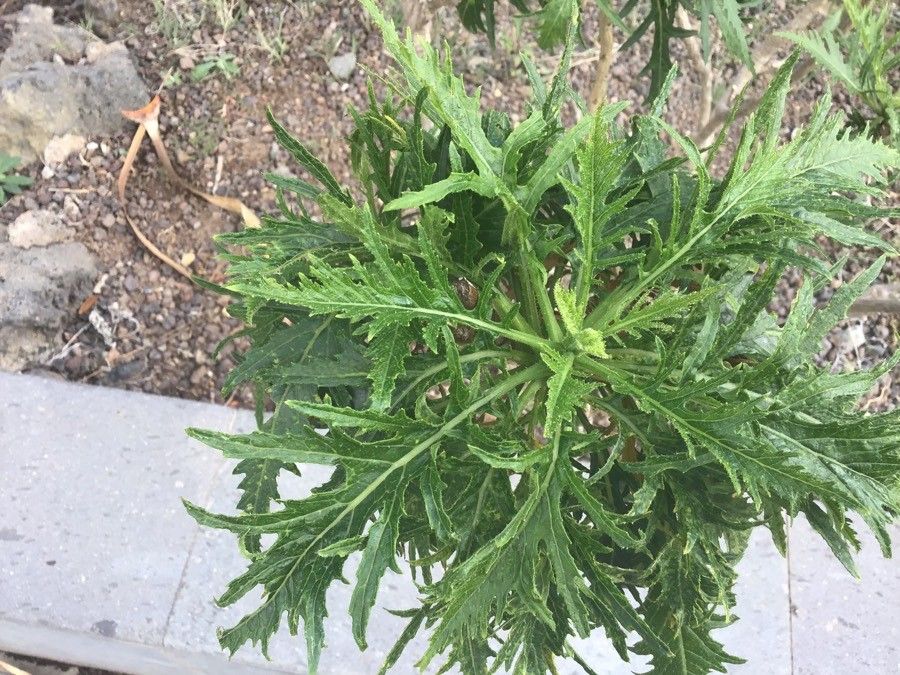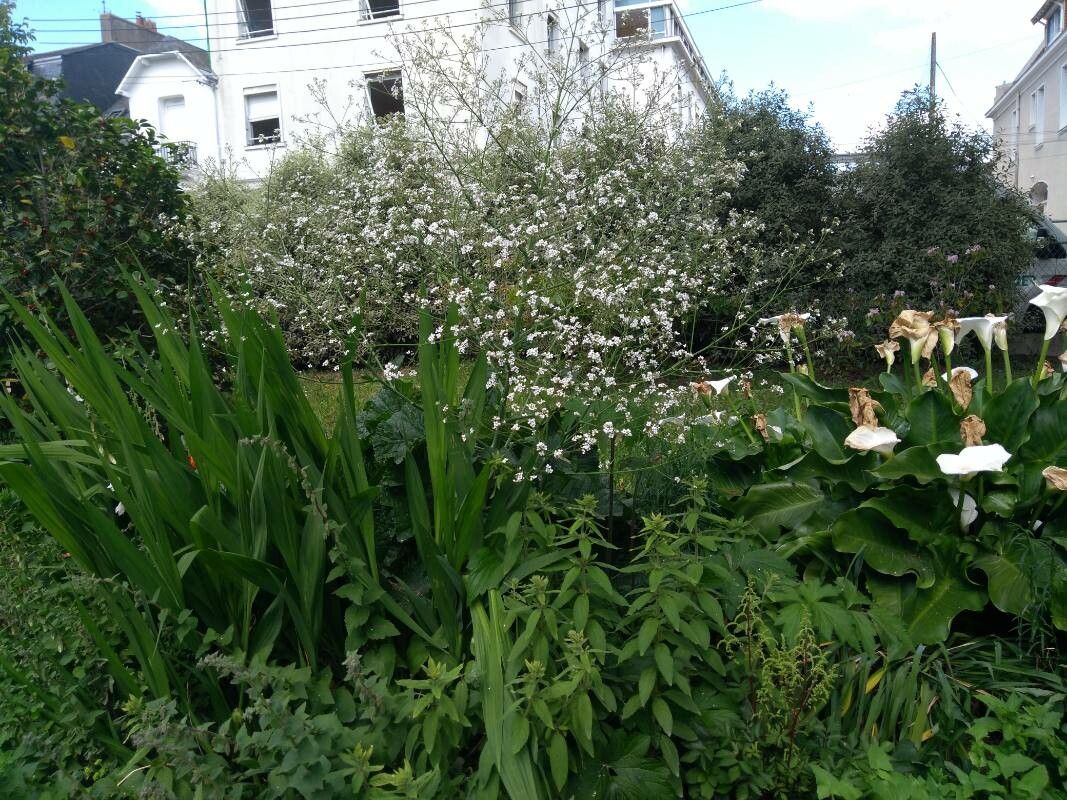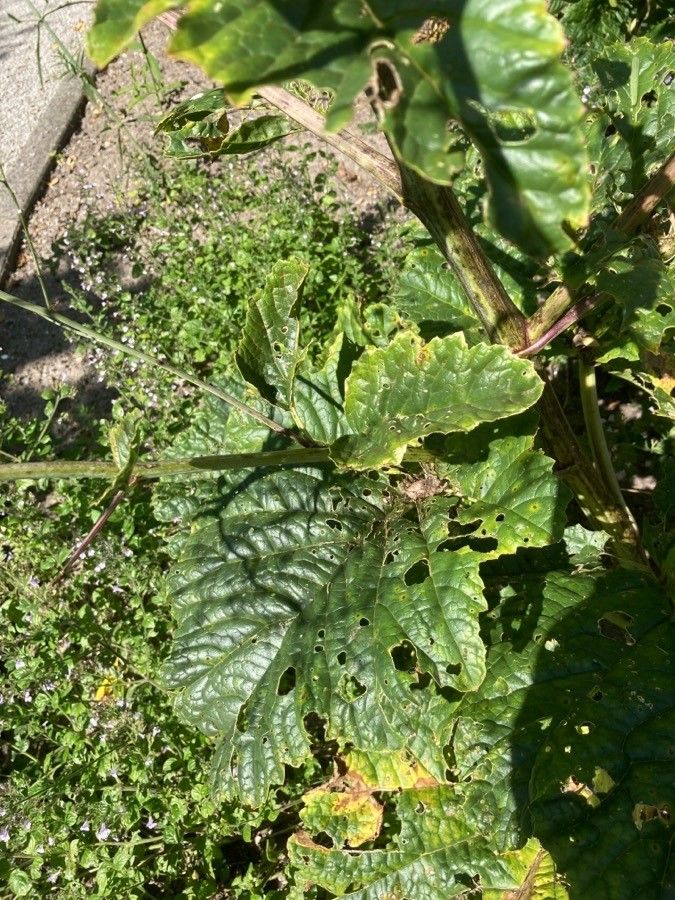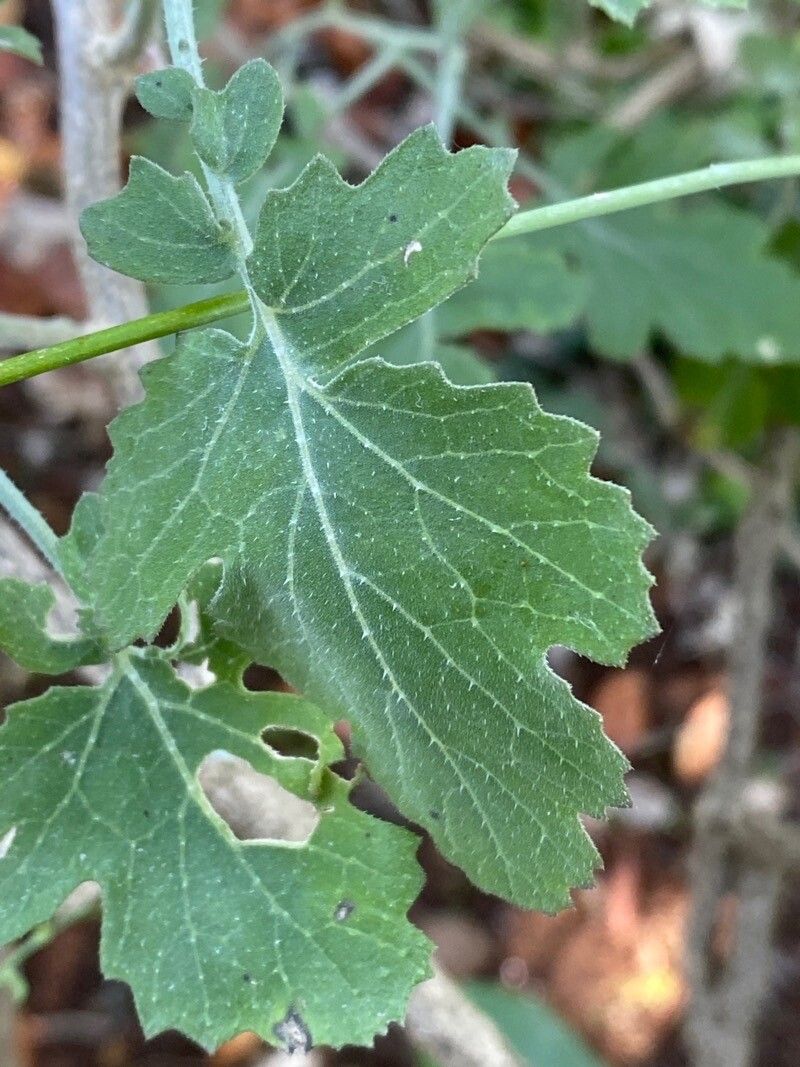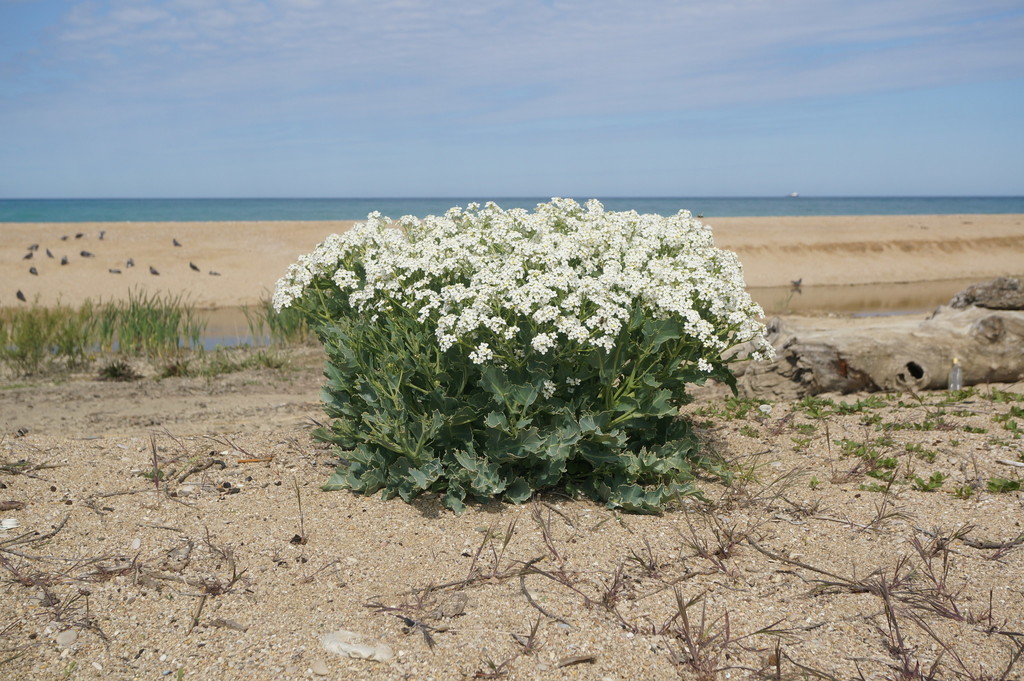
Crambe maritima, commonly known as sea kale, is a perennial plant in the Brassicaceae family. Native to the coastal regions of Europe and North Africa, it has been cultivated for centuries for its edible leaves and shoots. Sea kale can grow up to 60 cm in height and features large, fleshy, bluish-green leaves. Its small, white flowers exude a sweet fragrance.
Sea kale thrives in well-drained sandy soil and in locations with full sun or partial shade. It can tolerate salt spray from the ocean, making it ideal for coastal gardens and seaside landscapes. The plant can be propagated by seeds or by dividing mature plants.
Historically, sea kale has been valued as a food source because of its high nutritional content and unique flavor, reminiscent of a cross between asparagus and cabbage. Young shoots can be blanched like white asparagus, while older leaves can be cooked like spinach or enjoyed raw in salads.
Beyond its culinary applications, sea kale has traditionally been used for medicinal purposes, primarily due to its high vitamin C content, which helps boost immunity against colds and flu.
In summary, Crambe maritima is a fascinating perennial vegetable that offers both culinary delights and health benefits. Its unique texture and color can add a striking accent to any garden design.
Sea kale has moderate disease resistance but can be prone to problems like leaf spot. Its vulnerability to insect pests depends on the variety, though most varieties tend to have relatively low pest resistance. Regarding care, sea kale requires regular watering and feeding, along with frequent removal of yellowing leaves. It’s important to manage pests and diseases as they arise and to harvest the plant promptly. Sea kale is best suited to people who can invest some time and effort in routine care.
How to keep Crambe Maritima.
Light
Sea kale does best with ample sunlight, though it can tolerate reduced light, reflecting its origin in open habitats. Both too much and too little sun impair its vigor, causing leaves to pale or yellow and disrupting its growth.
Water
Sea kale, native to coastal regions, flourishes in well-drained soils that maintain consistent moisture. It benefits from regular watering, ideally once a week. Thanks to its resilient root system, sea kale can withstand heavy rainfall without succumbing to root rot, making it an excellent choice for outdoor cultivation.
Temperature
Sea kale comes from areas with mild temperatures, ideally between 41 and 89.6°F (5 to 32℃). Its temperature needs match the climates of many regions, though seasonal adjustments may be necessary to maintain optimal growing conditions.
Fertilizer
To maximize Sea kale's yield and flavor, maintain adequate nitrogen throughout the entire growth cycle, from pre-planting through harvest. Plants that are well watered and fertilized develop abundant, healthy leaves and are less bitter. Before planting, enrich the soil with organic matter such as compost or manure, preferably 2 to 8 weeks beforehand.
Pruning
Sea kale is a hardy perennial with edible leaves. To encourage new growth and improve its structure, prune away old or damaged leaves from early to late spring. Make sure to use clean tools, as they enhance air circulation, reduce the risk of disease, and promote vigor, all of which contribute to a healthy garden.
Botanical profile.
- Plant Type
- Herb
- Life Cycle
- Perennial
- Genus
- Crambe
- Family
- Brassicaceae
- Hardiness Zone
- 4-8
- Mature Height
- 76 cm
- Mature Spread
- 61 cm
- Leaf Color
- Green, Blue
- Leaf Type
- Deciduous
- Flower Color
- White
- Flower Size
- 1.02 cm to 1.52 cm
- Bloom Time
- Late spring, Early summer
- Planting Time
- Spring
- Harvest Time
- Mid summer
- Native Area
- Sweden, Slovakia, Bulgaria, Croatia, Ukraine, Russia, Lithuania, Norway, Germany, Denmark, Netherlands, Estonia, Finland, Ireland, United Kingdom, Romania, Latvia, Belgium, France
Other names.
Reader questions.
How should I water my Sea kale in the best way?
Sea kale not only prefers a specific amount of water, but it also pays close attention to how that water is applied. Improper watering techniques can harm your tomatoes. To water Sea kale effectively, apply water directly to the soil in a slow and gentle manner. Avoid pouring all the water into the soil at once and avoid overhead watering. While watering slowly, make sure to water deeply to ensure the soil around your Sea kale is adequately moist.
Why is it necessary to add fertilizer to my Sea kale?
Sea kale, a plant grown for its edible leaves, has specific nutrient requirements. Essential nutrients like nitrogen, phosphorus, and potassium support various functions in plants. Nitrogen, in particular, plays a crucial role in foliar development. Yet, obtaining sufficient nitrogen from the soil can be challenging for Sea kale, resulting in an unsatisfactory harvest. As a solution, many gardeners opt to supplement Sea kale with extra nitrogen through heavy feeding.
What are the sunlight requirements for Sea kale?
Sea kale requires full sun exposure, defined as more than 6 hours of sunlight a day, to thrive. However, it can also tolerate partial sun, which is about 3-6 hours of sunlight daily. It's crucial to observe the movement of sunlight through your garden to find spots that provide an ideal balance of light and shade, ensuring the plants' well-being. Sea kale's vitality is directly affected by the amount of sunlight it receives, with too much or too little exposure causing issues such as leaves fading or turning yellow and disturbing growth patterns.
What are the ideal growing conditions for Sea Kale?
Sea kale thrives in environments with mild temperatures, ideally within the range of 41 to 89.6°F (5 to 32°C). It prefers relatively warm temperatures and benefits from the temperature being kept above 5°C during winter cultivation to encourage growth. The plant should be protected from freezing, with the minimum temperature kept above the freezing point to prevent damage. If temperatures approach -5°C (25°F) during winter, it's advisable to bring Sea kale indoors or provide protection by setting up a temporary greenhouse or wrapping the plant with plastic film or fabric.
What should I do if I give too much or too little water to my Sea kale?
If you realize you have overwatered your Sea kale and are worried about the risk of disease, take immediate action. The best way to handle an overwatered Sea kale is to remove it from its current spot. Let the plant's roots dry a bit before replanting it in a new location that has well-draining soil. If you grow your Sea kale in pots, consider transferring it to a pot with better drainage. On the other hand, if you are underwatering, simply water the plant more frequently.
When should I put fertilizer on my Sea kale plant?
To maximize the growth of your Sea kale, it is important to apply fertilizer at various stages of the growing season. Here's a simplified breakdown of when and how to fertilize: 1. Before planting: Prepare the ground by adding nutrient-rich organic material like compost or manure, ideally 2 to 8 weeks before planting. 2. At planting time: Amend the soil again using the same method as before. 3. After seedling emergence: Wait until the seedlings are around 2 inches tall before applying the next dose of fertilizer. 4. Ongoing care: Continuously provide your Sea kale with rich organic matter or commercial fertilizer until harvest. A common schedule is fertilizing every two to three weeks. 5. Additional nourishment: To ensure a steady supply of nutrients, consider adding a layer of compost or manure around the plant. Following this simplified process will help your Sea kale grow healthy and robust.
How can artificial lighting be used for Sea kale?
Indoor Sea kale plants can benefit from artificial lighting, especially when natural sunlight is insufficient, such as in winter or less sunny locations. The right type of artificial light, like LED lights, can provide the specific wavelengths needed for plant growth. Full sun plants require 30-50W/sq ft, partial sun plants 20-30W/sq ft, and full shade plants 10-20W/sq ft of artificial light. The light source should be placed 12-36 inches above the plant and kept on for 8-12 hours per day to mimic natural daylight conditions, ensuring optimal growth.
How does Sea Kale respond to low temperatures?
Sea kale has moderate tolerance to low temperatures, thriving best between 5°C and 32°C. During winter, it's crucial to keep the plant above -25°C to avoid damage. Exposure to temperatures below -30°C can cause the leaves to darken in color, and in severe cases, lead to water-soaked necrosis, wilting, drooping, and the leaves turning brown. To mitigate frost damage, you should trim away the frost-damaged parts and immediately move the plant indoors to a warm environment or set up a makeshift greenhouse for cold protection. Ensuring the plant is placed near a south-facing window for ample sunlight or using supplemental lighting if natural light is insufficient is also recommended.
How much should I water my Sea kale?
Sea kale needs a lot of water during its growing season. To fulfill this water requirement, it is recommended to water it regularly from spring to summer. At the beginning of the season, watering it once or twice a week is sufficient. As the season progresses, increase the frequency of watering, potentially up to twice a day or more during summer, depending on the weather. Once Sea kale has completed its main growth phases, reduce watering to about once a week until the end of the growing season.
When is the best time to not fertilize my Sea kale?
To ensure healthy growth and maximize vegetable production, it is important to select nitrogen-rich fertilizers. However, caution should be exercised when applying these fertilizers near other vegetable plants that prioritize fruiting over foliage. Otherwise, excessive foliage growth may occur with limited vegetable output. Additionally, it is crucial to prevent any type of fertilizer from touching or splashing onto the leaves of Sea kale, as this can cause burning. It is advisable to apply the fertilizer a few inches away from the plant's base. If the Sea kale is already facing issues such as disease, pests, or drought, it is essential to address these problems before using fertilizer. While fertilizer can enhance the growth of healthy plants, it can be harmful if applied to unhealthy ones.
What are some common light deficiency symptoms in Sea kale?
When Sea kale is grown indoors or in conditions with limited light, it may show symptoms like smaller new leaves, leggy or sparse growth, faster leaf drop, slower or no new growth, and lighter-colored or even yellow leaves indicating chlorosis. Excessive sunlight can cause symptoms including sunscald, leaf curling, wilting, leaf scorching, and damage from intense light exposure, which can impact the plant's health and overall appearance.
How should Sea Kale be cared for in high temperatures?
During summer, it is important to keep Sea Kale's exposure to temperatures below 32°C to prevent growth slowdown and susceptibility to sunburn. If temperatures exceed 35°C, the plant's growth may slow, the color of its leaves can lighten, and they may become more susceptible to sunburn. To care for Sea Kale in high temperatures, trim away any sunburned and dried-up parts and move the plant to a location that provides shade during the most intense afternoon sun. Watering the plant in the morning and evening will help keep the soil moist and assist in maintaining healthy growth.