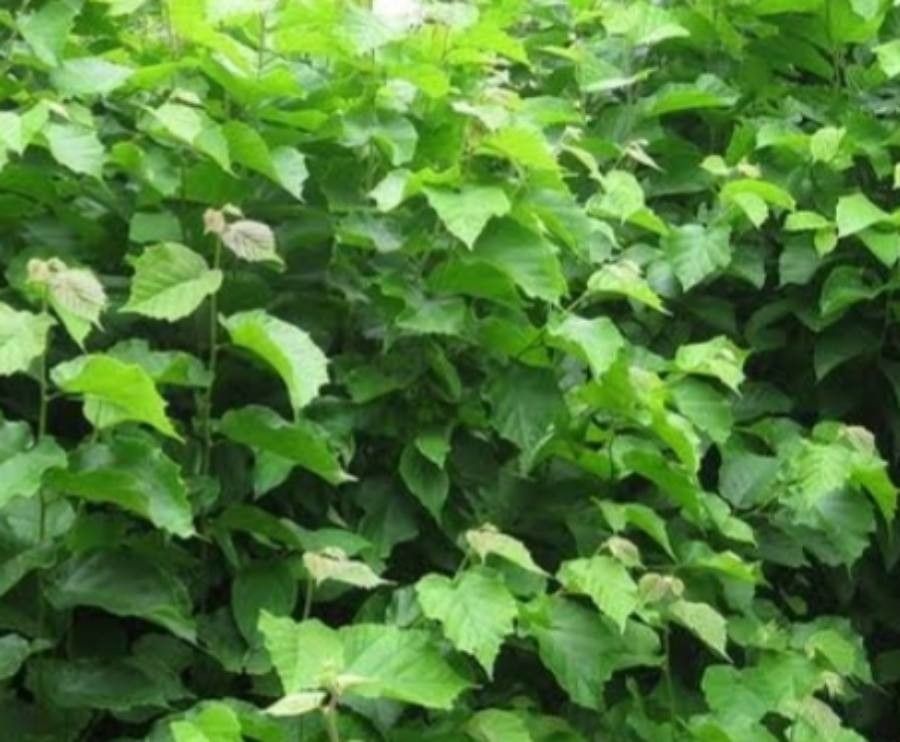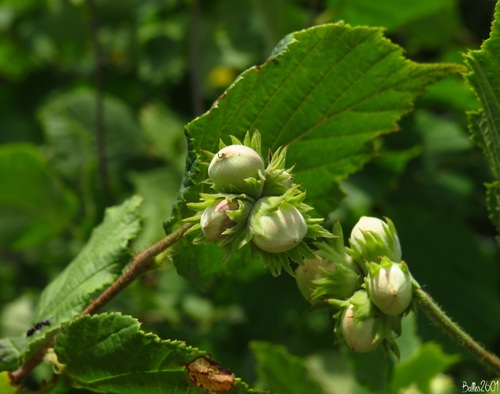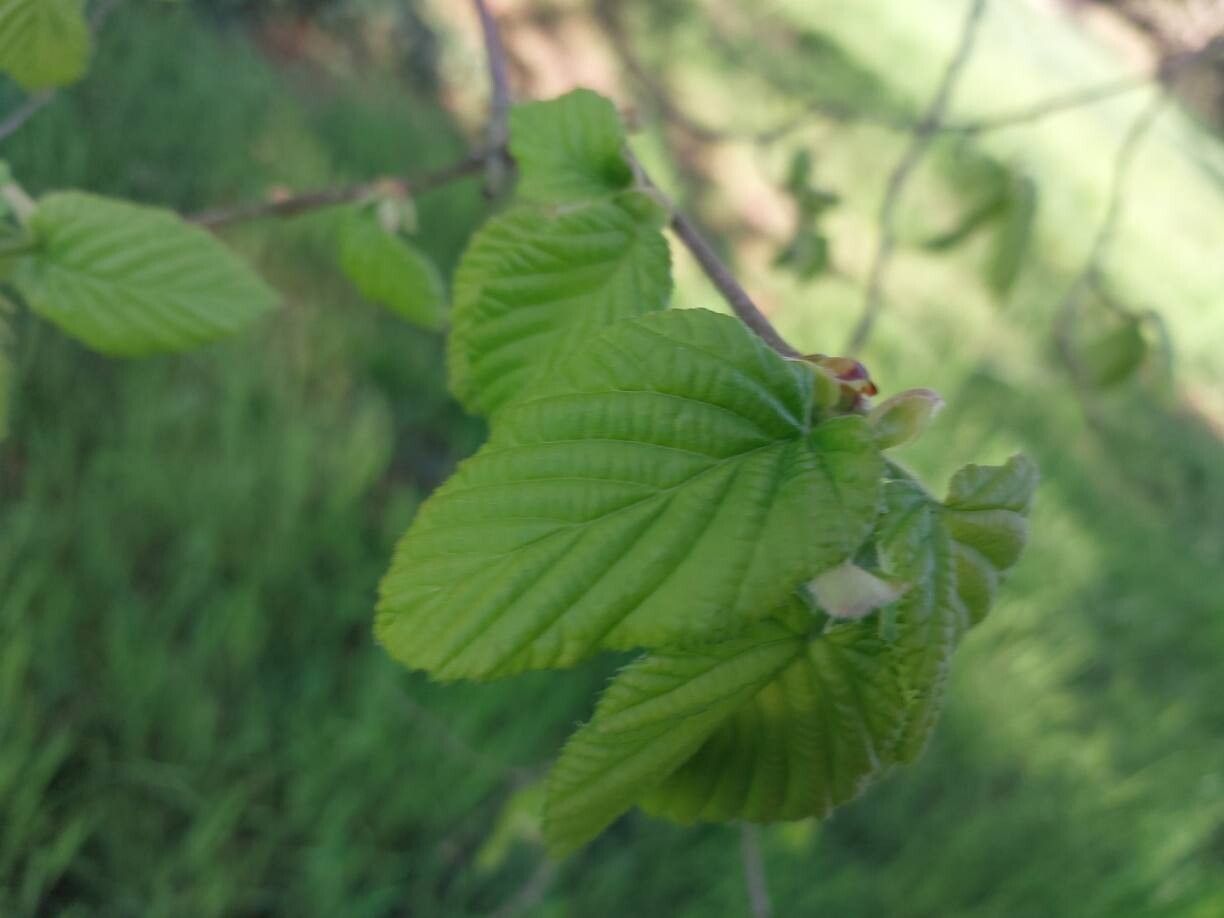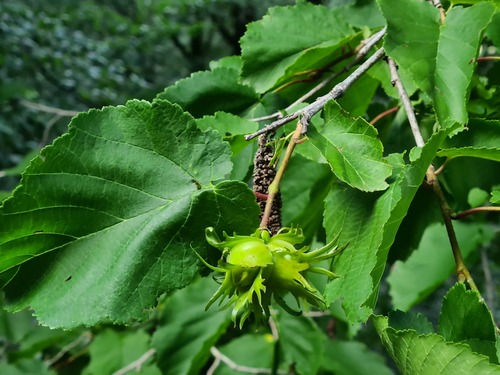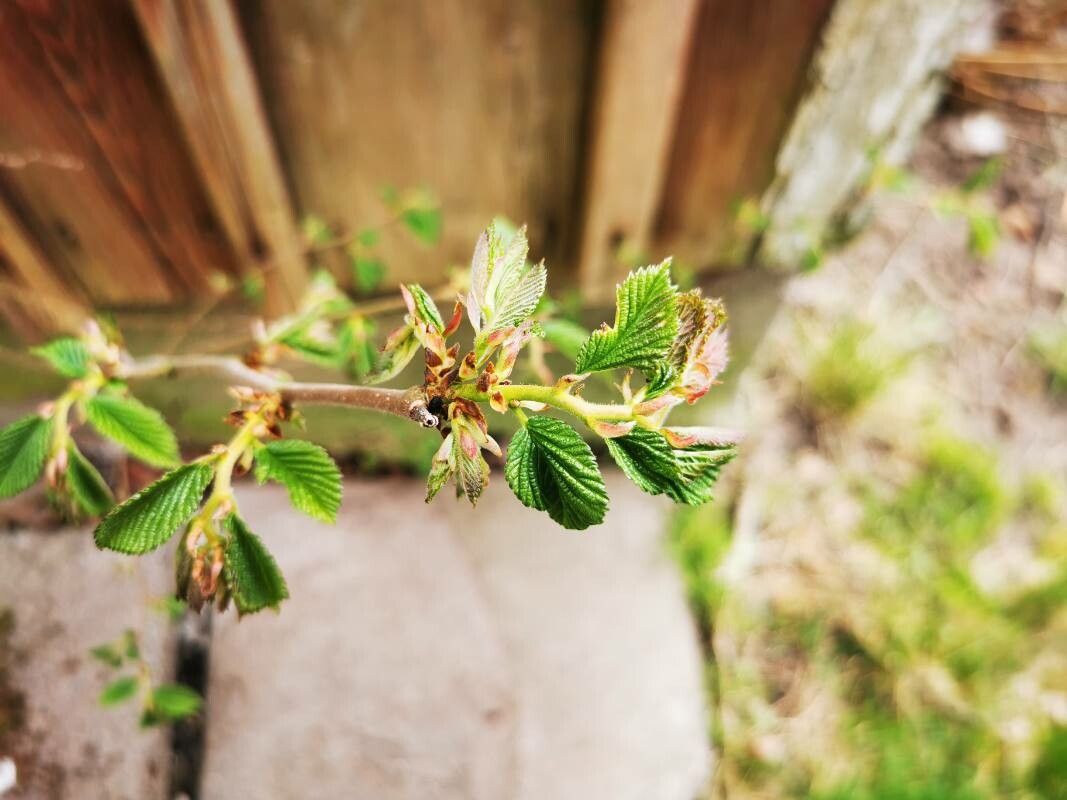
Corylus heterophylla, the Asian hazel, is a species of hazel native to eastern Asia in northern and central China, Korea, Japan, and southeastern Siberia.It is a deciduous shrub or small tree growing to 7 m (23 ft) tall, with stems up to 20 cm (8 in) thick grey bark. The leaves are rounded, 4–13 cm (1+1⁄2–5 in) long and 2.5–10 cm (1–4 in) broad, with a coarsely double-serrated to somewhat lobed margin and an often truncated apex. The flowers are wind-pollinated catkins; the male (pollen) catkins are pale yellow, 4 cm (1+1⁄2 in) long, while the female catkins are bright red and only 1–3 mm (1⁄16–1⁄8 in) long. The fruit is a nut produced in clusters of 2–6 together; each nut is 0.7–1.5 cm (1⁄4–1⁄2 in) diameter, partly enclosed in a 1.5–2.5 cm (1⁄2–1 in) long, bract-like involucre (husk).It is very similar to the closely related common hazel (C. avellana) of Europe and western Asia, differing in the leaves being somewhat more lobed.
The Siberian hazelnut is well resistant to disease and generally not prone to illnesses. Regarding care, this plant is relatively low maintenance. When planted outdoors it needs minimal watering, and larger plants usually do not require pruning. Smaller plants, however, should be pruned after they have bloomed. The Siberian hazelnut is suitable for anyone with an outdoor space, such as a garden or deck, and does not require a lot of care experience.
How to keep Corylus Heterophylla.
Light
Siberian hazelnut needs plenty of sunlight to grow vigorously, reflecting its preference for sunny locations. The species can tolerate somewhat less bright conditions too, although that may negatively affect its overall health and fruit production. Both too little and too much sunlight can impede its ability to thrive.
Water
The Siberian hazelnut flourishes in temperate regions and has a moderate tolerance for drought. It's best to water the plant every 2 to 3 weeks, allowing the soil to dry out slightly between watering sessions. This approach helps prevent root rot and mimics the plant's natural drying cycles, making it well-suited for outdoor cultivation.
Temperature
Siberian hazelnut is native to regions with moderate temperatures and prefers a range of 68 to 100.4 °F (20 to 38 ℃). Seasonal care involves slight temperature adjustments to mimic its natural conditions.
Fertilizer
Fertilizing is essential for caring for Siberian hazelnut. Regular feedings during the growing season maintain the energy needed for its showy leaves and encourage overall growth. Failing to fertilize can lead to unhealthy foliage, reduced ornamental value, and stunted or weak growth that is likely to break.
Pruning
The Siberian hazelnut is a hardy, deciduous shrub known for its edible nuts and attractive catkins. To keep the plant healthy, prune it in early spring by removing any dead or crossing branches. This improves airflow and light penetration. Make clean cuts just above the buds to encourage healthy growth, increase fruit production, and maintain the plant’s shape.
Botanical profile.
- Plant Type
- Tree
- Life Cycle
- Perennial
- Genus
- Corylus
- Family
- Betulaceae
- Hardiness Zone
- 10-12
- Mature Height
- 0.91 m to 7.01 m
- Mature Spread
- 7.01 m
- Leaf Color
- Green, Dark Green
- Leaf Type
- Deciduous
- Flower Color
- Yellow, Green, Brown
- Flower Size
- 4.06 cm
- Bloom Time
- Late winter, Early spring
- Planting Time
- Spring, Summer
- Harvest Time
- Early fall, Mid fall
- Native Area
- Russia, Japan, Koppen, South Korea, China
Other names.
Reader questions.
What are the sunlight requirements for the Siberian hazelnut?
The Siberian hazelnut thrives in locations that offer full sun, which means the plants should receive above 6 hours of sunlight daily. They can also tolerate partial sun, with about 3-6 hours of sunlight. However, it's crucial to observe how sunlight moves through your garden to ensure plants receive an optimal balance of light and shade. Both insufficient and excessive sun exposure can adversely affect the plant's growth, health, and fruit production.
What is the preferred temperature range for Siberian hazelnut?
The Siberian hazelnut, or Corylus heterophylla, thrives in moderate temperature environments, preferring a temperature range of 68 to 100.4 °F (20 to 38 °C). To mimic its native conditions, slight adjustments in temperature can be beneficial with the changing seasons. During winter, it is crucial to maintain temperatures above 20°C to support the plant's growth, while ensuring measures are taken to avoid exposure to temperatures nearing or dropping below 5°C, as these can be harmful.
How does artificial lighting support the growth of indoor Siberian hazelnut plants?
For indoor Siberian hazelnut plants, especially when natural sunlight is limited during winter or in less sunny spaces, artificial lighting can be a vital solution for promoting healthier and faster growth. LED lights are recommended as they can provide specific light wavelengths needed for growth. Full sun plants require 30-50W per square foot, partial sun plants need 20-30W per square foot, and full shade plants should have 10-20W per square foot of artificial light. The light source should be placed 12-36 inches above the plant and kept on for 8-12 hours per day to mimic natural daylight conditions.
What are the effects of low temperatures on Siberian hazelnut and how can they be mitigated?
Siberian hazelnut has a low tolerance for cold temperatures and fares best when kept above 20°C. Exposure to temperatures below 5°C can be detrimental, and such conditions might lead to symptoms like leaves lightening in color. With frost damage, the leaves can turn brown or black, accompanied by wilting and drooping. To mitigate these effects, frost-damaged parts should be trimmed off, and the plant should be moved indoors to a warm area, ideally near a south-facing window for ample sunlight. It's also important to avoid placing the plant near heaters or air conditioning vents to prevent dry air from affecting it further.
What are the symptoms of light deficiency in Siberian hazelnut plants?
Symptoms of light deficiency in Siberian hazelnut plants include small new leaves, leggy or sparse growth, faster leaf drop, slower or no new growth, and lighter-colored or chlorotic leaves. Excessive sunlight can also cause problems, such as sunscald, leaf curling, wilting, leaf scorching, and the breakdown of chlorophyll leading to chlorosis. These symptoms signal that a plant isn't receiving the appropriate amount of sunlight it needs to thrive.
How should Siberian hazelnut be cared for in high temperatures?
During the hotter months, it's essential to ensure that the Siberian hazelnut isn't exposed to temperatures over 38°C, as this can cause the leaves to lighten and increase the risk of sunburn. If temperatures exceed 43°C, implementing measures such as trimming away sunburned or dried-up parts becomes necessary. Relocating the plant to a spot shaded from the intense midday and afternoon sun, coupled with watering in the morning and evening to maintain soil moisture, can help alleviate stress from high temperatures.
What solutions can address light deficiency problems in Siberian hazelnut?
To address light deficiency in Siberian hazelnut plants, it's advised to gradually move them each week to locations with more sunlight, ensuring they receive at least 6 hours of direct sunlight daily. For indoor plants, consider using artificial light sources, like desk lamps or plant grow lights, for at least 8 hours daily. For outdoor plants, find the best spot for sunlight and transition them carefully to avoid sunburn. Reducing obstructions and transplanting smaller plants during their dormant period can also help increase sunlight exposure. It's important to note that parts of the plant already affected by insufficient light might not recover, but new growth should be healthy with improved light conditions.