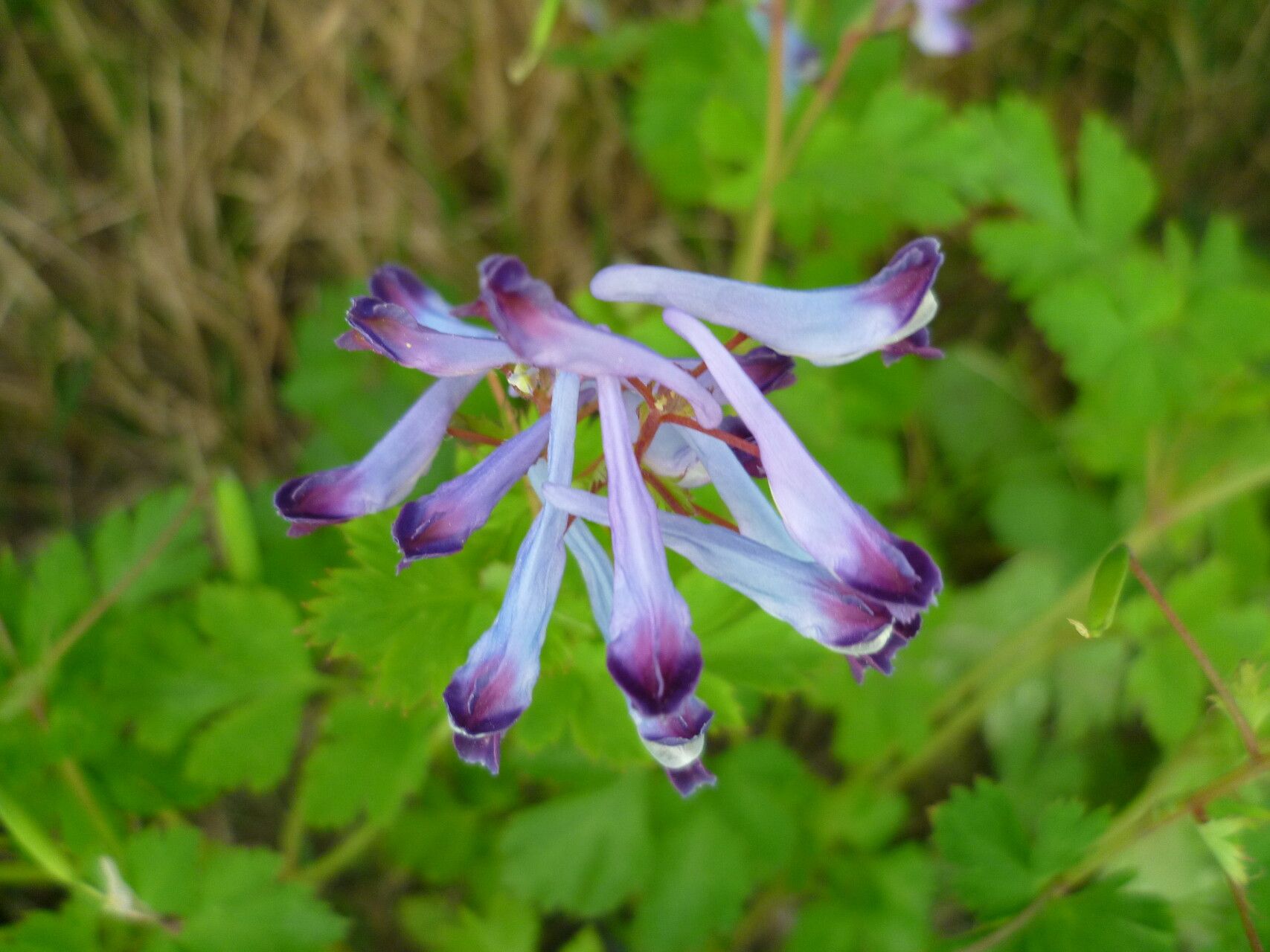
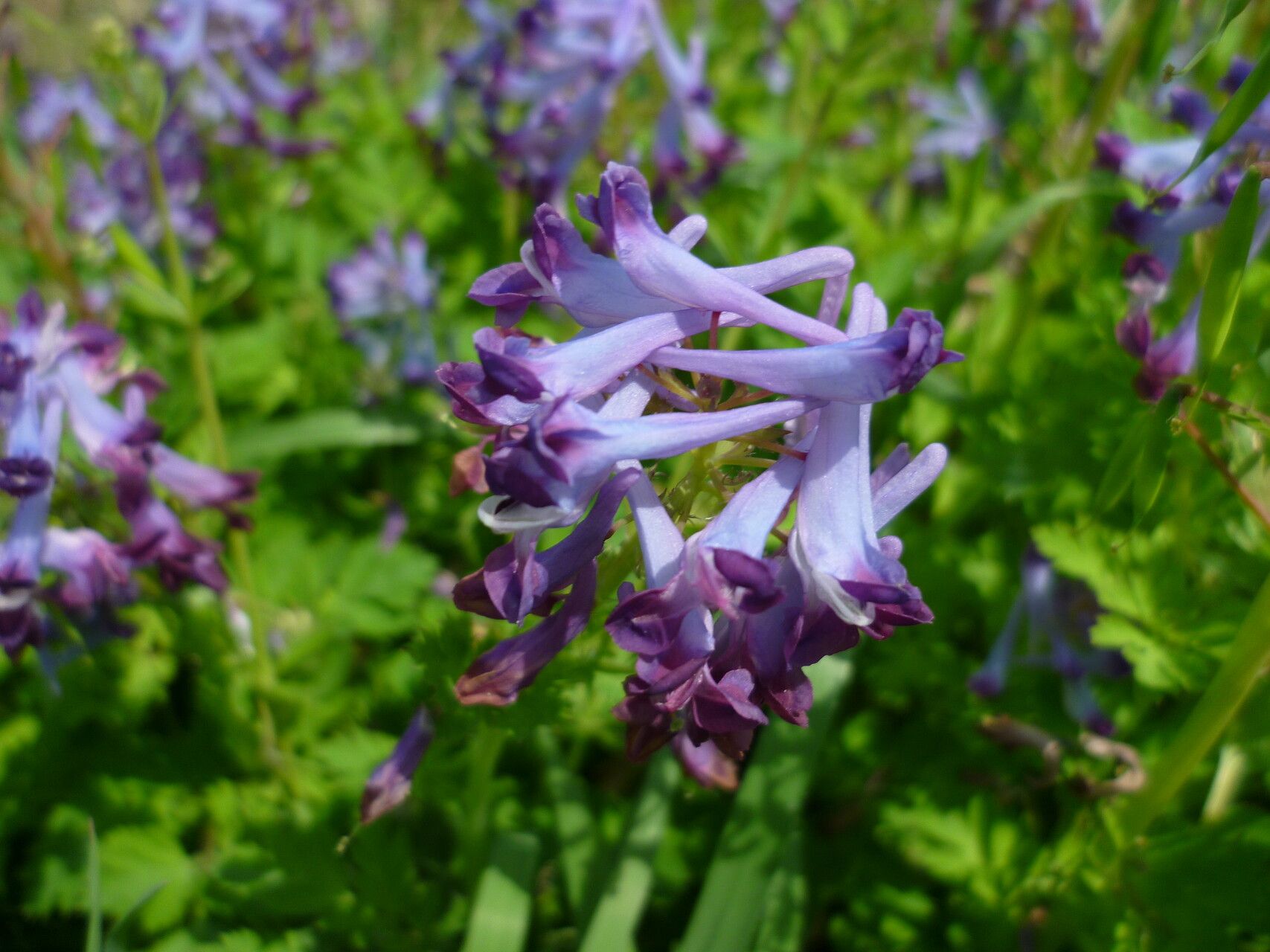
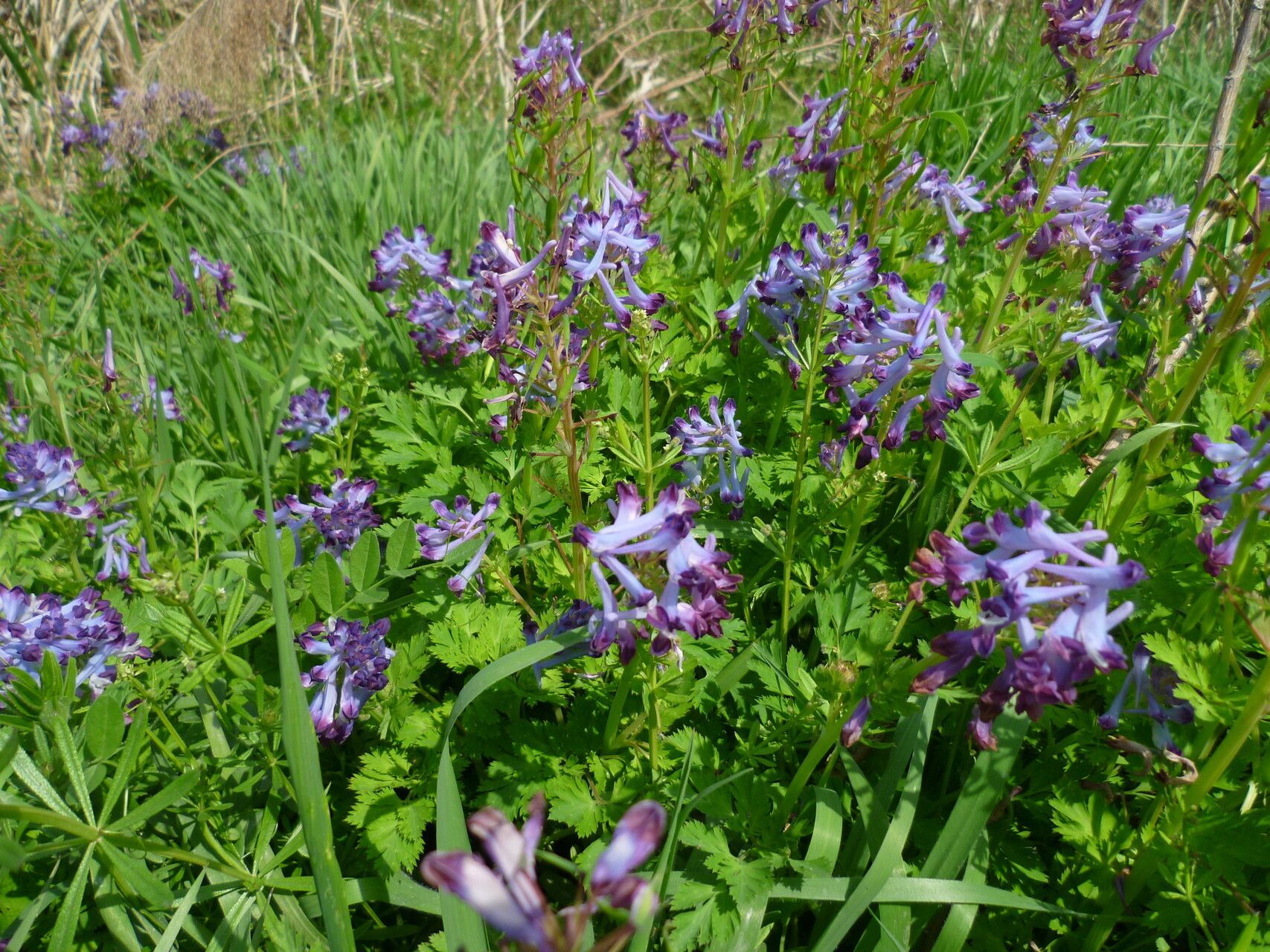
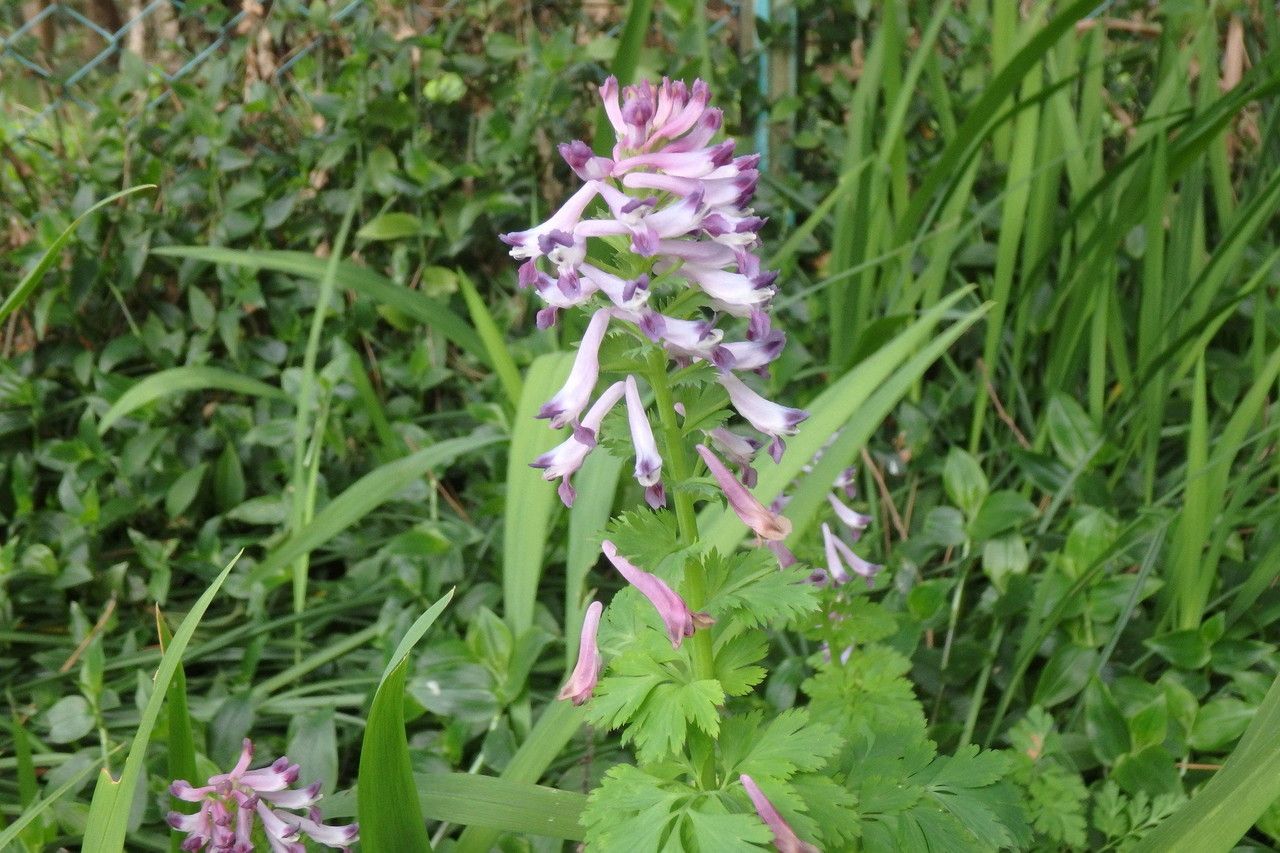
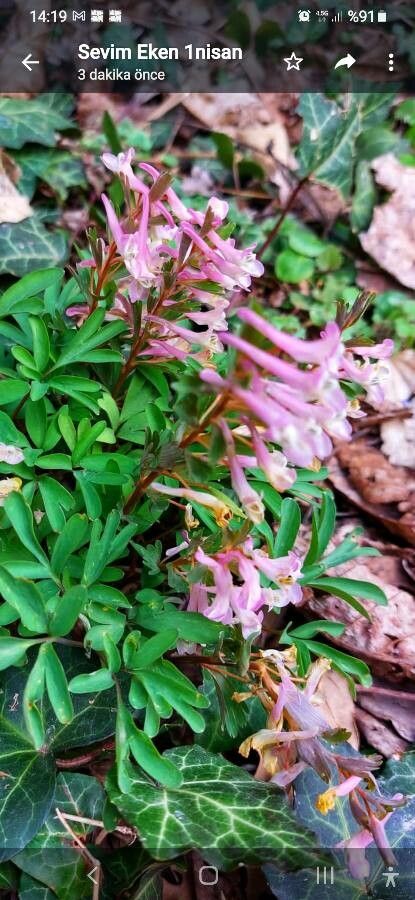
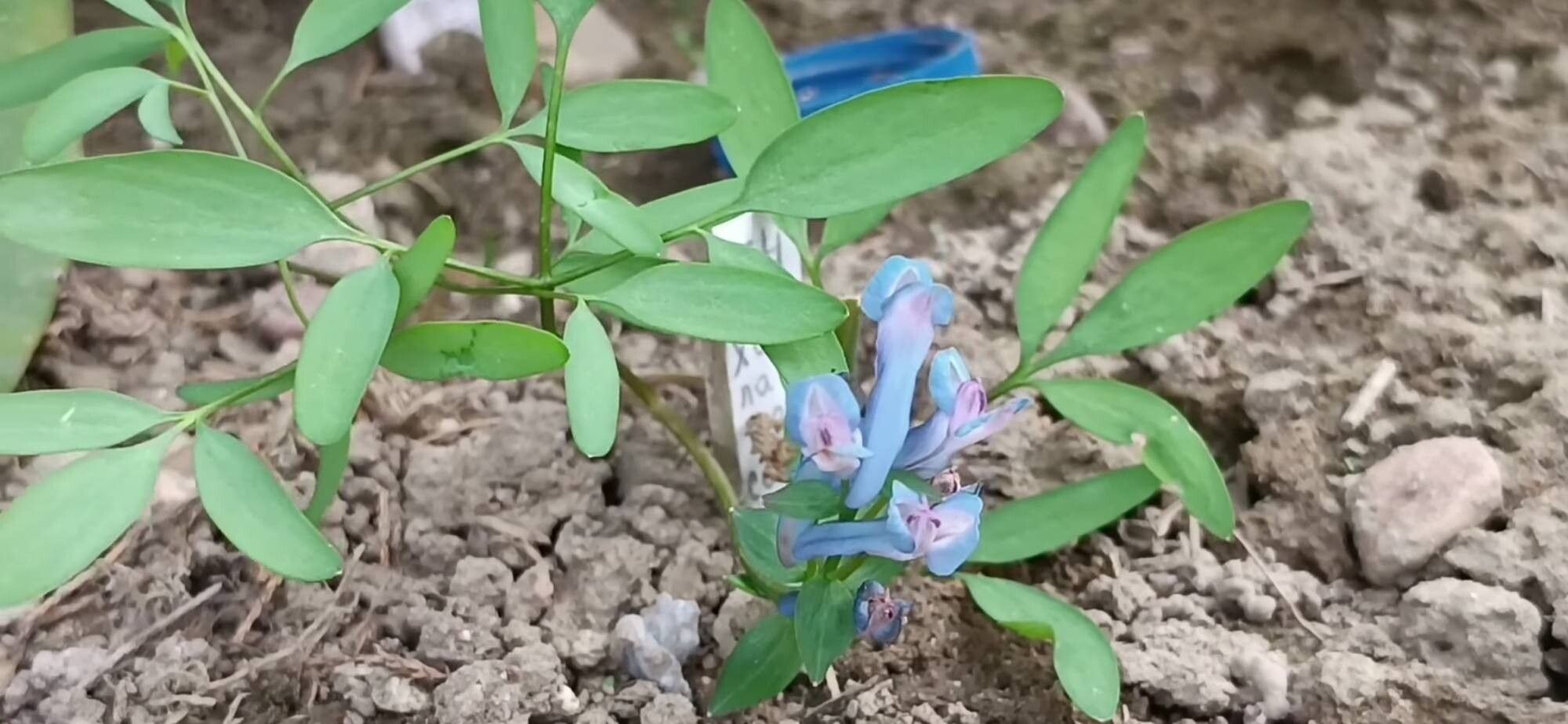
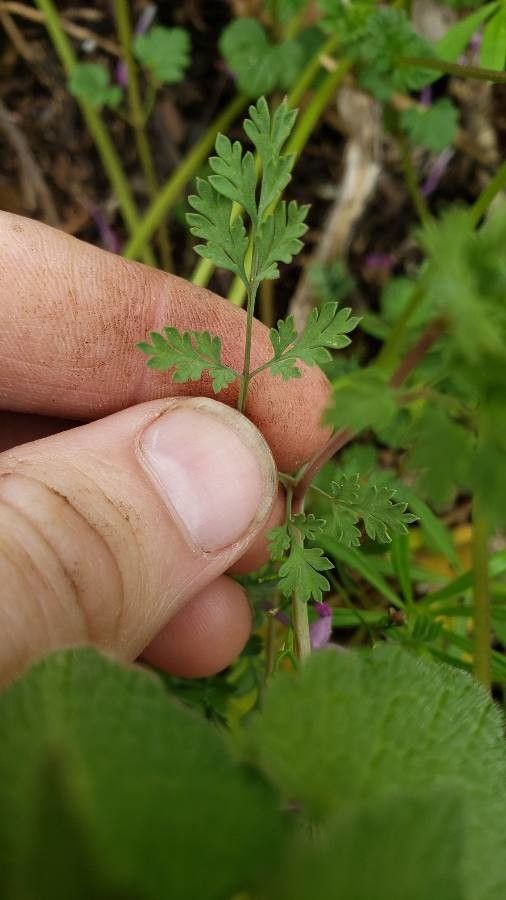
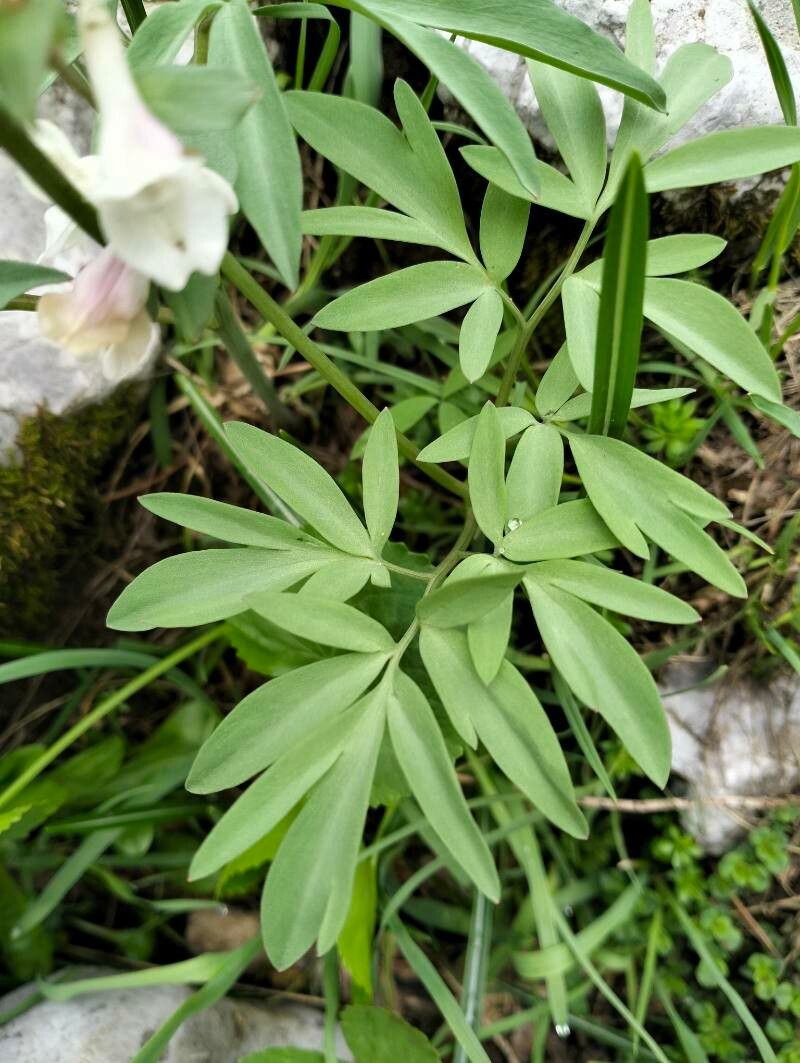
Corydalis incisa, incised fumewort, is an annual or biennial herbaceous species of plant in the poppy family. It is also known as purple keman or murasa-kike-man. Some authorities report it in the family Fumariaceae. The wildflower is native to Japan, Korea, Taiwan, and China, found in forests, clearings, and irrigation channels.Incised fumewort is an introduced species in the United States, with populations in New York, Pennsylvania, Maryland, Virginia, West Virginia, North Carolina, Tennessee, and the District of Columbia. The first reported populations were found in Bronx and Westchester Counties in 2005 and 2014. The plant can readily escape cultivation; it spreads from seeds explosively ejected from the fruit. The seed contains an elaiosome, which attracts dispersing ants. Apparently thriving in fine alluvial sediments, Corydalis incisa forms dense stands, crowding out more desirable riparian understory plants.
Incised fumewort, scientifically named Corydalis incisa, is a plant with an interesting etymology. The genus name, Corydalis, is derived from the Greek word meaning “creased lark,” a reference to the flowers' spurred appearance, reminiscent of a lark's. The specific epithet, incisa, describes the deeply cut nature of the plant's features.
Incised fumewort has strong resistance to disease and is generally not easily affected by illnesses. Still, it can be vulnerable to pests and diseases found in its environment. These issues are typically mild. For care, this plant needs moderate maintenance. Regular pruning is required to keep it looking good and to support healthy growth. Applying fertilizer can also encourage flowering. Incised fumewort is appropriate for anyone with outdoor space, such as a garden or patio, and does not demand extensive care experience. It may need more attention when kept indoors.
How to keep Corydalis Incisa.
Light
Incised fumewort grows best in spots with sunlight that is filtered and not overly strong. It originated in habitats with scattered light, so moderation is important. Excessive sun can harm it, while too little light hinders its growth and health.
Water
The incised fumewort is native to moist woodlands and thrives in evenly moist soil, although it can tolerate moderate drought conditions. To promote healthy growth, it's important to water the plant weekly during its active growing season, ensuring the soil remains adequately moist.
Temperature
Incised fumewort is native to temperate regions and does well in temperatures from 68 to 95°F (20 to 35°C). The plant's temperature needs do not require specific seasonal adjustments.
Fertilizer
Incised fumewort requires regular feeding to encourage flowering but is sensitive to overfertilization. Give it small amounts of fertilizer frequently throughout its life, especially during peak active growth and while it is flowering. Continue feeding your Incised fumewort until it stops blooming.
Pruning
Incised fumewort is known for its delicate foliage and tubular flowers. To keep the plant healthy, prune it from early to late spring. This involves removing any damaged stems and thinning overcrowded areas to improve air circulation. After flowering, additional pruning helps shape the plant, encourages more blooms, and prevents self-seeding. This not only ensures a neat appearance but also maximizes its ornamental value.
Botanical profile.
- Plant Type
- Herb
- Life Cycle
- Biennial, Annual
- Genus
- Corydalis
- Family
- Papaveraceae
- Hardiness Zone
- 6-10
- Mature Height
- 15 cm to 61 cm
- Mature Spread
- 8 cm to 61 cm
- Leaf Color
- Green, Blue
- Leaf Type
- Semi-evergreen
- Flower Color
- Purple, Lavender
- Flower Size
- 2.54 cm to 5.08 cm
- Bloom Time
- Mid spring, Late spring
- Planting Time
- Spring, Summer, Autumn
- Harvest Time
- Late spring, Early summer
- Native Area
- South Korea, Japan, China
Other names.
Reader questions.
What are the sunlight requirements for Incised Fumewort?
Incised Fumewort performs best in environments where it can receive partial sun, approximately 3-6 hours of sunlight per day. While it thrives under these conditions, too much direct sunlight can be harmful, and insufficient light can hinder its growth and health. Strive for a spot that offers a harmonious balance of light and shade, as observed in its natural habitat, which consists of filtered, scattered light.
What is the native environment of Incised fumewort?
Incised fumewort is native to temperate environments. It thrives in temperatures ranging from 68 to 95°F (20 to 35°C). The plant has adapted well to these conditions and does not require specific seasonal adjustments due to its temperature requirements. Incised fumewort is also known for its strong cold resistance, meaning that usually, it does not need special frost protection measures during the winter. However, in extreme conditions where winter temperatures are expected to drop below -25°C, it's important to provide additional cold protection by covering the plant with soil or straw. It's also recommended to water the plant abundantly before the first freeze in autumn to ensure the soil remains moist and enters a frozen state, helping to prevent drought and water scarcity during winter and early spring.
How can artificial lighting supplement natural sunlight for indoor Incised Fumewort plants?
Indoor Incised Fumewort plants may require artificial lighting to achieve optimal growth, especially in conditions where natural sunlight is scarce, such as during winter or in less sunny areas. Choosing the right artificial light, such as LED lights, is crucial because they can be customized to emit specific wavelengths beneficial for the plant. The intensity of the light should correspond to the plant's natural needs: 30-50W/sq ft for full sun plants, 20-30W/sq ft for partial sun, and 10-20W/sq ft for full shade. The light source should be placed 12-36 inches above the plant to mimic the sun's natural effect and run for 8-12 hours daily, aligning with natural daylight hours for that species.
What should be done if Incised fumewort experiences very low temperatures?
Incised fumewort exhibits strong cold tolerance, performing best when temperatures are above 20°C. During winter, it's essential to keep the plant above 0°C to prevent damage. If temperatures fall below -25°C, the plant may not show noticeable changes during winter but can experience decreased sprouting or fail to sprout at all during spring. If this occurs, the best course of action is to remove any parts of the plant that have failed to sprout in spring.
What symptoms indicate insufficient light for Incised Fumewort, and how can it affect the plant?
Incised Fumewort may exhibit several symptoms in response to insufficient light, including smaller new leaves, leggy or sparse growth, early leaf drop, halted growth, lighter-colored new leaves, chlorosis, sunscald, leaf curling, wilting, and leaf scorching. These symptoms range from minor aesthetic issues to severe health problems for the plant, underscoring the importance of providing adequate light. Insufficient light can lead to poor photosynthesis, energy conservation mode, and overall health degradation of the plant.
How does high temperature affect Incised fumewort and what are the solutions?
During the summer, the temperature where Incised fumewort is kept should not exceed 35°C. If temperatures rise above 41°C, the plant can experience several problems, including leaves becoming lighter in color, prone to curling, susceptible to sunburn, and in severe cases, the entire plant may wilt and become dry. To counteract these effects, it is recommended to trim away the sunburned and dried-up parts of the plant. Moving the plant to a location with shade from the midday and afternoon sun, or using a shade cloth, can provide necessary protection. Additionally, watering the plant in the morning and evening to keep the soil moist can help reduce stress from high temperatures.
What strategies can be used to optimize light exposure for Incised Fumewort, both indoors and outdoors?
To optimize light exposure for Incised Fumewort, gradual adjustments are key. Indoors, if the plant is large or not easily movable, supplementing with artificial light such as desk lamps or professional grow lights for at least 8 hours daily is recommended. Keeping the plant in gradually sunnier spots until it receives 3-6 hours of sunlight is ideal. Outdoors, gently transitioning the plant to sunnier locations weekly helps prevent sunburn. Reducing obstructions like trimming branches from trees can also increase sunlight exposure. When considering transplanting, do so during the plant's dormant period with careful attention to correct placement for optimal sunlight and drainage.