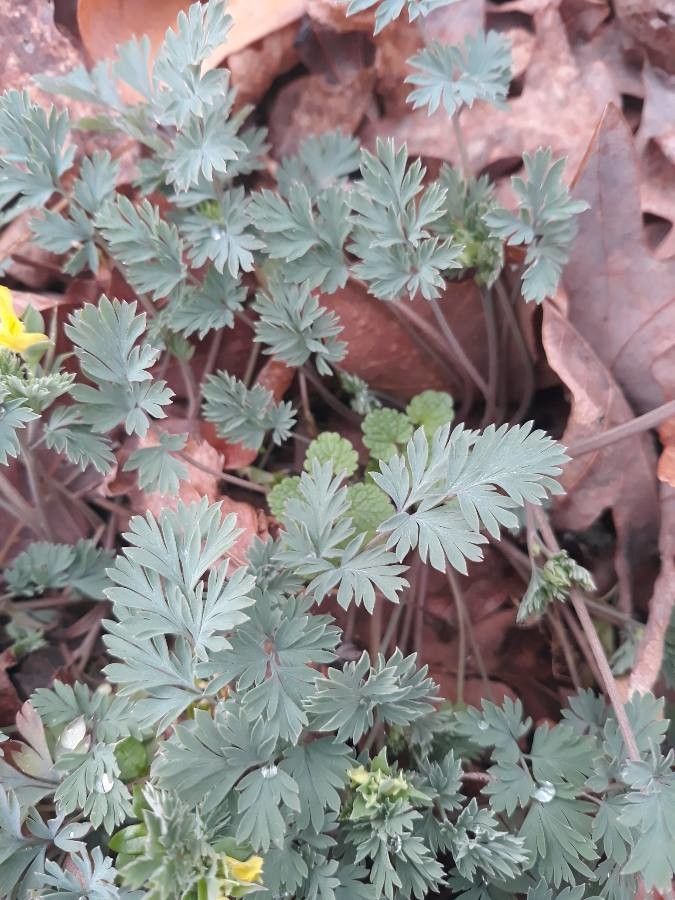
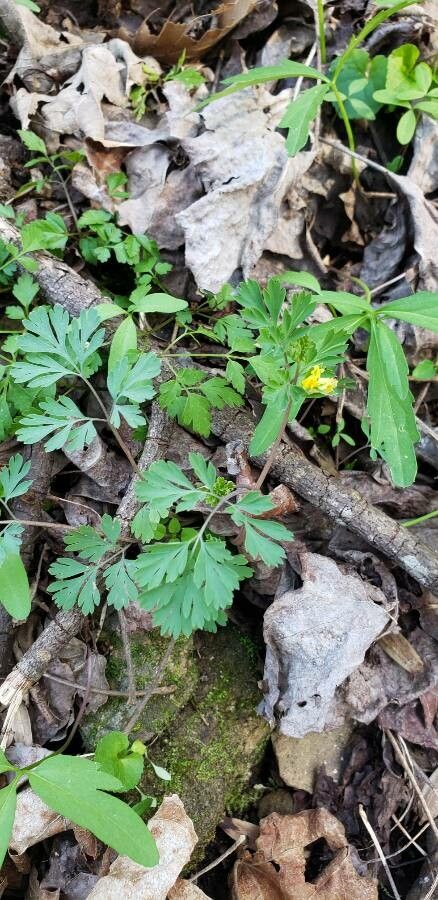
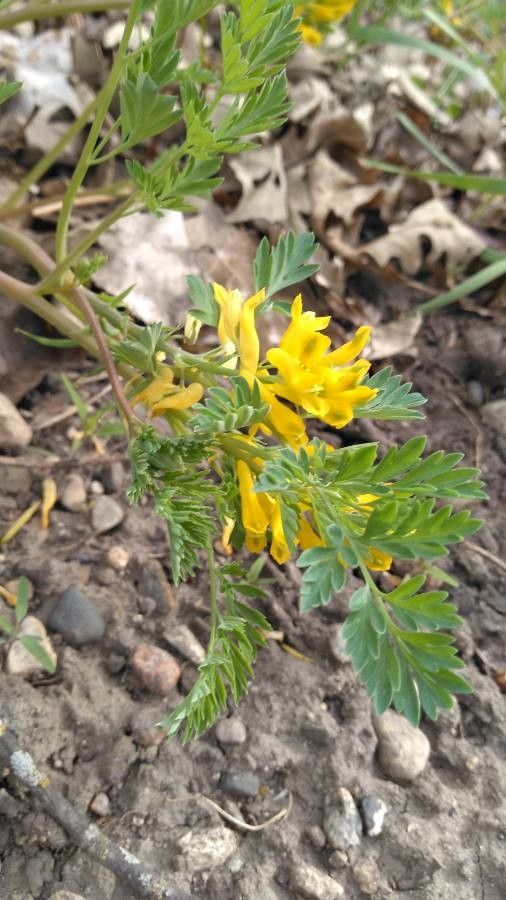
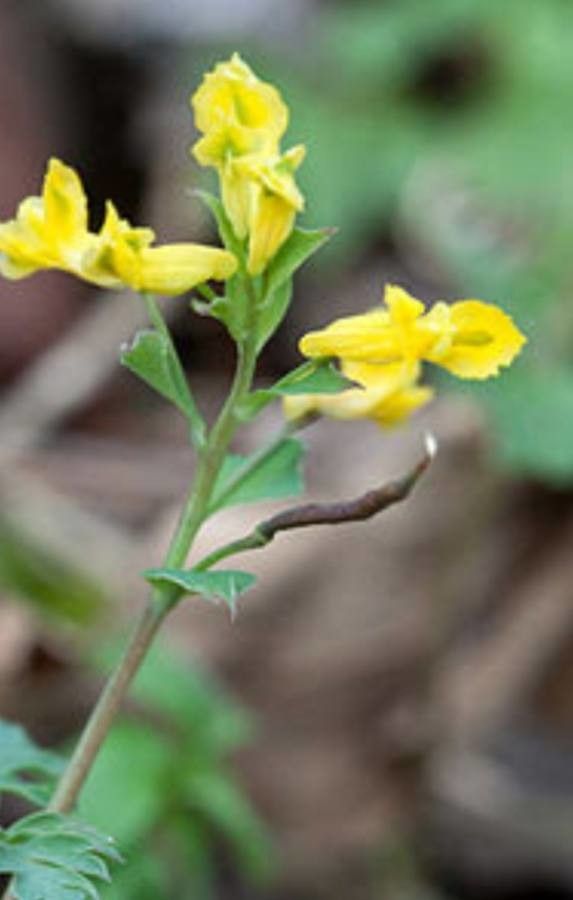
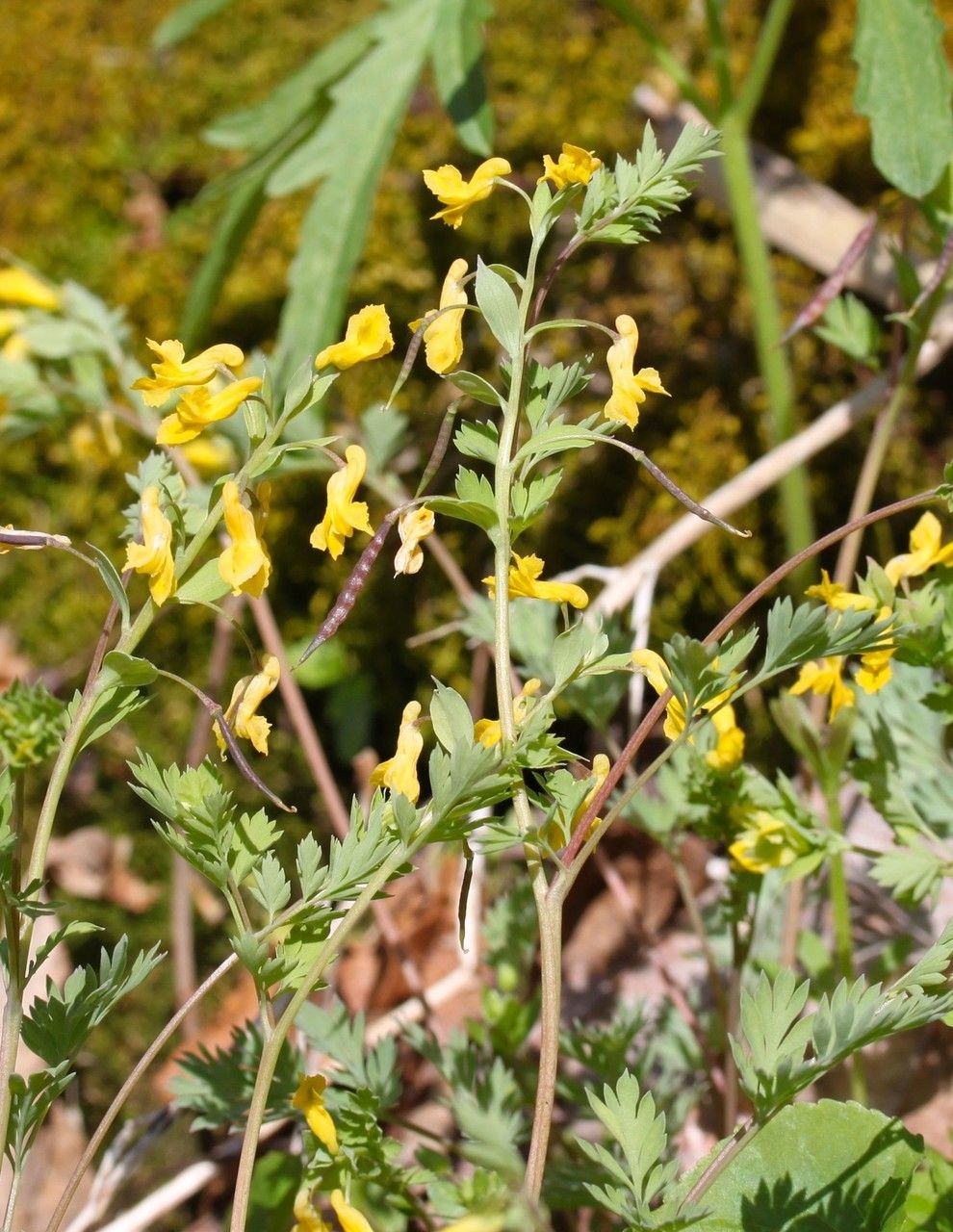
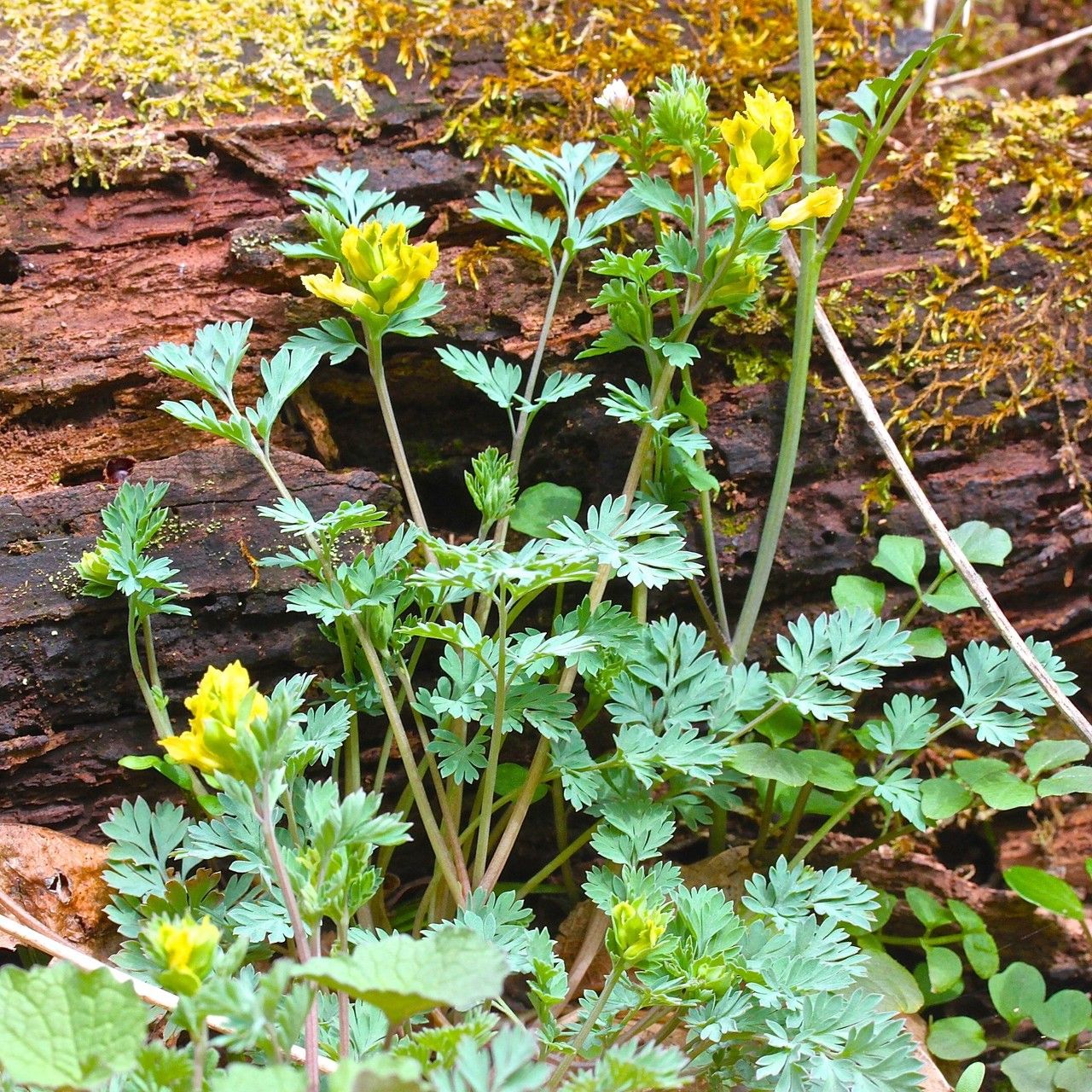
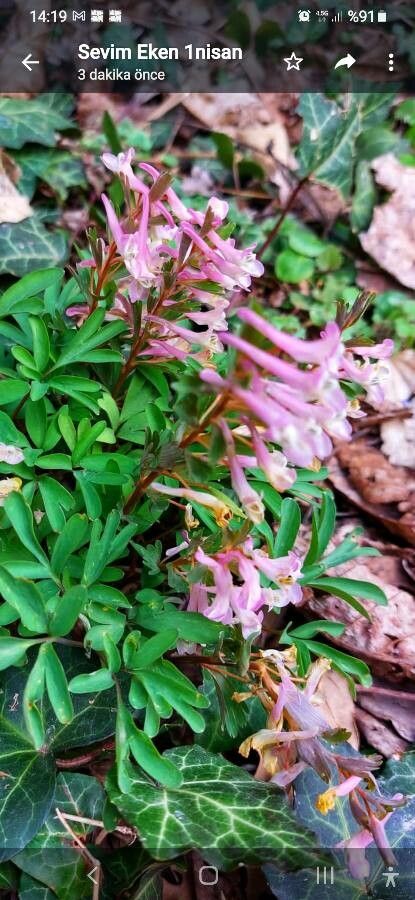
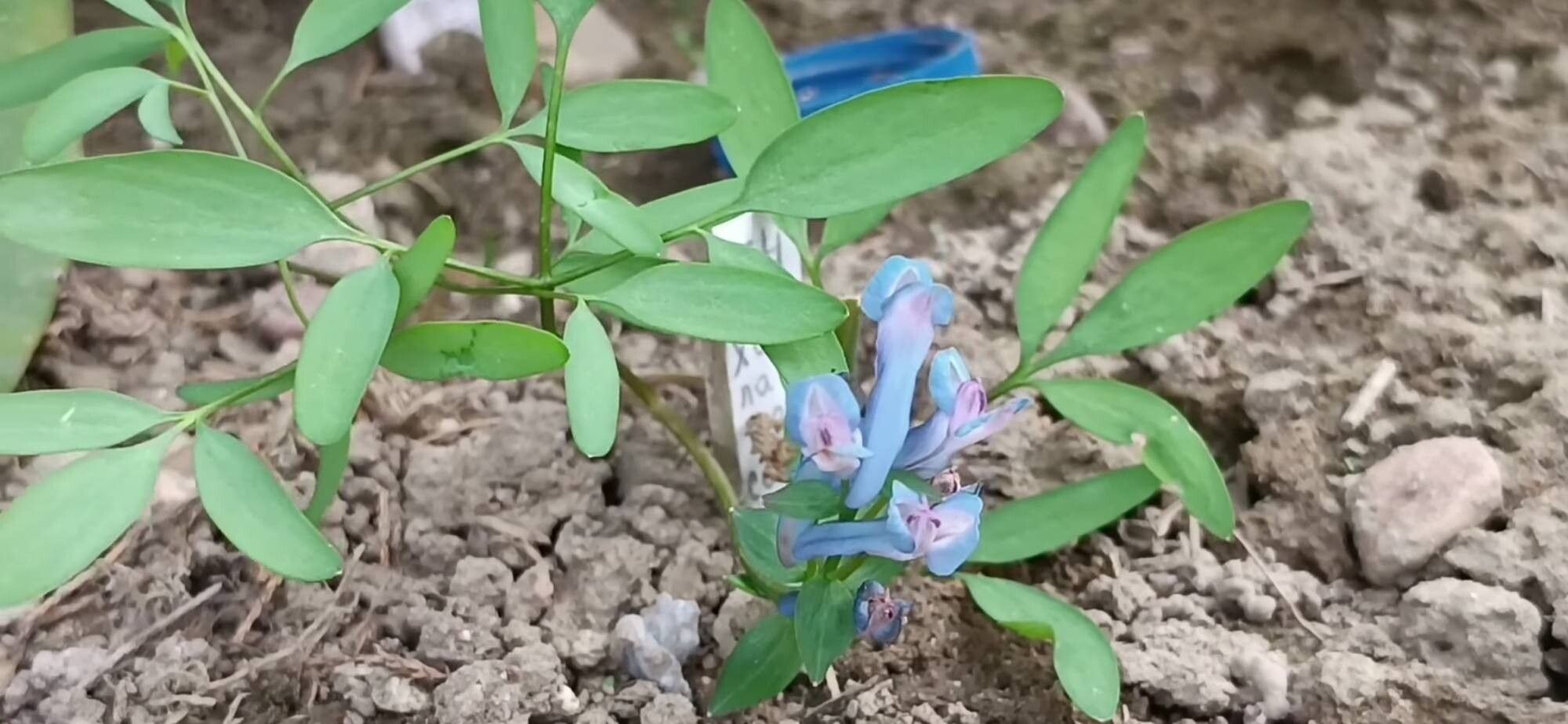
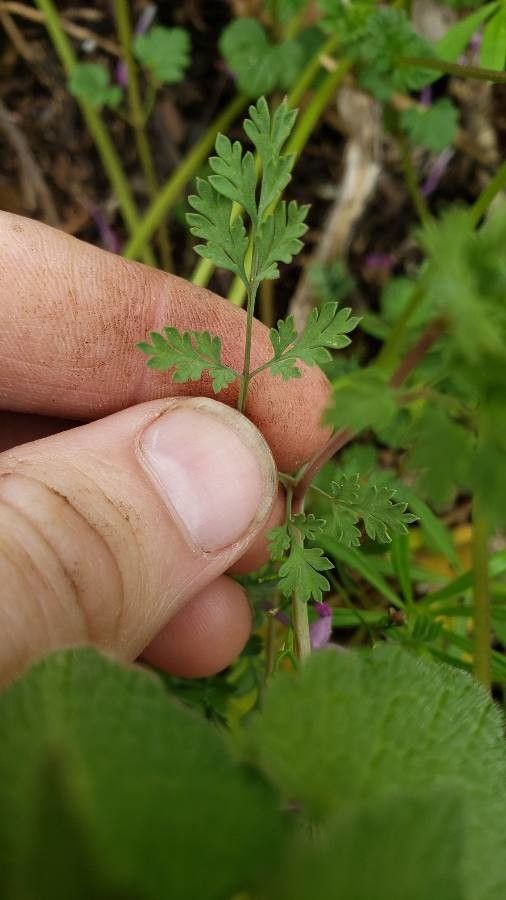
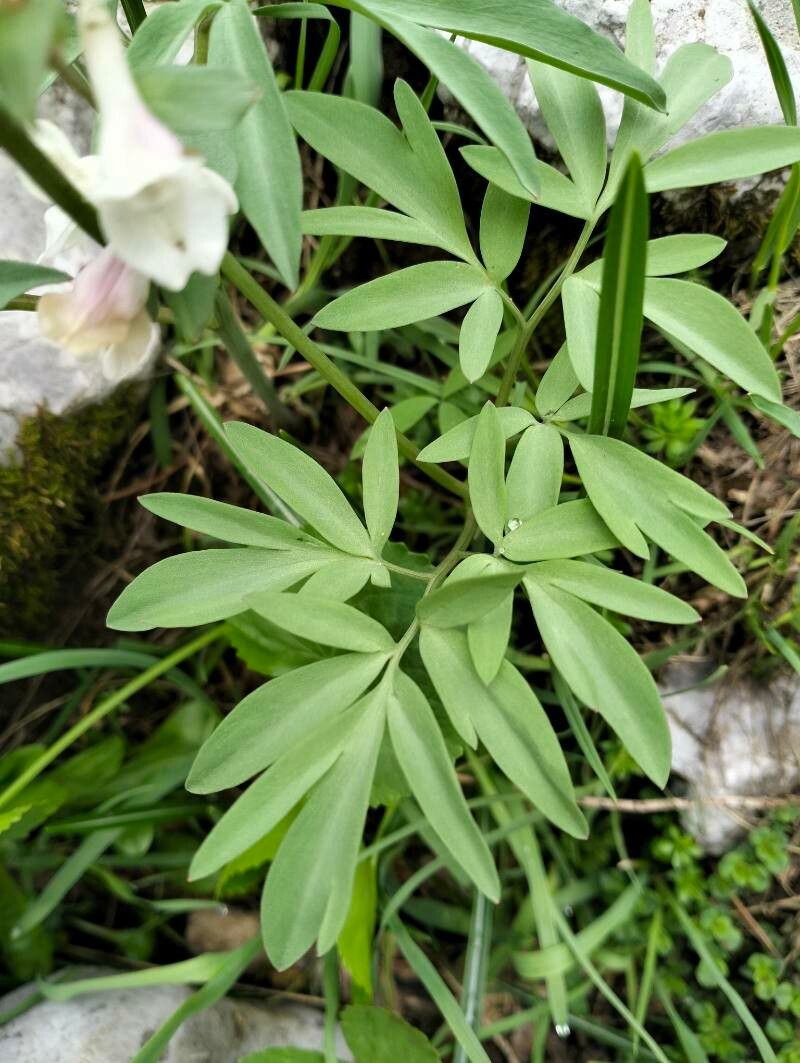
Corydalis flavula, commonly known as yellow corydalis or yellow fumewort, is a perennial herbaceous plant belonging to the Papaveraceae family. Native to Europe and Asia, this plant typically grows up to 30 cm in height and features finely divided, bluish-green leaves. Its bright yellow flowers, each adorned with a distinctive spur at the back, give the plant a unique appearance.
Corydalis flavula thrives in moist, well-drained soil and partial shade but can also withstand full sun. The plant blooms from late spring to early summer, attracting bees and other pollinators with its nectar-rich flowers.
Historically, Corydalis flavula has been used for medicinal purposes due to its analgesic properties, which help alleviate pain from inflammation or injury. The plant also contains alkaloids known for their sedative effects.
In addition to its medicinal uses, Corydalis flavula is valued for its ornamental appeal. Its attractive foliage and vibrant flowers make it a popular choice for gardens and landscaping projects.
In summary, Corydalis flavula is a fascinating herbaceous perennial that offers both medicinal benefits and ornamental beauty, making it a favored choice for gardeners worldwide.
Yellow fumewort is fairly disease-resistant and is generally not prone to illnesses. However, it can be affected by pests and diseases present in its environment. Such infections are usually mild. As for care, this plant requires moderate maintenance. Regular pruning is needed to keep a neat appearance and support healthy growth. Fertilizing can also help encourage flowering. Yellow fumewort is suitable for anyone with an outdoor area, such as a garden or patio, and does not demand extensive care experience. It may need more attention when grown indoors.
How to keep Corydalis Flavula.
Light
The yellow fumewort prospers in moderate sunlight and generally avoids very strong illumination. Native to heavily shaded habitats, it can withstand periods without light. Excessive sunlight may harm its growth, while insufficient light can inhibit healthy development.
Water
Yellow fumewort flourishes in conditions that replicate its native woodlands, where the soil remains moderately moist. It thrives best in evenly moist soil, maintained through weekly watering. While it can withstand short dry spells, it is ideally suited for outdoor environments where it can benefit from natural rainfall. This is particularly beneficial during its active growing season, ensuring optimal flowering and foliage growth.
Temperature
Yellow fumewort is native to environments with temperatures of 68 to 95 °F (20 to 35 ℃). It thrives well within that span. Seasonal adjustments to keep this preferred temperature are advised for optimal growth.
Fertilizer
When most of Yellow fumewort's blooms have opened to full size, resume fertilizing. Around the period of peak bloom, apply fertilizer once every three to four weeks, as weather permits. Then, when Yellow fumewort starts producing fewer new blooms, stop fertilizing; there is no need to fertilize when the plant can no longer produce more blooms.
Pruning
Yellow fumewort benefits from pruning in early to late spring. Focus on removing dead or damaged stems to improve growth and air circulation. Pruning after the blooming period can encourage a second flowering. Be sure to clean your tools to prevent disease, and avoid heavy pruning to maintain the plant's shape and ornamental appeal.
Botanical profile.
- Plant Type
- Herb
- Life Cycle
- Annual
- Genus
- Corydalis
- Family
- Papaveraceae
- Hardiness Zone
- 7
- Mature Height
- 15 cm to 30 cm
- Mature Spread
- 30 cm to 33 cm
- Leaf Color
- Pale Green
- Leaf Type
- Semi-evergreen
- Flower Color
- Yellow
- Flower Size
- 0.76 cm to 1.27 cm
- Bloom Time
- Early spring, Mid spring
- Planting Time
- Spring, Summer
- Harvest Time
- Late spring, Early summer
Other names.
Reader questions.
How should I water my Yellow fumewort plant?
There are a few different ways to water Yellow fumewort. You can use a garden hose with a spray nozzle, a watering can, or any other common watering tool. This plant isn't too fussy about the type of water it receives - it can survive on rainwater, tap water, or even filtered water. It's generally best not to water this plant from above, as it can harm the leaves and flowers and potentially cause disease. A drip irrigation system is often a good option for watering Yellow fumewort, as it delivers water evenly and directly to the soil. If you have a Yellow fumewort in a container, you can use a similar watering method but adjust the tools you use. Simply use a cup, watering can, or your tap to water the soil directly.
What are the sunlight requirements for Yellow Fumewort?
Yellow Fumewort, or Corydalis flavula, requires about 3-6 hours of sunlight, falling into the category of partial sun plants. It's essential to observe your garden's sunlight patterns to find the ideal balance of light and shade that supports the well-being of your plants. Ensuring they get the perfect amount of gentle sunlight is crucial for their growth and happiness.
What is the optimal temperature range for growing Yellow Fumewort?
Yellow Fumewort thrives in temperatures ranging from 68 to 95 °F (20 to 35 °C). Maintaining this temperature range is crucial for the plant's optimal growth. Seasonal adjustments might be necessary to keep the environment within this preferred temperature range. Despite its strong cold resistance, in areas where winter temperatures can fall below -15°C, additional cold protection measures are advisable to ensure the plant's well-being through colder months.
What should I do if I give too much or too little water to my Yellow fumewort plant?
If you notice that your Yellow fumewort lacks moisture, you should start watering it more regularly. Overwatering can be a more serious problem, as it can lead to diseases and the decline or death of the plant. To avoid overwatering, choose a well-lit location with good drainage. If you have overwatered a potted Yellow fumewort, consider transferring it to a new pot with better drainage, using loose soil.
What are the essentials for growing Yellow Fumewort indoors?
To successfully grow Yellow Fumewort indoors, providing adequate light is essential. This plant generally prefers environments with moderate sunlight and ample shade, avoiding intense direct sunlight. In cases where natural light is insufficient, especially during winter or in less sunny spaces, it’s advisable to use artificial lights. LED lights are recommended for their efficiency and ability to be customized to the plant's needs. Full sun plants require 30-50W/sq ft, partial sun plants need 20-30W/sq ft, and full shade plants 10-20W/sq ft of artificial light. The light source should be placed 12-36 inches above the plant, and plants generally need 8-12 hours of light daily to mimic natural daylight hours.
How can Yellow Fumewort be protected during cold winters?
Yellow Fumewort is notably cold-resistant and does not usually require special frost protection measures. However, in anticipation of winter temperatures dropping below -15°C, it's important to protect the plant from the cold. This can be achieved by covering the plant with protective materials such as soil or straw. Additionally, before the onset of the first freeze in autumn, it's recommended to water the plant thoroughly to ensure the soil remains moist and enters a frozen state, which helps prevent drought and water scarcity during winter and early spring.
How often do I need to water my Yellow fumewort plant?
Yellow fumewort requires regular watering throughout the growing season. In the spring, watering once a week is sufficient. However, as the season progresses and temperatures rise, you may need to increase watering to two or three times per week. It's important not to exceed this rate as it can harm the plant. Regardless of the watering frequency, ensure that the soil is relatively moist but not wet. If you're growing Yellow fumewort in a pot, you'll need to water more frequently compared to in-ground plants. Potting soil can heat up and dry out faster, so watering a few times per week is usually necessary, instead of just once for plants in the ground.
What are the symptoms of inadequate light for Yellow Fumewort?
Yellow Fumewort shows several symptoms when it doesn't receive enough light, including small new leaves, leggy or sparse growth, faster leaf drop, slower or no new growth, and lighter-colored new leaves. Excessive sunlight can also lead to issues such as chlorosis, where leaves turn yellow due to chlorophyll breakdown, sunscald with pale or necrotic areas on the plant tissue, leaf curling as a defense mechanism against sunlight, wilting from increased water loss, and leaf scorching characterized by brown, crispy leaf edges.
What should be done if Yellow Fumewort experiences low temperatures below -15°C?
While Yellow Fumewort is cold tolerant, temperatures falling below -15°C can impact its ability to sprout in the spring. There may not be visible changes during the winter, but a decrease in sprouting or a complete lack of sprouting might occur once the temperatures start to rise. In such cases, it is advised to remove any parts of the plant that have failed to sprout in the spring as part of its care regimen.
How much water does my Yellow fumewort plant need?
Determining how much water to give to your Yellow fumewort can be done in multiple ways. One approach is to feel the soil for moisture and water until the top six inches of soil are moist. Another option is to use a set measurement, such as two gallons per week, adjusting based on temperature and soil dryness. However, these guidelines may result in overwatering if your plant needs less water. When growing Yellow fumewort in a container, you should water enough to moisten all layers of dry soil, which can be tested by sticking your finger in the soil or observing excess water draining from the pot's holes.
How can I address lighting issues for Yellow Fumewort?
To address lighting issues for Yellow Fumewort, gradually introducing the plant to optimal sunlight conditions is key. Indoors, shift the plant to sunnier spots weekly until it gets 3-6 hours of sunlight or use artificial lighting, such as desk lamps or professional grow lights, for at least 8 hours a day. Outdoors and for ground plants, move the plant to sunnier locations gradually and reduce obstructions by pruning or transplanting to ensure enough sunlight reaches the plants. It’s important to remember that while affected parts might not recover, new growth will be healthy with improved light exposure.
How should Yellow Fumewort be cared for during high temperatures?
During the summer months, it is essential to keep the temperature below 35°C for Yellow Fumewort. Exposure to temperatures exceeding 38°C can lead to the plant's leaves becoming lighter, prone to curling, susceptibility to sunburn, and in severe cases, wilting and drying out. To mitigate these risks, sunburned and dried-up parts should be trimmed away. The plant should be moved to a shaded location or covered with shade cloth to protect it from midday and afternoon sun. Additionally, watering the plant in the morning and evening can help keep the soil adequately moist.