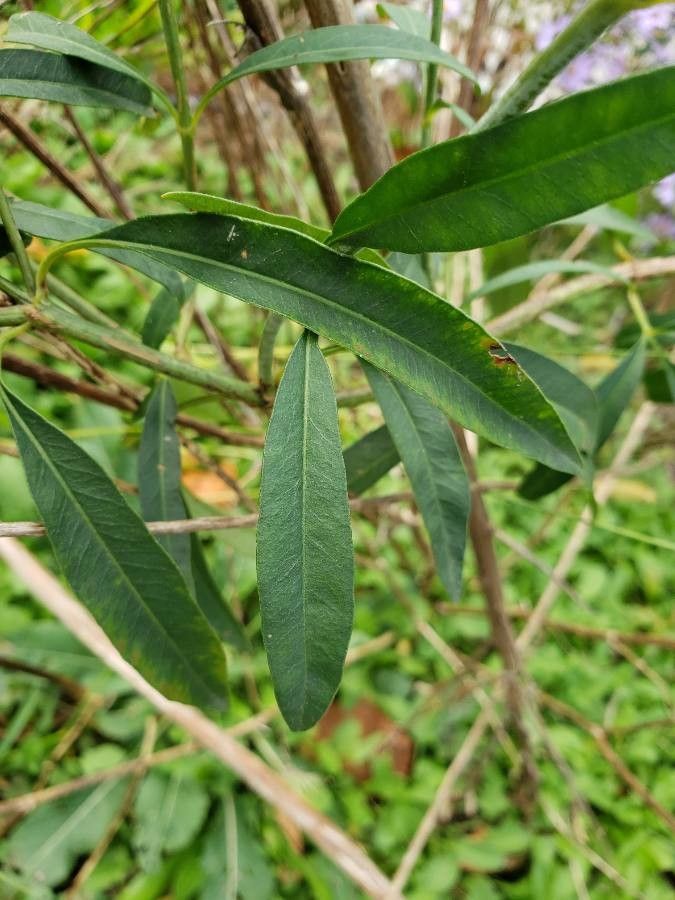
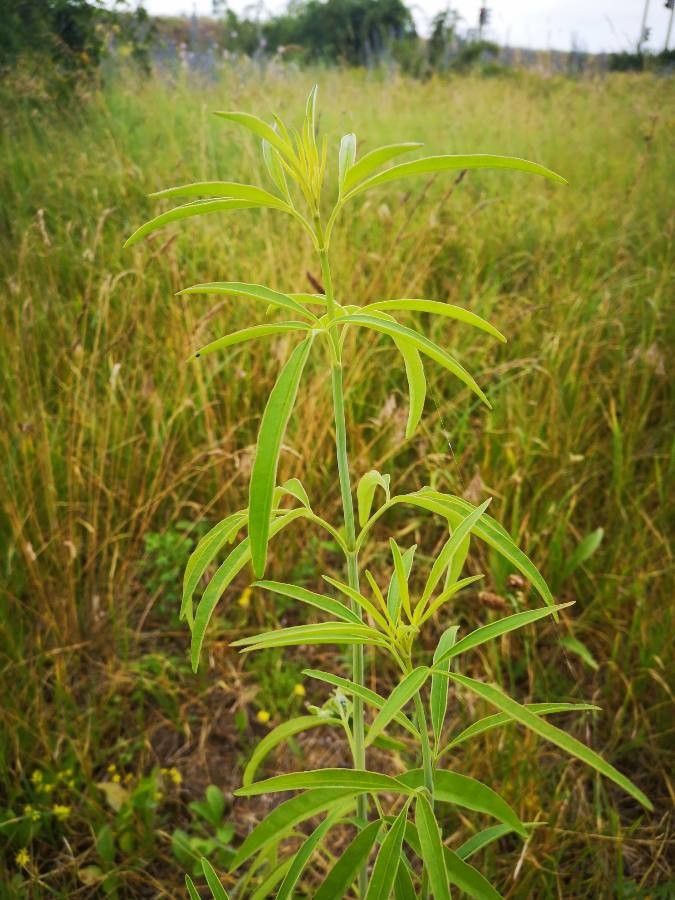
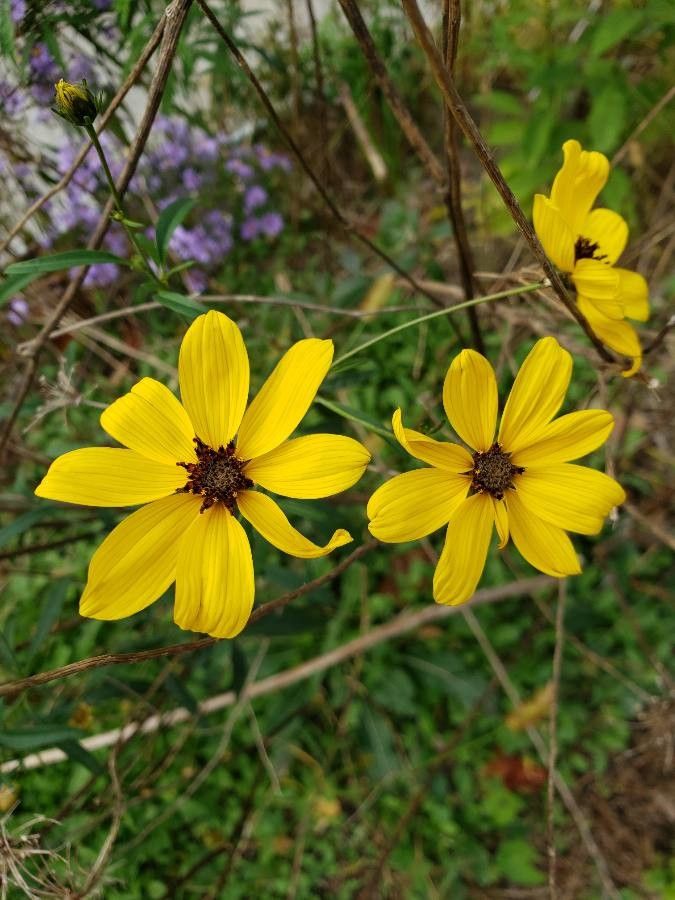
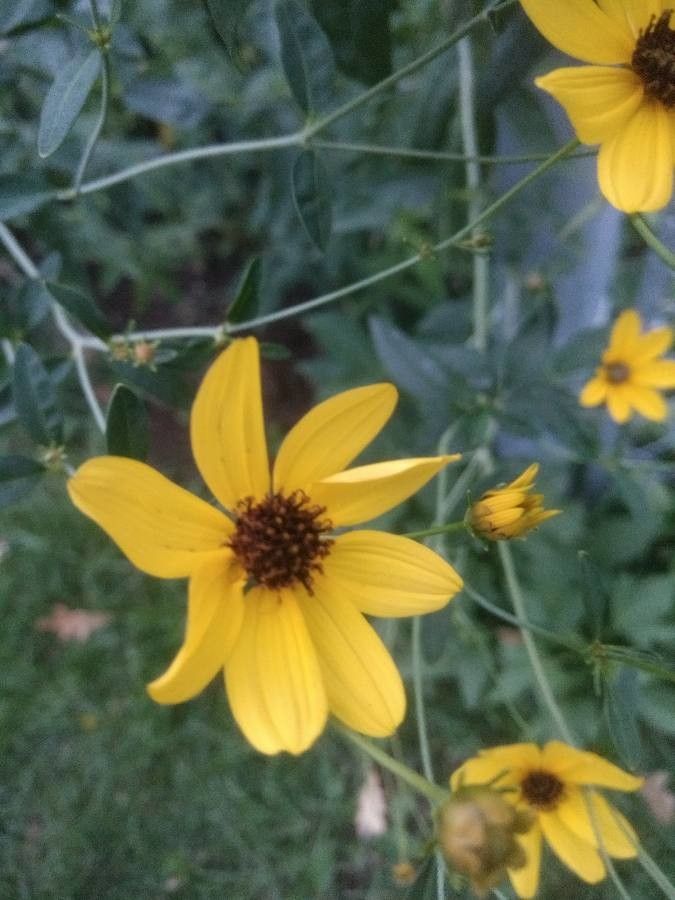
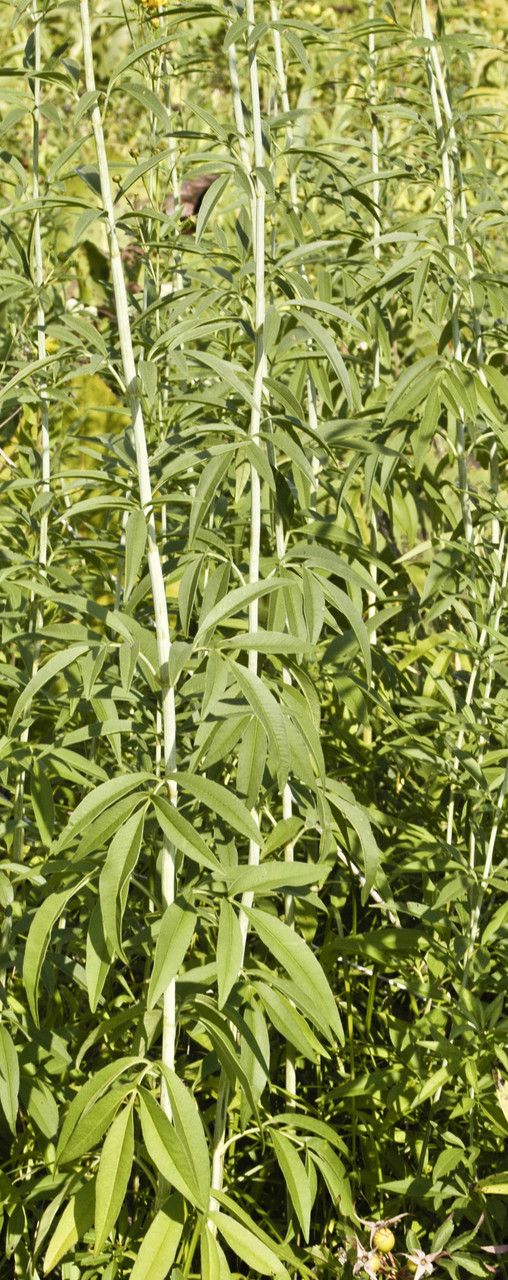
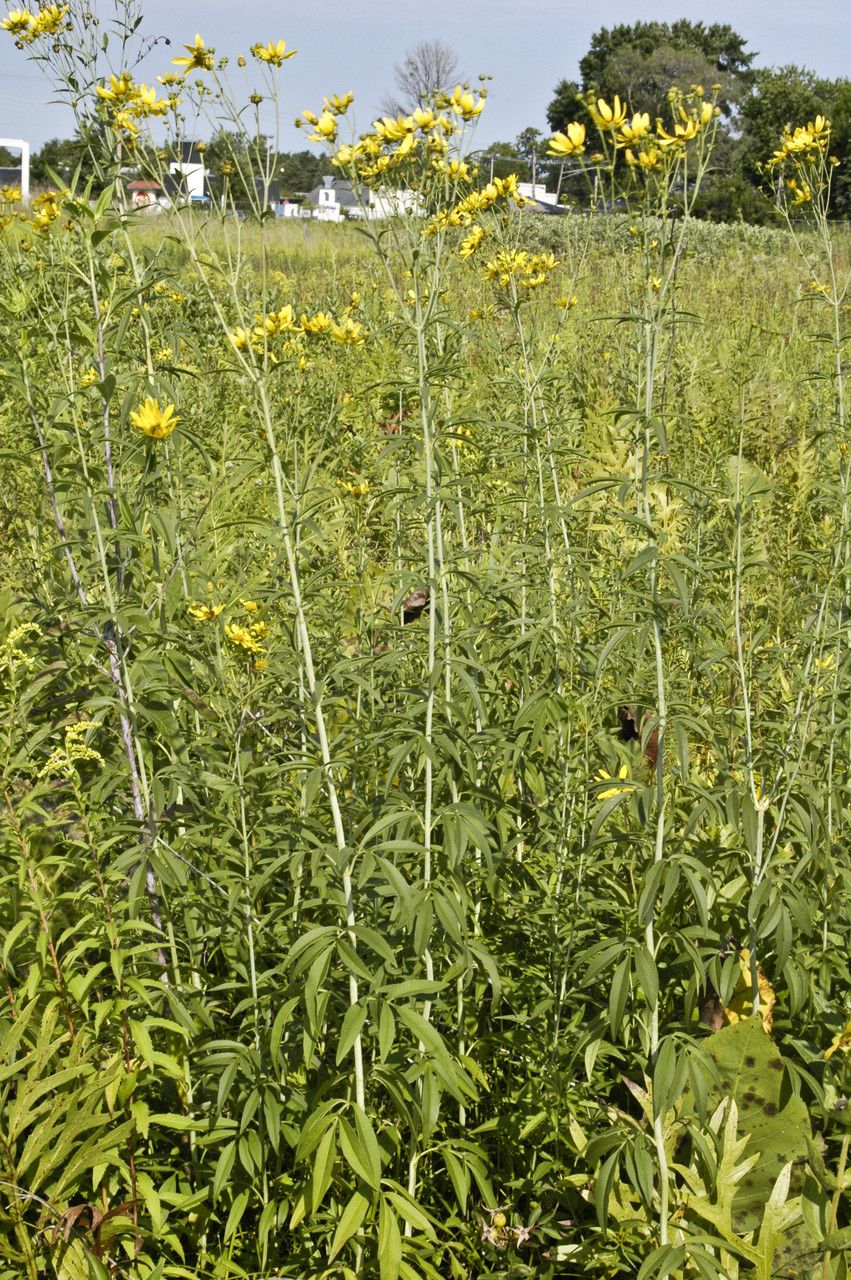
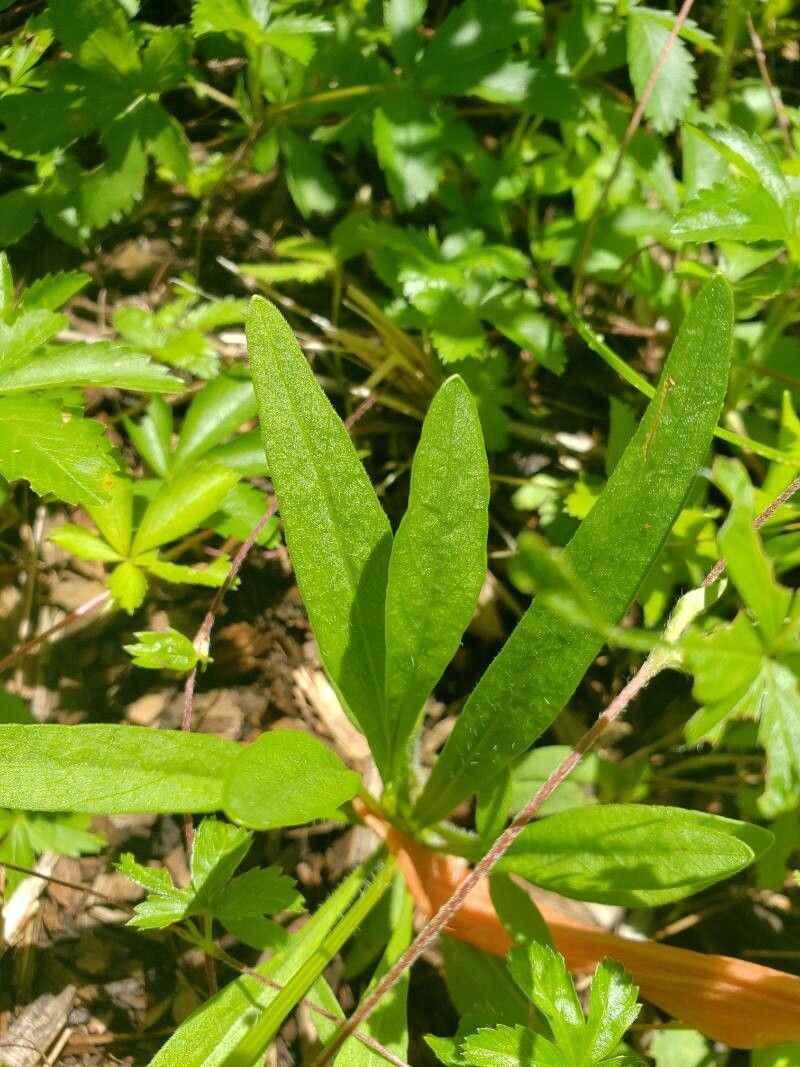
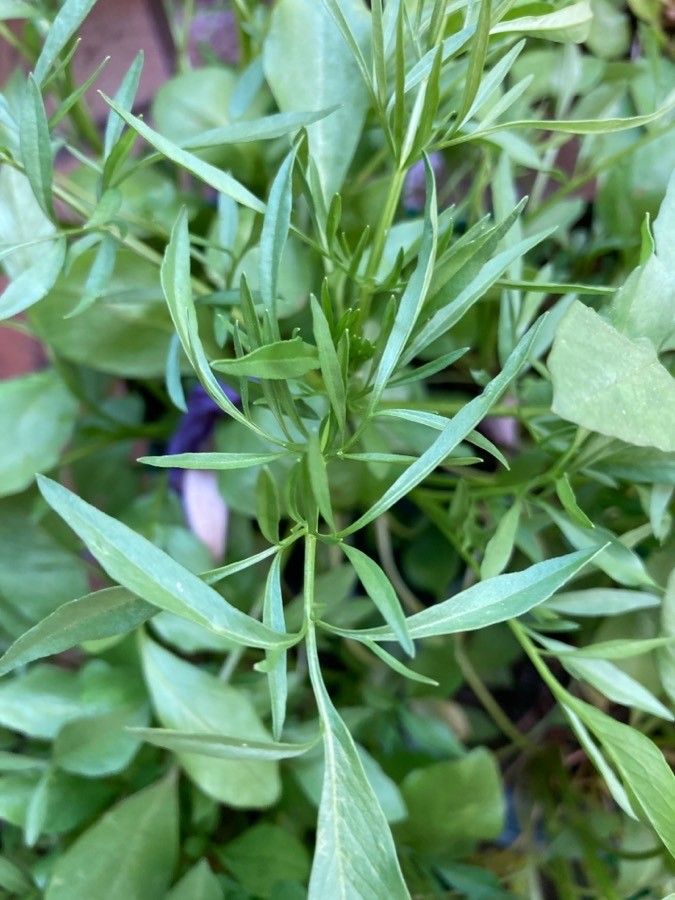
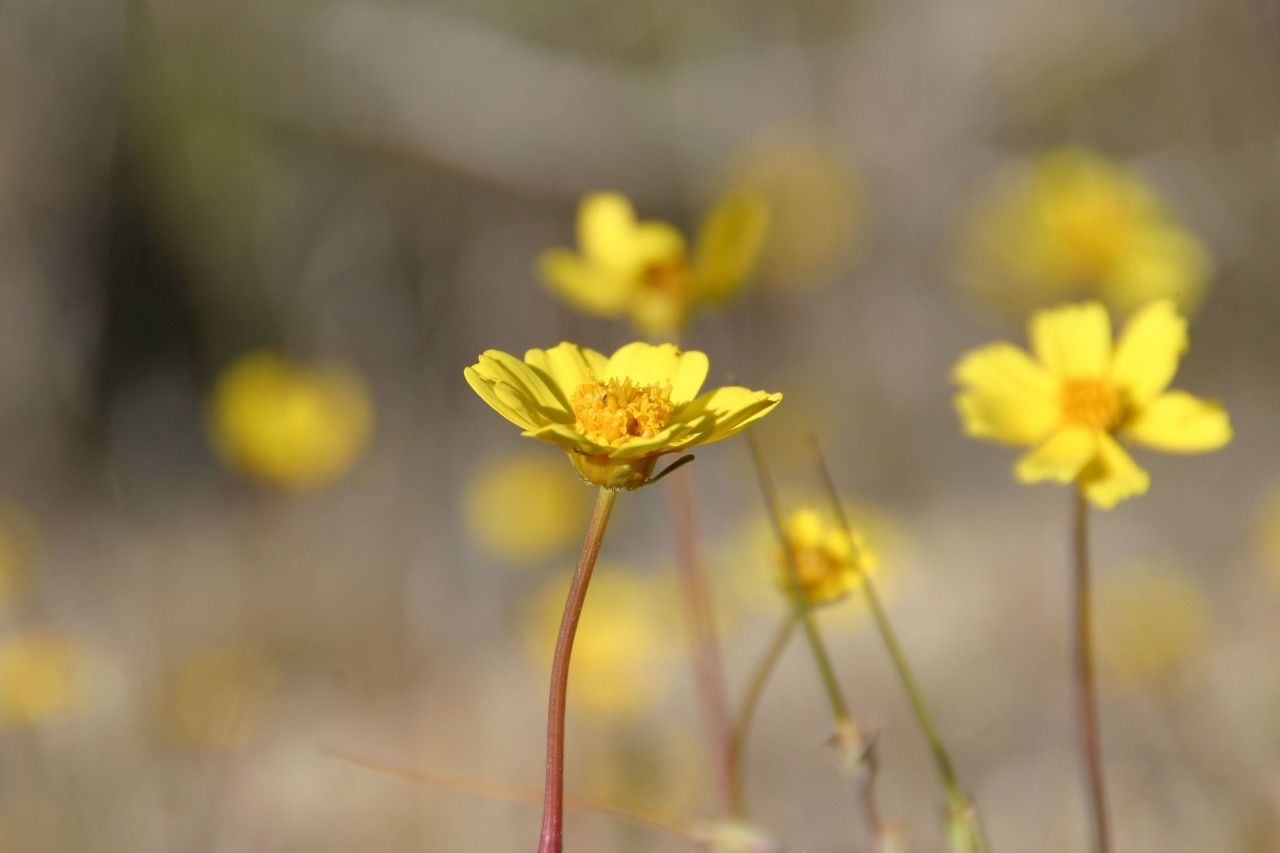
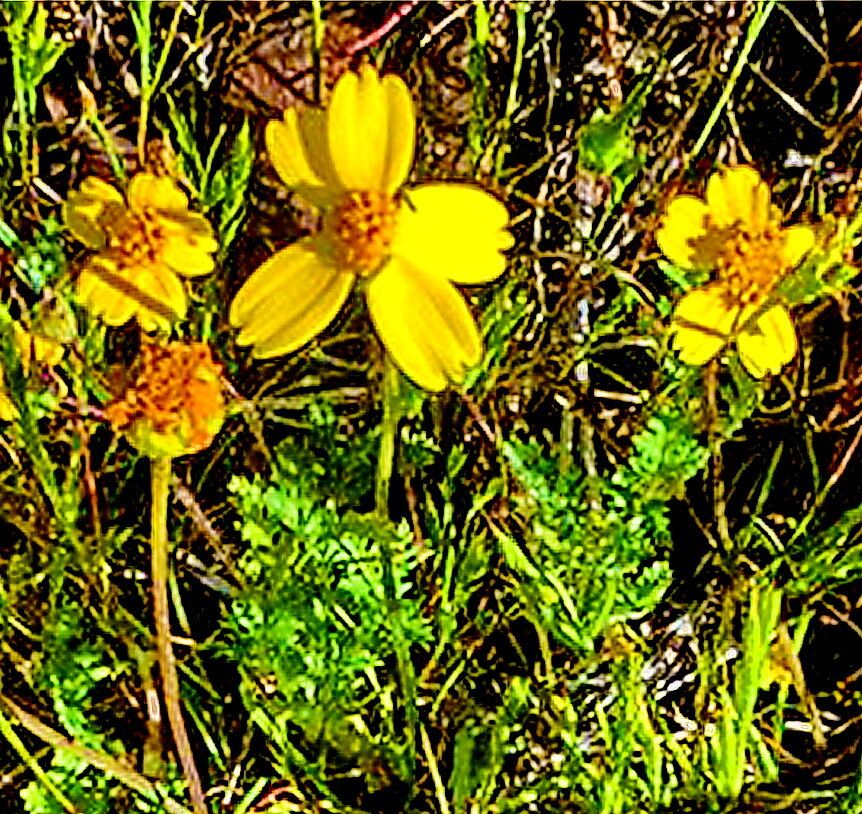
Coreopsis tripteris is a North American species of flowering plant in the family Asteraceae. It is widespread across much of eastern and central North America from the Florida Panhandle west as far as eastern Texas and north to Québec and Ontario. Its common names include tall tickseed, tall coreopsis, and Atlantic coreopsis.This perennial herb usually reaches nearly 100 cm (40 inches) in height, sometimes approaching 200 cm (80 inches). The leaves are mostly divided into 3 leaflets which are smooth-edged to lobed and several centimeters long. The flower heads have yellow ray florets 1 to 2 cm (0.4 to 0.8 in) long, or longer. The center of the head has many disc florets in shades of reddish brown to purplish. It produces short, stout rhizomes.This plant grows in moist habitat, such as streambanks and wet meadows. It flowers in summer.This plant is commercially available for use in cultivation as an ornamental.
Tall tickseed is fairly disease-resistant and typically not prone to illnesses. Still, it can be vulnerable to pests and diseases present in its surroundings. These problems are generally mild. In terms of care, this plant has moderate maintenance needs. It should be pruned regularly to maintain a tidy appearance and encourage healthy growth. Fertilizing can also help stimulate flowering. Tall tickseed is appropriate for anyone with outdoor space, such as a garden or patio, and does not demand extensive care experience. It may need more attention if grown indoors.
How to keep Coreopsis Tripteris.
Light
Tall tickseed does well in strong, uninterrupted sunlight, progressing healthily through every stage of growth. Its natural habitat is exposed to abundant sunlight. Reduced sun exposure can impair its growth, while excessive sunlight can cause it to dry out. Although it tolerates some shade, it responds poorly to prolonged shading.
Water
Tall tickseed thrives with regular moisture and benefits from weekly watering. As a perennial native to temperate regions, it adapts well to garden landscapes that mimic its natural wet and dry cycles. It flourishes in environments similar to open meadows enriched by rainfall.
Temperature
Tall tickseed is native to temperate regions and grows best in temperatures ranging from 41 to 95 °F (5 to 35 ℃). To achieve optimal growth, keep it within this temperature range and adjust for seasonal changes when needed.
Fertilizer
The best time to fertilize a Tall tickseed is in early spring, when it is coming out of dormancy and beginning active growth. Fertilizer supplies essential nutrients needed for healthy development. Although Tall tickseed has relatively low fertilizer requirements, an annual feeding can improve its survival and encourage better, longer-lasting flowers.
Pruning
Tall tickseed is known for its striking bright yellow flowers and tall stems. To improve its structure, prune the plant from early to late spring. This process involves removing dead stems and reducing overcrowding, which helps increase air circulation. Make clean, angled cuts to prevent water from accumulating, thereby promoting a healthier plant with an extended blooming period.
Toxicity
Coreopsis plants are non-toxic to both humans and animals.
Further reading →
The toxicity and danger assessments provided are for reference only. We do not assure their accuracy, so it's crucial not to depend on them. Seek professional advice when necessary for accurate guidance.
Botanical profile.
- Plant Type
- Herb
- Life Cycle
- Perennial
- Genus
- Coreopsis
- Family
- Asteraceae
- Hardiness Zone
- 4-9
- Mature Height
- 0.91 m to 2.13 m
- Mature Spread
- 1.22 m to 2.44 m
- Leaf Color
- Green
- Leaf Type
- Deciduous
- Flower Color
- Yellow
- Flower Size
- 5.08 cm
- Bloom Time
- Early summer, Mid summer
- Planting Time
- Spring, Summer, Autumn
- Harvest Time
- Mid summer, Late summer
- Native Area
- Prairie and woodlands of North America
Other names.
Reader questions.
How should I water my Tall tickseed plant in the best way?
To ensure the health of the Tall tickseed plant, it is recommended to water it with filtered water at room temperature. Tap water may contain harmful particles, so filtering it is beneficial. Since the plant is accustomed to warm environments, using cold water can be a shock to its system. It is also advisable to avoid overhead watering as it can cause issues with the foliage. Instead, thoroughly soak the soil with filtered room temperature water. This method benefits the plant by moistening its roots and aiding the spread of nutrients throughout the soil.
Why should I add fertilizer to my Tall tickseed?
Fertilization plays a crucial role in the growth of the Tall tickseed due to its ability to provide essential nutrients for both above and below ground development. While the overall fertilization requirement for Tall tickseed is relatively low, annual fertilization can greatly benefit the plant by ensuring its survival and promoting the production of longer-lasting, better-quality flowers. Therefore, those who want their Tall tickseed to thrive and look its best should make it a point to fertilize annually.
What are the sunlight requirements for Tall Tickseed?
Tall Tickseed (Coreopsis tripteris) thrives best in full sun, which means it requires more than 6 hours of sunlight a day to grow healthily through all its growth stages. It can also tolerate partial sun, about 3-6 hours of sunlight, but lesser sun exposure may affect its growth adversely, while extreme sun could lead to desiccation. Although it is tolerant to some degree of shade, prolonged shadows can have negative effects. It's paramount to watch how sunlight traverses your garden to ensure your Tall Tickseed receives the ideal balance of light and shade for optimal growth.
What is the native environment of Tall Tickseed?
Tall tickseed is native to temperate environments, flourishing best in a temperature range between 41°F (5°C) and 95°F (35°C). It has a strong cold resistance which makes it adaptable to varying seasonal changes without the need for special frost protection measures in most cases.
What should I do if I give my Tall tickseed plant too much or too little water?
Overwatering is a more common issue than underwatering for the health of your Tall tickseed. When this species gets too much water, its stems and leaves may wilt, turn yellow, and it can also lead to diseases like root rot, mold, and mildew. Underwatering is less of a concern because the plant can tolerate drought. However, when it does happen, the leaves may become brittle and brown. It is important to notice the signs of overwatering early and reduce your watering schedule. You should also check the soil's drainage and replace it if necessary. If you see signs of underwatering, simply water more regularly until the signs subside.
When should I fertilize my Tall tickseed plant for the best results?
For the best results, it is recommended to fertilize a Tall tickseed in late winter to early spring. This is when the plant transitions from its dormant phase to active growth, so fertilizing at this time can promote healthy growth and a strong start to the season. While early spring is generally the most beneficial time for fertilization, it is also acceptable to fertilize in the fall. However, it is not recommended to fertilize a Tall tickseed during summer or winter.
What symptoms indicate inadequate sunlight for Tall Tickseed?
Inadequate sunlight for Tall Tickseed can manifest in several ways, including smaller-than-expected leaves, leggy or sparse growth, accelerated leaf drop, halted new growth, lighter-colored new leaves, symptoms of chlorosis (yellowing leaves), sunscald on leaves or stems, leaf curling as a defense against too much sunlight, wilting due to excessive water loss, and leaf scorching characterized by brown, dry edges or patches on leaves. These symptoms hint at the plant's struggle in unsuitable light conditions.
How should Tall Tickseed be protected during extreme winter conditions?
Despite its strong cold resistance, during severe winter conditions where temperatures are expected to plummet below -30°C, Tall tickseed requires additional cold protection. This can be achieved by covering the plant with insulating materials such as soil or straw. It is also advisable to water the plant abundantly before the first freeze in autumn, to ensure the soil around it remains moist and enters a frozen state. This practice helps prevent drought and water scarcity for the plant during the winter and early spring months.
How frequently should I water my Tall tickseed?
If your Tall tickseed is in a pot, the most accurate way to determine if it needs water is by checking the moisture of the soil. Stick your finger into the soil and if the first two to three inches are dry, it's time to water. The same method can be used if you are growing Tall tickseed outdoors in the ground. Once again, if the top few inches of soil are dry, it's time to water. Typically, during spring and early fall, watering once a week is sufficient. However, during extremely hot weather, you may need to water twice or more per week. It's important to note that mature Tall tickseed plants have a strong ability to withstand drought.
When is it not a good time to add fertilizer to my Tall tickseed plants?
To ensure the healthy growth of Tall tickseed, it is recommended to only fertilize during late winter and early spring. This plant has low fertilization needs, so a single annual feeding is sufficient. Fertilizing during spring, summer, and fall can lead to overfertilization and associated complications, unless you skipped spring fertilization. In that case, fall fertilization is acceptable. It is important to note that Tall tickseed does not require fertilization during winter since it is in a dormant phase with no new growth.
How can artificial lighting be used for indoor Tall Tickseed plants?
For indoor Tall Tickseed plants, adequate lighting is crucial, especially when natural sunlight is insufficient, like during winter or in less sunny spaces. Artificial lighting, such as LED lights, can be a vital solution to provide the necessary wavelengths of light for optimal growth. It's important to choose the right type of light, adjusting the light intensity based on the plant's needs (full sun plants need 30-50W/sq ft, partial sun plants need 20-30W/sq ft, and full shade plants need 10-20W/sq ft), place the light source 12-36 inches above the plant to mimic natural light conditions, and ensure the artificial light is on for 8-12 hours per day to imitate the length of natural daylight hours.
What are the important temperature-related symptoms to watch for in Tall Tickseed?
Tall tickseed demonstrates distinct symptoms when exposed to temperatures outside of its optimal range. In low temperatures, particularly below -30°C, the plant might not show immediate damage during winter, but a decrease in sprouting or a failure to sprout might occur by spring. High temperatures above 35°C can lead to leaves becoming lighter, curling, prone to sunburn, and, in severe cases, the entire plant may wilt and dry out.