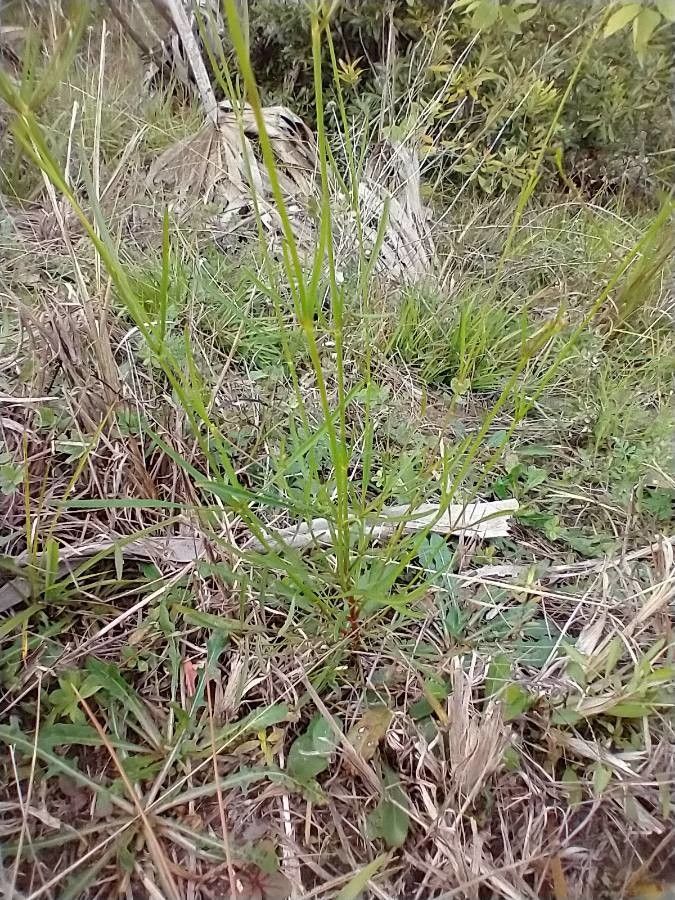
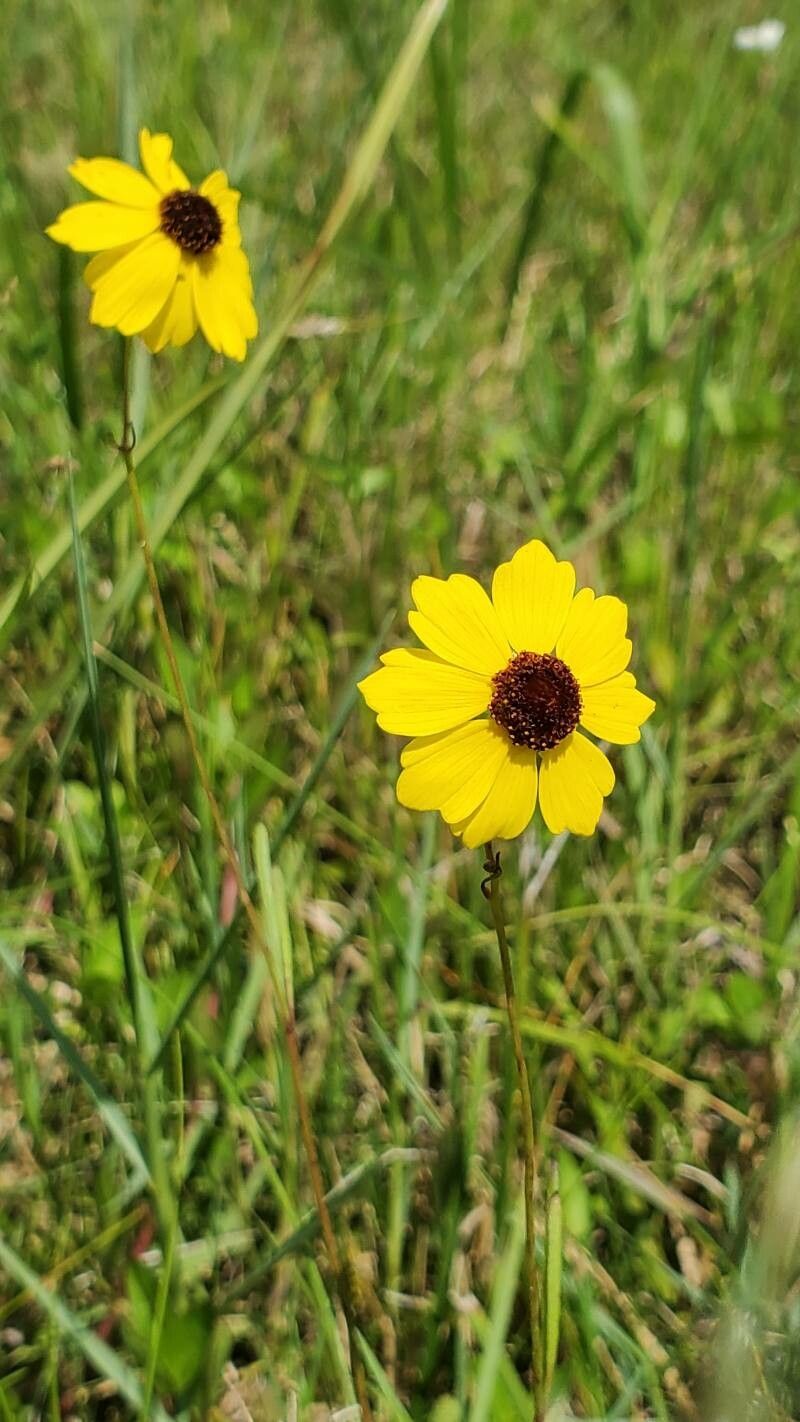
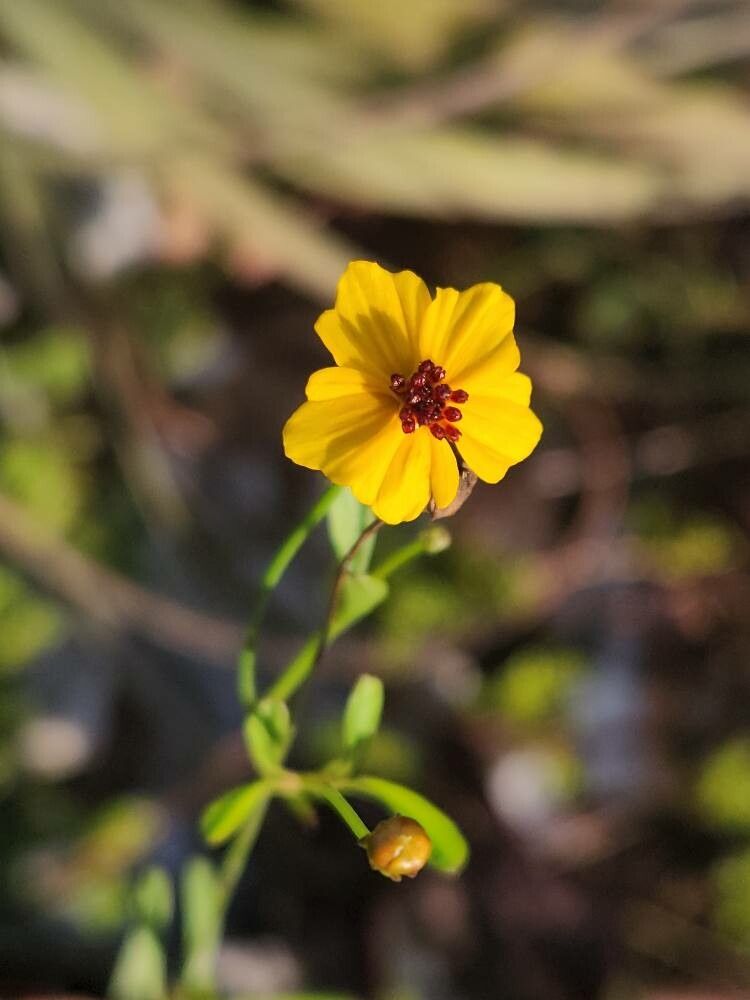
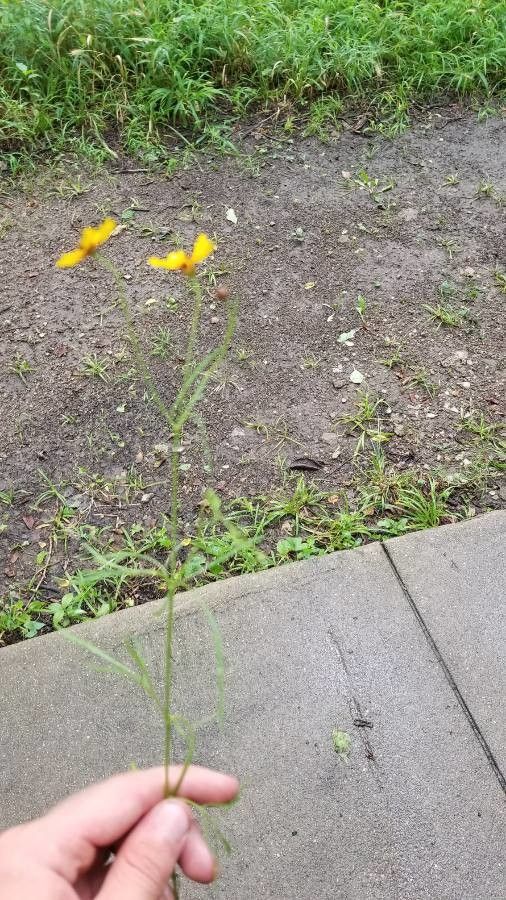
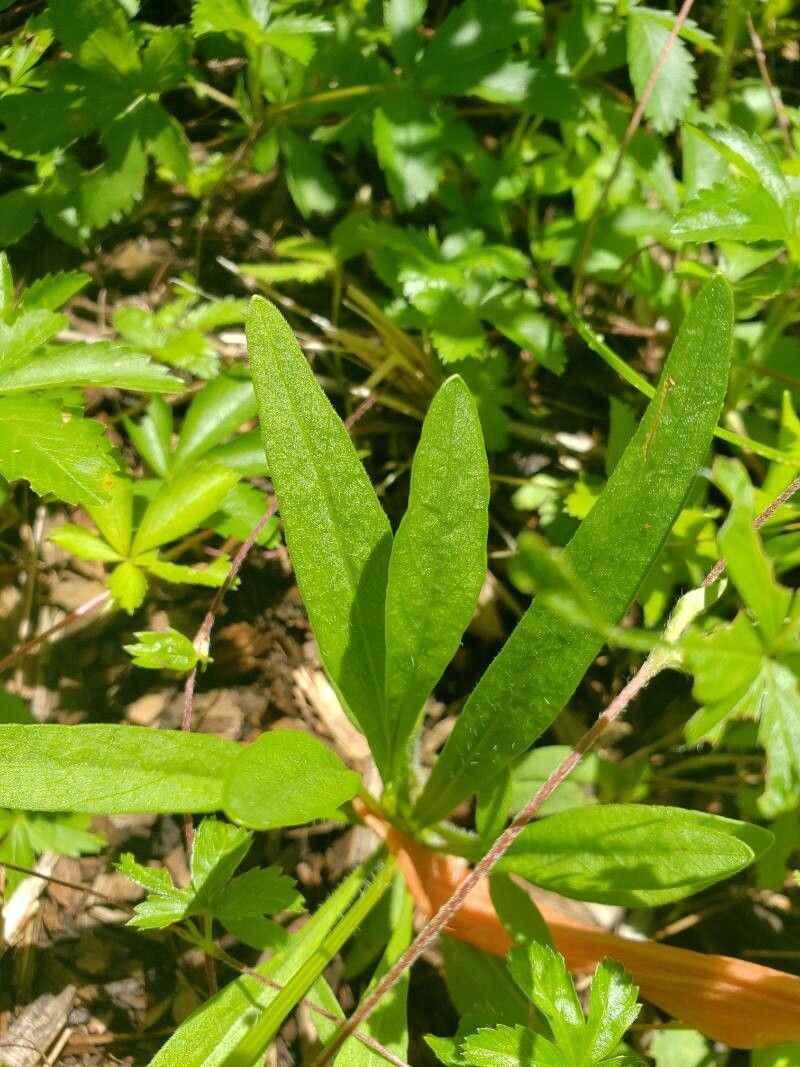
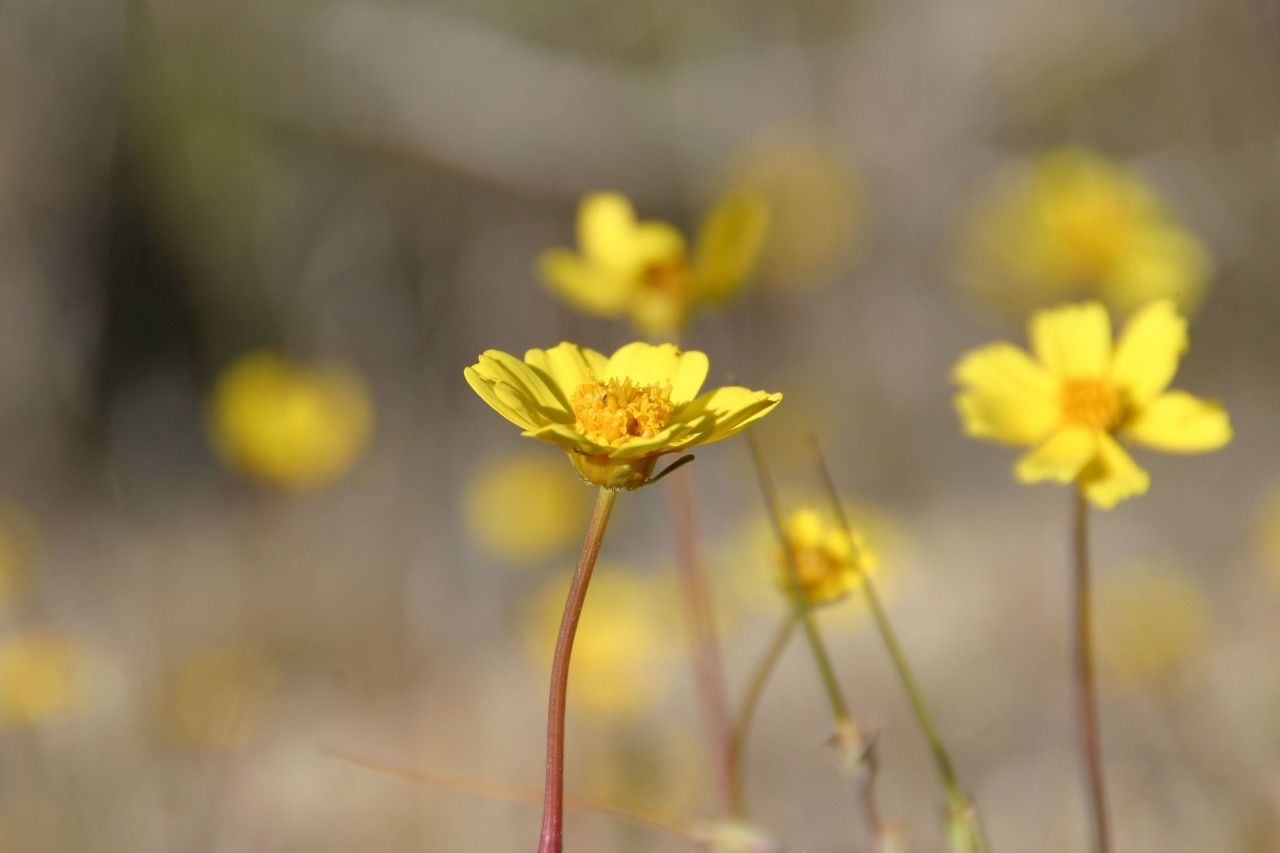
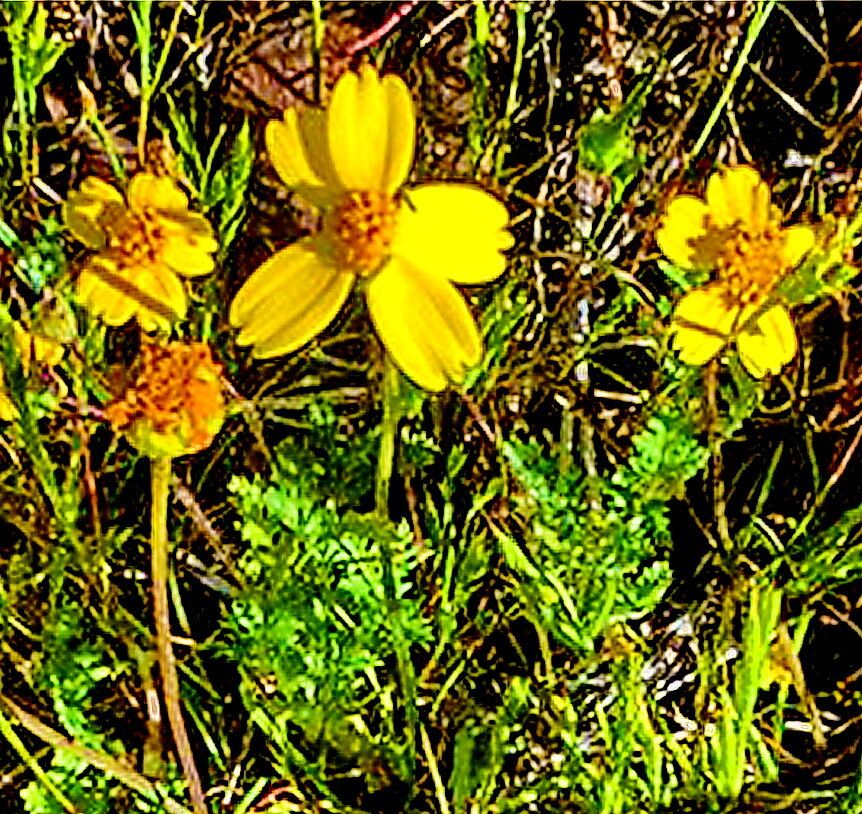
Coreopsis leavenworthii, commonly known as Leavenworth's tickseed, is a perennial plant in the Asteraceae family. Native to the southeastern United States, it thrives in open fields, meadows, and along roadsides. The plant can grow up to 2 feet tall and showcases bright yellow flowers that bloom from late spring through summer. Its leaves are narrow, lance-shaped, and slightly hairy.
Leavenworth's tickseed prefers well-drained soil and full sun but can tolerate some shade. Though it is drought-tolerant once established, it benefits from occasional watering during extended dry periods.
This plant attracts pollinators such as bees and butterflies with its nectar-rich flowers. Additionally, birds feed on the seeds during the fall when they mature.
Coreopsis leavenworthii is easy to grow in gardens or naturalized areas due to its low maintenance requirements and ability to self-seed without becoming invasive. Its bright yellow blooms make it an excellent choice for adding color accents or for mass planting in gardens and meadows alike!
How to keep Coreopsis Leavenworthii.
Light
Leavenworth's Tickseed does best when it receives full sun for most of the day. With only limited sun exposure, its growth can be stunted and the plant may look unhealthy. Because it comes from a place with abundant sunlight, care should be taken to avoid shade, as that can negatively impact its development.
Water
Leavenworth's Tickseed, native to moist environments in North America, thrives in subtropical-like conditions. While it can tolerate moderate drought, it grows best with consistent moisture from weekly watering. Rainwater is particularly beneficial, supporting its growth during the active season.
Temperature
Leavenworth's Tickseed comes from warm regions and does well in temperatures of 68 to 100 °F (20 to 38 ℃). It tolerates seasonal temperature changes but prefers to stay out of extreme cold.
Fertilizer
The best time to fertilize Leavenworth's Tickseed is in early spring, as it comes out of dormancy and begins active growth. Fertilizing supplies essential nutrients needed for healthy development. Although Leavenworth's Tickseed has relatively low fertilizer requirements, applying fertilizer annually can improve its survival and encourage better, longer-lasting flowers.
Pruning
Leavenworth's Tickseed is a perennial plant known for its bright yellow flowers that attract pollinators. To keep the plant healthy, it's important to prune it from early to late spring. Remove any dead stems and regularly deadhead the flowers to extend the blooming period. Proper pruning enhances air circulation, reduces the risk of disease, and helps the plant maintain a fuller appearance.
Botanical profile.
- Plant Type
- Herb
- Life Cycle
- Perennial, Annual
- Genus
- Coreopsis
- Family
- Asteraceae
- Hardiness Zone
- 8-11
- Mature Height
- 30 cm to 91 cm
- Mature Spread
- 30 cm to 91 cm
- Leaf Color
- Green
- Leaf Type
- Semi-evergreen
- Flower Color
- Yellow, Gold
- Flower Size
- 2.54 cm to 5.08 cm
- Bloom Time
- All year round
- Planting Time
- Spring
- Harvest Time
- All year round
Other names.
Reader questions.
How should I water my Leavenworth's Tickseed plant to keep it healthy?
To water the Leavenworth's Tickseed effectively, it is recommended to use filtered water at room temperature. Tap water may have harmful particles, so filtered water is preferred. The plant originates from a warm environment, so it is best to avoid using cold water as it can be a shock. Additionally, overhead watering should be avoided to prevent foliage issues. Instead, pour the filtered room temperature water directly onto the soil until it is fully saturated. This method helps to keep the roots moist and aids in their spread through the soil, enabling them to gather necessary nutrients.
Why is it necessary to fertilize my Leavenworth's Tickseed plant?
Fertilization is essential for the growth of Leavenworth's Tickseed and other plants, as it provides vital nutrients for both above and below ground development. Although the overall fertilization requirements for the Leavenworth's Tickseed are relatively low, annual fertilization can greatly benefit the plant. In some cases, the Leavenworth's Tickseed may survive without fertilization, but regular fertilization can improve the plant's survival and promote the growth of longer-lasting, more beautiful flowers. To ensure your Leavenworth's Tickseed looks its best, it is recommended to maintain annual fertilization.
What kind of sunlight does Leavenworth's Tickseed require?
Leavenworth's Tickseed is a plant that requires full sun every day. It needs at least six hours of sunlight to maintain healthy leaves, roots, and blooms. While most perennials also need six hours of sunlight, some plants like the Orange Daylily or Giant Coreopsis can survive on only three hours of sun each day. However, it's important to note that these plants won't thrive as well in less sunny conditions compared to when they receive more sunlight.
What temperature does Leavenworth's Tickseed like best?
Plants can be affected by cold temperatures because they adjust to the temperature of the air around them. When exposed to the sun, they can warm up again, but this doesn't happen in winter. The Leavenworth's Tickseed typically prefers temperatures between 70~85℉(21~30℃), and it can tolerate temperatures as low as 20~30℉(-6~0℃) or even 15℉(-10℃). However, prolonged exposure to these low temperatures can cause frost damage. To keep them healthy, it's important to maintain temperatures within the range of 70~85℉(21~30℃), and remember to spray them with water occasionally and provide some shade to prevent wilting.
If I give my Leavenworth's Tickseed plant too much or too little water, what should I do?
Both overwatering and underwatering can harm the health of your Leavenworth's Tickseed. However, overwatering is a more common issue. When this plant gets too much water, its stems and leaves wilt and turn yellow. Prolonged overwatering can also cause diseases like root rot, mold, and mildew, which can be fatal. Underwatering is less common, as this plant can tolerate drought. But it can still happen, and you'll notice brittle, brown leaves. It's important to recognize signs of overwatering early and reduce watering if needed. Check the soil quality, and replace it with well-draining potting mix if it doesn't drain properly. If underwatering is the issue, water more frequently until the signs improve.
When should I fertilize my Leavenworth's Tickseed plant?
The best time to fertilize a Leavenworth's Tickseed is from late winter to early spring. This is when the plant is transitioning from dormancy to active growth, so fertilizing at this time promotes healthy growth for the upcoming season. It is also acceptable to fertilize in the fall, but it is not recommended to fertilize during the summer or winter.
Can the sun harm Leavenworth's Tickseed? How can we keep Leavenworth's Tickseed safe from the sun and heat?
In warm climates, some Perennial Flowering Plants may struggle with excessive heat and suffer from sun damage. They can wilt, dry out, or even experience growth problems if they are consistently exposed to the intense afternoon sun. However, not all plants require protection from the light afternoon sun. For those that are harmed by intense afternoon exposure, it is recommended to provide them with some shade in warmer climates. Gardeners can achieve this by planting these plants in areas that do not receive direct heat during the afternoon, such as under trees or behind bushes.
Should I change the temperature for Leavenworth's Tickseed at different stages of growth?
Ensure that the temperature is appropriate for growing Leavenworth's Tickseed by conducting some research. Although some growers may consider decreasing the plants' thermostats to save on HVAC costs, it is important to understand that temperature can impact flowering, pest control, and overall plant quality. During the winter, there may be a point where Leavenworth's Tickseed stops growing, as certain species may enter a dormant state. As the seasons change and the base temperature rises, Leavenworth's Tickseed can grow more quickly. Species that naturally grow in warm environments have higher optimum temperatures compared to those that thrive in cooler climates. Exposing Leavenworth's Tickseed seeds to cool temperatures can result in inconsistent growth and delays. Lowering the temperature during flowering may be beneficial, but it should not be done during other phases. Additionally, cooler temperatures at night will require less water, so adjust irrigation accordingly.
How often do I need to water my Leavenworth's Tickseed?
If your Leavenworth's Tickseed is in a pot, the best way to check if it needs watering is by sticking your finger into the soil. If the top two to three inches of soil are dry, it's time to water. For outdoor plants in the ground, you can use the same method. When the first few inches of soil dry out, it's time to water. Generally, during spring and early fall, watering once a week is sufficient. However, in extremely hot weather, you may need to water twice or more per week. It's worth noting that mature Leavenworth's Tickseed plants can tolerate dry conditions quite well.
When is it not a good idea to fertilize my Leavenworth's Tickseed?
To ensure optimum growth of your Leavenworth's Tickseed, it is best to fertilize only during late winter and early spring. This plant has low fertilization needs, so a single feeding per year is sufficient. Fertilizing during spring, summer, and fall may lead to overfertilization and its associated complications. However, if you missed fertilizing in spring, it is acceptable to feed the plant in fall. Additionally, there is no need to fertilize during winter as the plant is in a dormant phase and does not undergo new growth. Therefore, it is not recommended to fertilize the plant during most of the winter.
Should I make sure that Leavenworth's Tickseed is not exposed to the sun?
Certain perennial plants require ample sunlight to reach their maximum bloom. However, in warmer climates, some of these plants actually benefit from less sun. For instance, individuals residing in hotter regions might find it beneficial to shade their flowering perennials during the intense afternoon sun, especially during summer months. Although many perennial flowering plants prefer partial shade in the hottest climates, there are exceptions. Take the Giant Coreopsis, for example, as it is not bothered by excessive sun exposure. These plants can flourish even when placed in the full sun during scorching weather.
How do I make sure Leavenworth's Tickseed stays warm during the winter months?
To prepare your Leavenworth's Tickseed plant for colder temperatures, it is important to stop fertilizing it to prevent new growth. Instead, focus on making the existing growth stronger and more resistant to the cold. Building structures such as cages or trellises around the plant can help keep it warm. Another option is to use heat mats, which can gently warm the soil and maintain an ideal temperature for the Leavenworth's Tickseed.