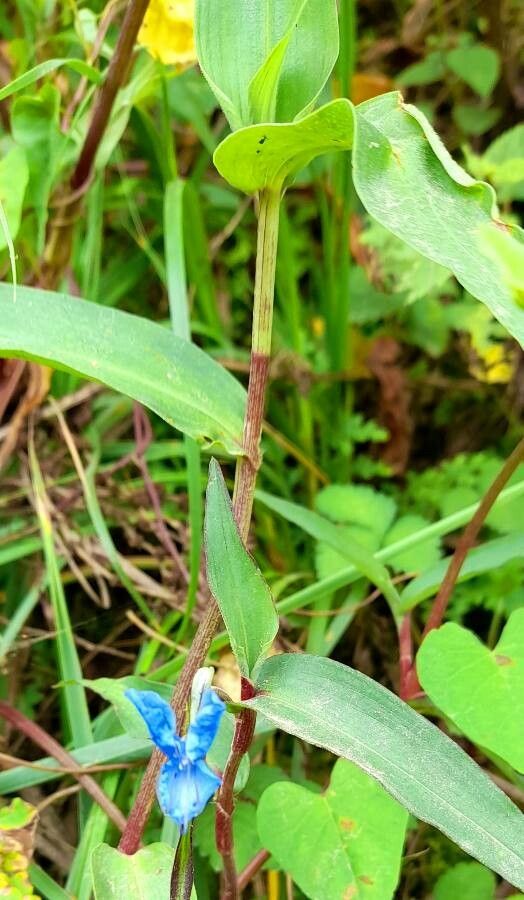
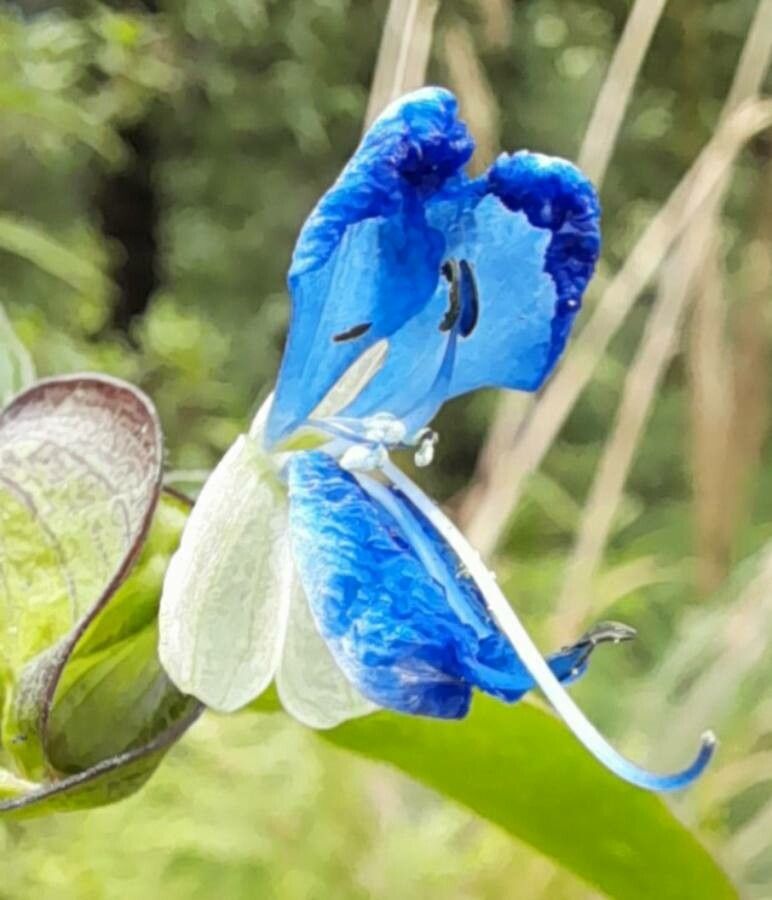
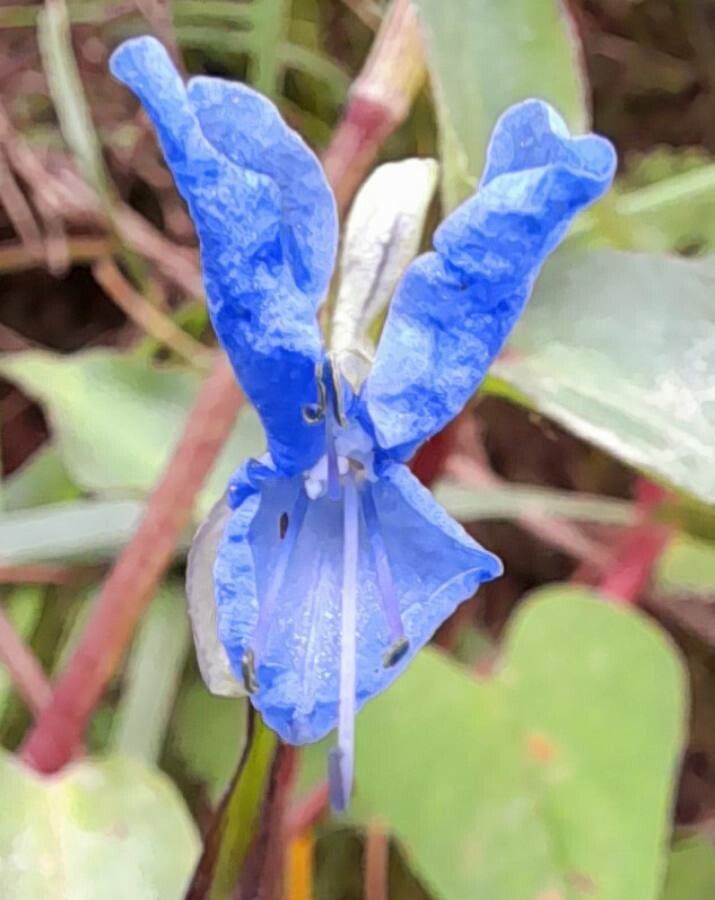
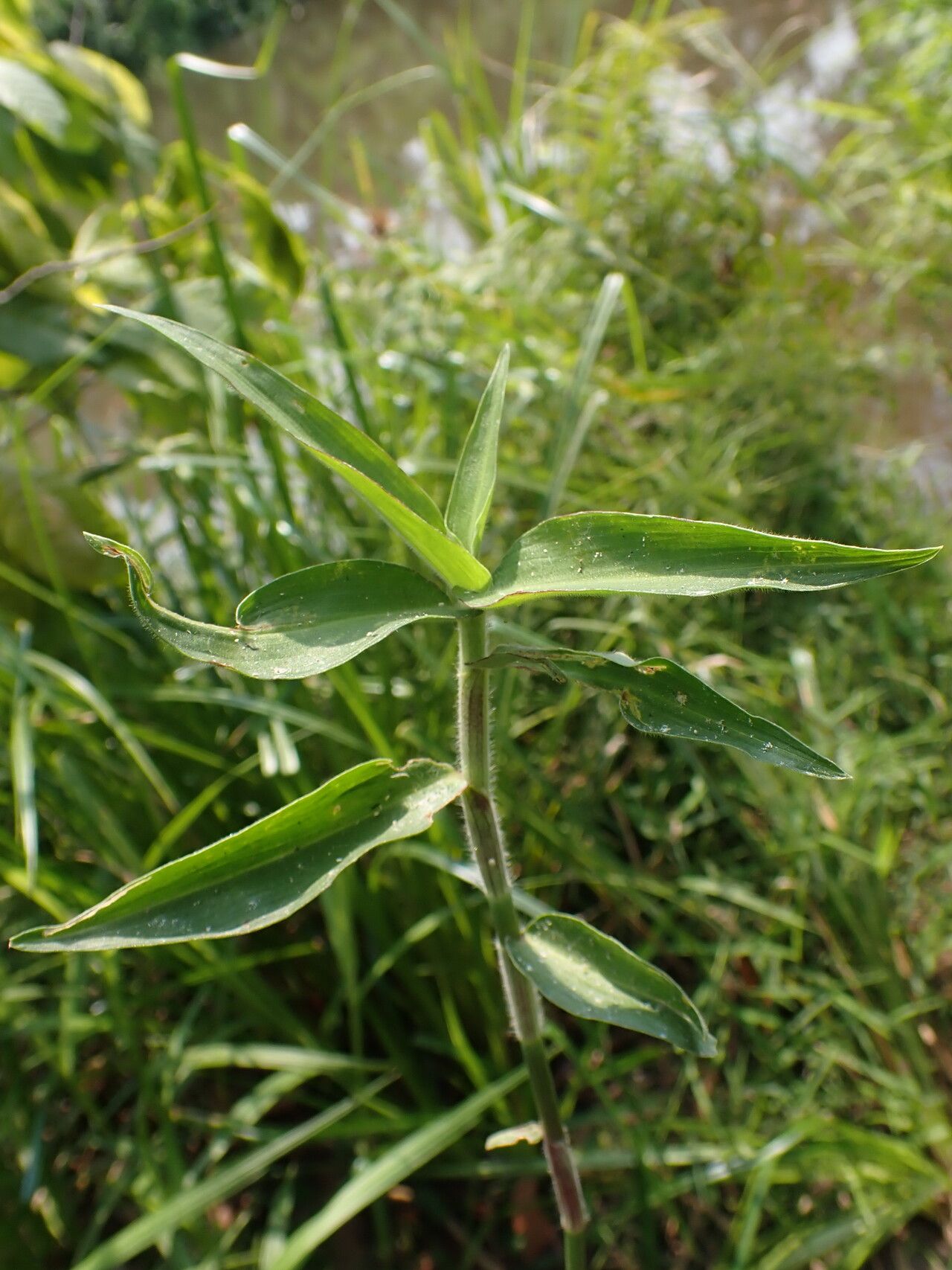
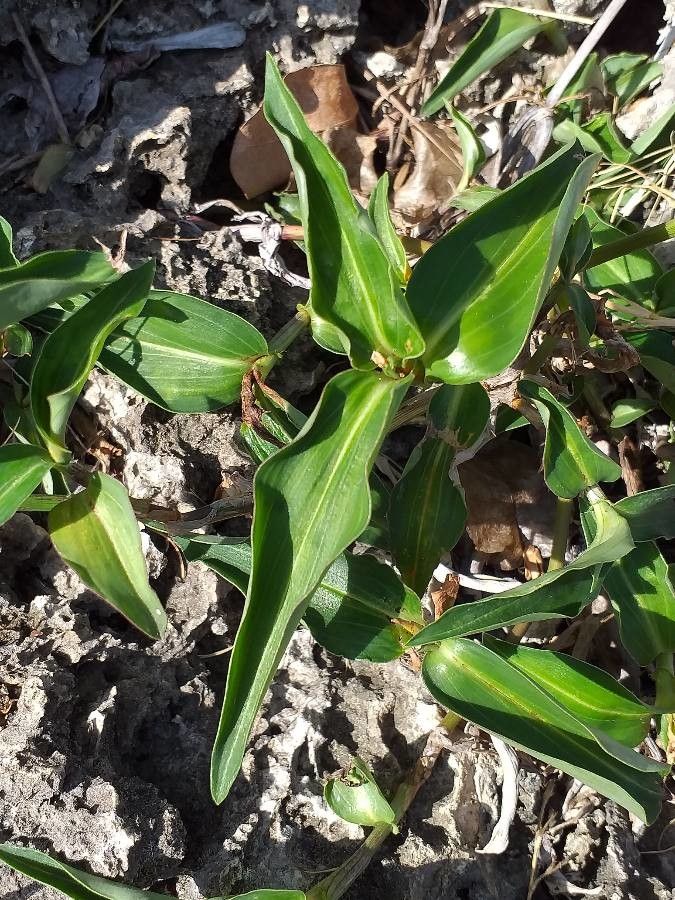
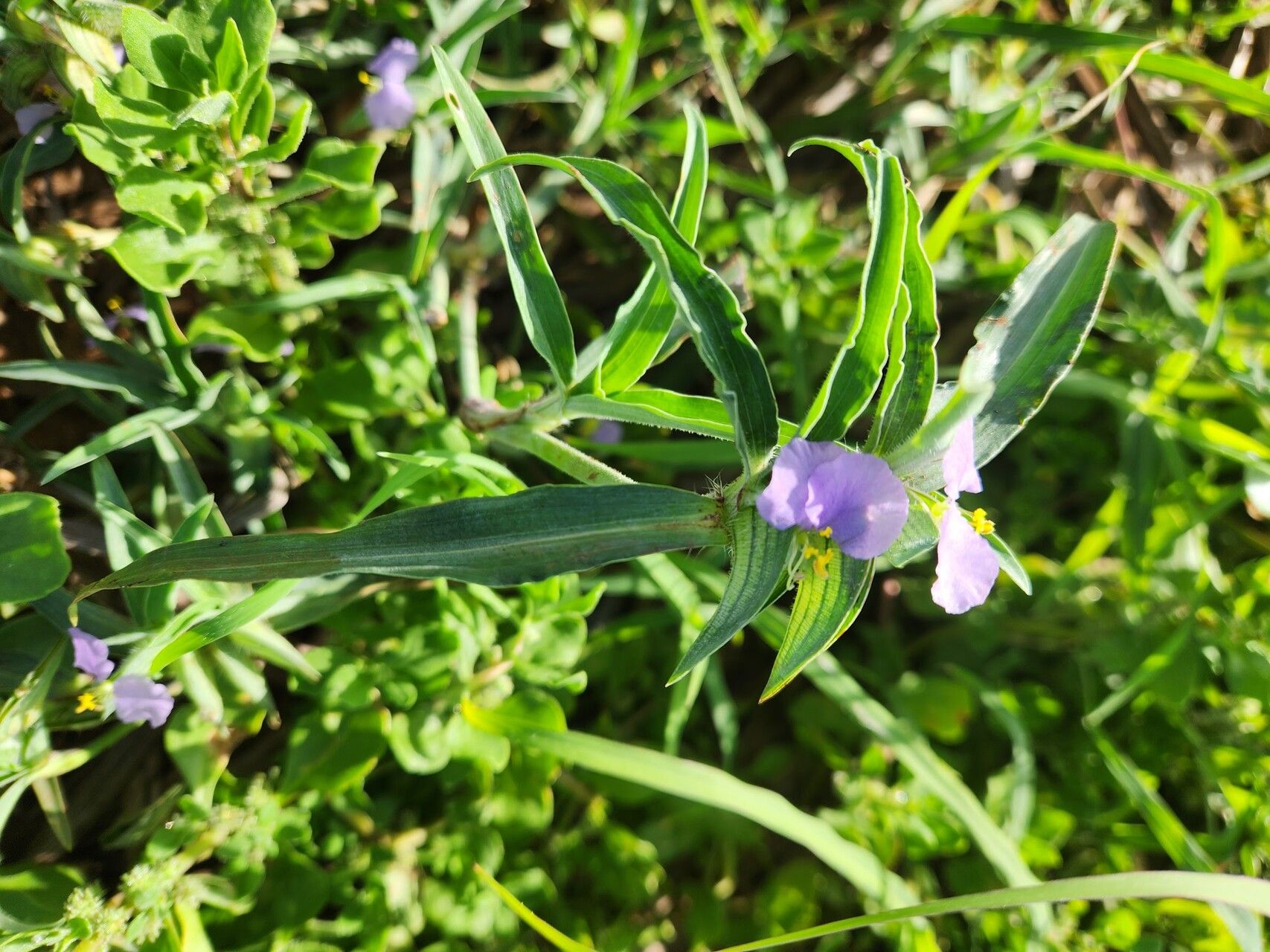
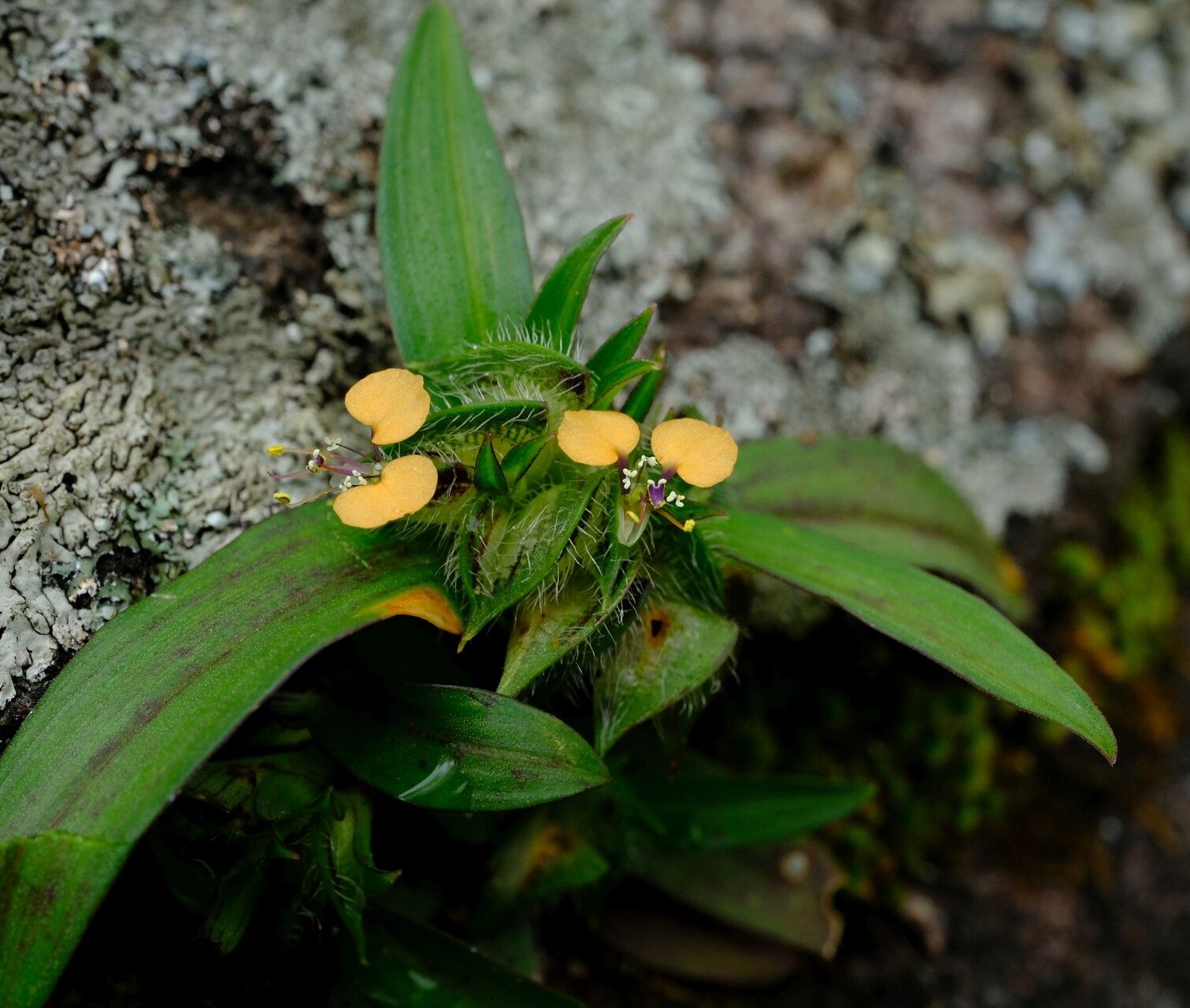
Commelina tuberosa is an herbaceous perennial plant in the dayflower family which is native to Mexico but grown worldwide as an ornamental plant. It is characterized by its purple-splotched spathes with free margins, its bright blue petals of equal size, its tuberous roots, and its four to ten flowered lower cymes. In the wild, it is encountered in moist fields, open forests, or pine-oak forests. The species is sometimes considered to include the species Commelina coelestis, Commelina dianthifolia, and Commelina elliptica, such as in the Flora Mesoamericana. When these are treated as separate, they are often referred to as the "Commelina tuberosa complex". Horticulturally, the species are often treated as separate entities because of their differing habits and leaf shapes. In this sense, Commelina tuberosa is a low-growing plant with long narrow leaves.The Coelestis Group is a cultivar group of Commelina tuberosa which is grown ornamentally. Growing to 50 cm (20 in) tall by 100 cm (39 in) broad, it flowers in summer and autumn. Being a warm temperate plant which dislikes temperatures below −5 °C (23 °F), in cooler areas it must be lifted and stored in the winter months. It prefers a sunny or partially shaded sheltered spot in the garden.
Commelina has good resistance to diseases and is generally not prone to them. Still, it can be affected by pests and illnesses present in its environment. These problems are typically mild. As for care, this plant requires moderate maintenance. It should be pruned regularly to keep a neat appearance and healthy growth. Fertilizing can also encourage flowering. Commelina is suitable for anyone with outdoor space, such as a garden or patio, and does not demand extensive caregiving experience. It may need more attention when grown indoors.
How to keep Commelina Tuberosa.
Light
Commelina comes from habitats with dappled light, such as forest understories or rocky sites that provide natural shade. It flourishes in partial sun but can also adjust to full-sun conditions.
Water
Commelina thrives in moist, tropical environments and prefers to be watered twice a week. It enjoys partial shade, so the soil should stay evenly damp but not waterlogged. Adequate moisture is crucial during the growing season to ensure vibrant flowers and robust growth.
Temperature
Commelina comes from tropical areas, where the climate is generally warm and humid. Consequently, it is well suited to high temperatures and humidity. It does not tolerate sudden temperature shifts and favors a consistent temperature, so avoiding indoor temperature fluctuations is important. It typically cannot withstand cold conditions and needs warmer temperatures to grow. If the ambient temperature falls too low, the plant may stop growing or even die.
Fertilizer
When most of the Commelina's flowers have opened to full size, resume fertilizing. At the peak of bloom production, apply fertilizer every three to four weeks, weather permitting. Once the plant begins to produce fewer new blooms, stop fertilizing, since there is no need to feed it when it can no longer produce additional flowers.
Pruning
Commelina is a hardy perennial known for its bright blue flowers and tuberous roots. To encourage healthy growth and avoid damaging the tubers, it's best to prune in early to late spring. Regular pruning helps by removing dead stems, improving air circulation, reducing the risk of disease, and promoting a denser plant, as noted by reputable horticultural sources.
Botanical profile.
- Plant Type
- Herb
- Life Cycle
- Annual, Perennial
- Genus
- Commelina
- Family
- Commelinaceae
- Hardiness Zone
- 8-11
- Mature Height
- 20 cm
- Mature Spread
- 30 cm
- Leaf Color
- Green
- Leaf Type
- Deciduous
- Flower Color
- Blue
- Flower Size
- 2.03 cm to 3.05 cm
- Bloom Time
- Summer, Early fall, Mid fall
- Planting Time
- Spring, Autumn
- Harvest Time
- Late summer, Fall, Early winter
- Native Area
- Colombia, Honduras, Mexico, Guatemala, Bolivia, Venezuela, Peru, El Salvador, Nicaragua
Other names.