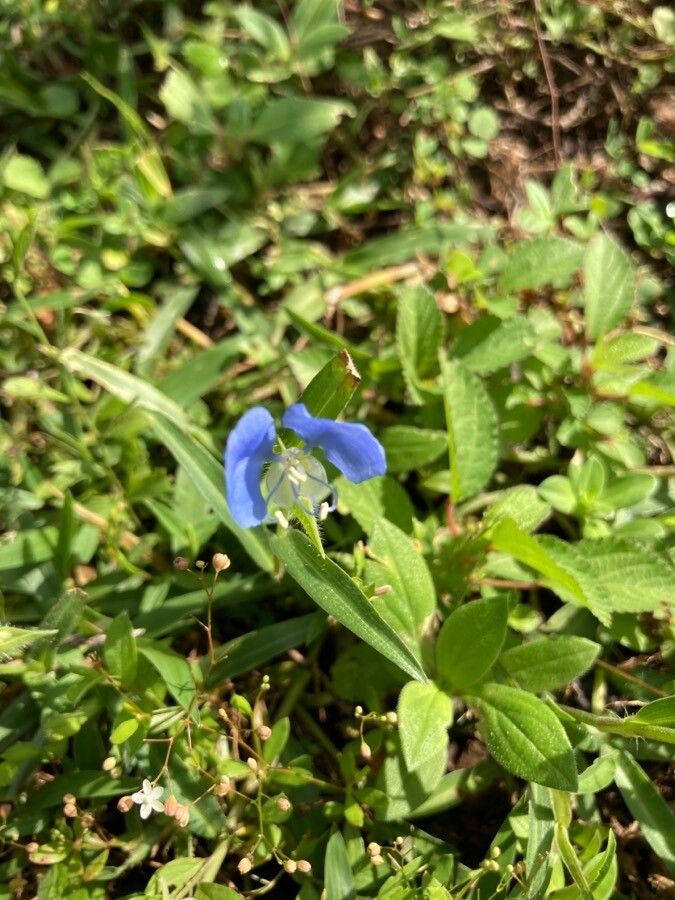
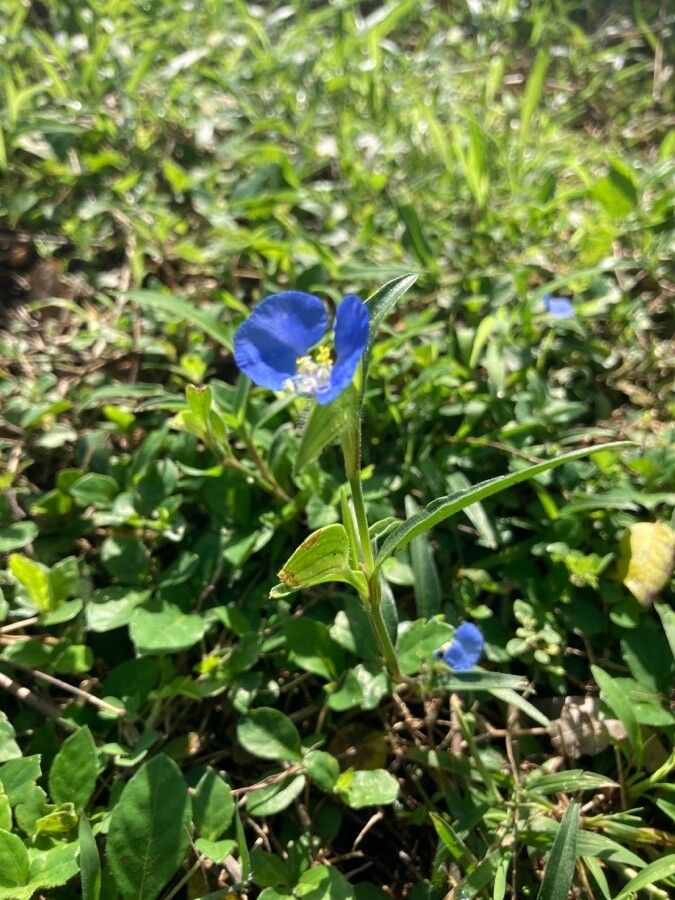
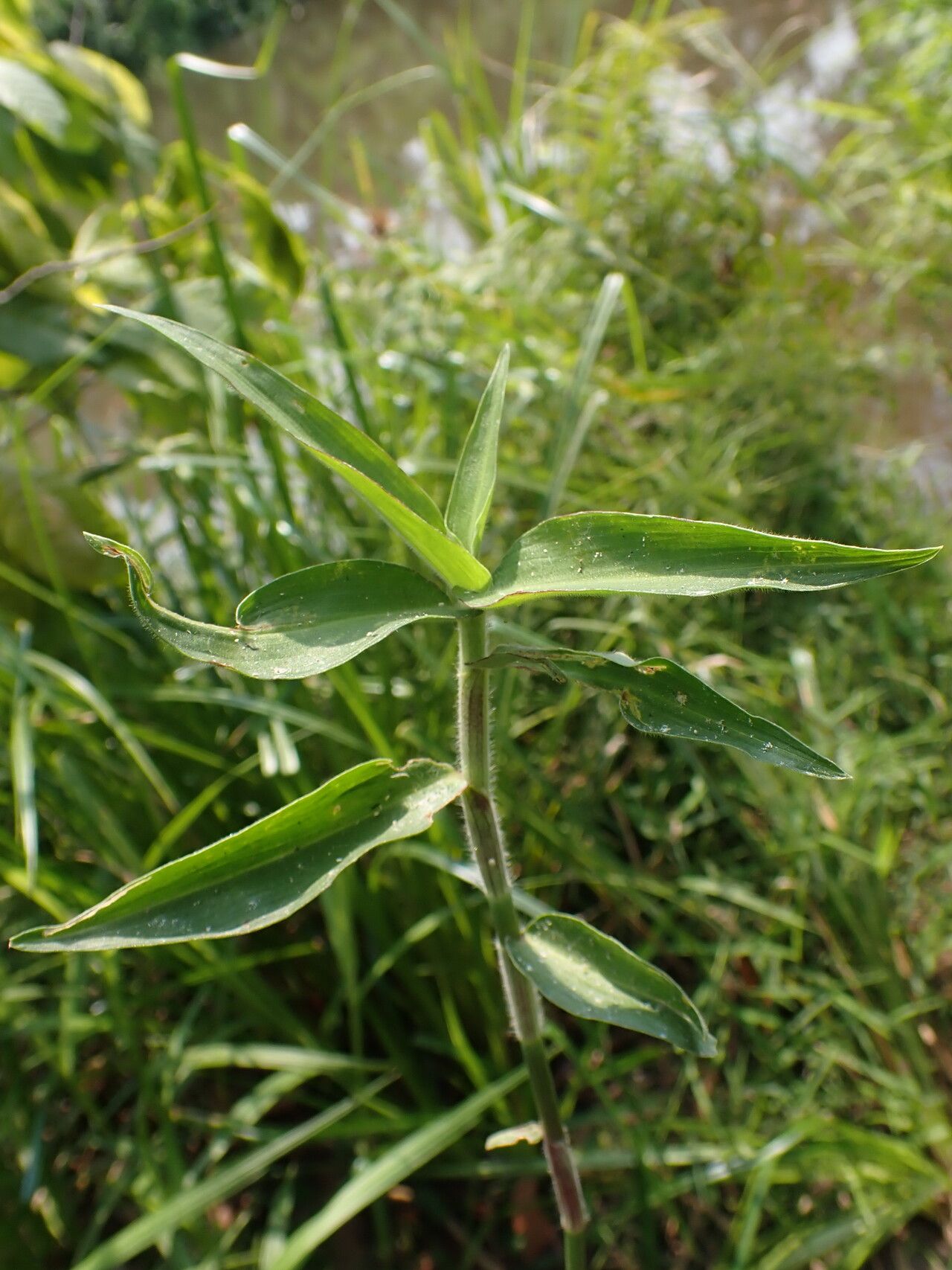
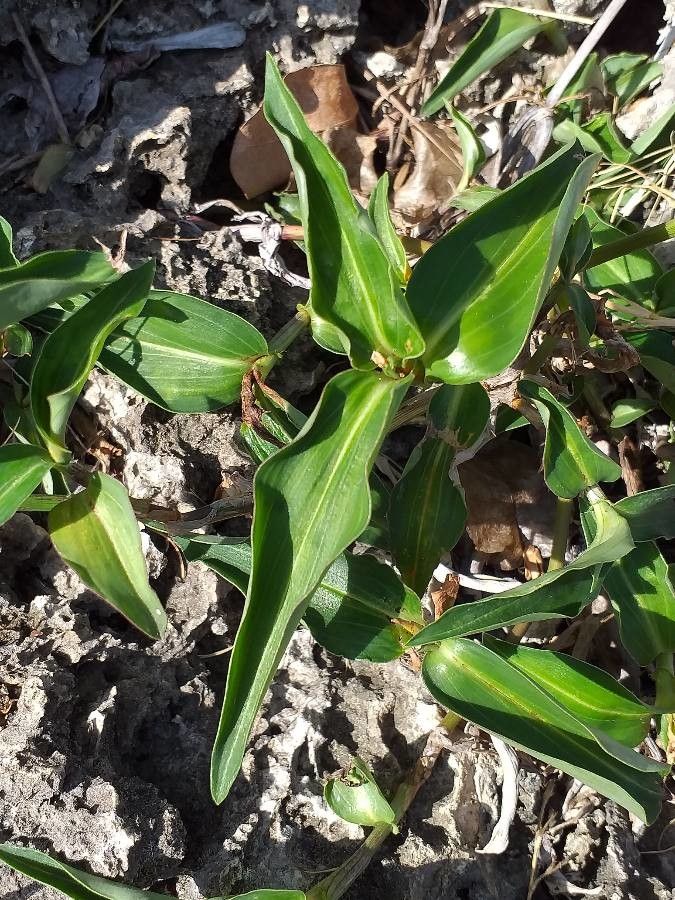
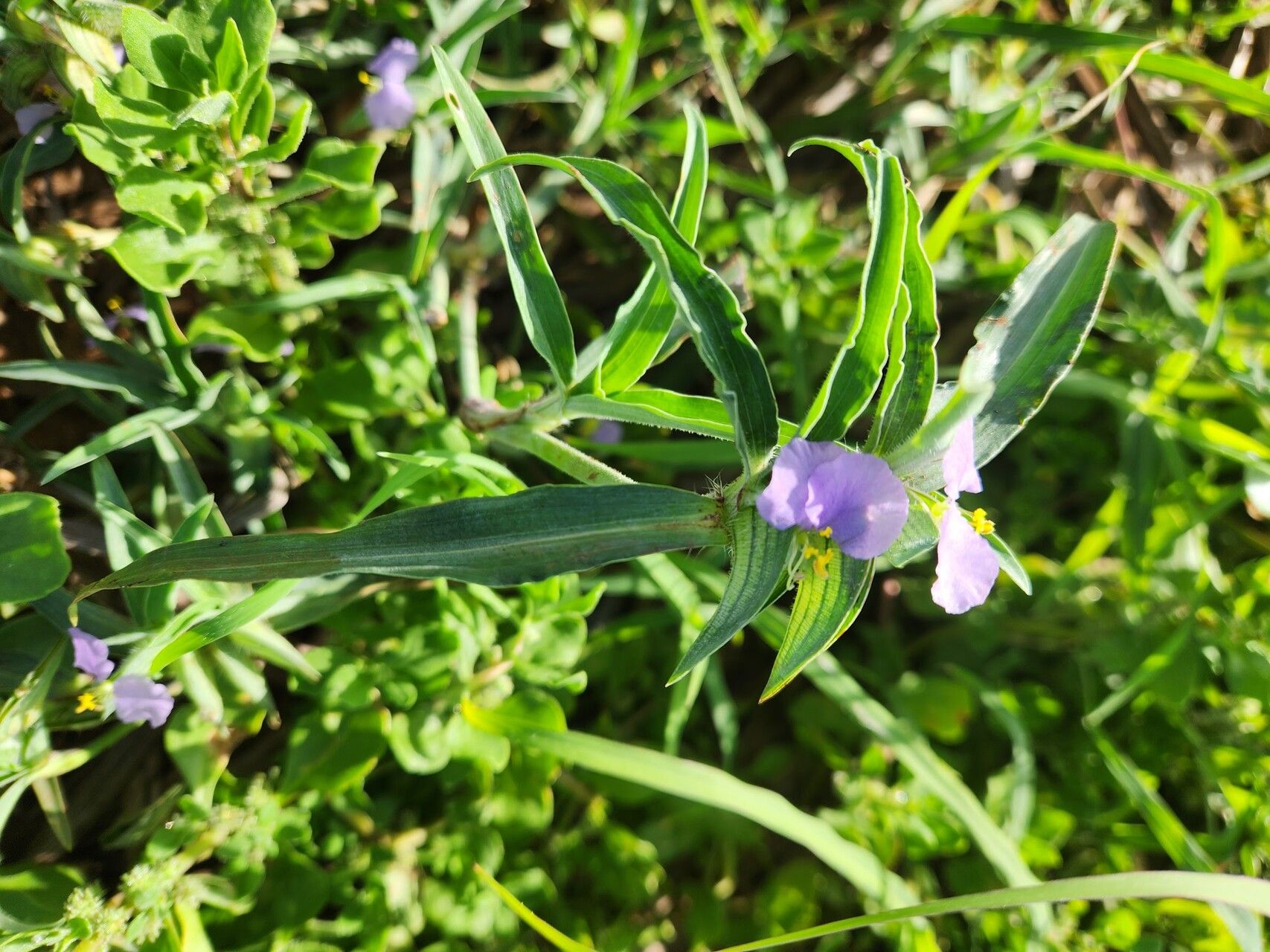
Commelina ensifolia, commonly known as scurvy weed, scurvy grass or wandering Jew, is an annual herb native to Australia, India, and Sri Lanka.The species grows as a prostrate herb, producing roots from the stem at the nodes. Flowers are bright blue with three petals, however one petal is much smaller than the others, often producing an appearance of two petals. The species prefers moist soils, but has a broad natural range, extending from coastal monsoon forest to the arid central deserts where it grows as an ephemeral following favourable rains. The species has been eaten as a green vegetable by Aboriginals. European settlers also ate the plant to prevent scurvy, giving rise the common name of scurvy grass.The species is a minor weed in some parts of its natural range.
Scurvy grass has strong disease resistance and is usually not prone to illnesses. However, it can be affected by pests and diseases present in its surroundings. These problems are typically not serious. Regarding care, this plant needs moderate maintenance. It should be pruned regularly to preserve a neat appearance and support healthy growth. Fertilizing can also help encourage flowering. Scurvy grass is suitable for anyone with an outdoor area, such as a garden or patio, and does not demand extensive plant-care experience. It may require more attention when grown indoors.
How to keep Commelina Ensifolia.
Light
Scurvy grass is a perennial herbaceous species that prefers sunny locations and comes from open habitats, commonly growing in meadows and grasslands. It favors full sun but can also tolerate partial sun.
Temperature
Scurvy grass comes from tropical areas, where the climate is usually warm and humid. Consequently it is adapted to high temperatures and moisture. It is sensitive to abrupt temperature changes and prefers a steady thermal environment, so avoiding temperature fluctuations indoors is important. It generally cannot tolerate cold and needs warmer conditions to grow; if temperatures drop too much, growth can stop or the plant may die.
Fertilizer
Appropriate fertilization is essential for Scurvy grass's health and appearance. Fertilize Scurvy grass during summer, repeating the treatment monthly throughout the season. Nutrients supply energy for growth and help maintain the plant's tissues. Fertilizing improves Scurvy grass's flower display, ensuring the best blooms.
Pruning
Scurvy grass is a hardy perennial known for its vibrant blue flowers. To ensure optimal growth, it is best to prune it in early spring. During pruning, remove any dead stems and shape the plant. This process encourages denser foliage and more abundant blooms. Always use clean tools to help prevent disease and promote healthy growth.
Botanical profile.
- Plant Type
- Herb
- Life Cycle
- Perennial
- Genus
- Commelina
- Family
- Commelinaceae
- Hardiness Zone
- 8-11
- Mature Height
- 30 cm to 61 cm
- Mature Spread
- 20 cm to 40 cm
- Leaf Color
- Green, Dark Green
- Leaf Type
- Evergreen
- Flower Color
- Blue
- Flower Size
- 1.02 cm to 2.03 cm
- Bloom Time
- Summer, Early fall, Mid fall
- Planting Time
- Spring, Summer, Autumn
- Harvest Time
- Late summer, Fall, Early winter
- Native Area
- Sri Lanka, India