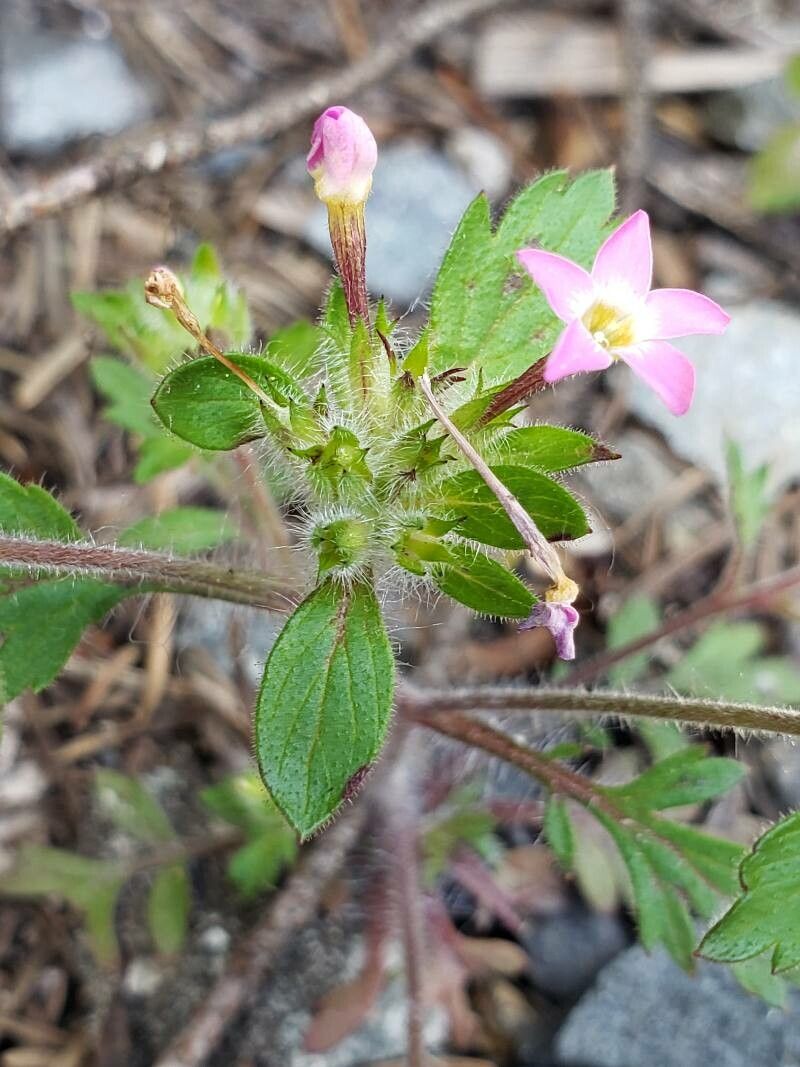
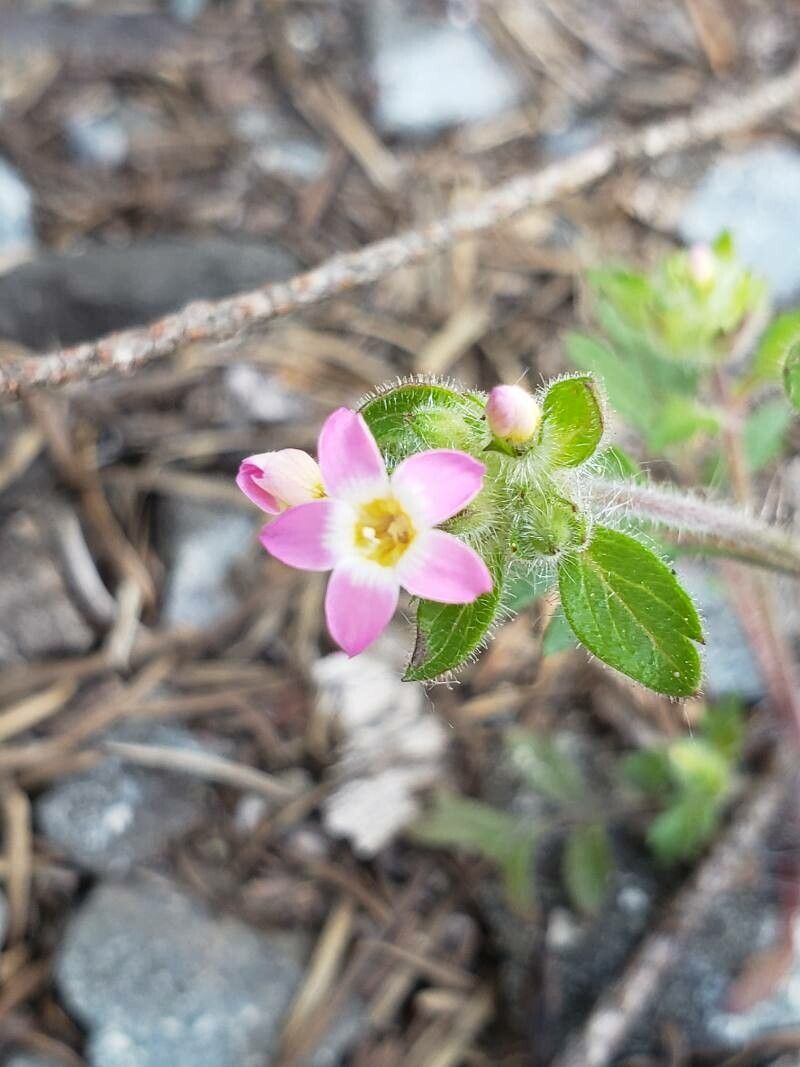
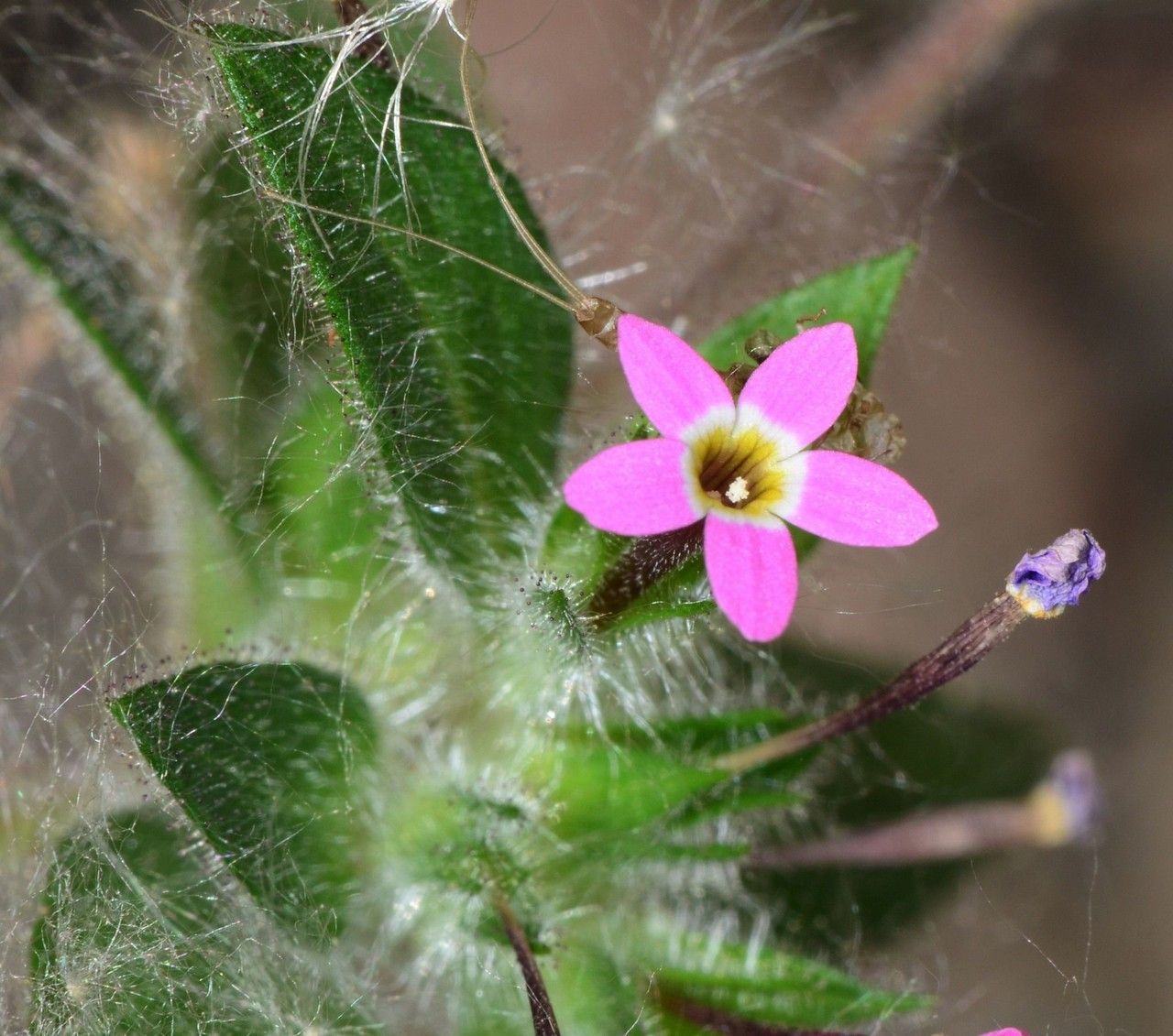
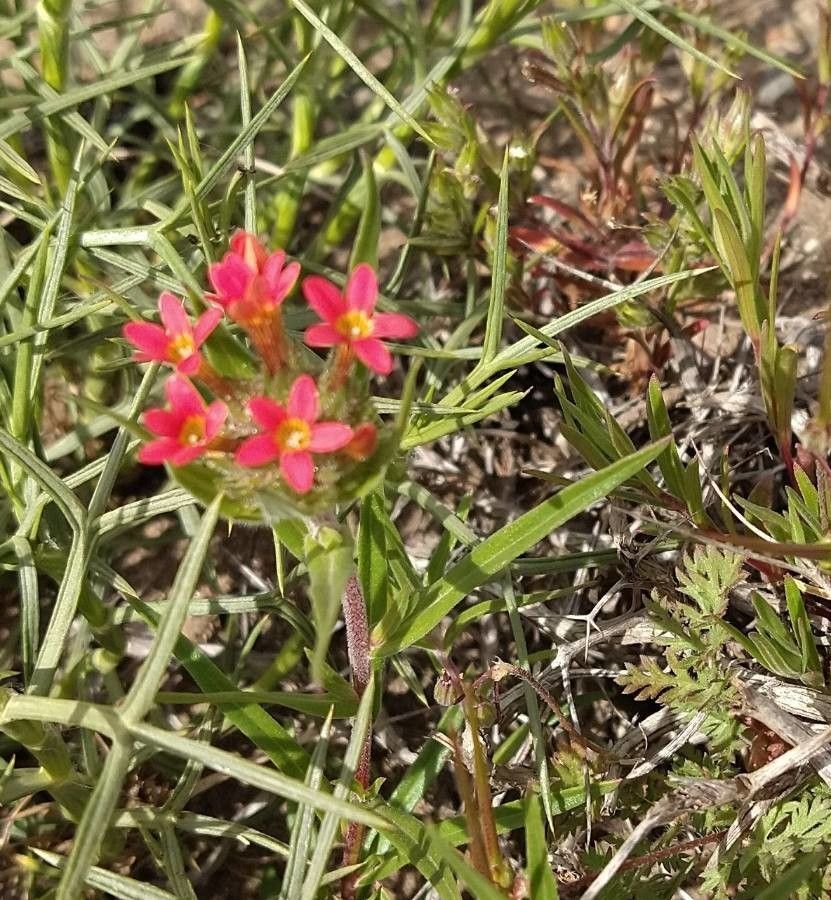
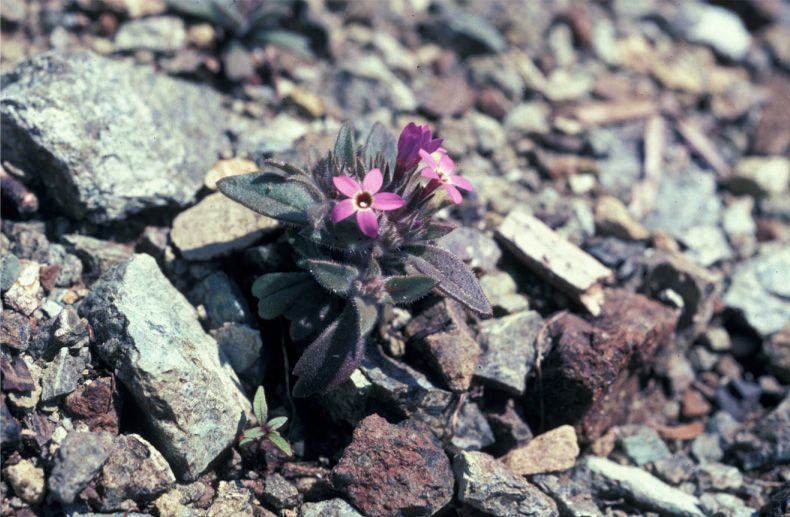
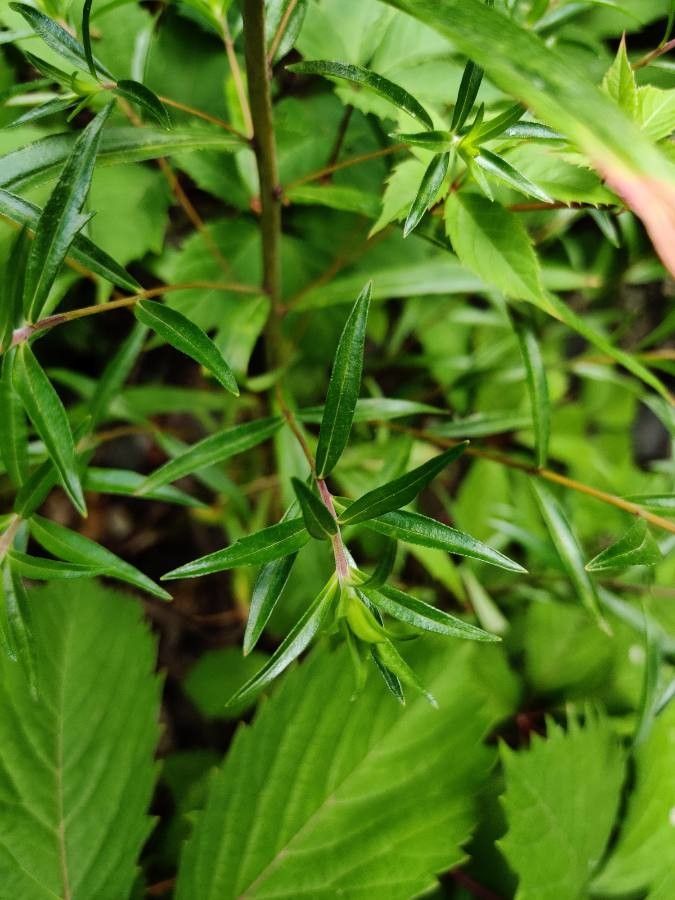
Collomia heterophylla is a species of flowering plant in the phlox family known by the common name variableleaf collomia. It is native to western North America from British Columbia to Idaho to central California, where it grows in several types of habitat, including open areas on gravelly mountain slopes. It is a hairy annual herb producing a branching, erect stem. As the common name suggests, the leaves are variable in shape, the lower generally with several toothed lobes and the upper sometimes lacking lobes. The inflorescence is a cluster of flowers emerging from the top of the stem or from the axil of a leaf. It may bear up to 25 flowers, each with star-shaped corolla at the tip of an elongated tube. The corolla lobes are lance-shaped and white to deep pink with white bases.
Variableleaf collomia has strong disease resistance and is generally not susceptible to illnesses. Still, it can be affected by pests and diseases present in its environment. These problems are typically mild. Regarding care, this plant needs moderate attention. Regular pruning is necessary to preserve a neat appearance and support healthy growth. Fertilizing can also encourage flowering. Variableleaf collomia is appropriate for anyone with outdoor areas like a garden or patio and does not demand extensive care experience. It may need extra attention if grown indoors.
How to keep Collomia Heterophylla.
Light
Variableleaf collomia comes from bright, open environments and thrives in full sun. It can tolerate partial sun but prefers direct sunlight for optimal growth. This plant, which can be annual or biennial, is known for its sun-loving nature.
Water
Variableleaf collomia, a plant suited to moderate climates, thrives best with consistent moisture similar to what it experiences in its natural habitat. For optimal growth, water it weekly to maintain adequate hydration, but be cautious not to oversaturate it. This is especially important during its active growing season to ensure the plant remains healthy and vigorous.
Temperature
Variableleaf collomia can tolerate a wide range of temperatures, but its distribution may still be restricted by different combinations of moisture and heat. It performs best in warm summer conditions with sufficient rainfall or irrigation. Extended periods of overcast, wet weather, as well as sustained high temperatures, can increase the risk of Variableleaf collomia dying. In winter, protecting the plant from cold can improve its chances of survival.
Fertilizer
When most of Variableleaf collomia's blooms have opened to full size, it's time to resume fertilizing. Start feeding again around the plant's peak bloom, applying fertilizer every three to four weeks as weather allows. Then, once Variableleaf collomia begins producing fewer new blooms, stop fertilizing; there's no need to feed it when it can no longer produce additional flowers.
Pruning
To improve the growth and appearance of Variableleaf collomia, it's beneficial to prune the plant carefully from early to late spring. Focus on removing dead or damaged stems and thinning out any overcrowded areas. This will enhance airflow, increase light exposure, and promote overall healthy growth. Additionally, regularly deadhead the spent flowers to encourage continuous blooming, which helps maintain robust and visually appealing plants.
Botanical profile.
- Plant Type
- Herb
- Life Cycle
- Annual
- Genus
- Collomia
- Family
- Polemoniaceae
- Hardiness Zone
- 7-9
- Mature Height
- 15 cm to 40 cm
- Mature Spread
- 15 cm to 30 cm
- Leaf Color
- Green, Dark Green
- Leaf Type
- Deciduous
- Flower Color
- Pink, White
- Flower Size
- 0.51 cm to 0.76 cm
- Bloom Time
- Late spring, Early summer, Mid summer
- Planting Time
- Spring, Summer
- Harvest Time
- Mid summer, Late summer, Early fall
Other names.
Reader questions.
What are the sunlight requirements for growing Variableleaf collomia?
Variableleaf collomia thrives in environments with abundant sunlight, preferring full sun conditions of above 6 hours of sunlight daily for optimal growth. It can also tolerate partial sun, defined as about 3-6 hours of sunlight. However, for the plant to truly flourish and display its full potential, direct sunlight is ideal. The success in growing Variableleaf collomia largely depends on ensuring that it receives the right amount of sunlight, mimicking its natural habitat of bright, open areas. Observing how sunlight moves through your garden and positioning your plants in spots that meet these sunlight requirements will contribute significantly to their health and growth.
How can artificial lighting be utilized for Variableleaf collomia grown indoors?
For Variableleaf collomia plants grown indoors, especially in conditions where natural sunlight is insufficient, artificial lighting serves as an essential growth facilitator. Optimal growth under artificial lighting can be achieved by choosing the right type of light, such as LED lights, which can provide specific wavelengths necessary for the plants. Full sun plants need 30-50W/sq ft, partial sun plants require 20-30W/sq ft, and full shade plants benefit from 10-20W/sq ft of artificial light. The light source should be placed 12-36 inches above the plants to simulate natural sunlight conditions, and the duration should mimic natural daylight hours, typically requiring 8-12 hours of light per day for most plant species. This approach ensures the plants receive adequate light for healthy growth, especially during winter or in less sunny spaces.
What symptoms indicate insufficient light for indoor Variableleaf collomia plants?
When Variableleaf collomia is grown indoors under inadequate light conditions, it may exhibit several symptoms signaling a need for more light. Some of these symptoms include smaller new leaves, leggy or sparse growth, which presents as longer spaces between leaves or stems, faster leaf drop as the plant attempts to conserve resources, slowed or halted new growth as the plant enters survival mode, lighter-colored new leaves indicating a lack of chlorophyll, and symptoms of too much light such as chlorosis, sunscald, leaf curling, wilting, and leaf scorching. These problems range from structural changes to discoloration and damage, each signaling that the plant's light environment needs adjustment.
What are some solutions for improving growth conditions for Variableleaf collomia regarding light?
Improving light conditions for Variableleaf collomia involves a series of practical steps tailored to indoor, outdoor, and ground settings. Indoors, gradually moving plants to sunnier locations to ensure at least 6 hours of direct sunlight daily is key. Utilizing south-facing windows and keeping curtains open maximizes sunlight exposure. Artificial light sources, such as desk or ceiling lamps left on for at least 8 hours, or professional grow lights, can supplement light for large or immovable plants. Outdoors, plants should be gradually moved to sunnier spots, avoiding drastic light intensity changes to prevent sunburn. Ground plants benefit from reducing obstructions, like pruning trees that block sunlight, and transplanting smaller plants to sunnier locations during their dormant period. These solutions aim to enhance sunlight exposure and promote healthier growth.