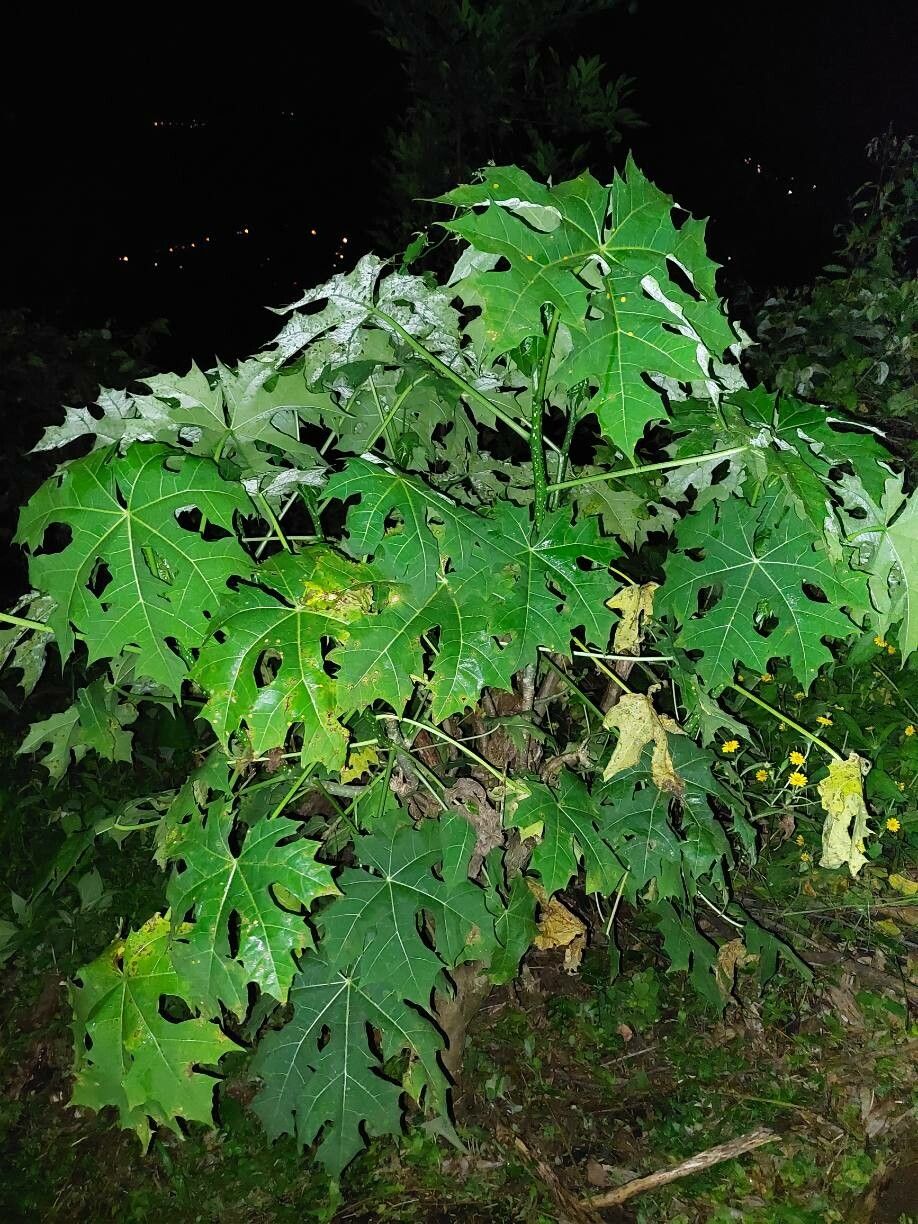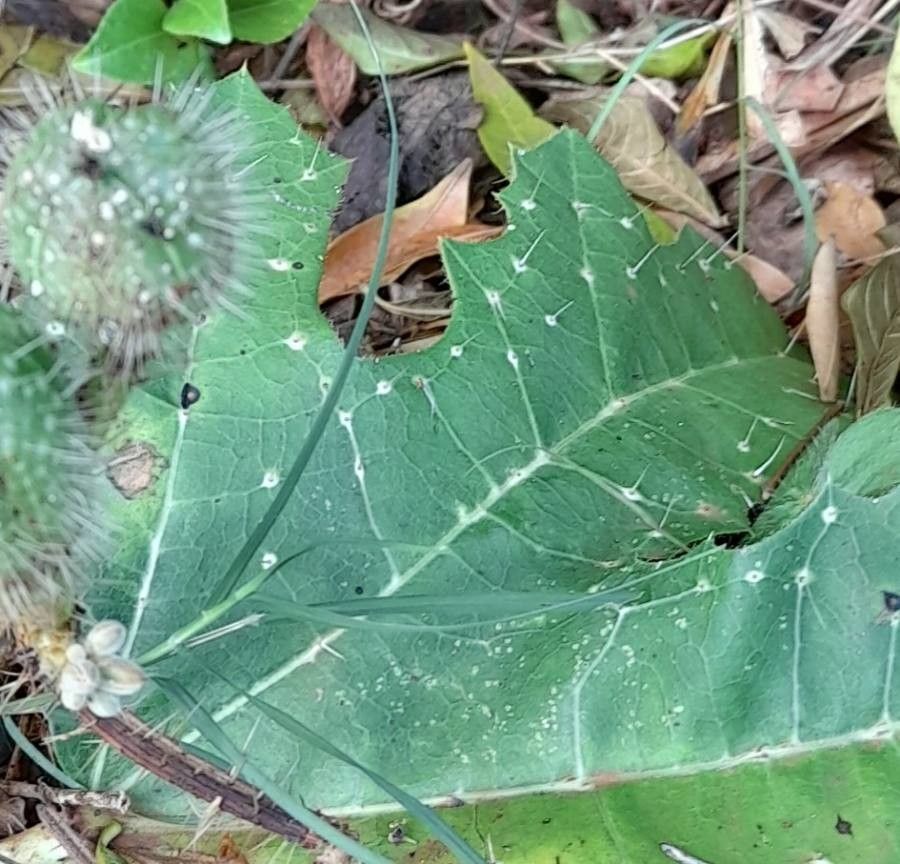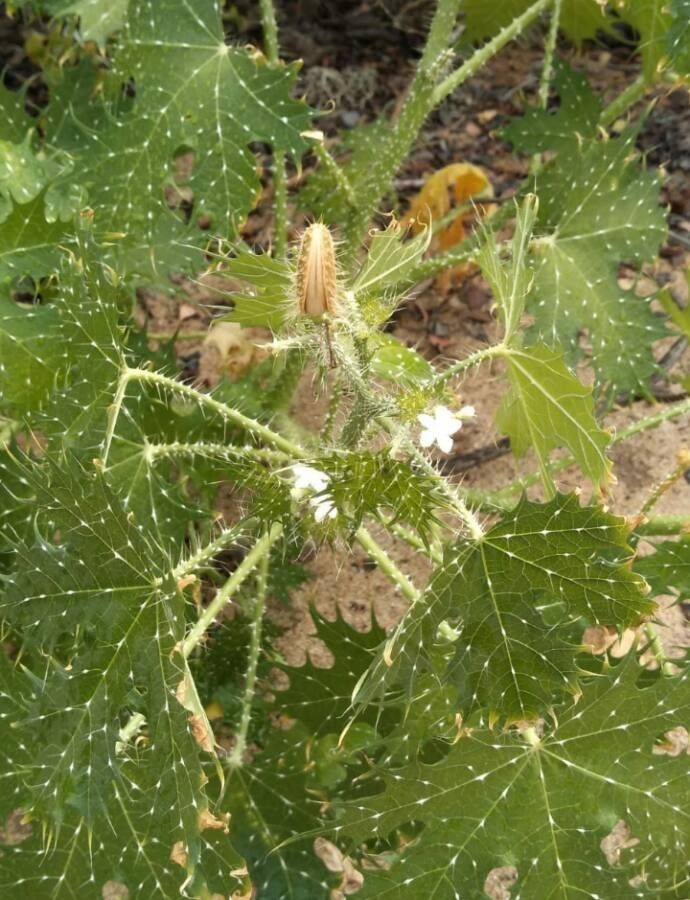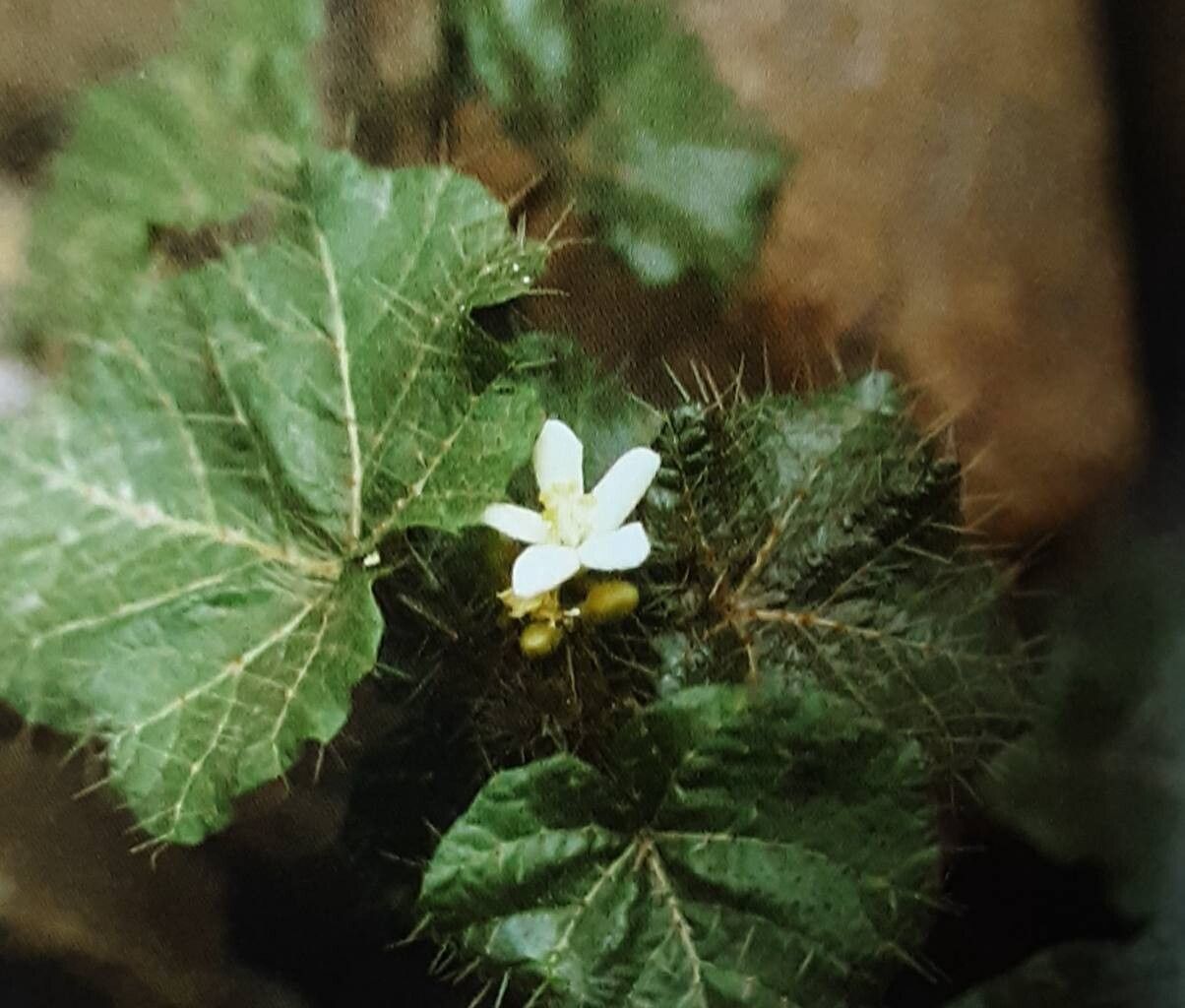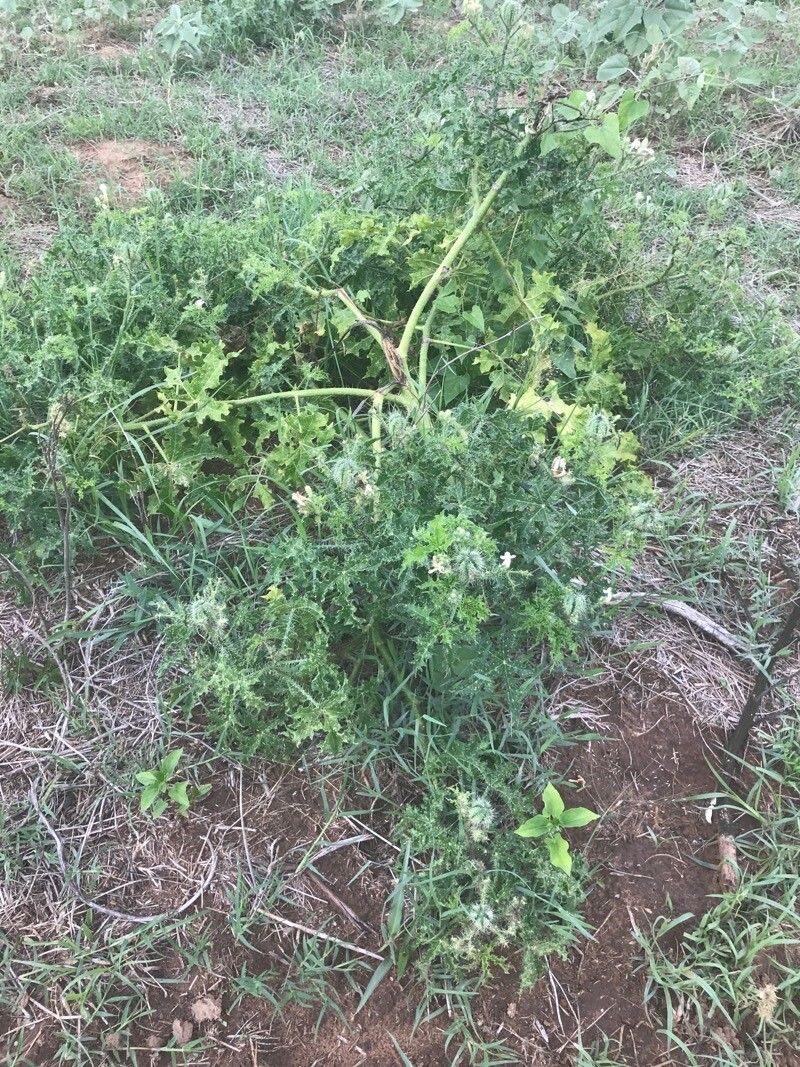
Cnidoscolus texanus, commonly known as Texas bullnettle (also Texas bull nettle and Texas bull-nettle), tread-softly, mala mujer, and finger rot, is a perennial herb covered with stinging hairs. The main stem, branches, leaves, and seed pods are all covered with hispid or glass-like bristly hairs that release an allergenic toxin upon contact. Contact with the plant results in intense pain: stinging, burning, and itching lasting for hours. It is native to the U.S. states of Texas, Arkansas, Kansas, Louisiana, and Oklahoma and also native to the northeastern state of Tamaulipas, Mexico. It is an herbaceous flowering plant that grows between 30–80 cm (11.8–31.5 in) tall and as much as 1 m (3.3 ft) across. Texas bullnettle (Cnidoscolus texanus) has showy, fragrant white flowers that can bloom throughout the year in southern regions of its distribution, predominantly March to November in northern regions. It is a drought-tolerant plant, therefore making it a superb choice for xeriscaping. This plant is attractive to birds, bees, butterflies, and other insects. The seeds are known to be consumed by Rio Grande wild turkeys (Meleagris gallopavo intermedia) and mourning doves (Zenaida macroura). The seeds, which are edible when ripe, are also consumed by humans. Native Americans harvested bullnettle seeds in the past and some people still eat them today. Each seed pod contains three seeds, which are smooth, somewhat cylindrical, brownish white, and a half to three quarters of an inch long. When ripe, they are dispersed when the pod burst open, catapulting the seeds away from the plant. Great care and caution is advised in collecting the seeds. Tull suggested wearing long pants, long sleeves, boots, and gloves to pick the seed pods with a pair of tongs, then dropping them into a paper sack and waiting for the pods to ripen and burst in the sack to collect the seeds. They are said to be appetizing and tasty with a nutty flavor.
Texas bullnettle is fairly disease-resistant and usually not prone to illness. That said, it can be affected by pests and diseases present in its environment. These problems are typically mild. For care, the plant needs moderate maintenance. It should be pruned regularly to preserve a tidy appearance and support healthy growth. Fertilizing can also encourage flowering. Texas bullnettle is well suited to anyone with outdoor space, such as a garden or patio, and does not demand extensive care experience. It may need more attention when kept indoors.
How to keep Cnidoscolus Texanus.
Light
The texas bullnettle does best when it receives steady, strong sunlight for the entire day. It can tolerate getting only part of the day's light, but that may hamper its optimal growth. Its native habitat includes areas where full exposure is common. Insufficient light can impair its overall health, while excessive light can cause scorching.
Water
The Texas bullnettle, native to arid regions, is highly drought-tolerant and thrives with just weekly watering. It's important to let the soil dry out between waterings. This plant prefers low humidity, making it an excellent choice for xeriscaping and low-water gardens, as it can endure prolonged dry spells.
Temperature
Texas bullnettle is naturally adapted to a wide range of temperatures, doing best between 50 and 95°F (10 and 35°C). Be sure to adjust the plant's environment according to seasonal changes to maintain optimal growth.
Fertilizer
One application of fertilizer in spring is typically adequate for Texas bullnettle, though repeated feedings can boost growth. Apply fertilizer every month to a month and a half. Fertilizing improves the leaves' appearance and function, encouraging uniform color and a healthy texture. It also promotes root development and nutrient uptake, supporting long-term plant health.
Pruning
Texas bullnettle is characterized by its spiny stems and stinging hairs. To promote healthy growth and flowering, it benefits from careful pruning in early to late spring. This practice also helps minimize pests and diseases. When pruning, trim back to healthy wood, but be careful not to over-prune, as this can cause stress and negatively impact the plant's overall health.
Botanical profile.
- Plant Type
- Herb
- Life Cycle
- Perennial
- Genus
- Cnidoscolus
- Family
- Euphorbiaceae
- Hardiness Zone
- 6-10
- Mature Height
- 30 cm to 76 cm
- Mature Spread
- 91 cm
- Leaf Color
- Red
- Leaf Type
- Deciduous
- Flower Color
- White
- Flower Size
- 2.54 cm
- Bloom Time
- Mid spring, Late spring, Summer, Fall
- Planting Time
- Spring, Summer, Autumn
- Harvest Time
- Summer, Fall, Early winter
- Native Area
- Mexico
Other names.
Reader questions.
What are the sunlight requirements for Texas bullnettle?
Texas bullnettle requires full sun, meaning it thrives best with more than 6 hours of sunlight per day, although it can tolerate partial sun, or about 3-6 hours of sunlight. It is important to observe your garden's sunlight throughout the day to find spots that offer the right balance of light and shade, ensuring the plants' optimal growth and health. In its native habitat, Texas bullnettle is accustomed to environments with full exposure to the sun, and insufficient light can negatively impact its health, while excessive sunlight might cause scorching.
What are the optimal growing temperatures for Texas bullnettle?
Texas bullnettle thrives in a wide temperature range, doing best between 50 to 95°F (10 to 35°C). It is naturally equipped to adapt to seasonal changes, making it important to adjust its surroundings to maintain optimal growth conditions throughout the year. The plant displays strong cold resistance, negating the need for special frost protection measures in most cases. However, preparations should be made when winter temperatures are expected to drop significantly by using protective coverings like soil or straw, and by watering the plant abundantly before the first freeze to keep the soil moist and reduce the risk of drought during the colder months.
How can indoor plants benefit from artificial lighting, and what types are recommended?
Indoor plants, including Texas bullnettle, require adequate lighting for optimal growth, especially when natural sunlight is insufficient. Artificial lights, such as LED lights, can provide a vital solution by supplying the specific wavelengths of light that your plants need. For indoor plants, full sun plants require 30-50W/sq ft of artificial light, partial sun plants need 20-30W/sq ft, and full shade plants should get 10-20W/sq ft. It's also important to place the light source 12-36 inches above the plant and ensure it receives 8-12 hours of light per day to mimic natural daylight hours and promote healthier growth.
How does Texas bullnettle respond to low temperatures?
Texas bullnettle is remarkably cold-tolerant, generally requiring temperatures to stay above a certain minimum to thrive. Despite its resilience, when temperatures fall below a critical threshold, there may not be visible damage during the winter, but the plant could experience reduced or absent sprouting in the following spring. To mitigate this, removing parts that have failed to sprout in spring is recommended to encourage new growth.
What are the symptoms and solutions for Texas bullnettle when it doesn't receive enough sunlight?
When Texas bullnettle doesn't receive enough sunlight, it may exhibit symptoms such as small and lighter-colored new leaves, leggy or sparse growth, increased leaf drop, slower or no new growth, and even chlorosis or sunscald. To address these issues indoors, you can gradually move plants to a sunnier location until they receive at least 6 hours of direct sunlight daily, using a south-facing window or artificial light as necessary. Outdoors, gradually acclimatizing the plant to more sunlight and avoiding sudden exposure changes can prevent sunburn. It may also be helpful to reduce obstructions like overhanging branches to improve sunlight access or transplant smaller plants to sunnier locations.
What should be done if Texas bullnettle is exposed to high temperatures?
During summer, it is crucial to ensure the environment of Texas bullnettle remains below a maximum temperature limit. Exceeding this limit can lead to the leaves becoming lighter in color, prone to curling, susceptible to sunburn, and in severe cases, the entire plant may wilt and dry out. To protect and revive the plant, trim away sunburned and dried parts, move it to a shaded area or use a shade cloth to reduce exposure to the intense midday and afternoon sun. Additionally, watering the plant in the morning and evening will help keep the soil moist and prevent further stress.
What are the signs of too much sunlight for Texas bullnettle and how can it be mitigated?
Signs that Texas bullnettle is receiving too much sunlight include leaf scorching, chlorosis, sunscald, leaf curling, wilting, and the development of pale, bleached, or necrotic areas on the plant tissue. To mitigate these symptoms, it is important to ensure that the plant is gradually adapted to its light conditions, possibly by providing some shade during the hottest parts of the day, especially for outdoor plants. If parts of the plant have been affected by excessive sunlight, they may not recover, but new growth should be healthy if the light exposure is adjusted appropriately.