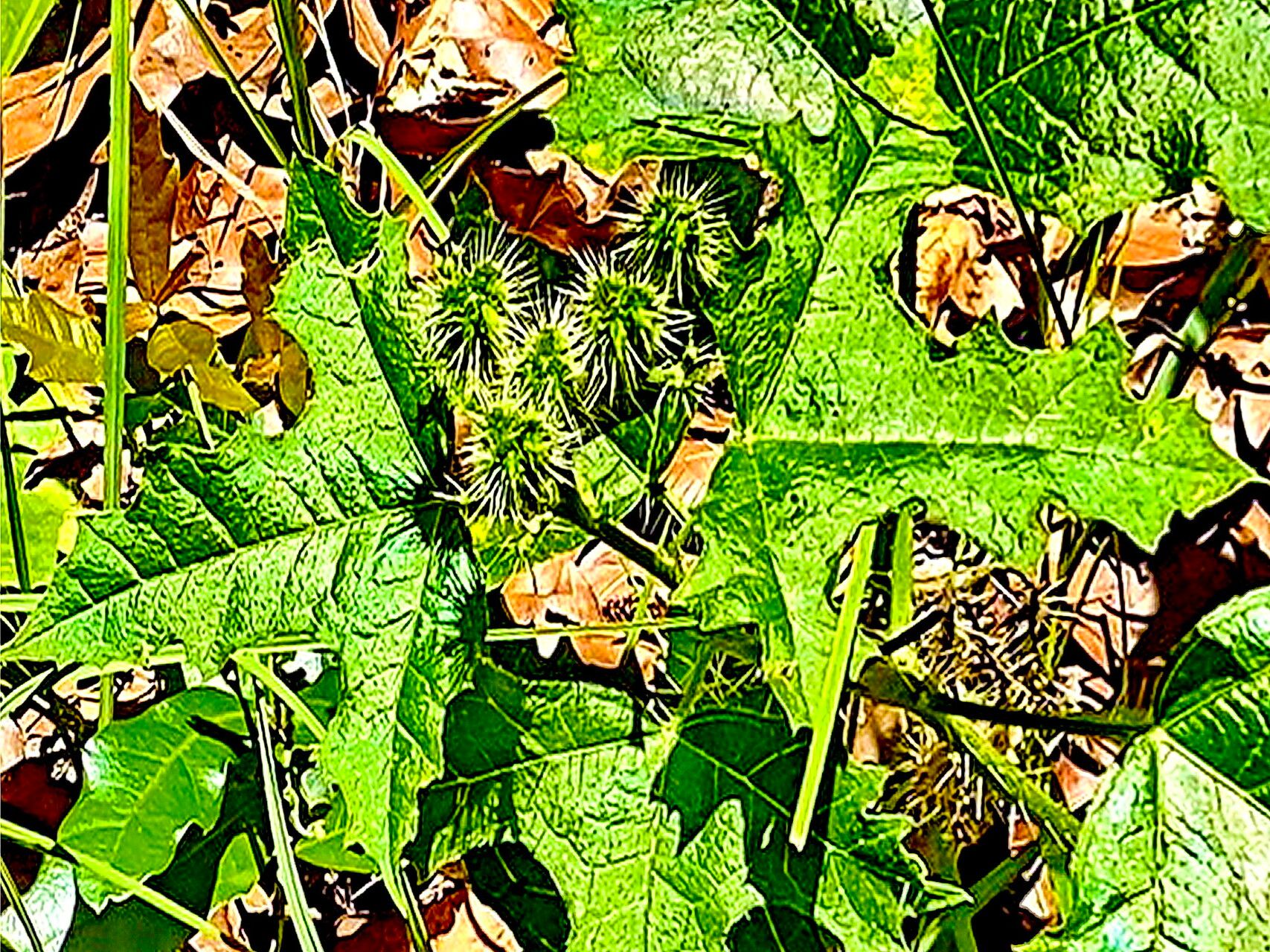
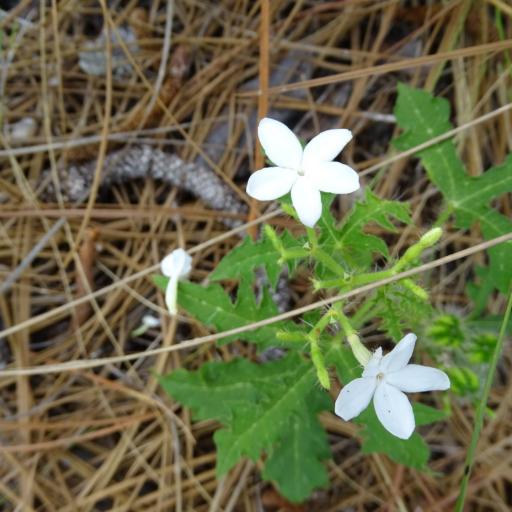
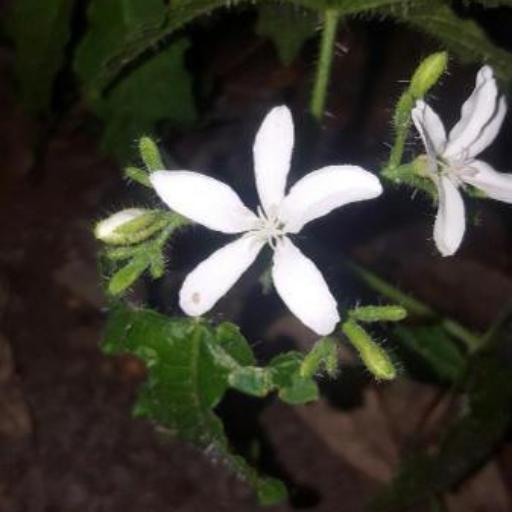
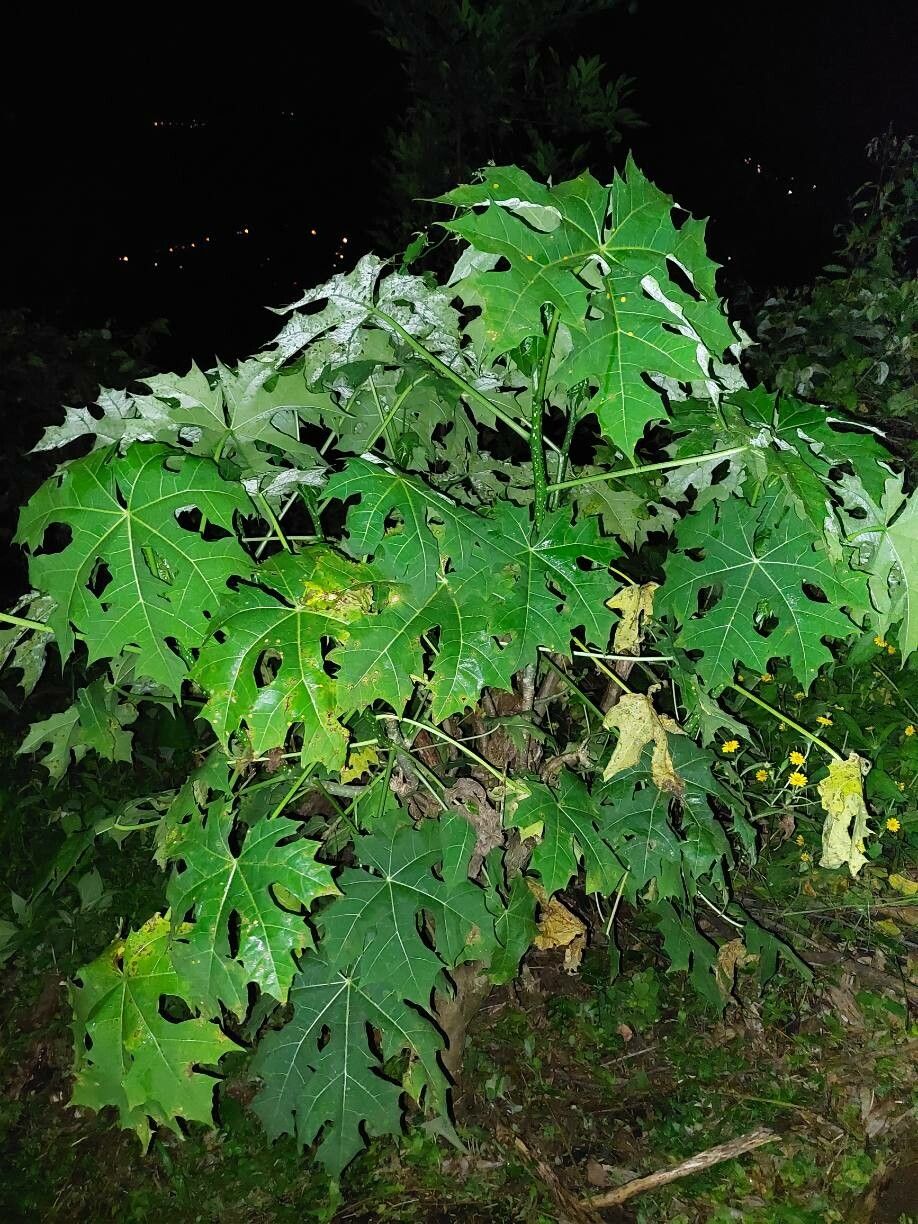
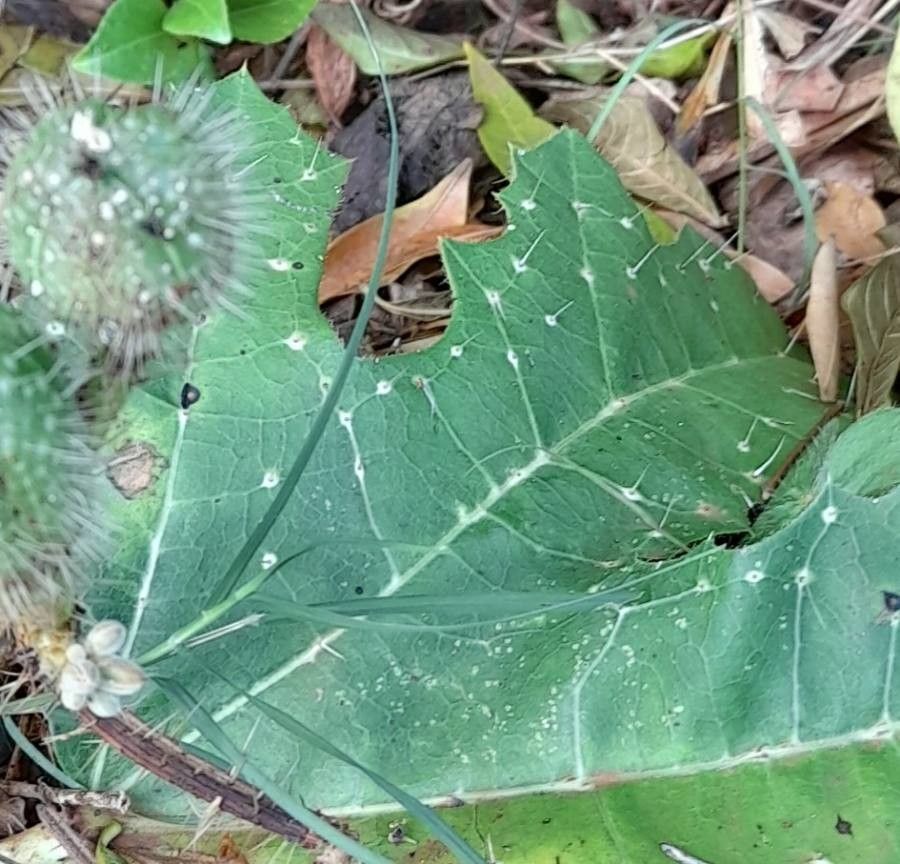
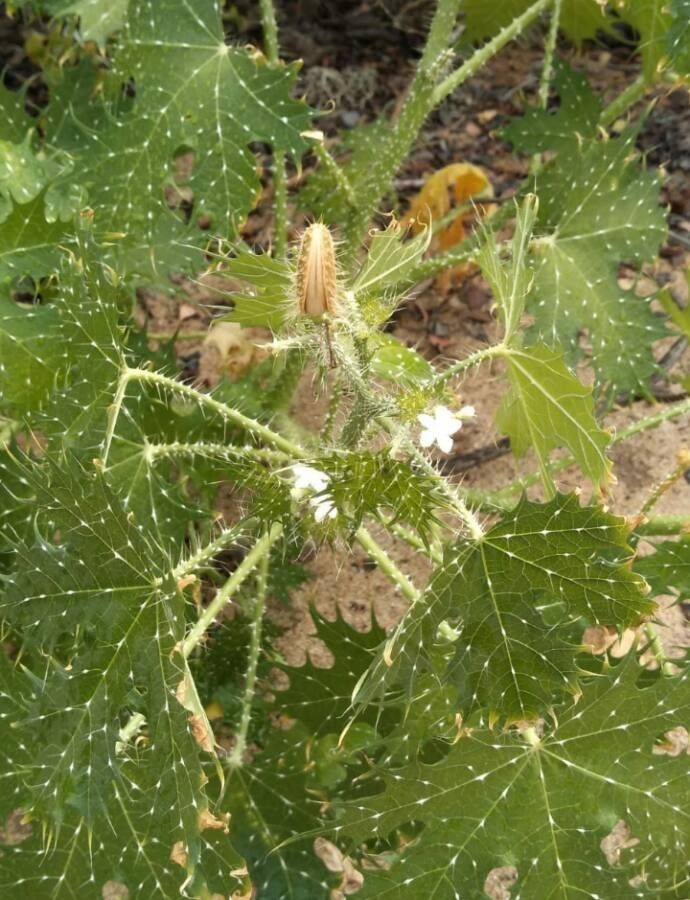
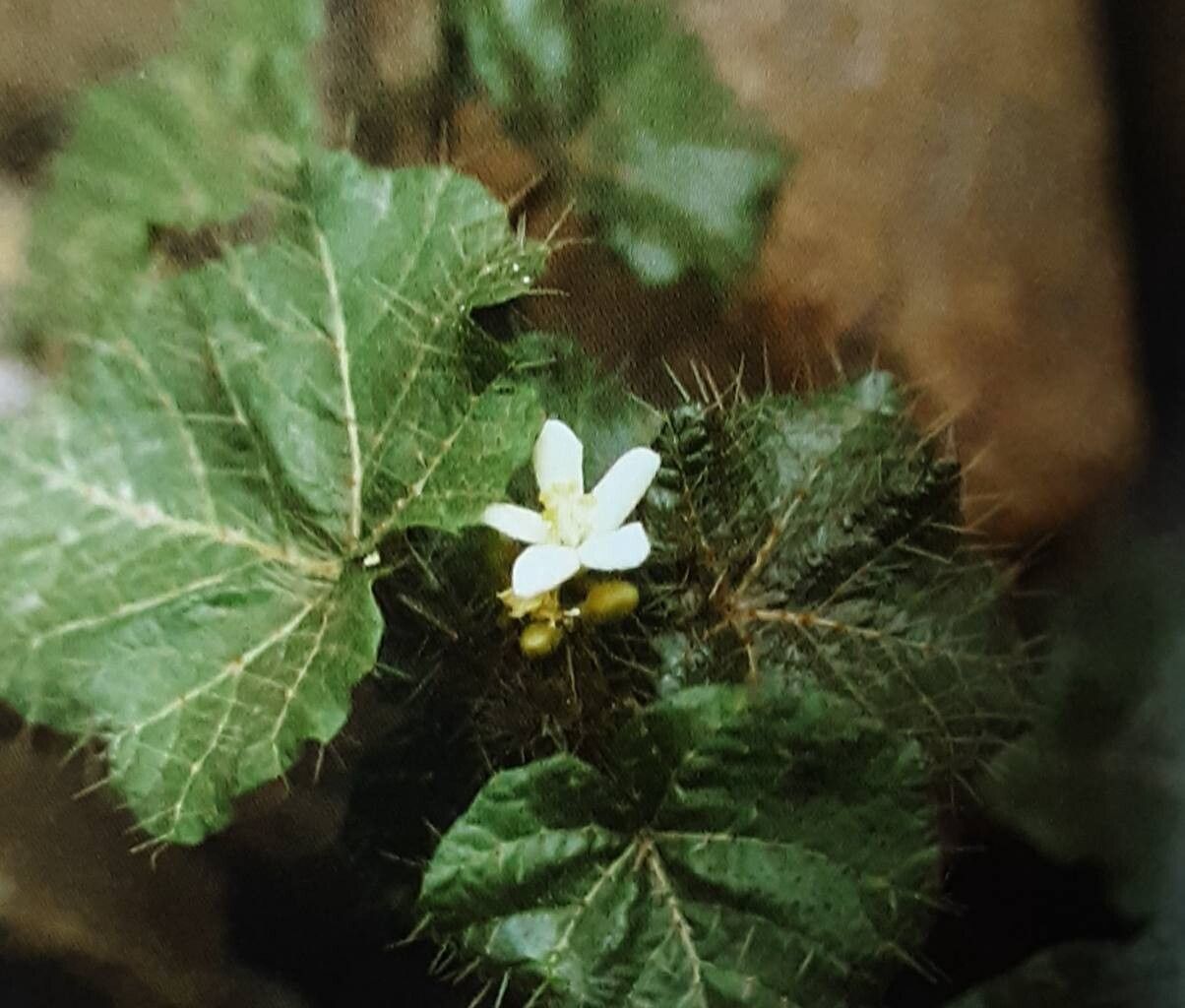
Cnidoscolus urens var. stimulosus, the bull nettle, spurge nettle, tread-softly or finger rot, is a perennial herb covered with stinging hairs, native to southeastern North America. A member of the family Euphorbiaceae (spurge family), it is not a true nettle. It prefers sandy, well-drained soil and mostly exists in pine/blackjack oak forests on sandhills, rims of Carolina bays, dunes, dry pastures, fields and roadsides. The green leaves of this plant are alternate, consisting of three to five untoothed lobes. The large, white flowers have five petals. Male and female flowers are on different plants. Flowers occur throughout the spring and summer followed by a small capsule that produces three large seeds. The entire plant above ground, including the flower petals, is covered with stinging hairs. The tap root can be used as an excellent potato substitute, tasting like pasta. As the common names imply, the urticating hairs on this plant contain a caustic irritant that inflicts a painful sting to those who contact it with bare skin. It can cause a painful, irritating rash and can cause more serious reactions with some people. The species name stimulosus comes from the Latin stimulus, meaning "goad" or "prod". This plant is also known as bull nettle and mala mujer (Spanish for "bad woman" or witch), though the latter name is applied to several other plants with similar properties.
Finger Rot has strong disease resistance and is generally not prone to illnesses. However, it can be vulnerable to pests and diseases present in its surroundings. These problems are usually mild. Care-wise, the plant needs a moderate level of maintenance. It should be pruned regularly to keep a good appearance and encourage healthy growth. Applying fertilizer can also aid in boosting flowering. Finger Rot is a good choice for anyone with outdoor space, such as a garden or patio, and does not require extensive care experience. It may need more attention when cultivated indoors.
How to keep Cnidoscolus Stimulosus.
Light
Finger Rot is a sun-loving perennial herbaceous plant native to open habitats, frequently flourishing in meadows and grasslands. It prefers full sun but can also tolerate partial sun.
Temperature
Finger Rot originates from temperate regions and has an optimal temperature range of 50 to 95 °F (10 to 35 ℃). It can withstand cooler winters, but during growing seasons a warmer environment is preferred.
Fertilizer
A single fertilizer application in spring is usually enough for Finger Rot, although repeated feedings can help maximize growth. Feed once every month to a month and a half. Fertilizing improves leaf appearance and function, helping maintain consistent color and a healthy texture. It also promotes root growth and nutrient uptake to support long-term plant health.
Botanical profile.
- Plant Type
- Herb
- Life Cycle
- Perennial
- Genus
- Cnidoscolus
- Family
- Euphorbiaceae
- Hardiness Zone
- 6-10
- Mature Height
- 5 cm to 91 cm
- Mature Spread
- 20 cm to 30 cm
- Leaf Color
- Green, Dark Green
- Leaf Type
- Deciduous
- Flower Color
- White
- Flower Size
- 1.02 cm to 2.03 cm
- Bloom Time
- Mid spring, Late spring, Summer, Early fall
- Planting Time
- Spring
- Harvest Time
- Summer, Fall
Other names.