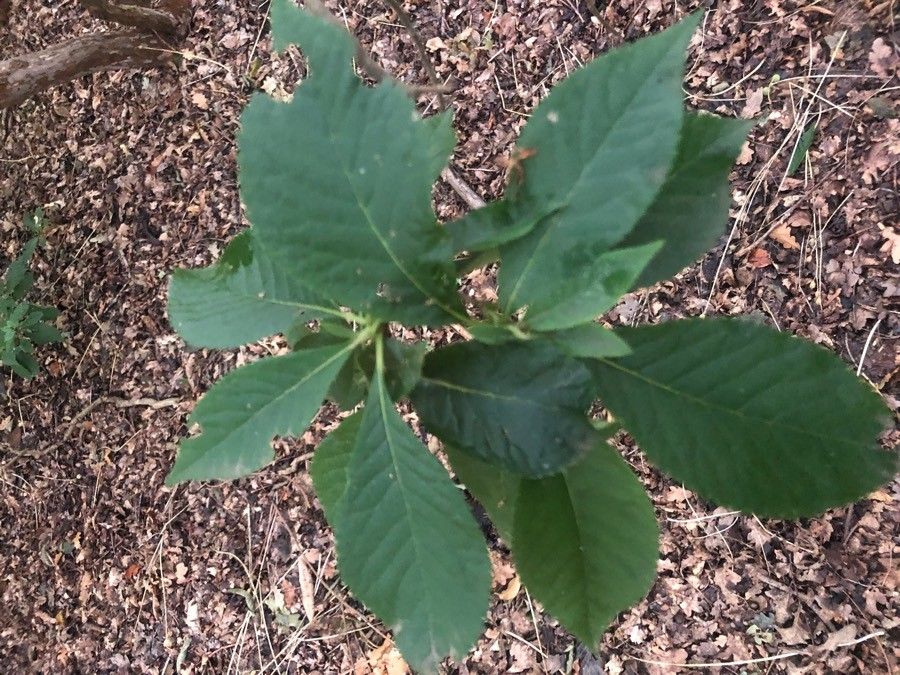
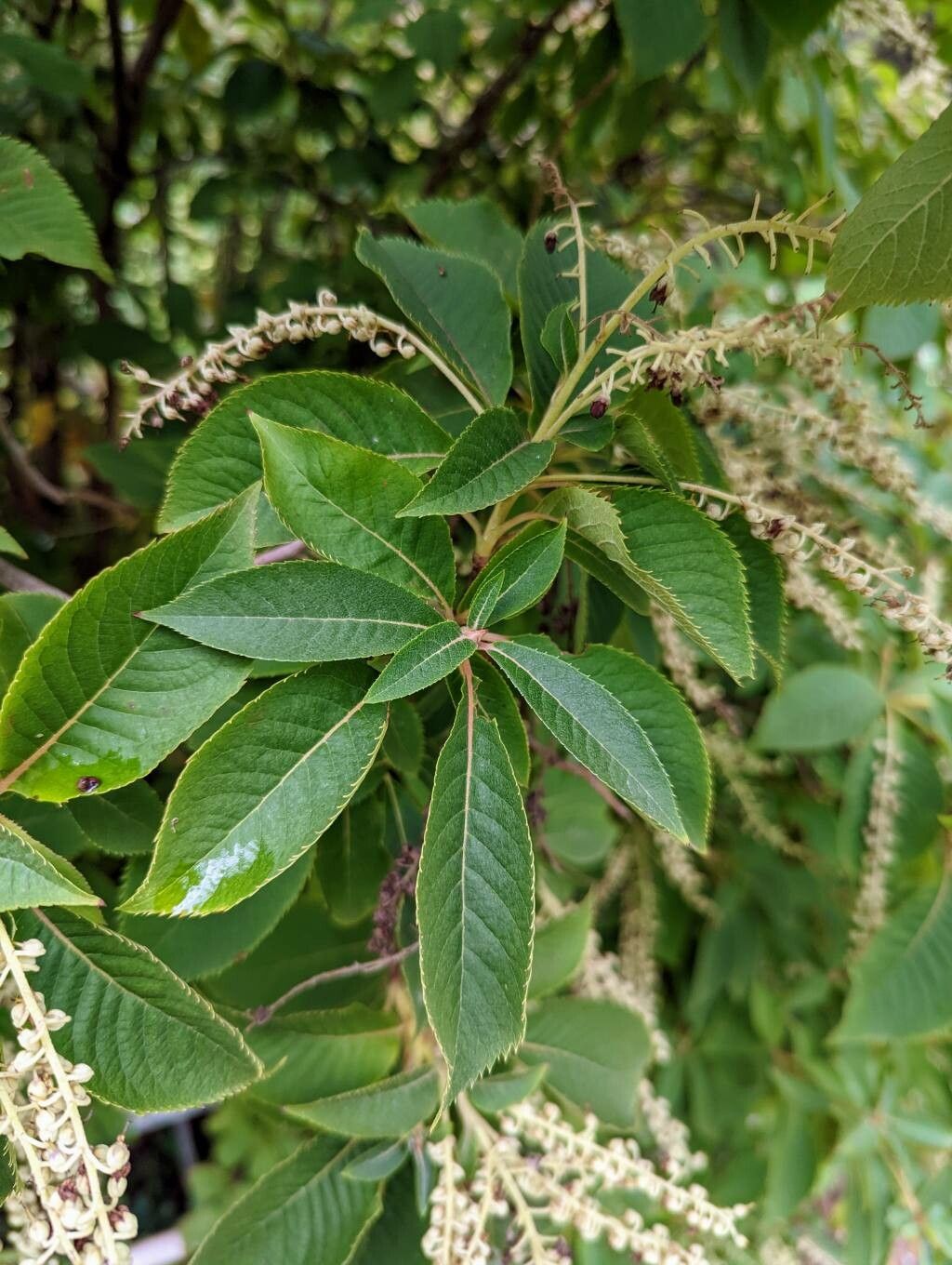
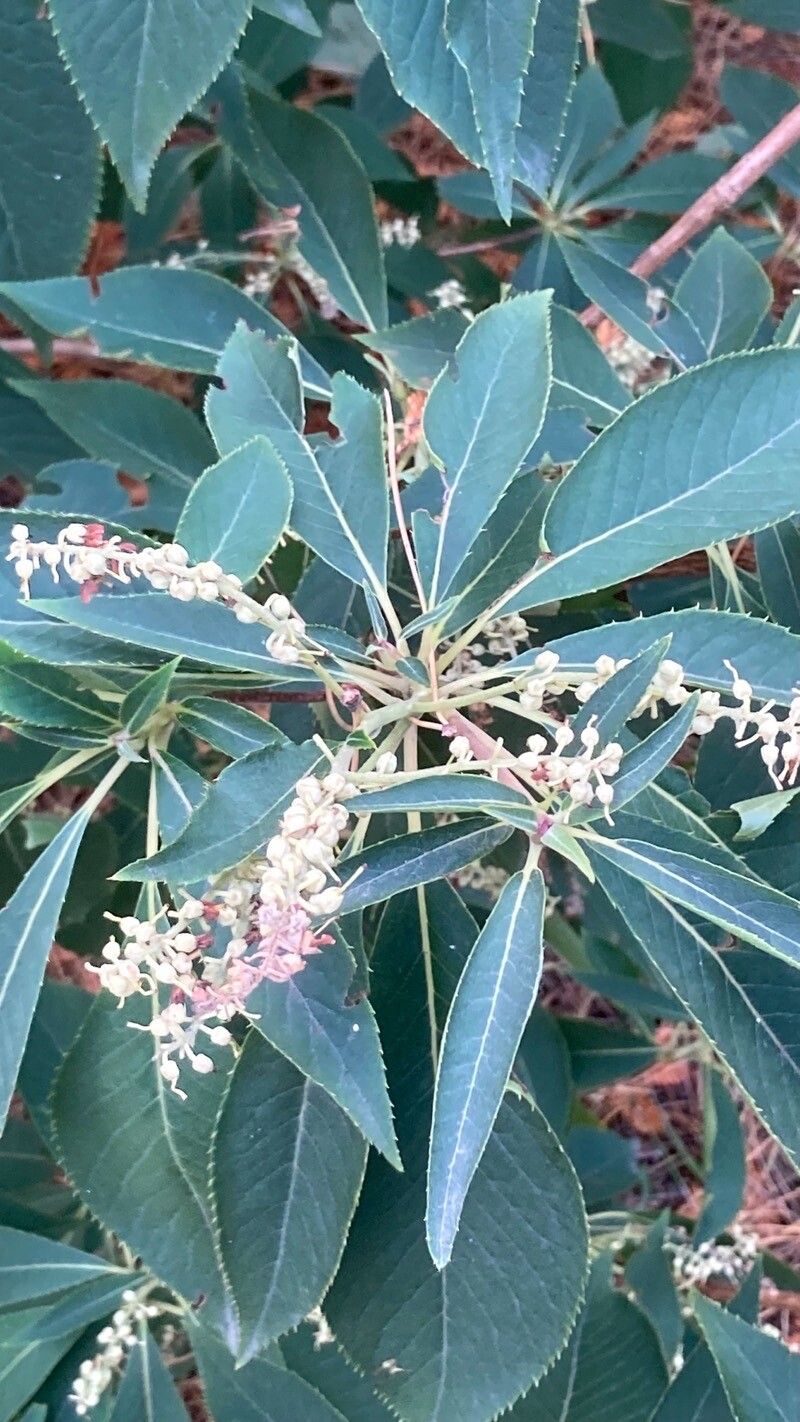
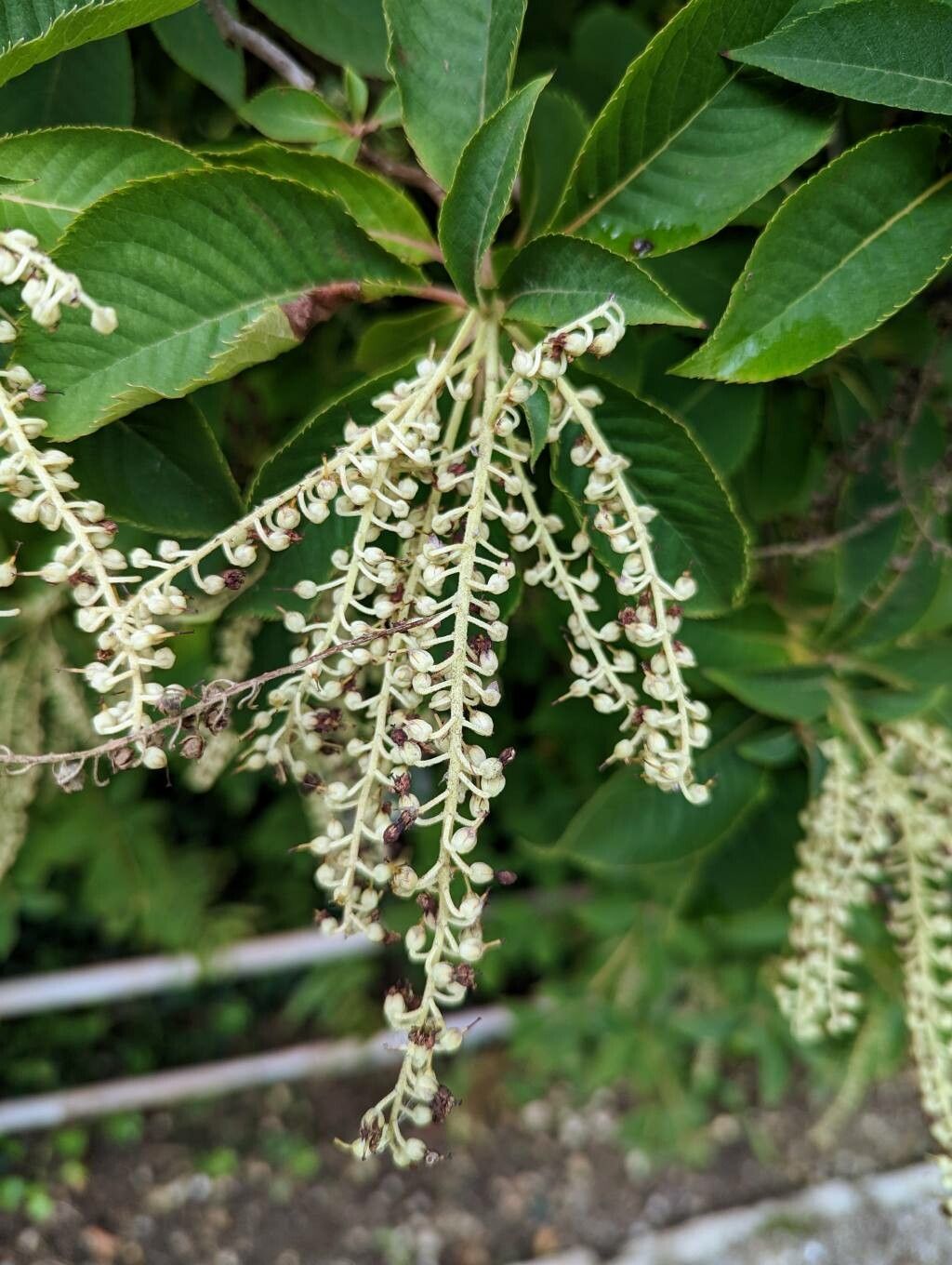
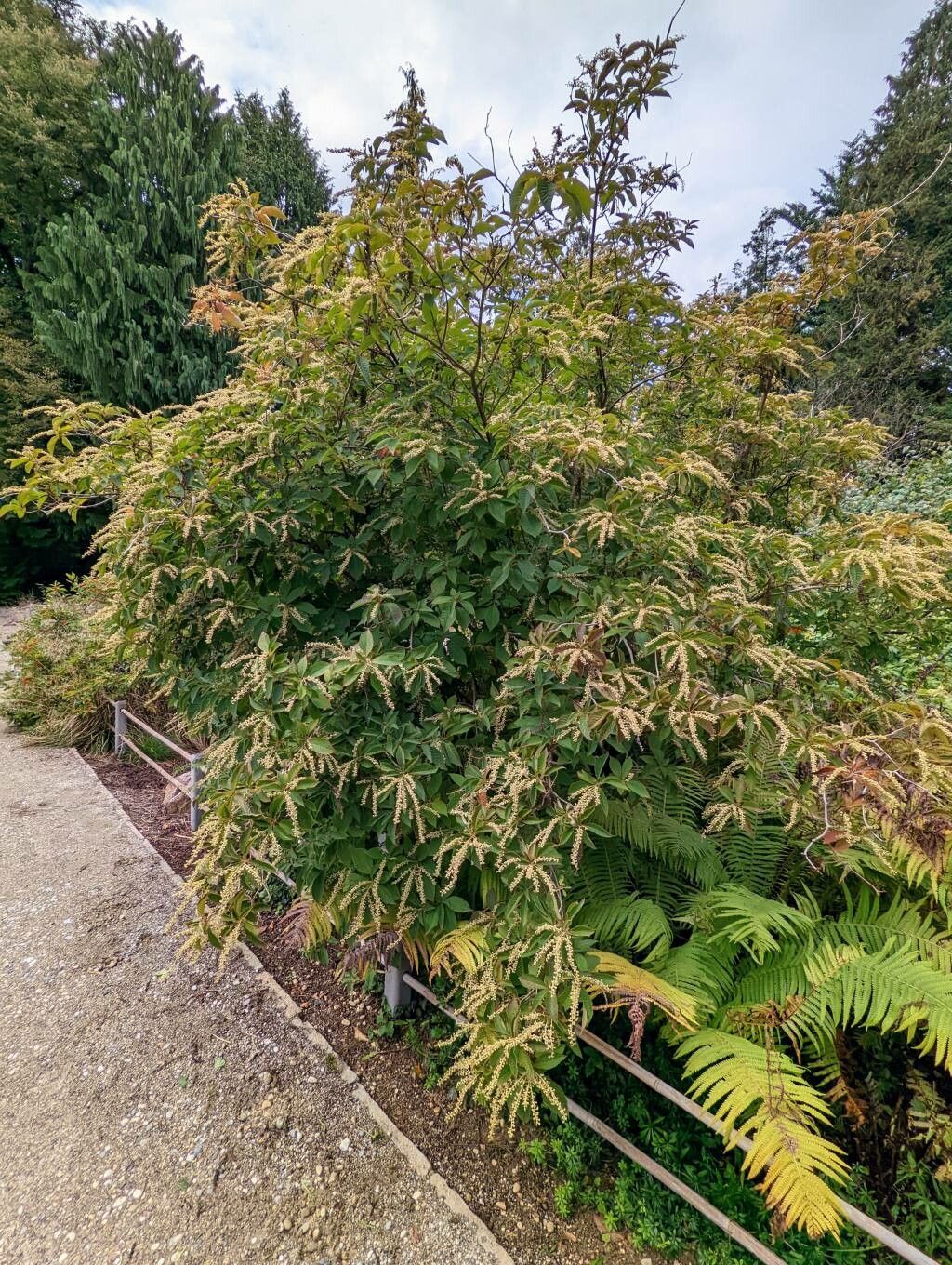
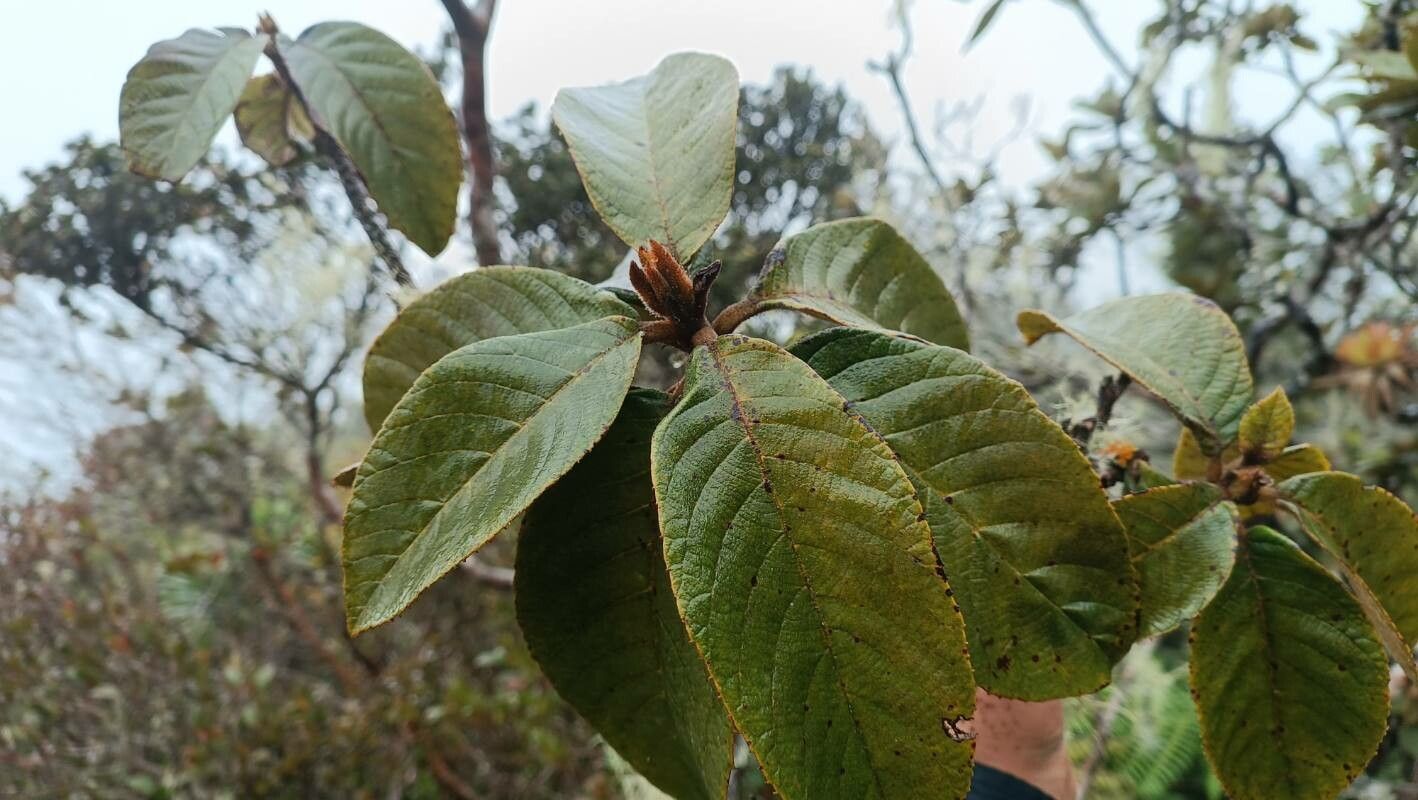
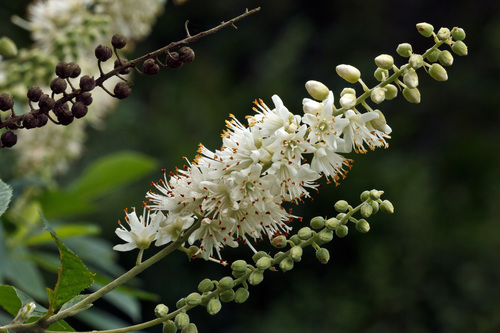
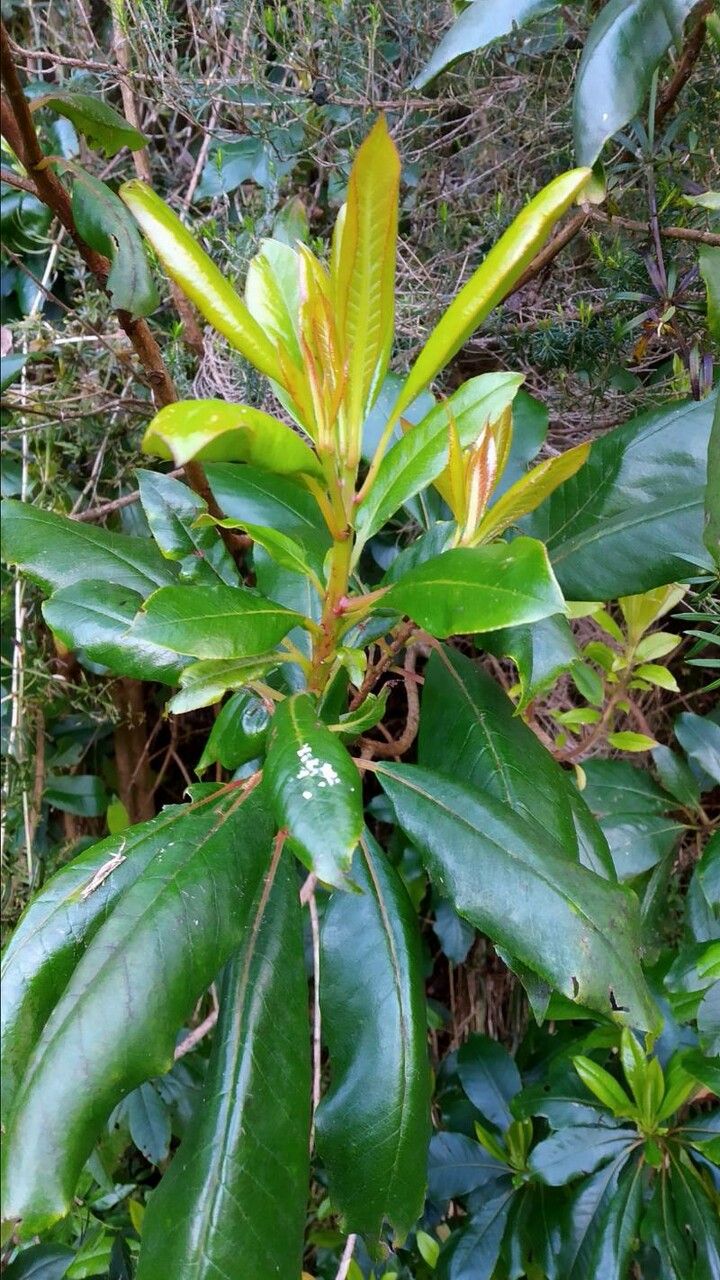
Clethra barbinervis, commonly known as Japanese clethra or sweet pepperbush, is a deciduous shrub native to Japan. This plant typically grows to a height of 6-10 feet and features an upright habit with arching branches. Its dark green, glossy leaves have serrated edges and turn a striking yellow in the fall before they drop.
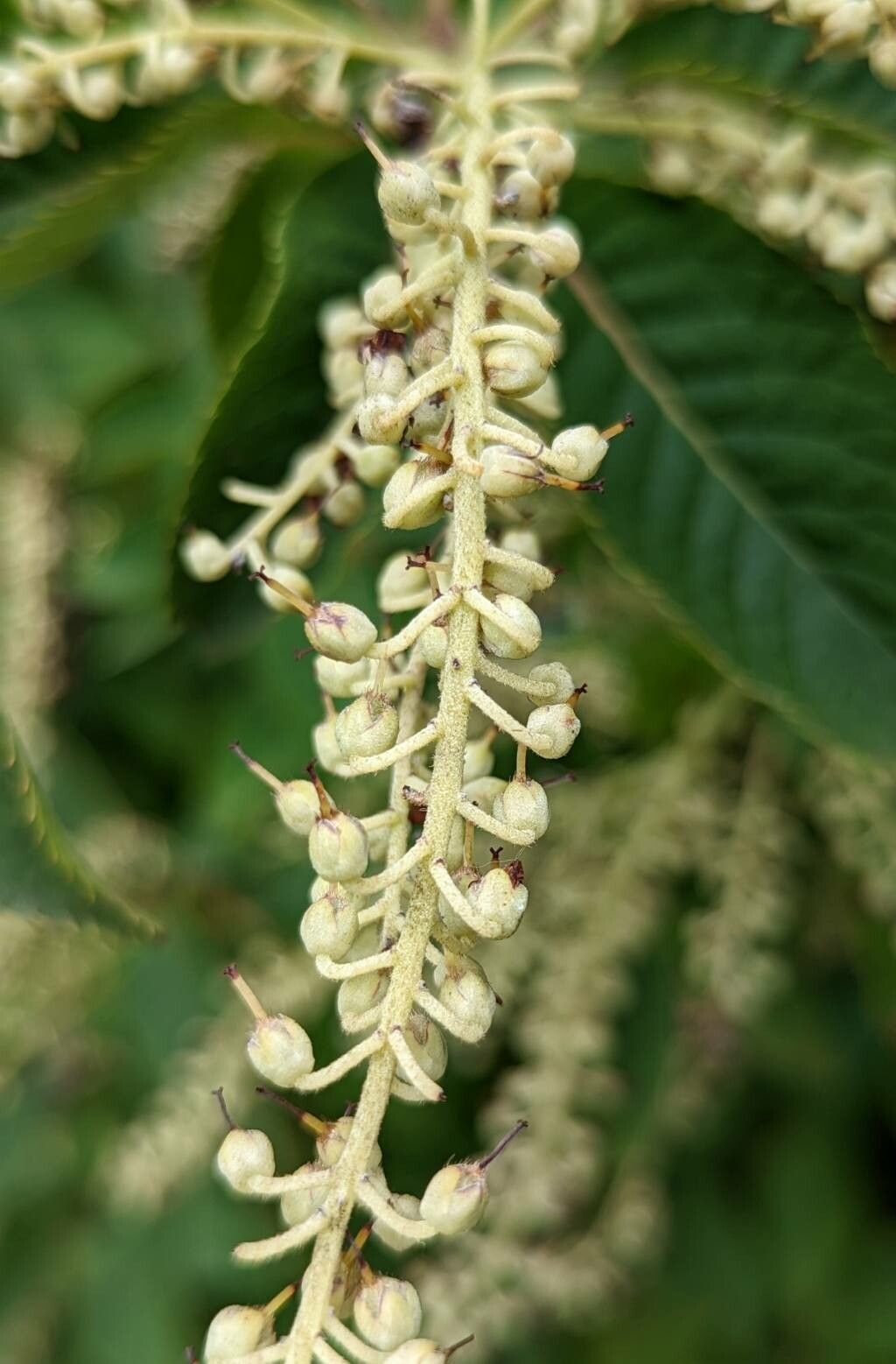
In mid-summer, Clethra barbinervis produces fragrant white or pale pink flowers arranged in long spikes at the tips of its branches. These blooms attract bees and butterflies, making the shrub an excellent addition to pollinator gardens.
The plant prefers moist, well-drained soil that is neither too dry nor too wet. While it can tolerate full sun, it thrives best in partial shade, especially during hot summer months.
Once established, Clethra barbinervis is low-maintenance and can serve as an accent plant or be planted en masse for a stunning summer display. Its attractive foliage also makes it a suitable choice for hedges or screens.
Overall, Clethra barbinervis is an excellent choice for gardeners seeking an easy-to-grow shrub that offers year-round interest with its fragrant blooms and appealing foliage.
Japanese tree clethra is resistant to disease and generally not susceptible to illnesses. In terms of care, this plant is fairly low-maintenance. When grown outdoors it needs only minimal watering, and larger plants typically do not require pruning. Smaller plants, however, should be pruned after they finish blooming. Japanese tree clethra is appropriate for anyone with outdoor space, such as a garden or deck, and does not demand extensive care experience.
How to keep Clethra Barbinervis.
Light
The japanese tree clethra does best with moderate sunlight but can also tolerate both abundant and limited sun. Coming from habitats with varied light levels, japanese tree clethra maintains healthy growth regardless of light intensity. Excessive or very low light may cause some stress to the japanese tree clethra, but it remains fairly adaptable.
Water
Japanese tree clethra flourishes in moist woodlands and prefers consistent humidity. While it has moderate drought tolerance, it performs best in evenly moist soil. To keep it optimally hydrated, water the plant weekly. As an outdoor plant in temperate regions, the growth of Japanese tree clethra is affected by seasonal rainfall and dormancy cycles.
Temperature
Japanese tree clethra is native to a climate where temperatures range from 32 to 100.4 °F (0 to 38 ℃). This plant prefers conditions within that range. When seasons change, small temperature adjustments may be needed to replicate its native habitat.
Fertilizer
Timing is important for fertilizing Japanese tree clethra. Apply fertilizer in early spring and continue monthly until early summer. Fertilizer promotes attractive flowers and supplies energy during both dormant and active growth periods.
Pruning
The Japanese tree clethra, known for its fragrant white flowers and exfoliating bark, flourishes when given proper care. To encourage healthier growth and blooming, prune the plant in early spring. This will help shape the plant, remove dead branches, and improve air circulation. Always use clean, sharp tools for precise cuts to maintain the plant's health.
Botanical profile.
- Plant Type
- Shrub
- Life Cycle
- Perennial
- Genus
- Clethra
- Family
- Clethraceae
- Hardiness Zone
- 2-11
- Mature Height
- 3.05 m
- Mature Spread
- 3.05 m to 4.57 m
- Leaf Color
- Green, Red, Orange, Yellow
- Leaf Type
- Deciduous
- Flower Color
- White
- Flower Size
- 0.20 cm to 0.25 cm
- Bloom Time
- Early summer, Mid summer
- Planting Time
- Spring, Winter
- Harvest Time
- Late summer, Early fall, Mid fall
- Native Area
- South Korea, Japan, China
Other names.
Reader questions.
How should I water my Japanese tree clethra in the best way?
To ensure excellent root development for your plants, consider using a garden hose at the base of the plant. Avoid spraying the leaves directly, as this can cause issues. Keep in mind that if the leaves are exposed to direct sunlight outdoors, they may require additional watering. To moisten the roots, you can use bubblers on each plant or soaker hoses that cover the entire garden or bed. When adding or removing plants, make sure to push the roots deeply into the soil. After watering, remember to drain any excess water and allow the soil to dry before watering again. Watering at ground level helps prevent diseases. On a sunny day, it may be beneficial to spray the entire bush with water. Whether the plant is in a pot or in the ground, Japanese tree clethra prefers deep watering rather than light sprinkling.
Why is it important to use fertilizer on my Japanese tree clethra?
To ensure your Japanese tree clethra produces beautiful blooms, it is important to fertilize it for various reasons. One obvious reason is that fertilizer promotes the growth of lovely flowers. For optimal results, it is recommended to fertilize in early spring. This helps guarantee excellent blooms during the season. Furthermore, fertilizer provides the tree with extra energy which it can store in the ground during dormant growth phases. By giving your Japanese tree clethra additional nutrients during fall planting or late spring, it can accumulate more energy to utilize when active growth resumes.
How much sunlight does a Japanese tree clethra need to grow?
To ensure the healthy growth of Japanese tree clethra, it requires 3-6 hours of direct sunlight daily. However, it is important to protect it from intense sun exposure during the hottest parts of the day. The morning sunlight is optimal for this plant, but it can tolerate some afternoon sun if the temperature is not too high. For an ideal amount of sunlight, consider planting Japanese tree clethra in a partially sunny spot, like under a tree or on the east side of a building.
What temperature is best for Japanese tree clethra?
The Japanese tree clethra thrives best when the temperature is between 65-80℉ (18-27℃). During the main growing phase, it can tolerate temperatures as high as 95℉ (35℃) and as low as 15℉ (-10℃). This species is able to survive freezing winters due to its tolerance for low temperatures. For optimal conditions, the perfect temperature range is 65-80℉ (18-27℃), the highest range is 85-95℉ (30-35℃), and the lowest range is -5-15℉ (-20 to -10℃) or even lower.
What do I do if I give too much or too little water to a Japanese tree clethra?
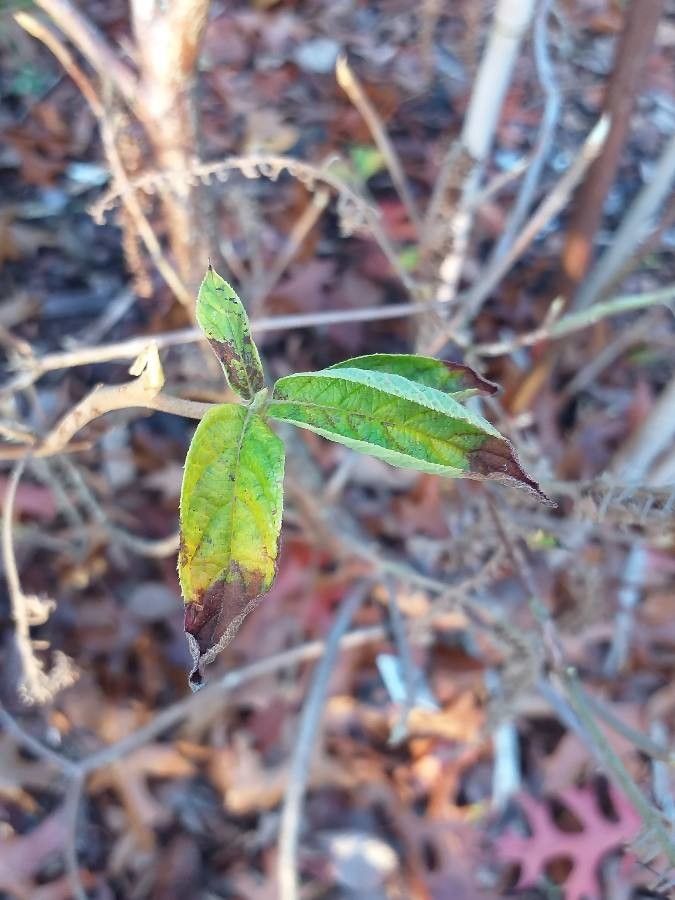
An overwatered Japanese tree clethra can display several signs of distress. The leaves may appear yellow, wilted, and eventually drop off. The plant may also look unhealthy, with mushy stems. It is important to adjust your watering schedule to prevent these issues. Wilting can also be a sign of under watering, in which case the leaves become crispy and dry. To determine whether watering is necessary, check the soil for dryness. If the soil is dry, provide a thorough watering. However, even with sufficient water, the plant may still maintain a dry appearance and develop yellow leaves due to root damage. Once the plant recovers, the yellowing of leaves will cease. When keeping the Japanese tree clethra indoors, regularly check the moisture levels in the pot. Avoid overwatering and watch for signs of black spots, indicating excess moisture. If black spots are present, allow the soil to dry out for a few days before watering again. Overwatering can lead to root rot, so take measures to prevent this by transferring the plant into a different pot if you notice discolored and slimy roots. When planting the Japanese tree clethra outdoors, ensure proper watering by checking the soil's moisture level. If the soil feels too dry, it may indicate under watering, so provide adequate water to aid in the plant's recovery.
When should I fertilize my Japanese tree clethra for the best results?
To ensure the effective use of fertilizer and avoid waste and pollution, it is important to time the application correctly for Japanese tree clethra. Using fertilizer too early, while the plant is still dormant, will result in its ineffectiveness and wash away with rainwater. The best time to apply the first round of fertilizer is early spring, followed by monthly applications until early summer.
What happens if the Japanese tree clethra doesn't get enough sunlight?
When Japanese tree clethra receives excessive direct sunlight, its leaves can become yellow, dry, or even burn. Additionally, the plant may wilt or remain small. To avoid sun damage, it is important to provide some shade for Japanese tree clethra during the hottest times of the day. You can achieve this by using a shade cloth or planting it near taller plants that can offer natural shade.
Do I need to change the temperature for Japanese tree clethra as it grows?
According to research, Japanese tree clethra may experience hurdles in their growth when exposed to extended periods of high temperatures, particularly during the growth of axillary buds and main shoots. To ensure thriving growth after germination or transplantation, it is recommended to maintain consistent and cooler temperatures, ideally around 65℉ (18℃).
How frequently should I water my Japanese tree clethra?
The Japanese tree clethra prefers deep and infrequent watering, especially when planted in pots. Due to the limited water storage of flower pots, it is important to soak them in a gallon of water each time. In cold regions, watering is needed every 3 to 5 days. Watering should be done early in the morning when the soil is dry, whether the plant is outdoors or indoors. To determine if watering is necessary, check the soil inside. If the top 2-3 inches of soil is dry, it is time to give the plant a full watering. During hot days, daily moisture checks may be necessary as the heat can quickly dry out the soil in the pot. If you have a garden, soil irrigation is also required. In hot climates, watering once a week is recommended. Only water when about 2 to 3 inches of soil become too dry, both outdoors and indoors. Take rainfall into consideration and avoid adding additional water to prevent root rot. If there is ample rainfall, additional watering may not be necessary. Japanese tree clethra mainly grows in the spring and fall. When outdoors, adding mulch about 3 to 4 inches deep can help conserve water. Sandy soil requires more frequent watering due to its faster drainage, while clay soil requires less frequent watering to avoid root rot. Marking the watering dates on a calendar can help ensure timely watering. Pay attention to the leaves drooping as it may indicate that watering is needed the following day.
When is the best time to not fertilize my Japanese tree clethra?
To ensure optimal blooming, it is important to avoid using a fertilizer with excessive nitrogen on Japanese tree clethra. Instead, opt for a fertilizer that has a lower level of nitrogen in relation to other nutrients. Additionally, refrain from fertilizing after early autumn to prevent excessive growth before winter sets in. During hot and dry periods, it is best not to fertilize as dry soil is less efficient at delivering nutrients. Fertilizing at this time can also stimulate growth that requires more water, which may not be readily available. It is advisable to apply fertilizer earlier in the season when temperatures are cooler. Lastly, keep in mind that Japanese tree clethra can absorb fertilizer from neighboring plants or lawns, so be careful not to inadvertently provide the tree/shrub with a double-dose of fertilizer.
What will happen if the Japanese tree clethra gets too much sunlight?
The Japanese tree clethra may become tall and sparse if it doesn't receive enough sunlight. This can be seen by the yellow or pale green leaves, which indicate a lack of chlorophyll production. To fix this issue, try moving the plant to a sunnier location or clearing nearby foliage to let more light in.
How do I keep Japanese tree clethra warm during cold seasons?
Japanese tree clethra can survive freezing temperatures in the ground as long as the temperature doesn't drop below 15℉(-10℃). However, if you're planting them in pots or containers, you'll need to ensure their roots are protected from the cold. This can be done by wrapping the container in a blanket or bringing it indoors where it will be shielded from the elements.