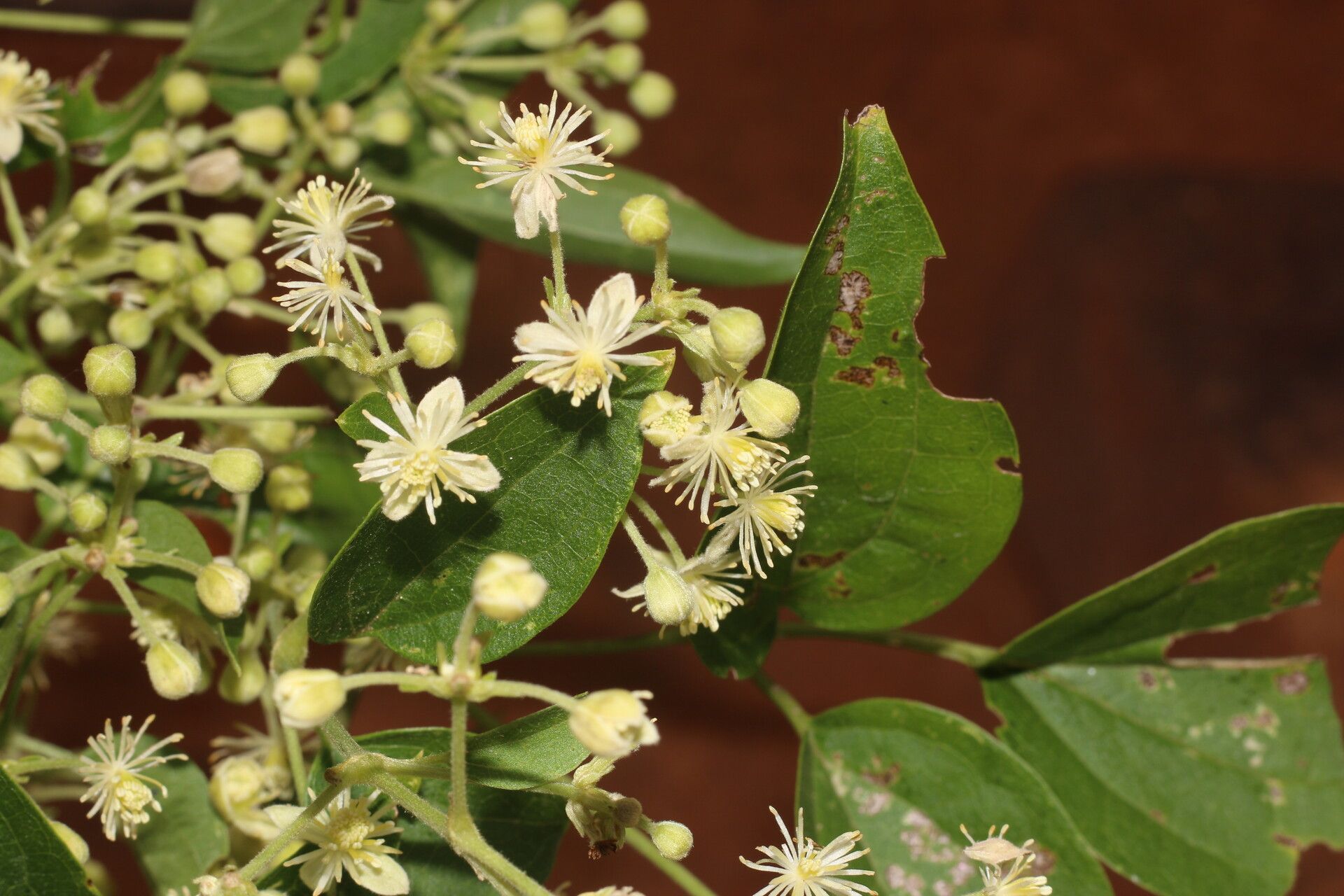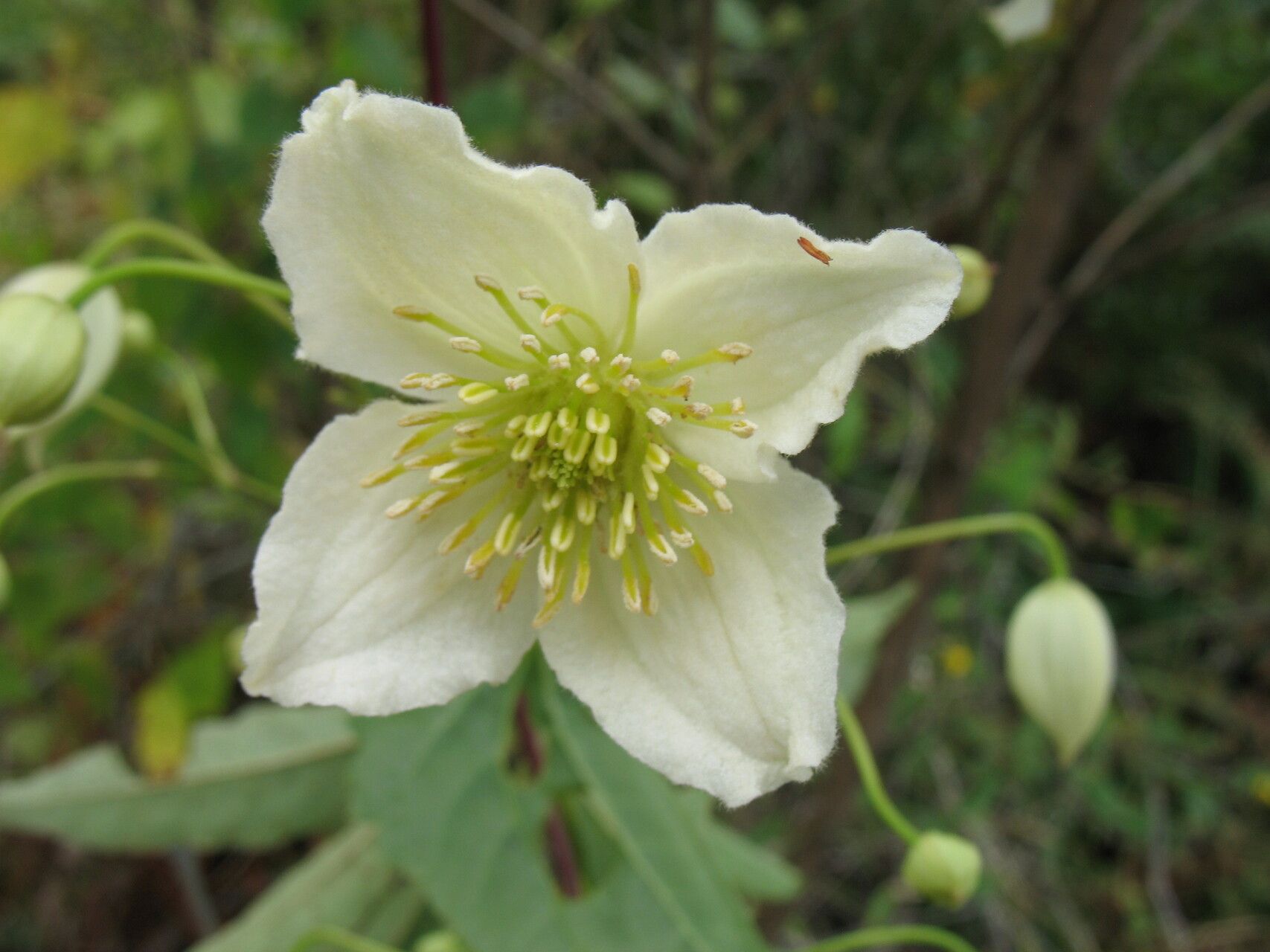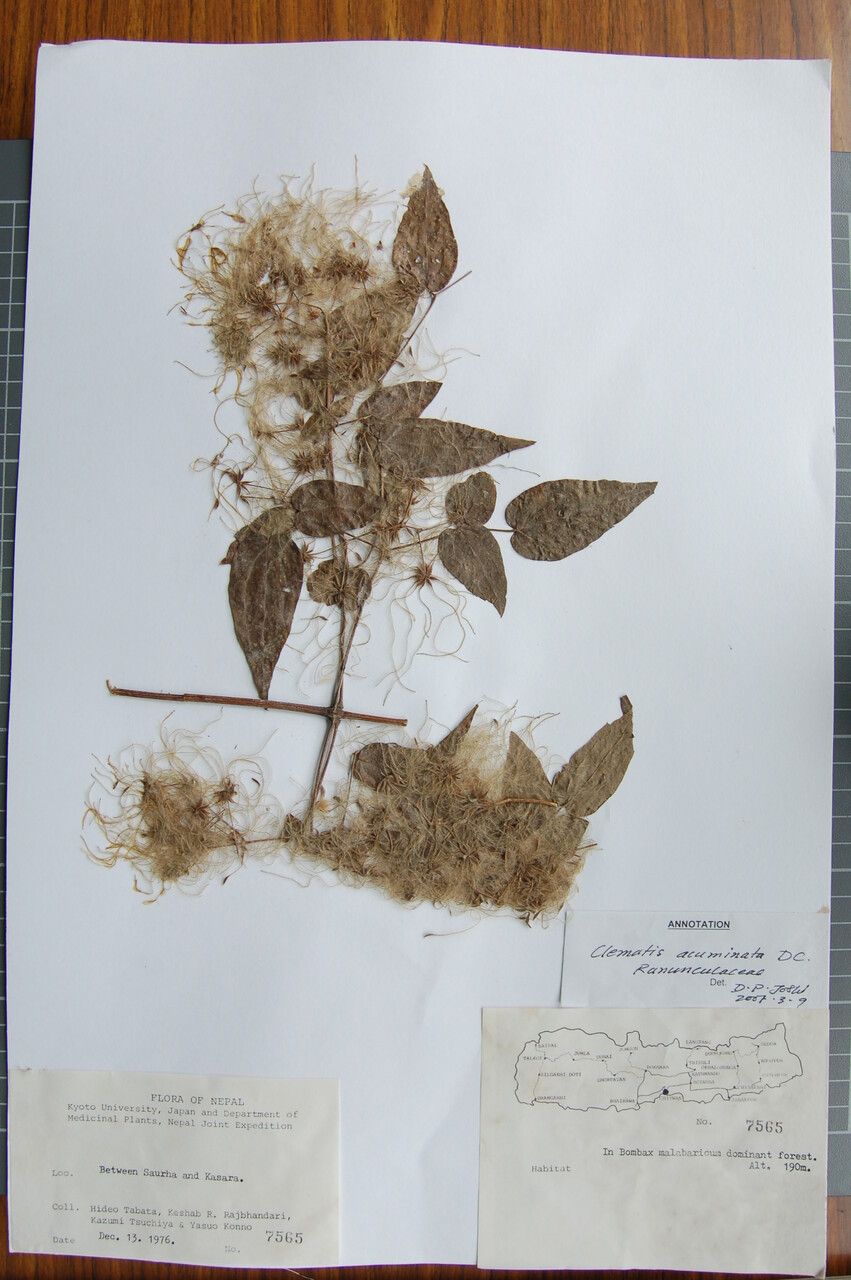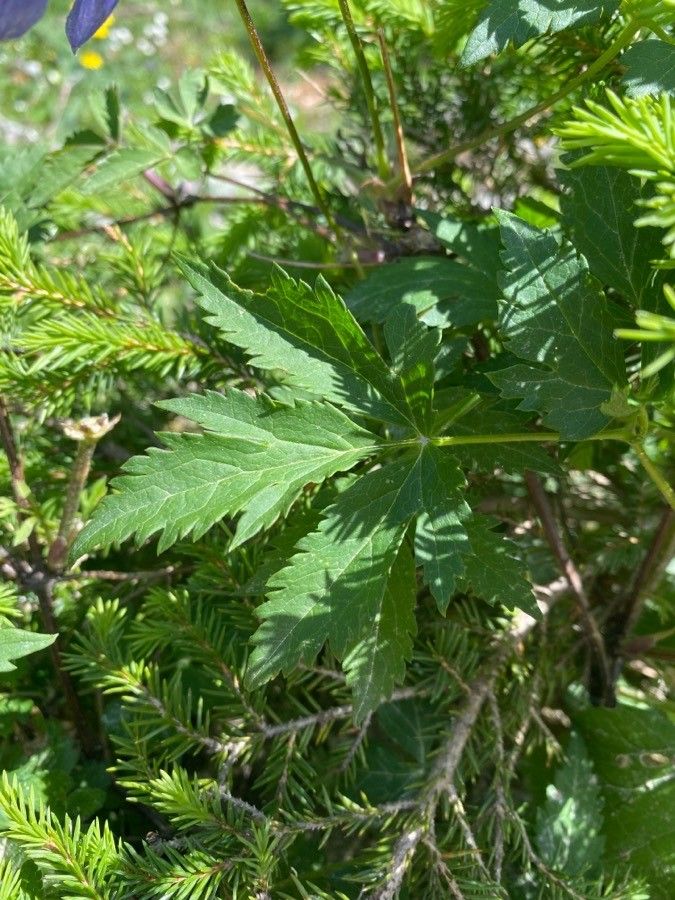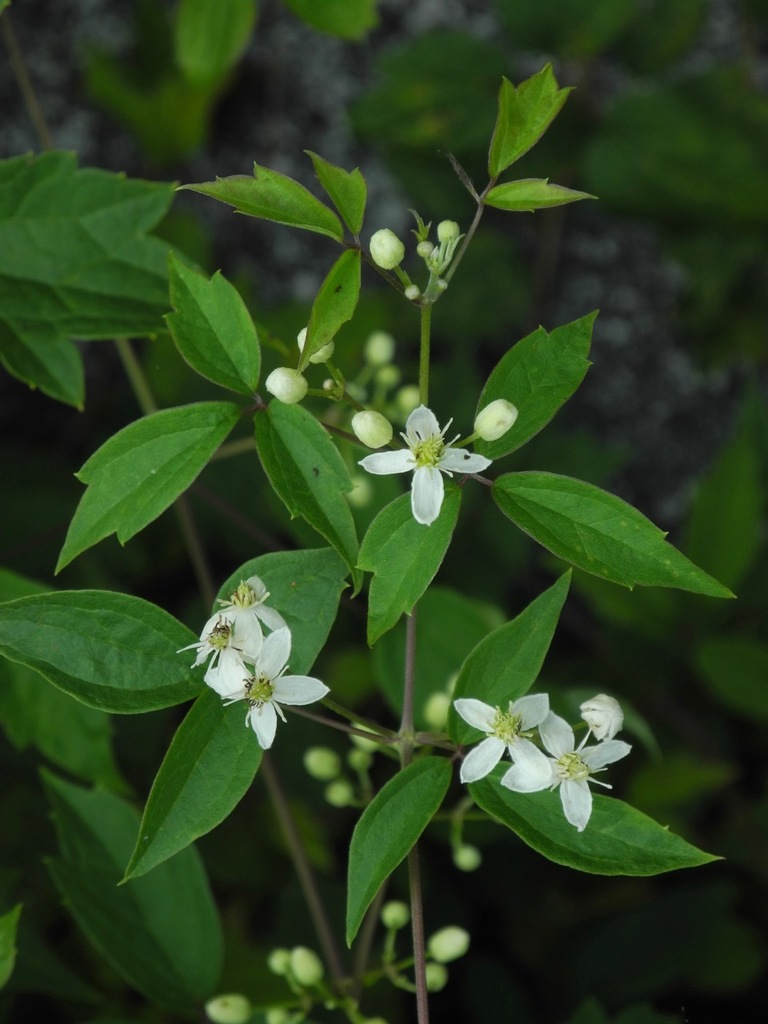
Clematis virginiana (also known as devil's darning needles, devil's hair, love vine, traveller's joy, virgin's bower, Virginia virgin's bower, wild hops, and woodbine; syn. Clematis virginiana L. var. missouriensis (Rydb.) Palmer & Steyermark ) is a vine of the Ranunculaceae (buttercup family) native to North America from Newfoundland to southern Manitoba down to the Gulf of Mexico. The rationale for some of the common names is unclear, as they include examples normally applied to unrelated plants, including twining parasites (e.g. "devil's hair" for Cuscuta). The name "Love Vine" also is applied to alleged aphrodisiacs, such as Caribbean species of Cassytha, which are unrelated to Clematis, not being in the family Ranunculaceae.
Devil's Darning Needles, also known as Devil's Hair, is a fast-growing vine known for its ability to climb by twisting its stems. It produces white flowers and emits a strong aroma. In European and American cultures, people have had mixed feelings about these twining plants, with some even believing they were sent by the devil himself. This belief is how the plant earned its ominous names: Devil's Darning Needles and Devil's Hair.
Virgin's bower is fairly disease-resistant and usually not prone to illness. Nevertheless, it can be affected by pests and diseases present in its surroundings. Such infections tend to be mild. The plant needs moderate care. Regular pruning is needed to keep it looking good and to support healthy growth. Fertilizing can also help encourage flowering. Virgin's bower is a good choice for anyone with outdoor space, like a garden or patio, and does not demand extensive gardening experience. It may need more attention when grown indoors.
How to keep Clematis Virginiana.
Light
Virgin's bower does best when it gets a high level of light throughout the day. It can tolerate conditions where light levels fluctuate, enabling healthy growth. Native to brightly lit habitats, this plant's growth can become stunted or weak with insufficient light, while too much light can stress it and may cause damage.
Water
Devil's darning needles thrive best in evenly moist soil and need to be watered weekly. Although they can tolerate moderate drought, higher humidity significantly boosts their growth. Typically grown outdoors, this climbing plant benefits greatly from rainwater during its active season, mirroring the conditions of its native habitat along moist stream banks.
Temperature
The natural growing conditions for virgin's bower require temperatures of 10 to 25 ℃ (50 to 77 ℉). It can, however, tolerate temperatures from 0 to 35 ℃ (32 to 95 ℉). In summer, it is advisable to keep the plant in a cooler spot, with temperatures between 20 and 25 ℃ (68 to 77 ℉). In winter the plant can withstand temperatures as low as 0 ℃ (32 ℉), provided it is protected from frost.
Fertilizer
One application of fertilizer in spring is generally adequate for Virgin's bower, though repeated feedings can maximize growth. Feed every one to one and a half months. Fertilization improves the leaves' appearance and function, encouraging even color and a healthy texture. It also promotes root development and nutrient uptake for long-term plant health.
Pruning
Devil's darning needles exhibit vigorous growth and striking flowers, which can be enhanced through early spring pruning. To improve the plant's health and flowering, remove dead or weak stems and ensure proper airflow. This practice not only enhances the plant's aesthetics but also controls its growth and promotes abundant blooms, aligning with the growth cycle of devil's darning needles.
Botanical profile.
- Plant Type
- Vine, Herb
- Life Cycle
- Perennial
- Genus
- Clematis
- Family
- Ranunculaceae
- Hardiness Zone
- 3-9
- Mature Height
- 3.05 m to 6.1 m
- Mature Spread
- 0.91 m to 1.83 m
- Leaf Color
- Green
- Leaf Type
- Deciduous
- Flower Color
- White
- Flower Size
- 5.08 cm
- Bloom Time
- Early summer, Mid summer
- Planting Time
- Spring
- Harvest Time
- Mid summer
Other names.
Reader questions.
How should I water my Devil's darning needles?
To ensure the well-being of Devil's darning needles when watering, it is best to use filtered water at room temperature. Tap water may contain harmful particles, so filtering is important. The water should be at room temperature or slightly warmer because the plant thrives in warm environments and cold water can be a shock. It is recommended to avoid overhead watering, as it can cause foliage problems. Instead, water the plant by applying filtered room temperature water directly to the soil until it is fully soaked. This benefits the plant by moisturizing the roots and facilitating their spread to collect necessary nutrients.
Why should I put fertilizer on my Devil's darning needles?
The main structure of the Devil's darning needles consists of its leaves. Fertilization is an impactful way to make sure these leaves look great and serve their purpose effectively. Proper fertilization helps maintain consistent leaf color and a healthy texture. It also supports root development, enabling the plant to generate new roots and maintain existing ones. By fertilizing, you not only keep your plant healthy in the present but also improve its ability to absorb nutrients from the soil in the future.
What are the sunlight requirements for Devil's darning needles?
Devil's darning needles requires full sun, defined as above 6 hours of sunlight daily, to thrive optimally. It can also survive in partial sun, which is about 3-6 hours of sunlight each day. It's important to watch how sunlight moves through your garden to find spots that offer a balance of light and shade, catering to the plant’s needs and ensuring its happiness.
What are the ideal growing conditions for Devil's darning needles?
Devil's darning needles thrive in temperatures ranging from 10 to 25°C (50 to 77°F), though they can tolerate a wider range from 0 to 35°C (32 to 95°F). During the warmer months, it's beneficial to relocate the plant to cooler areas where temperatures are between 20 to 25°C (68 to 77°F). In contrast, during winter, they can endure temperatures as low as 0°C (32°F) without the need for special frost protection. Nonetheless, in extremely cold winters where temperatures drop below its tolerance threshold, protective measures like wrapping the trunk and branches with non-woven fabrics are recommended. Additionally, watering the plant generously before the first freeze of autumn helps maintain soil moisture and prevents drought and water scarcity during the colder season.
What should I do if I give too much or too little water to my Devil's darning needles?
Both overwatering and underwatering can harm the health of your Devil's darning needles, but overwatering is more common. Too much water can cause wilting, yellowing leaves, and lead to diseases like root rot, mold, and mildew. While underwatering is less likely, it can cause brittle, brown leaves. It's important to spot signs of overwatering early as some diseases may not be fixable if left too long. Reduce watering if you see early signs of overwatering and check the soil's drainage. Replace poor-draining soil with a loose, well-draining potting mix. If underwatering is the issue, water more regularly until signs disappear.
When should I fertilize my Devil's darning needles?
If you grow your Devil's darning needles outdoors, they will start new growth in early spring. This is when you should begin fertilizing. Usually, one application of fertilizer in the spring is enough. But if you want to maximize growth, you can fertilize multiple times throughout the spring and early summer. In that case, feed your Devil's darning needles every month to a month and a half.
How essential is lighting for the growth of Devil's darning needles?
Lighting is crucial for the growth of Devil's darning needles, as it thrives under a high degree of illumination. Originating from environments with ample light, its growth can become stunted or weak under inadequate light conditions. However, excessive light can stress the plant, potentially causing damage. Indoor plants may require artificial lighting for optimal growth, especially in spaces with insufficient natural sunlight. LED lights are popular for providing the specific wavelengths needed, with full sun plants requiring 30-50W/sq ft, partial sun plants 20-30W/sq ft, and full shade plants 10-20W/sq ft of artificial light.
How does Devil's darning needles respond to low temperatures?
Devil's darning needles is known for its cold tolerance, performing optimally when the temperature stays above its minimum growth threshold and kept above its winter tolerance level. However, if temperatures fall below its critical tolerance point, the plant might not exhibit immediate distress during winter. Yet, as spring arrives, the branches may appear brittle and dry, with an absence of new shoots. To remedy this, pruning dead branches that fail to produce new leaves in spring is advisable.
How frequently should I water my Devil's darning needles?
If your Devil's darning needles plant is in a pot, the best way to determine if it needs water is to check the soil with your finger. If the top two to three inches of soil are dry, it's time to water it. If your plant is outdoors in the ground, you can use the same method. When the top few inches of soil have dried out, it's time to water. Typically, during spring and early fall, you'll need to water about once a week using this method. However, during extremely hot weather, you may need to water twice a week or more. It's worth noting that mature Devil's darning needles plants are quite resilient and can tolerate periods of drought.
When is it not a good idea to fertilize my Devil's darning needles?
During the late fall and winter, your Devil's darning needles go into a dormant phase and stop growing. It's important not to fertilize them during this time. In the spring and summer, if you choose to use fertilizer, start reducing the amount as summer approaches because the growth rate slows down. In general, it's not a good idea to fertilize your Devil's darning needles when it's very hot or the soil is very dry. Fertilizing in these conditions can stress the plant and cause it to die early.
What are the common symptoms of light deficiency in Devil's darning needles?
Symptoms of light deficiency in Devil's darning needles include small leaves, leggy or sparse growth, faster leaf drop, slower or no new growth, and lighter-colored new leaves. Insufficient sunlight disrupts the plant's natural growth processes, leading to these visible signs of stress.
What should I do if Devil's darning needles experiences high temperatures?
During summer, it's important to ensure the temperature surrounding Devil's darning needles does not exceed its maximum growth preference. Exceeding this limit can lead to symptoms such as lighter leaf color, dry and withered tips, and increased susceptibility to sunburn. Countermeasures include trimming away sunburnt sections, relocating the plant to a shaded area during peak sun hours, or using a shade cloth for protection. Additionally, maintaining soil moisture by watering in the mornings and evenings can alleviate some of the stress caused by high temperatures.