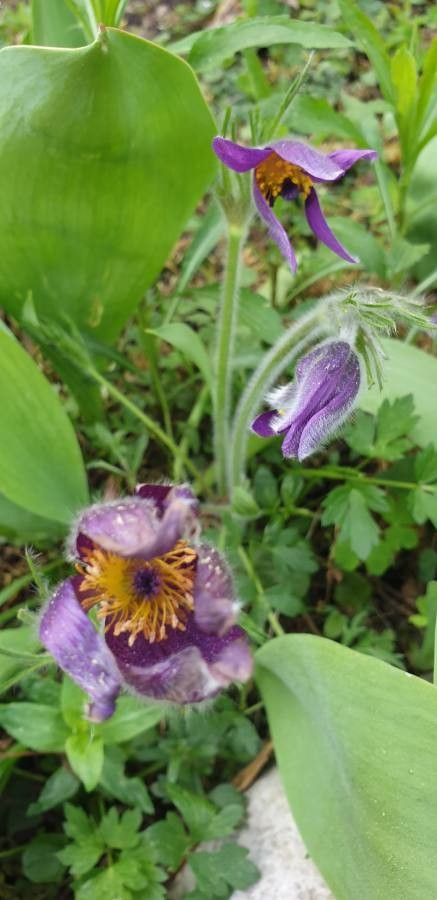
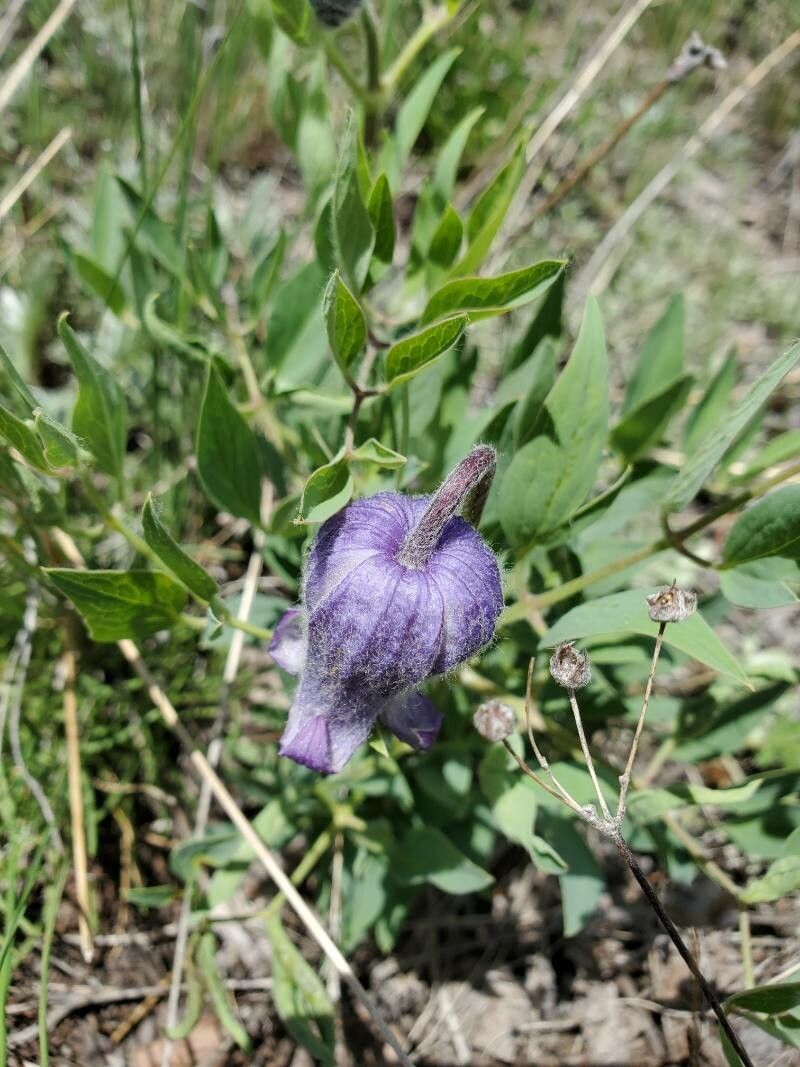
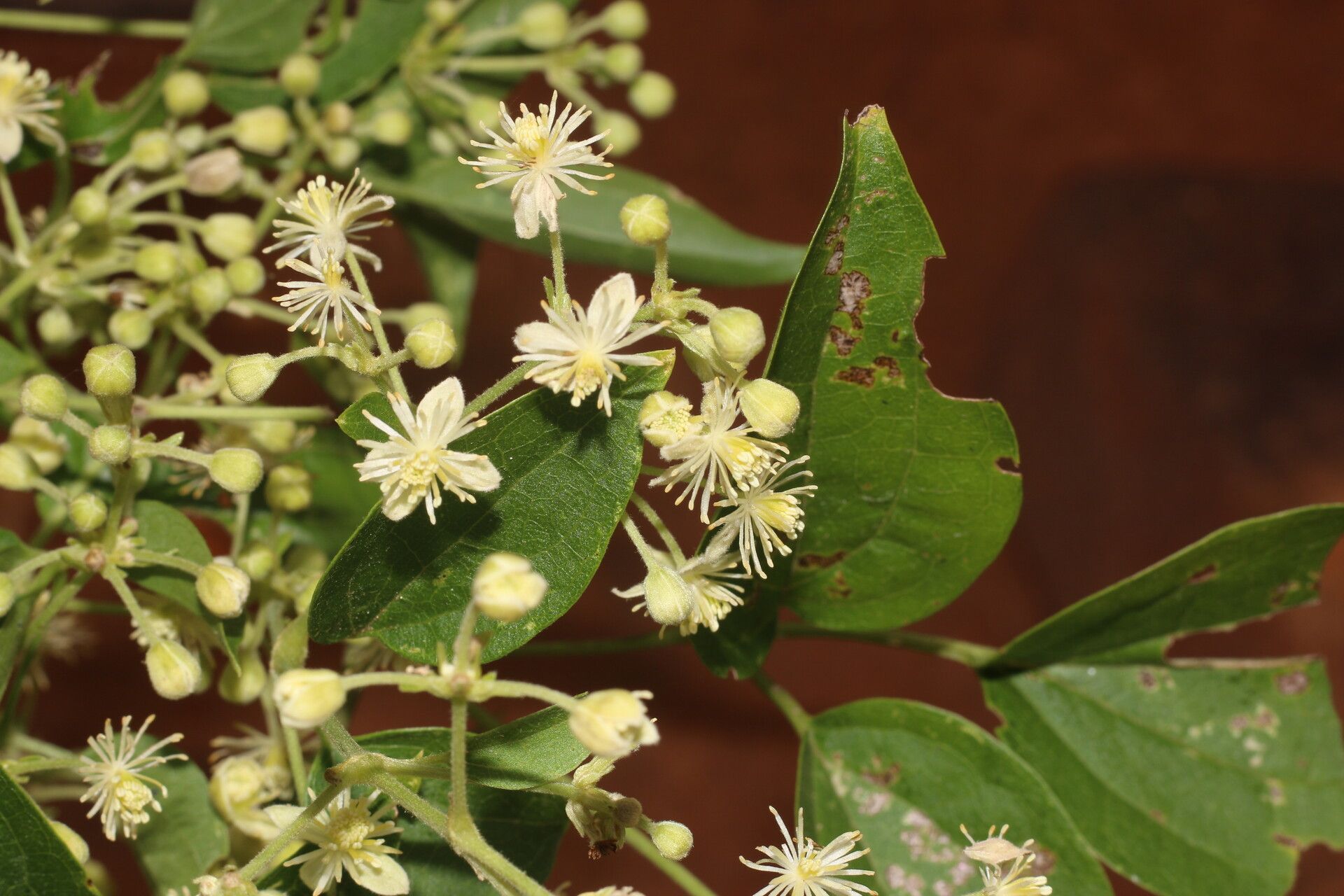
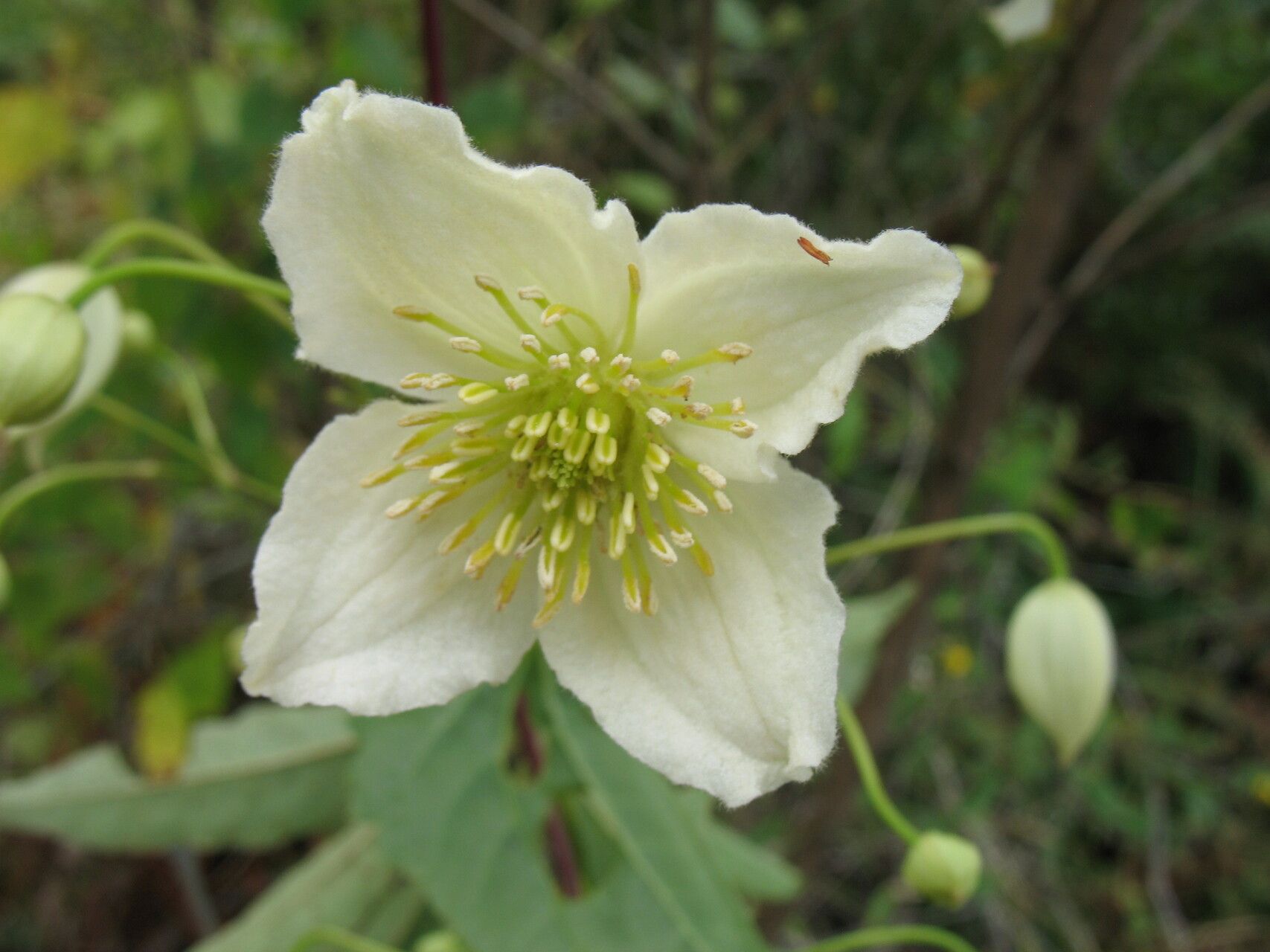
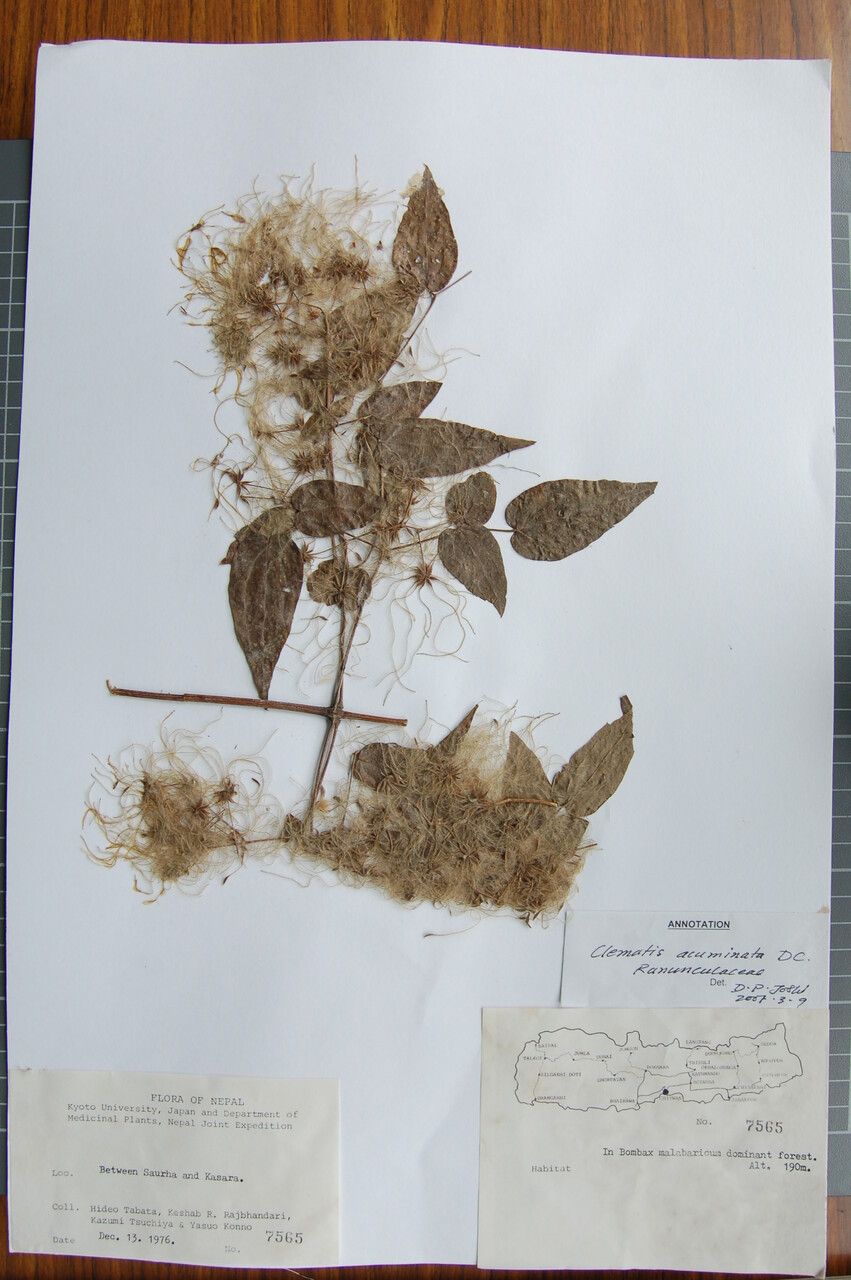
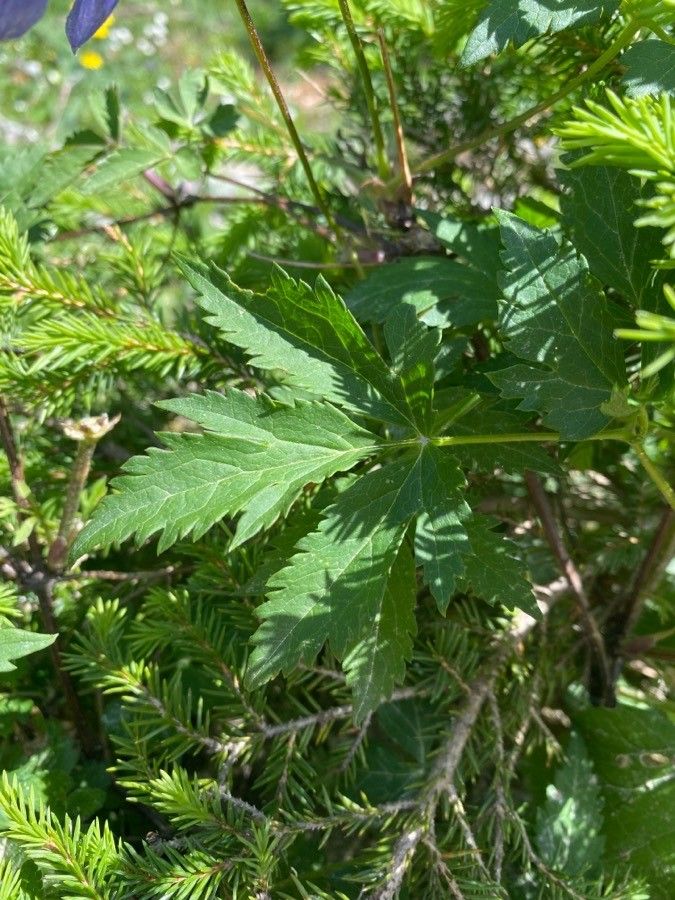
Clematis hirsutissima is a species of flowering plant in the buttercup family known by the common name hairy clematis or vase flower. It is a perennial herb that is native to much of the western United States, from Washington to Nebraska. It is a small, erect plant which, unlike other Clematis, does not generally produce vines. It is quite variable in appearance, especially across varieties. In general the hairy stem reaches up to about half a meter tall and has many large hairy leaves divided into lance-shaped lobes. The inflorescence appears at the tip of the stem and bears a solitary flower. The flower is made up of an urn-shaped cup of deep purple-blue petal like sepals, which are fuzzy and have pointed or rounded tips. Rare individuals have white or pinkish sepals. There are no true petals. The fruit is a hairy achene with a very long beak and a plume on the end; it is dispersed by wind.The plant was thought by some Plains Indians to have healing properties. It grows in grasslands, sagebrush plains, and ponderosa forests.
Hairy clematis is fairly disease-resistant and generally not prone to illnesses. However, it can be affected by pests and diseases present in its environment. These infections are typically not severe. In terms of care, this plant needs moderate maintenance. It should be pruned regularly to maintain an attractive appearance and healthy growth. Fertilizing can also help encourage flowering. Hairy clematis is suitable for anyone with outdoor space, such as a garden or patio, and does not require extensive gardening experience. It may need more attention when grown indoors.
How to keep Clematis Hirsutissima.
Light
Hairy clematis is a sun-preferring perennial herbaceous plant native to open habitats, commonly found in meadows and grasslands. It favors full sun but can also tolerate partial sun.
Water
Hairy clematis displays a moderate tolerance for drought and thrives in well-drained soil. It benefits from occasional deep watering once a week, complementing any natural rainfall. Because it is a deciduous plant, hairy clematis requires less water during its dormant period. This reduction in water needs helps conserve resources before the growing season begins.
Temperature
Hairy clematis can tolerate a broad range of temperatures, though its range may still be constrained by different combinations of moisture and heat. It performs best in warm summer conditions with sufficient rainfall or irrigation. Extended stretches of overcast, wet weather or prolonged high heat raise the risk of Hairy clematis dying. During winter, shielding the plant from severe cold can increase its chances of survival.
Fertilizer
The best time to fertilize a Hairy clematis is in early spring, as it comes out of dormancy and begins active growth. Fertilization supplies essential nutrients for healthy development. While Hairy clematis has relatively low fertilizer requirements, applying fertilizer annually can improve its survival and encourage better, longer-lasting flowers.
Pruning
To maintain healthy and vibrant hairy clematis, it is best to prune the plant before it blooms or between late winter and early spring. During this time, remove any weak branches and selectively prune to encourage better flowering. Avoid excessive pruning during the summer, as it can be detrimental to the plant. Heavy pruning stimulates new growth, so it's recommended to leave some thick branches intact for longer blooming periods. If the weather conditions are unfavorable, wait for a suitable time to prune.
Botanical profile.
- Plant Type
- Herb, Shrub
- Life Cycle
- Perennial
- Genus
- Clematis
- Family
- Ranunculaceae
- Hardiness Zone
- 4-8
- Mature Height
- 15 cm to 61 cm
- Mature Spread
- 30 cm to 46 cm
- Leaf Color
- Green
- Leaf Type
- Deciduous
- Flower Color
- Purple, Blue
- Flower Size
- 2.03 cm to 3.05 cm
- Bloom Time
- Mid spring, Late spring, Early summer
- Planting Time
- Autumn
- Harvest Time
- Mid summer, Late summer, Early fall
Other names.
Reader questions.
What are the sunlight requirements for Hairy Clematis (Clematis hirsutissima)?
Hairy Clematis (Clematis hirsutissima) thrives in various sunlight conditions. For optimal growth, it requires full sun, which means the plant should receive above 6 hours of sunlight daily. However, it can also grow in partial sun, where it gets about 3-6 hours of sunlight. It's important to observe how sunlight moves through your garden throughout the day. Choosing the right spots that offer a balance of light and shade will ensure the happiness and health of your plants.