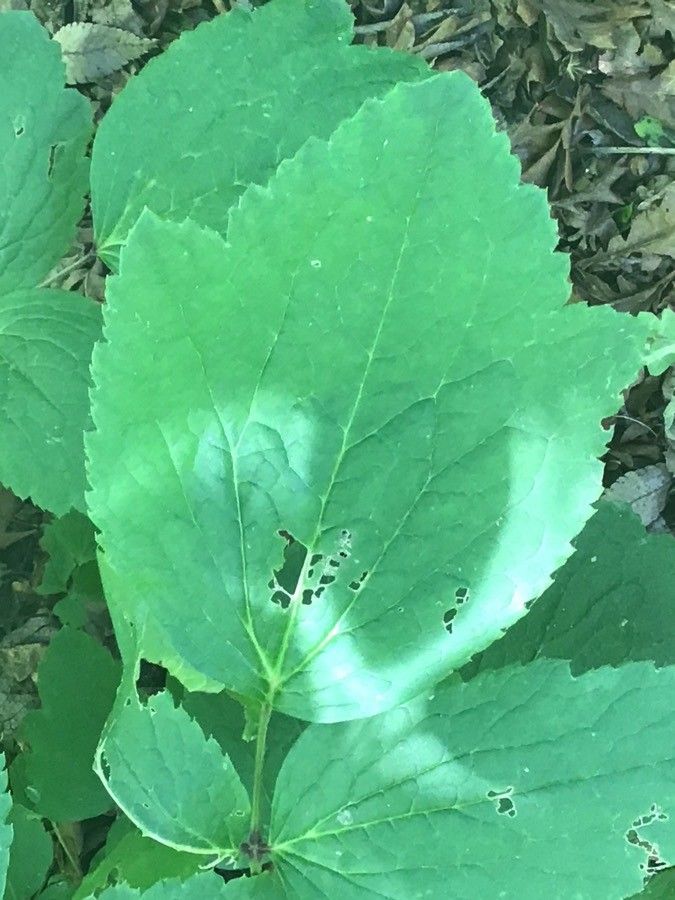
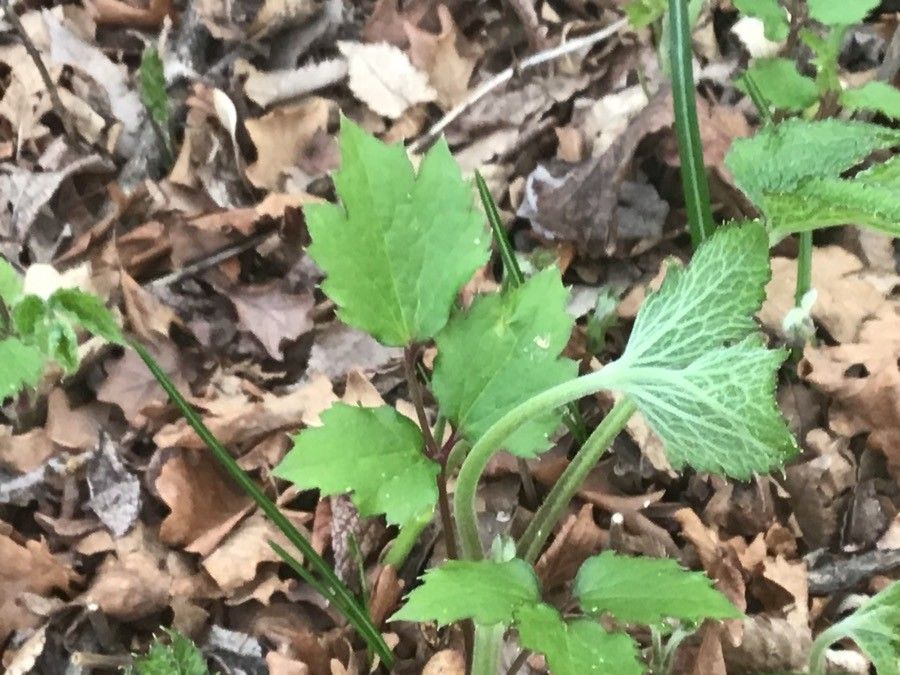
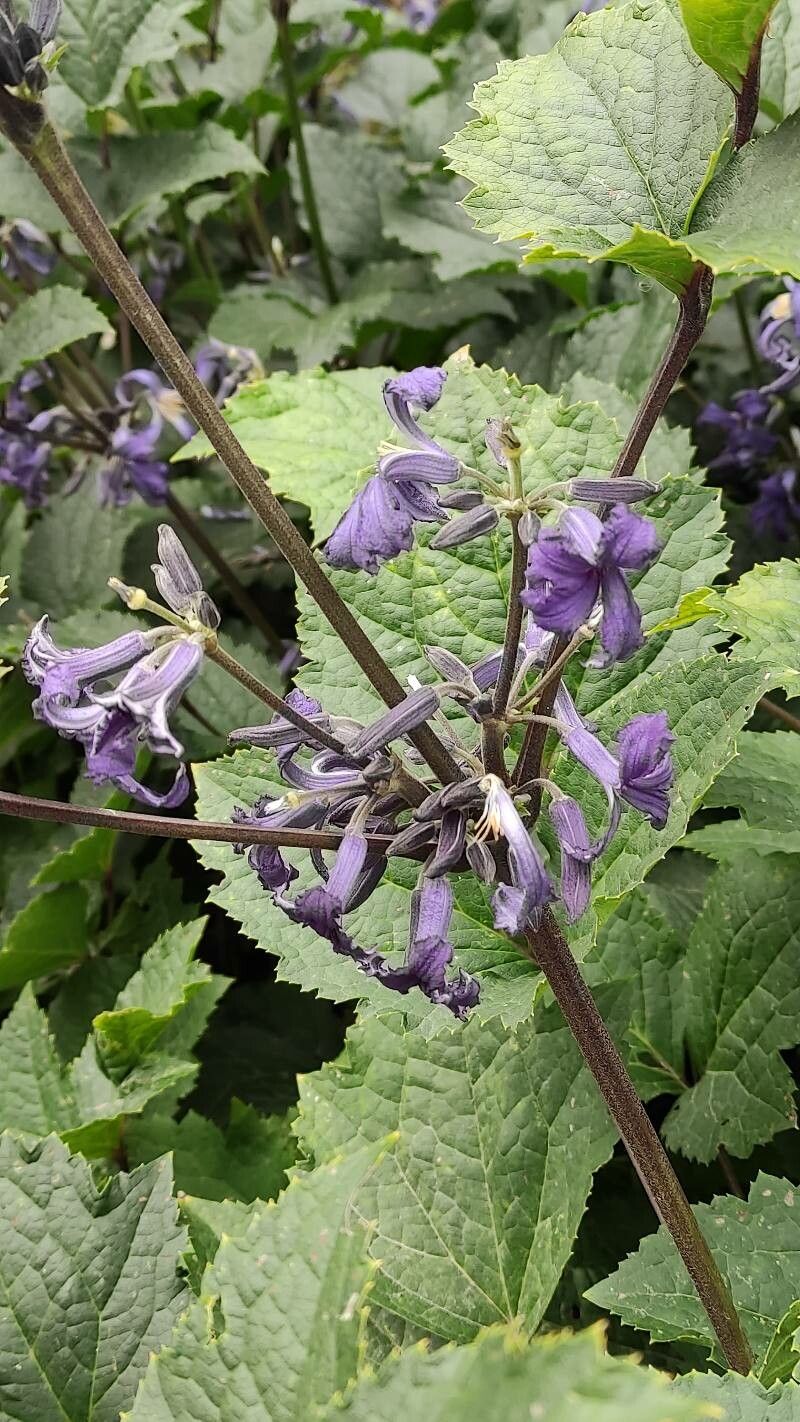
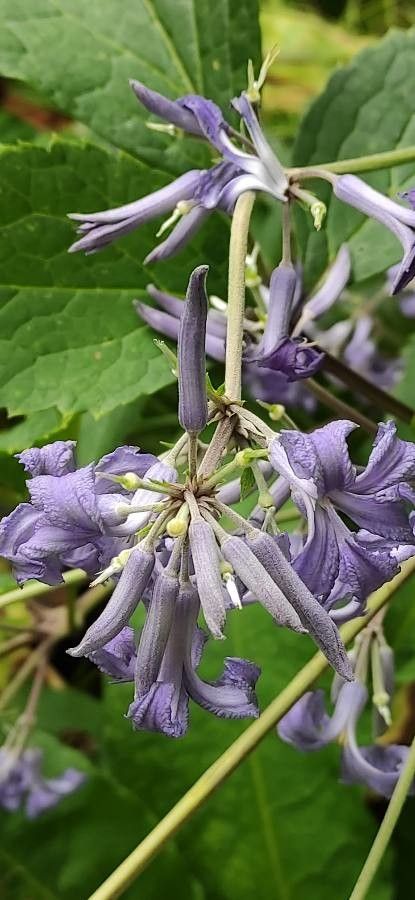
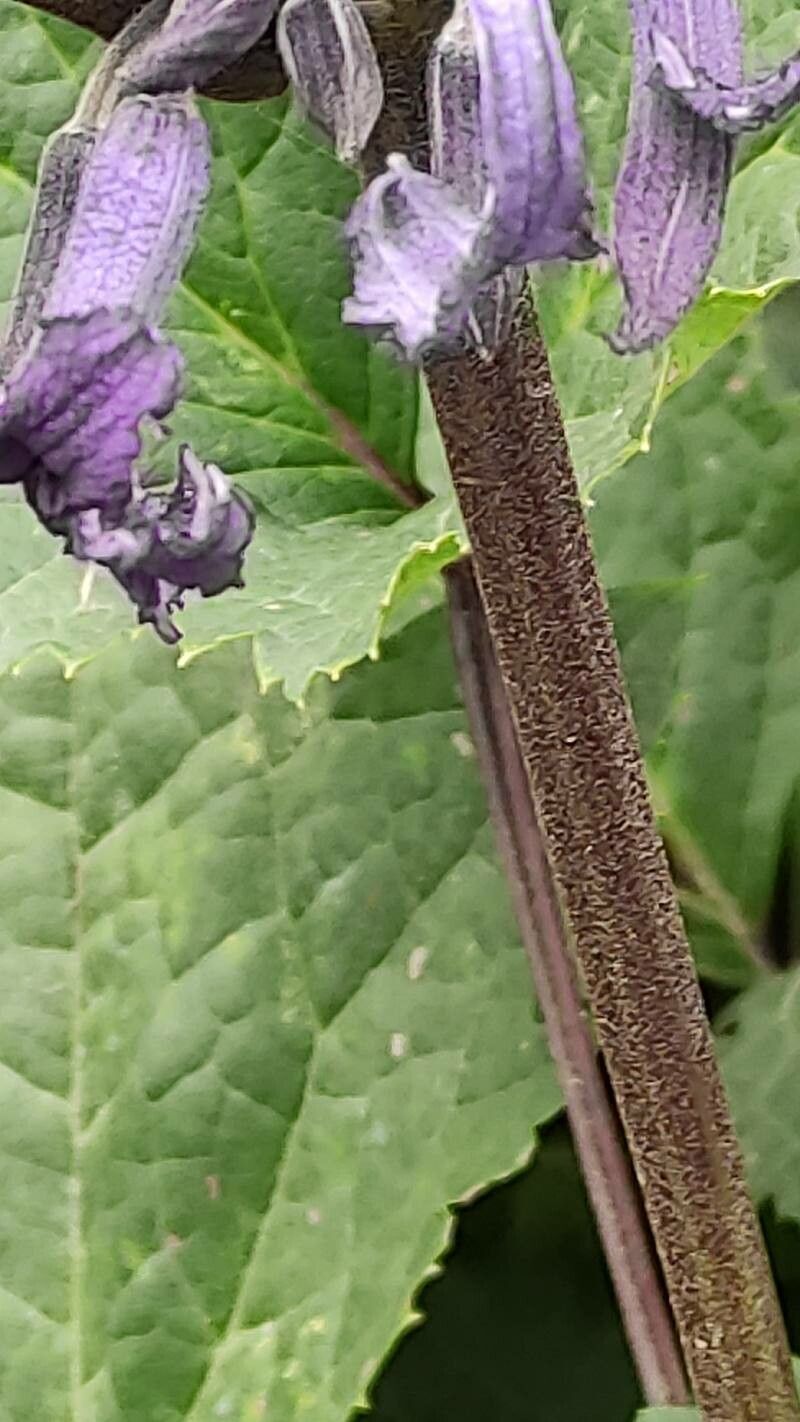
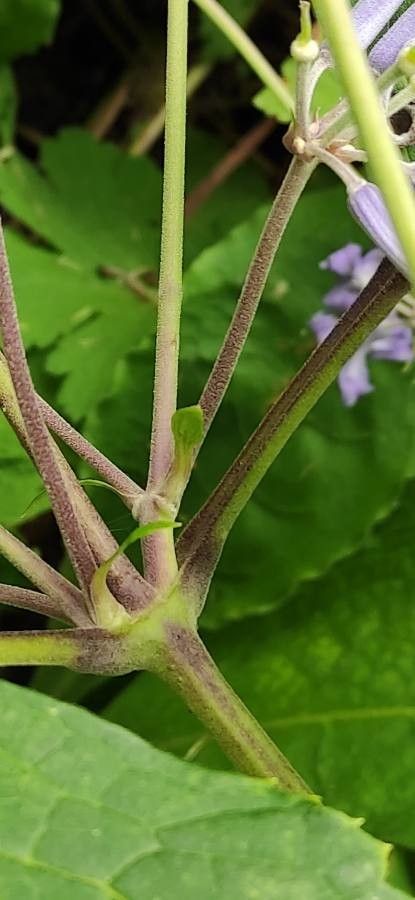
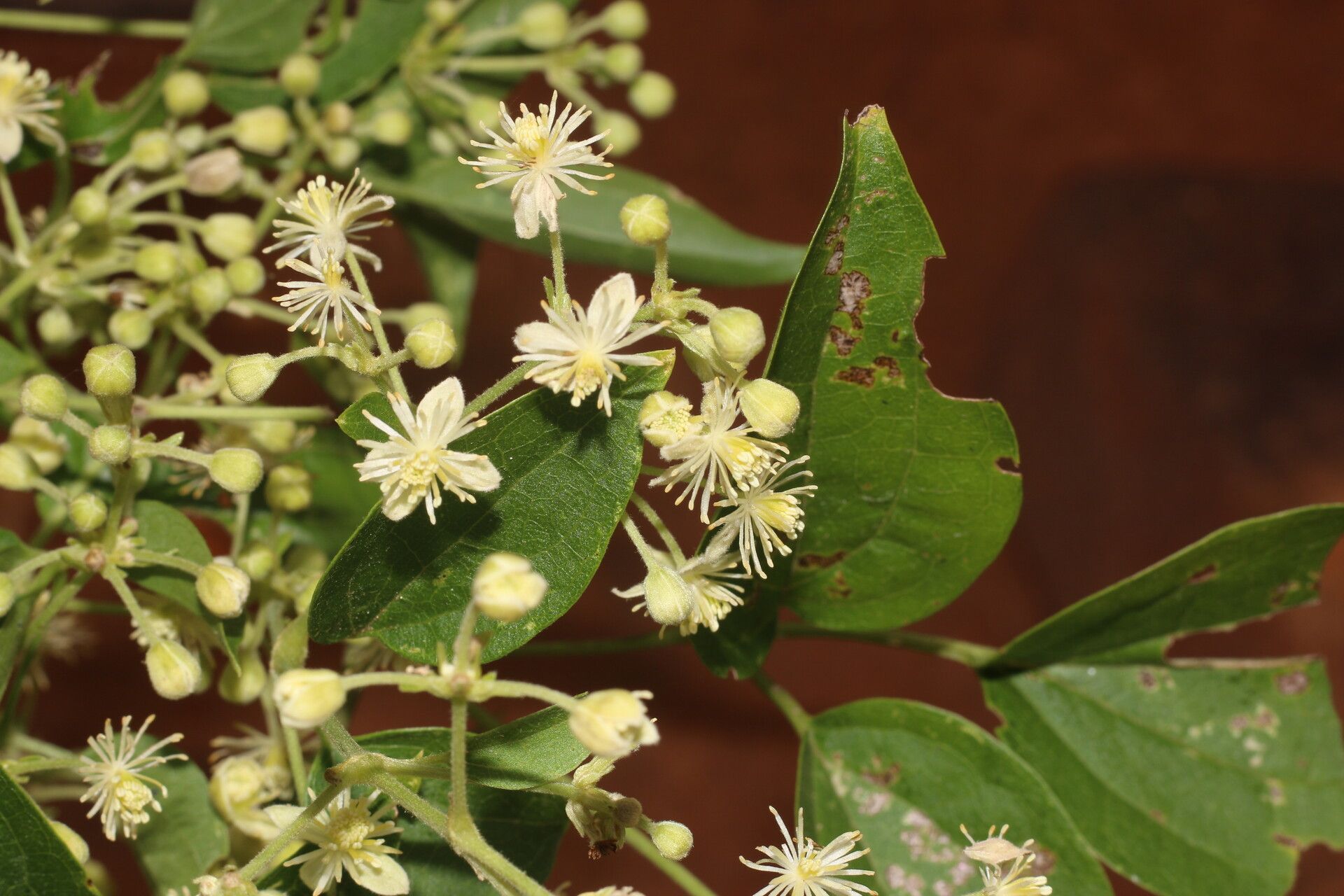
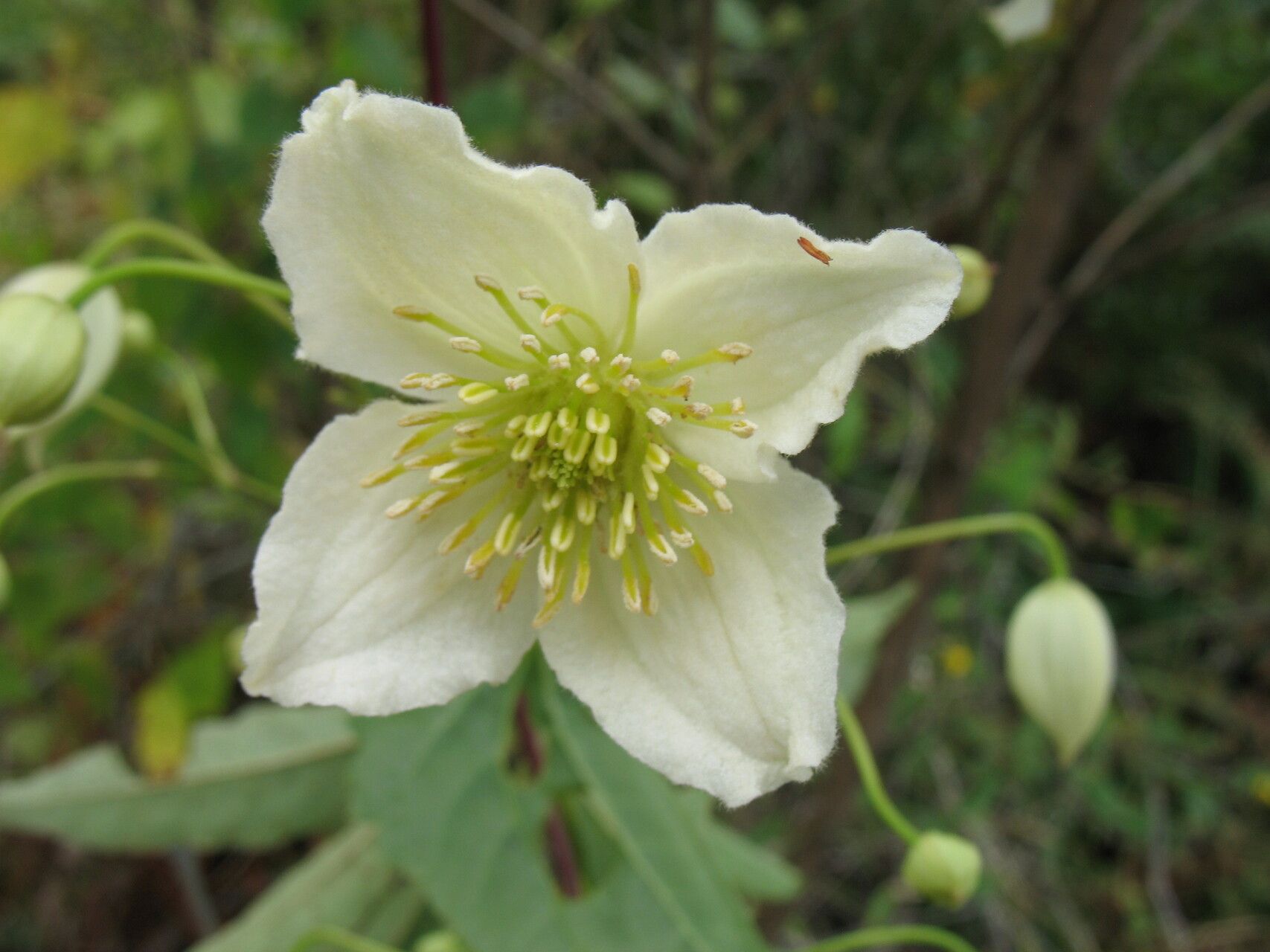
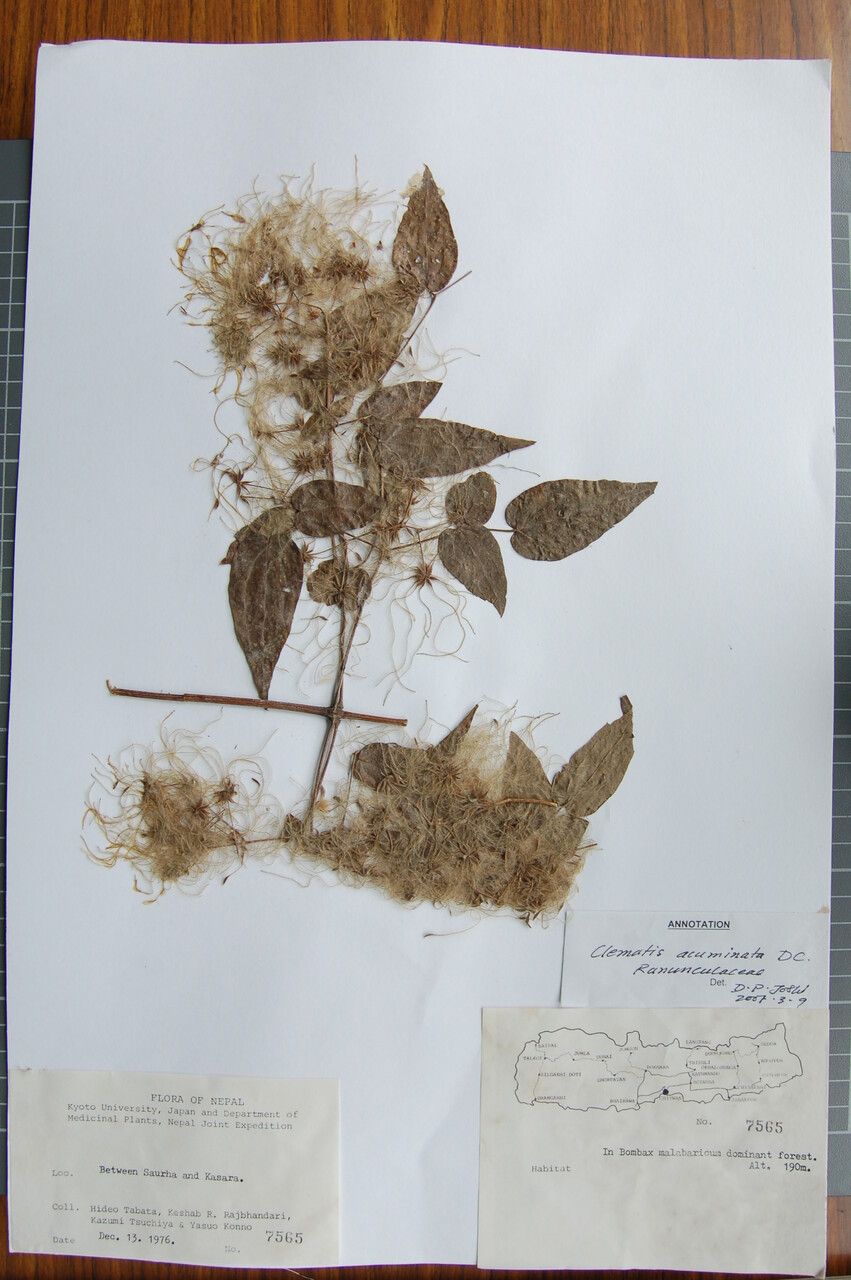
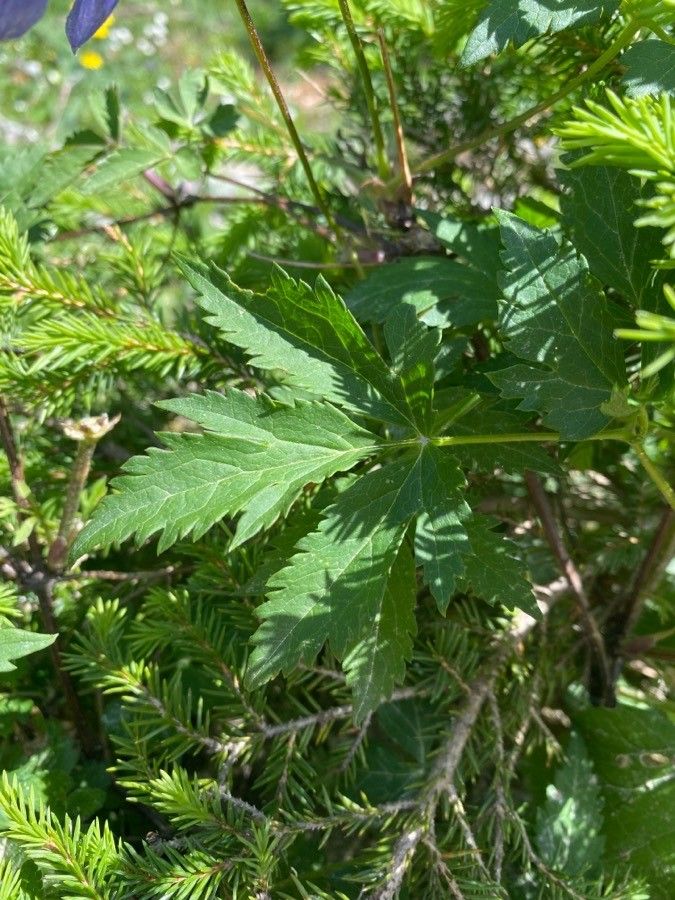
Clematis heracleifolia, the tube clematis (大叶铁线莲 da ye tie xian lian), is a species of flowering plant in the buttercup family Ranunculaceae, native to central and northern China. Unlike most other members of the genus Clematis, it has a scrambling rather than a climbing habit.Growing to 1 m (3.3 ft) tall by up to 50 cm (20 in) broad, it is a deciduous sub-shrub with broad downy leaves in groups of three, and delicate clusters of elongated tubular blue flowers in late spring and summer. Mature blooms recurve (bend backwards) into a trumpet shape. Repeat flowering sometimes occurs in autumn.The Latin specific epithet heracleifolia means "with leaves resembling hogweed" (Heracleum).The cultivar 'Cassandra', with fragrant flowers, has won the Royal Horticultural Society's Award of Garden Merit.
Tube clematis has strong resistance to disease and is typically not susceptible to illnesses. Nevertheless, it can be affected by pests and diseases present in its environment. These infections are generally mild. Regarding care, this plant needs a moderate amount of attention. It should be pruned regularly to keep a good appearance and encourage healthy growth. Applying fertilizer can also encourage flowering. Tube clematis is appropriate for anyone with an outdoor area, such as a garden or patio, and does not demand extensive care experience. It may need more attention if grown indoors.
How to keep Clematis Heracleifolia.
Light
The tube clematis does best with plenty of sunlight, though it can tolerate lower light levels. It naturally occurs in open, sunlit habitats. Extended periods of shade can hinder its growth, while too much sun can cause leaf scorch.
Water
Tube clematis thrives in moderate climates and prefers soil that remains consistently moist. It's best to water it weekly, although it can withstand brief periods of dryness. Applying mulch helps retain soil moisture and regulate temperature, which encourages vigorous growth and abundant blooms. As a perennial herb, tube clematis is commonly grown outdoors.
Temperature
Tube clematis comes from temperate areas and tolerates temperatures from 41 to 95 °F (5 to 35 °C). Since it prefers mild conditions, seasonal adjustments should keep temperatures within this ideal range.
Fertilizer
The best time to fertilize a Tube clematis is in early spring, when it is coming out of dormancy and starting active growth. Fertilization supplies essential nutrients needed for healthy development. Although Tube clematis has fairly low fertilizer requirements, applying fertilizer annually can boost its survival and encourage better, longer-lasting blooms.
Pruning
Tube clematis is known for its unique, hyacinth-like flowers and benefits from annual pruning in early spring. For optimal growth and air circulation, trim back the old stems just above healthy buds. Be sure to use clean, sharp tools for effective pruning, as this helps reduce the risk of disease and improves the overall shape of the plant.
Pot & Repot
Repotting tube clematis every 2-3 years in the spring is important for healthy growth. Use a pot that is 2 inches larger to allow for root expansion. Make sure the pot has good drainage and is filled with a loamy soil mix. After repotting, water the plant sparingly and place it in indirect light. Wait for new growth as a sign of recovery.
Botanical profile.
- Plant Type
- Herb
- Life Cycle
- Perennial
- Genus
- Clematis
- Family
- Ranunculaceae
- Hardiness Zone
- 5-9
- Mature Height
- 61 cm to 91 cm
- Mature Spread
- 61 cm
- Leaf Color
- Green
- Leaf Type
- Deciduous
- Flower Color
- Lavender
- Flower Size
- 2.54 cm
- Bloom Time
- Mid summer, Late summer, Early fall
- Planting Time
- Spring, Summer
- Harvest Time
- Mid fall, Late fall
- Native Area
- Koppen, Japan, South Korea, China
Other names.
Reader questions.
How should I water my Tube clematis?
To properly water the Tube clematis plant, it is best to use filtered water at room temperature. Tap water may contain harmful particles that can affect the plant's health. Since the Tube clematis originates from a warm environment, it is important to avoid using cold water, as it can be a shock to the plant. Additionally, it is advised to refrain from overhead watering, as it can lead to issues with the foliage. Instead, it is recommended to thoroughly soak the soil with filtered room temperature water. This method benefits the plant by moisturizing the roots, facilitating their spread through the soil, and aiding in the absorption of essential nutrients.
Why do I have to put fertilizer on my Tube clematis plant?
The structure of the Tube clematis is mainly made up of its leaves. Fertilization is a crucial way to ensure that these leaves are healthy and attractive. Proper fertilization promotes consistent color and a strong texture in the leaves. Additionally, fertilization benefits the plant below the surface by encouraging the growth of new roots and maintaining existing ones. This means that fertilization not only keeps the plant healthy presently but also improves its ability to absorb nutrients from the soil in the future.
What are the sunlight requirements for Tube Clematis?
Tube clematis requires full sun, which means it needs more than 6 hours of sunlight daily, to thrive effectively. However, it can also tolerate partial sun conditions, receiving about 3-6 hours of sunlight. Observing your garden's sunlight patterns is crucial for finding the optimal balance of light and shade that ensures the well-being of your plants.
What is the ideal temperature range for Tube Clematis?
Tube Clematis, botanically known as Clematis heracleifolia, is native to temperate regions and thrives in temperatures between 41 to 95°F (5 to 35°C). It prefers a mild environment and has strong cold resistance, meaning it generally doesn't require special frost protection measures during winter. However, for extremely cold winters with temperatures expected to drop below -25°C, protective measures should be taken, such as covering the plant with soil or straw. Additionally, it's beneficial to water the plant abundantly before the first freeze in autumn to ensure the soil remains moist, aiding in drought prevention during the colder months.
What do I do if I give my Tube clematis plant too much or too little water?
Both overwatering and underwatering can harm your Tube clematis, but overwatering is more commonly an issue. Excess water can cause wilting, yellowing, and even diseases like root rot, mold, and mildew that can kill the plant. Underwatering is less common as Tube clematis is tolerant to drought, but it can still happen, resulting in brittle, brown leaves. It's important to recognize the signs of overwatering early as some diseases may not be fixable if ignored. Reduce watering immediately and consider the soil's drainage if overwatering is suspected. If underwatering is the problem, simply water more regularly until the signs improve.
When should I fertilize my Tube clematis?
If you grow your Tube clematis outdoors each year, it will send out new growth in early spring. This is when you should start fertilizing. A single application of fertilizer in the spring will generally be enough for the plant to thrive. However, if you want to encourage even more growth, you can fertilize multiple times throughout the spring and early summer. In this case, you can feed your Tube clematis every month to a month and a half.
How does artificial lighting affect the growth of Tube Clematis indoors?
Artificial lighting plays a significant role in the growth of indoor Tube clematis plants, especially when natural sunlight is inadequate, like during winter or in less sunny spaces. LED lights are recommended because they can be tailored to provide specific light wavelengths needed by plants. Full sun plants require 30-50W/sq ft, partial sun plants need 20-30W/sq ft, and full shade plants should have 10-20W/sq ft of artificial light. The light source should be placed 12-36 inches above the plant and turned on for 8-12 hours per day to mimic the natural daylight cycle.
How can you protect Tube Clematis from low temperatures?
Tube Clematis is cold-tolerant and typically best kept above 5°C. If winter temperatures are expected to fall below -20°C, it is necessary to take precautions against the cold. Should temperatures plunge below -25°C, while there may not be noticeable issues during winter, the plant might face a decline in spring sprouting or not sprout at all. In such cases, remove any parts of the plant in spring that failed to sprout as part of the cold-damage management.
How often do I need to water my Tube clematis?
If your Tube clematis is in a pot, the best way to determine if it needs water is by checking the soil moisture. Stick your finger into the soil and if the top two to three inches are dry, it's time to water it. For outdoor-grown Tube clematis, you can use the same method. If the first few inches of soil are dry, it's time to water. Generally, watering once a week in spring and early fall is sufficient. However, in hot weather, you may need to water it twice a week or more. It's worth noting that mature Tube clematis plants have a good ability to tolerate drought.
When is it a bad idea to add fertilizer to my Tube clematis?
Your Tube clematis goes through a dormant phase in late fall and winter when it doesn't grow. During this time, avoid fertilizing it. In spring and summer, if you choose to fertilize, start reducing the amount as summer approaches because the growth rate slows down. It's not a good idea to fertilize your Tube clematis when the weather is unusually hot or the soil is very dry. Fertilizing during those times can stress the plant and cause it to die early.
What are some common symptoms of inadequate lighting in Tube Clematis?
Tube clematis shows several symptoms when exposed to inadequate lighting, such as smaller new leaves, leggy or sparse growth, faster leaf drop, and either slower or no new growth at all. Leaves may become lighter in color or develop chlorosis, turning yellow due to a breakdown of chlorophyll from insufficient sunlight. Other symptoms include sunscald, leaf curling, wilting, and leaf scorching, all of which indicate either too much or too little light.
What steps should be taken if Tube Clematis is exposed to high temperatures?
Tube Clematis should ideally be kept below 35°C during the summer months. Exceeding this temperature limit, especially going over 38°C, can lead to the leaves becoming lighter in color, curling, being prone to sunburn, and in extreme cases, causing the entire plant to wilt and dry. To protect the plant under such conditions, trim away any sunburned or dried-up sections. Relocating the plant to a spot with shade from the midday and afternoon sun, or using a shade cloth, can also help. Additionally, watering the plant in the morning and the evening will help keep the soil adequately moist, mitigating heat stress.