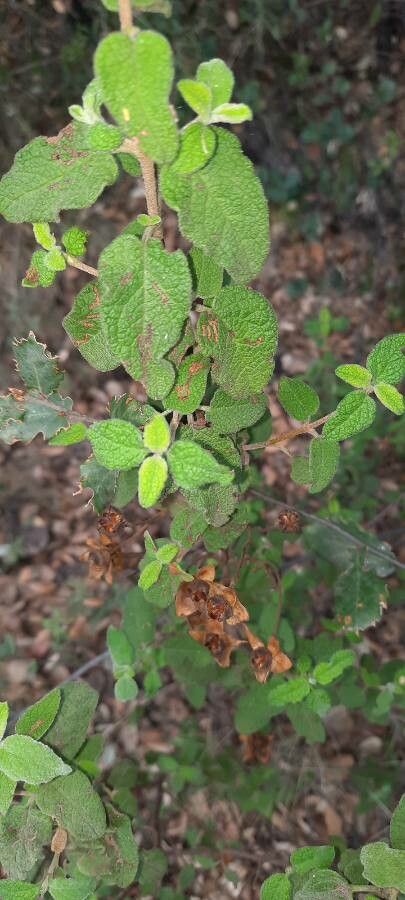
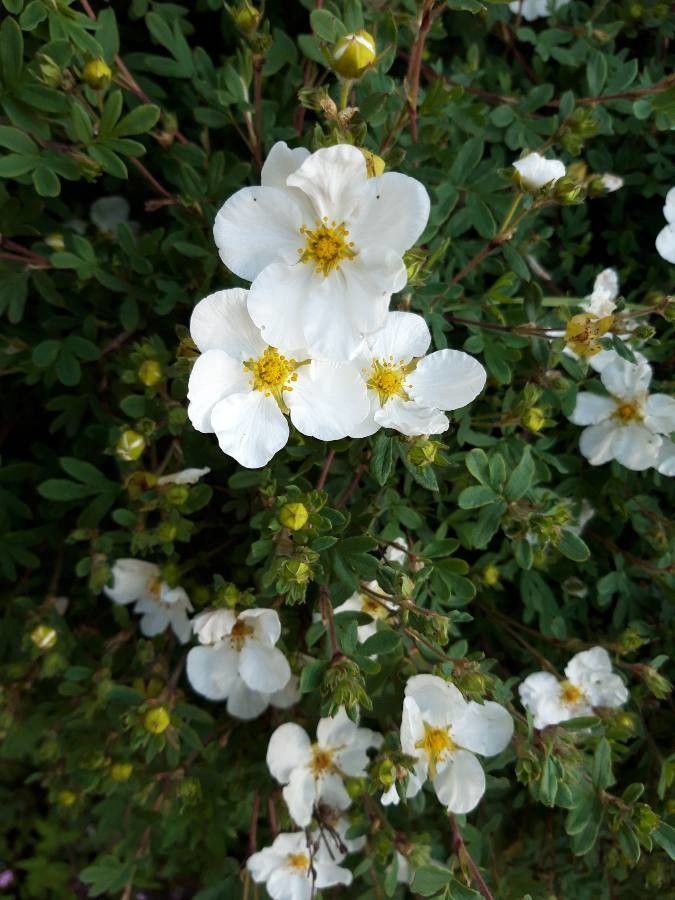
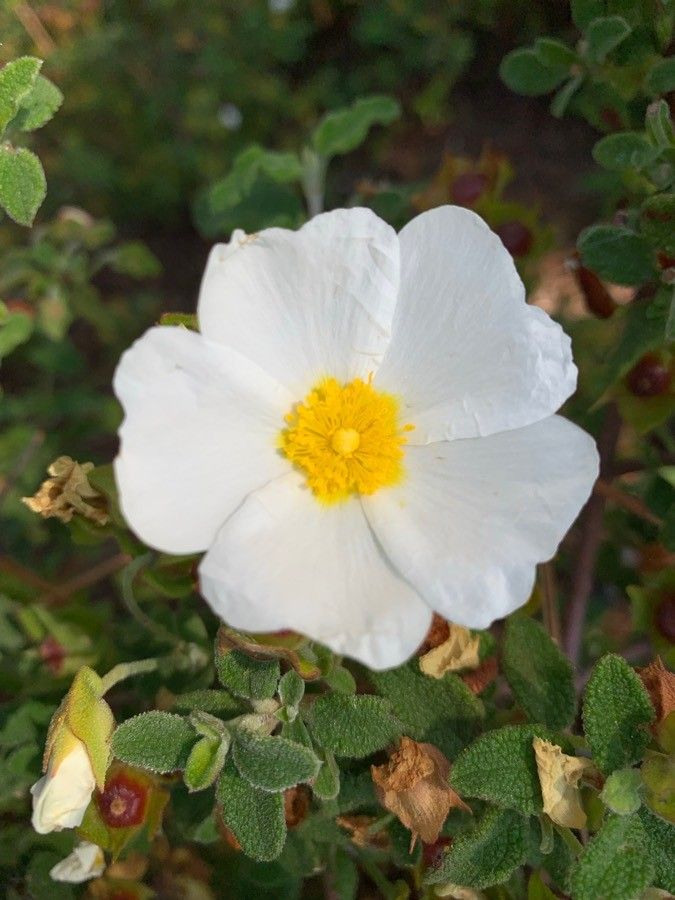
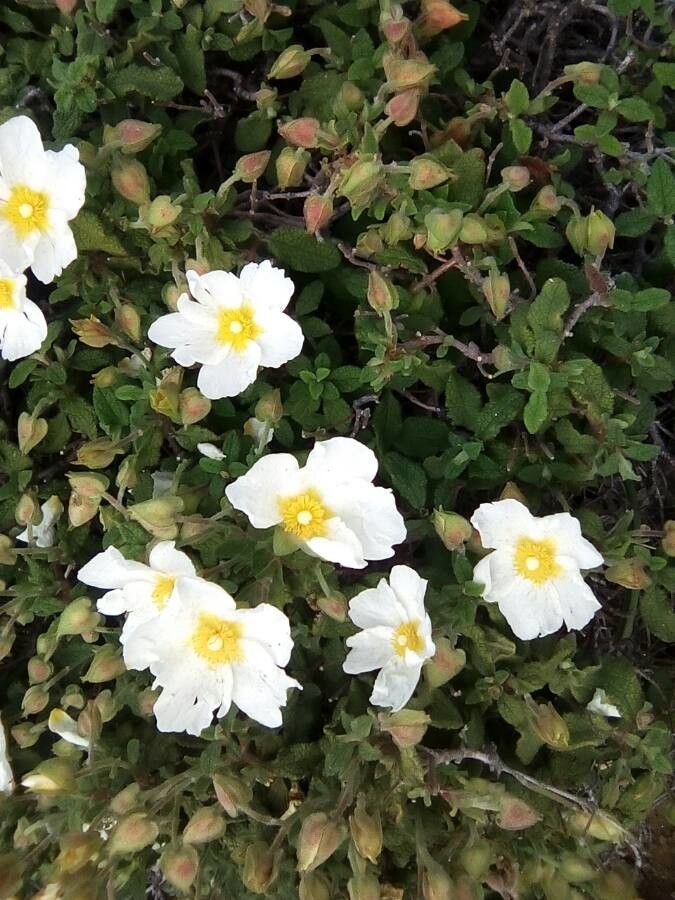
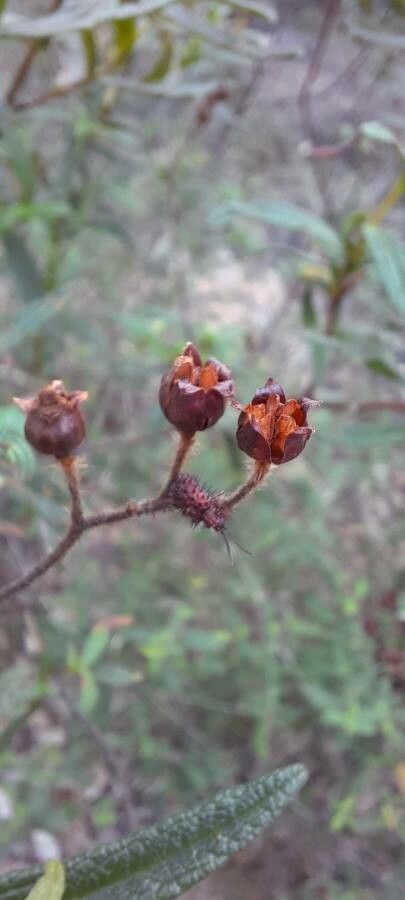
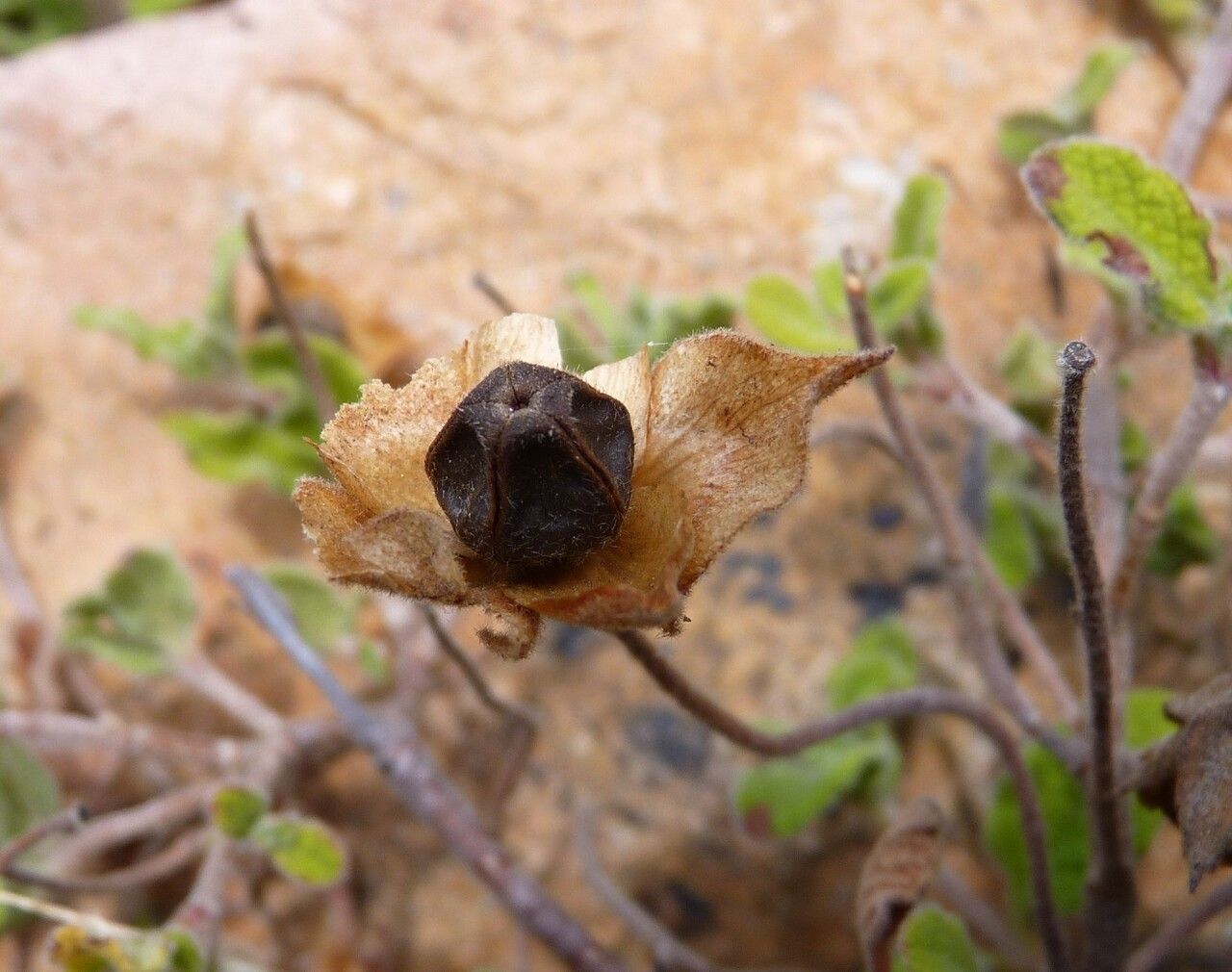
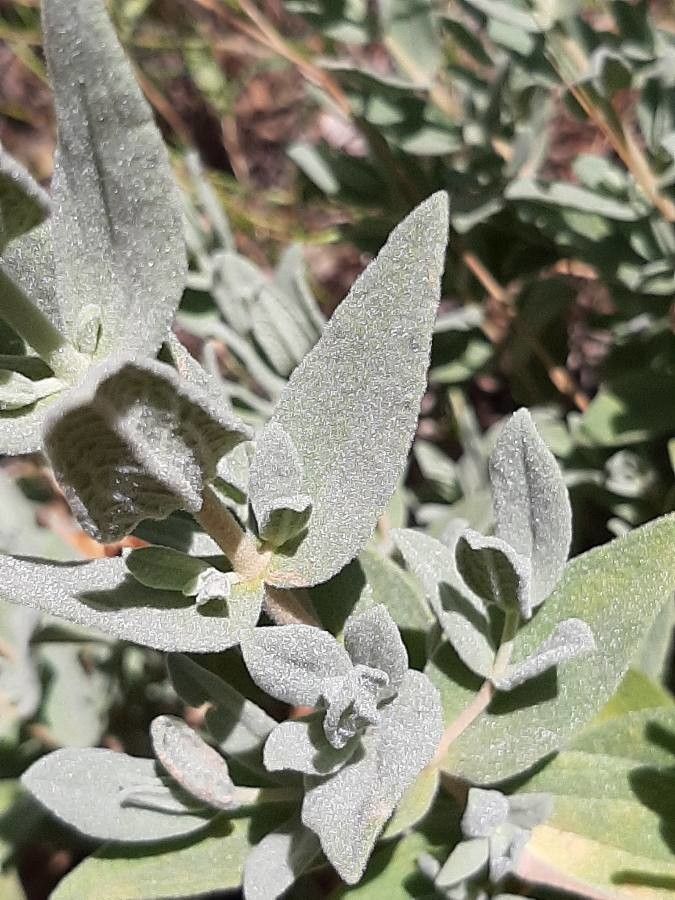
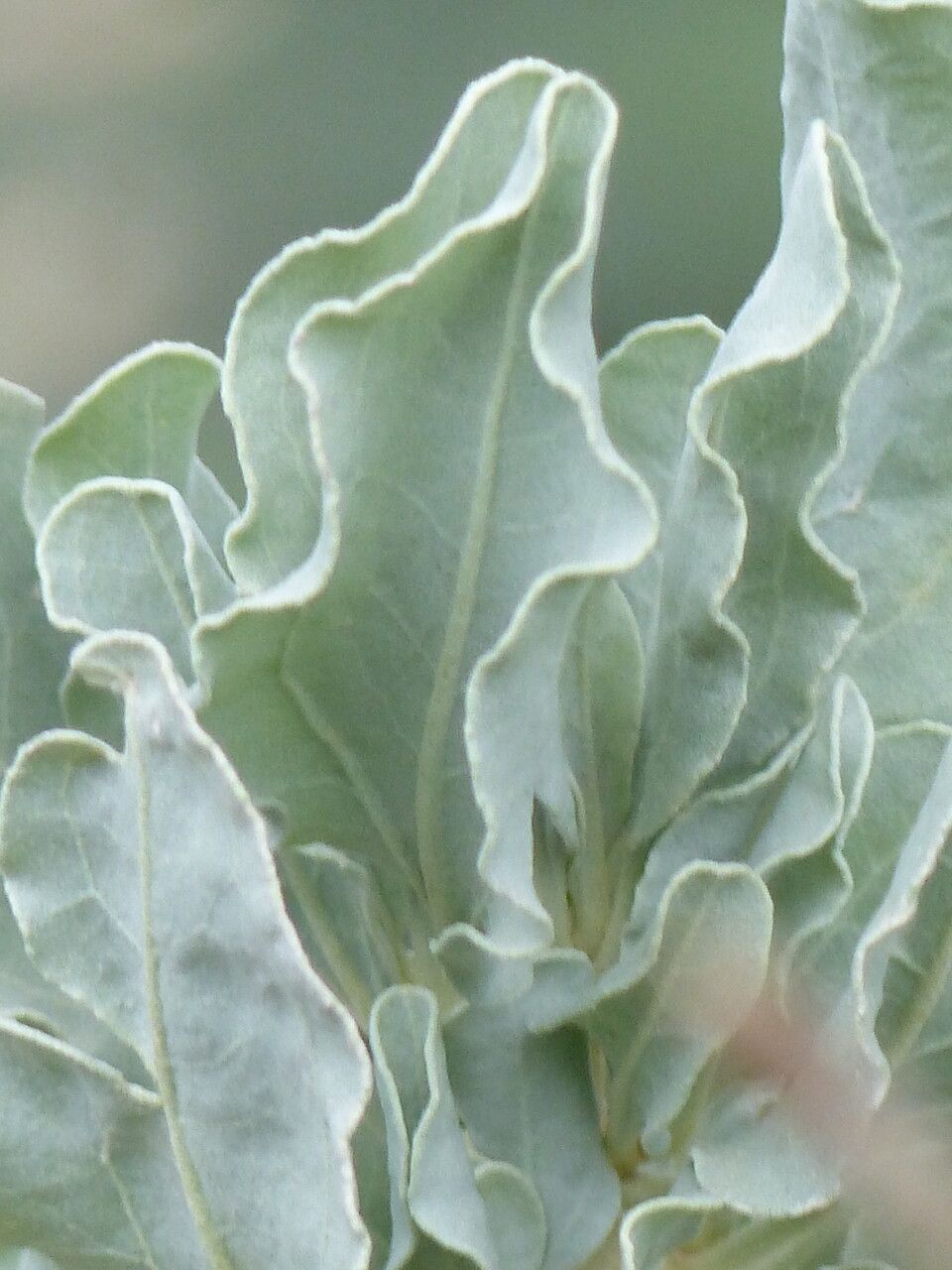
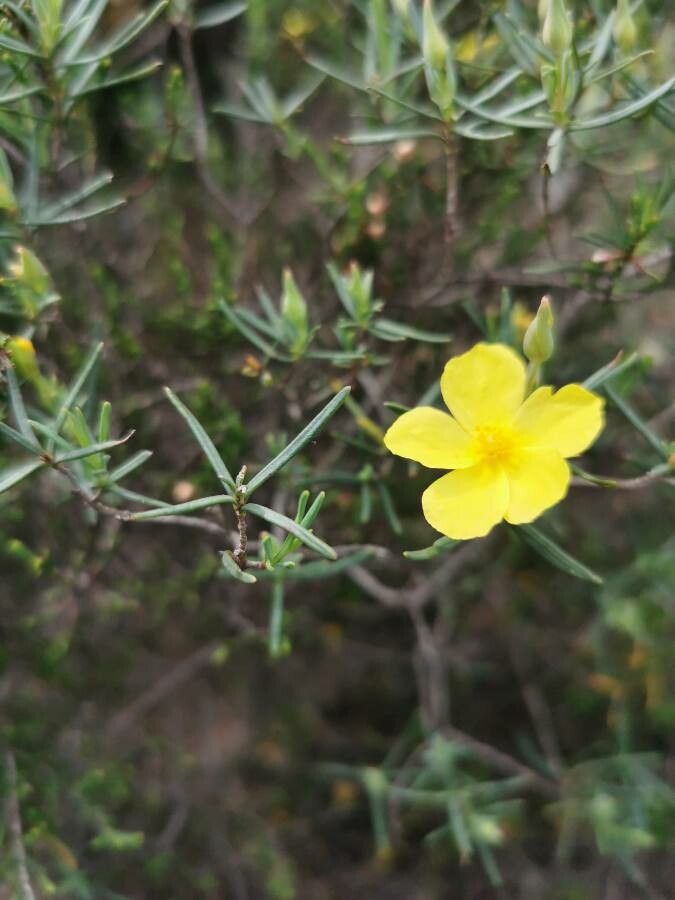
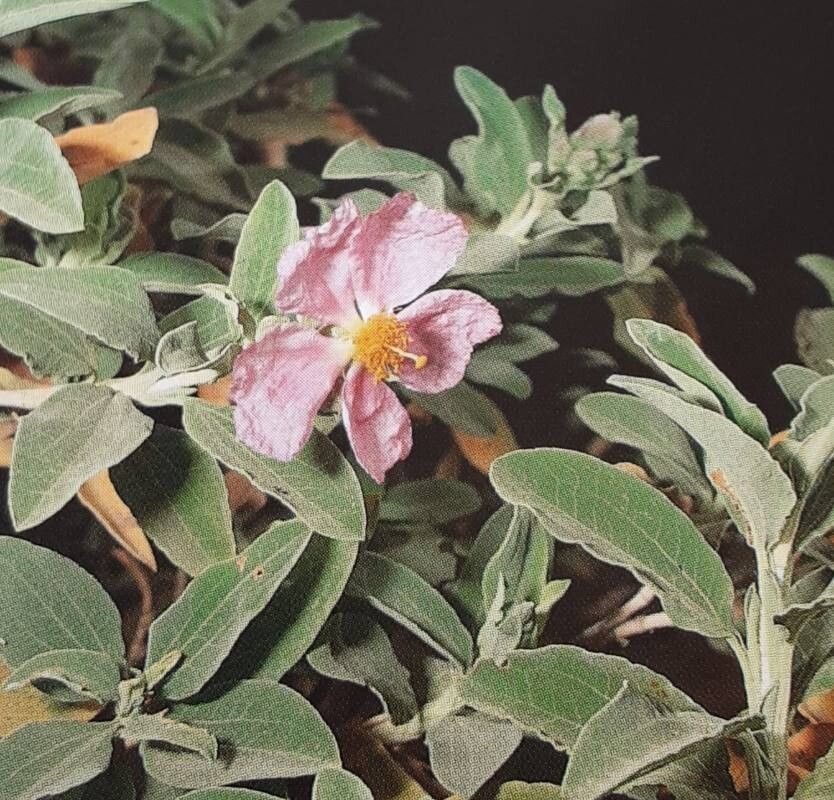
Cistus salviifolius, commonly known as the sage-leaved rock rose, is a small evergreen shrub belonging to the Cistaceae family. Native to the Mediterranean region, it thrives in rocky and dry habitats such as hillsides, cliffs, and scrublands. The plant has a bushy growth habit with woody stems that can reach up to 1 meter in height. The leaves of Cistus salviifolius are small, narrow, and gray-green in color. They are covered with fine hairs that give them a velvety texture. The plant's large, showy flowers have five petals and come in colors ranging from white to pink or purple. Cistus salviifolius blooms from late spring to early summer, attracting bees and other pollinators with its sweet fragrance. While drought-tolerant once established, the plant requires well-draining soil for optimal growth. In traditional medicine, Cistus salviifolius has been used for its antiseptic properties and for treating respiratory ailments such as coughs and colds. Its anti-inflammatory properties also make it useful for treating skin conditions like eczema and psoriasis. Overall, Cistus salviifolius is an attractive ornamental shrub that enhances any garden's beauty while also offering medicinal benefits when used appropriately by trained professionals or under medical supervision.
The sage-leaved rock-rose is well resistant to disease and is generally not susceptible to illnesses. Care-wise, this plant is fairly low-maintenance. When grown outdoors it needs only minimal watering, and larger specimens usually do not need pruning. Smaller plants, however, should be pruned after they have finished blooming. The sage-leaved rock-rose is suitable for anyone with outdoor space, such as a garden or a deck, and does not require extensive care experience.
How to keep Cistus Salviifolius.
Light
The sage-leaved rock-rose does best in spots that get sun for most of the day, which supports optimum growth. Its natural habitat is made up of places that are similarly sun-filled all year. Too much sun seldom threatens it, while too little sunlight can limit development and prevent strong growth.
Water
The sage-leaved rock-rose is a plant native to the Mediterranean region, known for thriving in dry, rocky soils. It requires minimal water, needing only a drink every 2-3 weeks. This evergreen plant prefers full sun and well-draining soil, and is highly drought-resistant, maintaining its lush foliage even in arid climates.
Temperature
The sage-leaved rock-rose originates from temperate regions. It does best at temperatures between 59 and 100.4°F (15 to 38℃). Seasonal temperature adjustments should be made to keep conditions within this range to optimize its growth.
Fertilizer
Proper timing is important for fertilizing Sage-leaved rock-rose. Apply fertilizer in early spring and continue once a month through early summer. Fertilizer promotes attractive blooms and supplies energy during both dormant and active growth periods.
Pruning
The sage-leaved rock-rose is characterized by silver-green leaves and white flowers. To keep it healthy and well-shaped, perform light pruning in late spring. This helps maintain its shape and vigor. Additionally, trim away any dead or diseased wood to encourage new growth. Be sure to use sharp, clean tools, and avoid heavy pruning, as this can cause stress and increase the risk of disease, particularly after the flowering period.
Botanical profile.
- Plant Type
- Shrub
- Life Cycle
- Perennial
- Genus
- Cistus
- Family
- Cistaceae
- Hardiness Zone
- 8-11
- Mature Height
- 30 cm to 91 cm
- Mature Spread
- 1.83 m to 2.44 m
- Leaf Color
- Green, Purple
- Leaf Type
- Evergreen
- Flower Color
- White
- Flower Size
- 1.52 cm to 2.54 cm
- Bloom Time
- Late spring, Early summer
- Planting Time
- Spring, Autumn
- Harvest Time
- Mid summer
- Native Area
- Libya, Turkey, Tunisia, Montenegro, Cyprus, Bulgaria, Greece, Croatia, Slovenia, Morocco, Lebanon, Portugal, Syria, Italy, Spain, Switzerland, Iran, Albania, Algeria, France
Other names.
Reader questions.
How should I water my Sage-leaved rock-rose?
Your Sage-leaved rock-rose doesn't have strict preferences for watering methods. You can use common tools like watering cans, hoses, or even cups to water it. Just make sure to water the soil directly and evenly to ensure all parts of the root system get the water they need. It's helpful to use filtered water to avoid harmful particles from tap water. Also, try to use water that is at or slightly above room temperature to avoid shocking the plant. However, the Sage-leaved rock-rose generally does well with any water you give it.
Why should I put fertilizer on my Sage-leaved rock-rose?
Fertilizing a Sage-leaved rock-rose is important for a few reasons. Firstly, it helps the plant produce beautiful blooms. To ensure excellent flower production in the spring, it is recommended to fertilize in early spring. Additionally, fertilizer provides the plant with energy that it can store in the ground during dormant phases. By giving extra nutrients during fall planting or late spring, the plant can store more energy to use when active growth resumes.
What are the sunlight requirements for Sage-leaved rock-rose?
The Sage-leaved rock-rose requires full sun exposure, which means it thrives best when it receives more than 6 hours of sunlight daily. Its natural habitat is drenched in sun year-round, making overexposure a rare issue. Reduced sunlight, however, can stunt its development and inhibit vigorous growth. It's essential to watch how sunlight moves through your garden to ensure your plants get a balance of light and shade for optimal growth.
What is the native climate of Sage-leaved rock-rose?
Sage-leaved rock-rose, or Cistus salviifolius, is native to regions with temperate climates. It thrives best when the temperature ranges between 59 to 100.4°F (15 to 38°C). To optimize its growth, seasonal temperature adjustments should be made to maintain this temperature range. The plant has some cold tolerance and generally doesn't require additional measures when the temperature is above -5°C. However, if temperatures are expected to drop below -5°C, temporary cold protection measures, such as wrapping the plant with plastic film, fabric, or other materials, should be taken. Once temperatures rise again, these protective measures should be promptly removed.
What should I do if I give my Sage-leaved rock-rose too much water or too little water?
Outdoor plants, especially newly planted ones or seedlings, are susceptible to not getting enough water. It is important to continue watering adequately for a few months when the tree is small or just planted. Once the roots are established, Sage-leaved rock-rose can rely on rainfall most of the time. When Sage-leaved rock-rose is planted in pots, overwatering is more likely. If you accidentally overwater your Sage-leaved rock-rose, take immediate action to fix the situation. First, stop watering the plant right away to minimize the overwatering effect. Then, remove the Sage-leaved rock-rose from its pot and inspect its roots. If there are no signs of root rot, you can return the plant to its container. However, if you find signs of root rot, trim any affected roots and consider applying fungicide to prevent further damage. Finally, repot the Sage-leaved rock-rose in well-draining soil. In the case of underwatering, simply water the Sage-leaved rock-rose more frequently. Underwatering is generally easy to address; when underwatered, the plant's leaves tend to droop, dry out, and fall off. However, with sufficient watering, the leaves will quickly regain their fullness. It is important to correct your watering frequency as soon as you notice underwatering occurring.
When should I fertilize my Sage-leaved rock-rose for best results?
To effectively fertilize Sage-leaved rock-rose, timing is crucial. It is important to avoid applying fertilizer too early when the plant is still dormant, as this can result in inefficiency and unnecessary pollution due to rainwater washing it away. Instead, the first application of fertilizer should be done in early spring, followed by monthly fertilization until early summer.
How can artificial lighting be used for Sage-leaved rock-rose?
Indoor Sage-leaved rock-rose plants require adequate lighting for optimal growth, especially when natural sunlight is insufficient. Artificial lights, like LED lights, are a vital solution, providing specific wavelengths of light needed by the plants. For full sun plants, 30-50W/sq ft of artificial light is needed, partial sun plants require 20-30W/sq ft, and full shade plants need 10-20W/sq ft. Position the light source 12-36 inches above the plant to mimic natural sunlight, and ensure the duration of light exposure mimics natural daylight hours, with most plants needing 8-12 hours of light per day.
How does Sage-leaved rock-rose react to low temperatures?
Sage-leaved rock-rose has a moderate tolerance to low temperatures, thriving best when the temperature is above 15°C and should be kept above -5°C during winter. If the temperature falls below -10°C, the leaves may begin to droop. In mild cases, the leaves can recover, but in severe cases, they will wilt and may eventually fall off. The solution for frost damage includes trimming off the frost-damaged parts. To prevent damage from low temperatures again, the plant should be wrapped with materials such as non-woven fabric or cloth, and a wind barrier may be constructed to protect against cold wind.
How much should I water my Sage-leaved rock-rose?
If your area lacks rainfall, you should water your plants every 2 weeks during spring and fall. In the summer, you'll need to water them more frequently. In the winter, when growth slows down, you can water them less often or even not at all. However, if your Sage-leaved rock-rose is young or newly planted, you should water it more often to help it establish and grow. For potted plants, there are two ways to determine how often to water your Sage-leaved rock-rose. You can set a predetermined watering schedule, such as watering once a week or once every other week. However, this may not always be accurate for your specific growing environment. Another option is to check the soil moisture. Wait until the top two to four inches of soil have dried out completely before watering again.
When is it not a good idea to add fertilizer to my Sage-leaved rock-rose?
To ensure the best bloom development for Sage-leaved rock-rose, it is important to avoid using fertilizers with high levels of nitrogen. These can result in an abundance of leaves but few blooms. Instead, opt for fertilizers that have lower nitrogen levels compared to other nutrients. Additionally, refrain from fertilizing after early autumn as this can promote excessive growth right before winter, which may not be beneficial for the plant. During hot and dry times of the year, it is also recommended not to fertilize Sage-leaved rock-rose. Dry soil does not effectively deliver fertilizer, and fertilizing during this period can stimulate growth that will require more water, which may not be readily available. It is better to fertilize earlier in the season when temperatures are cooler. Lastly, keep in mind that Sage-leaved rock-rose can absorb fertilizer from nearby plants or lawns. So, be cautious to avoid inadvertently providing the plant with a double-dose of fertilizer.
What are the important symptoms of light deficiency in Sage-leaved rock-rose?
If Sage-leaved rock-rose is not receiving adequate light, it may show symptoms such as smaller new leaves, leggy or sparse growth, faster leaf drop, slower or no new growth, and lighter-colored new leaves. Conversely, symptoms of excessive sunlight exposure include chlorosis, sunscald, leaf curling, wilting, and leaf scorching. These signs indicate the plant's struggle with the environmental light conditions, affecting its health and growth.
What should be done if Sage-leaved rock-rose experiences high temperatures?
During summer, it's important to keep Sage-leaved rock-rose below 38°C to avoid heat stress. If the temperature exceeds 43°C, the leaves might lighten in color, tips could become dry and withered, leaves may curl, and the plant becomes more susceptible to sunburn. The remedial steps include trimming away the sunburned and dried-up parts of the plant. To protect the plant, move it to a shaded location or use a shade cloth to prevent direct sunlight during the midday and afternoon sun. Watering the plant in the morning and evening helps keep the soil moist and aids in temperature stress management.