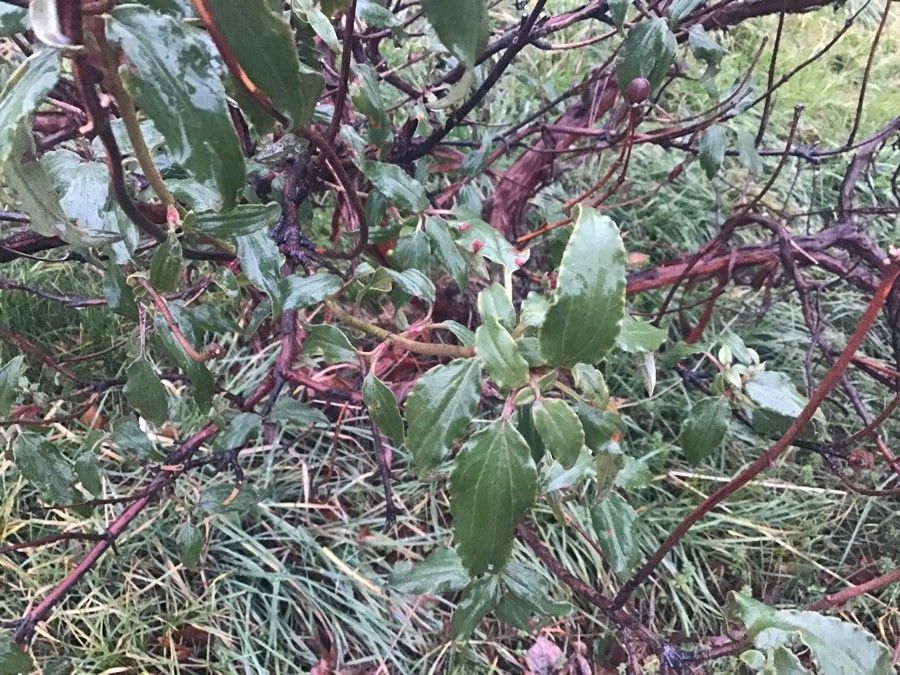
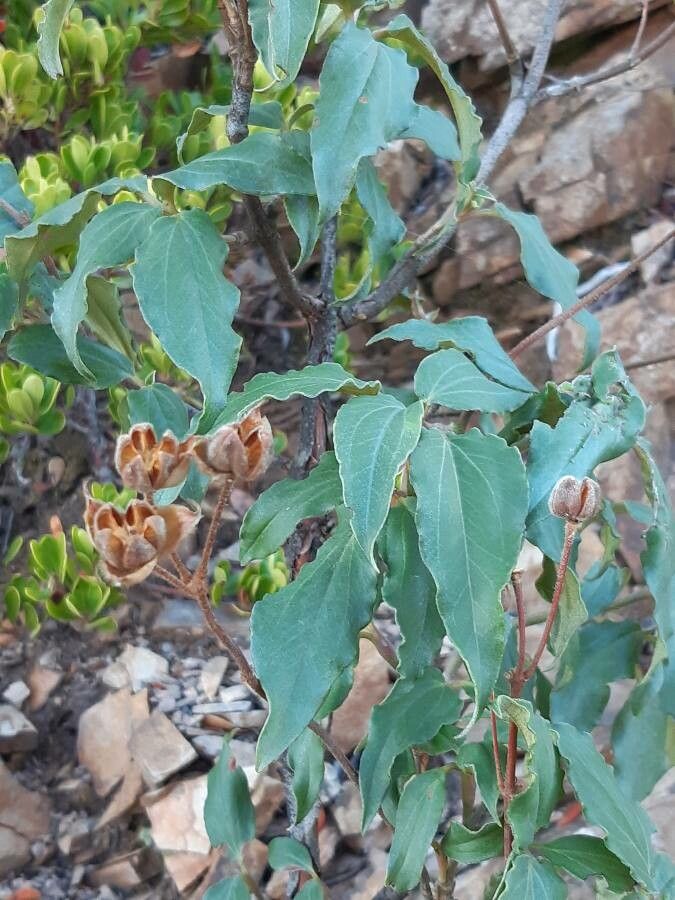
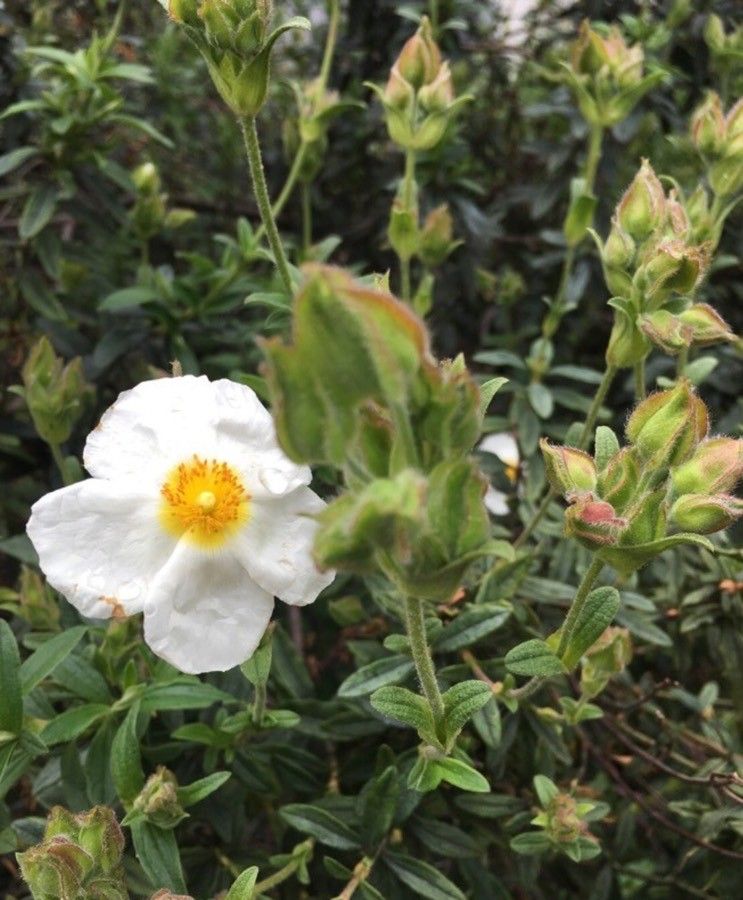
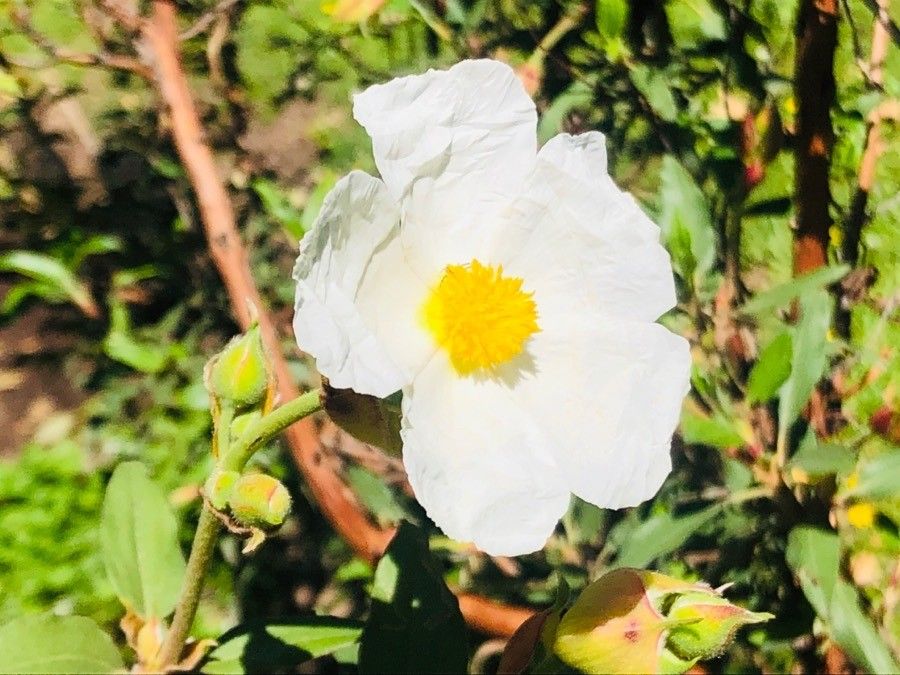
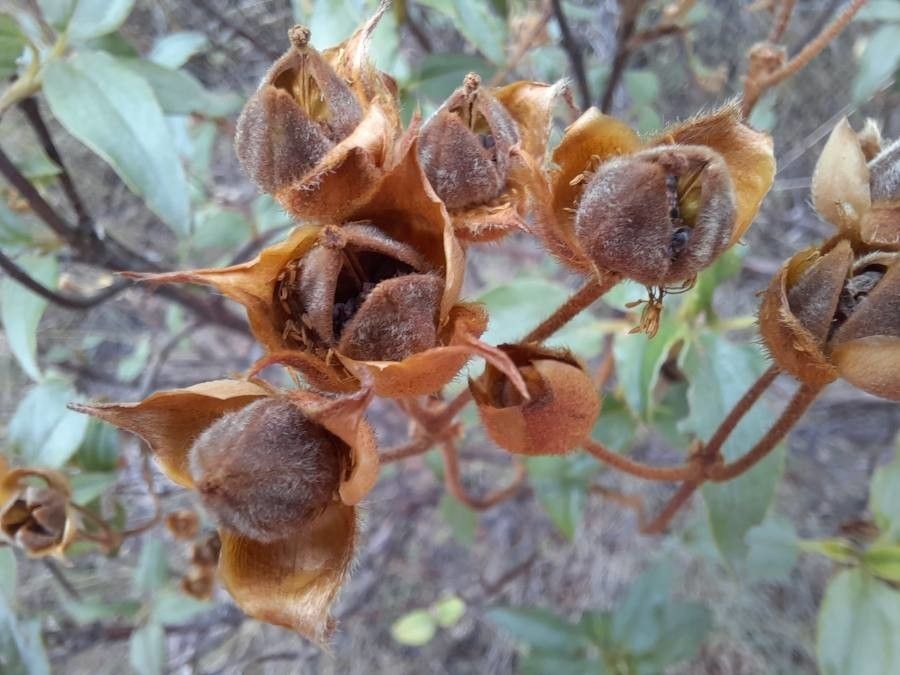
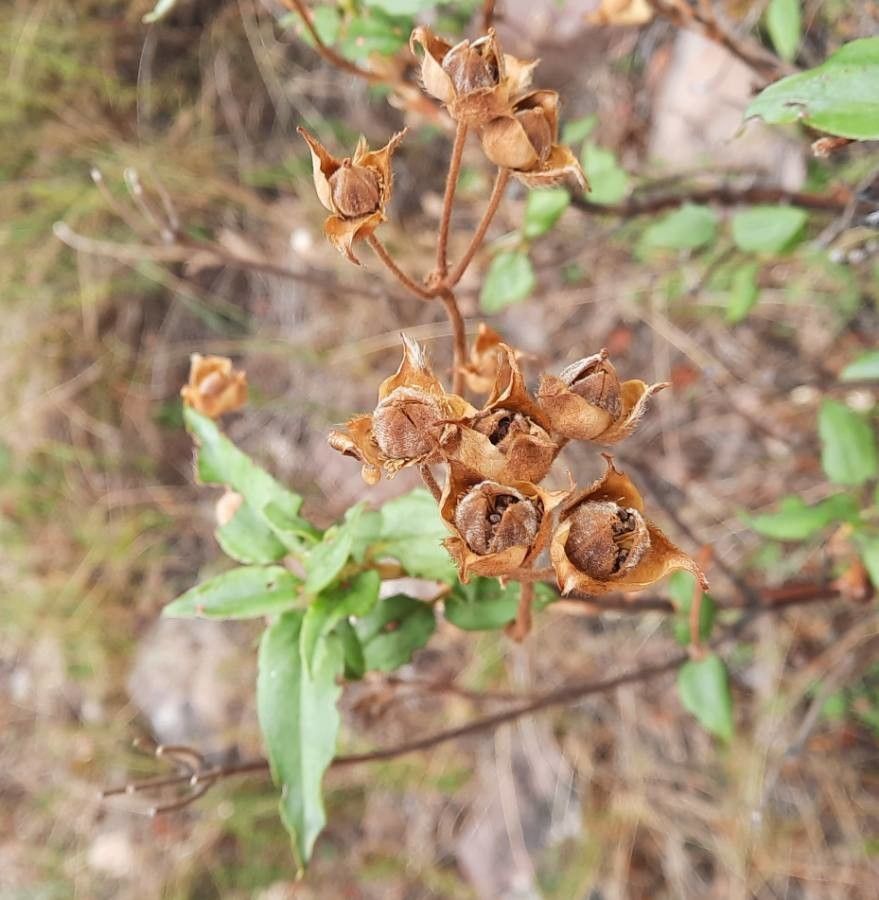
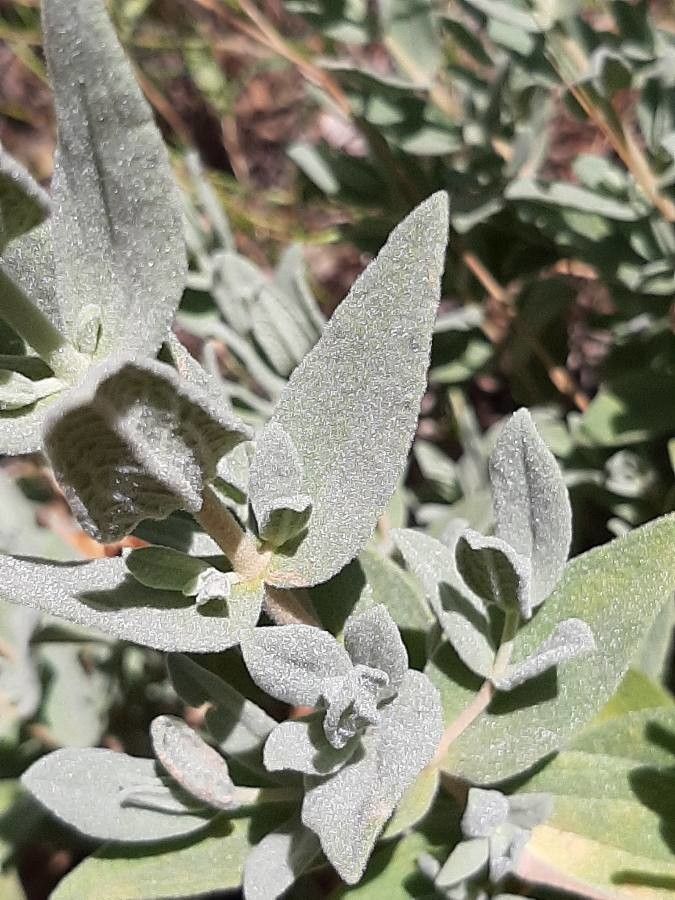
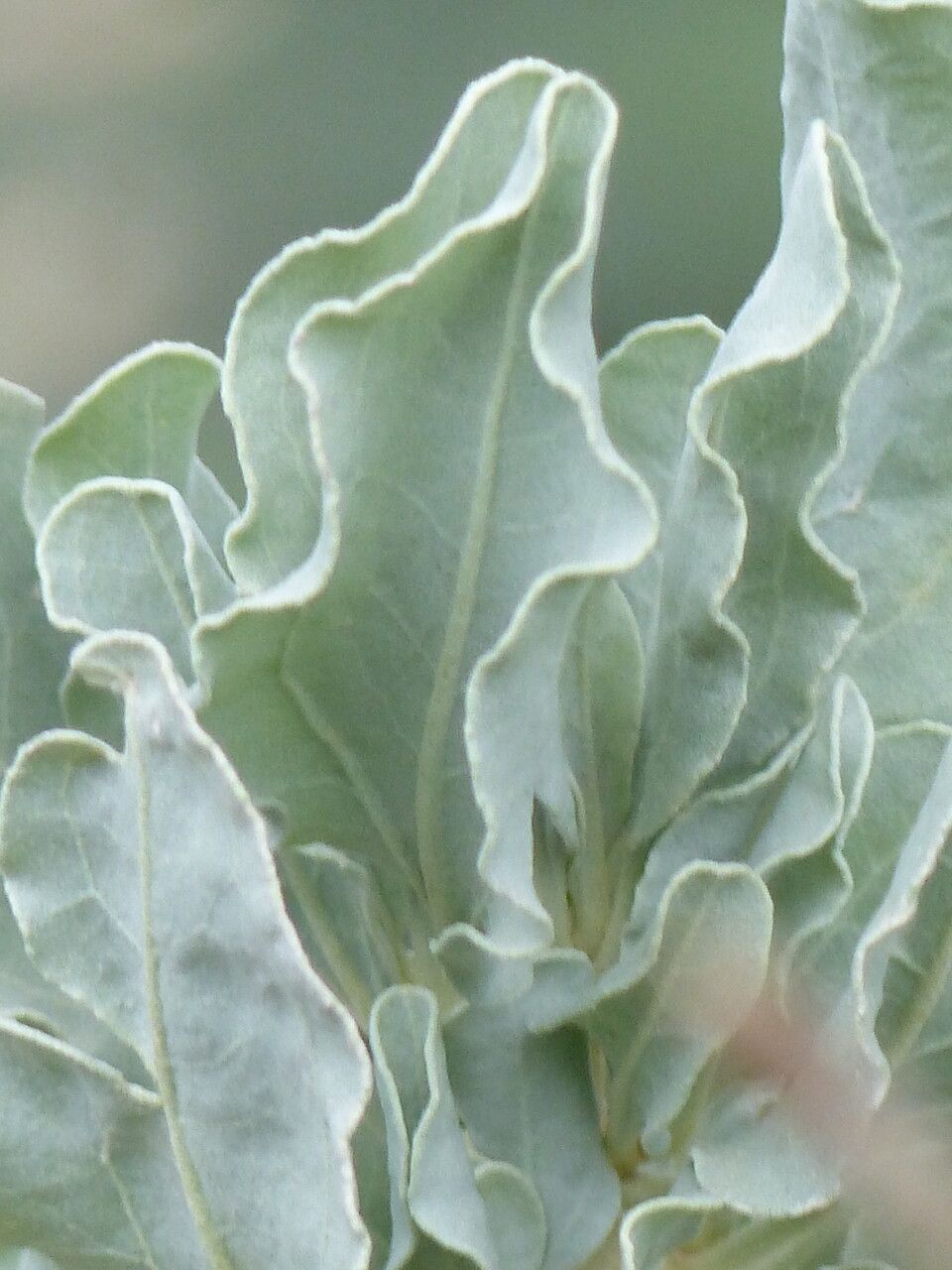
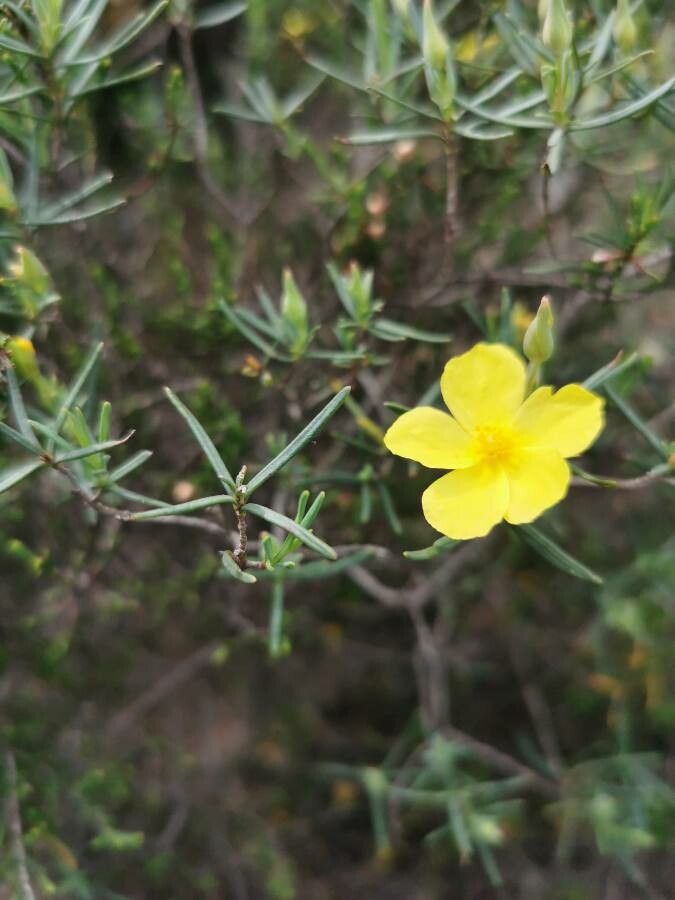
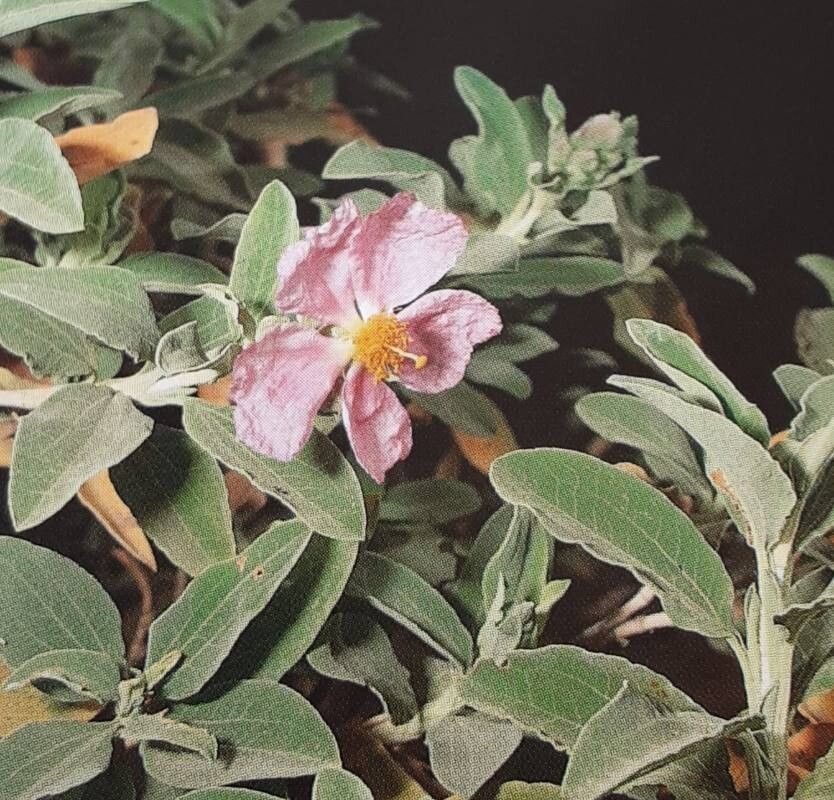
Cistus laurifolius, commonly known as the Laurel-leaved Rockrose, is a shrub species that belongs to the Cistaceae family. It is native to the Mediterranean region and is found in countries such as Spain, Portugal, Italy, and Greece. This plant typically grows up to 2 meters in height and has a dense, bushy habit with dark green leaves that are glossy on top and paler underneath. The flowers of Cistus laurifolius are large, about 5 cm in diameter, with five petals that range in color from white to pink or purple, depending on the variety.
Cistus laurifolius is a hardy plant that can tolerate drought conditions due to its ability to store water in its leaves. It prefers well-drained soils but can thrive even in poor soils, such as rocky or sandy ones. The plant blooms from late spring through summer, attracting bees and other pollinators.
The Laurel-leaved Rockrose has been used for medicinal purposes for centuries, owing to its antibacterial properties, which make it effective against various infections, including respiratory infections and skin conditions like eczema or psoriasis.
In summary, Cistus laurifolius is an attractive shrub with glossy green leaves and large, colorful flowers, making it an excellent addition to gardens or landscapes, especially those in dry regions where water conservation is important. Its medicinal properties add to its value, making it a versatile and useful plant species worth considering if you have suitable growing conditions available.
Laurel-leaved cistus has strong resistance to disease and is generally unlikely to suffer from illnesses. In terms of care, this plant is fairly low maintenance. When grown outdoors it needs minimal watering, and larger plants typically do not require pruning. Smaller plants, however, should be pruned after they finish flowering. Laurel-leaved cistus is suitable for anyone with an outdoor area, such as a garden or a deck, and does not require much experience in plant care.
How to keep Cistus Laurifolius.
Light
The laurel-leaved cistus thrives when exposed to full sunlight. It prospers with a sun-loving nature and is unsuitable for shaded locations. This matches its native habitats, which are characterized by abundant sunlight. However, both too little light and excessive exposure can impair its vigorous growth.
Water
The laurel-leaved cistus is a drought-tolerant evergreen plant ideal for arid regions, needing water only every 2 to 3 weeks. Its ability to retain leaves helps conserve water during dry spells, enabling it to thrive in areas with limited water resources.
Temperature
Laurel-leaved cistus shows strong adaptability to a range of climatic conditions, whether facing blazing summers or frosty winters. However, it has a preferred temperature range for growth. When temperatures become too high, the plant is susceptible to heat and humidity stress, which can lead to its death. In areas where temperatures approach the lower limit of its cold tolerance, it is necessary to use insulating measures to protect the plant.
Fertilizer
Timing is essential for fertilizing Laurel-leaved cistus. Start feeding in early spring and continue monthly until early summer. Fertilizer promotes attractive blooms and supplies energy during both dormant periods and active growth.
Pruning
Laurel-leaved cistus is an evergreen plant known for its resilience. To maintain its shape and encourage healthy growth, it’s best to prune it from early to late winter. During this time, remove any damaged branches and trim older ones to promote denser foliage. Regular maintenance like this improves air circulation, reduces the risk of disease, and helps ensure the plant remains healthy.
Botanical profile.
- Plant Type
- Shrub
- Life Cycle
- Perennial
- Genus
- Cistus
- Family
- Cistaceae
- Hardiness Zone
- 7-10
- Mature Height
- 2.13 m
- Mature Spread
- 2.13 m
- Leaf Color
- Green, Gray, Silver
- Leaf Type
- Evergreen
- Flower Color
- White
- Flower Size
- 5.08 cm to 6.35 cm
- Bloom Time
- Late spring, Early summer
- Planting Time
- Spring, Summer
- Harvest Time
- Mid summer, Late summer
- Native Area
- Turkey, Portugal, Italy, Spain, Greece, Morocco, France
Other names.
Reader questions.
How should I water my Laurel-leaved cistus plant?
Watering your Laurel-leaved cistus is quite flexible, as you can use most common watering tools. Whether it's a watering can, hose, or even a cup, they will all effectively moisten the plant's soil. Regardless of the tool, make sure to water directly onto the soil, evenly distributing the moisture to all parts of the root system. It is preferable to use filtered water to avoid any harmful particles present in tap water. Also, consider using water that is at or slightly above room temperature, as extremely cold or hot water can be detrimental to the plant. However, the Laurel-leaved cistus is generally resilient and will respond well to any type of water provided.
Why should I use fertilizer on my Laurel-leaved cistus?
If you own a Laurel-leaved cistus, fertilizing it regularly will help it stay healthy. This means providing the right nutrients to promote strong growth and resilience to difficult growing conditions, as well as to fend off diseases and pests. One of the most appealing aspects of your Laurel-leaved cistus is its foliage, so it's important to maintain it by following a regular fertilization schedule tailored to your plant. This will result in vibrant leaves and an overall lush appearance.
What are the sunlight requirements for a Laurel-leaved cistus plant?
Laurel-leaved cistus requires above 6 hours of sunlight daily to thrive, best enjoying full sun exposure. It's important to observe the movement of sunlight through your garden to identify the ideal locations that strike a balance between light and shade. This ensures the plant's growth is robust, reflecting its natural preference for ample sunlight. In environments where natural sunlight is insufficient, especially during winter or in less sunny spaces, artificial lighting can serve as an effective supplement. Adequate lighting is crucial for optimal growth, with LED lights being a popular choice due to their ability to mimic the specific wavelengths needed by plants. Depending on the plant's sunlight needs, the wattage required from artificial light can vary from 30-50W/sq ft for full sun plants to 10-20W/sq ft for full shade plants.
What should I do if I give my Laurel-leaved cistus too much or too little water?
Outdoor plants, especially new ones or seedlings, can easily be neglected when it comes to watering. It's important to remember that during the early stages, small or newly planted trees need regular watering for a few months. Once the roots are established, Laurel-leaved cistus plants can usually rely on rainfall. However, if you have a potted Laurel-leaved cistus, overwatering is more likely to occur. If this happens, you should take immediate action. Stop watering the plant to minimize the effects of overwatering and then remove it from the pot to examine the roots. If there is no sign of root rot, you can return the plant to its container. But if you do find root rot, trim any affected roots and apply a fungicide to prevent further damage. Finally, make sure to repot the Laurel-leaved cistus in well-draining soil. On the other hand, if you underwater your Laurel-leaved cistus, you simply need to water it more frequently. Underwatering is usually an easy problem to fix. When a plant is underwatered, its leaves will droop, dry out, and fall off, but they will quickly regain their fullness after sufficient watering. It's important to adjust your watering frequency once you notice signs of underwatering.
When should I fertilize my Laurel-leaved cistus for the best results?
To ensure healthy growth of your Laurel-leaved cistus, fertilize it for the first time during late winter or early spring. This provides the necessary nutrients for growth once the weather becomes warmer. If you live in a warm climate region, it can also be beneficial to give your cistus an additional fertilizer feeding in early fall. This not only adds nutrients for the following growing season but also helps your cistus become more resistant to winter cold and reduces foliage damage. Fertilizing earlier in the year will give the new branches enough time to grow and withstand the cold winter.
What symptoms indicate that my Laurel-leaved cistus is not getting enough sunlight?
When a Laurel-leaved cistus does not receive adequate sunlight, several symptoms can manifest. These include smaller new leaves, leggy or sparse growth, faster leaf drop, slower or ceased new growth, and leaves that are lighter-colored or develop chlorosis, indicating a lack of chlorophyll and essential nutrients. Excessive sunlight can also lead to issues like sunscald, leaf curling, wilting, and leaf scorching. Each symptom provides insight into the plant's health and its need for either more or less sunlight. It's vital to monitor these signs and adjust the plant's exposure to sunlight accordingly to ensure its well-being.
How frequently should I water my Laurel-leaved cistus plant?
Most outdoor plants can grow naturally with rainfall. However, if your area doesn't get much rain, you should water your plants every 2 weeks in the spring and fall. In the summer, they will need more frequent watering. In the winter, when growth slows down and plants need less water, you can water them less often or even skip watering altogether. If you have a young or newly planted Laurel-leaved cistus, you should water it more often to help it establish and grow into a more drought-tolerant plant. For potted plants, there are two main ways to determine how often to water your Laurel-leaved cistus. The first is to follow a set watering schedule, like once a week or once every other week. However, this may not always work as it doesn't consider the specific conditions of your plant's growing environment. The frequency of watering can also change depending on the season. During summer, when the plant needs more water, a set schedule may not be enough. An alternative approach is to check the moisture level of the soil. Wait until the top two to four inches of soil (about ⅓ to ½ depth of the pot) have completely dried out before watering again.
When is the best time to not fertilize my Laurel-leaved cistus?
There are a few specific times throughout the year when you should refrain from fertilizing your Laurel-leaved cistus. The first instance is during the early and mid-winter months when the plant is dormant and does not require any feeding. Additionally, it is not advisable to fertilize the plant during the late spring and summer when the weather is typically hotter and drier. These conditions can have a negative impact on the plant's response to fertilization. To avoid any potential issues, it is recommended to stick to a fertilization schedule that only involves feeding during early spring and early fall.
How can I address light-related issues for my Laurel-leaved cistus?
To address light-related issues for your Laurel-leaved cistus, consider gradually increasing its exposure to sunlight if it's suffering from lack of light. For indoor plants, moving them to a sunnier spot or using artificial lighting can help. Ensure they receive at least 6 hours of direct sunlight daily or supplement with artificial light for 8 hours daily. For outdoor plants, transitioning them to a location with more sunlight gradually is crucial to prevent sunburn. Reducing obstructions and transplanting to better-lit areas can significantly benefit the plant's exposure to sunlight. Remember, while parts of the plant that suffered might not recover, new growth should be healthy with proper light conditions.
How much water does my Laurel-leaved cistus require?
To water your Laurel-leaved cistus effectively, you don't always need to use a lot of water. If the soil has only dried a few inches since the last watering, giving the plant about five to ten ounces of water each time should promote healthy growth. You can gauge the water volume based on how dry the soil is. Take note of how many inches of soil have dried out between waterings. The best way to ensure the plant gets enough moisture is to water until all the dry soil layers have been moistened since the last watering. If over half of the soil is dry, it's a good idea to give more water than usual. Keep adding water until you see it draining from the pot's holes. If your Laurel-leaved cistus is planted in an area that receives plenty of rain, additional watering may not be necessary. When the plant is young or newly established, it needs about 1-2 inches of rain per week. As it grows and becomes established, it can rely solely on rainfall. Only if there is a prolonged period of hot weather without any rain for 2-3 weeks should you consider providing a full watering to prevent stress.
What kind of plant food does my Laurel-leaved cistus need?
Laurel-leaved cistus plants thrive with a good amount of nitrogen, although phosphorus and potassium are also important. Using a balanced fertilizer like 10-10-10 can be effective, but a more specific nutrient ratio like 10-6-4 often yields better growth. You can apply the fertilizer as granules or in liquid form.
How can I know if I am giving enough water to my Laurel-leaved cistus?
Overwatering is a common issue for the Laurel-leaved cistus. There are signs to look out for when this happens. Yellowing leaves and leaf drop are common symptoms of overwatering. It can also cause the plant's structure to shrink and promote root rot. On the other hand, an underwatered Laurel-leaved cistus will start to wilt, and its leaves may turn brown or become brittle. Regardless of which issue you notice, it's important to intervene and restore the plant's health.