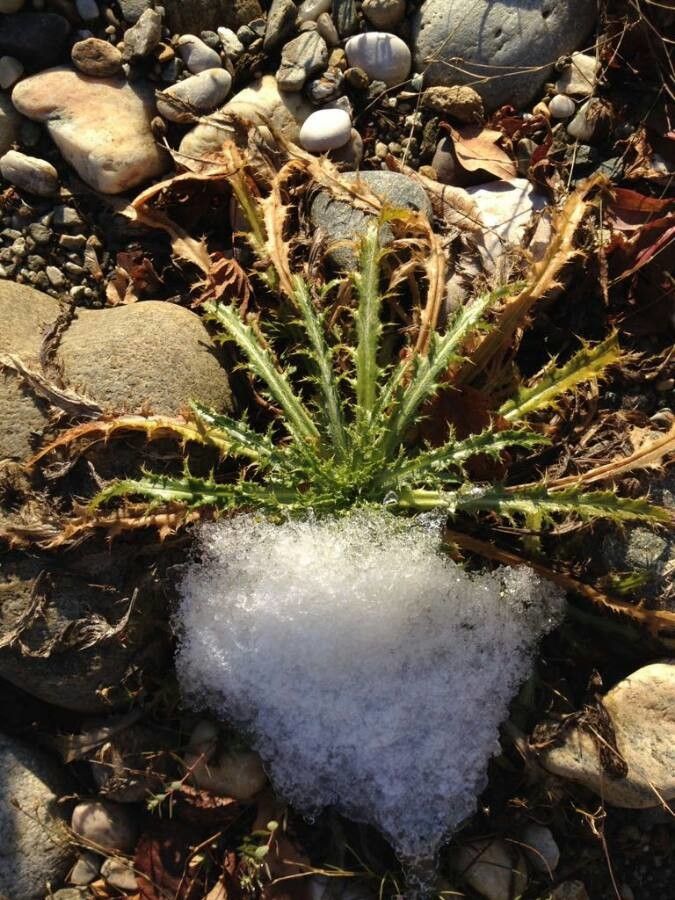
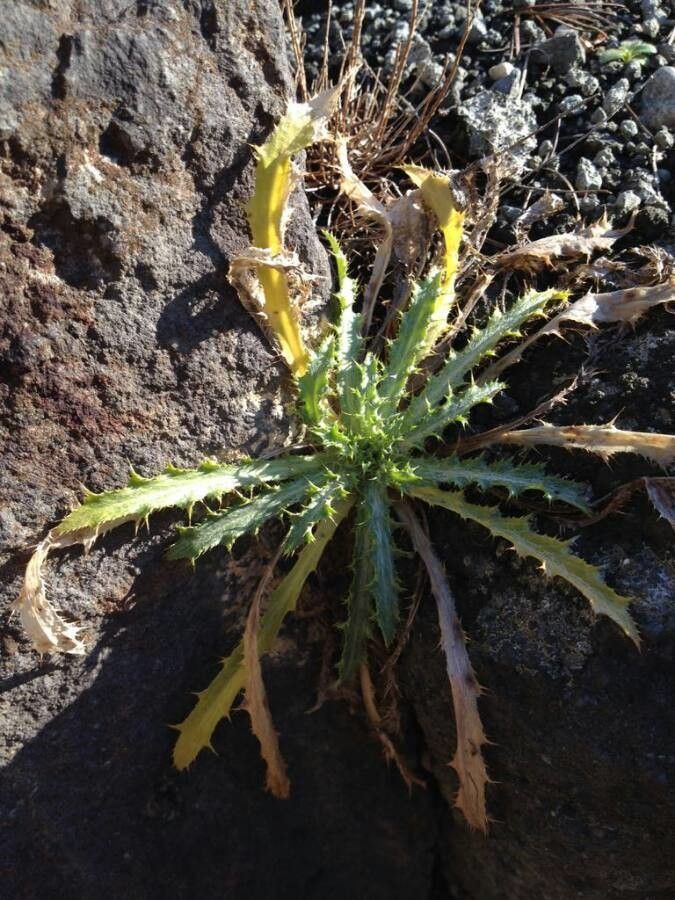
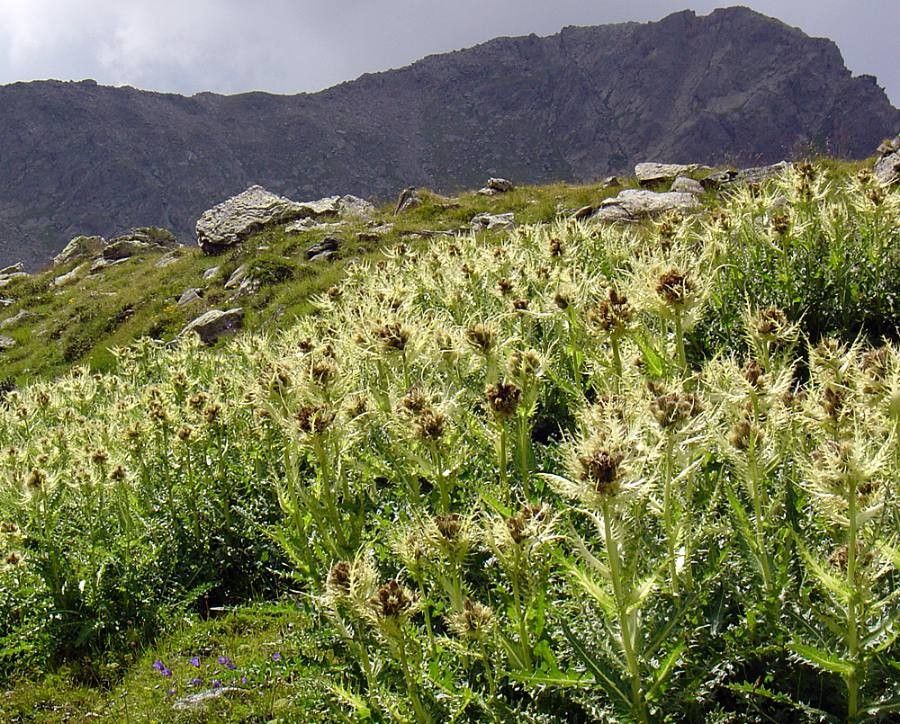
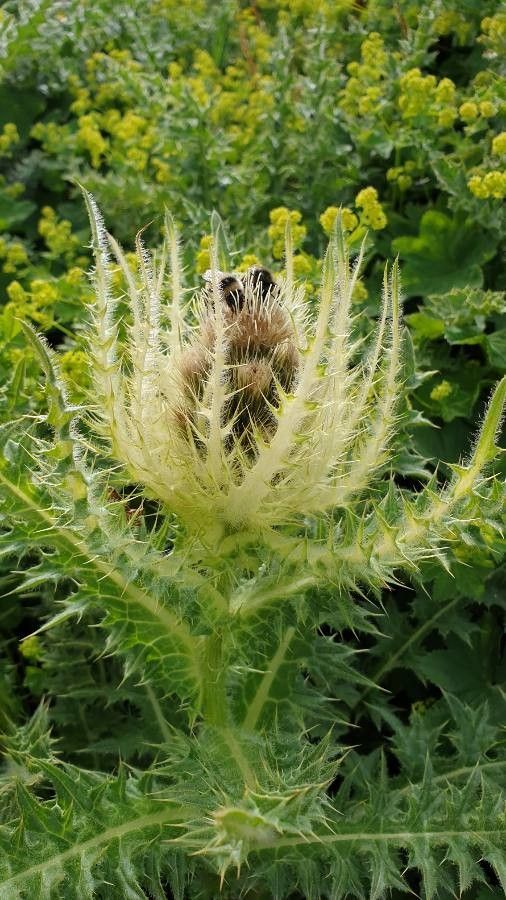
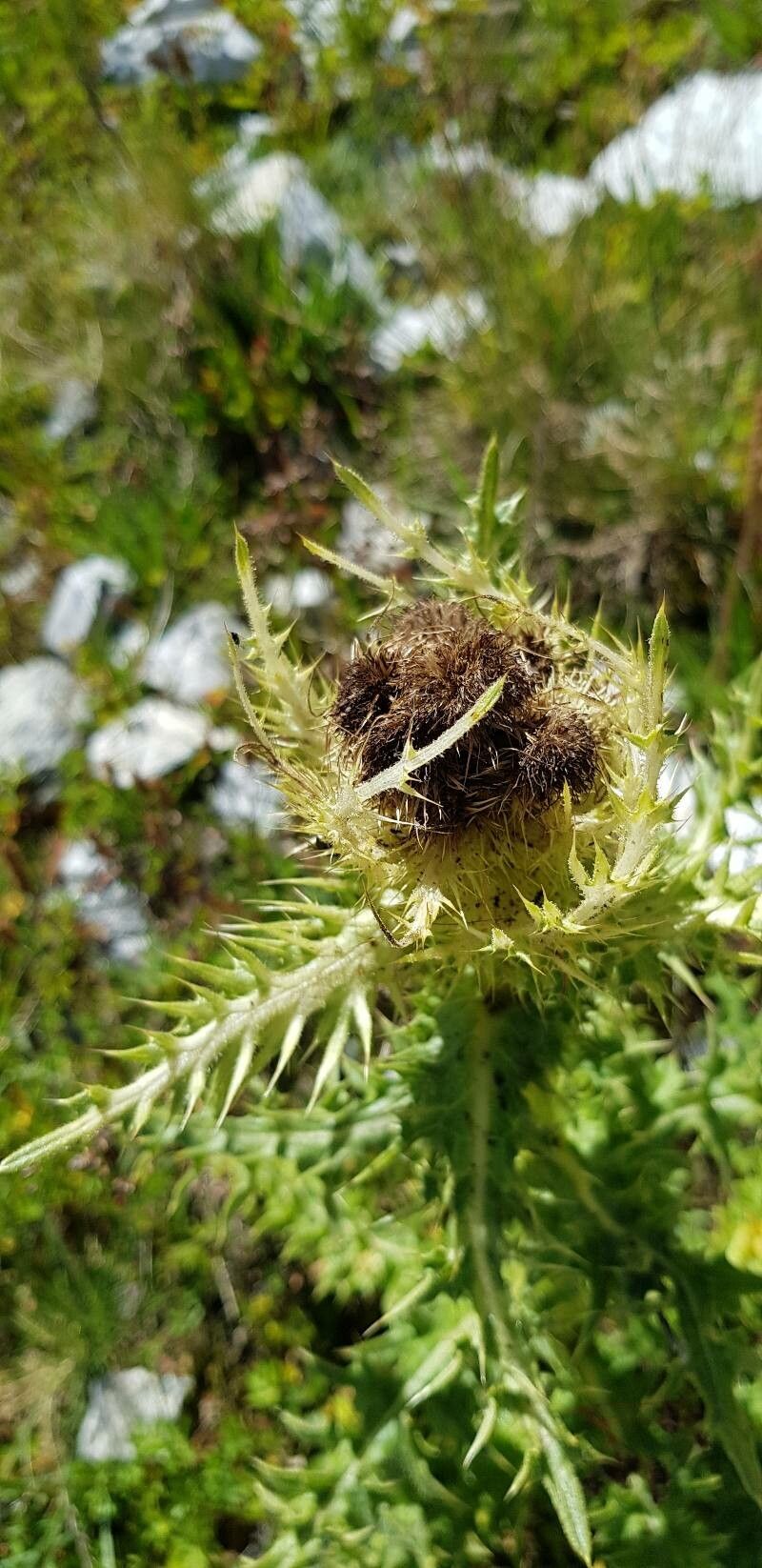
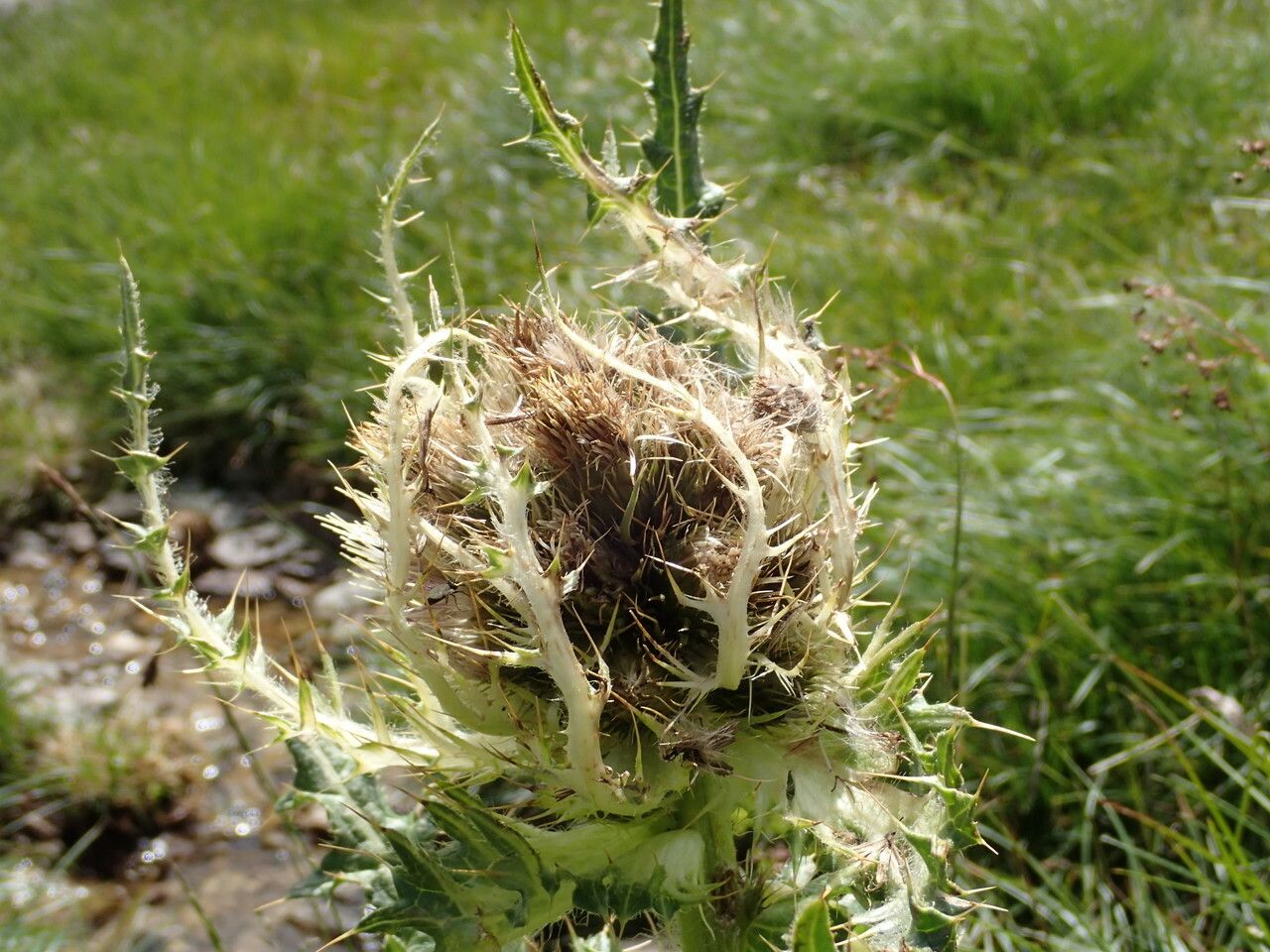
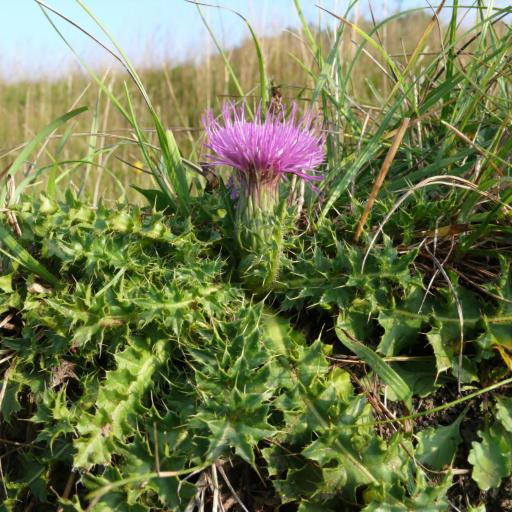
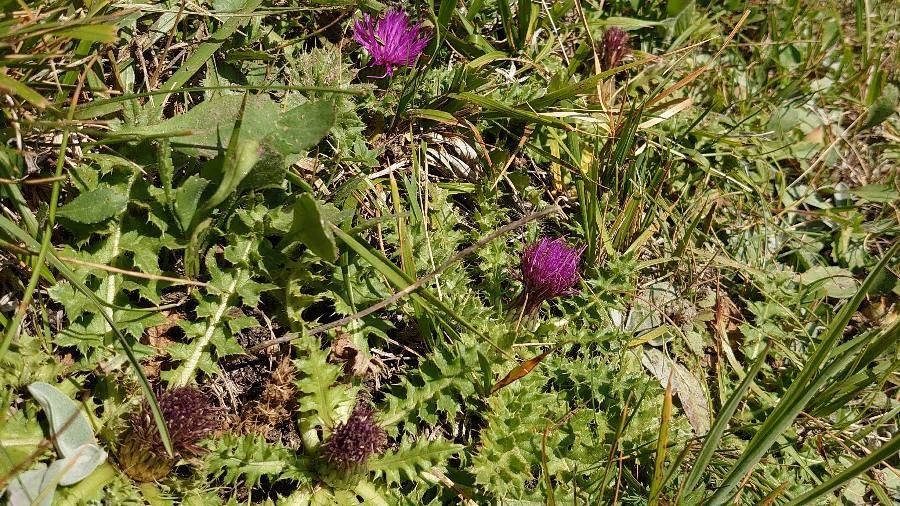
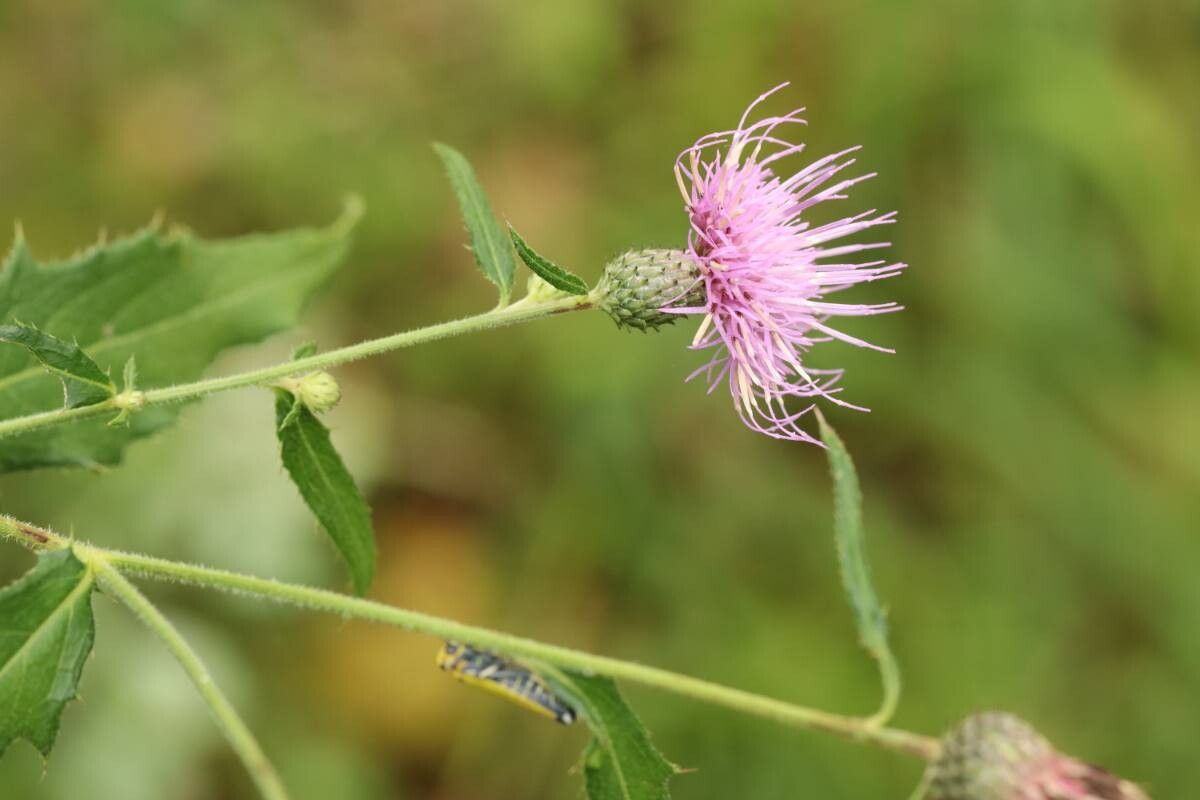
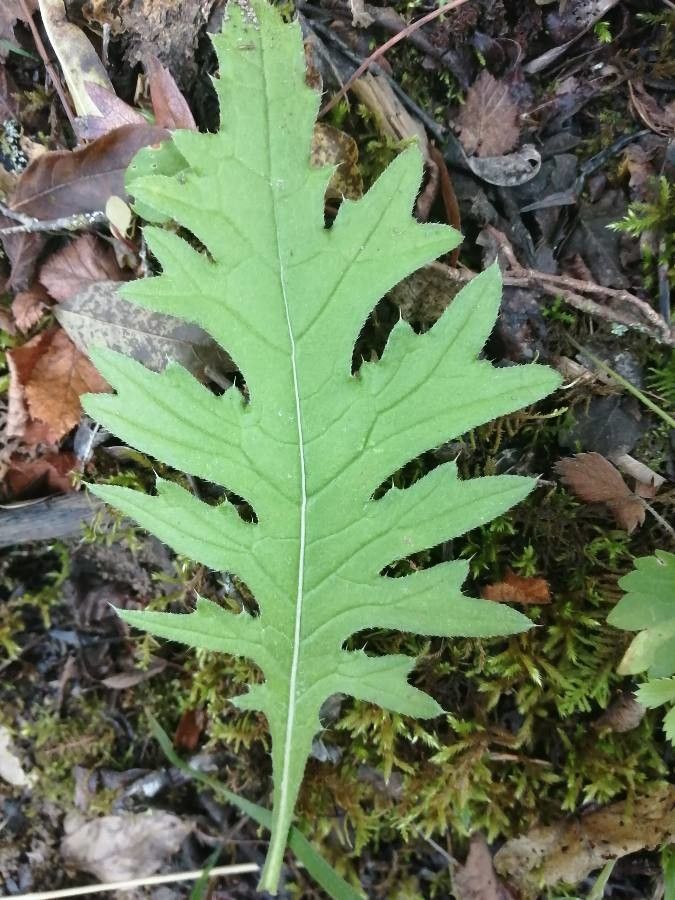
Cirsium spinosissimum, common name spiniest thistle, is a European species of thistle which grows in dry rocky areas. It is found in France, Italy, Germany, Switzerland, Austria, and the Balkans.The plant is between 20 to 80 cm (8 to 31.5 in) tall. Leaves, stems, and the sides of the flower head bear long, sharp spines, hence the name of the plant. Flower heads contain numerous disc florets but no ray florets, the florets off-white sometimes with a purple tinge.
Thorny thistle is fairly disease-resistant and typically does not suffer from many illnesses. Nonetheless, it can be vulnerable to pests and diseases present in its surroundings. Such infections are generally mild. Regarding care, the plant requires moderate maintenance. It should be pruned regularly to maintain a neat appearance and encourage healthy growth. Fertilizing can also help promote flowering. Thorny thistle is suitable for anyone with an outdoor area, such as a garden or patio, and does not demand much care experience. When grown indoors, however, it may need extra attention.
How to keep Cirsium Spinosissimum.
Light
The thorny thistle grows best with plenty of light. Originating from habitats with abundant sunlight, that setting supports its healthy growth. It tolerates high levels of light without harm. However, when light is limited, the plant's growth slows.
Water
Originating from alpine regions, the thorny thistle thrives in environments with moderate humidity and cool temperatures. To maintain optimal health, it needs consistent moisture without becoming waterlogged. Watering once a week is ideal. It's also crucial to use well-draining soil to prevent excess water retention, especially during the growing season.
Temperature
Thorny thistle originates from habitats where temperatures range from 50 to 90 °F (10 to 32 ℃). It performs best under these temperature conditions. Seasonal adjustments are unnecessary unless temperatures drop below or rise above this range.
Fertilizer
A single fertilizer application in spring is generally enough for Thorny thistle, though multiple feedings can maximize growth. Apply every one to one-and-a-half months. Fertilizing improves leaf appearance and function, maintaining even color and a healthy texture. It also encourages root development and nutrient uptake for long-term plant health.
Pruning
To promote healthy growth and control the spread of thorny thistle, it is important to prune strategically from early to late spring. Focus on removing dead or overcrowded stems. This practice not only prevents pests but also enhances the plant's structural integrity, contributing to its aesthetic appeal. Be sure to consult horticultural guides for specific care instructions.
Botanical profile.
- Plant Type
- Herb
- Life Cycle
- Perennial
- Genus
- Cirsium
- Family
- Asteraceae
- Hardiness Zone
- 6-7
- Mature Height
- 20 cm to 76 cm
- Mature Spread
- 30 cm to 61 cm
- Leaf Color
- Green, Blue
- Leaf Type
- Deciduous
- Flower Color
- Yellow
- Flower Size
- 1.52 cm to 2.03 cm
- Bloom Time
- Summer
- Planting Time
- Spring, Summer
- Harvest Time
- Late summer, Early fall, Mid fall
- Native Area
- Germany, Austria, Italy, Switzerland, Slovenia, France
Other names.
Reader questions.
How should I water my Thorny thistle plant?
To ensure the health of the Thorny thistle when watering it, it is best to use filtered water at room temperature. Tap water may contain harmful particles, so filtering it is the safer choice. Since the Thorny thistle is accustomed to warm climates, it is advisable to avoid using cold water as it can be detrimental. Overhead watering should also be avoided because it can lead to foliage issues. Instead, focus on thoroughly soaking the soil with filtered room temperature water. This helps to moisten the roots and facilitates their spread in the soil, enabling them to gather essential nutrients.
Why should I put fertilizer on my Thorny thistle plant?
The Thorny thistle relies mostly on its leaves for structure. Fertilization is an important way to maintain the appearance and function of these leaves. By fertilizing properly, you can ensure that your Thorny thistle has consistent color and a healthy texture in its leaves. Fertilization also has benefits below the soil's surface. It helps the Thorny thistle develop new roots and maintain existing ones. This means that fertilization not only keeps the plant healthy now but also improves its ability to absorb nutrients from the soil in the future.
What are the sunlight requirements for Thorny Thistle?
Thorny Thistle (Cirsium spinosissimum) thrives in environments that provide more than 6 hours of sunlight daily, indicating its need for full sun exposure for optimal growth. It's crucial to observe how sunlight moves through your garden to ensure that the plants receive a balanced amount of light and shade, contributing to their overall well-being.
What is the ideal temperature range for growing Thorny thistle?
Thorny thistle, botanically known as Cirsium spinosissimum, thrives best in environments where temperatures range from 50 to 90 °F (10 to 32 °C). It is native to these temperature conditions and grows optimally without the need for seasonal adjustments, unless temperatures fall below 50 °F (10 °C) or rise above 90 °F (32 °C).
What should I do if I give my Thorny thistle too much or too little water?
Overwatering is a common issue for Thorny thistles and can cause wilting, yellowing leaves, and various diseases. Root rot, mold, and mildew can be fatal to the plant if overwatered for a long time. Underwatering is less common for Thorny thistles, but it can still happen. Signs of underwatering include brittle, brown leaves. It's important to recognize the signs of overwatering early on because some diseases, like root rot, can't be fixed if left too long. If you notice these signs, reduce watering immediately and check the soil for poor drainage. If you see signs of underwatering, increase watering until the signs go away.
When should I fertilize my Thorny thistle plant?
If you plant your Thorny thistle outside each year, it will start growing new leaves in early spring. This is a signal that it's time to start fertilizing for the year. Normally, one application of fertilizer in spring is enough for your Thorny thistle to do well. But if you want it to grow as much as possible, you can fertilize it multiple times during spring and early summer. In this case, you can feed your Thorny thistle once every month to a month and a half.
How does light affect the growth of Thorny Thistle?
Thorny Thistle performs best under conditions of ample light exposure, originating from environments enriched with abundant sunlight, which facilitates healthy growth. While the plant can withstand significant light without damage, insufficient light leads to slowed growth. In indoor settings or during low-light seasons such as winter, artificial lighting becomes essential, offering a solution by mimicking natural sunlight. The appropriate type of artificial light includes LED lights, with requirements varying based on plant sunlight needs, from 30-50W/sq ft for full sun plants to 10-20W/sq ft for full shade plants.
Does Thorny thistle require frost protection measures during winter?
Thorny thistle is highly cold-tolerant and does not generally require additional frost protection measures during winter months. However, it is recommended to water the plant generously before the first freeze in autumn. This practice ensures the soil remains moist as it enters a frozen state, which helps prevent drought and water scarcity for the plant during the winter and early spring.
How often do I need to water my Thorny thistle?
If your Thorny thistle is in a pot, the most precise way to determine if it needs water is by sticking your finger into the soil. If the top two to three inches of soil are dry, it's time to water it. For Thorny thistle grown outdoors in the ground, you can use a similar method to test the soil. Once the top few inches of soil have dried out, it's time to water. In spring and early fall, watering once a week is usually sufficient. During extremely hot weather, you may need to increase watering to twice or more per week. However, mature, well-established Thorny thistle plants have a remarkable ability to withstand drought.
When should I not put fertilizer on my Thorny thistle?
During late fall and winter, the Thorny thistle goes into a dormant phase, halting new growth. It is advised to avoid fertilizing it during this time. In spring and summer, if you decide to fertilize, gradually decrease the amount as summer approaches since the growth rate slows down. It's important to note that fertilizing during extremely hot weather or when the soil is excessively dry is not recommended. Doing so can stress the Thorny thistle and lead to premature death.
What are the symptoms of inadequate light in Thorny Thistle?
When Thorny Thistle is exposed to low light, it may exhibit several symptoms indicating light deficiency. These include small new leaves, leggy or sparse growth, faster leaf drop, halted or no new growth, and lighter-colored or chlorotic new leaves. Excessive sunlight can also cause issues such as sunscald, leaf curling, wilting, and leaf scorching. Observing these symptoms is crucial for identifying and addressing light-related issues in the plant.
What should I do if winter temperatures drop below -25°C?
Although Thorny thistle exhibits extreme cold tolerance, winter temperatures should ideally be maintained above -25°C. If temperatures do drop below this threshold, you might not notice any changes during the winter. However, there may be a decrease in sprouting or even no sprouting at all during springtime. In spring, it's recommended to remove any parts of the plant that have failed to sprout to encourage new growth.