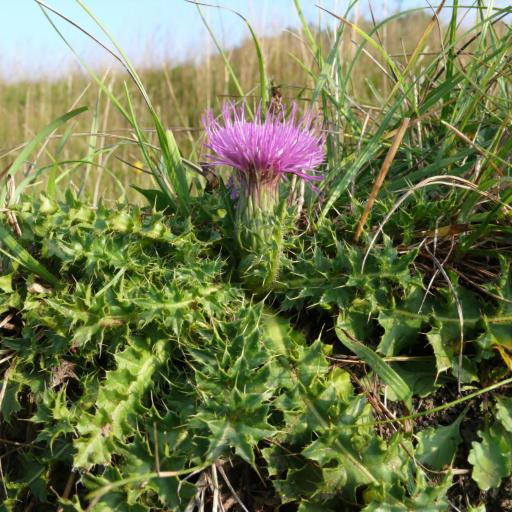
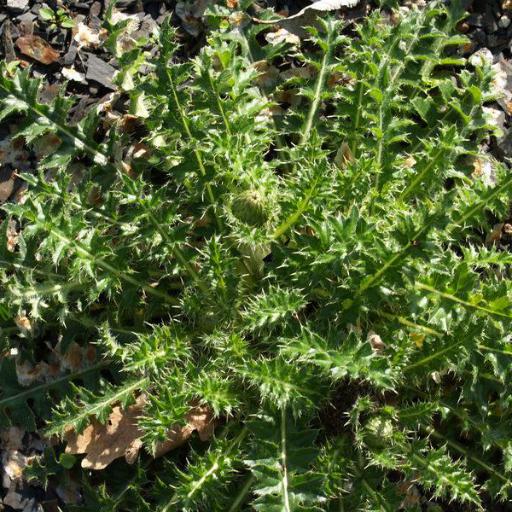
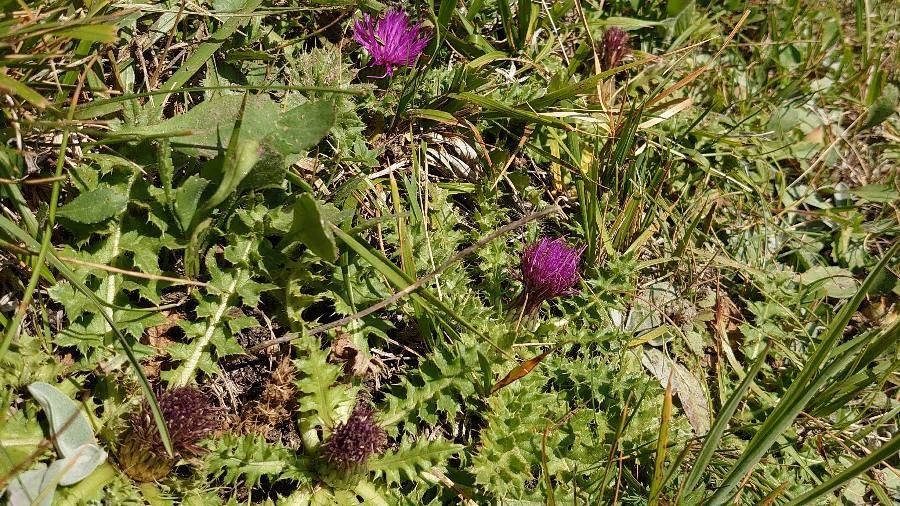
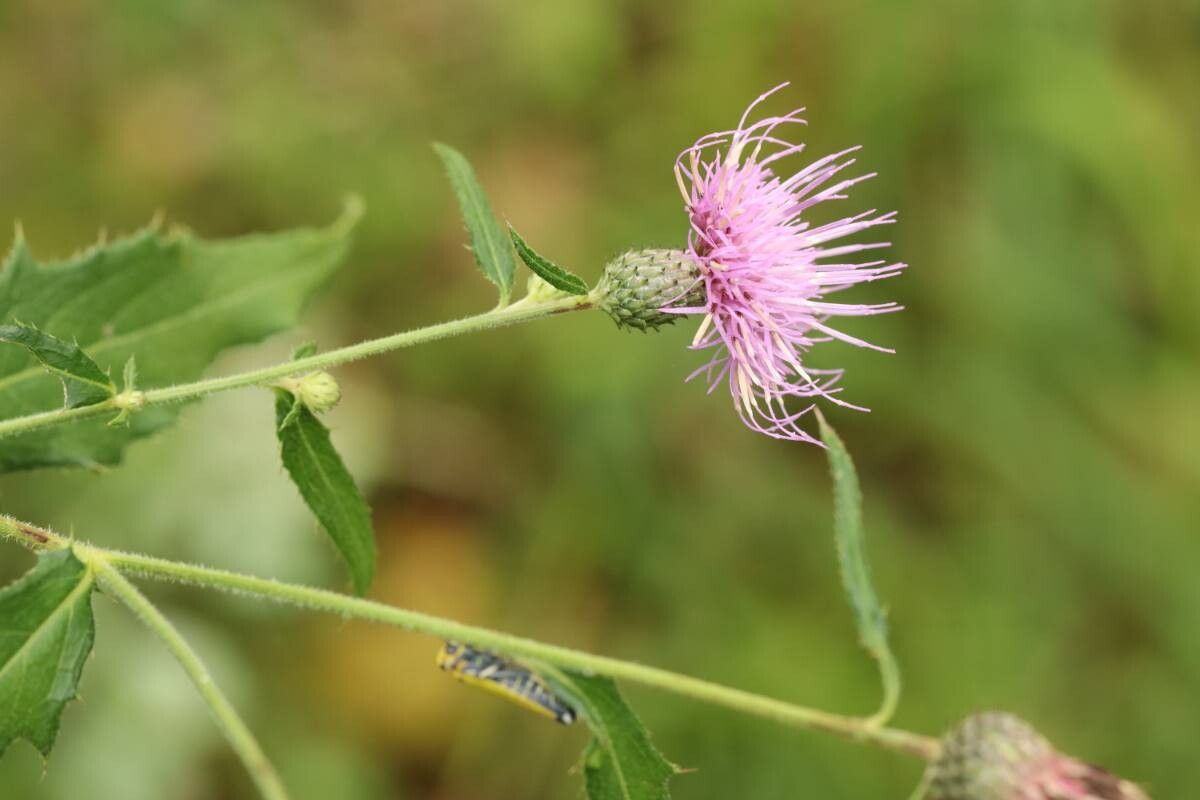
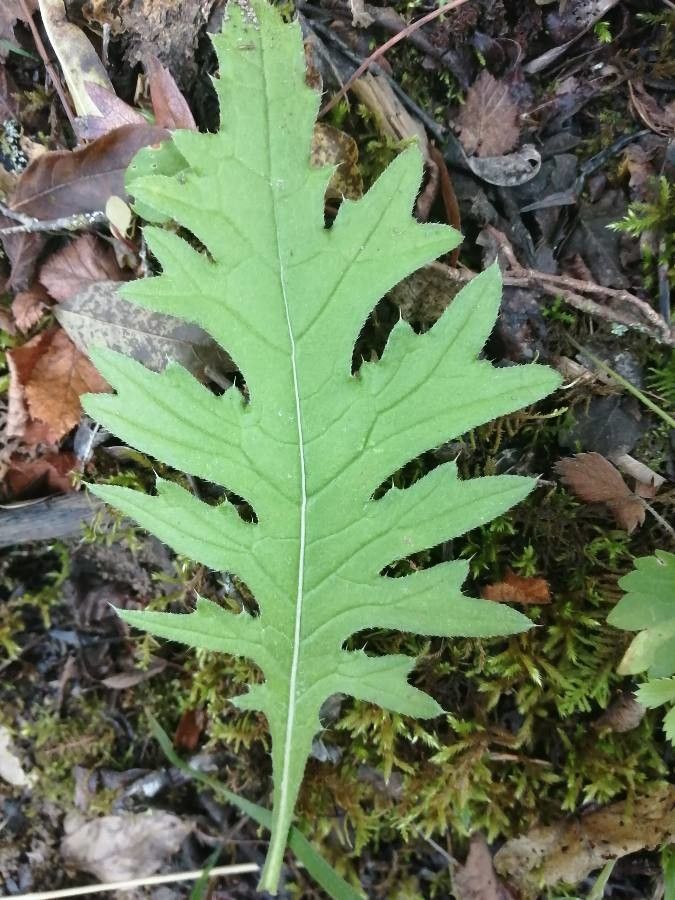
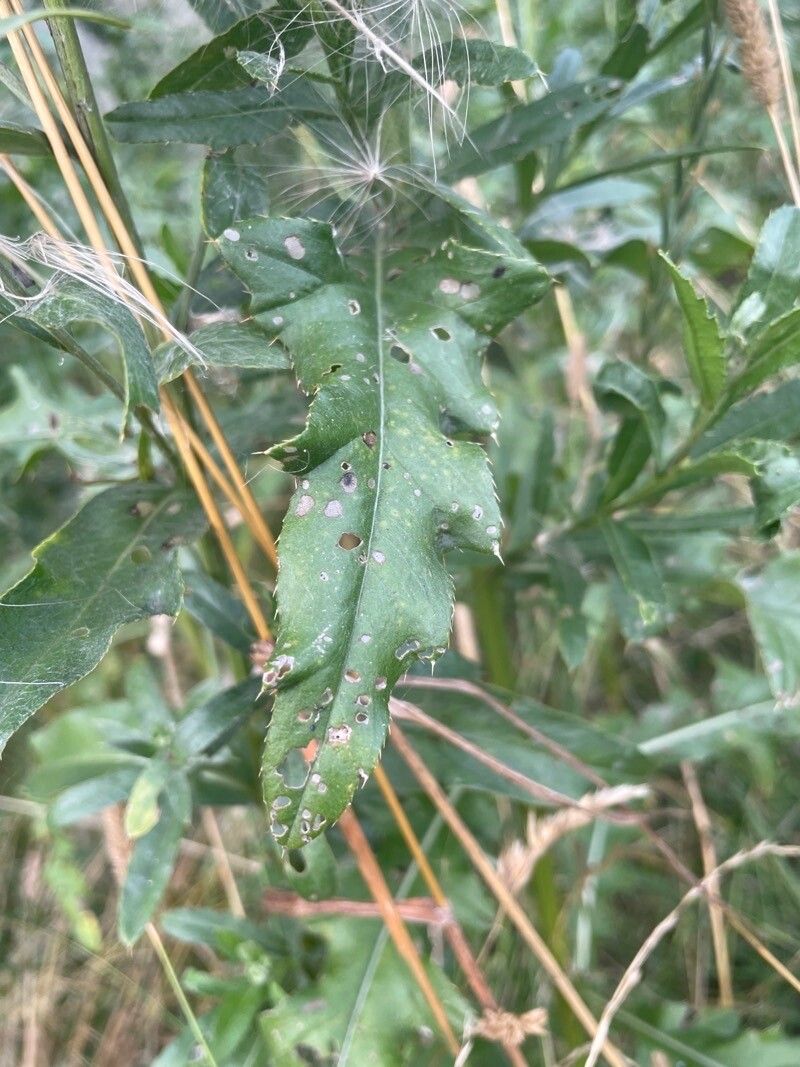
Cirsium acaule or acaulon has the English name dwarf thistle or stemless thistle. It is widespread across much of Europe. It is often found on short, calcerous grasslands.
The dwarf thistle is fairly resistant to disease and is generally not prone to illness. That said, it may be vulnerable to pests and diseases present in its surroundings. These problems are typically mild. In terms of care, this plant requires moderate maintenance. It should be pruned regularly to retain a good appearance and support healthy growth. Fertilizing can also help encourage flowering. Dwarf thistle is suitable for anyone with outdoor space, such as a garden or patio, and does not demand extensive care experience. It may need more attention when grown indoors.
How to keep Cirsium Acaule.
Light
Dwarf thistle is a sun-loving perennial herbaceous species native to open habitats, commonly found growing in meadows and grasslands. It prefers full sun but can also tolerate partial sun.
Water
Dwarf thistle flourishes in well-drained soils, striking a balance between drought tolerance and moisture needs. To maintain this balance, it's best to water the plant weekly. Usually grown outdoors, dwarf thistle makes efficient use of water reserves throughout the growing season to support its flowering phase.
Temperature
Dwarf thistle can tolerate a wide range of temperatures, but its distribution may still be limited by certain combinations of moisture and heat. It performs best in warm summer climates with adequate rainfall or watering. Extended periods of cloudy, rainy weather, as well as prolonged high temperatures, can raise the likelihood of Dwarf thistle dying. In winter, protecting it from cold can improve the plant's chances of survival.
Fertilizer
The main time to fertilize Dwarf thistle is in early spring when the flowers are forming. The proper fertilizer encourages better blooms and helps Dwarf thistle produce attractive flowers. Fertilizing in early spring ensures excellent flowers during the season and provides energy for dormant growth phases.
Pruning
The dwarf thistle is a low-growing perennial known for its vibrant purple flowers. To keep it healthy, prune the plant in early spring to remove any damaged parts. After the flowers have bloomed, deadhead them to promote vigor. Always use sterilized tools to prevent infection and enhance the plant's health by improving airflow and sunlight exposure.
Botanical profile.
- Plant Type
- Herb
- Life Cycle
- Perennial
- Genus
- Cirsium
- Family
- Asteraceae
- Hardiness Zone
- 4-9
- Mature Height
- 5 cm to 15 cm
- Mature Spread
- 10 cm to 20 cm
- Leaf Color
- Dark Green
- Leaf Type
- Semi-evergreen
- Flower Color
- Purple
- Flower Size
- 2.03 cm to 4.06 cm
- Bloom Time
- Summer
- Planting Time
- Spring, Autumn
- Harvest Time
- Late summer, Early fall, Mid fall
Other names.