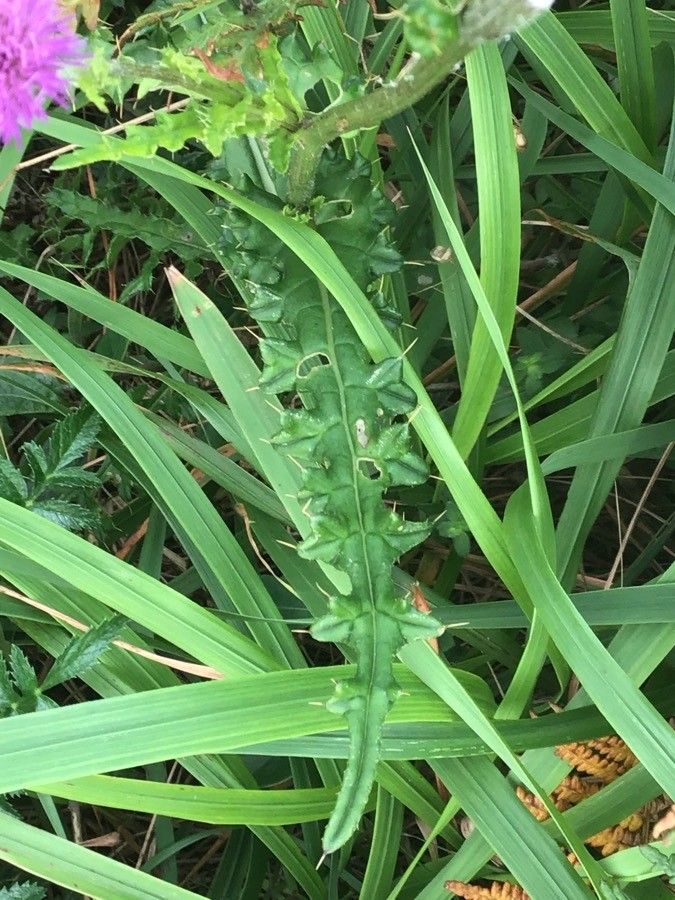
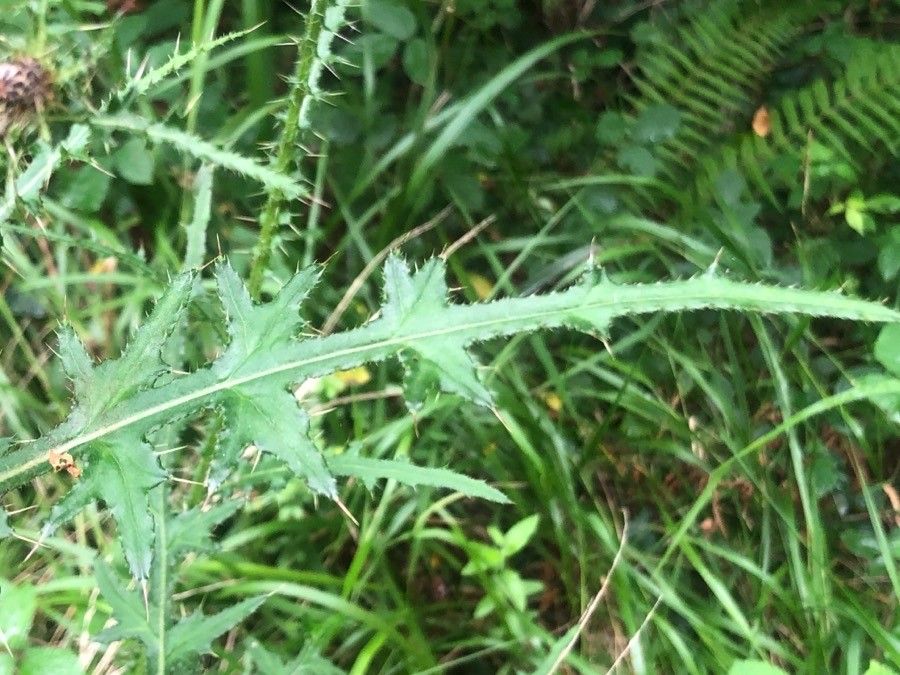
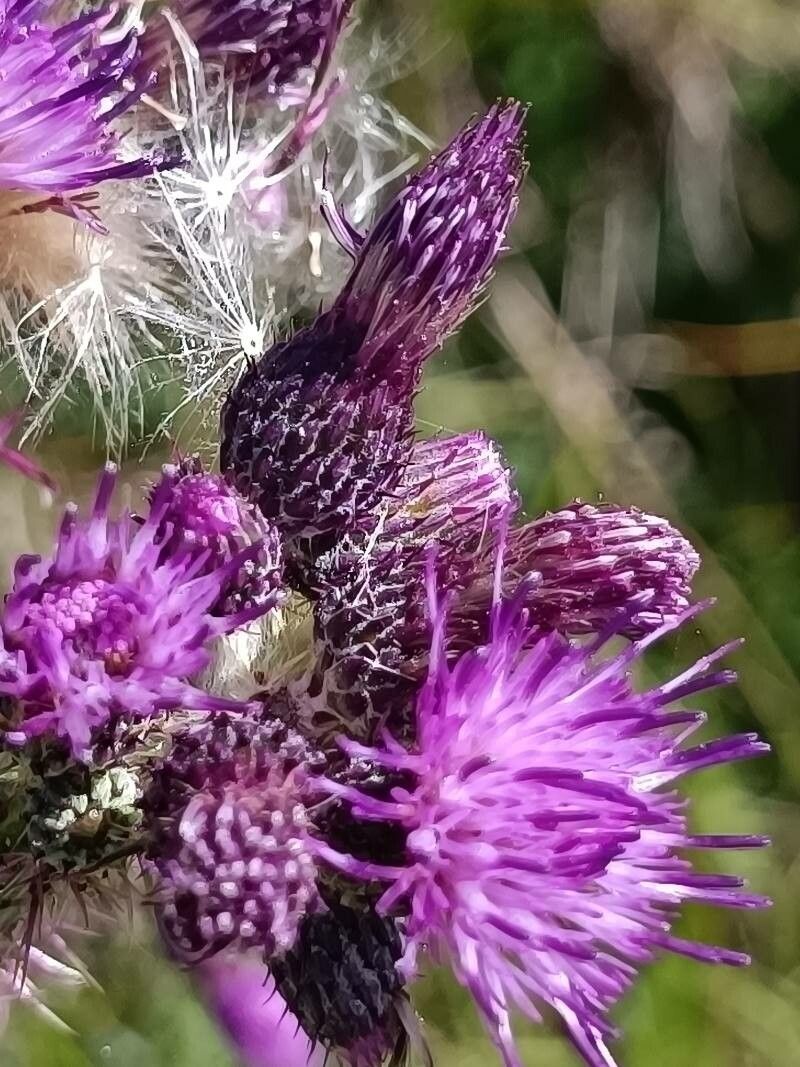
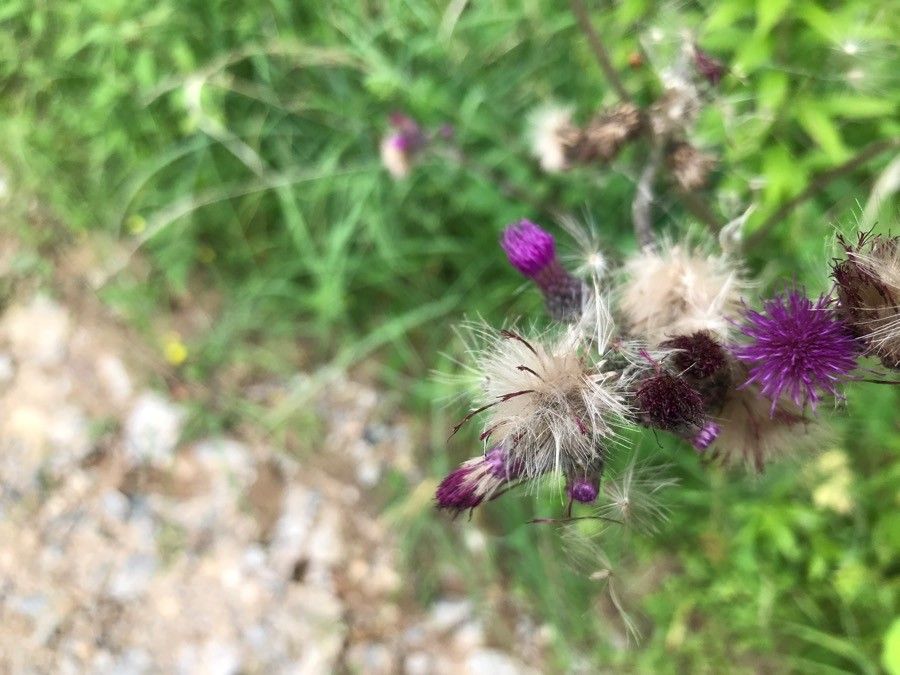
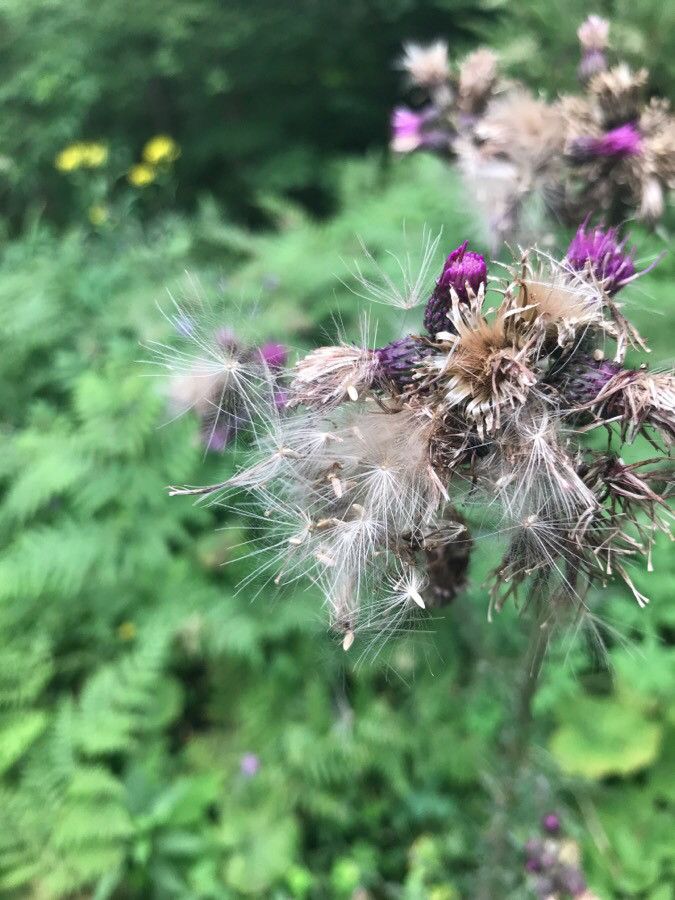
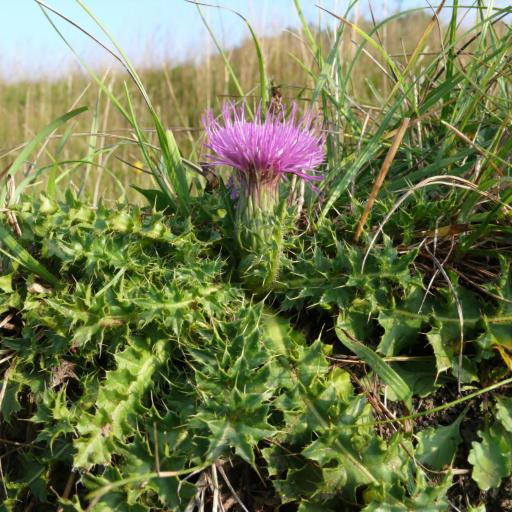
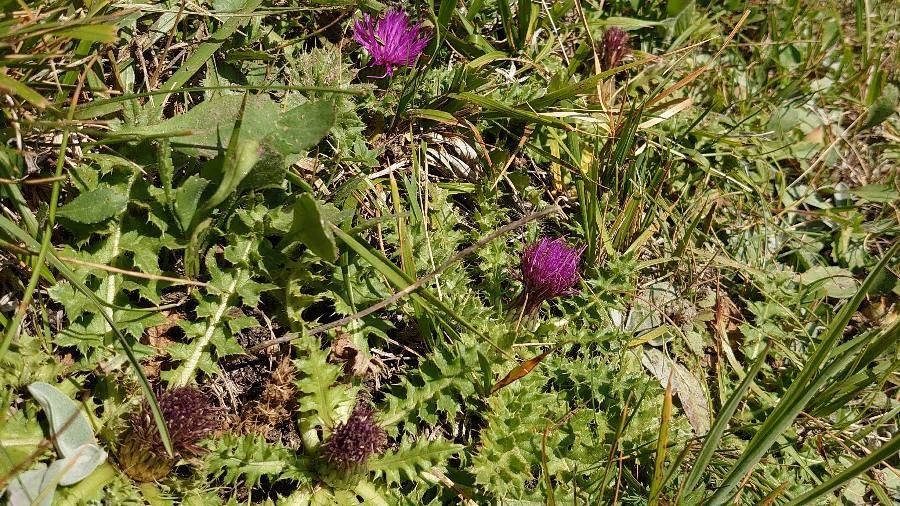
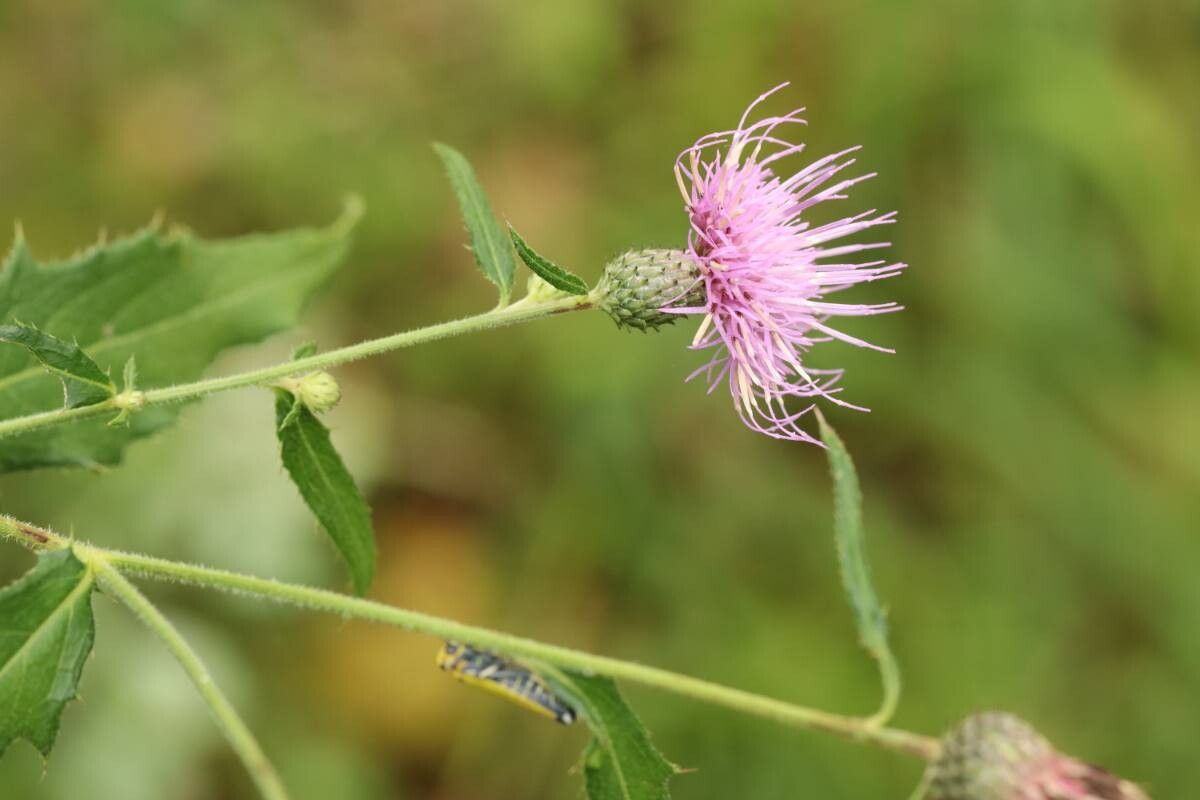
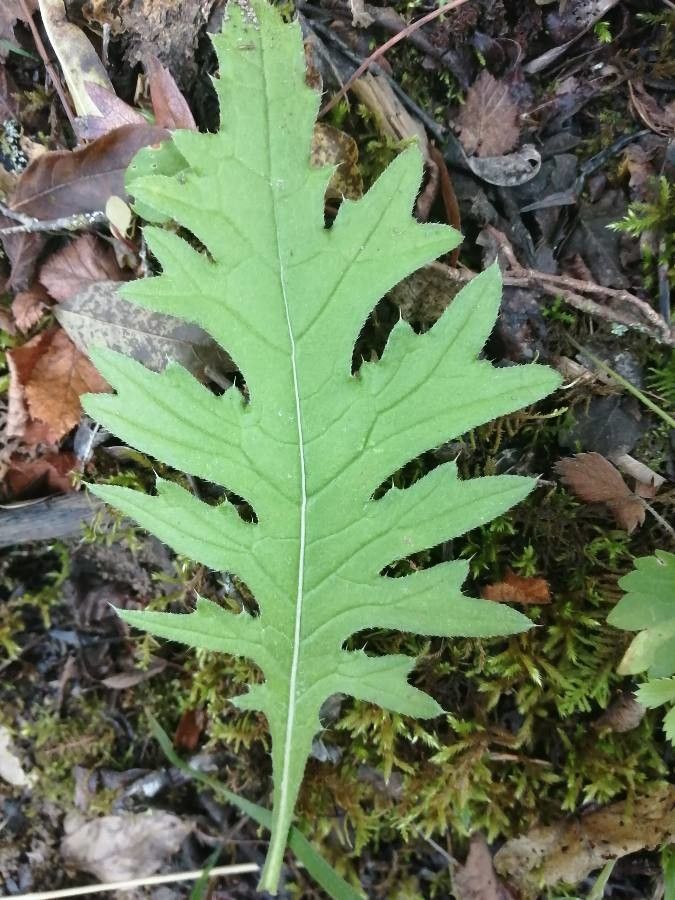
Cirsium palustre, the marsh thistle or European swamp thistle, is a herbaceous biennial (or often perennial) flowering plant in the family Asteraceae.Cirsium palustre is a tall thistle which reaches up to 2 metres (7 ft) in height. The strong stems have few branches and are covered in small spines. In its first year the plant grows as a dense rosette, at first with narrow, entire leaves with spiny, dark purple edges; later, larger leaves are lobed. In the subsequent years the plant grows a tall, straight stem, the tip of which branches repeatedly, bearing a candelabra of dark purple flowers, 10–20 millimetres (0.4–0.8 in) with purple-tipped bracts. In the northern hemisphere these are produced from June to September. The flowers are occasionally white, in which case the purple edges to the leaves are absent.The plant provides a great deal of nectar for pollinators. It was rated first out of the top 10 for most nectar production (nectar per unit cover per year) in a UK plants survey conducted by the AgriLand project which is supported by the UK Insect Pollinators Initiative.It is native to Europe where it is particularly common on damp ground such as marshes, wet fields, moorland and beside streams. In Canada and the northern United States, it is an introduced species that has become invasive. It grows in dense thickets that can crowd out slower growing native plants.
Marsh thistle has good resistance to disease and is generally not prone to illnesses. However, it can be vulnerable to pests and diseases present in its surroundings. Such infections are usually not severe. For care, this plant requires moderate maintenance. It should be pruned regularly to keep a neat appearance and healthy growth. Fertilizing can also help encourage flowering. Marsh thistle is suitable for anyone with an outdoor area, such as a garden or patio, and does not demand extensive gardening experience. It may need more attention when grown indoors.
How to keep Cirsium Palustre.
Light
Marsh thistle does best in areas receiving abundant sunlight but can tolerate places with moderate sun. Its native habitat includes strong sunlight, which greatly supports its well-being. At different stages of growth, adequate light is necessary. Too little or too much sunlight can negatively affect the plant's development.
Water
The marsh thistle thrives in wet meadows and marshes, preferring consistently moist soil and high humidity. It is well-suited to wet conditions and needs weekly watering to stay hydrated. Generally grown outdoors, the marsh thistle benefits from the regular rainfall typical of its native climate.
Temperature
Marsh thistle grows best in temperate regions, preferring temperatures of 68 to 95°F (20 to 35°C). It adapts to seasonal shifts and can tolerate a slight drop in temperature during winter, though maintaining the optimal range when possible is ideal.
Fertilizer
Marsh thistle requires regular fertilization to encourage flowering but does not tolerate excessive amounts. It needs small, frequent applications of fertilizer throughout its entire life cycle, especially during the peak period of active growth and while it is flowering. You will feed your Marsh thistle until they stop blooming.
Botanical profile.
- Plant Type
- Herb
- Life Cycle
- Biennial, Perennial, Annual
- Genus
- Cirsium
- Family
- Asteraceae
- Hardiness Zone
- 4-8
- Mature Height
- 2.13 m
- Mature Spread
- 40 cm
- Leaf Color
- Green
- Leaf Type
- Deciduous
- Flower Color
- Purple, Lavender
- Flower Size
- 2.54 cm
- Bloom Time
- Early summer, Mid summer
- Planting Time
- Spring
- Harvest Time
- Mid summer
- Native Area
- Austria, Sweden, Slovakia, Montenegro, Croatia, Slovenia, Belarus, Russia, Germany, Estonia, Romania, Latvia, Belgium, Moldova, Netherlands, France, Portugal, Czech Republic, Poland, Ukraine, Serbia, Lithuania, Norway, Italy, Spain, Switzerland, Denmark, Finland, Albania, Ireland, United Kingdom, Hungary
Other names.
Reader questions.
How should I water my Marsh thistle plant?
To properly water the Marsh thistle, use filtered water at room temperature. Tap water may contain harmful particles, so filtered water is preferred. The plant is accustomed to warmth, so avoid using cold water as it can be a shock to the plant. Additionally, do not water from above as it can lead to issues with the leaves. Instead, saturate the soil with filtered room temperature water until it is fully soaked. This watering method benefits the plant by keeping the roots moist and enabling them to spread and absorb the necessary nutrients from the soil.
What are the sunlight requirements for Marsh thistle?
Marsh thistle requires full sunlight to thrive, with ideal conditions being above 6 hours of sunlight daily. However, it can also tolerate partial sun, needing about 3-6 hours of sunlight. Ensuring your garden provides a good balance of light and shade is crucial for the well-being of your plants. The plant's native habitat involves substantial exposure to sunlight, which is vital for its growth. Different phases of growth may demand varying amounts of sunlight, and both too little and too much sunlight can have negative impacts on the plant's development.
What is the ideal temperature range for Marsh thistle?
Marsh thistle thrives in temperate climates with the ideal temperature range being between 68 to 95°F (20 to 35°C). Although it adapts well to changing seasons and can tolerate a slight decrease in temperature during winter, maintaining the optimal temperature range is beneficial for its growth. Marsh thistle exhibits strong cold resistance, meaning special frost protection measures are not typically necessary. However, in conditions where winter temperatures are expected to drop below -30°C, providing cold protection by covering the plant with soil or straw is important. Additionally, watering the plant abundantly before the first freeze in autumn to ensure the soil remains moist can prevent drought and water scarcity during winter and early spring.
If I give my Marsh thistle too much or too little water, what should I do?
It's important to avoid both overwatering and underwatering your Marsh thistle, but overwatering is a more common problem. When the plant receives too much water, its stems and leaves may wilt and turn yellow. Prolonged overwatering can also cause diseases like root rot, mold, and mildew, which can be fatal for the plant. Underwatering is less common, as the Marsh thistle has good drought tolerance, but it can still happen. When underwatering occurs, the leaves will become brittle and brown. To care for your Marsh thistle, it's crucial to recognize the signs of overwatering early. Some diseases caused by overwatering, like root rot, may be irreversible if not addressed promptly. If you notice signs of overwatering, reduce your watering schedule and check the soil drainage. If the soil drains poorly, replace it with a loose, well-draining potting mix. If your Marsh thistle shows signs of underwatering, simply increase your watering frequency until the signs improve.
How can artificial lighting be used for Marsh thistle indoors?
Indoor Marsh thistle plants require adequate lighting to grow optimally. During winter or in less sunny spaces, artificial lights can compensate for the lack of natural sunlight. LED lights are recommended for their capability to provide specific wavelengths needed by plants. Full sun plants need 30-50W/sq ft, partial sun plants need 20-30W/sq ft, and full shade plants need 10-20W/sq ft of artificial light. The light source should be placed 12-36 inches above the plant, mimicking natural sunlight as closely as possible. Additionally, mimicking natural daylight hours, most plants will need 8-12 hours of light per day.
How does low temperature affect Marsh thistle, and what are the solutions?
Marsh thistle is known for its cold tolerance, flourishing best when the temperature remains above 20°C (68°F) and generally should be kept above 0°C (32°F). When the temperature falls below -30°C (-22°F), there might not be visible changes during the winter, but a decrease in sprouting or a complete lack of sprouting might occur in spring. In such cases, it's advisable to remove any parts of the plant that have failed to sprout in spring as a part of the plant care routine.
How often should I give water to my Marsh thistle?
If your Marsh thistle is in a pot, you can check if it needs water by sticking your finger into the soil. If the top two to three inches of soil feel dry, it's time to water it. If you have your Marsh thistle planted outdoors in the ground, you can use the same method. Once the top few inches of soil have dried out, it's time to water it. Typically, in the spring and early fall, you will need to water this plant about once a week. However, during very hot weather, you may need to water it twice a week or more. It is worth noting that mature and well-established Marsh thistles are quite resilient and can withstand drought conditions.
What are the signs of insufficient sunlight in Marsh thistle?
When Marsh thistle is grown indoors or in conditions with inadequate light, it may show symptoms such as smaller new leaves, leggy or sparse growth, faster leaf drop, slower or no new growth, and lighter-colored new leaves. Insufficient sunlight affects the plant's chlorophyll and nutrient levels, leading to issues like chlorosis (leaves turning yellow) and potentially other conditions like sunscald, leaf curling, wilting, and leaf scorching from excessive sunlight.
What effect does high temperature have on Marsh thistle, and how can it be mitigated?
During the summer, it's essential to ensure that Marsh thistle's temperature does not exceed 35°C (95°F). Temperatures above 38°C (100°F) can cause the leaves to lighten in color, become prone to curling, susceptible to sunburn, and in severe cases, lead to the entire plant wilting and drying out. To mitigate these issues, trim away the sunburned and dried parts of the plant. Moving the plant to a shaded location or using a shade cloth can protect it from the midday and afternoon sun. Watering the plant in the morning and evening helps keep the soil moist, reducing stress on the plant.
How much water does the Marsh thistle need?
To ensure your Marsh thistle receives proper watering, don't be afraid to give it a generous amount. When the top two to three inches of soil are dry, it's time for a thorough watering. Make sure the soil is completely soaked, allowing excess water to drain through the pot's bottom drainage holes. If you don't see any excess water draining, it means you haven't given enough water. However, be cautious of letting water accumulate in the soil, as this can harm the plant. On the other hand, if water doesn't drain properly, it might indicate that the soil doesn't drain well, which is not good for the plant's health. If the plant is outside, receiving around one inch of rain per week should be enough.
What solutions can be applied to Marsh thistle suffering from insufficient sunlight?
To address insufficient sunlight for Marsh thistle, indoor plants can be gradually moved to sunnier locations or provided with artificial light to ensure at least 6 hours of direct sunlight daily. If moving the plant isn't feasible due to its size, using a desk or ceiling lamp for at least 8 hours daily or investing in grow lights can offer an effective solution. For outdoor plants, selecting the optimal sunlight spot and moving the plant gradually to avoid sunburn is key. Minimizing obstructions such as pruning trees can also help, as can transplanting smaller plants during their dormant period to a location with ample sunlight and good drainage.
How do I water my Marsh thistle as it grows?
The water needs of the Marsh thistle can change depending on its growth stages. For instance, when the plant is in its early years or has recently been transplanted, it requires more water than usual. During these stages, the Marsh thistle focuses on developing new roots to support future growth, which requires extra moisture. As the plant matures, it will need less water. Additionally, the bloom period is another stage where the Marsh thistle may require more water due to the significant amount of moisture needed for flower development.