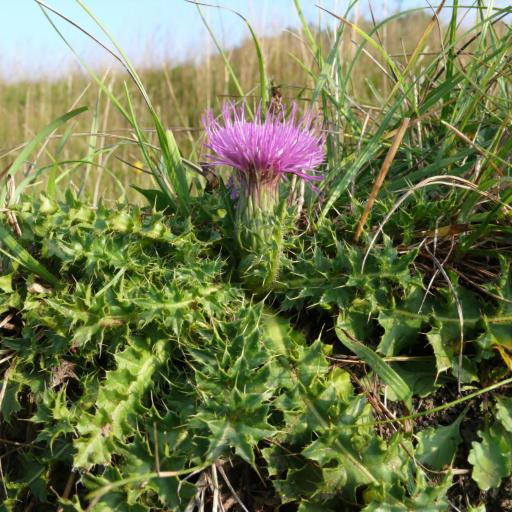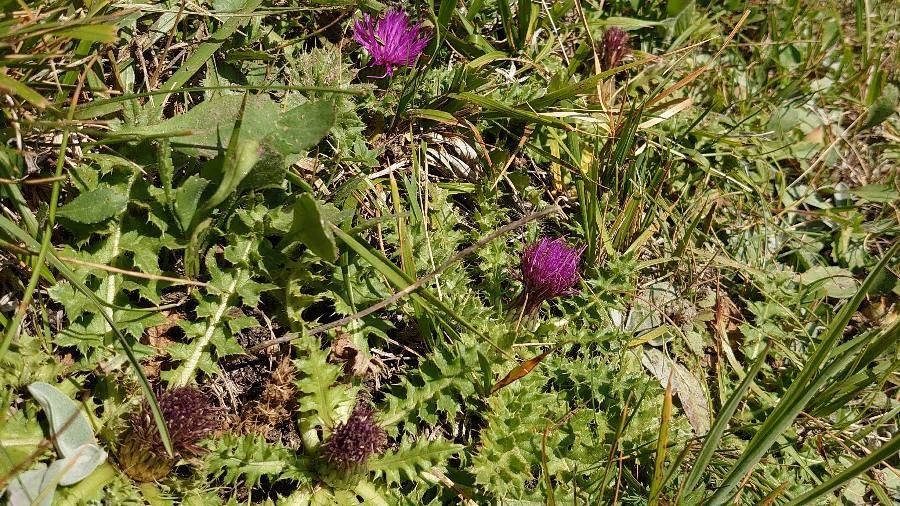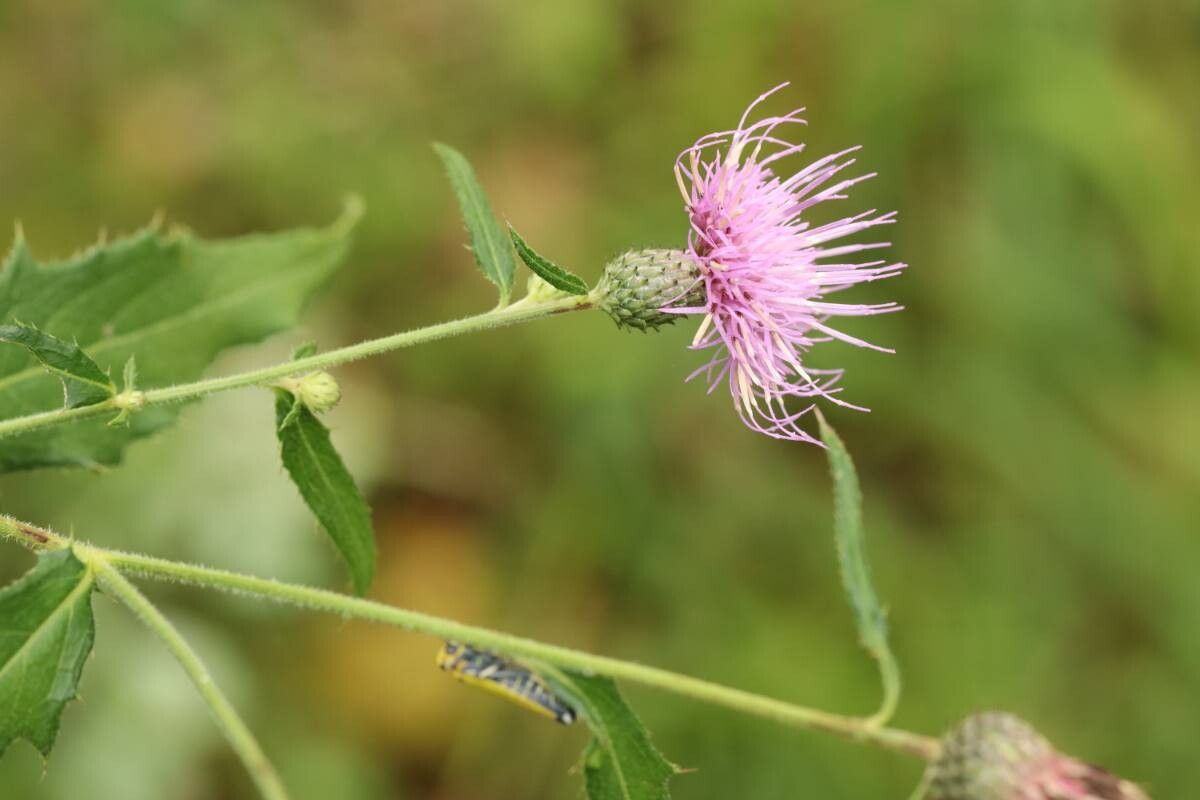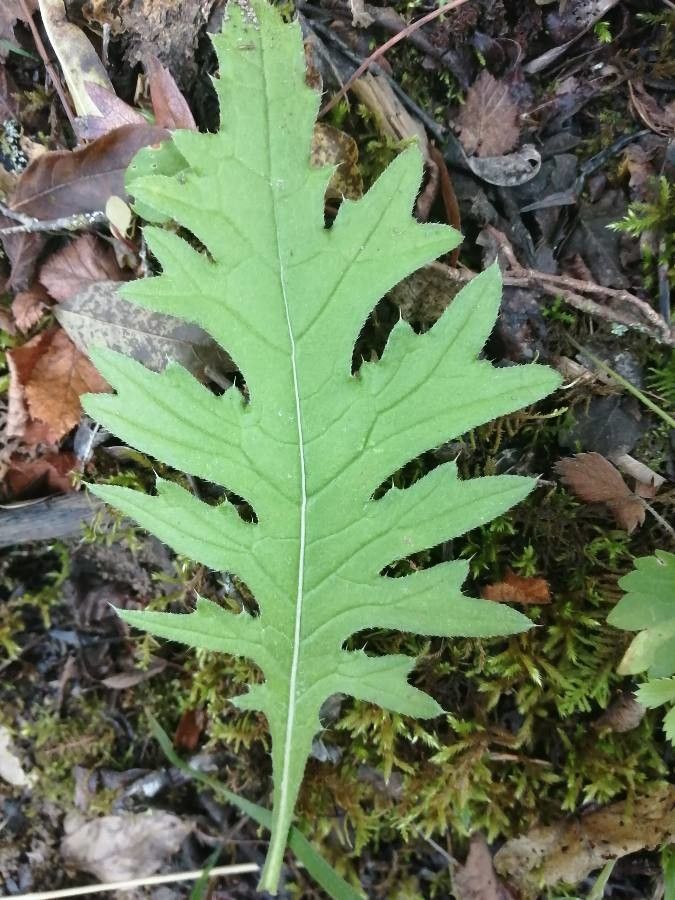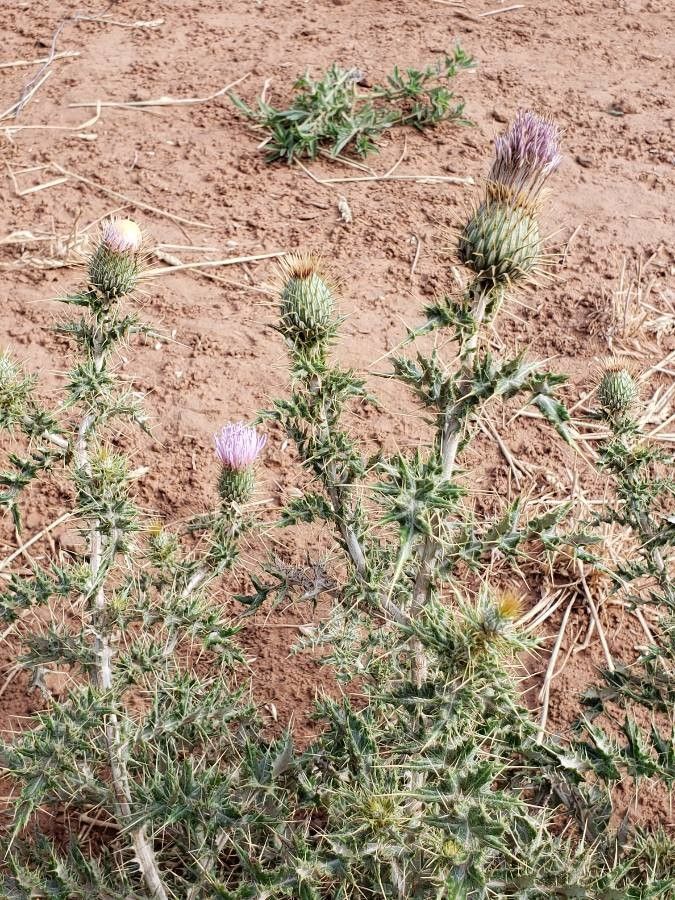
Cirsium ochrocentrum, commonly known as the yellowspine thistle, is a thistle species native to North America. This perennial plant can grow up to 1.5 meters tall and is characterized by its spiny leaves and stems. The pink-purple flowers bloom from June to August.
Yellowspine thistle is commonly found in open areas such as meadows, prairies, and along roadsides. It thrives in well-drained soils and full sun exposure.
Historically, Native Americans have utilized Cirsium ochrocentrum for medicinal purposes, treating ailments such as headaches, stomachaches, and skin irritations.
Despite its spiny nature, which makes it difficult to handle and graze for livestock like cattle and horses, this plant plays a crucial role in the ecosystem. Its nectar-rich flowers attract pollinators such as bees, providing them with an important food source.
Overall, Cirsium ochrocentrum is a valuable plant species worth conserving due to its ecological and medicinal significance.
Yellow-spine thistle has strong resistance to disease and is generally not prone to illnesses. Nonetheless, it can be vulnerable to pests and diseases found in its environment. Such infections are typically mild. Regarding care, this plant needs moderate maintenance. It should be pruned on a regular basis to preserve a neat appearance and encourage healthy growth. Applying fertilizer can also help encourage flowering. Yellow-spine thistle is appropriate for anyone with outdoor space, like a garden or a patio, and does not demand extensive gardening experience. It may need more attention when cultivated indoors.
How to keep Cirsium Ochrocentrum.
Light
Yellow-spine thistle is a perennial herbaceous plant that favors sunny sites and originates in open habitats, often flourishing in meadows and grasslands. It prefers full sun but can tolerate partial sun.
Temperature
Yellow-spine thistle can tolerate a broad range of temperature conditions, though its distribution may still be restricted by different combinations of moisture and heat. It performs best in warm summer climates with adequate rainfall or watering. Extended periods of cloudy, rainy weather, as well as prolonged high temperatures, can increase the chance of Yellow-spine thistle dying. In winter, protecting the plant from cold can boost its survival rate.
Fertilizer
Applying fertilizer once in spring is generally enough for Yellow-spine thistle, though repeated feedings can boost growth. Fertilize about every one to one and a half months. Feeding improves the leaves' appearance and function, helping maintain even color and a healthy texture. It also encourages root development and nutrient uptake, supporting long-term plant health.
Pruning
The yellow-spine thistle is known for its unique yellow spines. To encourage healthy growth, it benefits from pruning in early spring. Trim back any damaged stems to manage the plant's size and enhance air circulation. Be sure to sterilize your tools to prevent the spread of diseases and reduce pest problems, helping to keep the plant healthy and attractive.
Botanical profile.
- Plant Type
- Herb
- Life Cycle
- Perennial
- Genus
- Cirsium
- Family
- Asteraceae
- Hardiness Zone
- 4-8
- Mature Height
- 0.49 m to 1.52 m
- Mature Spread
- 30 cm to 61 cm
- Leaf Color
- Green, Gray
- Leaf Type
- Deciduous
- Flower Size
- 3.05 cm to 5.08 cm
- Bloom Time
- Summer
- Planting Time
- Spring, Summer, Autumn
- Harvest Time
- Late summer, Early fall, Mid fall
- Native Area
- Mexico