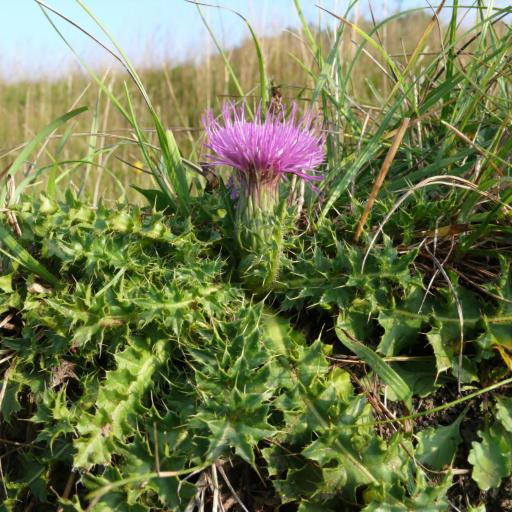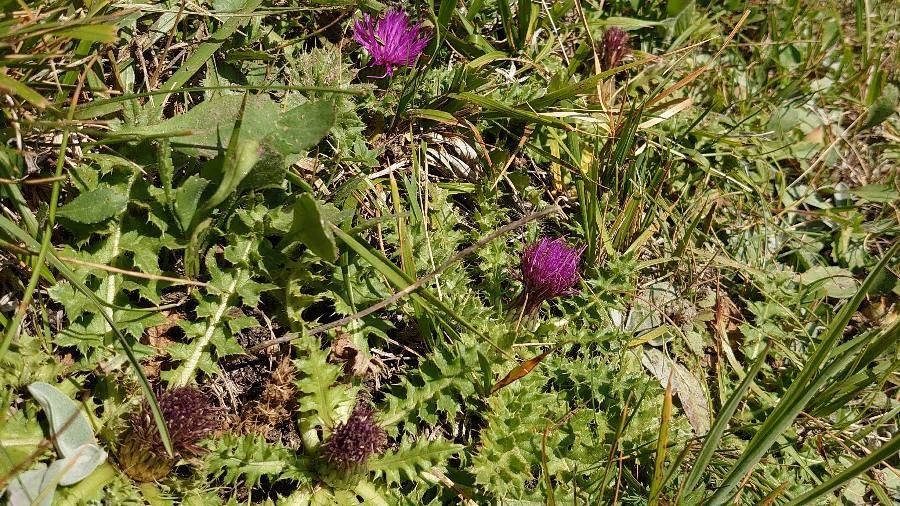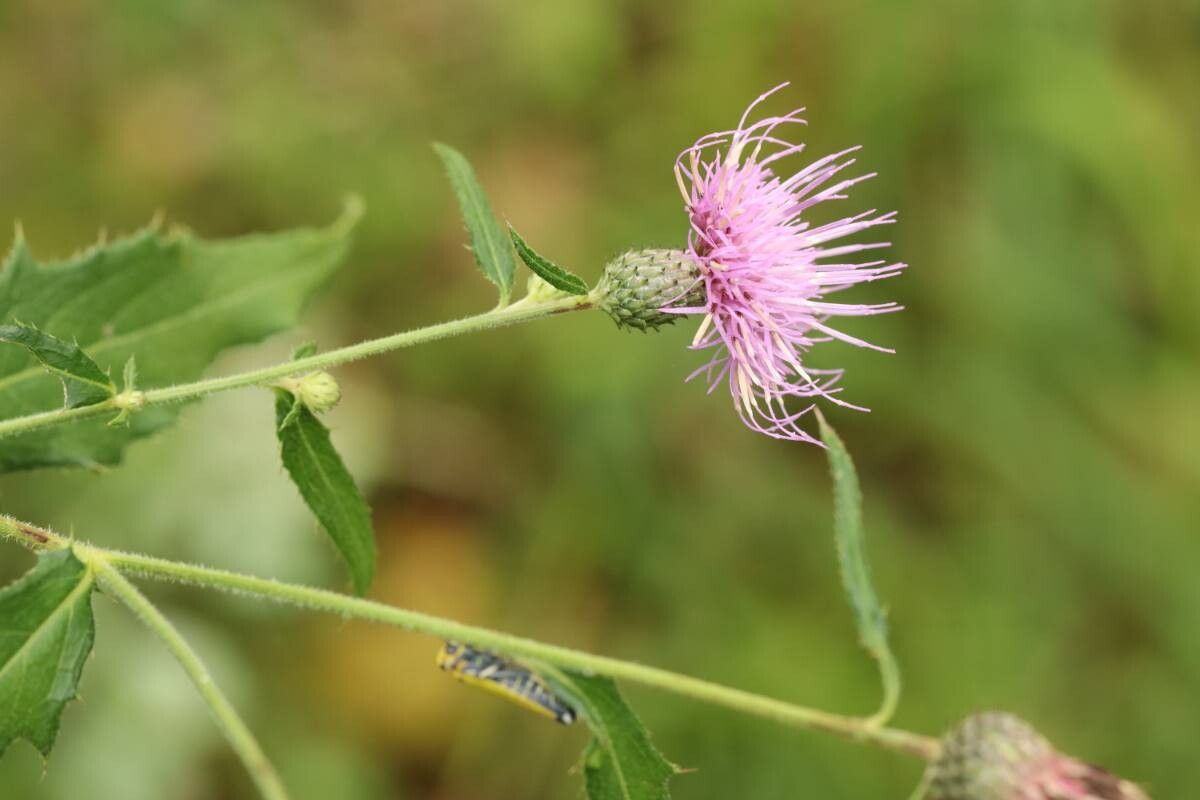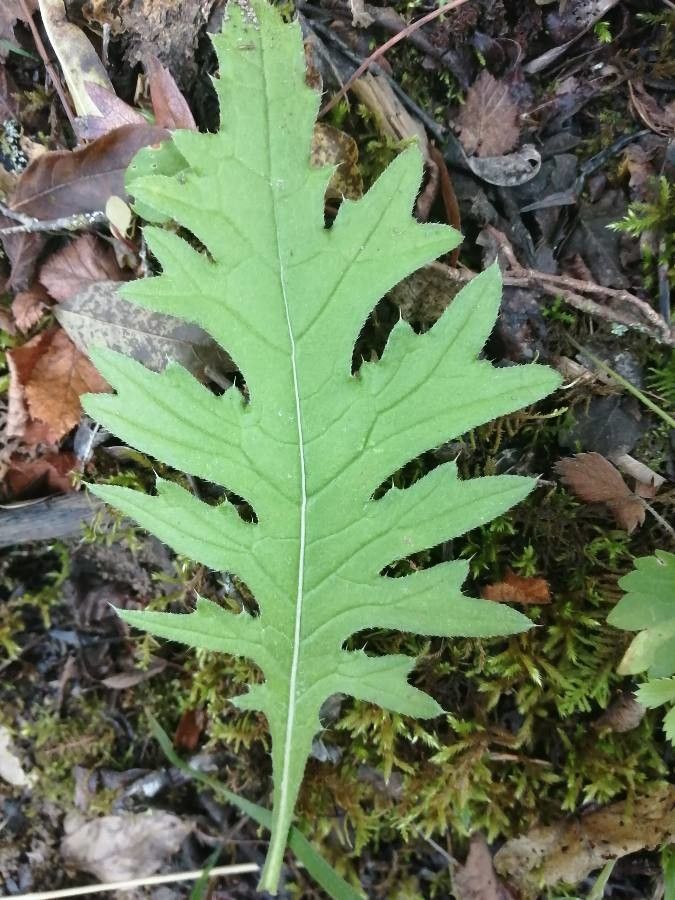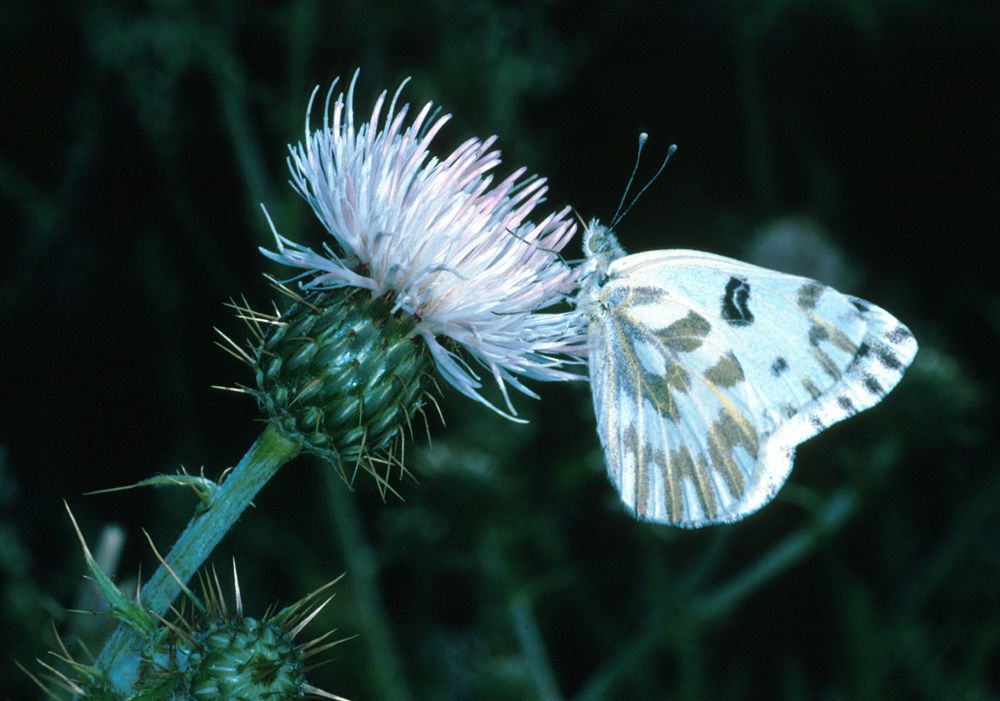
Cirsium mohavense, commonly known as the Mohave thistle, is a perennial herbaceous plant belonging to the Asteraceae family. Native to the Mojave Desert regions of California and Nevada in the United States, it grows to a height of 1 to 2 meters. The plant features a woody stem and spiny, deeply lobed leaves. Its pink-purple flowers bloom from May to August. The Mohave thistle thrives in dry, sandy soils found in desert habitats such as washes, slopes, and rocky areas. It is well-adapted to the harsh desert environment, thanks to its deep taproot system that allows it to access water from underground sources. Historically, Native American tribes have used the Mohave thistle for medicinal purposes, including treating skin ailments and digestive issues. However, it is important to note that some species of Cirsium can be toxic if ingested by livestock. Cirsium mohavense plays a crucial role in its ecosystem by providing food for pollinators such as bees and butterflies. Additionally, its spiny leaves offer protection for small animals like rodents against predators. Despite facing threats from habitat loss due to human activities like mining and urbanization, Cirsium mohavense remains a vital component of the Mojave Desert ecosystem. Its unique adaptations enable it to survive extreme conditions while offering ecological benefits to other species within its habitat range.
Mojave thistle is fairly disease-resistant and usually not prone to illnesses. However, it can be affected by pests and diseases present in its surroundings. These infections are typically mild. For care, the plant needs moderate maintenance. It should be pruned regularly to preserve a good appearance and healthy growth. Fertilizing can also help encourage flowering. Mojave thistle is suitable for people with outdoor areas like a garden or patio and does not demand much care experience. It may require more attention when grown indoors.
How to keep Cirsium Mohavense.
Light
Mojave thistle comes from well-lit, open habitats and grows best in full sun. It tolerates some shade but favors direct sunlight for peak development. This species, which can be annual or biennial, is recognized for its preference for sunny conditions.
Temperature
Mojave thistle is fairly adaptable to temperature, able to endure higher heat and wide temperature fluctuations. In hot weather, you should monitor watering and provide suitable shade to prevent sunburn. On the other hand, Mojave thistle tolerates low temperatures poorly; while it can handle some cold, very cold conditions may cause frost damage.
Fertilizer
Mojave thistle are regarded as heavy nutrient feeders. They need frequent, small applications of nitrogen and potassium fertilizers and periodic doses of phosphorus, micronutrients, sulfur, and magnesium to maintain strong growth and bright coloration. Fertilization should be continuous throughout the growing season to prevent deficiency symptoms and sustain optimal growth.
Botanical profile.
- Plant Type
- Herb
- Life Cycle
- Biennial
- Genus
- Cirsium
- Family
- Asteraceae
- Hardiness Zone
- 7-10
- Mature Height
- 0.49 m to 1.52 m
- Mature Spread
- 30 cm to 61 cm
- Leaf Color
- Green, Gray
- Leaf Type
- Deciduous
- Flower Color
- Purple, Lavender
- Flower Size
- 2.03 cm to 4.06 cm
- Bloom Time
- Early summer, Mid summer
- Planting Time
- Spring, Summer, Autumn
- Harvest Time
- Mid summer, Late summer
- Native Area
- Mexico