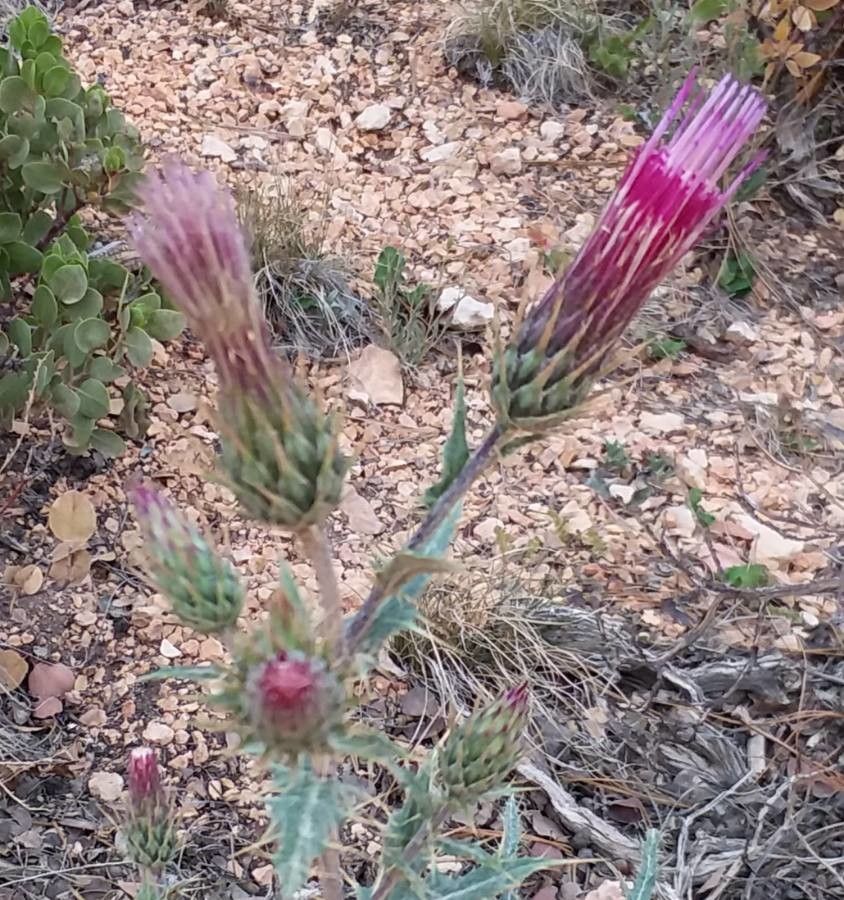
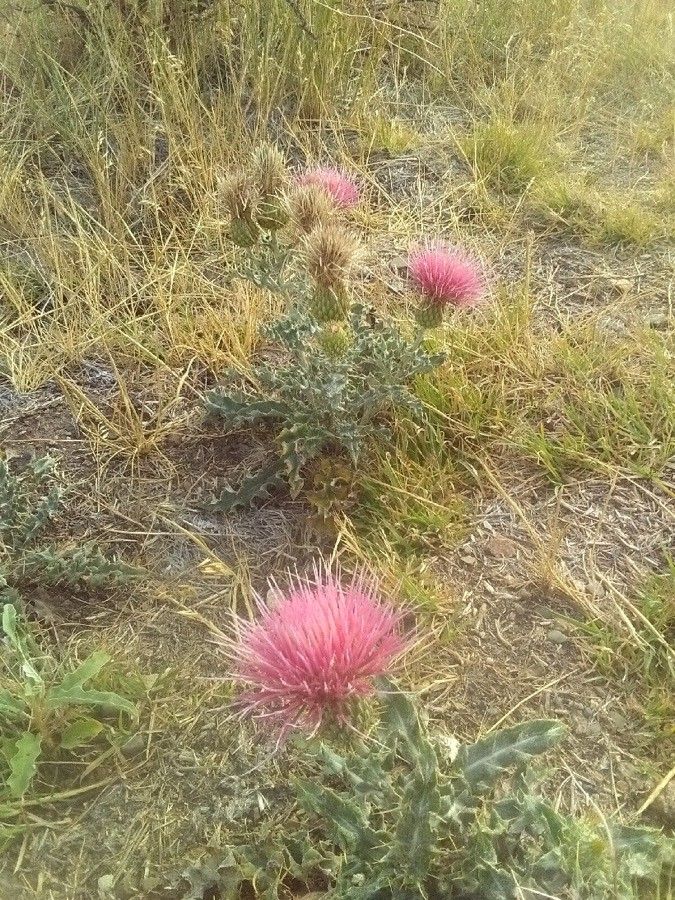
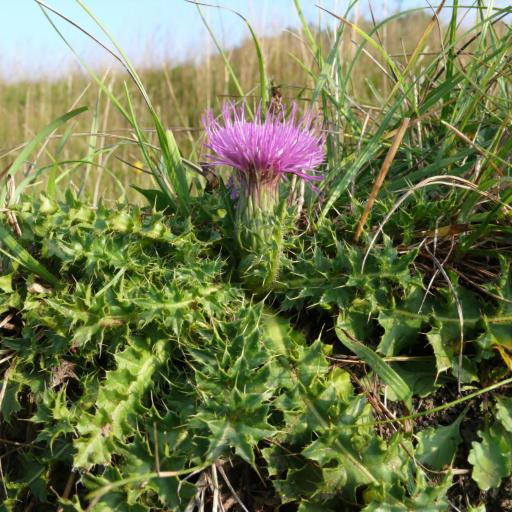
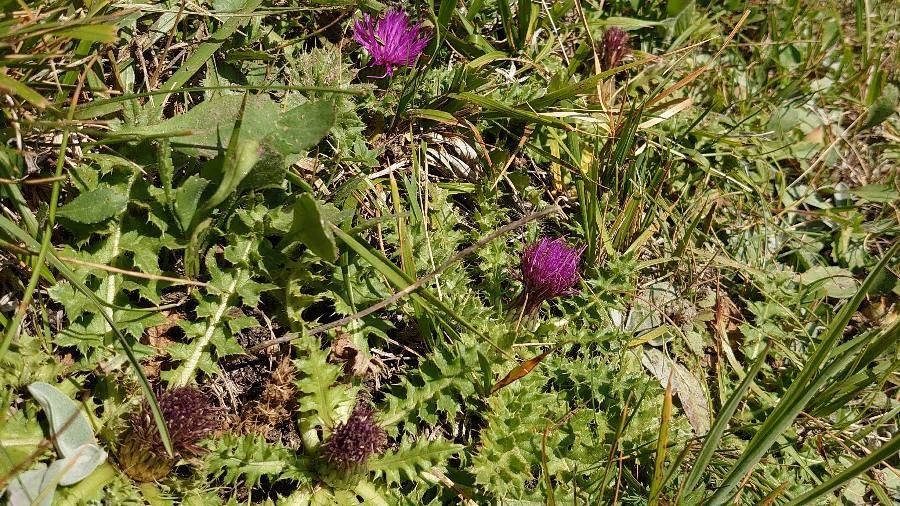
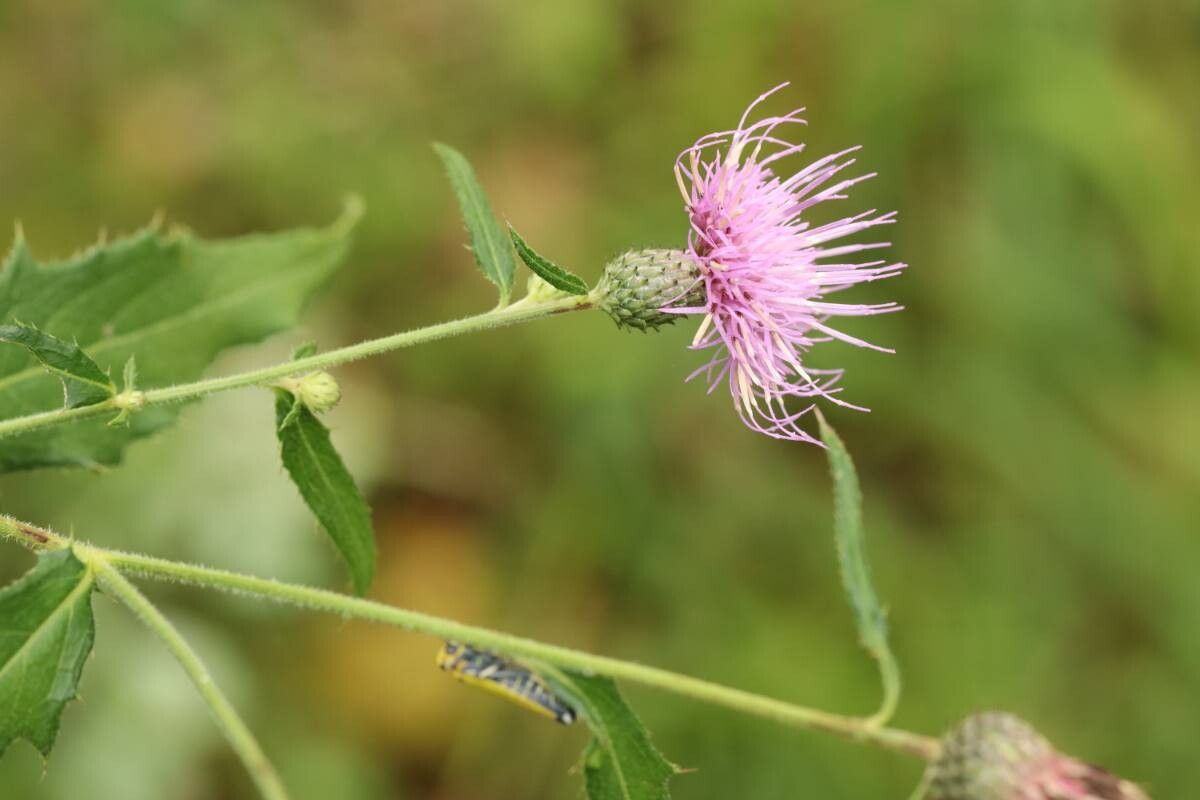
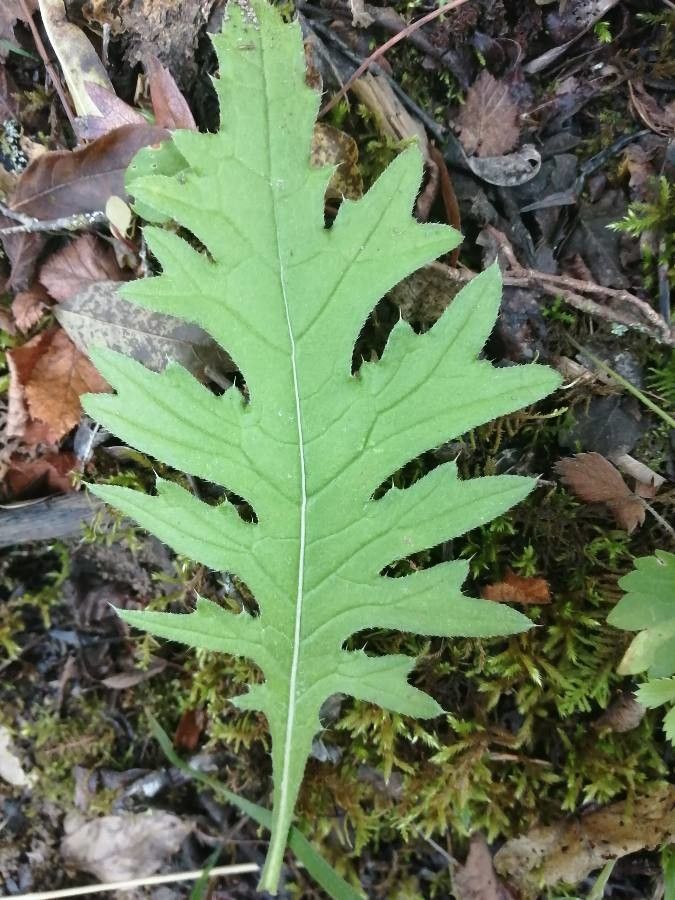
Cirsium arizonicum, the Arizona thistle, is a North American species of thistle in the family Asteraceae, native to the southwestern United States and northwestern Mexico. It has been found in Arizona, southeastern California, New Mexico, Nevada, Colorado, Utah, Sonora, and northwestern Chihuahua.Cirsium arizonicum is a herbaceous plant that can be either biennial or perennial, reaching 30–150 cm in height. The spiny leaves are oblong-obovate with pinate lobes; the basal leaves are larger, 10–40 cm long, while leaves on the upper stem can be only 3 cm long. The inflorescence is 3–4 cm in length and 1.5–2 cm diameter, red to pink or purple, with all the florets of similar form (no division into disc and ray florets); individual plants are very variable in the number of heads produced, from one to 100. Flowering is from mid spring to mid fall. The species occurs in mountains, at elevations of 900–3,600 m.Five varieties have been identified: Cirsium arizonicum var. arizonicum (syn. var. nidulum (M.E.Jones) S.L.Welsh) – Arizona, New Mexico, California, Nevada, Utah, Sonora, Chihuahua Cirsium arizonicum var. bipinnatum (Eastwood) D.J.Keil. Four Corners thistle – Arizona, New Mexico, Colorado, Utah, Sonora Cirsium arizonicum var. chellyense (R.J.Moore & Frankton) D.J.Keil (syn. C. chellyense R.J.Moore & Frankton) Navajo thistle – Arizona, New Mexico Cirsium arizonicum var. rothrockii (A.Gray) D.J.Keil (syn. C. rothrockii (A.Gray) Petrak). Rothrock's thistle – Arizona, New Mexico, Sonora; this variety is found on both rims of the Grand Canyon and for a short distance below. Cirsium arizonicum var. tenuisectum D.J.Keil. Desert mountains thistle – California, Nevada, Sonora
Arizona thistle is fairly resistant to disease and usually does not suffer from many ailments. However, it can be vulnerable to pests and diseases present in its environment. Such infections are typically mild. Regarding care, this plant needs moderate maintenance. It should be pruned regularly to keep a neat appearance and support healthy growth. Fertilizing can also help encourage flowering. Arizona thistle is well suited for people with outdoor areas like a garden or patio and does not demand extensive gardening experience. It may need more attention if grown indoors.
How to keep Cirsium Arizonicum.
Light
Arizona thistle does best when it gets plenty of light throughout the day. The correct amount of light is vital for its healthy growth and development. Excessive or insufficient light can cause poor growth and reduced vigor. Its preference for abundant light reflects the conditions of its native habitat.
Water
The Arizona thistle is well-suited to arid environments, showing a preference for dry conditions and handling occasional droughts with ease. It thrives with moderate watering about once a week and benefits from being outdoors, where it can take advantage of seasonal rain patterns that align with its growth cycles.
Temperature
Arizona thistle originates from climates with average temperatures of 68 to 95 °F (20 to 35 °C). The plant flourishes in those conditions and may require temperature adjustments during colder seasons.
Fertilizer
The best time to fertilize an Arizona thistle is in early spring, when it is coming out of dormancy and beginning active growth. Fertilization supplies essential nutrients for healthy development. Although Arizona thistle has fairly low fertilizer requirements, a yearly application can boost its survival and encourage better, longer-lasting flowers.
Pruning
The Arizona thistle, a perennial known for its spiny leaves and vibrant blooms, benefits greatly from early spring pruning. By trimming away dead stems and spent flowers, you can encourage new growth and prevent overcrowding. Regular pruning boosts the plant's vigor, reduces the risk of pests and diseases, and ensures a healthy display. Always use clean tools to prevent infections.
Botanical profile.
- Plant Type
- Herb
- Life Cycle
- Perennial, Biennial
- Genus
- Cirsium
- Family
- Asteraceae
- Hardiness Zone
- 6-8
- Mature Height
- 1.22 m to 1.52 m
- Mature Spread
- 30 cm to 61 cm
- Leaf Color
- Green, Dark Green
- Leaf Type
- Deciduous
- Flower Color
- Purple, Red
- Flower Size
- 2.54 cm to 5.08 cm
- Bloom Time
- Summer
- Planting Time
- Spring, Summer, Autumn
- Harvest Time
- Late summer, Early fall, Mid fall
- Native Area
- Mexico
Other names.
Reader questions.
What are the sunlight requirements for Arizona thistle?
Arizona thistle, or Cirsium arizonicum, flourishes with abundant daylight, necessitating over 6 hours of sunlight daily for optimal growth. This emphasis on substantial light exposure is vital for its development, mirroring the conditions of its native environment. The plant's need for full sun is a critical aspect of its care, underlining the importance of carefully selecting your garden's planting spots to achieve a harmonious balance of light and shade, ensuring the plants' well-being.
What are the ideal growing conditions for Arizona thistle (Cirsium arizonicum)?
Arizona thistle flourishes in climates with average temperatures ranging from 68 to 95 °F (20 to 35 °C), indicative of its preference for warmer environments. Despite its strong cold resistance, ensuring adequate temperature management during the colder months is crucial. While the plant generally does not require special frost protection, it is important to take preventative measures if winter temperatures are expected to plummet below -25°C. This involves covering the plant with insulating materials such as soil or straw. Additionally, prior to the first autumn freeze, it's recommended to water the plant thoroughly, ensuring the soil remains moist and freezes, which helps prevent drought and water scarcity throughout the winter and into the early spring.
What essentials should be considered for Arizona thistle's exposure to light?
For healthy growth and vitality of Arizona thistle, the right amount of light is crucial. Whether grown indoors or outdoors, the plant thrives under adequate exposure to natural or artificial lighting, particularly in scenarios where natural sunlight is insufficient. For indoor settings, artificial lighting becomes essential, especially during less sunny seasons. LED lights are recommended for their ability to provide specific wavelengths needed by the plant. The intensity and duration of artificial light should mimic natural sunlight as closely as possible, with suggested wattages ranging based on the plant's sunlight requirements. Placement of artificial lights should be 12-36 inches above the plant, ensuring they receive 8-12 hours of light daily.
How does Arizona thistle respond to low temperatures, and what solutions are recommended?
Arizona thistle is notably cold-tolerant, thriving best when temperatures stay above 20°C and ideally remaining above 0°C during winter. However, temperatures dropping below -25°C might not visibly affect the plant during winter, but could lead to a decrease in sprouting or a complete lack of sprouting come spring. The recommended solution for such damage is to wait until spring and then remove any parts of the plant that have failed to sprout.
What signs indicate insufficient light for Arizona thistle, and how can they be addressed?
When Arizona thistle does not receive enough light, several indicators can emerge, such as smaller new leaves, leggy growth, premature leaf drop, halted growth, lighter-colored new leaves, chlorosis, sunscald, leaf curling, wilting, and leaf scorching. To mitigate these issues, gradually increasing the plant's exposure to sunlight or utilizing artificial lights can be effective. For indoor plants, moving them to sunnier locations or using grow lights can help, while outdoor plants may benefit from strategic positioning to receive optimal sunlight. It's essential to increase light exposure gradually to prevent shock and ensure new growth is healthy. Addressing obstructions and considering transplantation during the plant's dormant period might also facilitate better light access.
What should be done if Arizona thistle is exposed to high temperatures?
In the summer, it's crucial to ensure that Arizona thistle's exposure to temperatures does not exceed 35°C. Temperatures surpassing 38°C can lead to the leaves lightening in color, becoming prone to curling, susceptibility to sunburn, and in severe cases, the entire plant wilting and drying out. To mitigate these issues, sunburned and dried-up parts should be trimmed away. The plant should be moved to a shadier location or protected from midday and afternoon sun with a shade cloth. Additionally, morning and evening watering sessions are beneficial to keep the soil moist and support plant health.