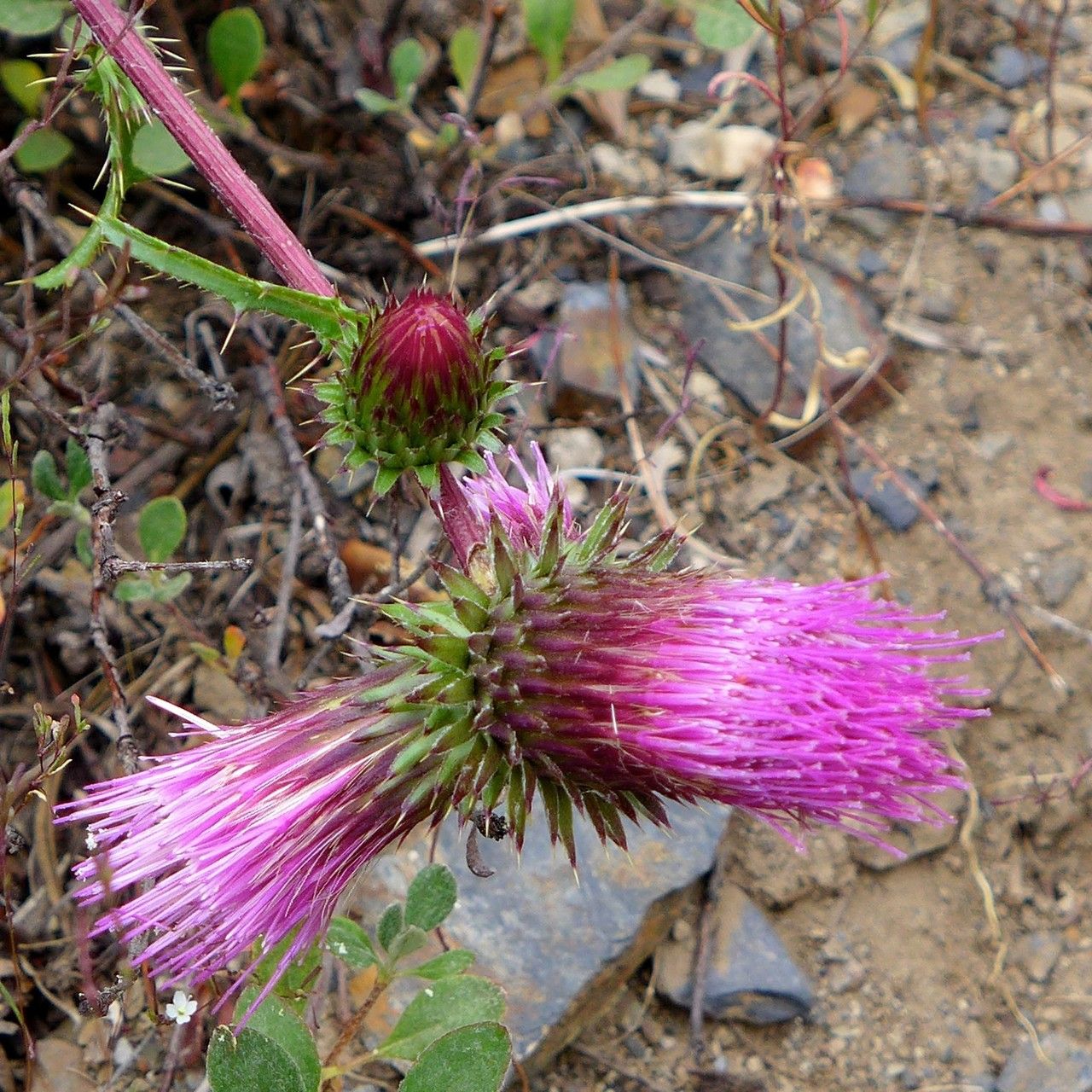
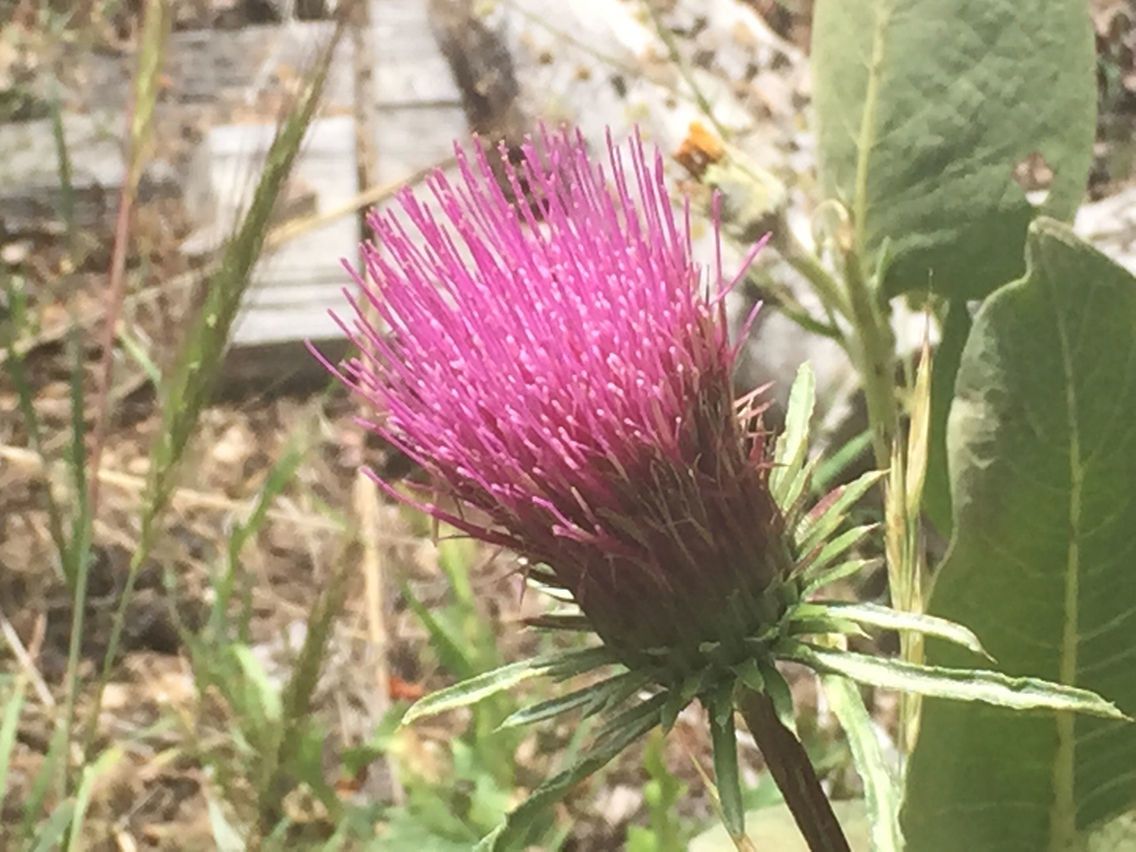
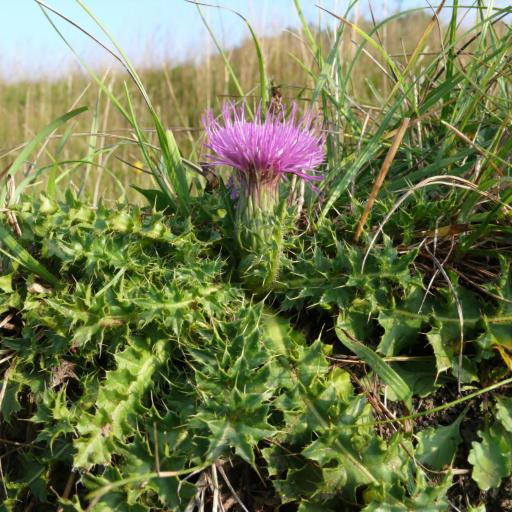
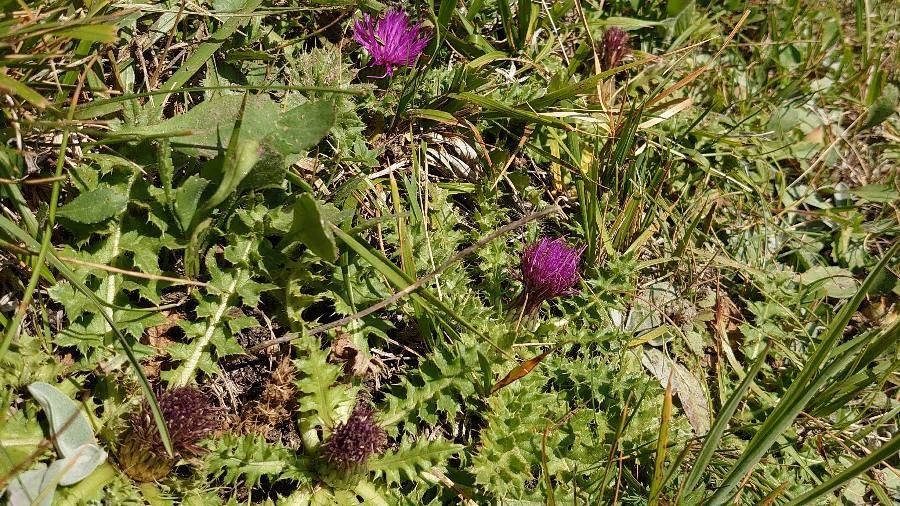
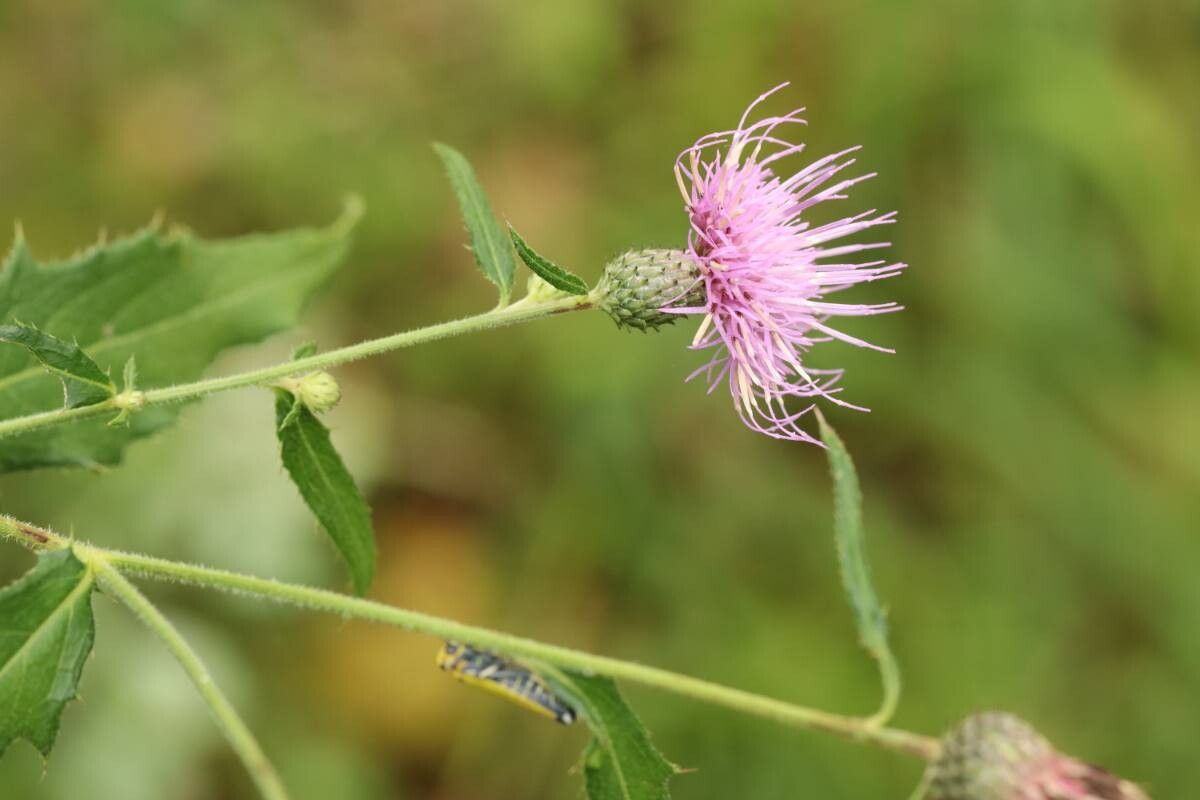
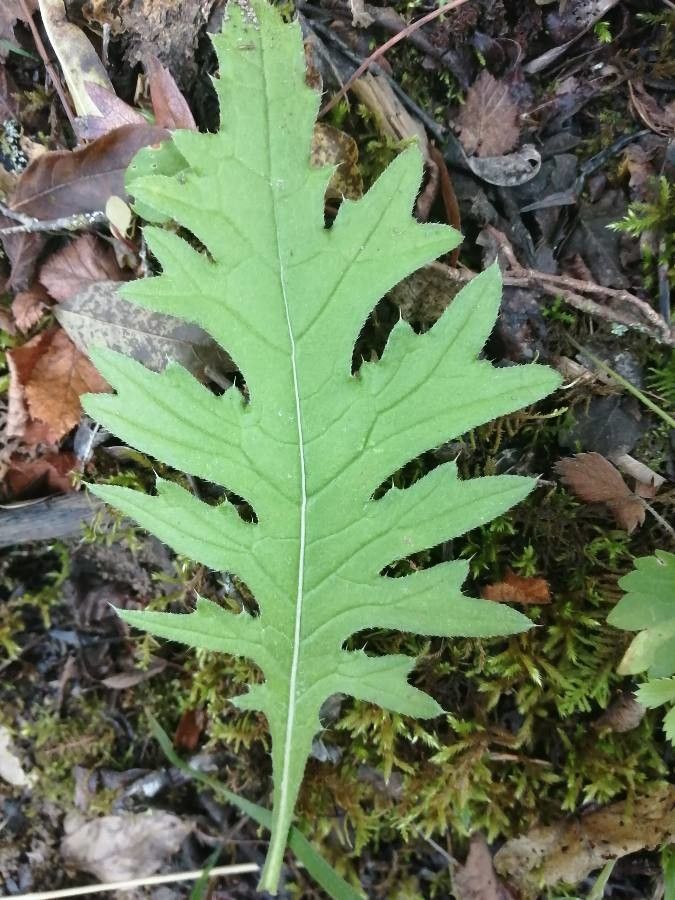
Cirsium andersonii is a North American species of thistle known by the common names Anderson's thistle and rose thistle. It is native to California, Oregon, and Nevada, where it grows in the woodlands and forest openings of the local high mountain ranges, including the Sierra Nevada and the southern Cascade Range. It has also been reported from Idaho.This native thistle is a perennial herb growing erect to a maximum height approaching 100 cm (39 in). It produces one to multiple stems, simple or branching, which may be hairless to quite woolly. The deeply lobed and sharply cut leaves are borne on spiny-winged petioles, the longest toward the base of the plant reaching over 30 centimetres (12 inches) long. The inflorescence bears one or more flower heads, each up to 5 centimeters long by 4 wide at the largest. The head is lined with spiny, purple-tipped phyllaries which curve outward. The head contains many red, purplish, or rose pink flowers, each up to 4.5 centimeters long. The fruit is an achene with a brown body 6 or 7 millimeters long topped with a pappus which may be 4 centimeters in length. The flower heads attract hummingbirds.It was originally named Cnicus andersonii after Charles Lewis Anderson by Asa Gray; its name was later changed to Cirsium andersonii by Petrak.
Rose thistle is fairly resistant to diseases and typically does not suffer from them. Still, it can be vulnerable to pests and illnesses that exist nearby. Such infections are typically mild. Regarding upkeep, this plant needs a moderate level of care. Regular pruning is necessary to keep a neat appearance and support healthy growth. Applying fertilizer can also encourage it to bloom. Rose thistle is appropriate for anyone with outdoor areas like a garden or patio and does not demand extensive gardening experience. It may need extra attention if cultivated indoors.
How to keep Cirsium Andersonii.
Light
Rose thistle is a sun-loving, perennial herbaceous plant that comes from open habitats and is frequently found in meadows and grasslands. It prefers full sun but can also tolerate partial sun.
Fertilizer
For Rose thistle, the best time to apply fertilizer is in early spring when the flowers are starting to form. The correct fertilizer promotes healthier blooms and helps Rose thistle produce attractive flowers. Fertilizing in early spring ensures strong flowers throughout the season and supplies energy for dormant growth periods.
Pruning
Pruning rose thistle in early spring improves their growth and health by removing dead stems and thinning dense areas to enhance air circulation. This practice helps prevent diseases and encourages blooming. To minimize stress and reduce the risk of infection, make sure to use clean, sharp tools.
Botanical profile.
- Plant Type
- Herb
- Life Cycle
- Perennial
- Genus
- Cirsium
- Family
- Asteraceae
- Hardiness Zone
- 4-8
- Mature Height
- 30 cm to 91 cm
- Mature Spread
- 30 cm to 61 cm
- Leaf Color
- Green, Dark Green
- Leaf Type
- Deciduous
- Flower Color
- Purple
- Flower Size
- 2.03 cm to 4.06 cm
- Bloom Time
- Summer
- Planting Time
- Spring, Summer, Autumn
- Harvest Time
- Late summer, Early fall, Mid fall
Other names.