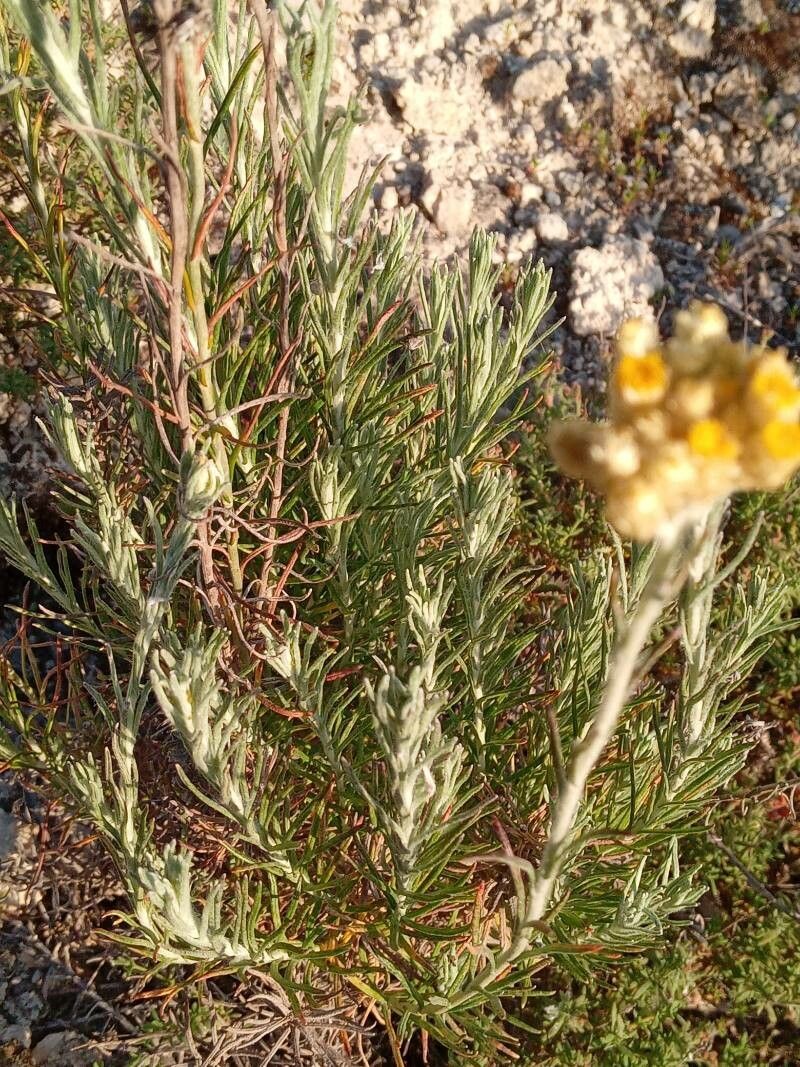
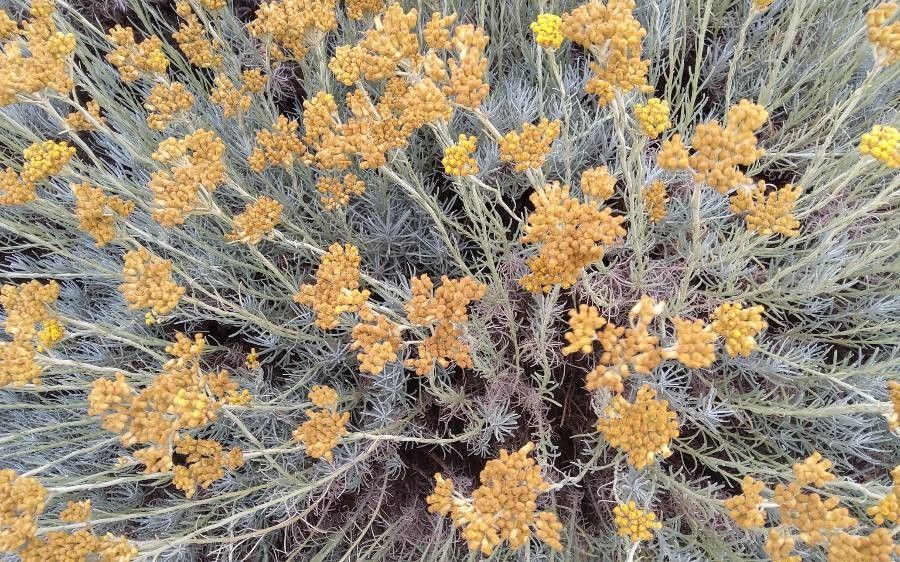
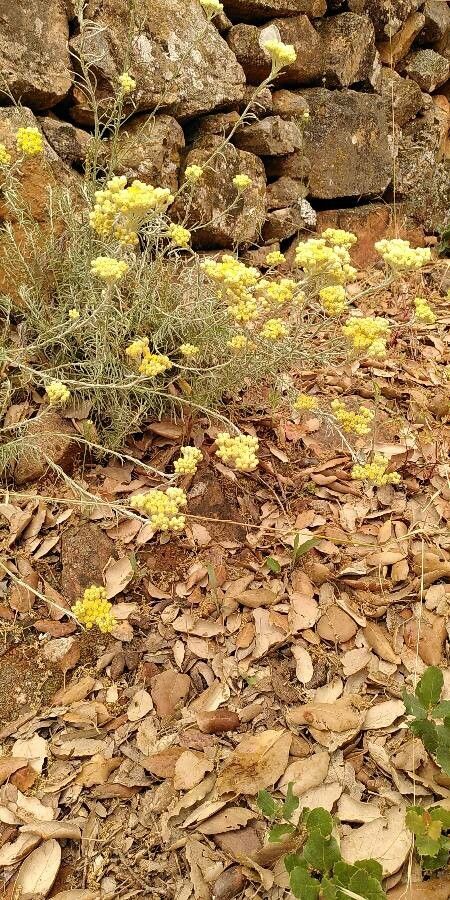
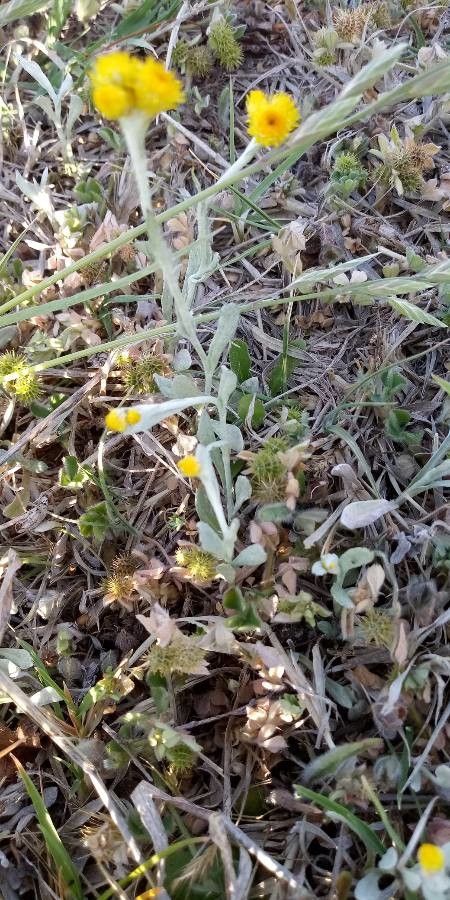
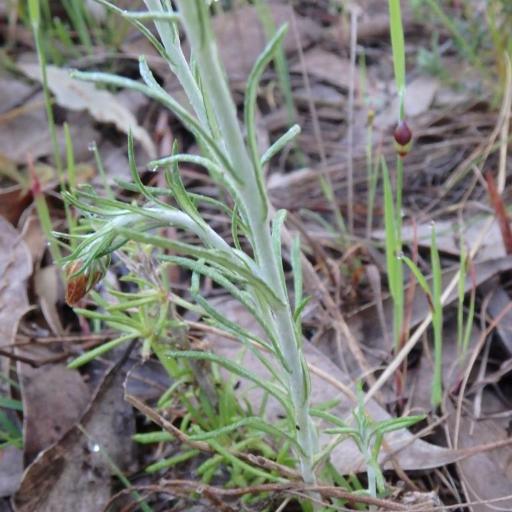
Chrysocephalum semipapposum, commonly known as clustered everlasting is a perennial shrub native to Australia. Clustered everlasting belongs to the family Asteraceae. C. semipapposum produces terminal flowers heads in clusters, mainly between spring and early summer with silver-grey appearing stems and branches. It grows up to 40cm high and 60 cm high, although there have been some varieties which can grow up to 1 m. C. semipapposum is often confused with Chrysocephalum apiculatum or 'yellow buttons', due to their similar appearances. C. semipapposum has 4 different subspecies, however they lack distinctive qualities and are often hard to identify. C. semipapposum is endemic to Australia and can be found in multiple states, most notably within Victoria. The plant is found in a variety of habitats including dry rocky regions. Clustered everlasting often grows sparsely and is rarely found in abundance and can be mistaken for a weed. Clustered everlasting has many uses, including as a source of nectar for butterflies, cut flowers or as an addition to a garden.
Clustered everlasting is fairly resistant to disease and, in general, does not tend to suffer from illnesses. That said, it can be affected by pests and diseases found nearby. When infections do occur, they are generally mild. Regarding care, this plant needs a medium level of maintenance. It should be pruned on a regular basis to preserve a neat appearance and support healthy growth. Applying fertilizer can also encourage blooming. Clustered everlasting is a good choice for anyone with outdoor space, like a garden or patio, and does not demand extensive gardening experience. When kept indoors, it may need more attentive care.
How to keep Chrysocephalum Semipapposum.
Light
Clustered everlasting is a herbaceous perennial that favors sunny conditions and originates from open habitats, often occurring in meadows and grasslands. It prefers full sun but can also tolerate partial sun.
Temperature
Clustered everlasting can tolerate a wide range of temperatures, but its occurrence may still be constrained by certain combinations of moisture and heat. It performs best in warm summer climates with enough rainfall or watering. Extended periods of cloudy, rainy weather or prolonged high temperatures increase the risk of Clustered everlasting dying. In winter, adequate protection from cold can raise the plant's survival rate.
Fertilizer
The best time to fertilize a Clustered everlasting is in early spring, as it comes out of dormancy and begins active growth. Fertilization supplies essential nutrients for healthy growth. Although Clustered everlasting has relatively low fertilizer requirements, an annual application can improve its survival and encourage better, longer-lasting flowers.
Pruning
To promote healthy growth and blooms, prune clustered everlasting regularly in early spring. Trim away dead or damaged stems as well as any leggy growth to maintain a compact shape. This will improve air circulation and reduce the risk of disease. Be sure to make clean cuts just above the leaf nodes for a vibrant display.
Botanical profile.
- Plant Type
- Herb
- Life Cycle
- Perennial
- Genus
- Chrysocephalum
- Family
- Asteraceae
- Hardiness Zone
- 8-11
- Mature Height
- 30 cm to 61 cm
- Mature Spread
- 30 cm to 49 cm
- Leaf Color
- Gray, Silver
- Leaf Type
- Evergreen
- Flower Color
- Yellow, Gold
- Flower Size
- 1.02 cm to 2.03 cm
- Bloom Time
- Mid spring, Late spring, Early summer, Mid summer
- Planting Time
- Spring, Summer, Autumn
- Harvest Time
- Summer
Other names.
Reader questions.
What amount of sunlight does Clustered everlasting (Chrysocephalum semipapposum) require?
Clustered everlasting, or Chrysocephalum semipapposum, thrives in conditions where it can receive varying degrees of sunlight. For optimal growth, these plants require 'Full sun' which means they should get above 6 hours of sunlight daily. However, they can also adapt well to 'Partial sun' conditions, receiving about 3-6 hours of sunlight. It's important to observe the movement of sunlight through your garden to ensure that you plant your Clustered everlasting in spots where they receive the perfect balance of light and shade. This careful placement will ensure your plants grow happy and healthy.
What is the Clustered everlasting?
The Clustered everlasting, known botanically as Chrysocephalum semipapposum, is a species recognized for its unique characteristics, though this particular entry does not detail those specifics, such as its essentials or symptoms it might treat or exhibit. Further information would be necessary to fully describe its attributes and uses.