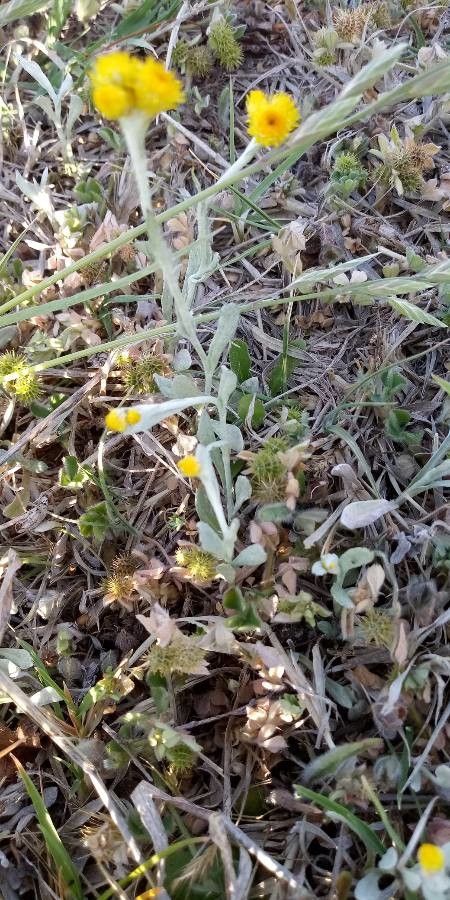
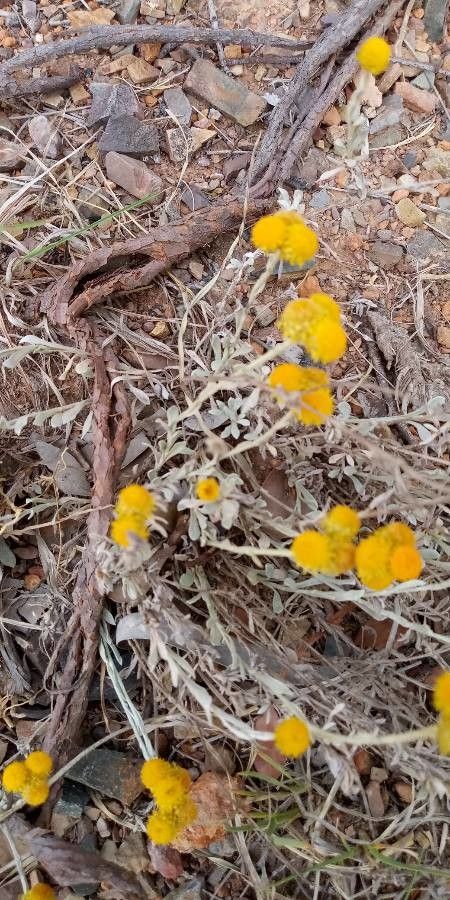
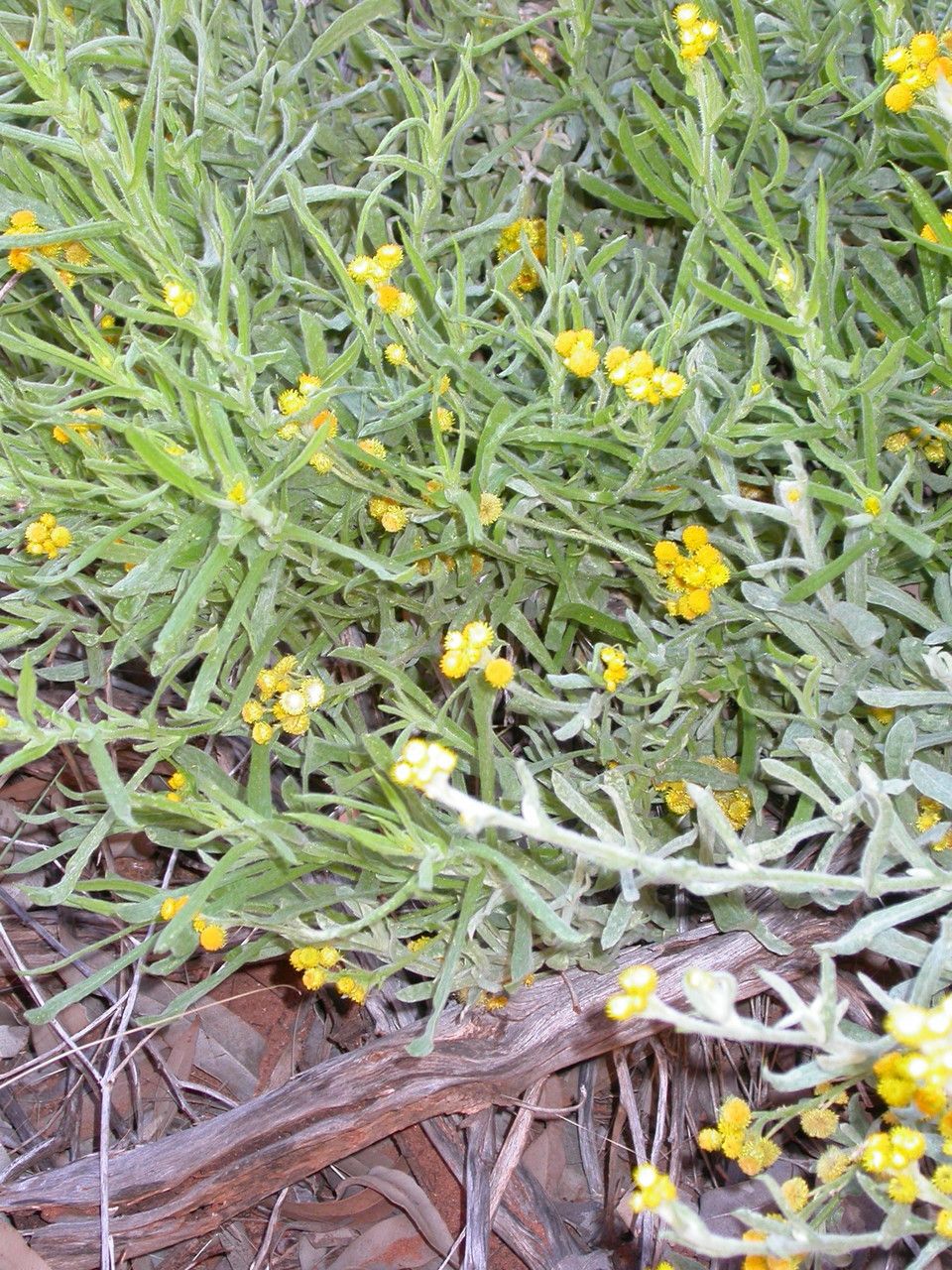
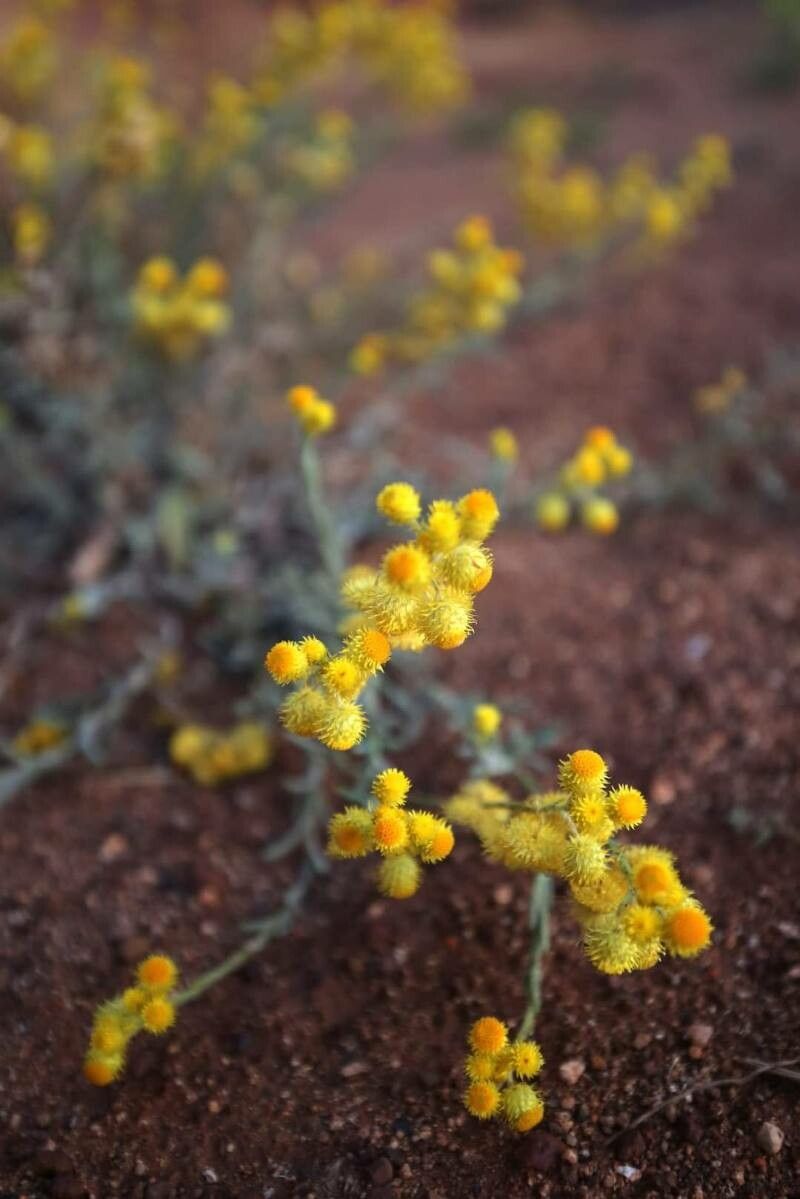
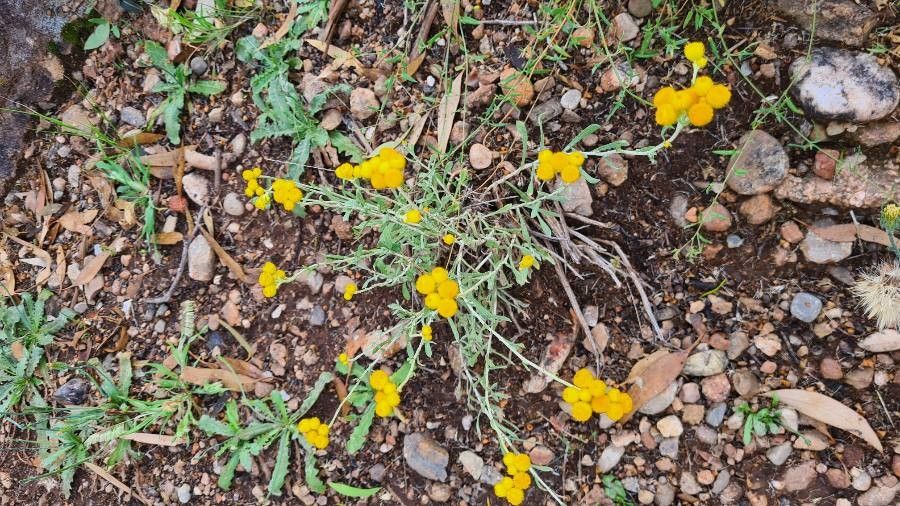
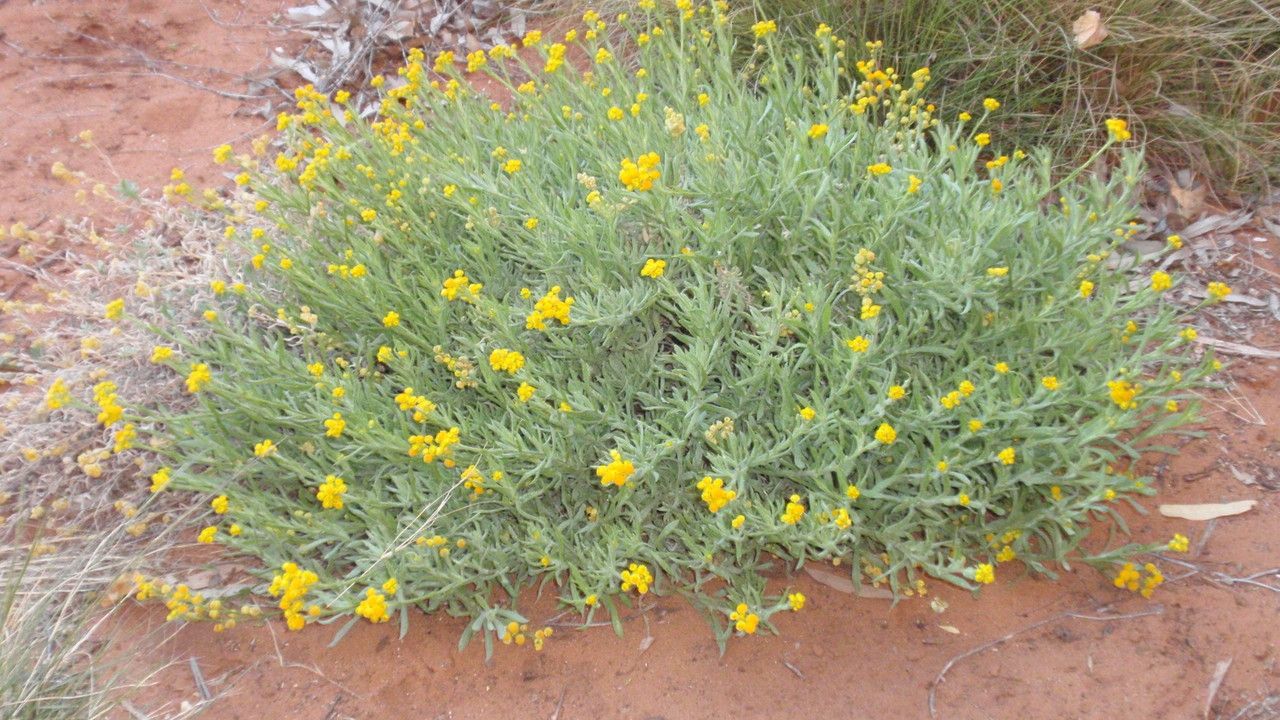
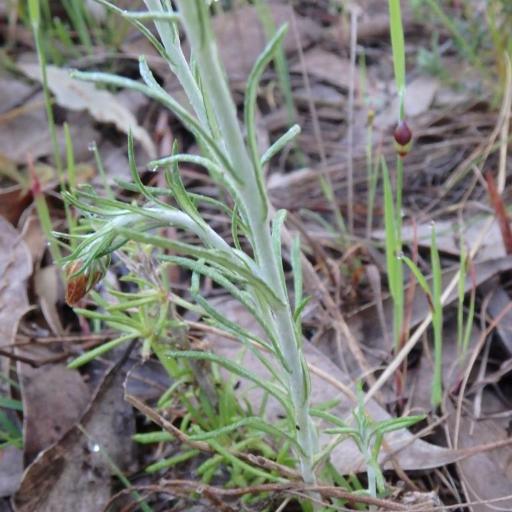
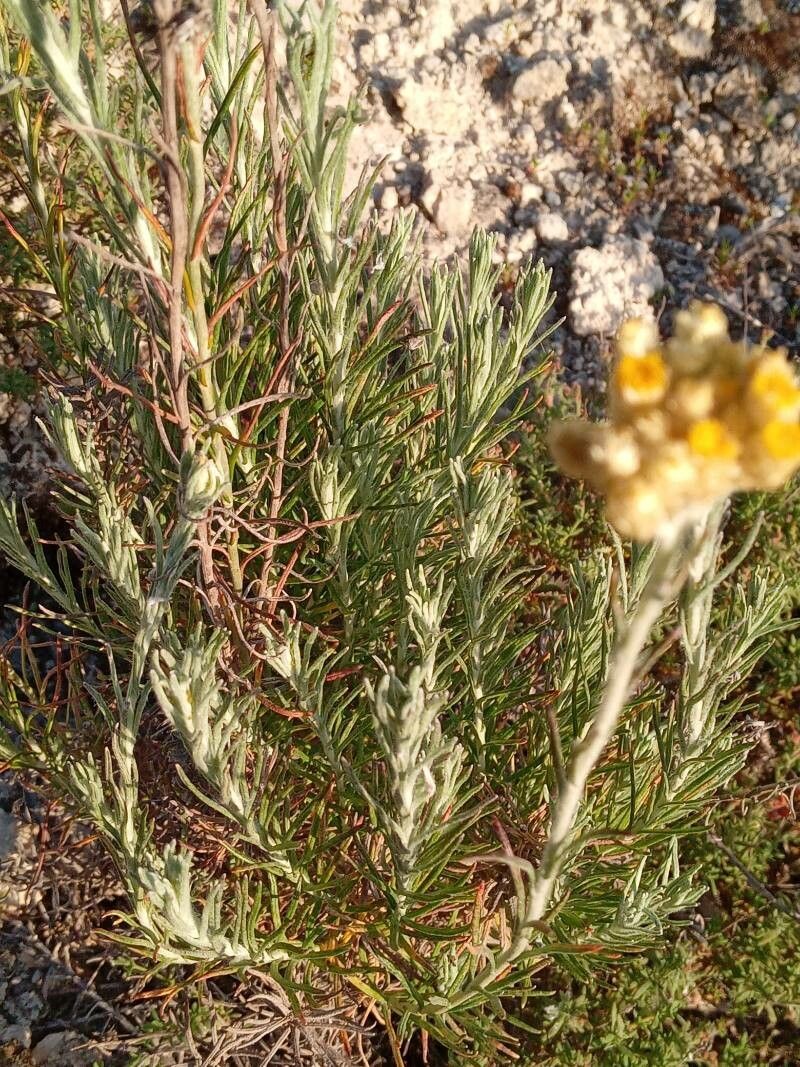
Chrysocephalum apiculatum, commonly known as yellow buttons or common everlasting, is a perennial herb native to Australia. This plant belongs to the Asteraceae family and can grow up to 30 cm tall. It features narrow, gray-green leaves covered with fine hairs. The small, yellow, button-like flowers give the plant its common name.
Chrysocephalum apiculatum is a hardy plant, capable of withstanding drought conditions and poor soil quality. It thrives in full sun but can also grow in partial shade. Due to its low-growing habit, it is often used as a ground cover or for border planting.
Traditionally, Chrysocephalum apiculatum has been used in medicine for its anti-inflammatory properties and as a treatment for respiratory ailments such as coughs and colds.
Overall, Chrysocephalum apiculatum is an attractive, low-maintenance plant that adds color to any garden or landscape, while also offering medicinal benefits.
Yellow buttons is fairly disease-resistant and generally does not suffer from many illnesses. However, it can be vulnerable to pests and diseases present in its surroundings. Such infections are typically not severe. Regarding care, this plant requires a moderate level of maintenance. Regular pruning is needed to keep it looking tidy and to encourage healthy growth. Applying fertilizer can also help promote flowering. Yellow buttons is suitable for anyone with outdoor space, such as a garden or patio, and does not demand much care experience. It may need extra attention when grown indoors.
How to keep Chrysocephalum Apiculatum.
Light
Yellow buttons does best in locations where daytime sunlight is regularly available. It can also tolerate spots with slightly less frequent sun. Continuous sunlight is important for its healthy growth, while too little light may cause weak growth and faded foliage. Too much sun, however, can stress the plant.
Water
Yellow buttons thrive in consistent moisture and moderate humidity. To keep these plants healthy, water them weekly. As evergreens, they benefit from soil that remains moist throughout the year, helping ensure vibrant foliage whether they are indoors or outdoors.
Temperature
Yellow buttons is most often found in areas with temperatures between 68 to 95 °F (20 to 35 ℃), showing a preference for mild, warm conditions. Seasonal temperature adjustments may be required to replicate its native environment and encourage healthy growth.
Fertilizer
The best time to fertilize Yellow buttons is in early spring, as it comes out of dormancy and begins active growth. Fertilizing supplies essential nutrients for healthy growth. Although Yellow buttons have relatively low fertilizer requirements, annual feeding can improve their survival and encourage healthier, longer-lasting flowers.
Pruning
Yellow buttons display vibrant yellow flowers and thrive with timely pruning from late winter to early spring. Trimming dead or leggy stems promotes compact growth and encourages blooming. Regular pruning helps maintain the plant's health, enhances its appearance, and can extend its lifespan.
Pot & Repot
To maintain healthy yellow buttons, repot them every 2-3 years during the spring. Use a larger container and a well-draining potting mix to prevent root rot. After repotting, water regularly and place the plant in a sunny spot to promote growth and vitality in this hardy ground cover.
Botanical profile.
- Plant Type
- Herb
- Life Cycle
- Perennial, Annual
- Genus
- Chrysocephalum
- Family
- Asteraceae
- Hardiness Zone
- 9-10
- Mature Height
- 15 cm
- Mature Spread
- 91 cm
- Leaf Color
- Light Gray
- Leaf Type
- Evergreen
- Flower Color
- Gold, Yellow
- Flower Size
- 1.02 cm
- Bloom Time
- All year round
- Planting Time
- Spring, Summer, Autumn
- Harvest Time
- All year round
Other names.
Reader questions.
How should I water my Yellow buttons?
To properly water the Yellow buttons, it is best to use filtered water at room temperature. Tap water may contain harmful particles that could negatively affect the plant's health. Since the Yellow buttons originates from a warm environment, it is important to avoid using cold water as it may shock the plant. Additionally, overhead watering should be avoided as it can lead to issues with the foliage. Instead, gently apply the filtered room temperature water directly to the soil until it becomes completely saturated. This method benefits the plant by keeping the roots moist and allowing them to spread and absorb necessary nutrients from the soil.
Why should I put fertilizer on my Yellow buttons?
Fertilization is important for the Yellow buttons for a few reasons. Firstly, it provides essential nutrients for the plant's growth both above and below ground. However, the Yellow buttons actually have relatively low fertilization needs overall, and can sometimes survive without it. Nonetheless, annual fertilization can greatly benefit the Yellow buttons by keeping it alive and promoting the production of longer-lasting, more beautiful flowers. Therefore, those looking to keep their Yellow buttons looking its best should make sure to fertilize it on a yearly basis.
How much sunlight does Yellow buttons need to grow?
Yellow buttons plants require 6 to 8 hours of direct sunlight per day. If you're growing them outdoors, choose a location that gets full sunlight all day. Indoors, place them near a south-facing window or another spot with ample sunlight. Be mindful of extreme temperatures, such as over 35°C (95℉) or hot summer afternoons, as direct sunlight may scorch or wilt the leaves. You can use sheer curtains or blinds to filter the sunlight or move the plant to a shadier spot to avoid this.
What is the best temperature for Yellow buttons?
When temperatures drop, plants are affected because they will have the same temperature as the surrounding air. In the presence of sunlight, plants can warm up again, but this doesn't happen during winter. The recommended temperature range for Yellow buttons is usually between 70 to 85℉ (21 to 30℃). They may tolerate temperatures as low as 20 to 30℉ (-6 to 0℃), and even as low as 15℉ (-10℃), but not for long as this can cause damage from frost. To prevent wilting, it is advisable to keep the maximum temperature within 70 to 85℉ (21 to 30℃), while also making sure to water the plants occasionally and provide them with some shade.
What do I need to do if I give my Yellow buttons too much or too little water?
Taking proper care of your Yellow buttons is crucial for its health, and this includes avoiding both overwatering and underwatering. However, overwatering is a more common issue. When this happens, the stems and leaves of your Yellow buttons may wilt and turn yellow. Overwatering over a long period can lead to diseases like root rot, mold, and mildew, which can be fatal for your plant. Unlike overwatering, underwatering is less common for Yellow buttons because it can tolerate dry conditions reasonably well. Nonetheless, underwatering is a possibility, and you'll notice that the leaves become brittle and brown. It is crucial to identify signs of overwatering early on. Some diseases caused by overwatering, like root rot, may not be reversible if you delay in addressing the issue. If you spot early signs of overwatering, reduce your watering immediately and check the soil's drainage. If it drains poorly, replace it with a loose, well-draining potting mix. On the other hand, if you notice signs of underwatering, simply increase your watering frequency until those signs disappear.
When should I fertilize my Yellow buttons?
The best time to fertilize a Yellow buttons plant is during late winter or early spring. This is when the plant is coming out of its dormant phase and beginning to grow. Fertilizing at this time promotes healthy growth and helps the plant start the season off well. It is also acceptable to fertilize in the fall, but it is not recommended to do so in summer or winter.
What will happen if Yellow buttons doesn't get enough sunlight? What happens if Yellow buttons doesn't get enough sunlight?
Insufficient sunlight can cause your Yellow buttons to grow weak and leggy. This is evident when the leaves turn yellow, as it suggests a lack of sunlight necessary for chlorophyll production. In the worst scenarios, the plant may not survive.
Do I need to change the temperature for Yellow buttons as they grow?
To successfully grow Yellow buttons, it is important to research and ensure that the temperature is suitable. Some growers might consider lowering the thermostat during the growing season to save on HVAC costs. However, it is crucial to understand that temperature can impact flowering, pest management, and overall plant quality. In the winter, certain species may enter a dormant state, causing growth to halt. When the season changes and temperatures increase, Yellow buttons tend to grow more rapidly. Species that naturally thrive in warm environments have higher optimum temperatures compared to those that prefer cooler climates. Exposing Yellow button seeds to cool temperatures can result in decreased uniformity and delays. Lowering the temperature during flowering can be beneficial, but not during other stages. Cooler nighttime temperatures also require less water, so adjust irrigation accordingly.
How much water does my Yellow buttons need?
If your Yellow buttons plant is in a pot, the most precise way to determine if it needs water is to check the moisture level of the soil by inserting your finger into it. If the top two to three inches of soil feel dry, then it is time to water it. If you have planted your Yellow buttons outdoors directly in the ground, you can use a similar method to test the soil. Again, if you find that the top few inches of soil are dry, it is time to water. Typically, during the spring and early fall seasons, using this method will lead you to water the plant about once every week. However, during extremely hot weather, you may need to water it more frequently, around two or more times per week. Nevertheless, mature and well-established Yellow buttons plants have an impressive ability to tolerate drought conditions.
When is it a bad idea to put fertilizer on my Yellow buttons?
To properly care for your Yellow buttons, it is important to follow a specific fertilization schedule. This plant only requires one annual feeding, which should be done during the late winter or early spring. Fertilizing during any other time of the year, such as spring, summer, or fall, can easily lead to overfertilization and its associated complications. However, if you happen to miss the opportunity to fertilize in spring, it is acceptable to do so in the fall. Furthermore, it is important to note that no fertilization is necessary during the winter months. During this time, the Yellow buttons are in a dormant growth phase and do not produce new growth. Therefore, it is not recommended to fertilize during most of the winter.
What will happen if the Yellow buttons get too much sunlight?
Yellow buttons require full sunlight, but it is important to avoid excessive direct sunlight. If the plant is exposed to intense sunlight for too long, it can develop signs of sunburn, such as brown or scorched leaves. To prevent this, regularly check the plant and relocate it to a shaded area if needed.
How can I prevent Yellow buttons from getting cold during the cold seasons?
To help your plant endure colder temperatures, it's a good idea to stop fertilizing it so it doesn't produce new growth. Instead, allow the existing leaves to become hardy. To keep the plant warm, you can create structures around it, such as cages or trellises. Another option is using heat mats, which will gently warm the soil and maintain an ideal temperature for the plant.