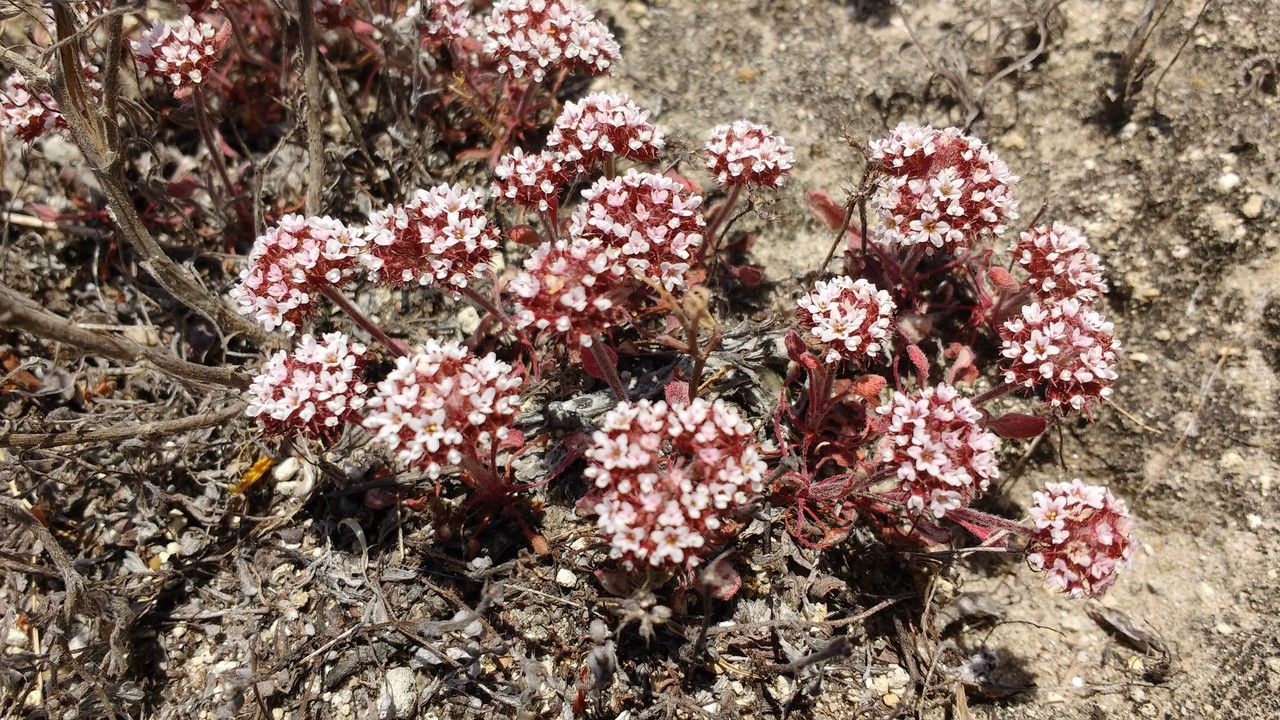
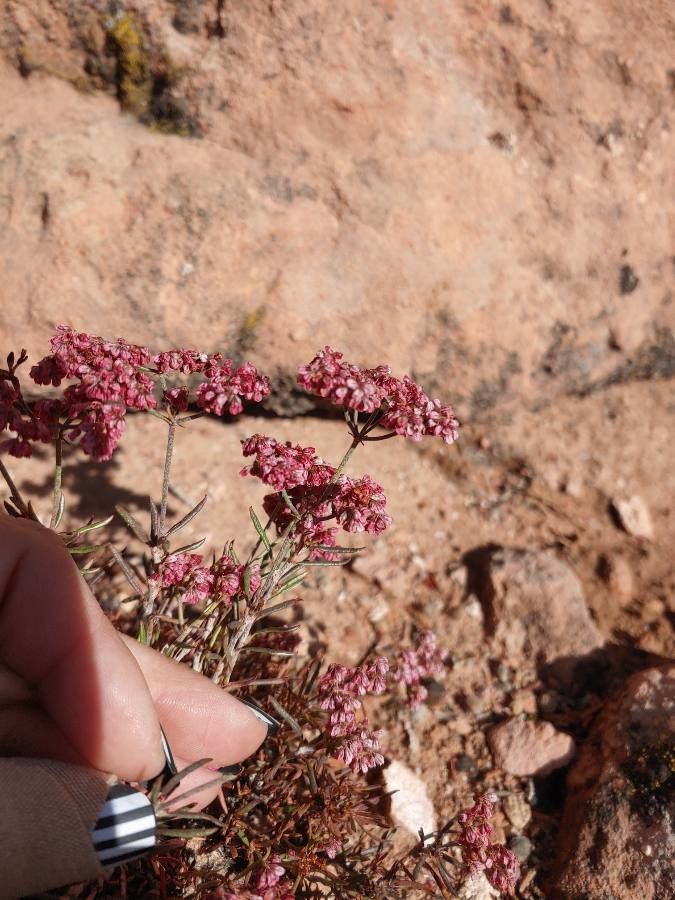
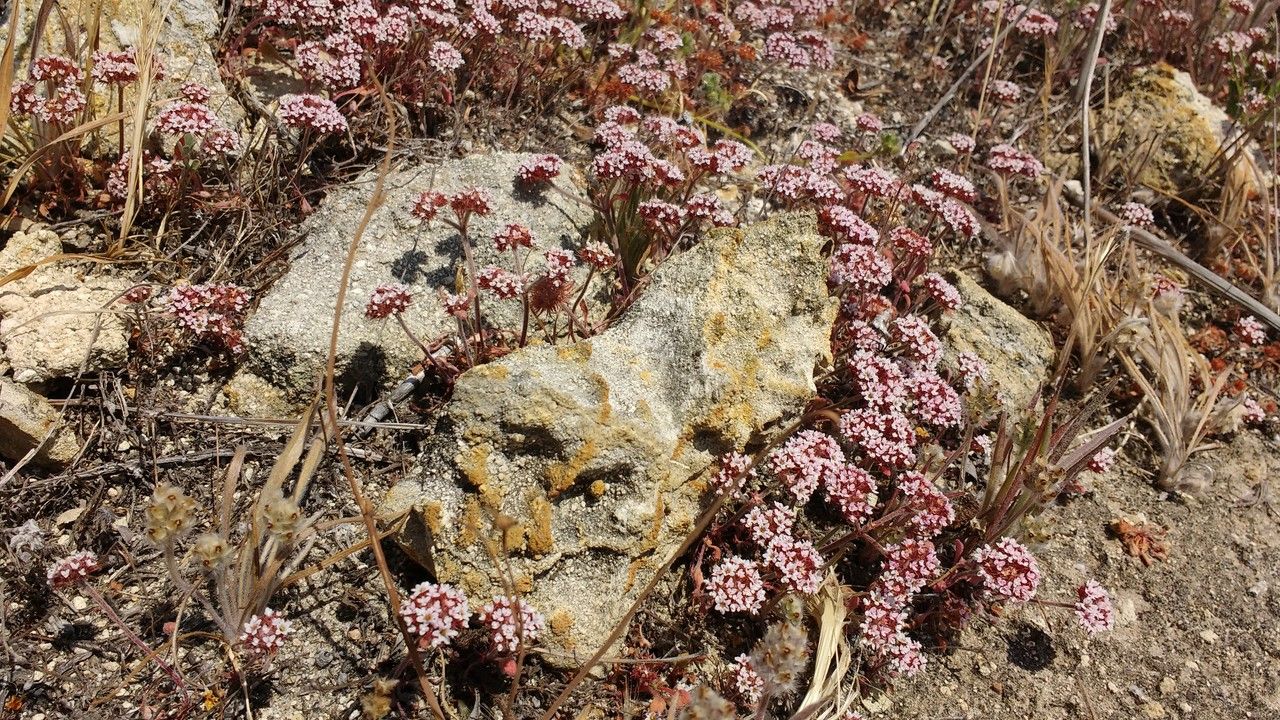
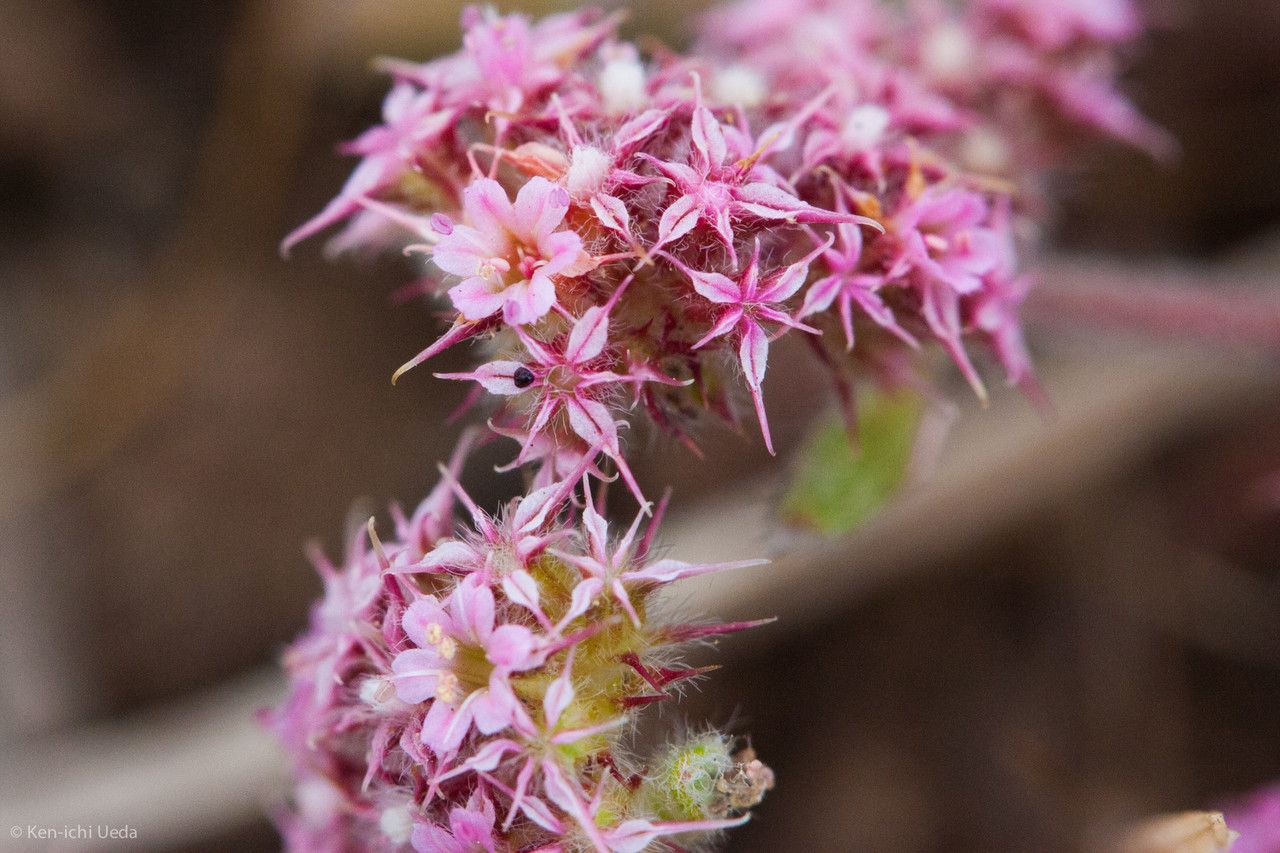
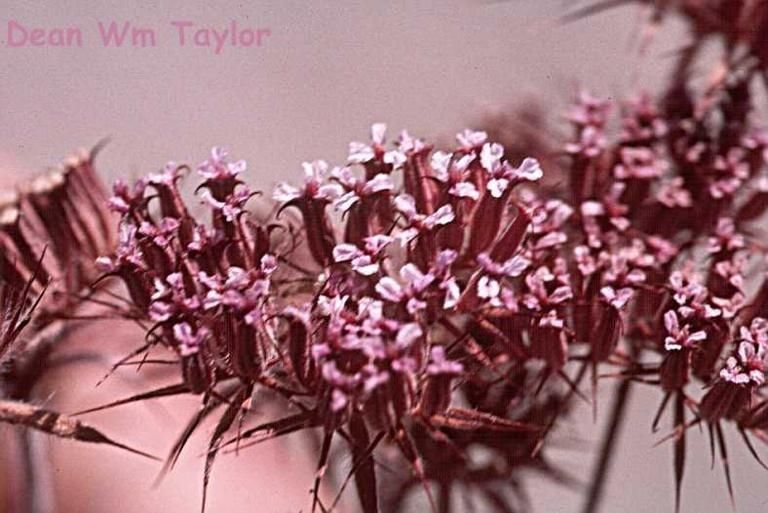
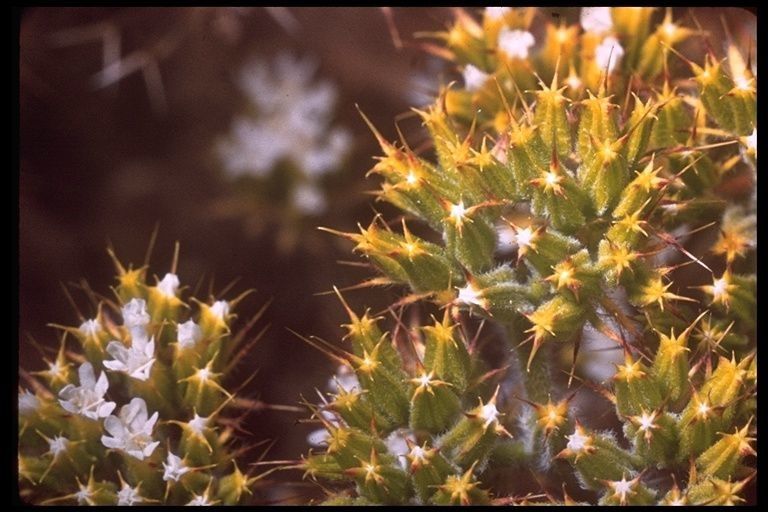
Chorizanthe staticoides is a species of flowering plant in the buckwheat family known by the common name Turkish rugging. It is endemic to California, where it is a common member of the flora in the chaparral and scrub habitats in a number of regions. This is a plant which is quite variable in morphology, producing small patches on the ground or growing erect to heights over half a meter. The leaves measure from just a few millimeters to about 8 centimeters long. Most of them grow at the base of the fuzzy green or reddish stem. The top of the stem branches neatly into flat-topped inflorescences packed densely with tiny flowers. Each flower has a cylindrical base of six sharp-tipped bracts in shades of red to purple or green. Within this involucre is the pink to red flower which is a few millimeters wide and contains nine tiny stamens.
Turkish rugging shows good resistance to disease and is generally unlikely to develop illnesses. Still, it can be vulnerable to pests and diseases present in its surroundings. Such infections are generally mild. Regarding care, this plant requires moderate maintenance. Regular pruning is needed to keep a neat appearance and support healthy growth. Fertilizing can also help encourage flowering. Turkish rugging is suitable for anyone with outdoor space, such as a garden or patio, and does not demand extensive care experience. It may need more attentive care when grown indoors.
How to keep Chorizanthe Staticoides.
Light
Turkish rugging comes from bright, open habitats and performs best in full sun. It can handle partial sun but favors direct sunlight for optimal growth. This plant, which may be annual or biennial, is noted for its sun-loving habit.
Water
Originating from arid environments, Turkish rugging thrives with minimal moisture and only requires watering twice a week. It efficiently uses water during its active growing season, ensuring robust growth even with variable hydration. This makes it highly drought-tolerant.
Temperature
Turkish rugging can tolerate a wide range of temperatures, but its range may still be constrained by particular combinations of moisture and heat. It performs best in warm summer climates with sufficient rainfall or watering. Extended periods of cloudy, rainy weather or prolonged high temperatures increase the likelihood that Turkish rugging will die. In winter, protecting it from cold can improve its chances of survival.
Fertilizer
Turkish rugging responds well to regular, dilute applications of fertilizer to encourage healthy leaf growth. You should feed Turkish rugging roughly once a month during the summer. Nitrogen is essential for foliage, and adding nitrogen-rich sources helps Turkish rugging prosper.
Pruning
Turkish rugging is a low-growing perennial plant admired for its distinctive blooms. To encourage growth and an abundance of flowers, prune the plant from early to late spring by removing any spent stems and damaged foliage. Regular pruning helps maintain a compact shape and enhances the plant's aesthetic appeal. Be sure to clean your pruning tools to prevent the spread of disease.
Botanical profile.
- Plant Type
- Herb
- Life Cycle
- Annual
- Genus
- Chorizanthe
- Family
- Polygonaceae
- Hardiness Zone
- 7-10
- Mature Height
- 10 cm to 30 cm
- Mature Spread
- 15 cm to 40 cm
- Leaf Color
- Green, Gray
- Leaf Type
- Deciduous
- Flower Color
- Pink, White
- Flower Size
- 0.51 cm to 0.76 cm
- Bloom Time
- Mid spring, Late spring, Early summer
- Planting Time
- Spring, Autumn
- Harvest Time
- Summer
Other names.