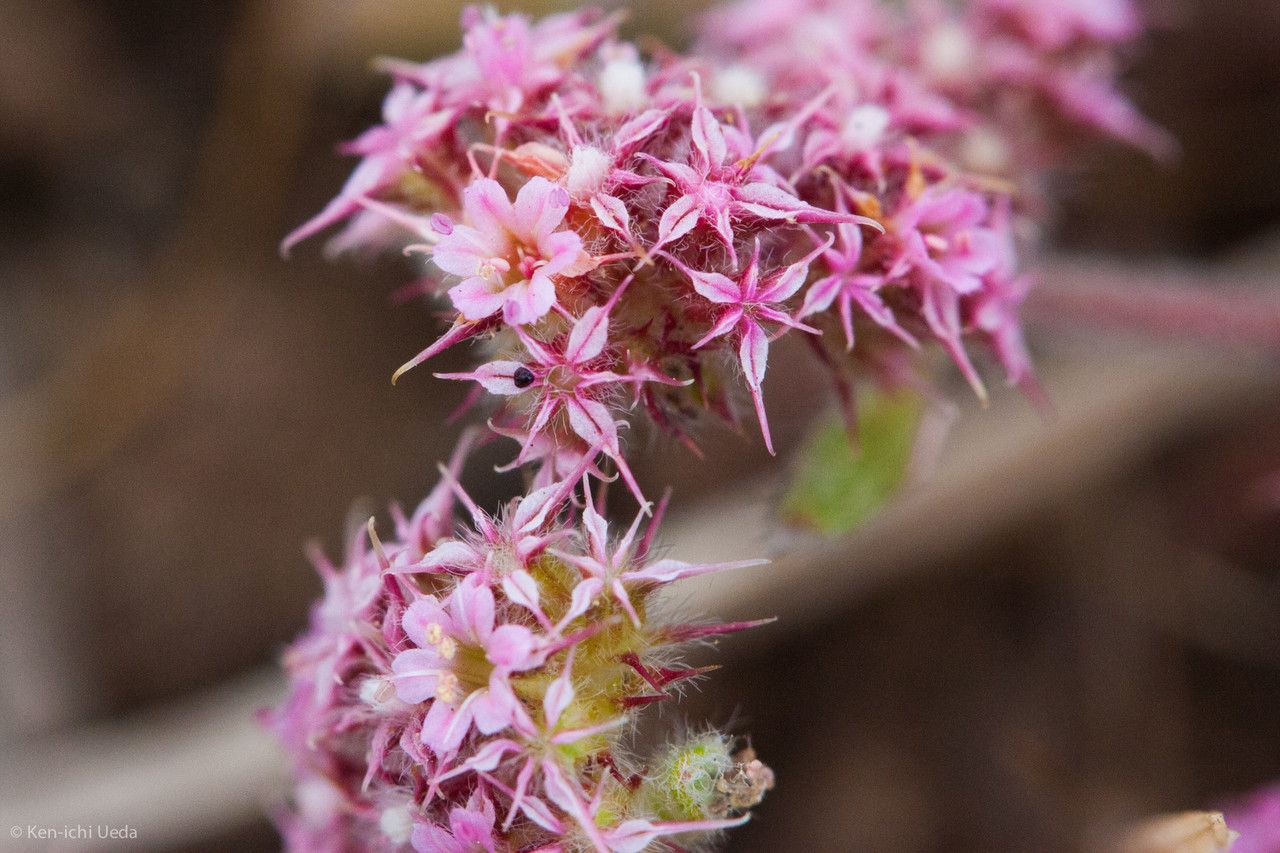
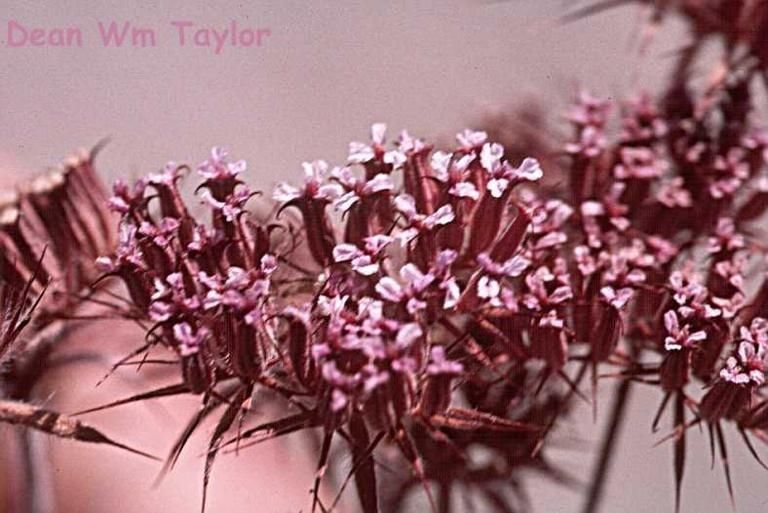
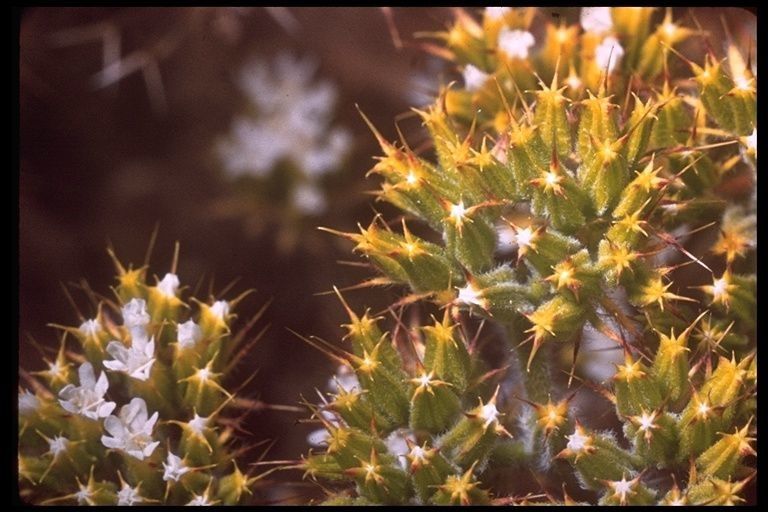
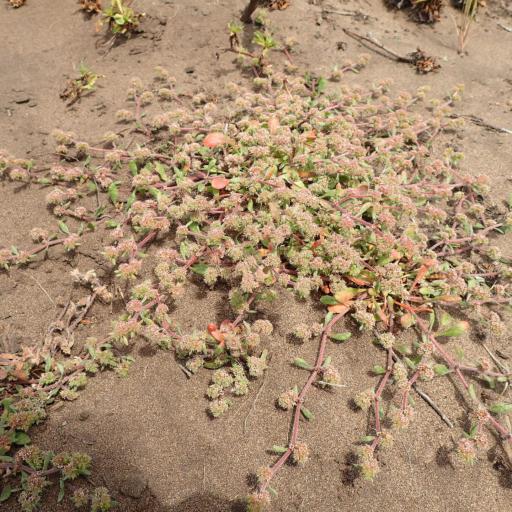
Chorizanthe brevicornu is a species of flowering plant in the buckwheat family which is known by the common name brittle spineflower. It is native to the southwestern United States and northern Mexico, where it is widely distributed but is most abundant in the deserts. The plant extends an erect, naked, highly branching stem which is greenish in color. Most of the leaves grow from the base of the plant, but a few small ones may appear up on the stem. At the end of each of the many branches is a tube-shaped inflorescence which opens into a tiny white or greenish-yellow flower a few millimeters wide. There are two subvarieties of C. brevicornu.
Brittle spine flower is fairly disease resistant and typically not prone to illnesses. Still, it can be affected by pests and diseases present in its surroundings. Those infections are generally mild. For care, the plant needs moderate maintenance. It should be pruned regularly to preserve a tidy appearance and support healthy growth. Fertilizing can also help encourage flowering. Brittle spine flower is well suited for someone with outdoor space, like a garden or patio, and does not demand extensive plant-care experience. It may need more attention when kept indoors.
How to keep Chorizanthe Brevicornu.
Light
The brittle spine flower develops best when it is regularly exposed to full sunlight, which promotes its optimal growth and vigor. Originating from environments with steady sunlight duration, it has little tolerance for low-light conditions. Uneven light exposure—whether excessive or insufficient—can negatively affect its flowering or growth rate.
Water
The brittle spine flower, native to arid regions, exhibits remarkable drought tolerance and requires only minimal watering—roughly once a week. It thrives in rocky terrains where well-draining soil prevents waterlogging. This aligns perfectly with the plant's growth cycle, which is adapted to the infrequent rainfall of its natural habitat.
Temperature
Brittle spine flower can tolerate a wide range of temperatures, but its distribution may still be restricted by different combinations of water and heat. It performs best in warm summer climates with adequate rainfall or watering. Extended stretches of cloudy, rainy weather or prolonged high temperatures can raise the chance of the Brittle spine flower dying. In winter, protecting it properly from the cold can improve its survival.
Fertilizer
Brittle spine flower benefits from regular, dilute fertilizer applications to encourage healthy leaf growth. Fertilize Brittle spine flower roughly once a month during the summer. Nitrogen is important for foliage, and providing nitrogen-rich feeds helps Brittle spine flower prosper.
Pruning
The Brittle Spine Flower needs minimal pruning, ideally performed from early to late spring, to remove any dead or damaged stems. Avoid heavy pruning to prevent stress on the plant. Make sure to use sterilized tools to prevent disease. This process helps maintain the plant's shape and promotes flowering, as recommended by respected horticultural guides.
Botanical profile.
- Plant Type
- Herb
- Life Cycle
- Annual, Perennial
- Genus
- Chorizanthe
- Family
- Polygonaceae
- Hardiness Zone
- 8-11
- Mature Height
- 15 cm to 30 cm
- Mature Spread
- 0.91 m to 1.22 m
- Leaf Color
- Green, Gray
- Leaf Type
- Semi-evergreen
- Flower Color
- White, Pink
- Flower Size
- 2.54 cm
- Bloom Time
- Early spring, Mid spring
- Planting Time
- Spring, Summer
- Harvest Time
- Late spring, Early summer
- Native Area
- Mexico
Other names.
Reader questions.
What are the sunlight requirements for the Brittle Spine Flower?
The Brittle Spine Flower requires more than 6 hours of sunlight daily. It is crucial to observe how sunlight moves through your garden and select sites that ensure a balance of light and shade, supporting the plant's health. Originating from regions of consistent sunlight, the Brittle Spine Flower doesn't tolerate low light well, and both excessive or insufficient light can negatively affect its growth and flowering.
How does artificial lighting support plant growth indoors?
Artificial lighting is essential for indoor plants when natural sunlight is inadequate, especially during winter or in less sunny spaces. LED lights are recommended due to their customizable wavelengths, catering to the specific needs of plants. Full sun plants require 30-50W/sq ft of artificial light, partial sun plants need 20-30W/sq ft, and full shade plants need 10-20W/sq ft. The light source should be placed 12-36 inches above the plant to emulate natural sunlight, and most plants benefit from 8-12 hours of light daily.
What are the symptoms of light deficiency in indoor Brittle Spine Flowers?
Indoor Brittle Spine Flowers with inadequate light may exhibit several symptoms, including small new leaves, leggy or sparse growth, faster leaf drop, slower or no new growth, and lighter-colored new leaves. These signs indicate the plant's struggle with insufficient exposure to sunlight, impacting its ability to thrive.
What symptoms indicate too much sunlight exposure for Brittle Spine Flowers?
Excessive sunlight can cause symptoms such as chlorosis (leaves turning yellow), sunscald (pale or necrotic areas on leaves or stems), leaf curling (a defense mechanism to minimize surface area exposed to sunlight), wilting (due to increased water loss), and leaf scorching (brown, dry edges or patches on leaves). These issues suggest that the Brittle Spine Flower is receiving too much direct sunlight, adversely affecting its health.
How can I manage sunlight exposure for better growth of Brittle Spine Flowers?
To ensure optimal sunlight exposure for Brittle Spine Flowers, gradually move plants to sunnier locations, aiming for at least 6 hours of direct sunlight daily. Indoors, use a south-facing window or artificial light for plants that cannot be easily moved. Outdoors, adapt plants to sunlight gradually to prevent sunburn. Pruning trees that block sunlight or transplanting smaller plants to sunnier spots with good drainage can also improve light exposure. While some damage from insufficient light may be irreversible, new growth will be healthy once conditions improve.