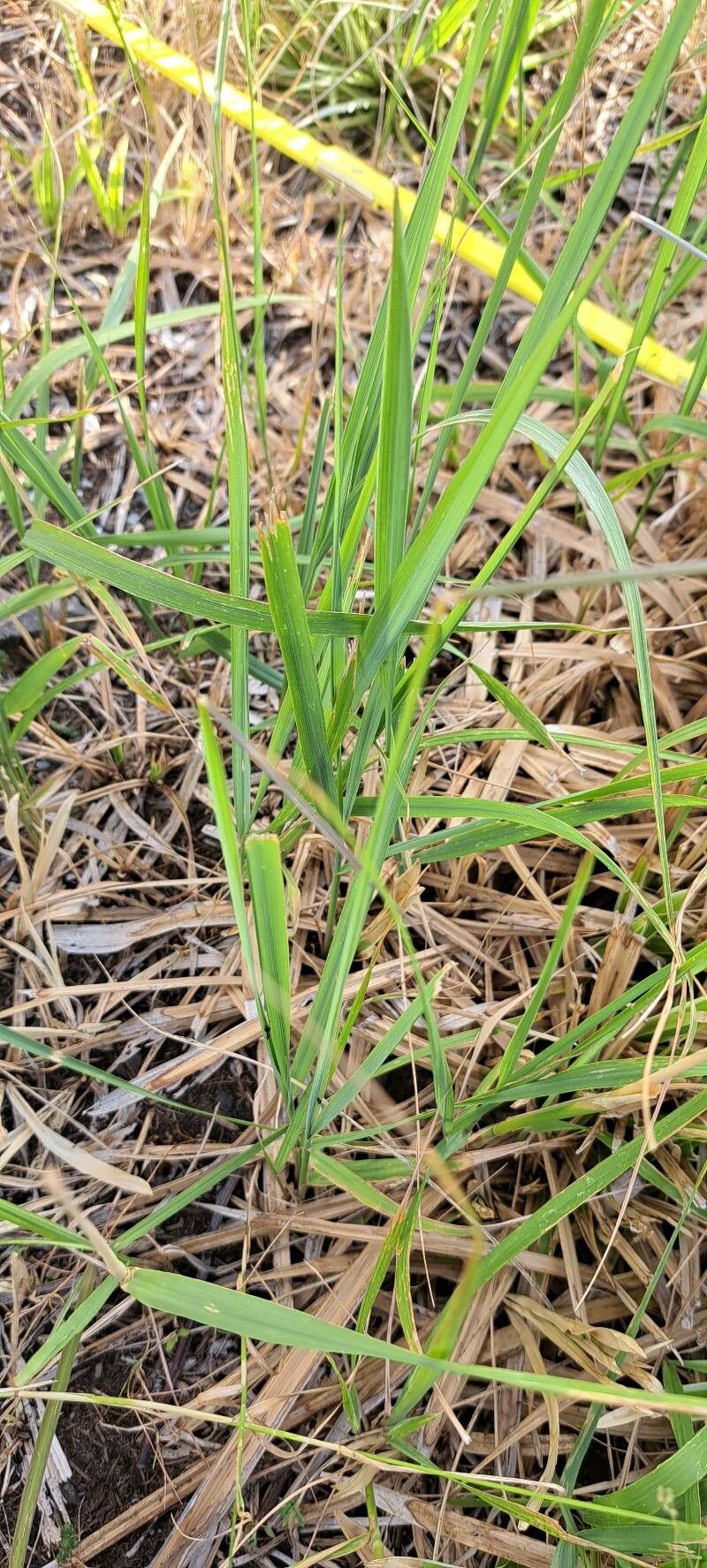
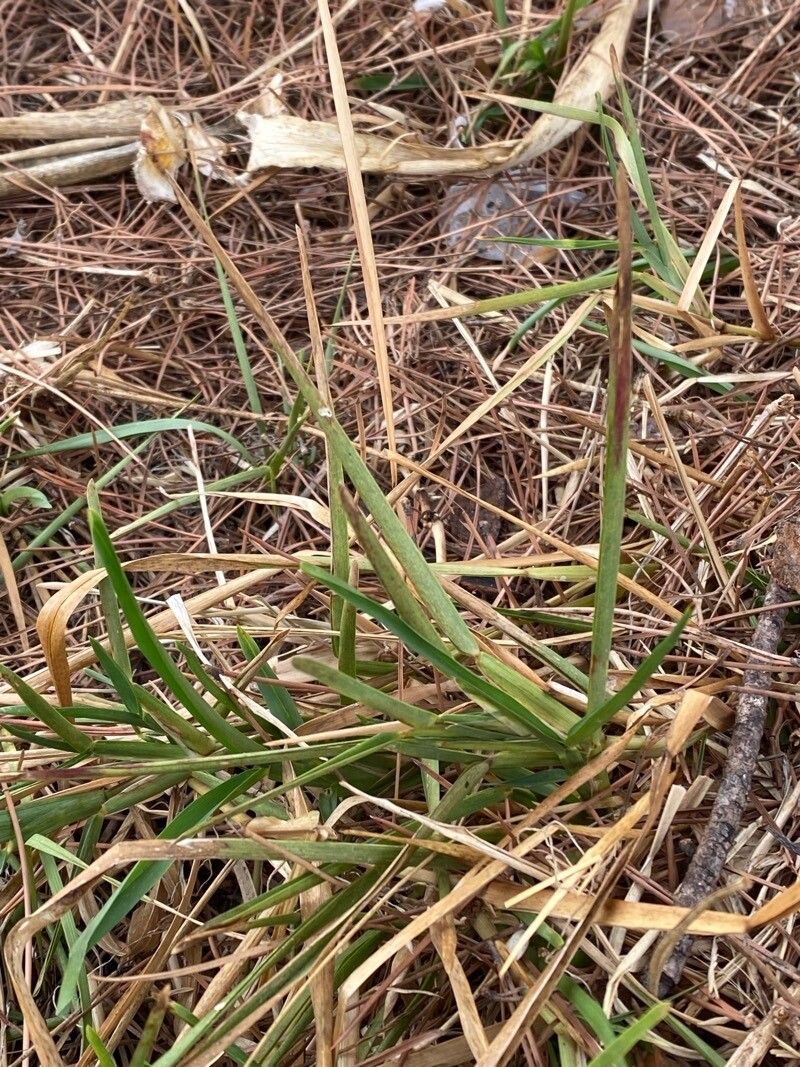
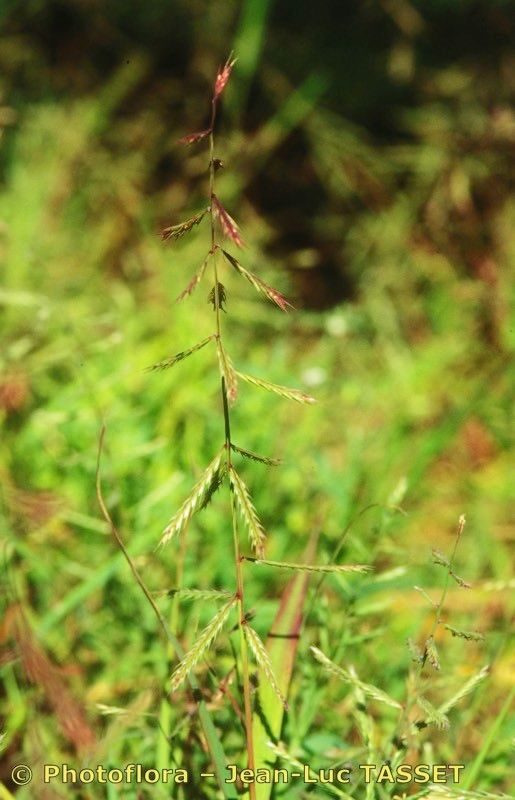
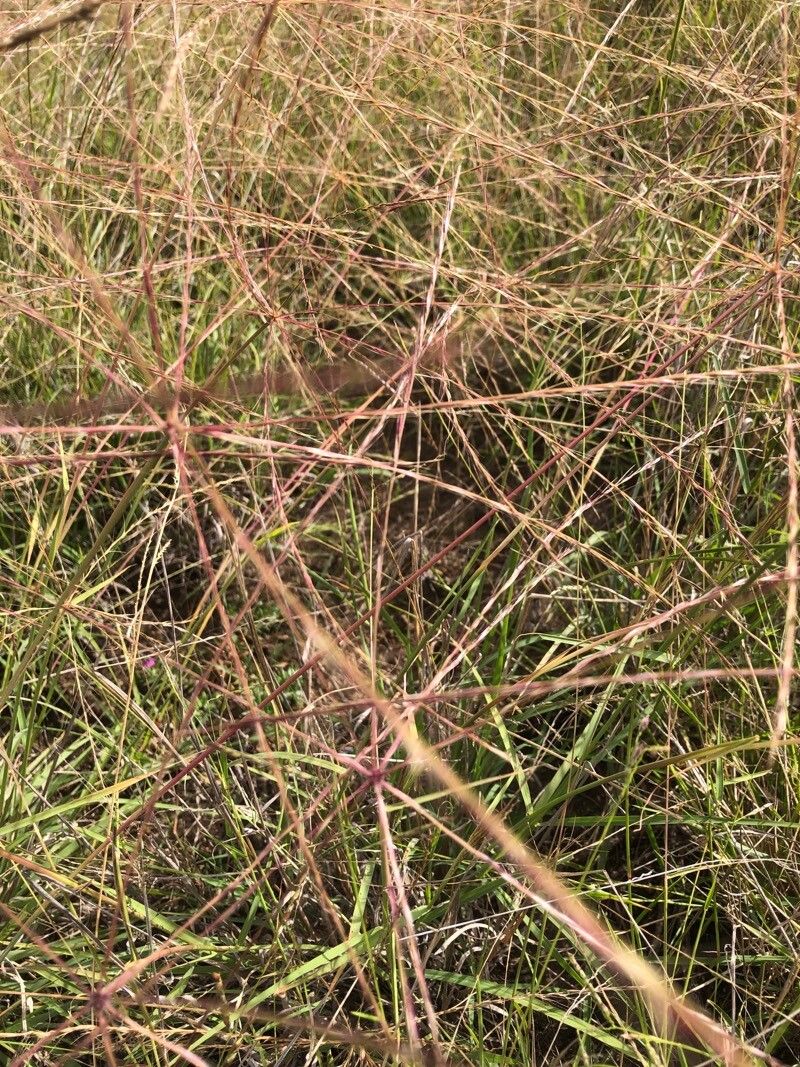
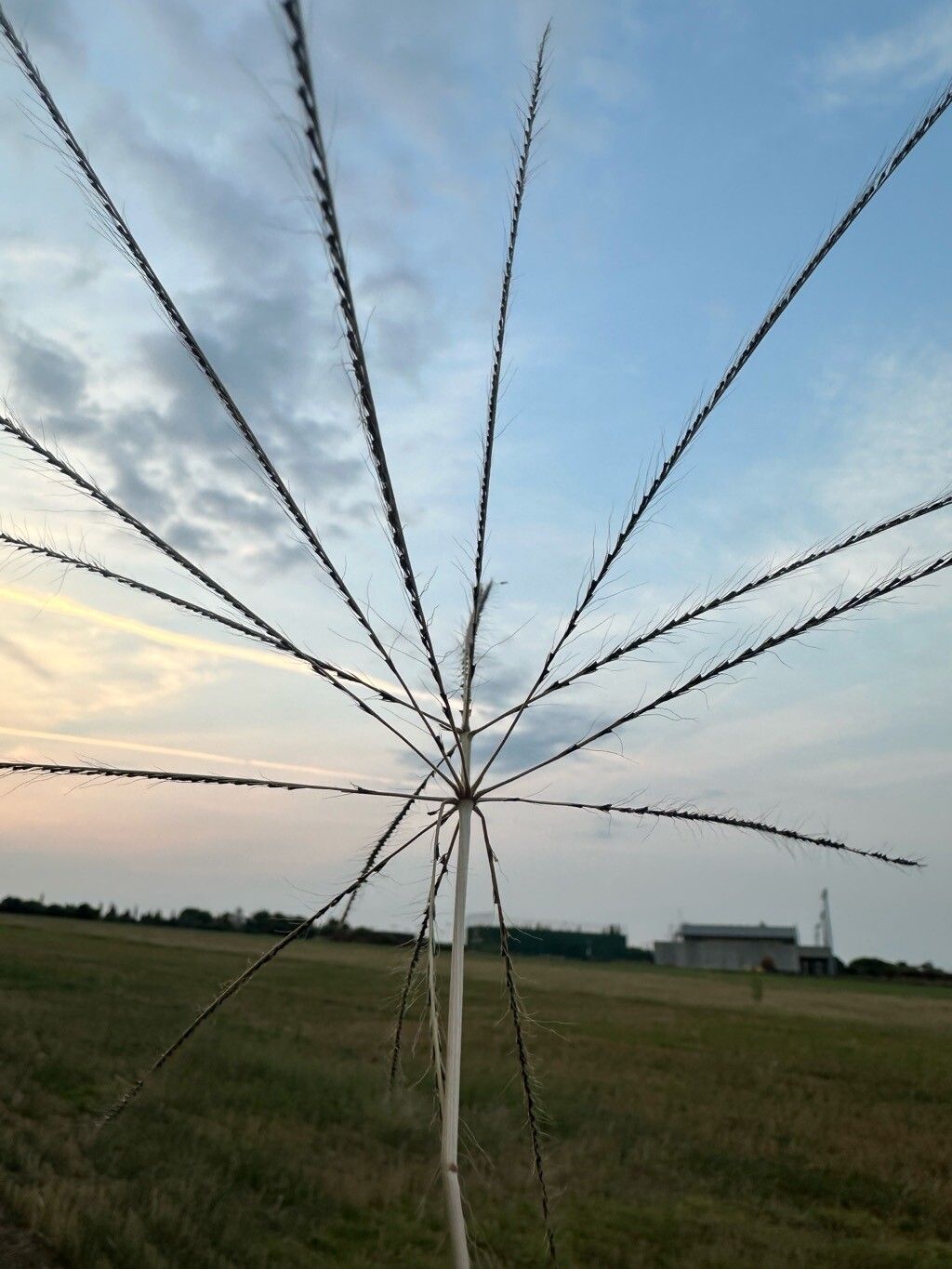
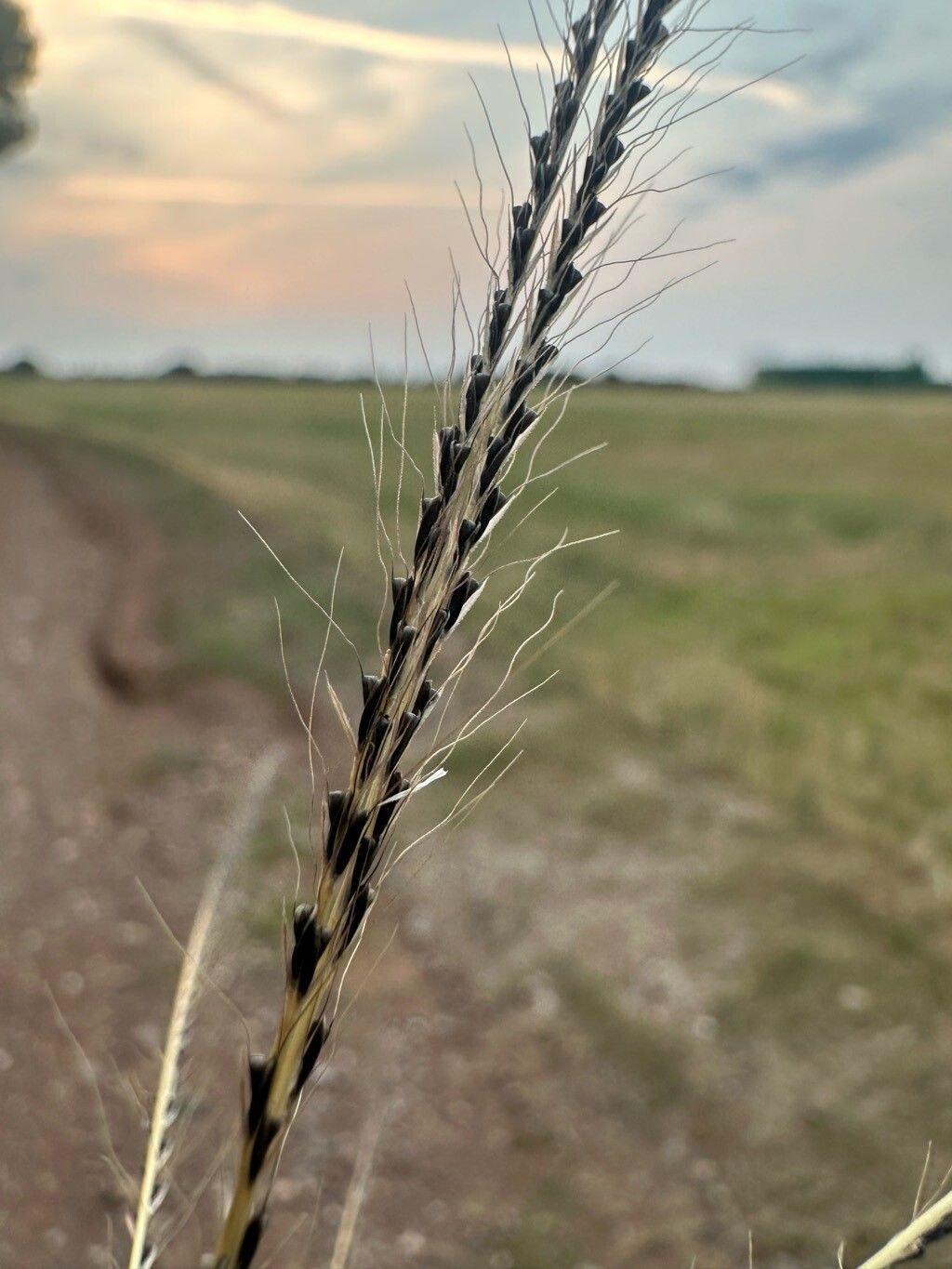
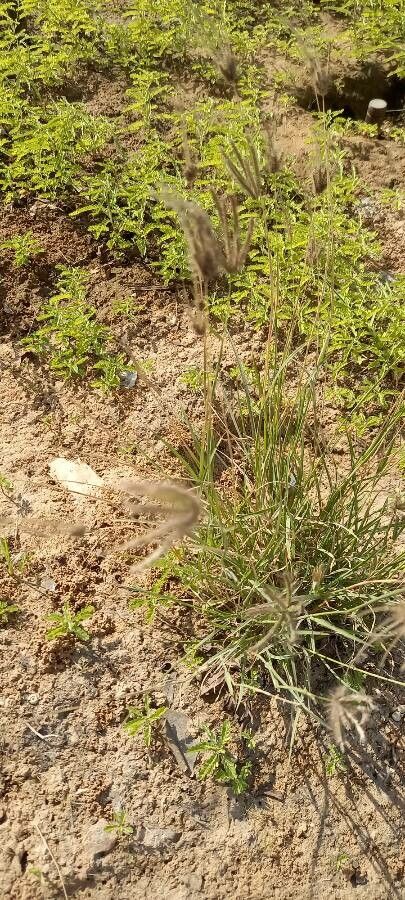
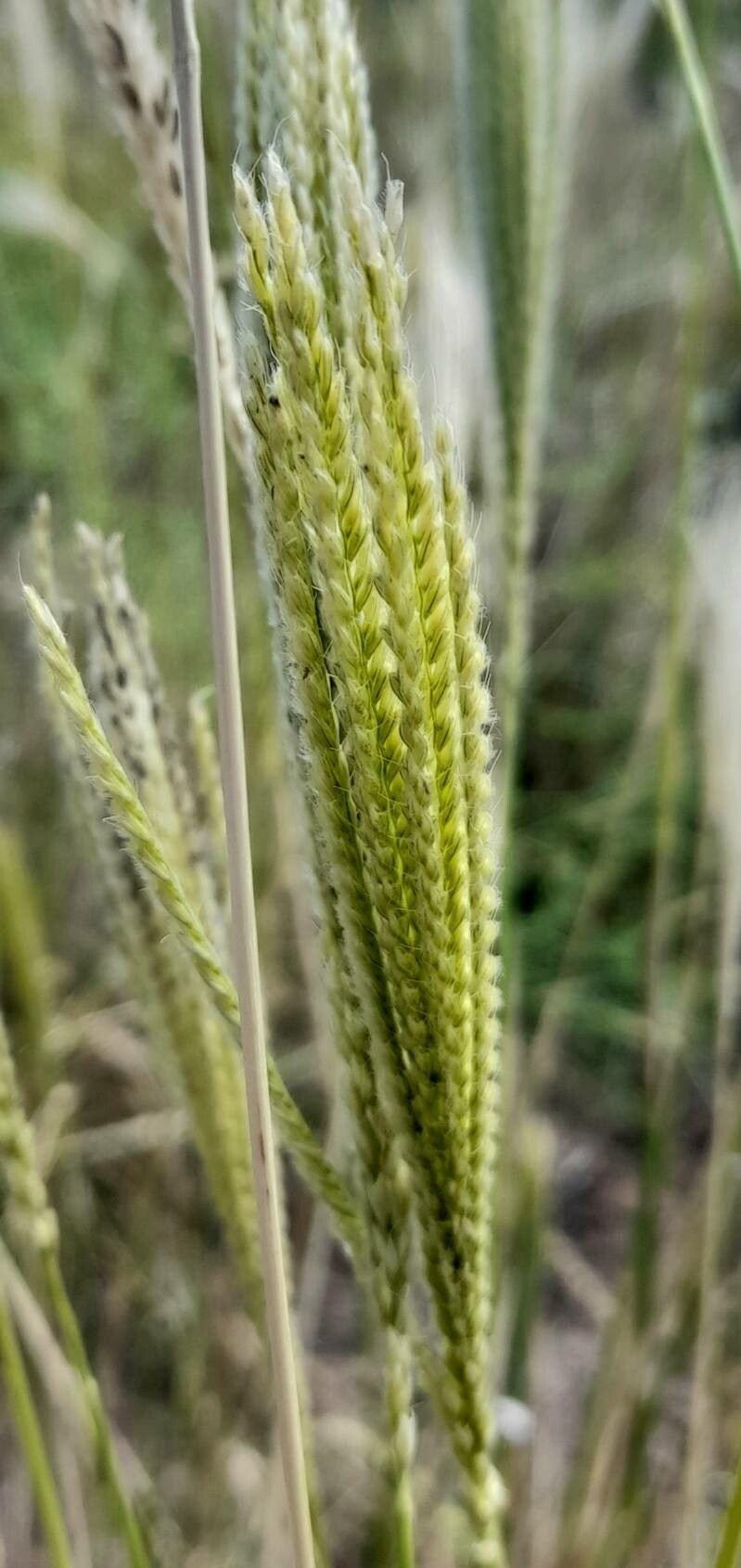
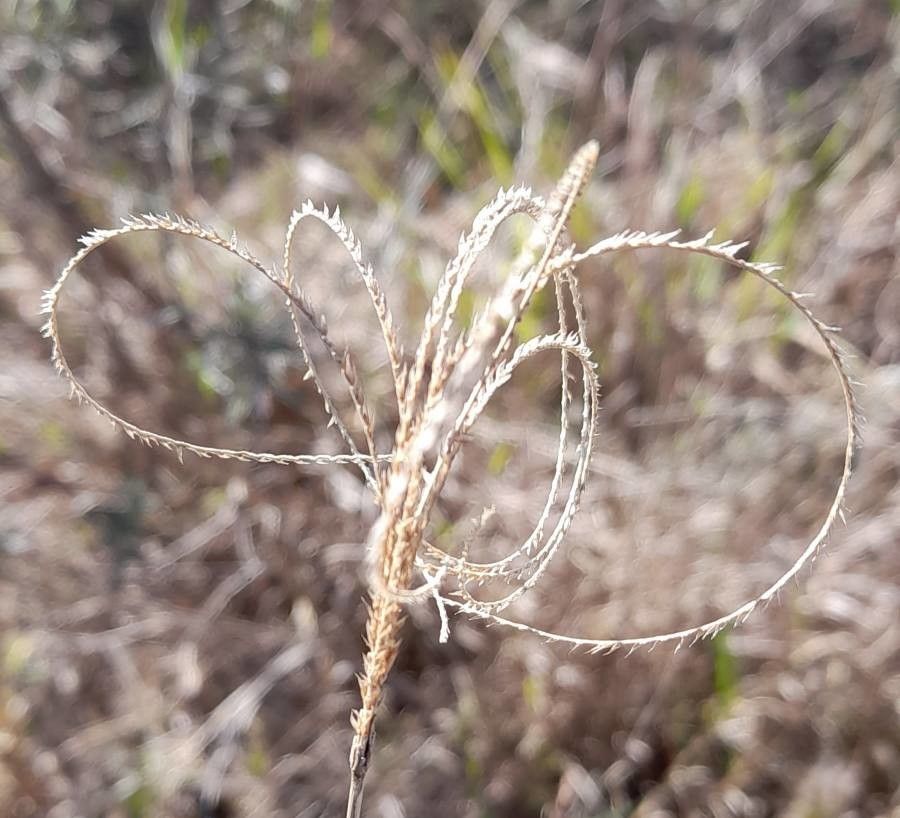
Chloris truncata, known by the common names Australian fingergrass, windmill-grass, Australian windmill grass and simply windmill grass locally in Australia, is a perennial grass.Chloris truncata is a low-growing grass forming a small clump of around 30 centimetres in diameter. It has long leaves, approximately 10–15 cm long with a distinctive blunt tip and flattened leaf sheath at the base. It is light green in colour with a prominent central vein. The plant gets its common name from its large windmill-shaped flowering heads, which can be around 30 cm across. Each of the long black spikes is lined with black seeds which have two awns each. Seed is set in both summer and winter. The plant spreads moderately fast, but is relatively hard to propagate. It prefers full sun and may be used as a lawn grass if mowed lightly.
Australian finger grass demonstrates good resistance to disease and is generally not susceptible to illnesses. In terms of care, this plant is fairly low maintenance. When grown outdoors it needs only minimal watering, and larger plants typically do not require pruning. Smaller plants, however, should be pruned after they finish blooming. Australian finger grass is suitable for anyone with an outdoor area, such as a garden or deck, and does not require extensive gardening experience.
How to keep Chloris Truncata.
Light
Australian finger grass originates in bright, open environments and performs best in full sun. It can tolerate partial sun but favors direct sunlight for optimal growth. This plant, which can be annual or biennial, is recognized for its sun-loving nature.
Temperature
Australian finger grass can tolerate a wide range of temperatures, but its distribution may still be constrained by particular combinations of moisture and heat. It performs best in warm summer climates with sufficient rainfall or watering. Extended periods of cloudy, rainy weather or sustained high temperatures can raise the likelihood of Australian finger grass dying. In winter, adequate protection from the cold can increase the plant's chances of survival.
Pruning
Australian finger grass is known for its robust growth. To promote regrowth and remove dead foliage, it benefits from early spring pruning. Maintaining an open structure improves air circulation, encourages denser growth, and aids in erosion control. For optimal resilience, pruning should be timed to align with the grass's natural growth cycle.
Botanical profile.
- Plant Type
- Grass
- Life Cycle
- Annual
- Genus
- Chloris
- Family
- Poaceae
- Hardiness Zone
- 8-11
- Mature Height
- 30 cm to 61 cm
- Mature Spread
- 20 cm to 40 cm
- Leaf Color
- Green, Light Green
- Leaf Type
- Deciduous
- Flower Size
- 0.51 cm to 1.02 cm
- Bloom Time
- Summer, Early fall, Mid fall
- Planting Time
- Spring, Summer, Autumn
- Harvest Time
- Mid summer, Late summer, Fall
- Native Area
- Nicaragua, Guatemala, Ecuador
Other names.