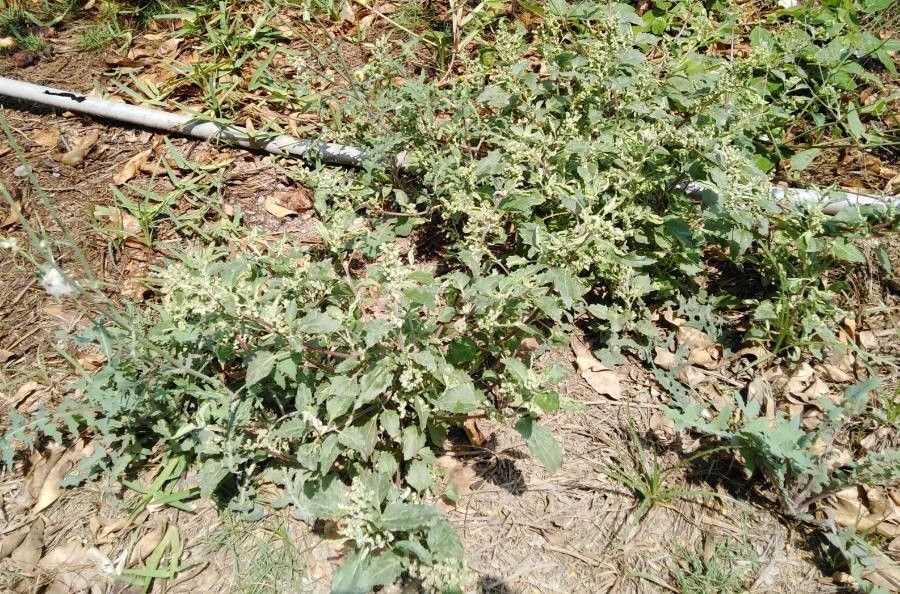
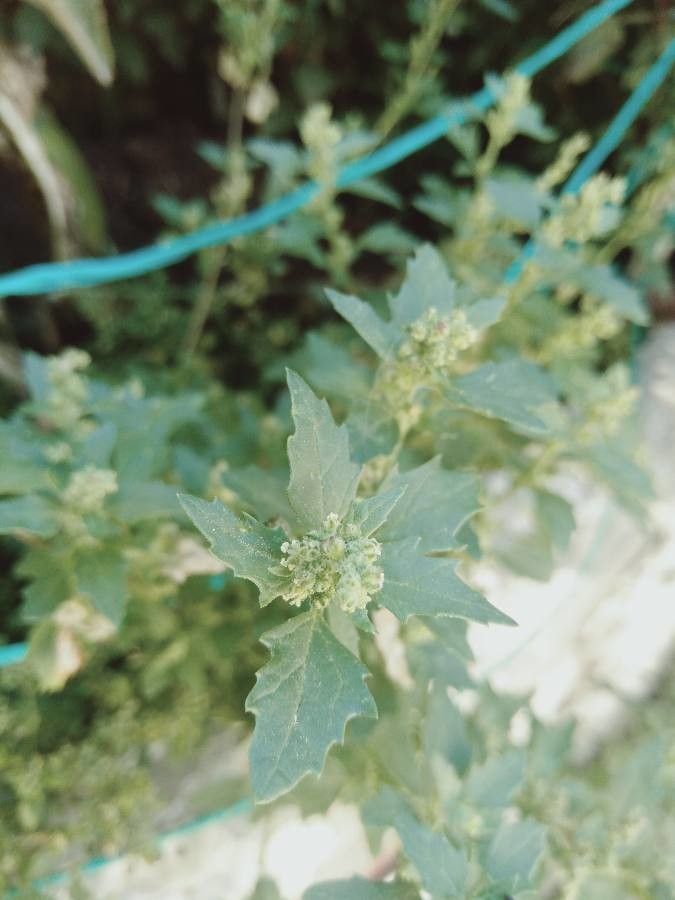
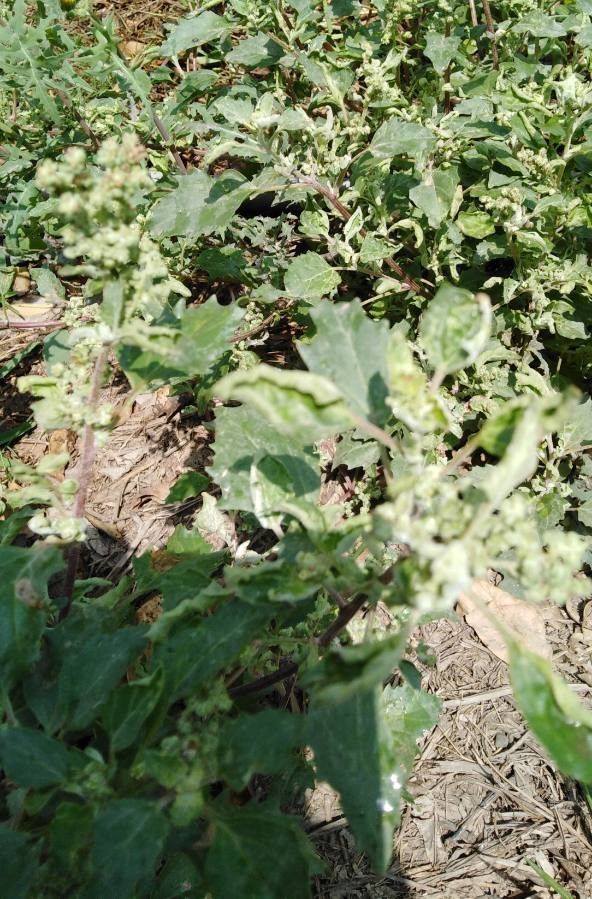
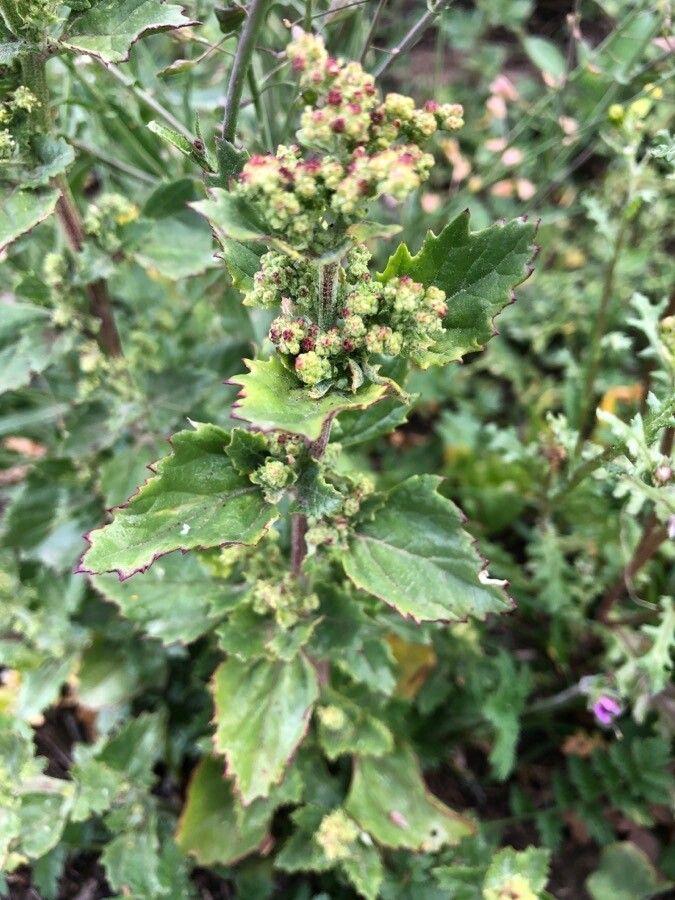
Chenopodiastrum murale, commonly known as nettle-leaved goosefoot or prickly saltwort, is a flowering plant species in the family Amaranthaceae. It is native to Europe and Asia but has been introduced to other parts of the world, including North America and Australia.
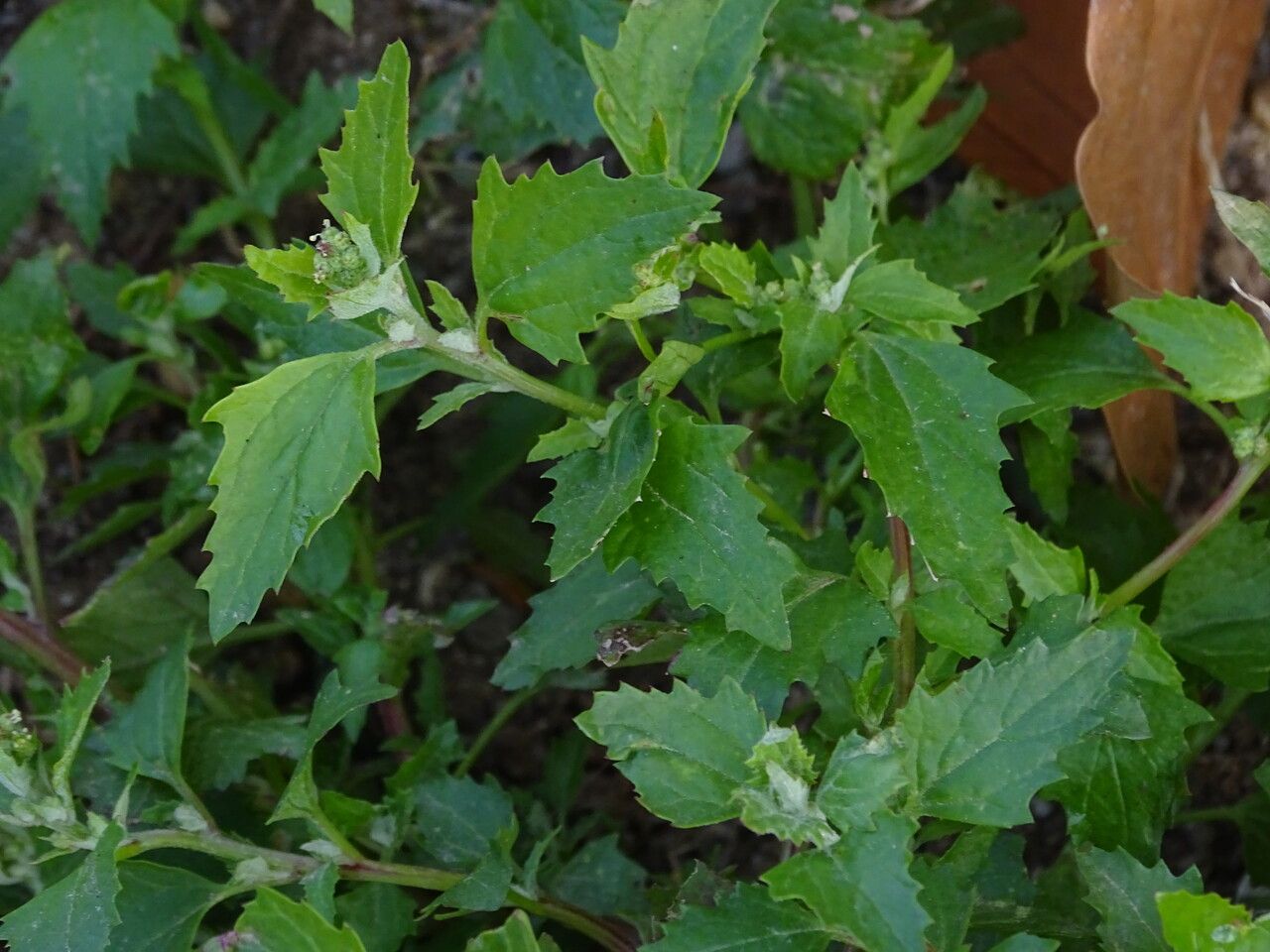
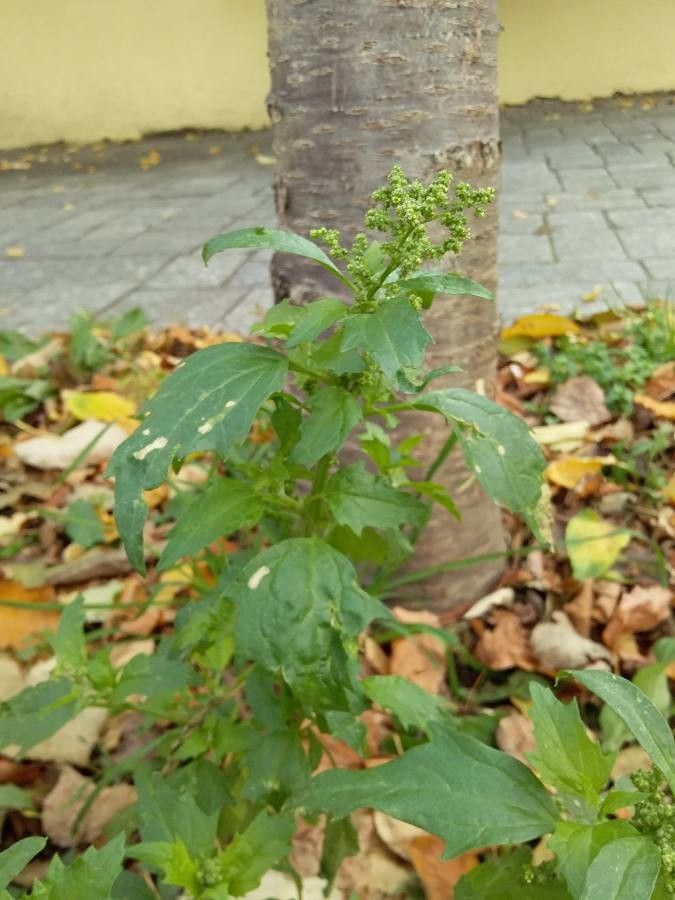
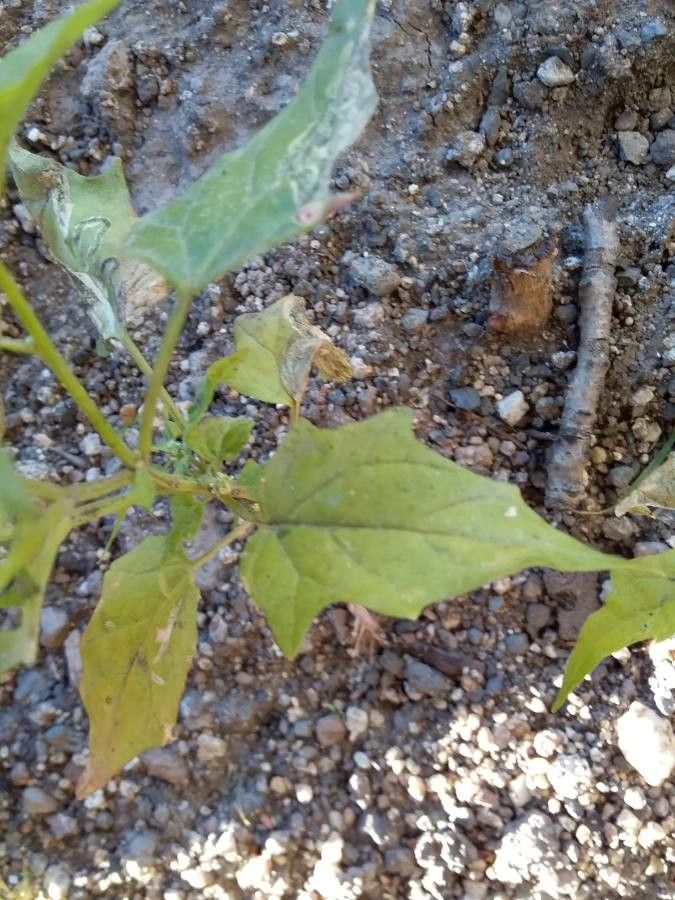
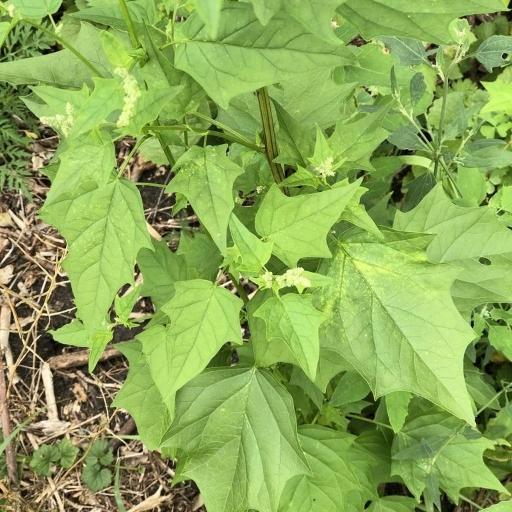
This plant typically thrives in disturbed areas such as roadsides, fields, and waste places. It can grow up to 1 meter (3 feet) tall and has green, triangular or diamond-shaped leaves with serrated edges. The leaves are covered in small hairs that can cause skin irritation upon contact.
Chenopodiastrum murale produces small green flowers that bloom from June to September. These flowers are followed by tiny black seeds, which can be dispersed by wind or animals.
In traditional medicine, the plant has been used for its diuretic properties and as a treatment for skin conditions such as eczema.
Despite being considered an invasive species in some areas due to its rapid colonization of disturbed habitats, Chenopodiastrum murale also plays an important ecological role by providing food for wildlife such as birds and insects.
Overall, Chenopodiastrum murale is a fascinating plant with both beneficial properties and potential negative impacts on ecosystems where it has been introduced outside its native range.
Nettle-leaved goosefoot is fairly disease-resistant and typically does not suffer from many ailments. Nevertheless, it can be affected by pests and local diseases present in its environment. These infestations are generally mild. For care, the plant requires moderate attention. It should be pruned regularly to preserve an attractive appearance and promote healthy growth. Fertilizing can also help encourage flowering. This species is appropriate for anyone with outdoor space, such as a garden or patio, and does not demand extensive care experience. It may need more attentive care when grown indoors.
How to keep Chenopodiastrum Murale.
Light
The nettle-leaved goosefoot grows best in locations with full sun but can also tolerate less bright conditions. It comes from habitats that receive plenty of sunlight. Excessive sun can dry it out, whereas too little light may hinder growth or cause the leaves to wilt.
Water
The nettle-leaved goosefoot is adaptable to varying moisture levels, efficiently using water and withstanding short periods of drought. It thrives best in consistently moist soil but does not tolerate waterlogged conditions. For optimal growth, it should be watered weekly. When grown outdoors, nettle-leaved goosefoot benefits from natural rainfall that matches the precipitation patterns of its native climate.
Temperature
Nettle-leaved goosefoot originates from temperate zones and does best in temperatures of 68 to 95 °F (20 to 35 ℃). It is adaptable and can tolerate cooler conditions, though warmer climates encourage more rapid growth. Adjust as the seasons change.
Fertilizer
Nettle-leaved goosefoot benefits from regular, light applications of fertilizer to encourage healthy leaf development. Apply fertilizer to Nettle-leaved goosefoot about once per month during the summer. Nitrogen is important for the foliage, and providing nitrogen-rich fertilizers supports the plant's growth.
Botanical profile.
- Plant Type
- Herb
- Life Cycle
- Annual
- Genus
- Chenopodiastrum
- Family
- Amaranthaceae
- Hardiness Zone
- 8-10
- Mature Height
- 61 cm
- Mature Spread
- 20 cm to 61 cm
- Leaf Color
- Green, Blue
- Leaf Type
- Deciduous
- Flower Color
- Green
- Flower Size
- 0.20 cm
- Bloom Time
- Late spring, Early summer, Mid summer
- Planting Time
- Spring, Autumn
- Harvest Time
- Mid summer
- Native Area
- Sri Lanka, Libya, Turkey, Sweden, United Arab Emirates, Slovakia, Madagascar, Montenegro, Pakistan, Slovenia, Croatia, Morocco, Belarus, Tanzania, Germany, Ethiopia, Romania, Latvia, Belgium, Netherlands, Portugal, Saudi Arabia, Tunisia, Bulgaria, Bangladesh, Cyprus, Ukraine, Chad, Lebanon, Afghanistan, Syria, Kyrgyzstan, Kazakhstan, Italy, Finland, Bosnia and Herzegovina, Eswatini, Iran, Azerbaijan, Kuwait, Djibouti, Somalia, Egypt, Lesotho, Austria, Namibia, Eritrea, Yemen, Kenya, Niger, Zimbabwe, Uzbekistan, Russia, Mali, Iraq, Estonia, Oman, Qatar, Botswana, France, Nepal, Tajikistan, South Africa, Sudan, Mauritania, Armenia, Poland, Zambia, Greece, Serbia, Lithuania, Hungary, Spain, Switzerland, Denmark, Israel, Albania, United Kingdom, Algeria, Turkmenistan
Other names.
Reader questions.
How should I water my Nettle-leaved goosefoot plant?
Watering Nettle-leaved goosefoot is simple and versatile. You can use various tools like a garden hose with a spray nozzle, watering can, or any common watering tool. This plant is not too particular about the water source, as it can thrive with rainwater, tap water, or even filtered water. However, it's best to avoid watering the plant from above to prevent leaf and flower damage, as well as potential disease. For optimal results, setting up a drip irrigation system is a great option as it delivers water evenly and directly to the soil. If you have a container-grown Nettle-leaved goosefoot, you can follow a similar watering approach, using a cup, watering can, or tap water to apply water directly to the soil.
Why should I put plant food on my Nettle-leaved goosefoot?
Plants need nutrients to grow, but some plants, like nettle-leaved goosefoot, can obtain all the nutrients they need without any additional fertilizers. Nettle-leaved goosefoot, like other plants, uses nutrients for growth and various internal processes. The main nutrients that plants need, such as nitrogen, phosphorus, and potassium, each play a role in supporting different essential functions. Nitrogen is particularly essential for foliage growth. However, it can be challenging for nettle-leaved goosefoot to acquire sufficient nitrogen from the soil. As a result, many gardeners choose to supplement nettle-leaved goosefoot with nitrogen through fertilizer.
What are the sunlight requirements for Nettle-leaved Goosefoot?
Nettle-leaved Goosefoot requires full sun exposure, which is above 6 hours of sunlight daily, to thrive well. It can also endure partial sun conditions, receiving about 3-6 hours of sunlight. However, it's important to observe how sunlight moves through your garden to find a location with the perfect balance of light and shade, ensuring the plant's happiness.
What is the native climate for Nettle-leaved goosefoot?
Nettle-leaved goosefoot, also known by its botanical name, Chenopodiastrum murale, is native to temperate regions. It thrives best in temperatures ranging from 68 to 95 °F (20 to 35 °C). The plant can acclimate to cooler climates; however, it will grow faster in warmer conditions. It shows some cold tolerance and does not require special care when temperatures are above 0°C. Nevertheless, temporary cold protection measures are needed if the temperature is expected to drop below freezing.
What should I do if I give too much or too little water to my Nettle-leaved goosefoot?
The solution for underwatering Nettle-leaved goosefoot is simple: when you notice that your plant needs more moisture, increase the frequency of watering. On the other hand, overwatering can lead to more serious issues, particularly if it goes unnoticed. Overwatered Nettle-leaved goosefoot can develop diseases that cause it to decline and die. To avoid this, it's important to select a suitable growing location with ample sunlight to dry out the soil and good drainage to prevent waterlogging. If you have overwatered a potted Nettle-leaved goosefoot, you may need to transfer it to a new pot. The previous container may have lacked proper soil drainage or sufficient drainage holes. When repotting, be sure to use loose soil and a pot that efficiently drains excess water.
When should I fertilize my Nettle-leaved goosefoot plant?
Nettle-leaved goosefoot grows well with the help of occasional fertilizer. It is best to fertilize the plant about once a month during the spring and summer months when it is actively growing. However, during the fall and winter when the plant is less active, it does not need as many nutrients, so it is not necessary to fertilize. You can start fertilizing Nettle-leaved goosefoot when you see signs of new growth. The fertilization schedule is the same whether the plant is grown outside or indoors in a container. If your plant is in a container, you may not need to fertilize for the first one to two months since the potting soil for container plants already contains plenty of nutrients. Only start fertilizing after your plant has been in the same soil for a while.
Can Nettle-leaved Goosefoot grow in less sunny conditions?
Yes, Nettle-leaved Goosefoot can grow in less sunny conditions. Originally from habitats with ample sun exposure, the plant can survive in areas with less sunlight. However, overexposure to sunlight can dehydrate the plant, while inadequate light might stunt its growth or lead to leaf wilting.
How does Nettle-leaved goosefoot react to low temperatures?
Nettle-leaved goosefoot has a moderate tolerance to cold, performing best when the temperature stays above 20°C. It should be kept above 0°C during the winter months. Should temperatures fall below -10°C, the plant's leaves may begin to droop. While they can recover from mild frostbite, severe cases result in wilting and eventual loss of leaves. To protect the plant from cold damage, it is recommended to trim off any frost-damaged parts, and before encountering low temperatures again, wrap the plant with non-woven fabric or cloth and construct a wind barrier for additional protection.
How often do I need to water my Nettle-leaved goosefoot?
Nettle-leaved goosefoot requires regular watering throughout the growing season. In the spring, water the plant once a week. As the season progresses and gets warmer, increase the watering rate to two to three times per week. However, watering more than that can harm the plant. It's important to keep the soil moist but not wet, regardless of how often you water. When it comes to Nettle-leaved goosefoot in a pot, you'll need to water more frequently. Potted soil tends to heat up and dry out faster than ground soil. Typically, water container-grown Nettle-leaved goosefoot a few times per week, compared to only once per week for plants in the ground.
When is the best time to not fertilize my Nettle-leaved goosefoot?
To ensure the health of your Nettle-leaved goosefoot, avoid fertilizing if it is not in good condition due to disease or insects. Additionally, do not fertilize a dehydrated plant as this can worsen the problem. Only apply fertilizer to healthy plants. When watering, be cautious not to splash fertilizer onto the leaves or stem as it can cause damage. Unless you have a specific foliage fertilizer, avoid direct contact between the plant and fertilizer.
How can artificial lighting support plant growth?
Indoor plants, including Nettle-leaved Goosefoot, may require artificial lighting for optimal growth when natural sunlight is insufficient. LED lights, recommended for their ability to provide specific wavelengths of light, can promote healthier, faster plant growth. Full sun plants need 30-50W/sq ft, partial sun plants 20-30W/sq ft, and full shade plants 10-20W/sq ft of artificial light. The light source should be placed 12-36 inches above the plant, mimicking natural sunlight for 8-12 hours per day.
How should Nettle-leaved goosefoot be cared for during high temperatures?
In the summer, it's essential to keep Nettle-leaved goosefoot below 35°C to avoid stress from high temperatures. Exposure to temperatures above 41°C can lead to discolored and lighter leaves, with leaf tips becoming dry and withered, and the leaves curling. The plant also becomes more prone to sunburn under such conditions. To alleviate these issues, trim away any sunburned or dried parts of the plant. Providing shade during the midday and afternoon sun or using a shade cloth can protect the plant from excessive heat. Additionally, watering the plant in the morning and evening helps keep the soil adequately moist.