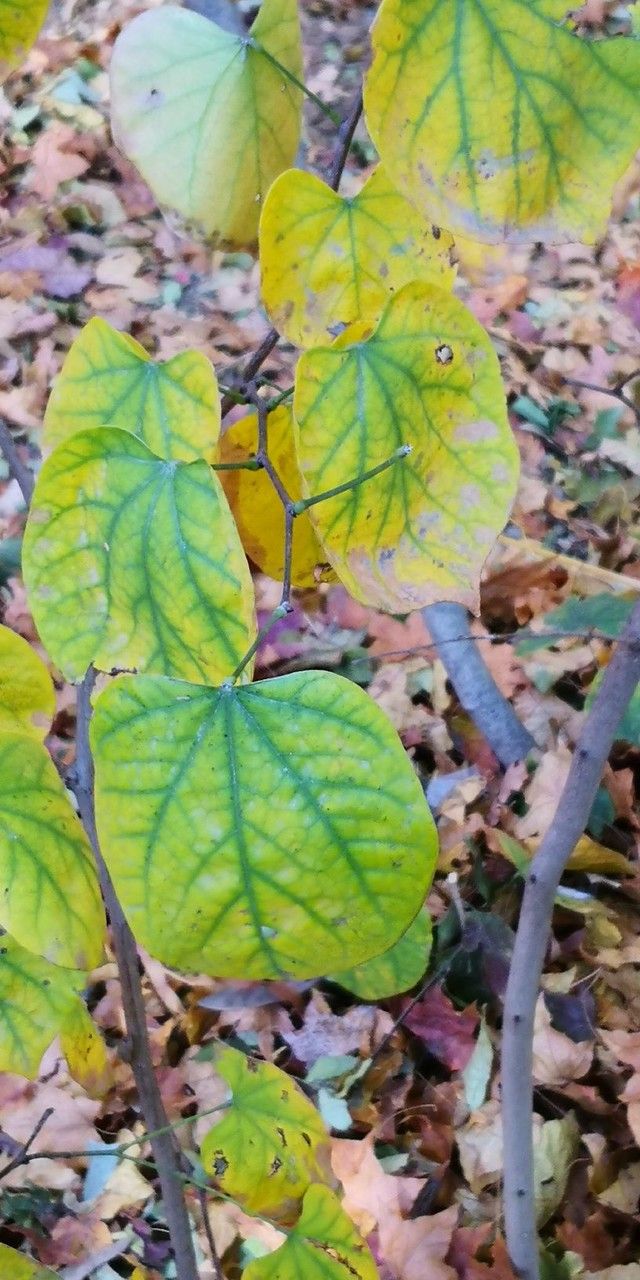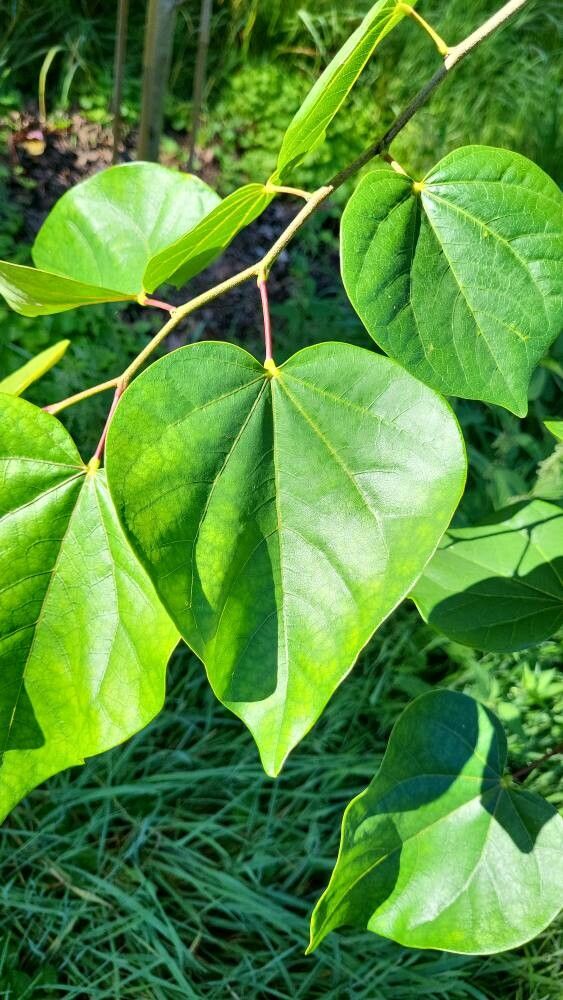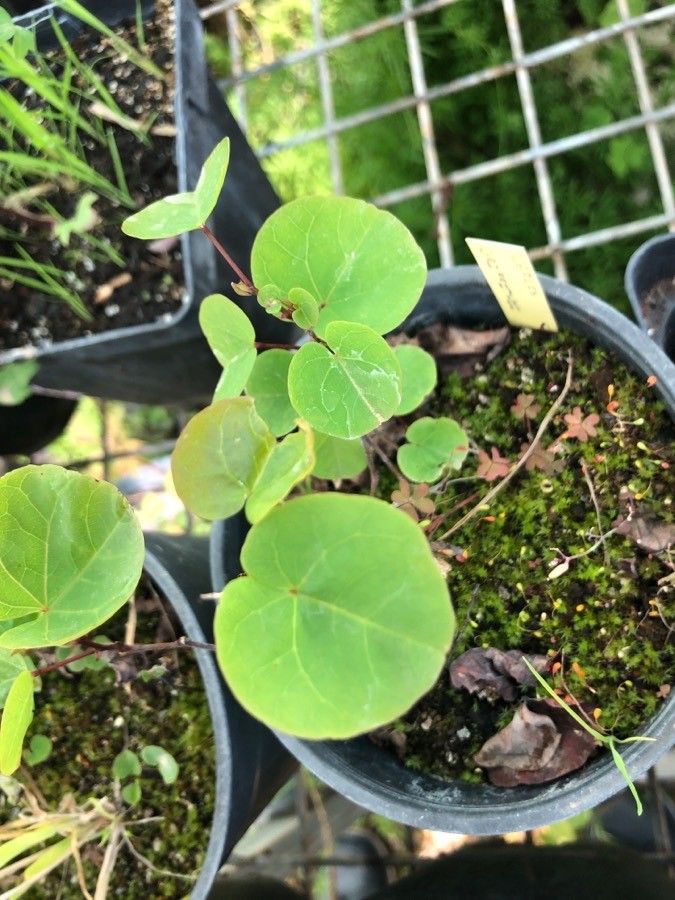
Cercis chinensis, commonly known as the Chinese redbud, is a deciduous tree native to China and other parts of Asia. Belonging to the family Fabaceae, this tree can reach up to 10 meters in height. It features a rounded crown with spreading branches adorned with heart-shaped green leaves.
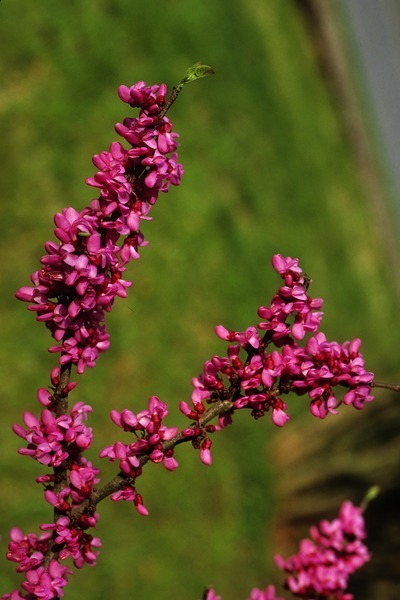
In early spring, before the leaves emerge, Cercis chinensis produces clusters of small pink or purple flowers on its bare branches. These blossoms attract bees and other pollinators and eventually develop into flat seed pods later in the season.
Cercis chinensis prefers well-drained soil and thrives in full sun or partial shade. Once established, it is relatively low-maintenance but may require occasional pruning to maintain its shape.
According to the story, there was once a family with three brothers who decided to live apart from each other. They divided the Chinese redbud tree in their courtyard into three parts. The next day, they discovered that the entire tree had withered. This made them realize that people, unlike trees, do not thrive when separated. They chose to live together again, and soon after, the Chinese redbud flourished once more. FUN FACT · FROM THE LIBRARY
The Chinese redbud is often used as an ornamental tree, appreciated for its attractive foliage and vibrant spring blooms. Its durable wood has also been utilized in furniture making.
Overall, Cercis chinensis is a stunning addition to any garden or landscape, offering beautiful flowers, lush foliage, and a unique growth habit.
Chinese redbud resists disease well and is generally unlikely to develop illnesses. In terms of maintenance, this plant is fairly easy to look after. When planted outdoors it needs only light watering, and larger specimens typically do not need pruning. Smaller plants, however, should be pruned after they finish blooming. Chinese redbud is appropriate for anyone with outdoor space, such as a garden or a deck, and does not require extensive care experience.
How to keep Cercis Chinensis.
Light
Chinese redbud thrives with an abundant supply of sunlight, yet it can also tolerate lower light levels. Its native environment has shaped this trait, giving it the ability to handle varying amounts of sun. All growth stages of the Chinese redbud gain from ample sunlight, but too much exposure or too little light can cause poor growth and health problems.
Water
The Chinese redbud thrives in conditions of moderate humidity and needs consistent moisture, though it should not be waterlogged. Once the plant is established, it becomes moderately drought-tolerant and benefits from deep watering every two weeks. During the colder months, when it becomes dormant outdoors, its water requirements decrease. At this time, it's best to adjust watering according to seasonal rainfall and the reduced rate of evapotranspiration.
Temperature
Chinese redbud originates from areas where average temperatures lie between 50 and 95°F (10 and 35 ℃). This adaptable woody plant prefers that temperature range. If temperatures regularly fall outside it, seasonal adjustments may be necessary.
Fertilizer
Timing is critical for fertilizing Chinese redbud. Apply fertilizer in early spring and continue once a month until early summer. Fertilizer encourages lovely blooms and supplies energy during both dormant and active growth phases.
Pruning
The Chinese redbud is known for its vibrant pink blooms and benefits from pruning in early spring after it has finished flowering. Important practices include removing dead branches, thinning the interior to improve structure, managing its size, and cutting back any suckers. Regular pruning encourages abundant flowering and vigorous growth, helping the plant perform optimally in your garden.
Botanical profile.
- Plant Type
- Tree, Shrub
- Life Cycle
- Perennial
- Genus
- Cercis
- Family
- Fabaceae
- Hardiness Zone
- 6-9
- Mature Height
- 2.13 m to 4.88 m
- Mature Spread
- 3.05 m to 3.66 m
- Leaf Color
- Green, Yellow
- Leaf Type
- Deciduous
- Flower Color
- Purple, Pink
- Flower Size
- 1.02 cm to 1.27 cm
- Bloom Time
- Mid spring, Late spring
- Planting Time
- Spring, Autumn
- Harvest Time
- Early summer, Mid summer
- Native Area
- China
Other names.
Reader questions.
How should I water my Chinese redbud tree?
To promote excellent root development, it is helpful to place a garden hose at the base of the plant. It is important to avoid spraying the leaves directly, especially if the plant is outdoors and in direct sunlight, as the leaves will require more water. Bubblers can be used to moisten the roots of each plant, while soaker hoses can provide overall coverage for the entire garden or bed. When adding or removing plants, using soaker hoses can help push the roots deeper into the soil. Be sure to drain any excess water and wait for the soil to dry before watering again. To prevent diseases, it is recommended to water at ground level. On sunny days, it may be beneficial to spray the entire bush with water. Whether the plant is potted or in the ground, keep in mind that Chinese redbuds prefer deep watering rather than light sprinkling.
Why is it important to add fertilizer to my Chinese redbud?
Fertilizing a Chinese redbud is important for a few reasons. One reason is that it helps the tree produce beautiful blooms. Fertilizing in early spring is the best time to ensure the tree has excellent flowers during that season. Additionally, fertilizers provide the tree with energy that can be stored in the ground during its dormant growth phases. Giving the tree extra nutrients during fall planting or in late spring will help it store more energy to use when active growth resumes.
What are the sunlight requirements for Chinese redbud?
The Chinese redbud requires full sun exposure, which means it needs more than 6 hours of sunlight daily, but it can also grow in partial sun, receiving about 3 to 6 hours of sunlight. It's crucial to observe how sunlight moves through your garden to ensure that you place your plants where they can get a suitable balance of sunlight and shade. This careful placement aids in the optimal growth and health of your plants.
What is the native temperature range for Chinese redbud?
The Chinese redbud is native to regions where average temperatures are in the range of 50 to 95°F (10 to 35°C). This adaptable woody plant thrives within this temperature scope, making seasonal adjustments crucial if temperatures frequently fall outside this range. The Chinese redbud has a strong cold resistance, reducing the need for special frost protection during winter. However, protection is advised if winter temperatures are expected to drop below -25°C, using materials such as non-woven fabric or cloth to wrap the trunk and branches. An important winter care tip includes watering the plant abundantly before the first freeze in autumn to ensure the soil stays moist and enters a frozen state, which helps prevent drought and water scarcity during the colder months.
What should I do if I give too much or too little water to a Chinese redbud?
If you overwater a Chinese redbud, you may notice that the leaves turn yellow, drop off, and wilt. The plant may also look unhealthy with mushy stems. When these signs appear, try adjusting your watering schedule. Wilting can also be a sign of under watering. In this case, the leaves will become crispy and dry. To determine if the soil is too dry, check it when it's dry and watering alone is not enough. If needed, give the plant a good watering. However, even with enough water, the Chinese redbud may still have yellow leaves and appear dry for a few days due to root damage. Once it returns to normal, the yellowing of leaves will stop. When you have the Chinese redbud indoors, always check the moisture levels in the pot and avoid overwatering. Look out for black spots, which indicate overwatering. If present, give the soil a few days to dry out before watering again. Overwatering can lead to root rot, so be mindful of this and prevent the soil from becoming too soggy. When planting the Chinese redbud outdoors, dig a little deeper and check the soil to ensure it's not too dry. If it is dry, make sure you water the plant adequately to promote recovery.
When should I fertilize my Chinese redbud tree?
To effectively fertilize Chinese redbud, timing is crucial. It is important to avoid applying fertilizer too early while the plant is still dormant, as this will result in ineffective use and the fertilizer being washed away. The first application of fertilizer should be done in the early spring, followed by monthly applications until early summer.
How does the Chinese redbud adapt to varying light conditions?
Chinese redbud has adapted to flourish under a broad range of sunlight conditions thanks to its origin environment. It thrives in abundant sunlight but can also tolerate lower light levels. This adaptability is beneficial for its growth at all stages, though too much or too little sunlight can lead to growth problems and health issues. Additionally, indoor plants might require artificial lighting to mimic natural sunlight, especially in spaces with insufficient natural light, such as during winter or in less sunny locations. LED lights, which can be tailored to provide specific wavelengths, along with the right power, distance, and duration, can effectively support plant growth indoors.
How does low temperature affect Chinese redbud and what are the solutions?
Chinese redbud is cold-tolerant, best thriving when temperatures stay above 10°C, and should preferably be kept above -15°C during winter. In conditions where temperatures fall below -25°C, there may not be immediate noticeable changes during the winter; however, in spring, the affected branches may become brittle and dry, failing to produce new shoots. The recommended solution for such damage is to prune away any dead branches which have failed to produce new leaves by spring. This helps maintain the health and aesthetics of the plant.
How frequently do I need to water my Chinese redbud?
The Chinese redbud prefers deep and infrequent watering. When planted in pots, it is important to soak them in a gallon of water each time due to the limited water storage in the pot. In cold regions, watering is required every 3 to 5 days. Water the plant early in the morning when the soil is dry, whether it is placed outdoors or indoors. You can also check the soil inside to determine if watering is needed. When the top 2-3 inches of soil are dry, it is time for a full watering. During hot days, it is necessary to check the moisture daily as the heat can quickly dry out the soil in the pot. If you have a garden, irrigation of the soil is also necessary. In hot climates, watering once a week is recommended. Only water when about 2 to 3 inches of soil become too dry, and consider the amount of rainfall to prevent root rot. Chinese redbud generally grows during spring and fall. When the plants are outdoors, adding mulch about 3 to 4 inches deep can help conserve water. It is important to water more frequently in sandy soil, which tends to drain faster. However, with clay soil, watering can be less frequent, allowing the plant to dry for 2-3 days without developing root rot. To keep track of watering, mark the date on the calendar and pay attention to drooping leaves, which may indicate that watering is needed soon.
When is it best not to fertilize my Chinese redbud?
To ensure healthy growth and abundant blooms for your Chinese redbud tree, it's important to be mindful of the fertilizer you use and when you apply it. Excessive nitrogen in the fertilizer can result in lots of leaves but few blooms, so opt for a fertilizer with a lower nitrogen content compared to other nutrients. It's advisable to refrain from fertilizing your tree in late autumn, as this can lead to excessive growth right before the onset of winter. Similarly, avoid fertilizing during hot and dry periods, as dry soil doesn't effectively deliver nutrients, and stimulating growth during this time can increase water requirements that may not be met. Instead, it's best to apply fertilizer earlier in the season when temperatures are cooler. Lastly, keep in mind that Chinese redbud can absorb fertilizer from nearby plants or lawns, so use caution to avoid unintentionally over-fertilizing your tree.
What symptoms indicate light deficiency or overexposure in Chinese redbud?
Chinese redbud can show several symptoms in response to light deficiency or overexposure. Symptoms of light deficiency include smaller new leaves, leggy or sparse growth, faster leaf drop, slowed or halted growth, and lighter-colored or yellow leaves (chlorosis). Overexposure symptoms include sunscald, which appears as bleached or necrotic areas on leaves, leaf curling as a defense against water loss, wilting due to increased transpiration, and leaf scorching characterized by brown or crispy leaf edges. These symptoms can impact the plant's health and growth.
What are the effects of high temperature on Chinese redbud and how can they be mitigated?
During the summer, it is best to keep the Chinese redbud's surrounding temperature below 35°C. Exceeding 38°C can cause the plant's leaves to lighten in color, with tips becoming dry and withered, which in turn makes the plant more susceptible to sunburn. To mitigate these high-temperature effects, it's advised to trim away any sunburned and dried parts of the plant, move it to a shaded location away from the midday and afternoon sun, or use a shade cloth. Additionally, watering the plant in the morning and evening helps keep the soil suitably moist, further protecting the plant from the adverse effects of high temperatures.