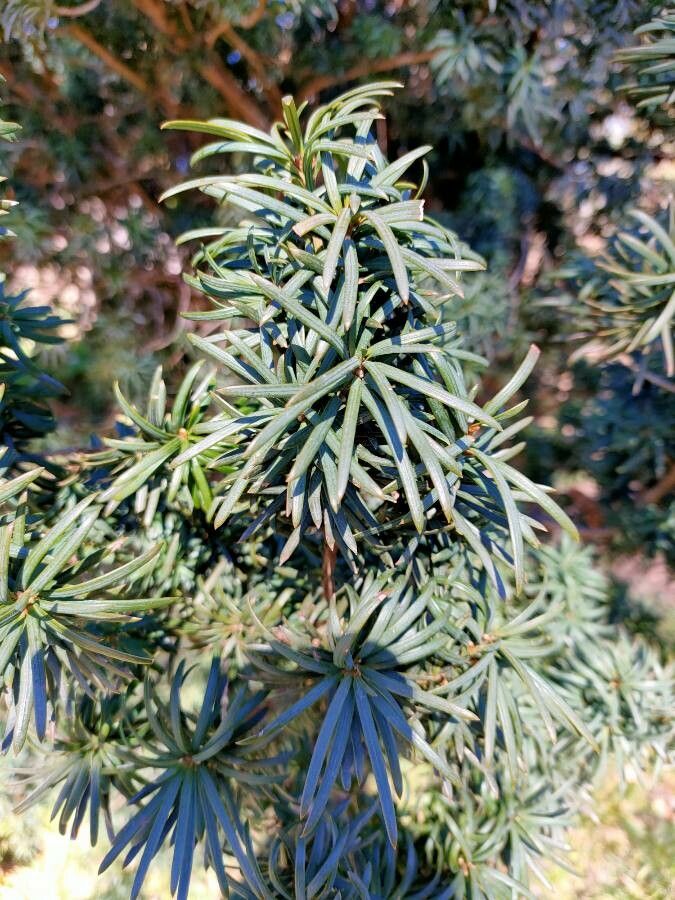
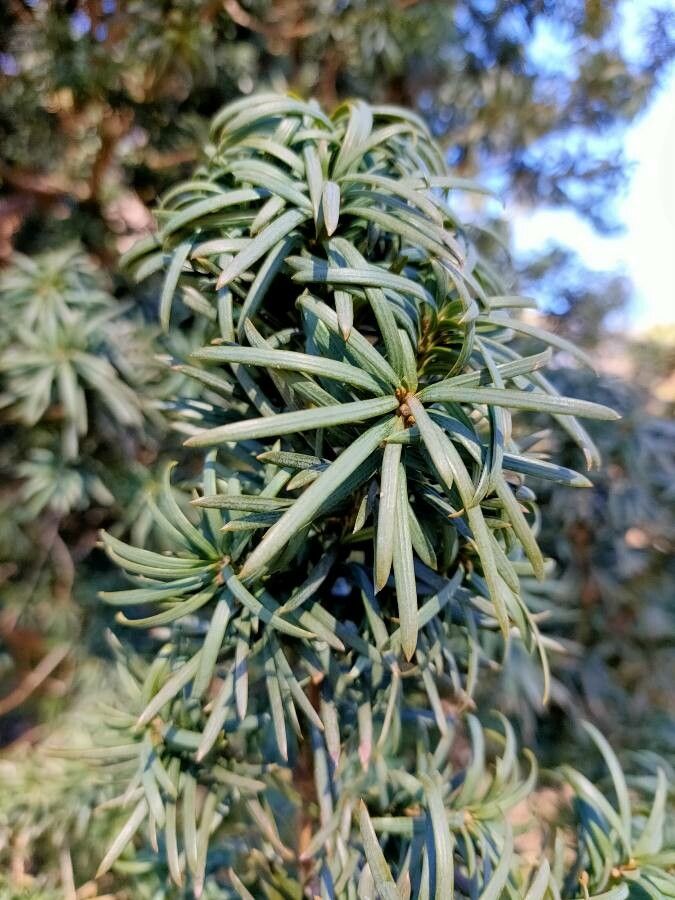
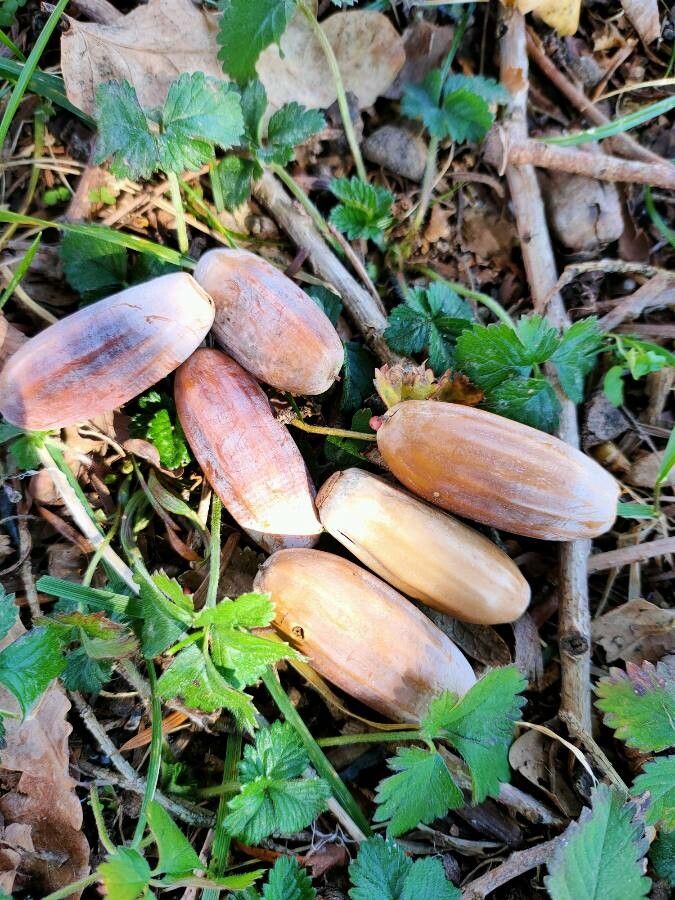
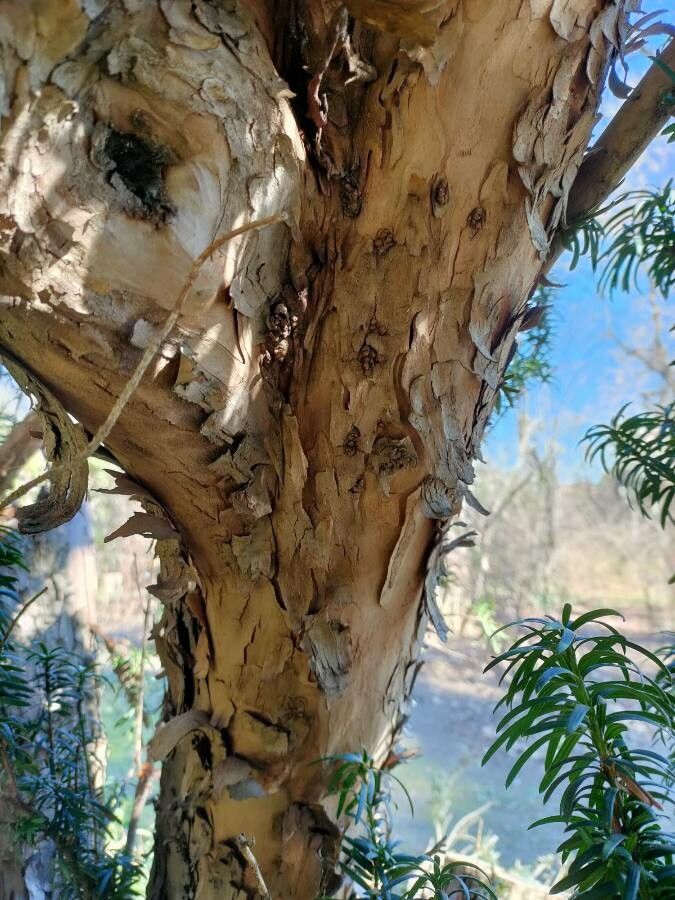
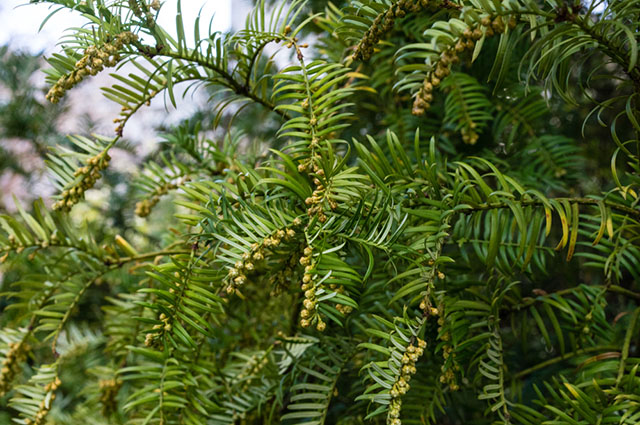
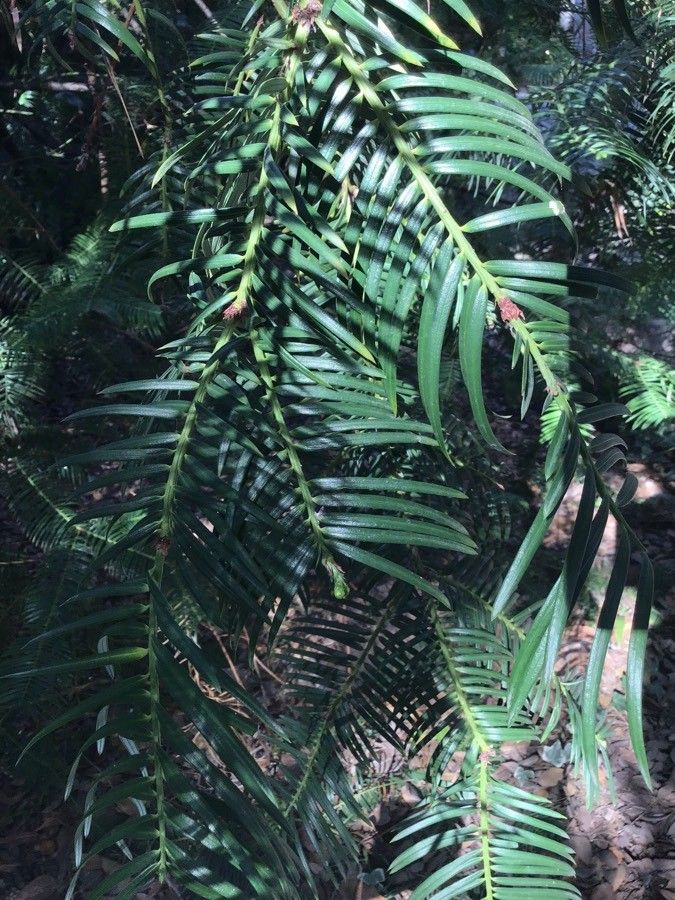
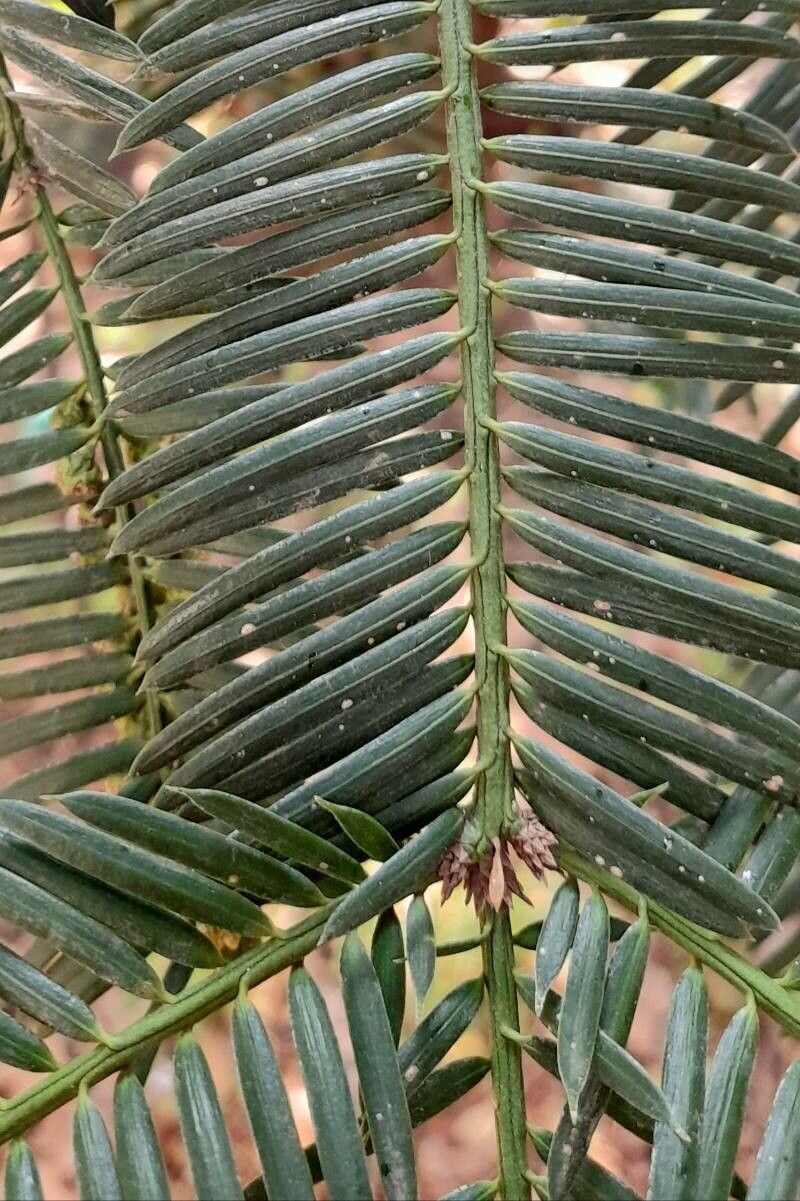
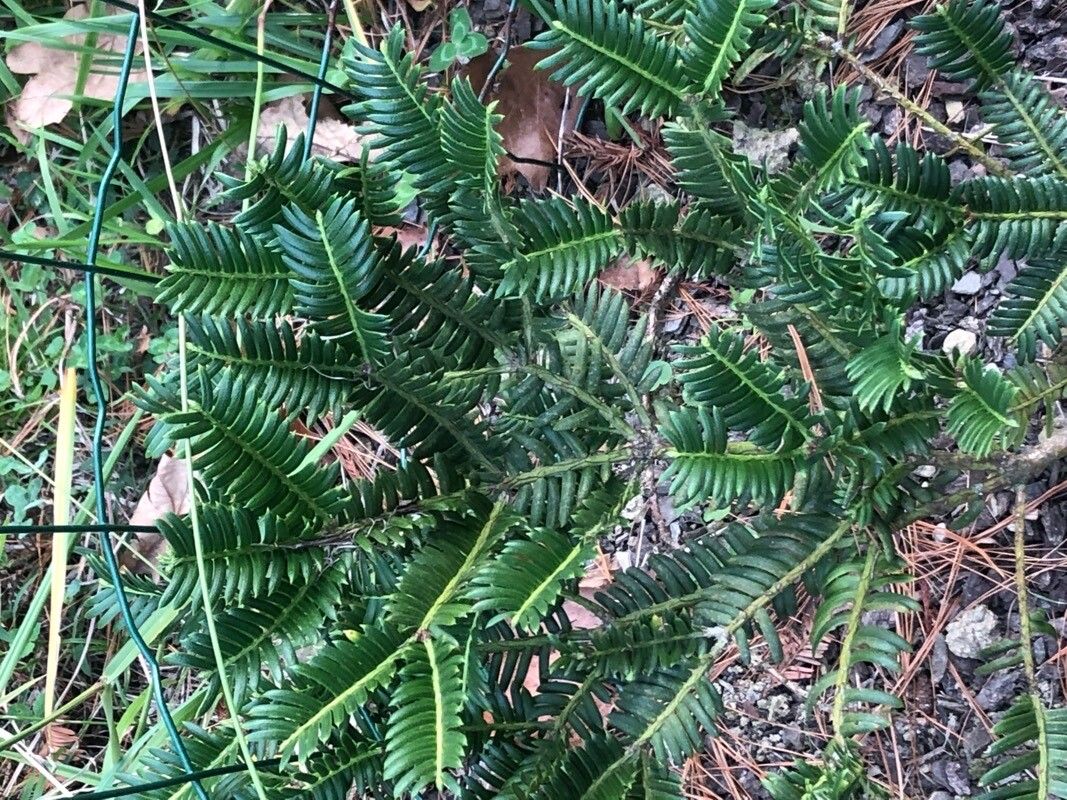
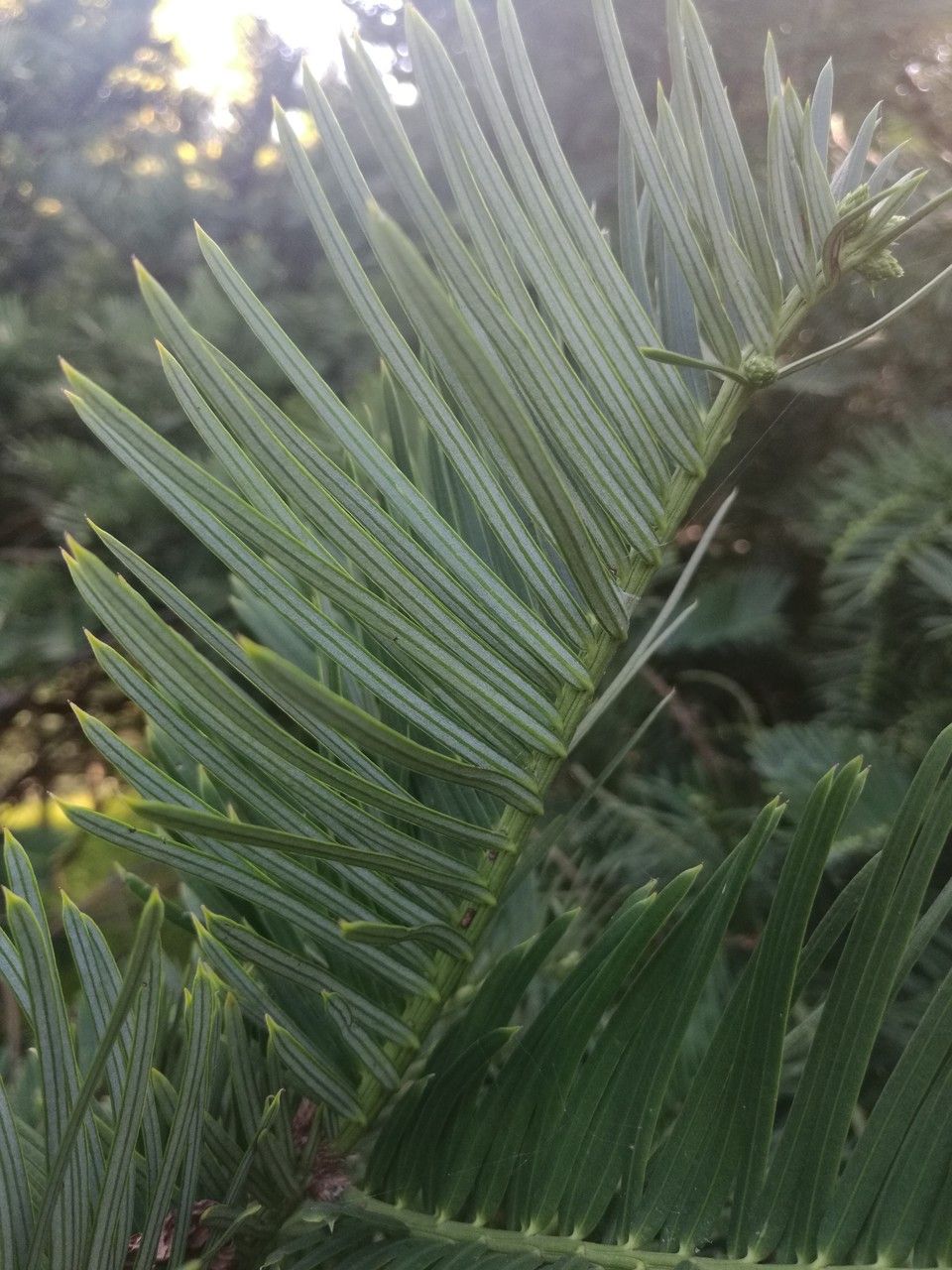
Cephalotaxus harringtonia, commonly known as Japanese plum-yew, Harrington's cephalotaxus, or cowtail pine, is a coniferous bush or small tree in the family Taxaceae. It is native to Japan, but is occasionally utilised in western gardens and several cultivars exist for these purposes. Japanese plum yew has been in cultivation in Europe since 1829, and many modern horticulturists are familiar with this Japanese species, named in honor of Charles Stanhope, 4th Earl of Harrington, one of the first to grow the plant in a European garden, at Elvaston.
Harrington's plum yew has strong resistance to disease and is generally not susceptible to illnesses. In terms of care, this plant is fairly low maintenance. When planted outdoors it needs only minimal watering, and larger specimens typically do not require pruning. Smaller plants, however, should be pruned after they have bloomed. Harrington's plum yewt is suitable for anyone with an outdoor area, such as a garden or deck, and does not demand extensive care experience.
How to keep Cephalotaxus Harringtonia.
Light
Harrington's plum yew is native to habitats such as forest understories and rocky areas, where it grows in natural shade. It prefers partial sun but can tolerate full sun or full shade, illustrating its versatile and hardy nature.
Temperature
Harrington's plum yew is highly adaptable to a variety of climate conditions, from scorching summers to cold winters. However, it has a preferred temperature range for growth. If temperatures climb too high, the plant can experience heat and humidity stress, which may lead to death. In areas where temperatures approach the lower limit of its cold tolerance, providing insulation is necessary to protect the plant.
Fertilizer
Harrington's plum yew has specific nutrient needs and does not require heavy fertilization. Spring is the best time to apply fertilizer for optimal growth. Supplying nutrients improves its health, increases resistance to pests and diseases, and helps maintain a long lifespan.
Pruning
Before new growth starts to sprout, late winter or early spring are the ideal times to do more thorough pruning to reduce the size of a Plum Yew. Almost any time of year is suitable for performing light pruning for shape. 2 months before the typical first frost date in your area, stop pruning.
Toxicity
Except for the flesh of the red berry that encloses the seed, all parts of the Japanese yew are poisonous. You can eat the berry, known as a "aril," but you must first remove the poisonous seed's meat in order to prevent ingesting or biting into it. This common tree is highly toxic to all animals (e.g., dogs, cats, horses, cattle, humans, etc.).
Further reading →
The toxicity and danger assessments provided are for reference only. We do not assure their accuracy, so it's crucial not to depend on them. Seek professional advice when necessary for accurate guidance.
Botanical profile.
- Plant Type
- Tree
- Life Cycle
- Perennial
- Genus
- Cephalotaxus
- Family
- Taxaceae
- Hardiness Zone
- 6-9
- Mature Height
- 4.88 m to 10.06 m
- Mature Spread
- 3.05 m to 4.88 m
- Leaf Color
- Dark Green
- Leaf Type
- Evergreen
- Bloom Time
- Mid spring, Late spring
- Planting Time
- Spring, Summer, Autumn
- Harvest Time
- Late summer, Early fall, Mid fall
- Native Area
- Koppen, Japan, South Korea, China
Other names.