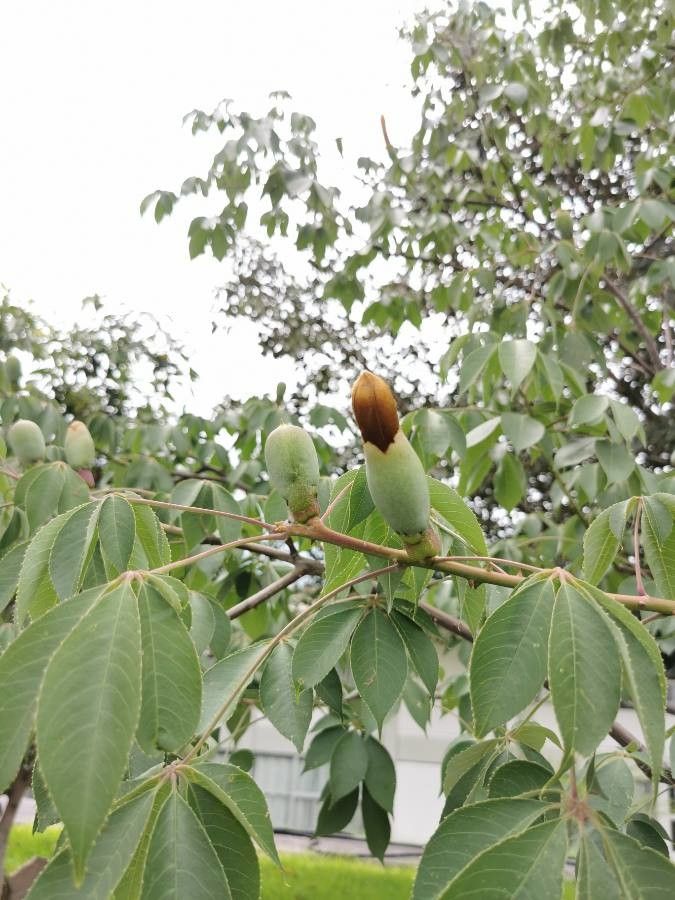
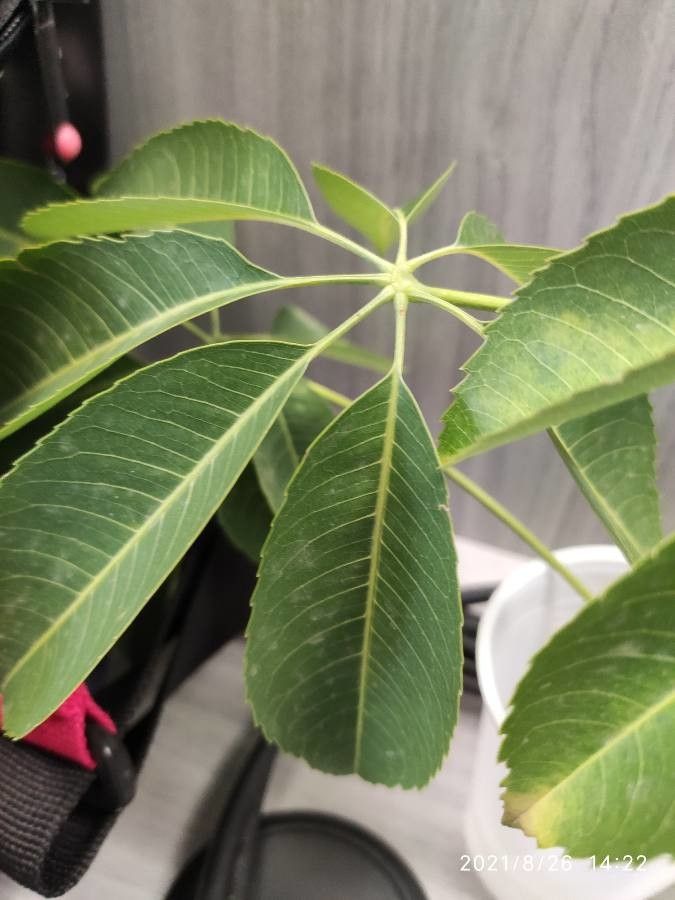
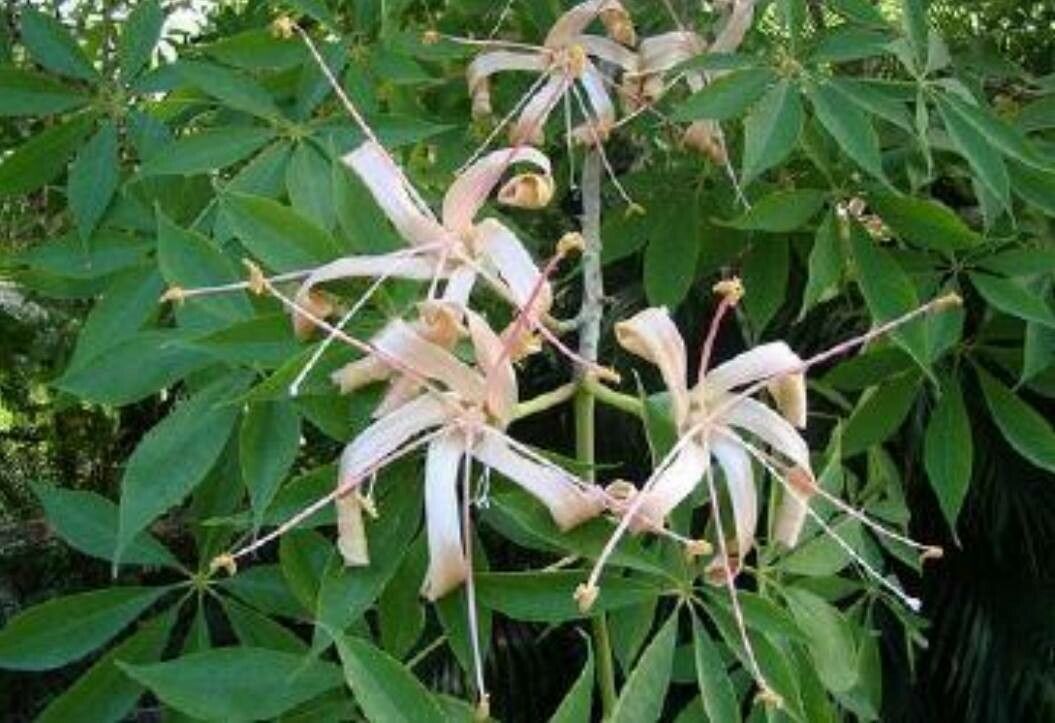
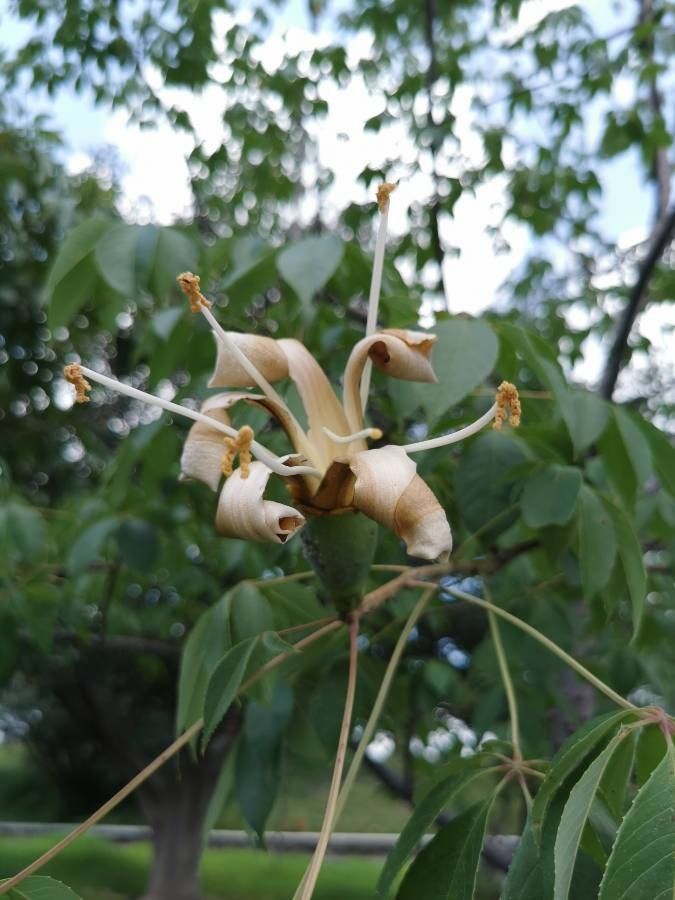
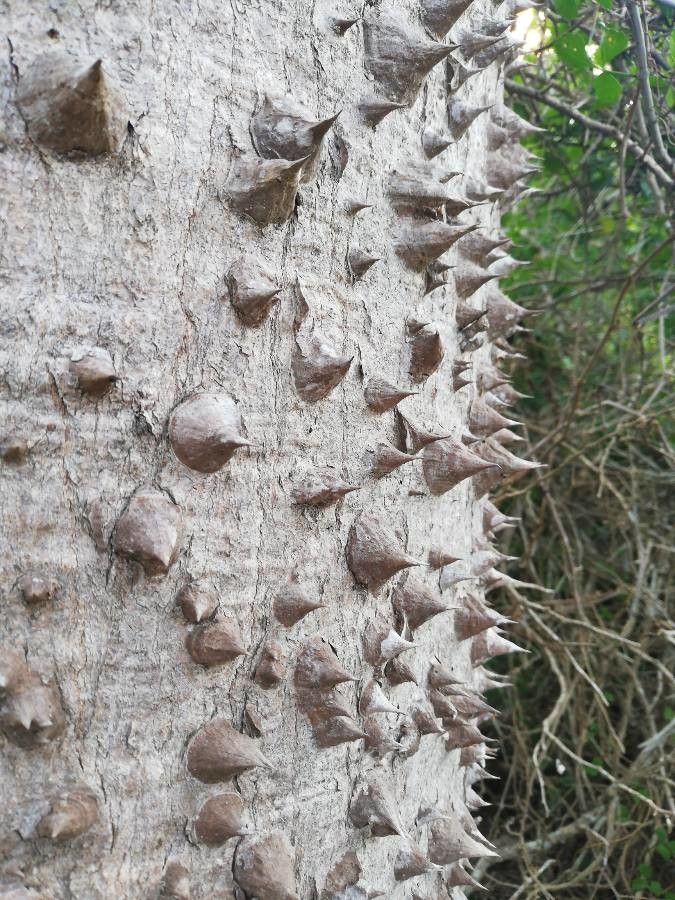
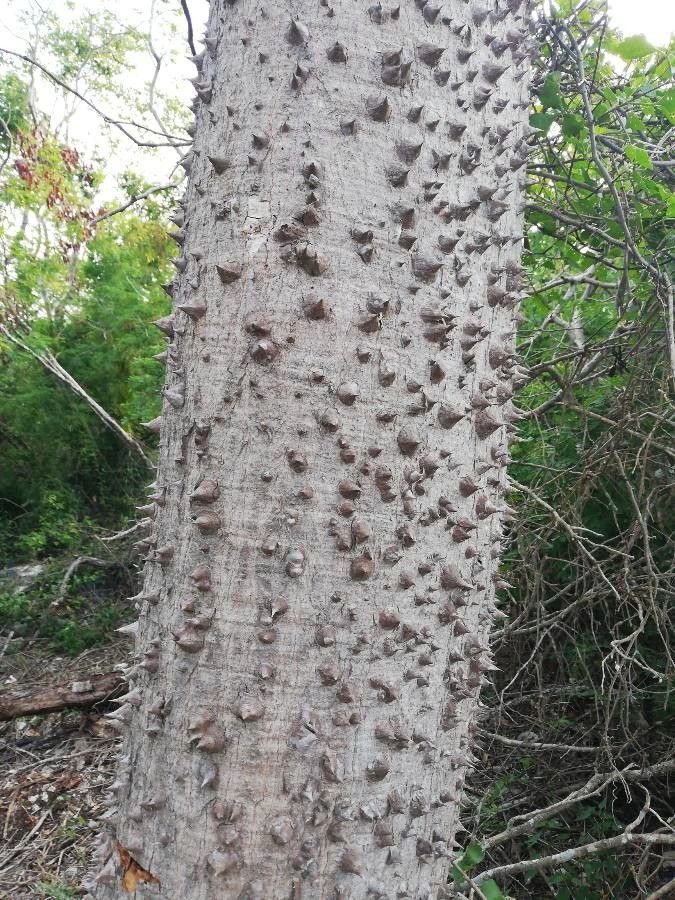
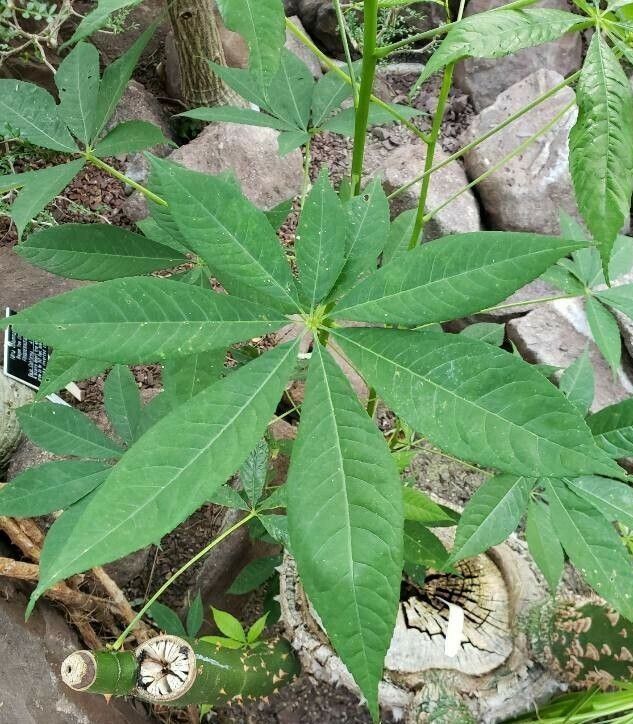
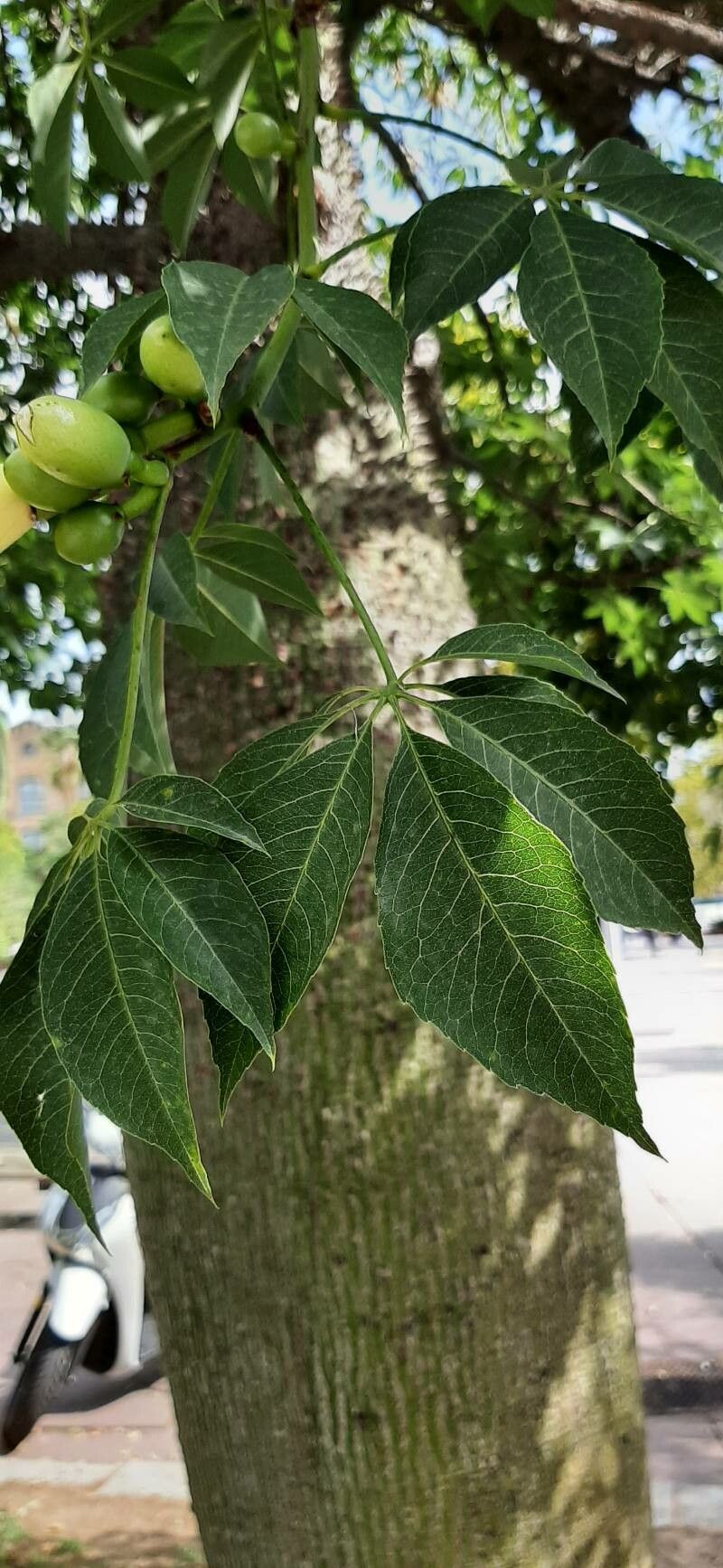
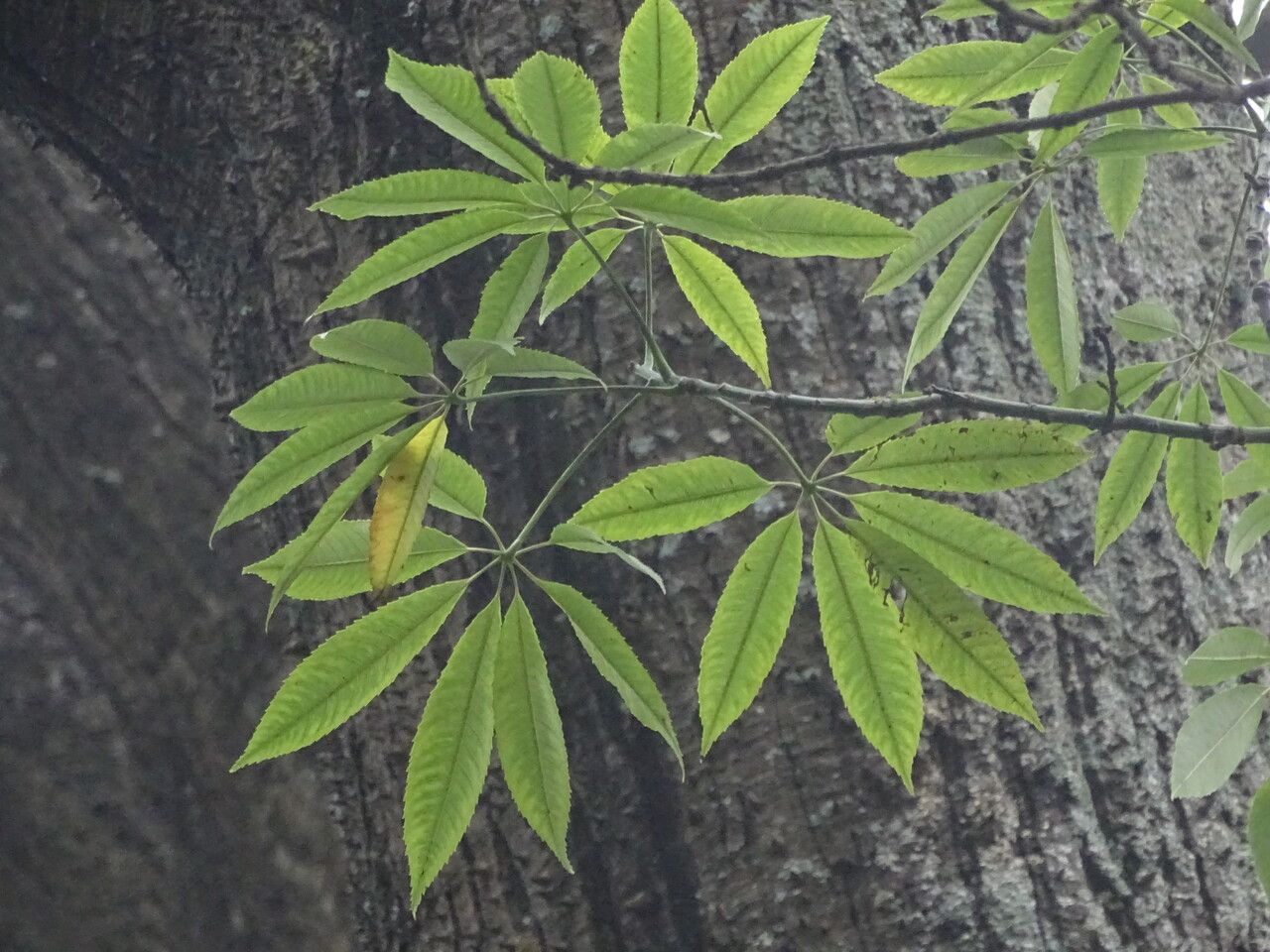
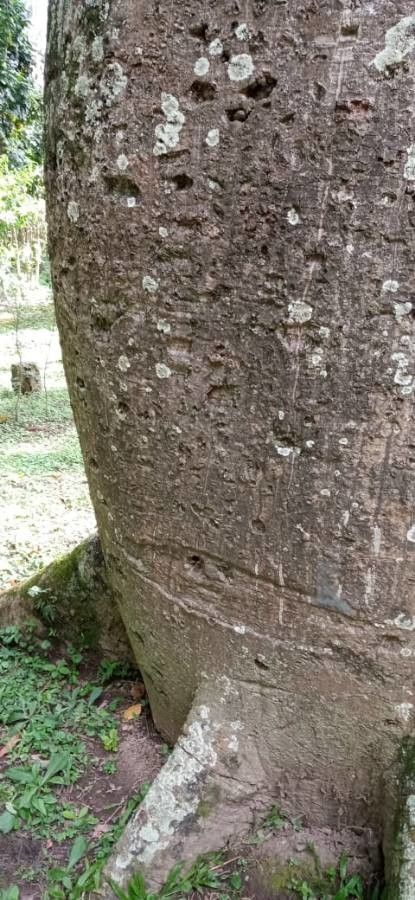
Ceiba aesculifolia, commonly known as the white silk-cotton tree, is a deciduous tree native to Mexico and Central America. It can grow up to 30 meters tall and features a broad trunk with buttress roots. The large, palmate leaves consist of five to seven leaflets. The flowers, which are large and white or pinkish in color, bloom in the spring before the leaves appear. The fruit is a woody capsule containing numerous seeds surrounded by cotton-like fibers, often used for stuffing pillows or cushions.
This tree holds cultural significance in many indigenous communities, where it is believed to be sacred and possess healing properties. It also provides essential habitat for a variety of animals, including birds, insects, monkeys, and bats.
The wood of Ceiba aesculifolia is commonly used for making furniture, while its bark, which contains tannins, is utilized for dyeing textiles and leather products.
Despite its cultural importance and ecological value, Ceiba aesculifolia faces threats from deforestation due to logging activities. Consequently, it has been listed as an endangered species by the International Union for Conservation of Nature (IUCN). In response, conservation efforts, such as reforestation programs, have been implemented to protect this species from extinction and to promote the sustainable use of natural resources within its habitat range.
Pochote is resistant to disease and typically does not suffer from illnesses. In terms of care, this plant is fairly low-maintenance. When grown outdoors it needs little watering, and larger specimens generally do not require pruning. Smaller plants, however, should be pruned after they have finished blooming. Pochote is suitable for anyone with an outdoor area, such as a garden or a deck, and does not demand extensive gardening experience.
How to keep Ceiba Aesculifolia.
Light
Pochote comes from open habitats, such as sunlit meadows and forest edges, which offer abundant light. It flourishes in Full Sun but can also tolerate Partial Sun, adapting well to varying sunlight conditions.
Temperature
Pochote comes from tropical regions, where the climate is generally warm and humid. Consequently, it is well suited to high temperatures and humidity. It does not like sudden temperature changes and prefers a stable thermal environment, so it is important to prevent temperature fluctuations indoors. It typically cannot tolerate cold conditions and needs warmer temperatures to grow. If the ambient temperature drops too low, the plant may stop growing or even die.
Fertilizer
The best time to fertilize a Pochote is in early spring, as it comes out of dormancy. This supports overall growth and the development of flowers. Feeding the plant improves its foliage, stems, and branches, while encouraging flowers that are large, vibrant, and long-lasting. It also helps move nutrients from the roots to the blooms and enhances the plant's health and resistance to disease.
Pruning
The Pochote is a large tropical tree that benefits from careful pruning in early spring, just before new growth begins. When pruning, concentrate on removing dead or damaged branches to improve the tree's shape and health. Proper pruning also enhances air circulation and increases access to sunlight. Be sure to use clean, sharp tools to minimize the risk of injury and disease.
Botanical profile.
- Plant Type
- Tree
- Life Cycle
- Perennial
- Genus
- Ceiba
- Family
- Malvaceae
- Hardiness Zone
- 10-12
- Mature Height
- 14.94 m to 24.99 m
- Mature Spread
- 10.06 m to 14.94 m
- Leaf Color
- Green, Dark Green
- Leaf Type
- Deciduous
- Flower Color
- White
- Flower Size
- 7.62 cm to 10.16 cm
- Bloom Time
- Late winter, Early spring
- Planting Time
- Spring, Autumn
- Harvest Time
- Late spring, Early summer, Mid summer
Other names.